If you grew up imagining dinosaurs as cold, lumbering monsters that laid eggs and walked away, the fossil record has a surprise for you. Over the past few decades, paleontologists have uncovered quietly dramatic scenes frozen in stone: nests carefully arranged, young huddled together, even adults preserved in positions that look a lot like guarding or brooding. When you zoom in on these discoveries, you start to see something far more familiar than a monster movie – you see families.
This shift in understanding has been slow and evidence driven, not the result of wild speculation. You are looking at a story that comes from actual bones, eggs, and trackways that have been dug out of badlands and deserts around the world. Taken together, they reveal that at least some dinosaurs invested real time and energy into their offspring. Once you see the patterns, it is hard to go back to the old idea of dinosaurs as indifferent egg layers, and you start to recognize that long before mammals rose to dominance, complex parental care was already playing out on prehistoric ground.
Nests and Eggs: When Dinosaur Sites Start Looking Like Nurseries
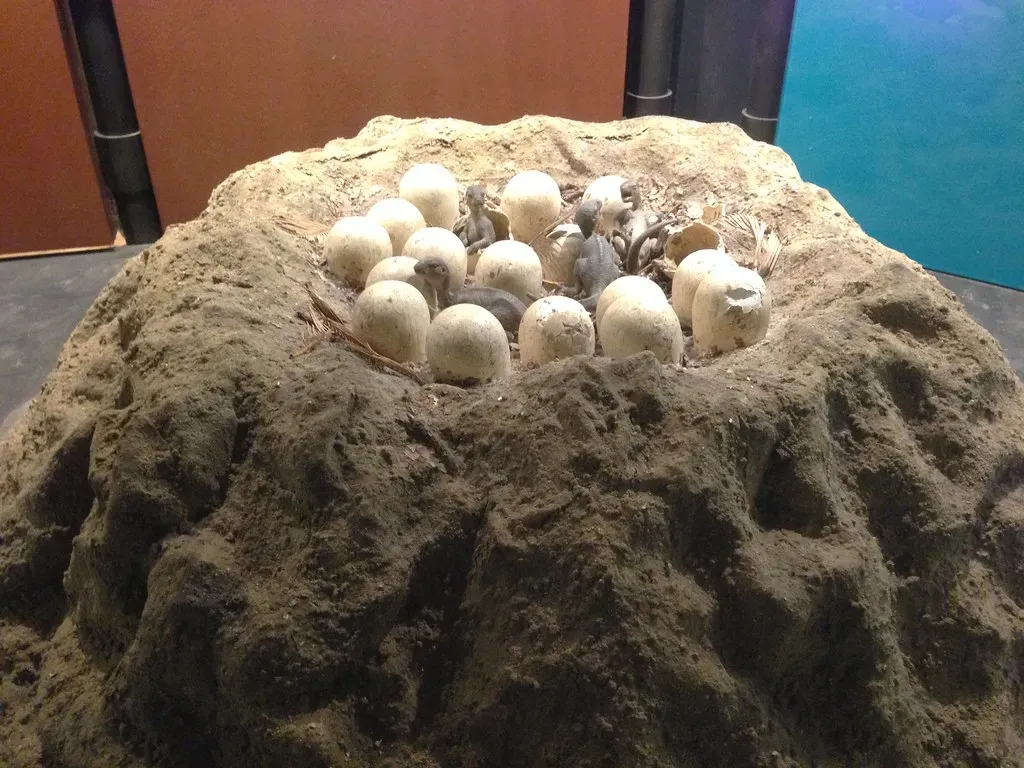
One of the most striking things you notice in the fossil record is that some dinosaur eggs are not scattered randomly – they are arranged in organized nests. You find circular patterns, layered clutches, and repeated nest structures in the same locations, which strongly suggests that these dinosaurs were doing more than just dropping eggs and moving on. When you see multiple nests clustered together in a single rock layer, it starts to feel less like a random accident and more like a nesting ground, the prehistoric equivalent of a crowded bird colony.
As you look closer, the eggs themselves tell more of the story. Some show signs that they were buried in sediment or covered with vegetation, which implies the parent was actively choosing where and how to lay them, possibly to regulate temperature and protect them. In a few sites, you find eggs at different developmental stages in the same nesting area, hinting that adults were returning season after season to the same place. You might not be able to watch those parents in action, but the layout of the nests and eggs already pushes you to see intention and care rather than pure instinct and abandonment.
Fossil “Family Portraits”: Adults and Young Preserved Together
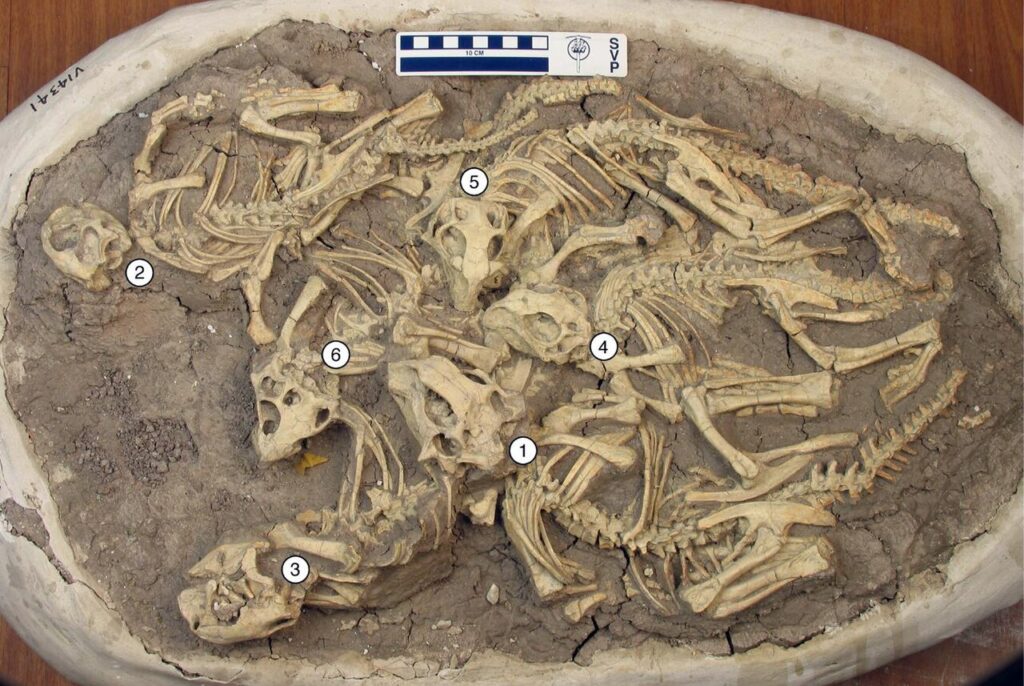
Every now and then, you come across what feels like a family snapshot preserved in stone: an adult dinosaur surrounded by juveniles, or a cluster of youngsters of similar size found in close association. When you discover fossils laid out like this, you are not just counting bones; you are reading behavior. These groupings suggest that some young dinosaurs did not immediately disperse after hatching but stuck around, possibly depending on adults for protection or guidance, much like young birds or mammals do today.
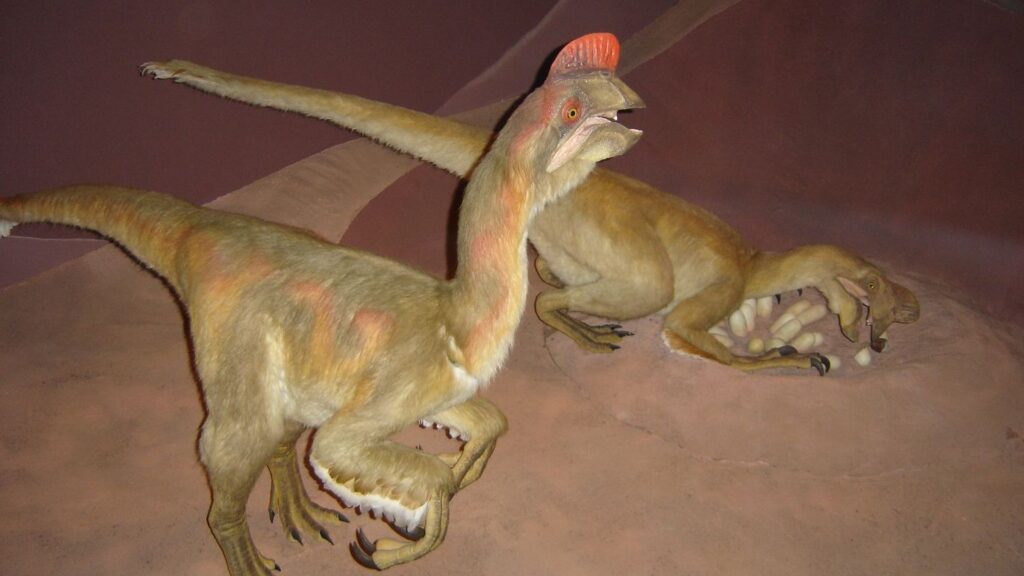
In some remarkable cases, the positions of the skeletons deepen the story. You might see an adult curled around a clutch or juveniles grouped tightly together as if sheltering from danger. These scenes are often interpreted cautiously, because fossilization is chaotic, but when you repeatedly find similar patterns across different sites and species, the idea of dinosaur family groups becomes hard to dismiss. As you follow these clues, you start to realize that, for at least some species, life after hatching was not a solo struggle from day one – it unfolded in the shadow of watchful adults.
Growth Rings, Bone Histology, and the Long Childhood Question
When you slice through a dinosaur bone and look at it under a microscope, you see growth rings, a bit like those in a tree. By studying these rings and the overall texture of the bone, you can estimate how fast an animal was growing and how long it took to reach full size. When you find evidence that a young dinosaur needed several years to mature, you are also looking at a simple but powerful question: during that long childhood, was it completely on its own, or did it benefit from parental protection or group living?
If a species took a long time to reach adulthood and remained relatively vulnerable for years, that kind of life strategy often pairs with at least some level of care or social structure in modern animals. You see that in large birds, some reptiles, and especially mammals. While you cannot directly watch dinosaur parents feeding or teaching their young, the combination of extended growth periods, clustered juvenile fossils, and nesting evidence nudges you toward the conclusion that in some lineages, young dinosaurs probably did not survive purely by luck. Instead, they may have relied on parents or groups in ways that echo what you see in many animals today.
From Reptilian to Birdlike: Rethinking Dinosaur Behavior
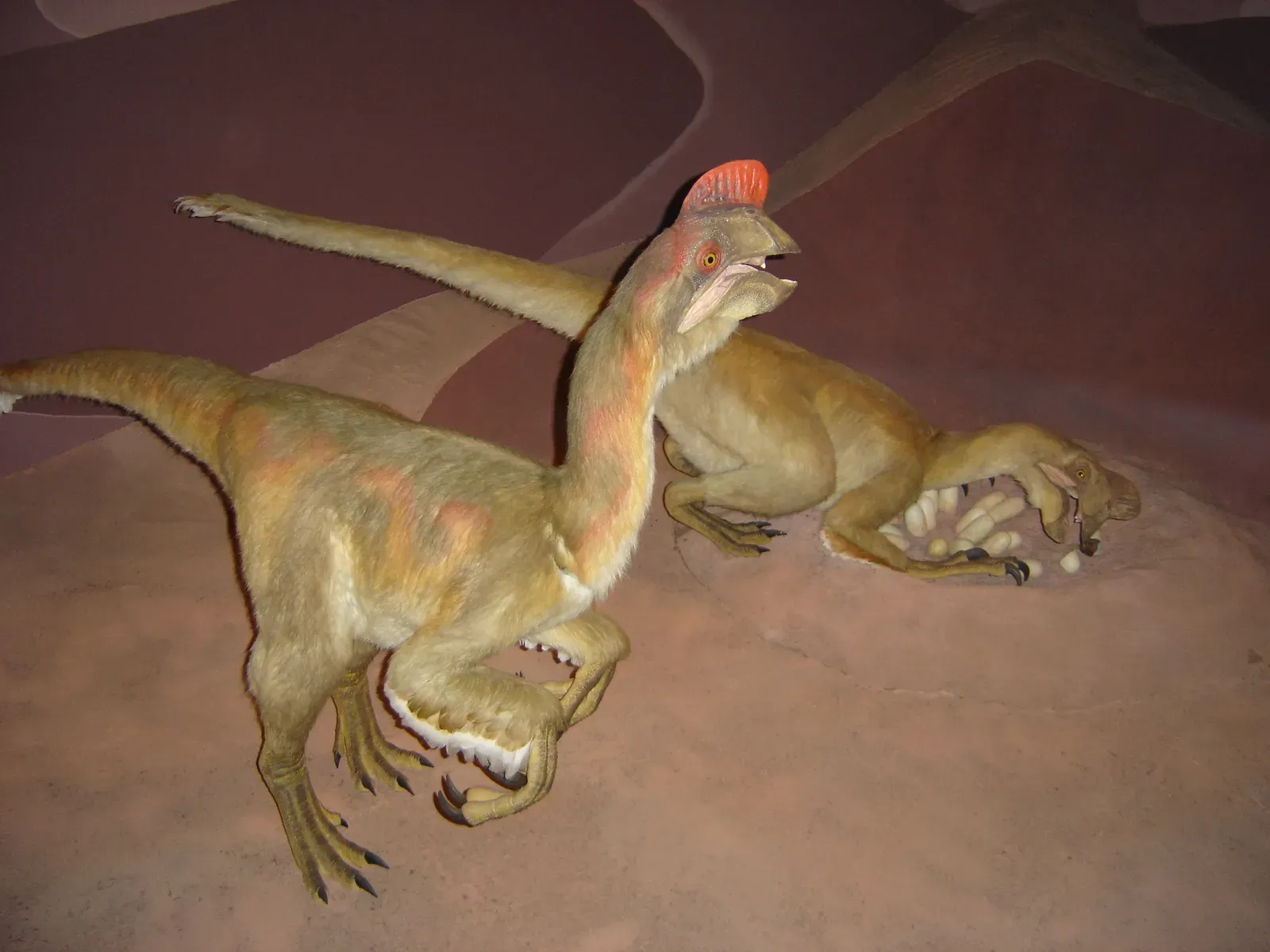
If you grew up hearing that dinosaurs were essentially giant reptiles that behaved like crocodiles or lizards, the evidence for parental care forces you to recalibrate. Crocodiles actually do show some care, guarding nests and helping hatchlings reach water, but many other reptiles lay eggs and play no further role. When you place dinosaurs on this spectrum, you begin to see them as more behaviorally diverse than that old stereotype allows, with some species trending toward the more attentive, birdlike end of the scale.
Modern birds are living dinosaurs, and many bird species pour extraordinary effort into their young: building elaborate nests, defending territories, and feeding chicks for weeks or months. When you notice fossil dinosaurs building repeated nests, brooding eggs, or moving in groups that mix adults and juveniles, you are looking at behavior that slots comfortably into this broader dinosaur–bird continuum. Instead of treating parental care in dinosaurs as a shocking exception, you can start to see it as an early expression of patterns that reach their full complexity in the birds you see in your backyard today.
Not All Dinosaurs Were Devoted Parents – And That Matters
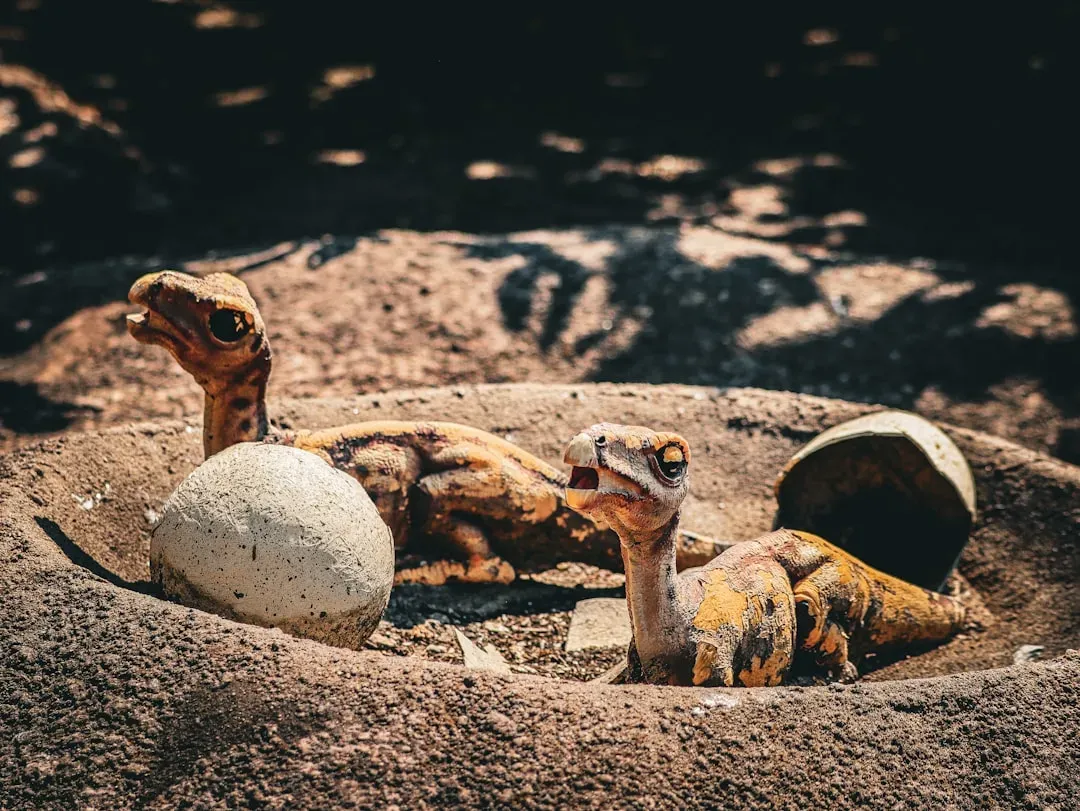
As tempting as it is to picture every dinosaur tucking its young in at night, the fossil record does not justify that kind of blanket claim. For many species, especially those known only from scattered bones, you simply do not have enough evidence to say much about their parenting at all. In some cases, egg types cannot even be confidently matched to a particular dinosaur, so you have to stay honest and admit that for a lot of species, parental behavior remains a mystery.
That uncertainty is not a weakness; it is a reminder that you are working with fragments of an enormous, ancient story. What you can say with confidence is that there are clear, repeated signals of parental care in several dinosaur groups, and that those signals are strong enough to overturn the old idea of dinosaurs as universally neglectful. You are dealing with a spectrum: some species likely invested heavily in their offspring, while others may have followed a more hands-off, high-egg-number, low-investment strategy. Recognizing that variety lets you imagine dinosaur ecosystems that were as behaviorally rich and mixed as modern ones, rather than flattened cartoon worlds of identical monsters.
Why Parental Care May Have Helped Dinosaurs Thrive
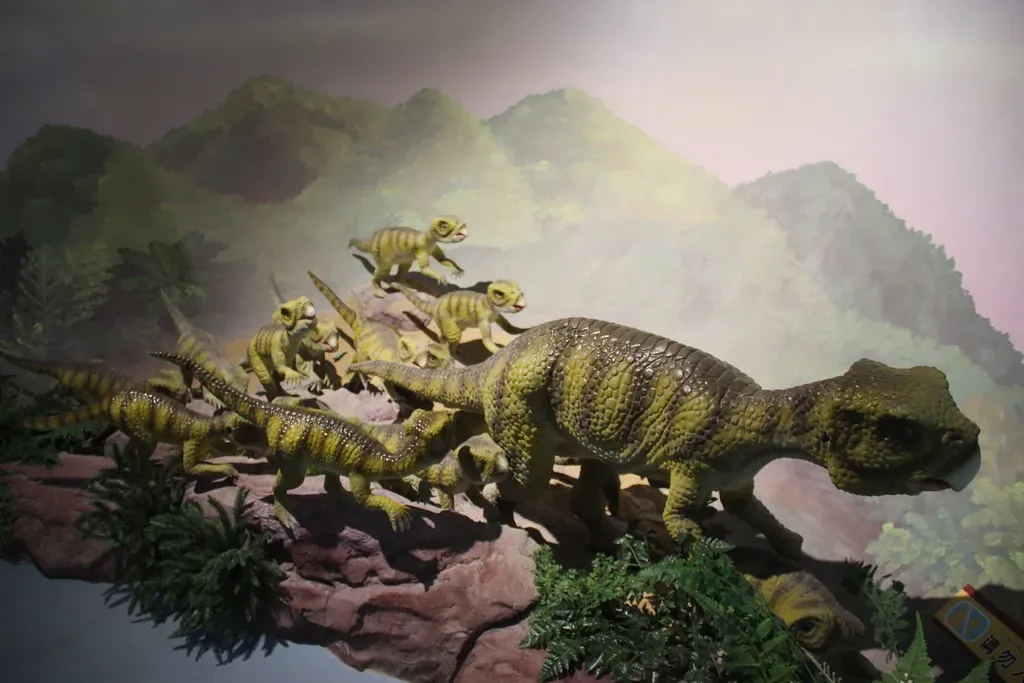
When you think about why parental care would evolve in the first place, survival is the obvious answer. If adults protect or provision their young, more of those offspring make it to adulthood, even if fewer eggs are laid overall. In dangerous, competitive environments, that trade-off can pay off in a big way. If you imagine small or medium-sized dinosaurs trying to raise young in landscapes full of predators, floods, droughts, and shifting seasons, you can see how guarding nests, choosing safe sites, and moving as family groups would give them an edge.
Parental care does something else that is easy to overlook: it allows learning and social behavior to matter more. When offspring stay near adults longer, they can pick up on safe paths, feeding grounds, or group signals, much as young birds and mammals do today. You might never know the details of what a young dinosaur learned from its parents, but the very existence of prolonged association opens the door to more complex behavior. In that sense, every nest, every fossil family group, is not just a story about tenderness; it is a story about strategy and the quiet arms race of survival that played out over millions of years.
What This Changes For You: Seeing Dinosaurs as Living Animals, Not Movie Monsters
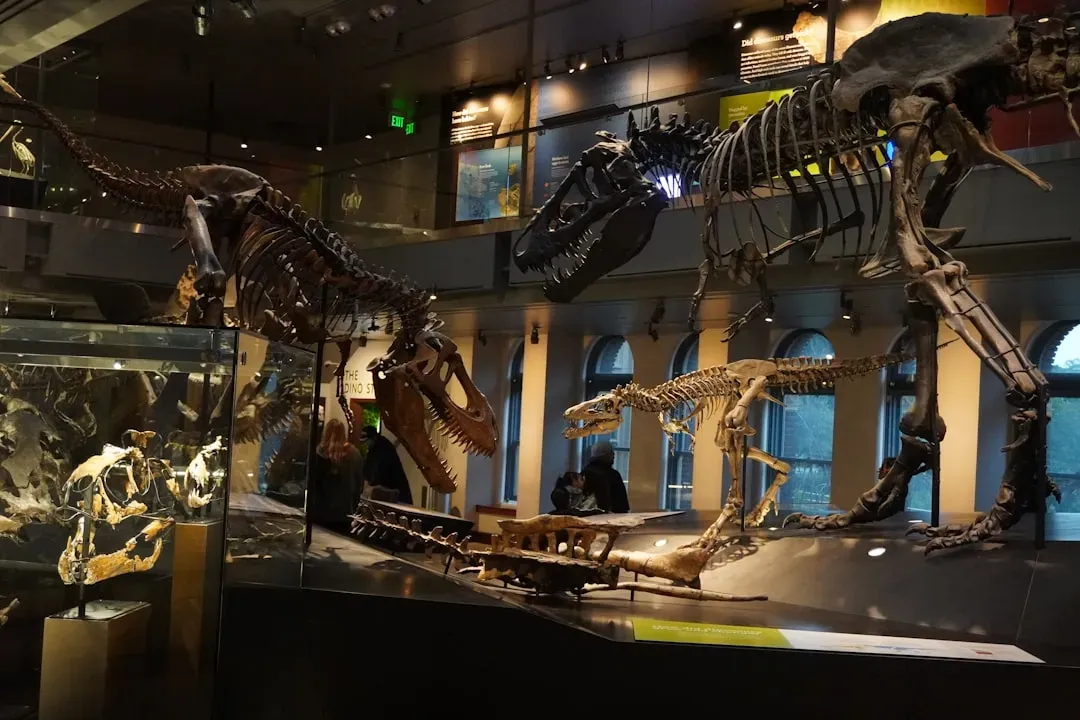
Once you absorb the idea that some dinosaurs cared for their young, it changes the way you picture them in your mind. Instead of imagining a lonely giant stomping through a storm, you might start picturing a watchful adult standing near a nest, or a group of juveniles trotting in loose formation behind older animals. That mental shift makes dinosaurs feel less like props in a disaster film and more like real animals that woke up hungry, faced danger, and invested in their future through their offspring.
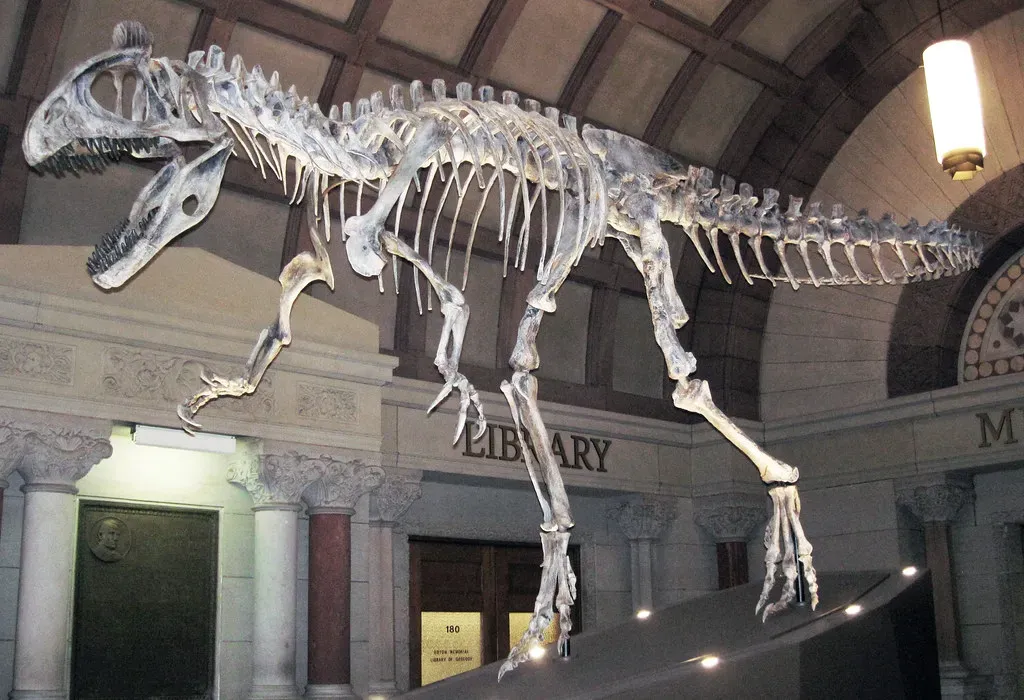
This perspective does something quietly powerful for you as a science reader. It reminds you that fossils are not just objects; they are traces of lives that once had rhythms, relationships, and stakes. When you look at a dinosaur skeleton in a museum now, you can ask yourself what kind of parent this animal might have been, what risks it took for its young, and how those choices shaped its success. That question pulls dinosaurs out of the realm of pure spectacle and drops them into the same messy, caring, survival-focused world that you share with every living creature on Earth today.
In the end, the fossil record is not shouting at you; it is whispering, and you have to listen carefully to pick out patterns like parental care. When you do, you discover that the deep past was not just a brutal, indifferent arena, but also a place where parents guarded nests, young stayed close, and family strategies quietly shaped evolution. The story of dinosaurs becomes richer, stranger, and more relatable all at once, because caring for the next generation turns out to be far older than your species – and maybe far more common – than you ever imagined. Did you expect that?