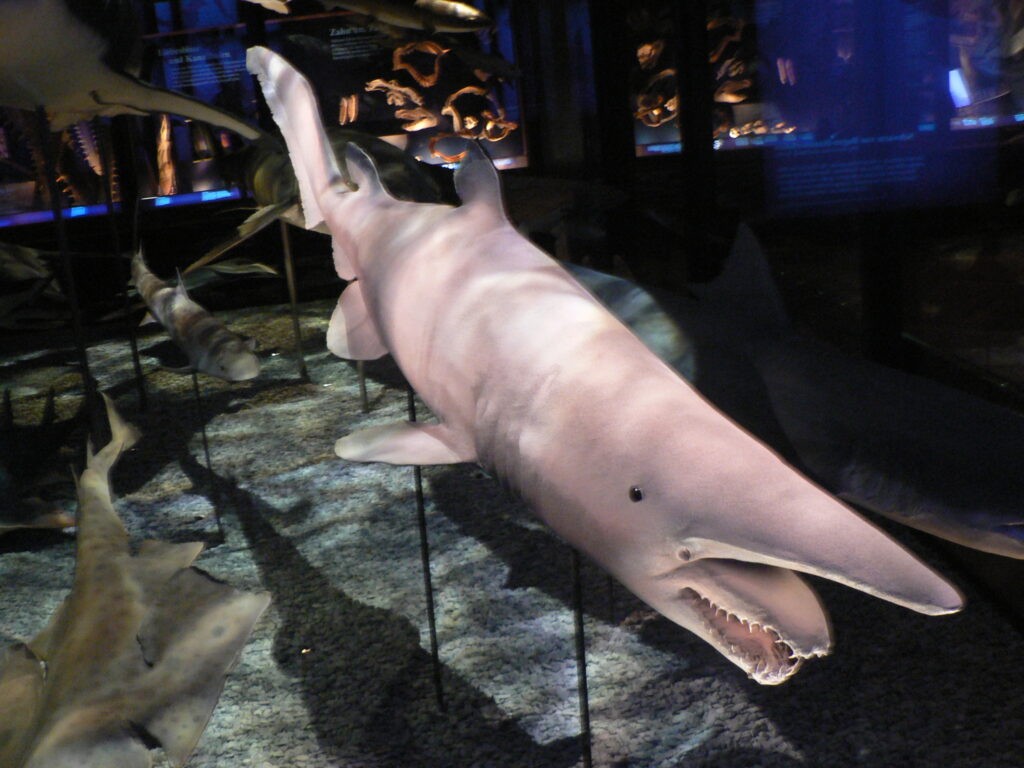
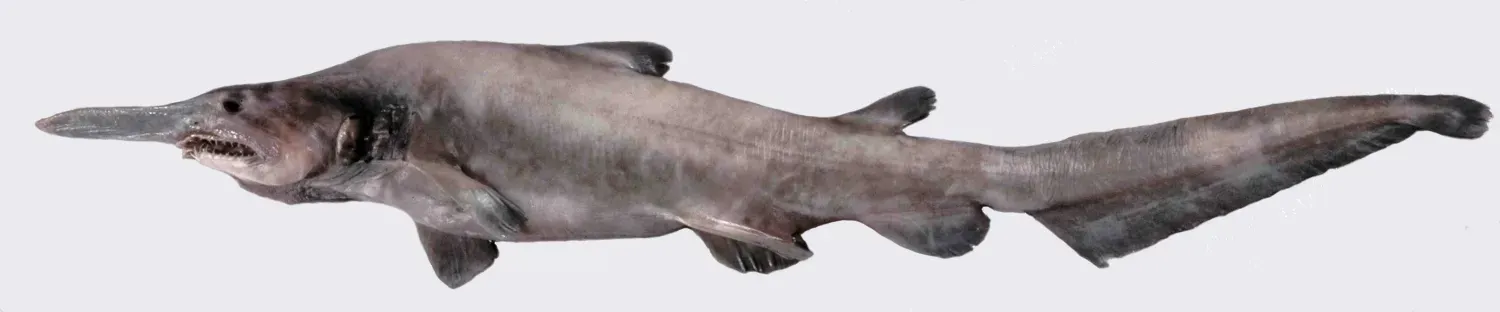
If you tried to sketch a nightmare from the deepest ocean trenches, you’d probably end up drawing something that looks a lot like a goblin shark. Long, flat snout. Needle teeth jutting out at odd angles. A jaw that literally shoots forward from its skull. It looks so unreal that when I first saw a photo, I honestly thought it was a movie prop.
And yet this creature is very real, very ancient, and somehow still a mystery in an age where we can map distant galaxies. It has survived mass extinctions, continental drift, and the rise and fall of entire ecosystems, while barely changing for more than a hundred million years. How does an animal like that live, hunt, and endure in places where almost nothing else survives – and why are scientists still struggling to fully understand it?
A Living Fossil That Refused to Modernize
The goblin shark is often called a living fossil, and for once that overused phrase actually fits. Fossil relatives of this strange shark date back roughly about one hundred twenty five million years, and when you compare ancient teeth to modern ones, the similarities are uncanny. It is as if the goblin shark found a design that worked early on and then simply never bothered to upgrade while the rest of the shark world experimented with new body plans and lifestyles.
Think about how much has changed on Earth in that time: dinosaurs ruling the land, then vanishing; entire oceans shifting; climates swinging from tropical warmth to icy extremes. Yet the goblin shark’s basic blueprint – elongated snout, flabby body, weird jaw mechanics – stayed essentially the same. In evolutionary terms, that is not laziness; that is ruthless efficiency. If your body lets you thrive in a niche nobody else wants, there is very little pressure to reinvent yourself.
Built for the Deep-Sea Ghost Town
The goblin shark lives in places that are more like ghost towns than bustling reefs. It tends to be found in deep waters, often hundreds to well over a thousand meters down, where sunlight disappears, pressure crushes most life, and food can be painfully scarce. Down there, the water is cold, the oxygen can be low, and most animals move slowly because they simply cannot afford to burn energy.
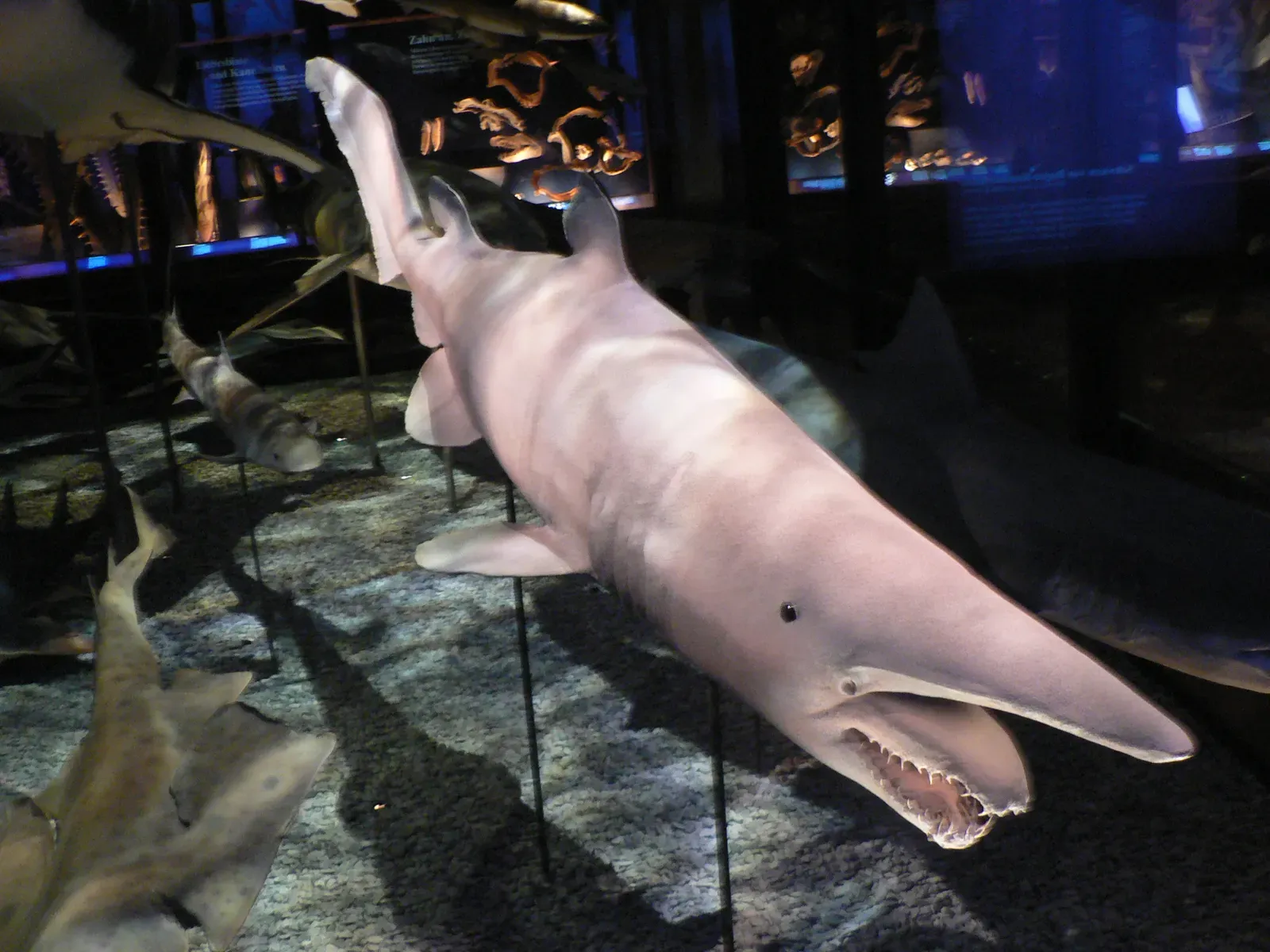
Its body reflects that lifestyle. The goblin shark is soft and somewhat flabby, with a long, loose-looking shape that screams slow, energy-efficient cruising rather than high-speed chase. Its pale, often pinkish skin and soft fins would be terrible for a reef sprinter like a mako shark, but perfect for a slow-motion ambush hunter drifting through dim, quiet water. It is not trying to win races; it is trying to survive in a place where just staying alive is already pushing the limits.
The Bizarre Jaw That Snaps Like a Trap
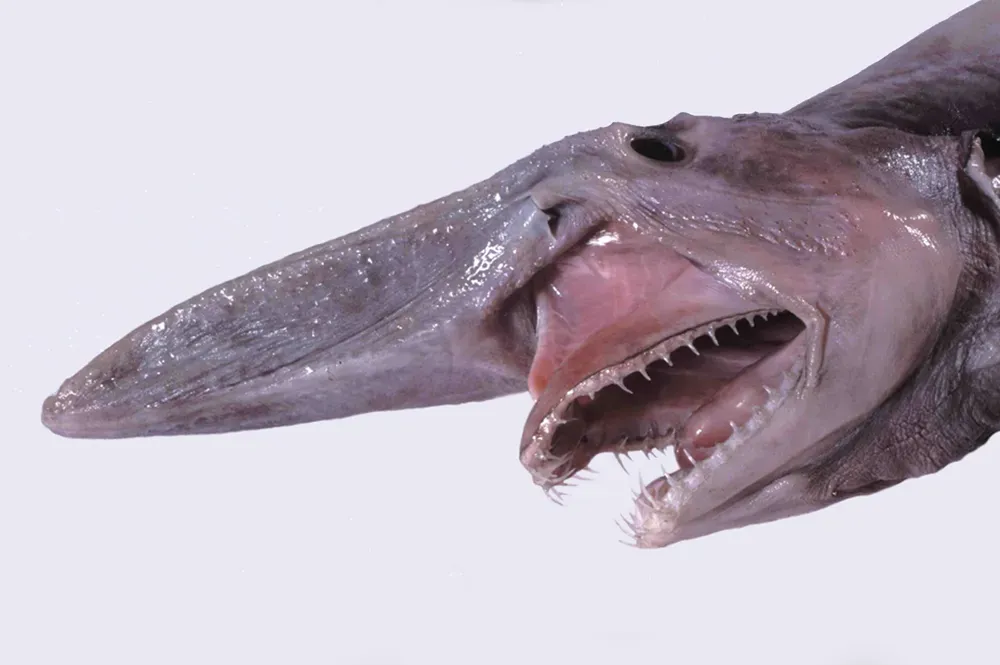
If there is one feature that makes people gasp when they see goblin shark footage, it is the jaw. Most sharks can nudge their jaws forward a bit to grab prey, but the goblin shark takes that idea and cranks it up to a shocking extreme. Its entire jaw apparatus can sling forward like a spring-loaded trap, snapping out from the skull and then retracting, all in a fraction of a second.
This weird mechanism is not a party trick; it is a deep-sea survival tool. In the dark, food can appear and vanish quickly, and the shark’s own movement is slow and lumbering. By weaponizing its jaw instead of its whole body, the goblin shark can hang almost motionless in the water, then suddenly fire its mouth forward to snatch small fish, squids, and crustaceans that drift too close. It is like carrying a high-speed grappling hook in a world where everything else is stuck in slow motion.
An Invisible Hunter With Electric Senses
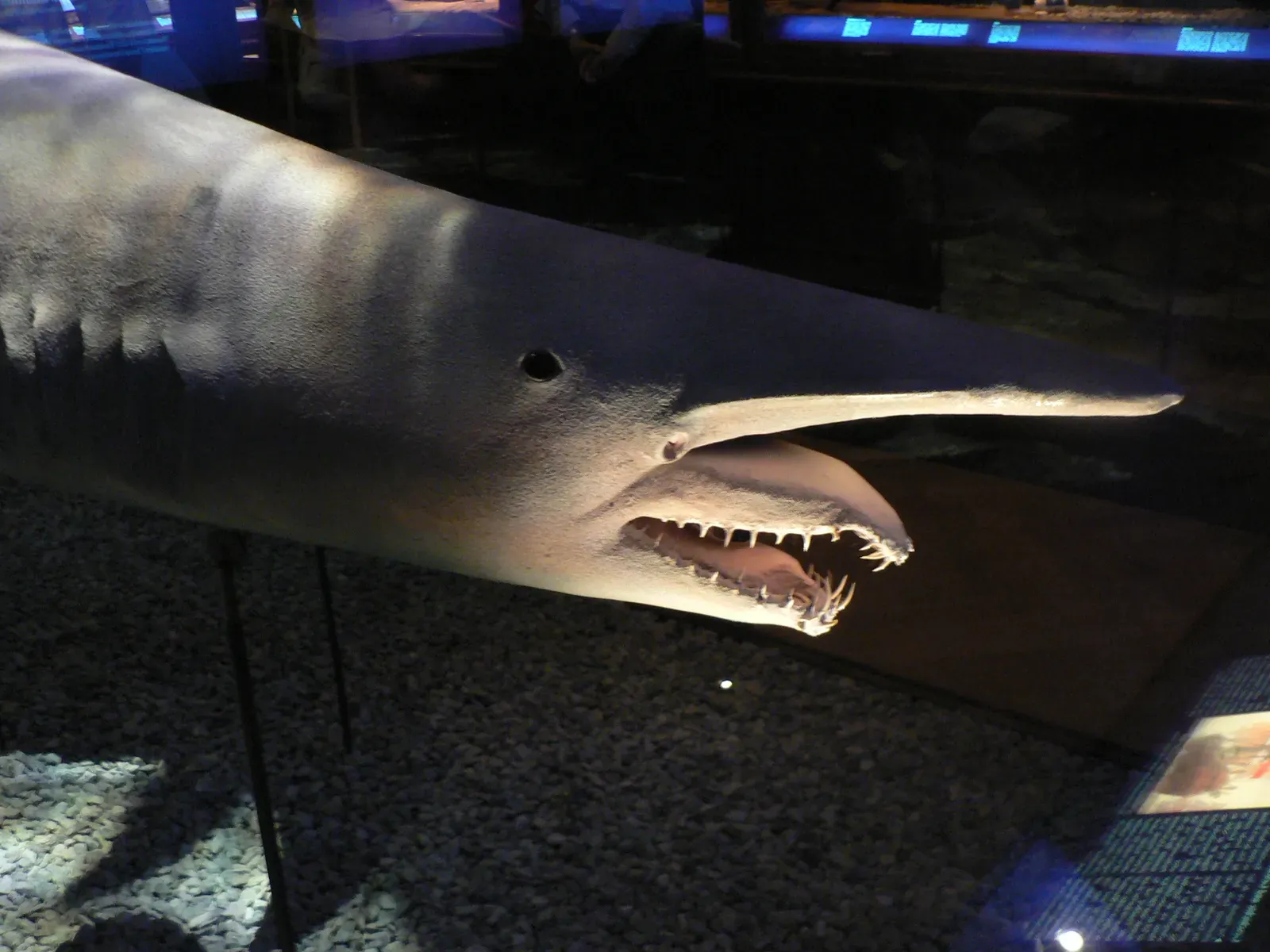
Hunting in the deep sea is a bit like trying to find your dinner in a pitch-black basement while wearing a blindfold. The goblin shark does not rely on sharp eyesight; instead, it leans on an extraordinary set of electroreceptors. That long, flattened snout is covered in tiny sensory organs that detect the faint electric fields produced by the muscles and nerves of other animals.
This sense allows the goblin shark to “feel” living things in the darkness, even when they are hidden in the gloom or buried in sediment. Paired with its slow, stealthy movement, this turns it into a sort of drifting mine that can lock onto invisible targets. To me, that is one of the most unsettling things about it: this shark turns the entire water around it into a sensory map, reading signals that we cannot even perceive without advanced instruments.
Rarely Seen, Poorly Sampled, Deeply Misunderstood
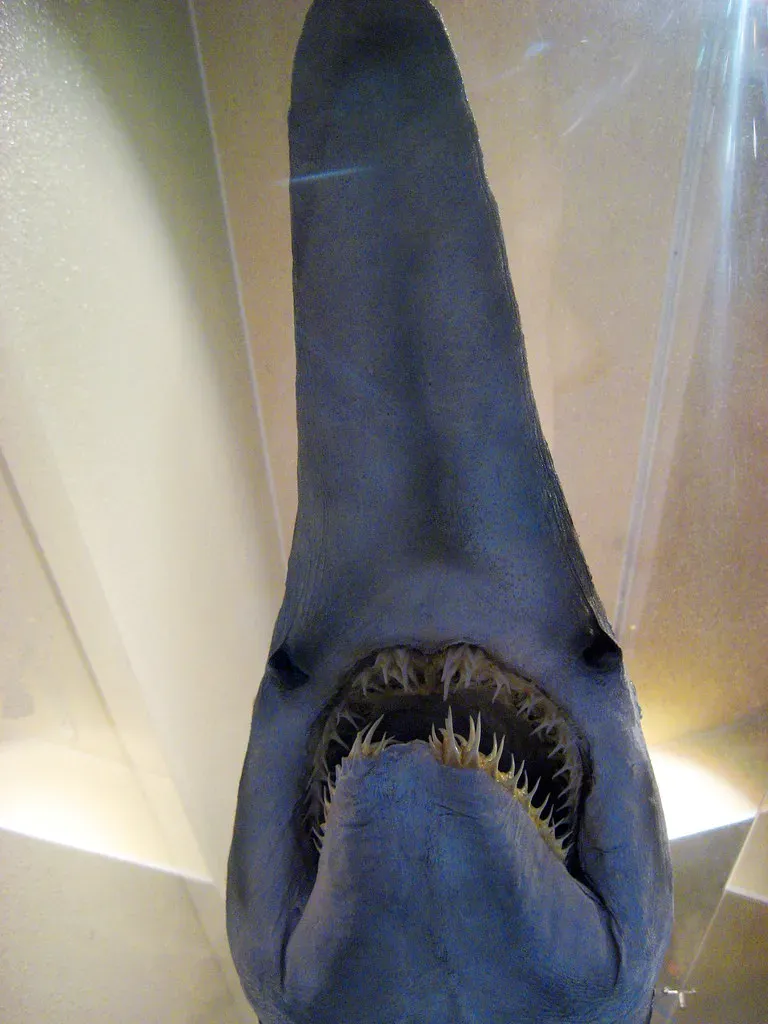
For an animal that has been around since early in the age of dinosaurs, we actually know surprisingly little about the goblin shark. It lives far beyond the reach of casual scuba divers, and most encounters come from deep-sea fishing bycatch or occasional submersible sightings. That means scientists are often working with a small number of specimens, many of them already stressed or dead by the time they can be studied.
We still do not have a clear picture of how many goblin sharks exist, how widely they are distributed at depth, how fast they grow, or how often they reproduce. Their behavior in natural conditions is largely a mystery because filming them in their true habitat is technically difficult and expensive. In a world flooded with high-definition wildlife documentaries, the goblin shark remains strangely underexposed, and that uncertainty should make us a bit uncomfortable when we assume we understand the ocean.
Ancient Survivor in a Rapidly Changing Ocean
Here is where things get complicated: the goblin shark has survived one hundred twenty five million years of natural change, but now it faces something different – fast, human-driven transformation of the oceans. Climate shifts, changing currents, deep-sea mining proposals, and expanding fishing activity all risk rewiring the world it depends on. The problem is that we barely know enough about its life to even predict how badly it might be affected.
In my view, that ignorance is not harmless; it is dangerous. When we do not understand a species but push into its habitat anyway, we gamble with a line of evolution that has endured since before humans existed. The goblin shark is a reminder that the deep sea is not empty; it is just unseen. Treating it like a blank slate for exploitation feels reckless, especially when creatures like this have quietly held their ground for longer than our entire civilization has been around.
Why This Strange Shark Should Change How We See Ourselves
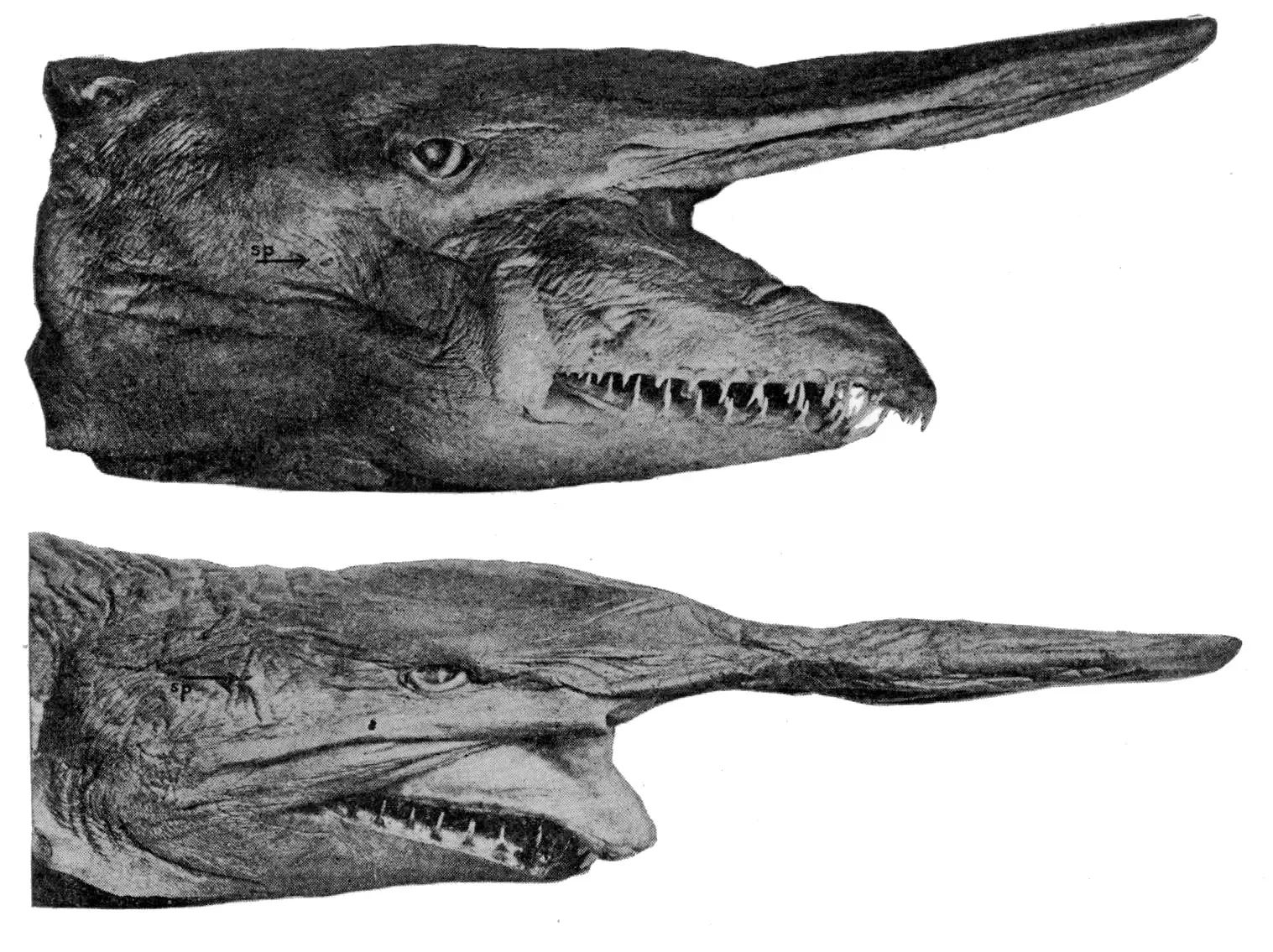
![Why This Strange Shark Should Change How We See Ourselves (Hussakof L. A new goblin shark, Scapanorhynchus jordani, from Japan. Bulletin of the AMNH 26, 257-262 [1], Public domain)](https://nvmwebsites-budwg5g9avh3epea.z03.azurefd.net/dinoworld/6191952907efac4f690e75ff3f3785dd.webp)
To me, the goblin shark is more than a creepy face from a viral photo; it is a mirror that makes our own timeline look laughably short. While we rush through trends, technologies, and social shifts, this animal has been refining the same basic survival strategy for ages beyond our imagination. It did not need to become sleek or glamorous or fast; it survived by fitting perfectly into a harsh, overlooked corner of the planet.
That is why I think we should treat the goblin shark not as a monster, but as a quiet master of endurance that deserves respect and protection. Its long, bizarre history shows that life can thrive in places we barely acknowledge, following rules we are only beginning to understand. If we are willing to leave space for such ancient strangeness to continue, maybe that says something hopeful about our future too. After all, in a world obsessed with constant change, is there anything more radical than a creature that has almost never needed to?