
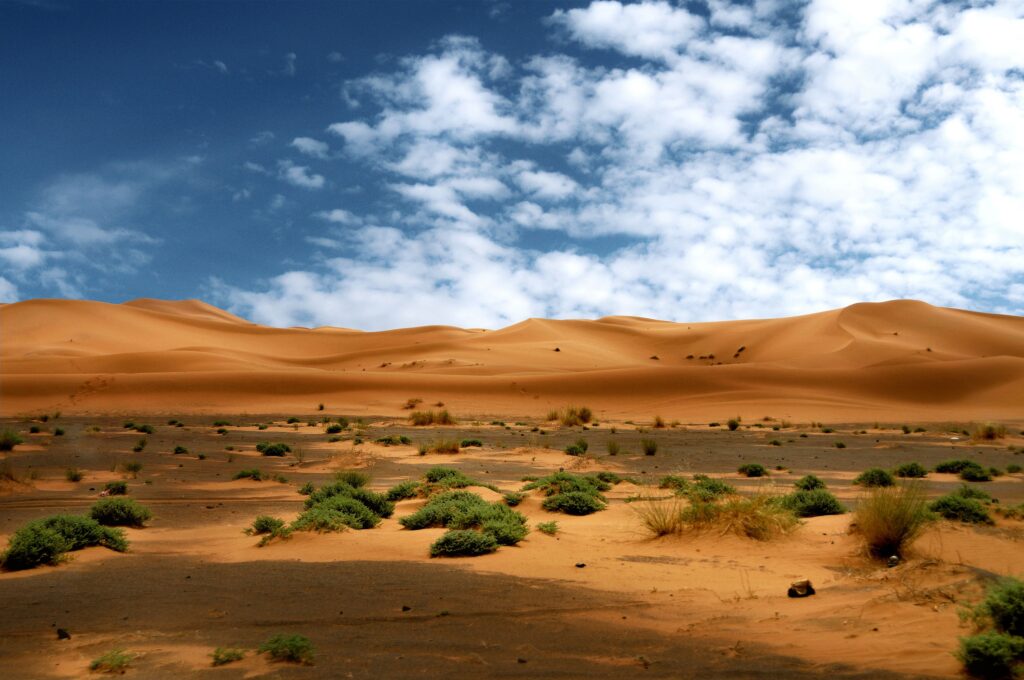
Imagine walking across what looks like a dead, empty desert and realizing you’re standing on top of a lost world. Beneath the dunes and cracked mud of the Sahara, archaeologists uncovered a prehistoric cemetery packed with hundreds of burials from a culture so thoroughly erased by time that, until the discovery, it might as well have never existed. No villages on the surface, no ruins on satellite images, no local legends pointing the way – just silence, and then suddenly, an entire community frozen in the ground.
This graveyard forces us to rethink what the Sahara once was, and who lived there. These people hunted hippos and crocodiles where today you’d struggle to find a blade of grass. Their jewelry, tools, and funeral rituals hint at a rich, complex life in a landscape we usually imagine as nothing but sand and heat. The more you look at this burial ground, the stranger and more familiar it seems – like discovering an ancient neighborhood where the faces are gone, but the stories still whisper from the bones.
A drowned world beneath the dunes
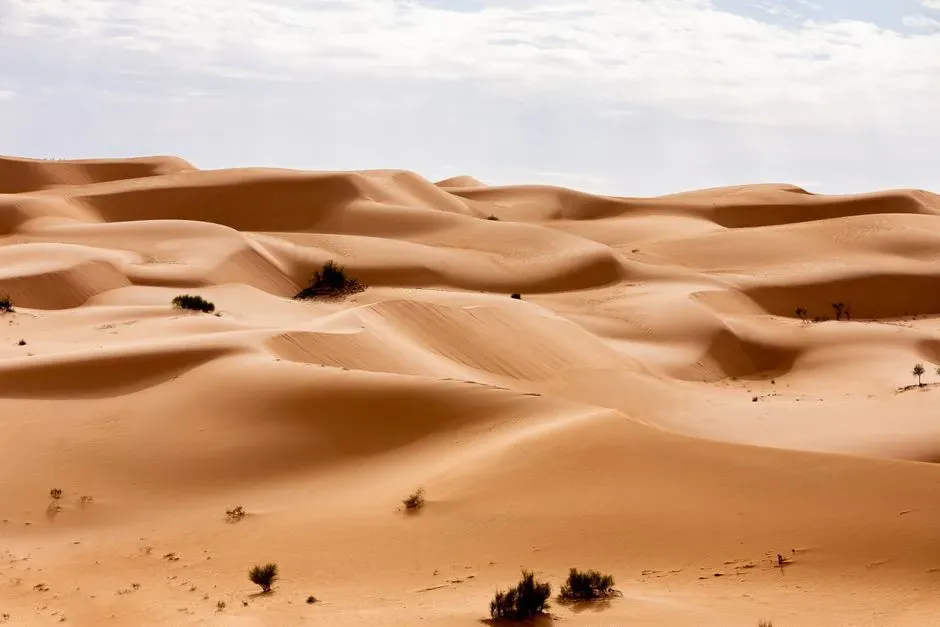
It is almost shocking to realize that the Sahara, the world’s largest hot desert today, was once home to lakes, wetlands, and grassy plains teeming with wildlife. During a period often called the Green Sahara or African Humid Period, monsoon rains pushed far north, turning what is now barren into a patchwork of rivers and shallow lakes. In that wetter world, hippos, crocodiles, fish, antelope, and even giraffes thrived, and humans followed them into what would eventually become one of the harshest places on Earth.
The prehistoric graveyard sits on the shores of one of these long-vanished lakes. From the evidence, it was a place where people could drink, fish, and hunt large animals in a rich wetland ecosystem, rather than scrape by in a desert. When the climate shifted back toward dryness and the monsoons retreated, the lake shrank, the plants vanished, and the entire landscape slowly turned into the sand sea we know today. The cemetery remained, sealed by windblown sediment as if the Earth itself decided to archive a lost chapter of human history.
Hundreds of burials from a vanished community
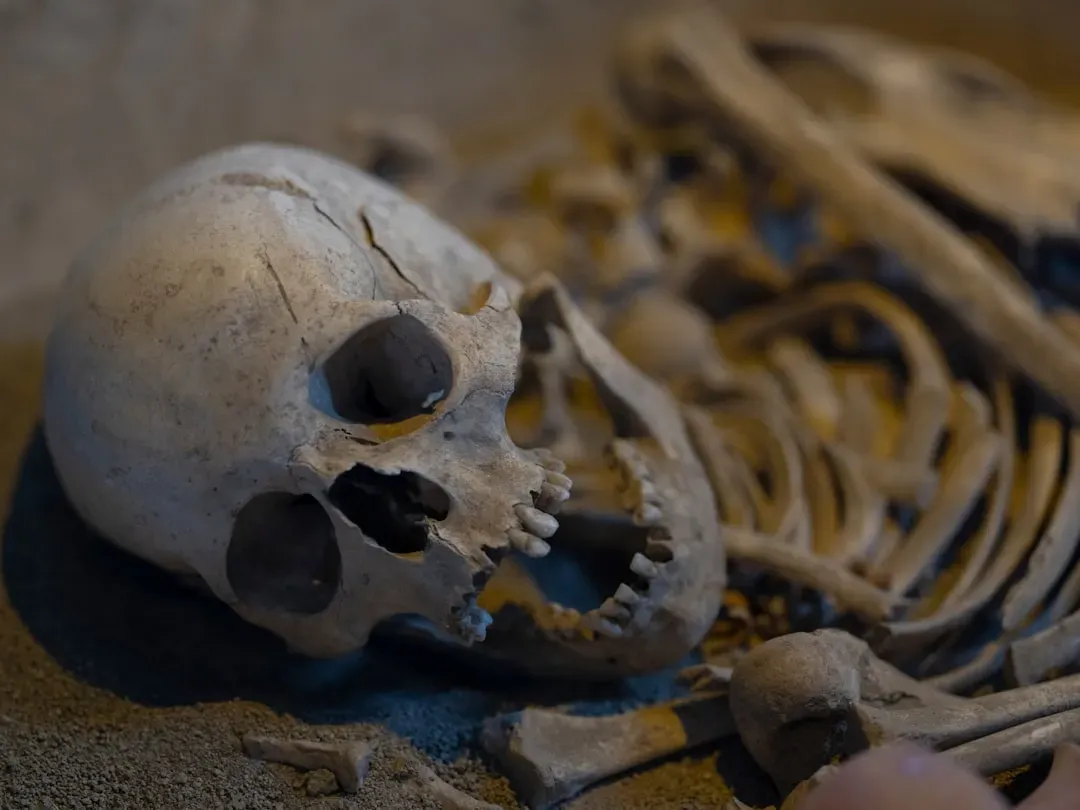
The graveyard contains the remains of hundreds of individuals, ranging from infants to the elderly, indicating a long-lived community that buried its dead in the same place over many generations. Archaeologists found carefully arranged skeletons, not just scattered bones, which shows these people had clear ideas about how to treat their dead. The sheer number of burials suggests this was not a temporary camp; it was a place of deep emotional and cultural importance, visited again and again as decades, maybe centuries, passed.
What makes this site especially striking is that, beyond this cemetery, there were essentially no known traces of the same culture in the region. No obvious settlements, no monumental architecture, no written records – nothing that would have warned researchers that an entire community once thrived here. It is as if we skipped straight from “no evidence anyone lived here” to “here is a full cross-section of their lives and deaths.” That kind of sudden visibility is rare in archaeology and a reminder of how much prehistory still lies hidden under our feet.
Grave goods, tools, and the hints of a daily life
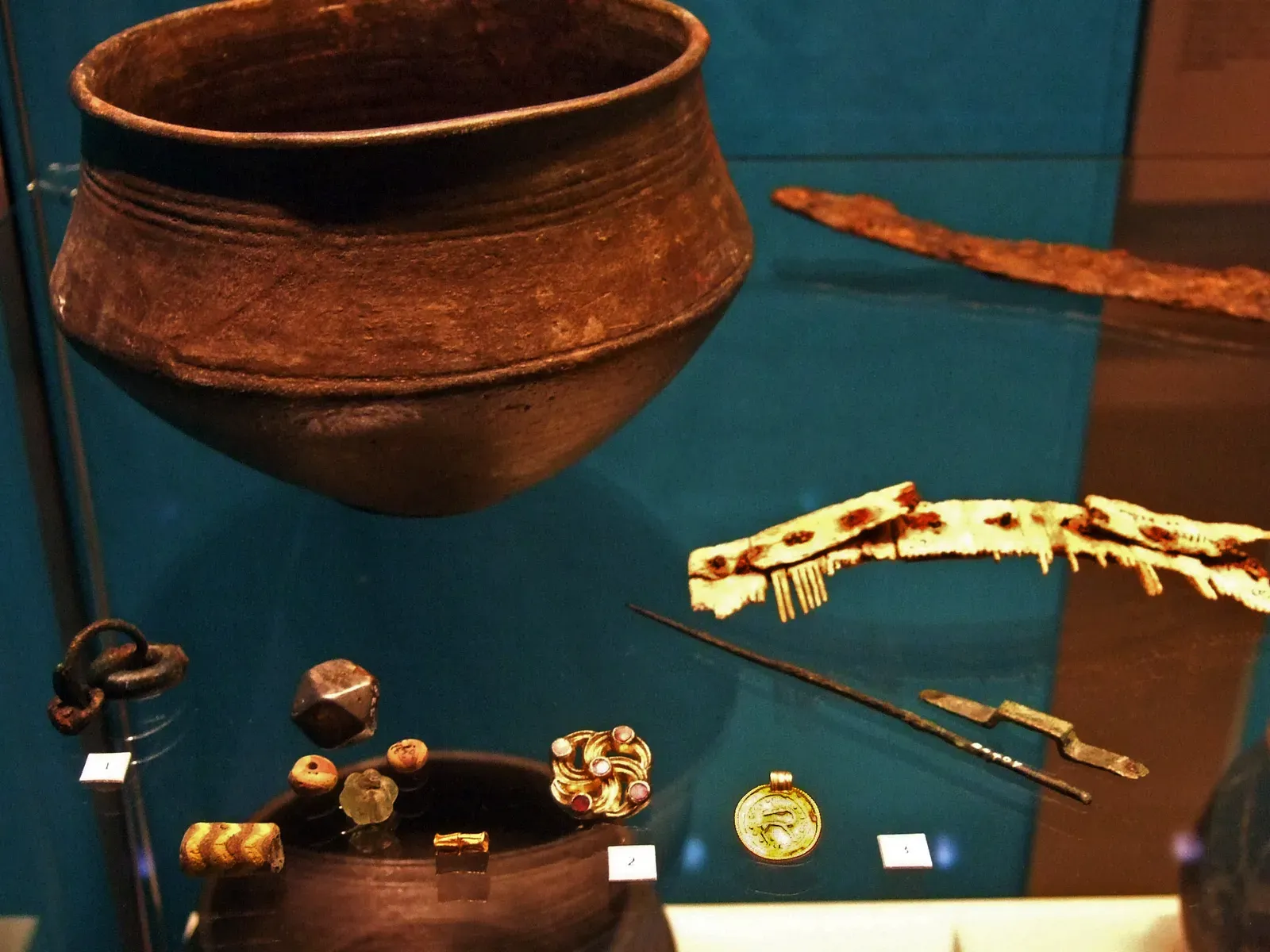
Despite the lack of buildings or obvious ruins on the surface, the burials themselves are far from bare. Many graves include grave goods: stone tools, bone points, ornaments, and other personal objects that people clearly cared about. Tiny beads, carved from shells or stones, show that these individuals invested time in personal adornment, even in a challenging environment. That attention to jewelry and decoration tells us they did not just live to survive; they cared about identity, beauty, and probably social status.
The tools found with the dead suggest a mix of hunting, fishing, and gathering, fitting with the lakeside setting. Projectile points, blades, and other sharp-edged tools point to organized hunting of large game, while fish remains and specialized implements hint at regular exploitation of the water’s resources. Taken together, the objects buried with people form a quiet inventory of daily life: not a list written in ink, but a pattern of choices that says, this is what we used, this is what mattered, and this is how we wanted to be remembered.
Families in the sand: emotional stories written in bone
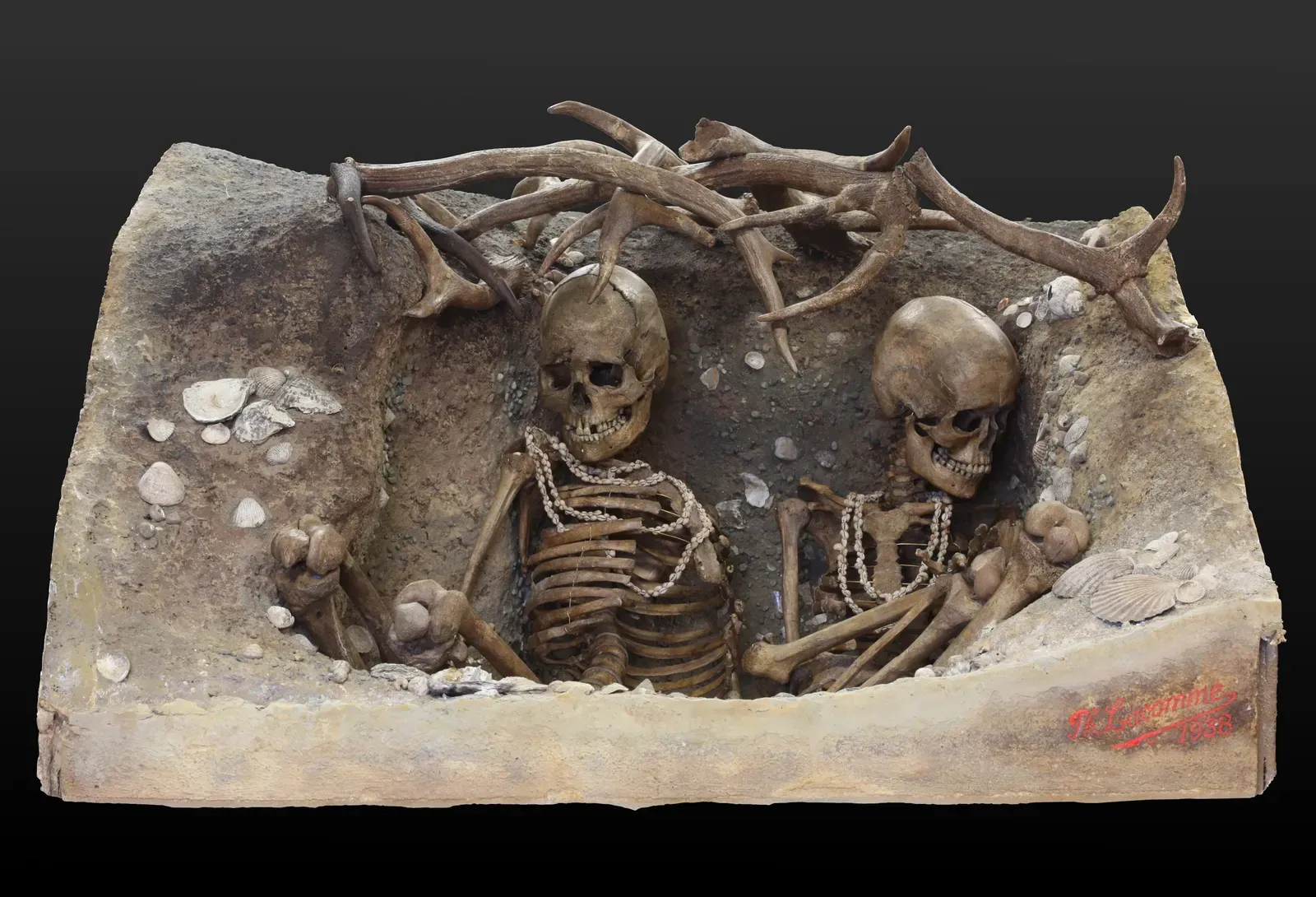
One of the most moving aspects of this prehistoric cemetery is how clearly it reveals relationships and care. Some burials show adults and children interred together in ways that strongly suggest family ties. In a few cases, skeletons appear to have been arranged with striking tenderness, like an adult with a child cradled near them, as if death could not break the bond between them. These scenes are thousands of years old, yet they feel heartbreakingly familiar to anyone who has ever grieved for a loved one.
Archaeologists studying the bones can sometimes infer injuries, illnesses, and nutritional stress, as well as signs of survival after trauma. When you see healed fractures or evidence that a person lived for a while with a serious condition, it points to a community that took care of its members. In that sense, the graveyard is not just a field of skeletons; it is a record of love, responsibility, and social structure. For me, this is the part that hits hardest: no matter how alien their world seems, the emotional landscape was not so different from ours.
Two cultures layered in time on the same lakeshore
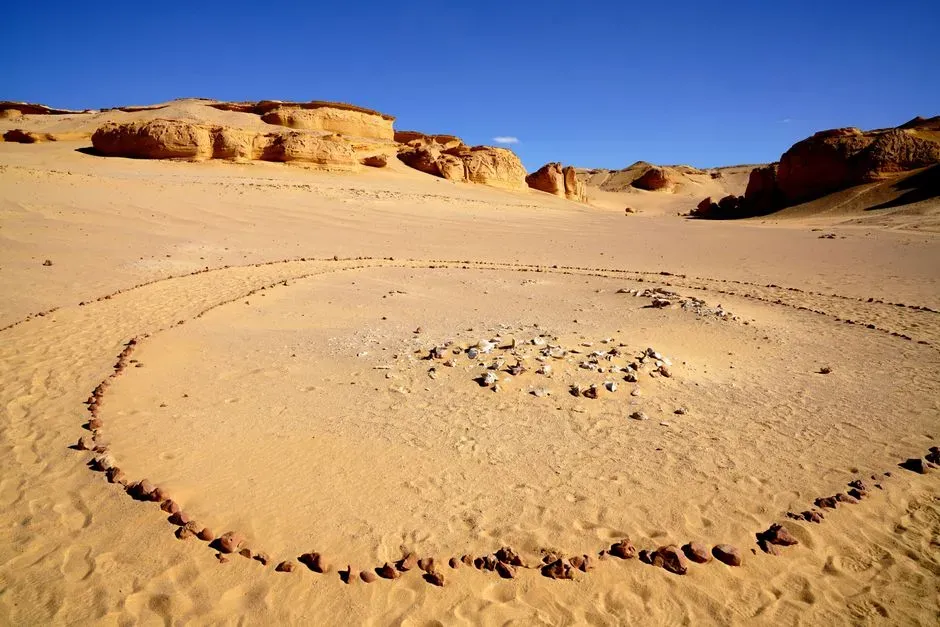
Careful study of the burial styles, artifacts, and even the physical traits of the skeletons suggests that more than one cultural group used this cemetery over time. In some prehistoric Saharan graveyards, archaeologists have identified distinct phases: an earlier group with one style of tools and ornaments, and a later group with different weapons, jewelry, and even patterns of burial. These phases can be separated by many centuries, yet share the same lakeshore, almost like two different villages reusing the same ancient cemetery.
One group may have been hunter-fishers drawn to the lush wetlands when the Sahara was at its greenest, while a later group, arriving after the climate shifted somewhat, appears to have relied more on land-based hunting and perhaps early plant use. The fact that the same place held such layered histories shows just how important certain spots can be across deep time. People came back to the same water, the same good hunting, perhaps the same sacred ground, long after the original community had vanished without leaving visible traces behind.
A climate story written in skeletons and sediments
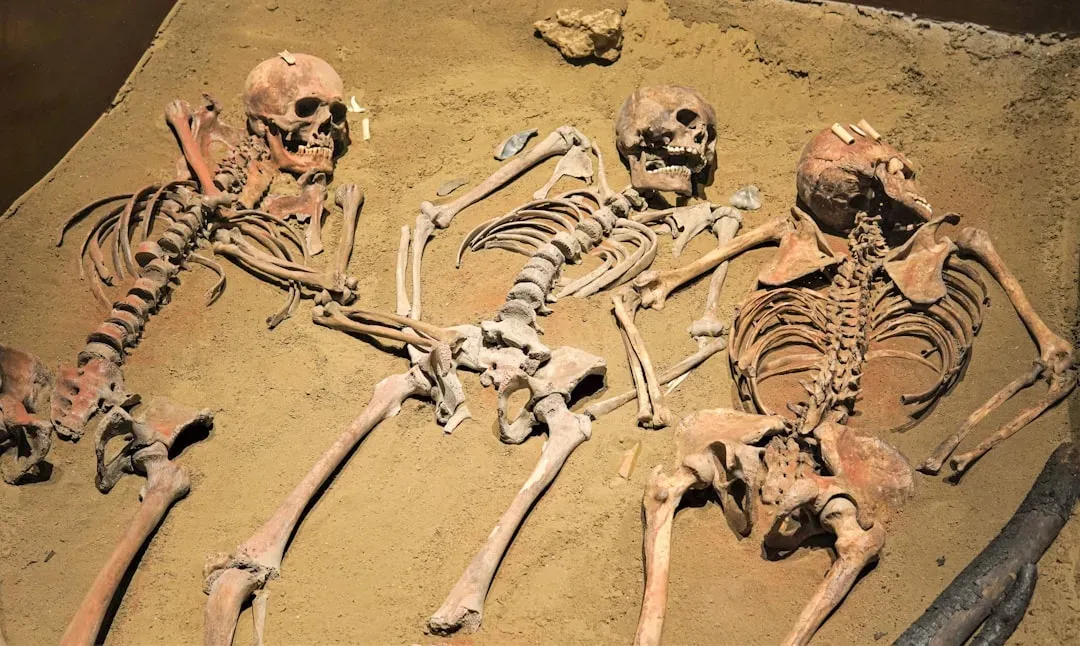
This cemetery is not only about people; it is also an archive of climate change on a timescale far longer than anything recorded by human memory. Layers of lake mud, plant remains, and animal bones around the burials document changes in rainfall and water levels over thousands of years. By comparing the ages of the human remains with shifts in the surrounding environment, scientists can see when the lake was full, when it began to shrink, and when conditions became too harsh for long-term settlement.
The gradual disappearance of aquatic animals and the rise of more drought-tolerant species in the surrounding layers paint a stark picture of a world drying out. Human presence also shifts in response – patterns in diet, tool styles, and even the health of the skeletons may reflect increasing stress as resources became scarce. In that sense, this vanished community becomes a case study in how people respond to slow, relentless environmental change. The uncomfortable truth is that their story – forced adaptation, migration, or eventual disappearance – echoes questions we are asking about our own future today.
Why this discovery changes how we see the Sahara
For a long time, many people pictured prehistoric life in Africa as centered on a few famous regions: the Nile Valley, parts of East Africa, or coastal zones. A massive cemetery in the heart of what is now the Sahara challenges that narrow view. It shows that even landscapes we consider empty or peripheral today were once vibrant hubs of human activity. These people were not outliers scraping by on the margins; they were part of a dynamic, continent-wide story of movement, innovation, and adaptation.
To me, the most radical implication is this: if a whole community could vanish so thoroughly that only a buried graveyard remains, how many other cultures have disappeared without leaving anything at all we can recognize? The Sahara alone spans a vast area, much of it still lightly explored archaeologically. Every new site like this one reminds us that our map of the human past is patchy, biased toward the visible and the monumental. The true history is likely far more diverse, more experimental, and more surprising than the straightforward timelines in textbooks suggest.
Conclusion: a vanished people with a very modern message
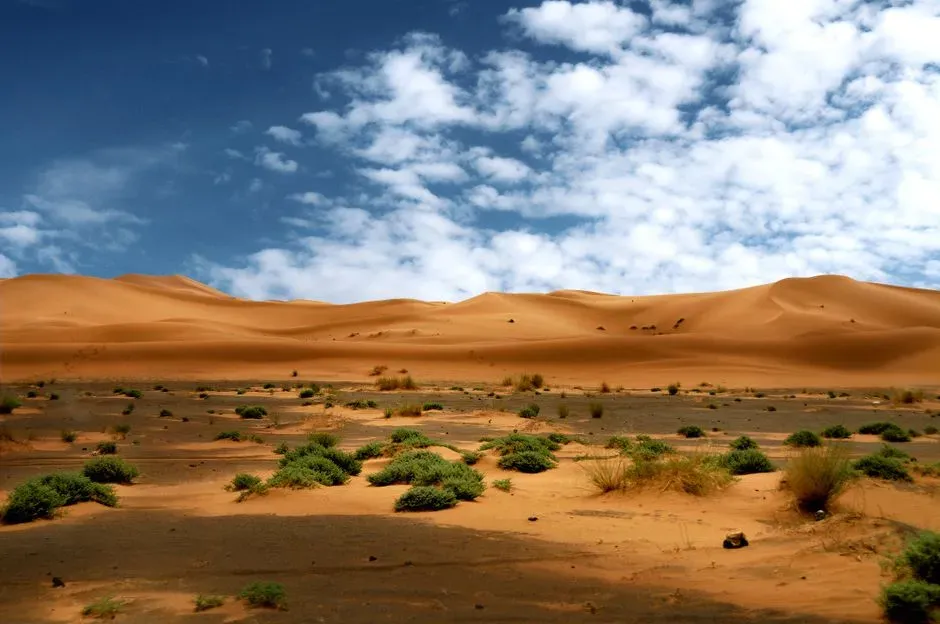
Standing back from this prehistoric graveyard, I can’t help seeing it as both a memorial and a warning. On one level, it is a haunting testament to a culture that lived, loved, raised children, crafted tools, and buried its dead with care, only to be erased so completely that the desert almost swallowed them forever. On another level, it is a mirror, reflecting themes that feel uncomfortably current: dependence on an unstable climate, the fragility of communities, and the way whole ways of life can vanish when environmental thresholds are crossed.
My opinion is that the most important lesson here is not about exotic ancient rituals or mysterious lost peoples; it is about humility. If a thriving community on a lush Saharan lakeshore can become invisible for thousands of years, then our own sense of permanence is probably an illusion. We like to think our cities and cultures are too big to disappear, but in the long sweep of time, we might be just another layer in the sediment. The graves in the desert are a quiet reminder to pay attention – to the climate, to the stories we tell, and to the traces we leave behind. When some future archaeologist digs through what used to be our world, what will they find, and what will they think we vanished for?