
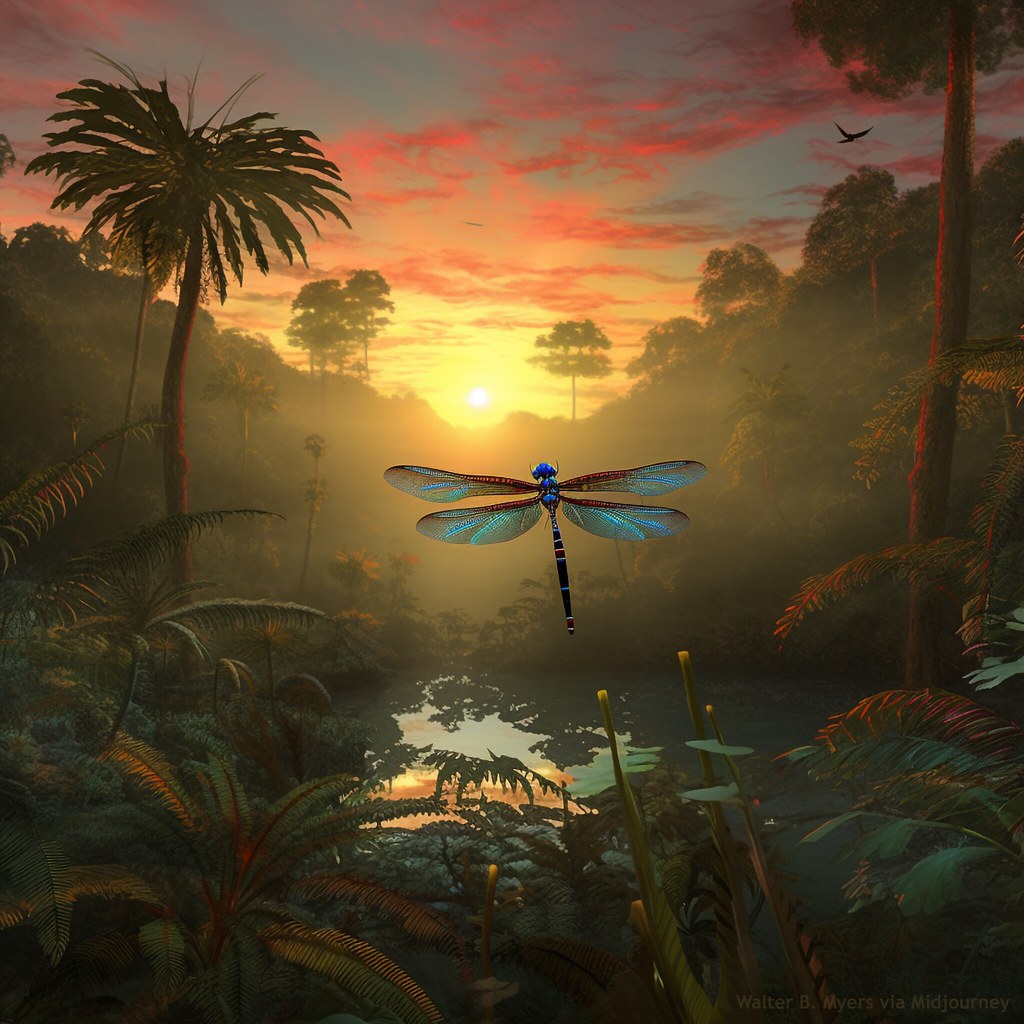
Imagine walking through a forest and hearing wingbeats above you, then looking up and realizing it’s not a bird casting that shadow, but a dragonfly with a two-foot wingspan. That sounds like fantasy, but scenes like that were real during parts of the Paleozoic era, when giant insects ruled the skies and swamps. The obvious question is: what on Earth made bugs so big back then, and why did those conditions vanish?
To answer that, we have to dive into deep time, into a world where the air itself was radically different from what you’re breathing right now. This is a story about oxygen, coal swamps, wild climate swings, and the limits of insect biology. It is also a reminder that Earth’s atmosphere is not some fixed backdrop, but a restless, shifting system – and when it moves, life has to move with it or disappear.
A world supercharged with oxygen: how high did it really get?
Today, oxygen makes up about one fifth of the air. During the late Carboniferous and early Permian periods, roughly three hundred million years ago, many studies suggest atmospheric oxygen climbed to levels far above that, possibly up to around one third of the atmosphere in some models. That is not a subtle tweak; that is like turning the oxygen knob on Earth’s life support system way past what we experience now.
The idea of sky-high ancient oxygen is not just wild speculation. Geologists and geochemists pull this story out of rocks and fossils: from the chemistry of ancient soils, the carbon trapped in coal beds, and the tiny air bubbles preserved in minerals. Different models give slightly different numbers, and there’s still healthy scientific debate about the exact peaks, but the broad picture is solid – there were long stretches of time when Earth was literally more oxygen-rich than the modern world by a huge margin.
Why more oxygen can mean bigger insects (and why it doesn’t work the same for us)
Insects breathe in a way that almost feels alien. They don’t have lungs like we do; instead, they rely on a network of tiny tubes called tracheae that bring oxygen directly from openings in their exoskeleton to their tissues. This system works beautifully for small bodies, but it hits serious limits as size increases because diffusion – the passive movement of oxygen through those tubes – eventually cannot keep up with the demands of bigger, thicker bodies.
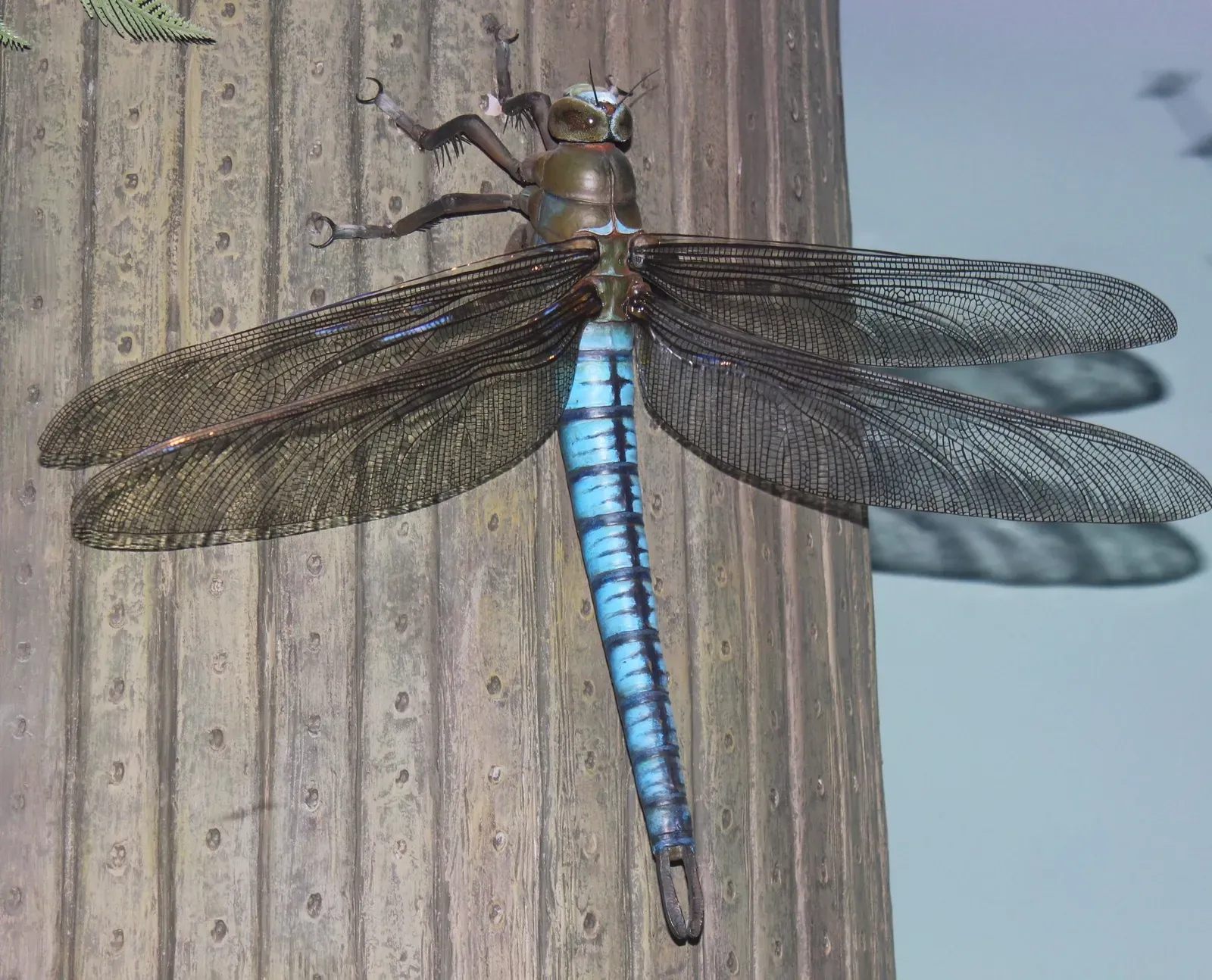
Boost the oxygen in the air, though, and those diffusion limits stretch. In a high‑oxygen world, more oxygen can seep in through the same system, letting insects grow larger before they run into respiratory roadblocks. That’s the main reason you get monsters like Meganeura, a dragonfly‑like insect with wings as wide as a golden eagle’s, in the fossil record during times of elevated oxygen. Humans, by contrast, are constrained by different anatomical and developmental rules, so high ancient oxygen didn’t turn our ancestors into giants – it mostly turned the bugs up to max.
Swamp forests, buried carbon, and the engine that pumped up ancient oxygen
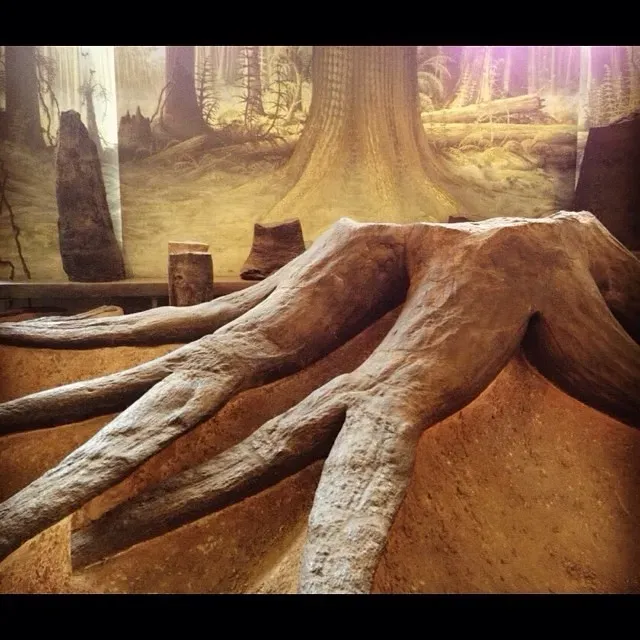
So what actually cranked oxygen to those extreme levels? A big part of the answer lies in the vast, steamy coal swamps that covered equatorial regions during the Carboniferous. These were dense forests of giant clubmosses, horsetails, and ferns growing in waterlogged, low‑lying areas. Plants, as you know, use photosynthesis to take in carbon dioxide and release oxygen, and with so many of them packed together, the oxygen-production side of the equation was on overdrive.
Here’s the trick, though: oxygen only really builds up in the atmosphere when dead plant material gets buried and locked away rather than fully decomposing. Those ancient swamps tended to be anoxic – low in oxygen – at the bottom, so fallen trees and leaves often escaped complete decay and instead piled up as thick layers of peat. Over millions of years, that peat was compressed into coal. Each coal seam you see in a mine today is basically a fossil receipt for oxygen: carbon taken out of the short‑term cycle and stored, with its corresponding oxygen left free in the air.
The age of giant insects: what we actually know from the fossils
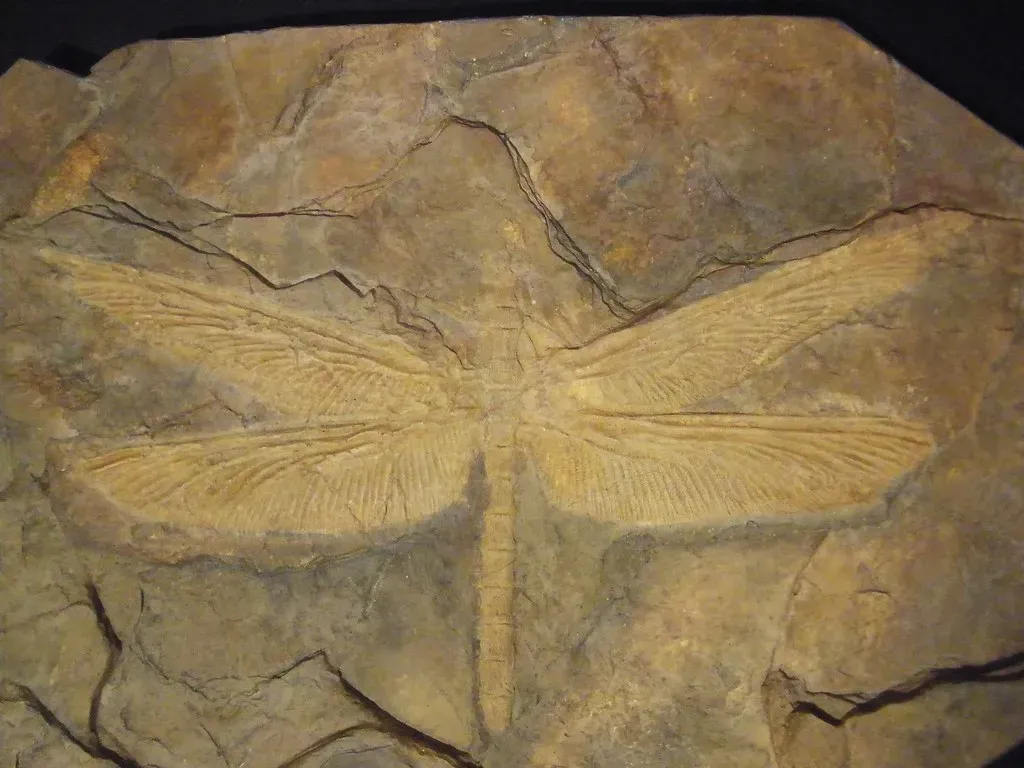
The fossil record from these high‑oxygen intervals is full of arthropod overachievers. Besides the famous giant dragonflies, there were enormous millipede‑like creatures such as Arthropleura, which may have reached lengths that would make a medium‑sized dog look small. Many terrestrial arthropods in these ecosystems pushed far beyond the size range we see today, especially those living in forests and swampy lowlands where moisture and vegetation were abundant.
That said, it’s important not to romanticize the past as some uniform age of colossal bugs. Not every insect was enormous, and size varied between groups and regions. Scientists also argue about how tightly insect size tracks oxygen levels, because other factors – like predation, ecological competition, and body design – clearly mattered. Still, when you zoom out, there is a strong general pattern: during times of elevated oxygen, the upper limit of insect size stretched into ranges that look almost absurd to modern eyes.
When the oxygen bubble burst: shifting climates and collapsing coal swamps

The conditions that produced those oxygen‑pumping coal swamps were not permanent. Over time, Earth’s climate and continents shifted. The supercontinent Pangaea was assembling, sea levels changed, and the moist tropical belts where the great swamp forests thrived started to fragment or dry out. As these habitats shrank or transformed, so did the vast plant communities that had been pulling carbon dioxide out of the air and locking it underground.
Once less plant material was being buried as coal, the oxygen “bonus” started to fade. Decomposition caught up, reuniting oxygen with carbon in the form of carbon dioxide instead of leaving it free in the atmosphere. Geological and geochemical evidence suggests that atmospheric oxygen gradually dropped from those extraordinary highs toward values much closer to what we live with now. As the oxygen bubble slowly deflated, the world became less friendly to oversized insects that depended on that rich atmospheric mix to function.
Why giant insects disappeared: more than just the air getting thinner
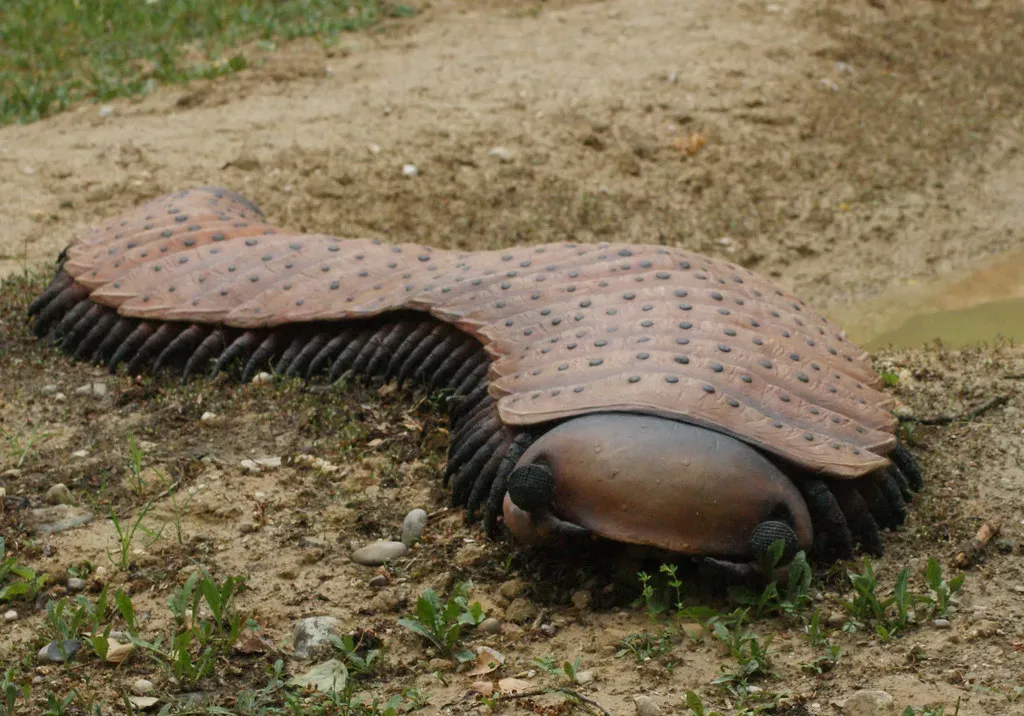
It’s tempting to say the story is simple: oxygen fell, insects shrank, the end. Reality is messier. Yes, lower oxygen would have squeezed the respiratory system of large insects, making it harder for them to supply their tissues with enough oxygen to fly, hunt, or escape predators. But researchers also point to other pressures, like the rise of vertebrate aerial predators – early reptiles and later birds – that could have made life tougher for large, slow‑maneuvering insect giants.
On top of that, ecosystems were reorganizing in response to changing climates and continental positions, which meant food webs, habitats, and competition patterns were all in flux. In this shifting context, huge body size went from advantage to liability. Smaller insects, which require less oxygen and can reproduce quickly, were better suited to the new atmospheric and ecological reality. Over time, natural selection steadily favored those more modest forms, until giant dragonflies and room‑length millipedes were no longer part of the living landscape, just echoes in stone.
Modern experiments give this story a fascinating twist. When scientists rear some insect species in artificially oxygen‑rich chambers, the adults often grow slightly larger than normal, hinting that the basic oxygen‑size link is still there in principle. But the size changes are nowhere near the leap from modern dragonflies to eagle‑sized Carboniferous ones. That gap tells us something important: high oxygen may open the door to animal gigantism, but evolution and ecological context decide how far species actually walk through it.
The end result today is a world where insects are still incredibly successful – by sheer numbers and diversity, they are arguably the dominant animals on land – but they no longer reach the extravagant extremes of their Paleozoic relatives. Our atmosphere has settled into a range where giant insects are biologically constrained, and where the balance of predators, prey, and plants locks in different evolutionary trade‑offs. You might be grateful for that next time you swat a mosquito and imagine it scaled up to seagull size.
What this ancient oxygen roller coaster says about our future
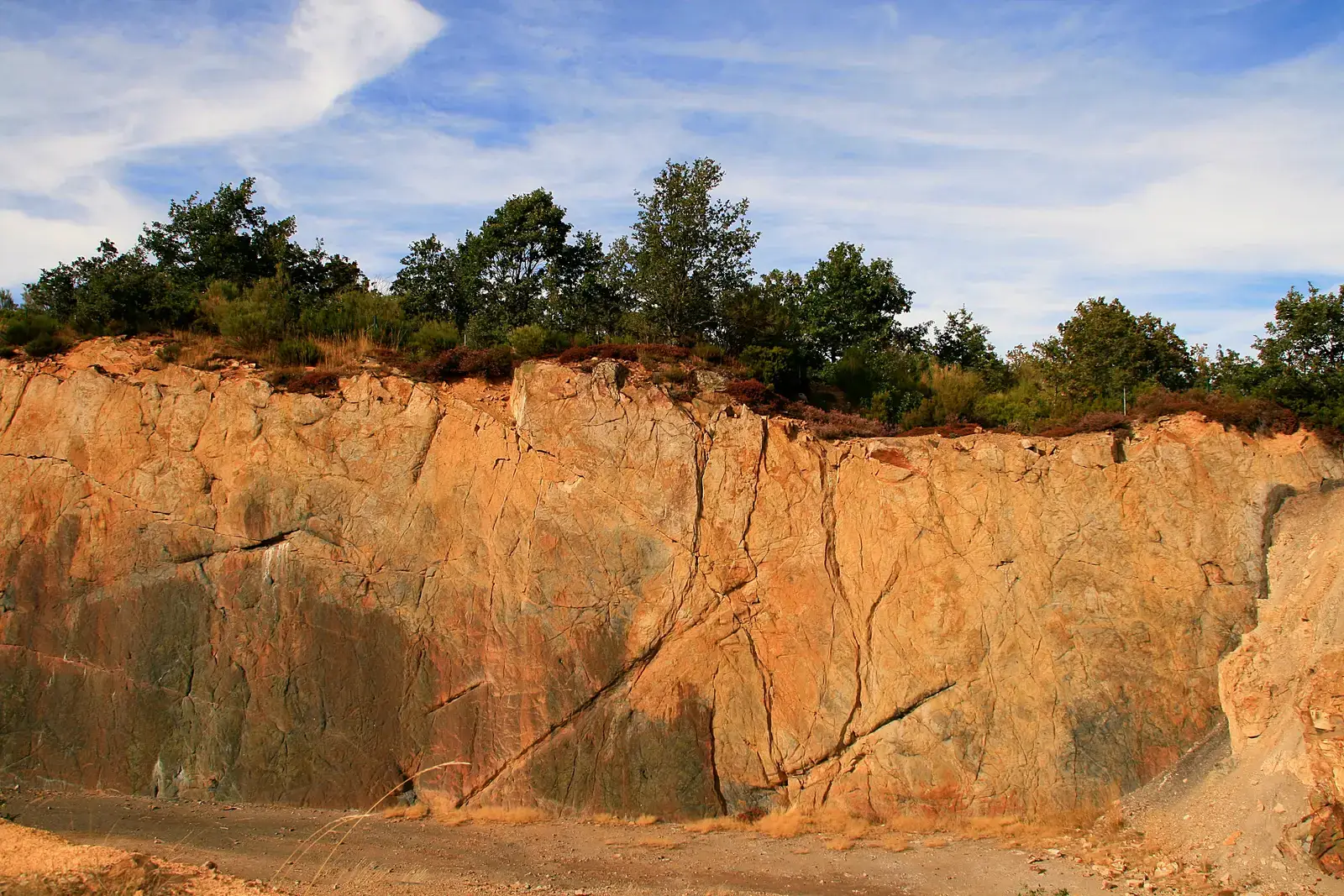
Looking back at these wild swings in ancient oxygen is not just about gawking at prehistoric monsters; it is also a humbling lesson in how tightly life is coupled to the chemistry of the air. The massive oxygen highs of the Carboniferous came from incredibly long‑term processes – millions of years of burial, forest growth, and slow geological cycling. We are now, in a geological instant, burning a huge chunk of that stored carbon and pushing the system in the opposite direction by piling carbon dioxide back into the atmosphere.
Now, to be clear, we are not about to trigger a fresh wave of giant insects by tinkering with the climate. The changes we are driving are much faster and move oxygen in more subtle ways while dramatically altering temperature, acidity, and weather patterns. Still, the deeper message is the same: the atmosphere is fragile on human timescales but flexible on geological ones, and when it shifts, the rules of life shift with it. Ignoring that history because it feels distant is like ignoring the warning lights on a car because they turned on during a previous trip.
Conclusion: a vanished world of giant bugs – and why I’m oddly glad it’s gone
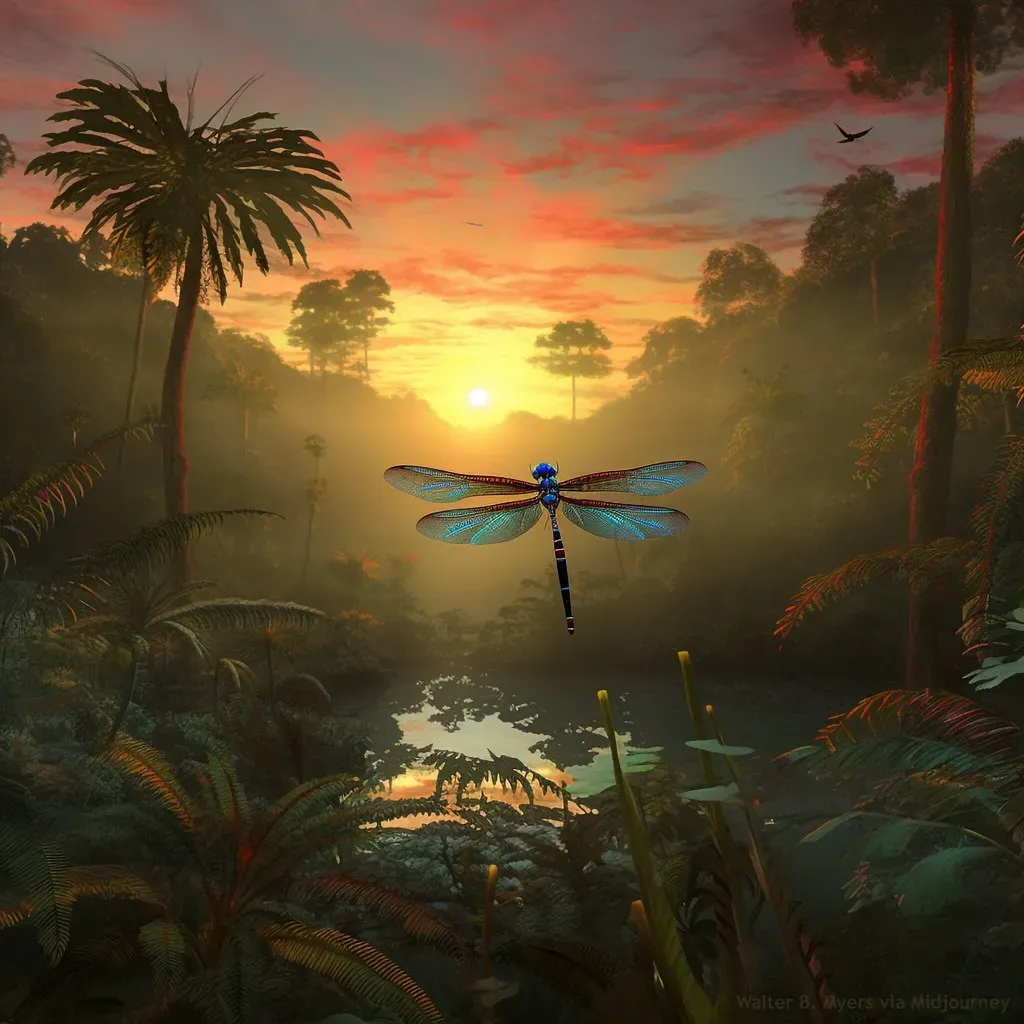
For me, the story of prehistoric oxygen and giant insects lands somewhere between awe and relief. Awe, because it reveals just how strange Earth can be: a time when a single breath contained so much more oxygen that it rewrote the upper limits of what a bug could be. Relief, because as cool as it sounds on paper, I honestly do not want to hike through a forest where the buzzing overhead comes from something as wide as an eagle circling for a landing.
In the end, those titanic insects were not freak accidents; they were perfectly logical responses to a planet tuned to different settings. When coal swamps faded, oxygen fell, and new predators emerged, the same evolutionary logic trimmed them back down again. That rise‑and‑fall should make us respect how delicately life is wired into atmospheric chemistry – and how quickly the cast of characters can change when the script does. If oxygen once turned dragonflies into giants, what unsuspected changes might our own atmospheric experiment be setting up, quietly, for the far future?