If you could step out of your door and walk straight into the Ice Age, you wouldn’t find endless walls of ice. You’d find a sweeping, windswept grassland stretching from Spain to Alaska, packed with animals so big and so many that your mind would need a moment to catch up. This was the mammoth steppe, a lost world that once covered a huge chunk of the northern hemisphere, and you are living in its aftermath without even realizing it.
When you picture the Ice Age, you probably imagine mammoths standing alone on a frozen plain, but the real story is far richer, stranger, and more surprising. You’re about to step into an ecosystem that was more productive than many modern grasslands, where giant grazers shaped the land and where humans were just one more newcomer trying to survive. Once you see how this forgotten world actually worked, your idea of “nature” today will never look quite the same.
The Mammoth Steppe: What It Really Was
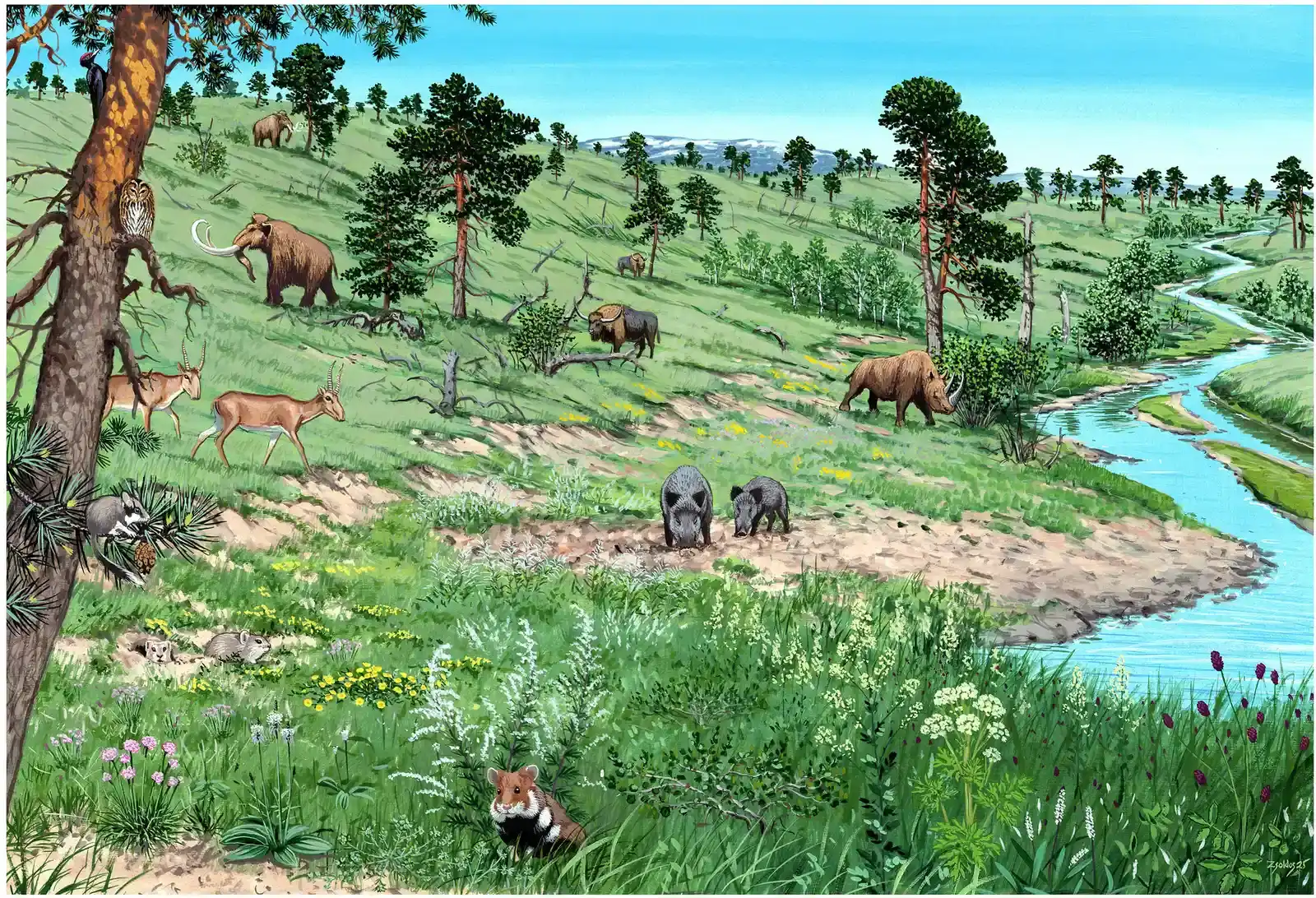
You might assume the Ice Age north was all glaciers and lifeless snow, but the mammoth steppe was closer to a cold, dry super–savanna. You would have walked across a mix of grasses, herbs, and low shrubs, with open horizons and very few trees, especially during the height of the last glacial period. Scientists sometimes call it a “steppe–tundra,” but that term can be misleading, because this place wasn’t barren; it was loaded with edible plants that thrived in the cool, dry climate and long summer daylight.
If you had stood somewhere in Siberia around twenty thousand years ago, you could, in theory, have trekked overland all the way to western Europe or into North America across Beringia without ever leaving this basic habitat type. You’d have felt the ground crunch under your boots as permafrost sat below your feet, but in the brief summers the surface would have burst into growth. This mosaic of hardy plants was the engine that powered huge herds of animals, making the mammoth steppe one of the most expansive and productive ecosystems the planet has ever seen.
A Cast of Giants: Mammoths, Bison, and Their Neighbors
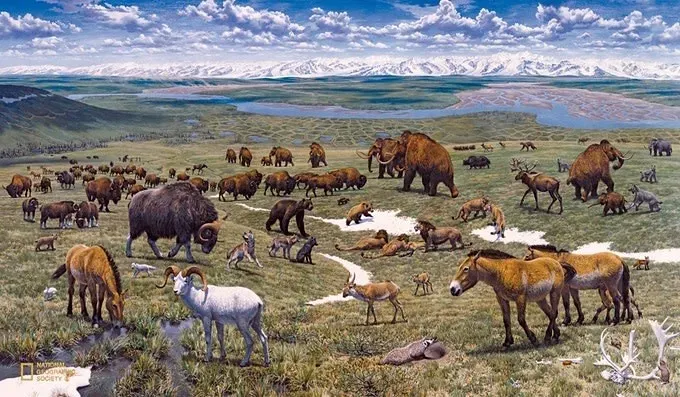
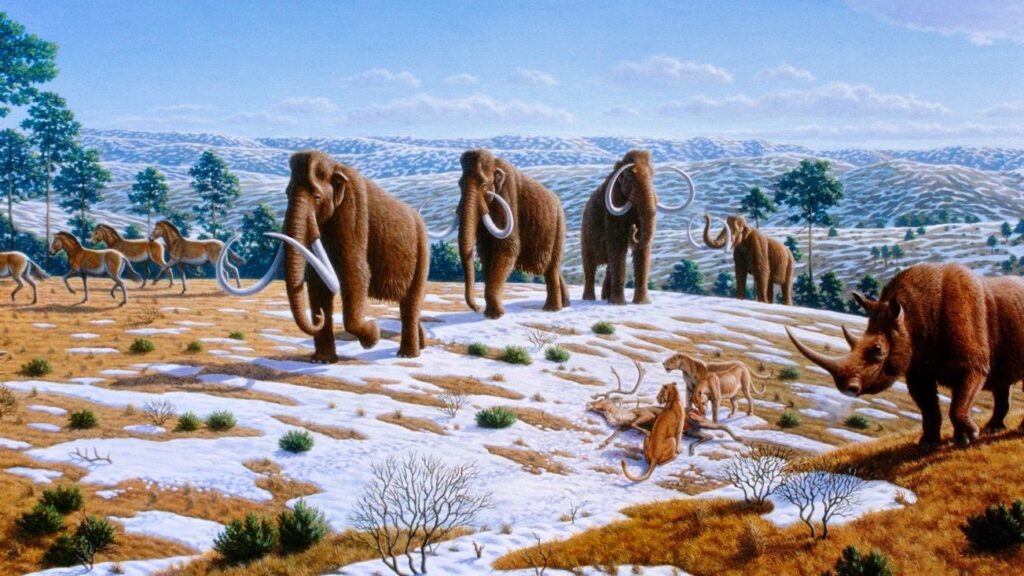
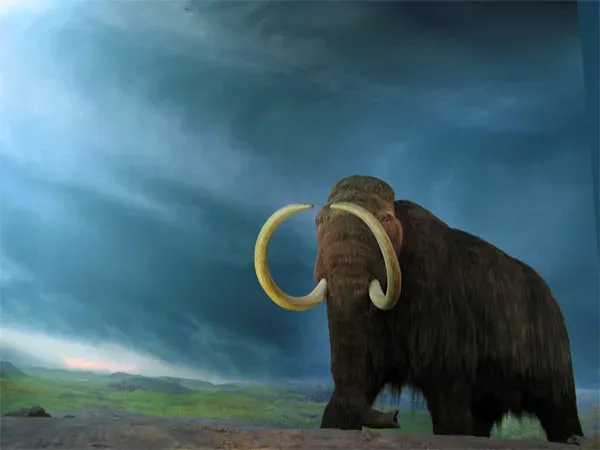
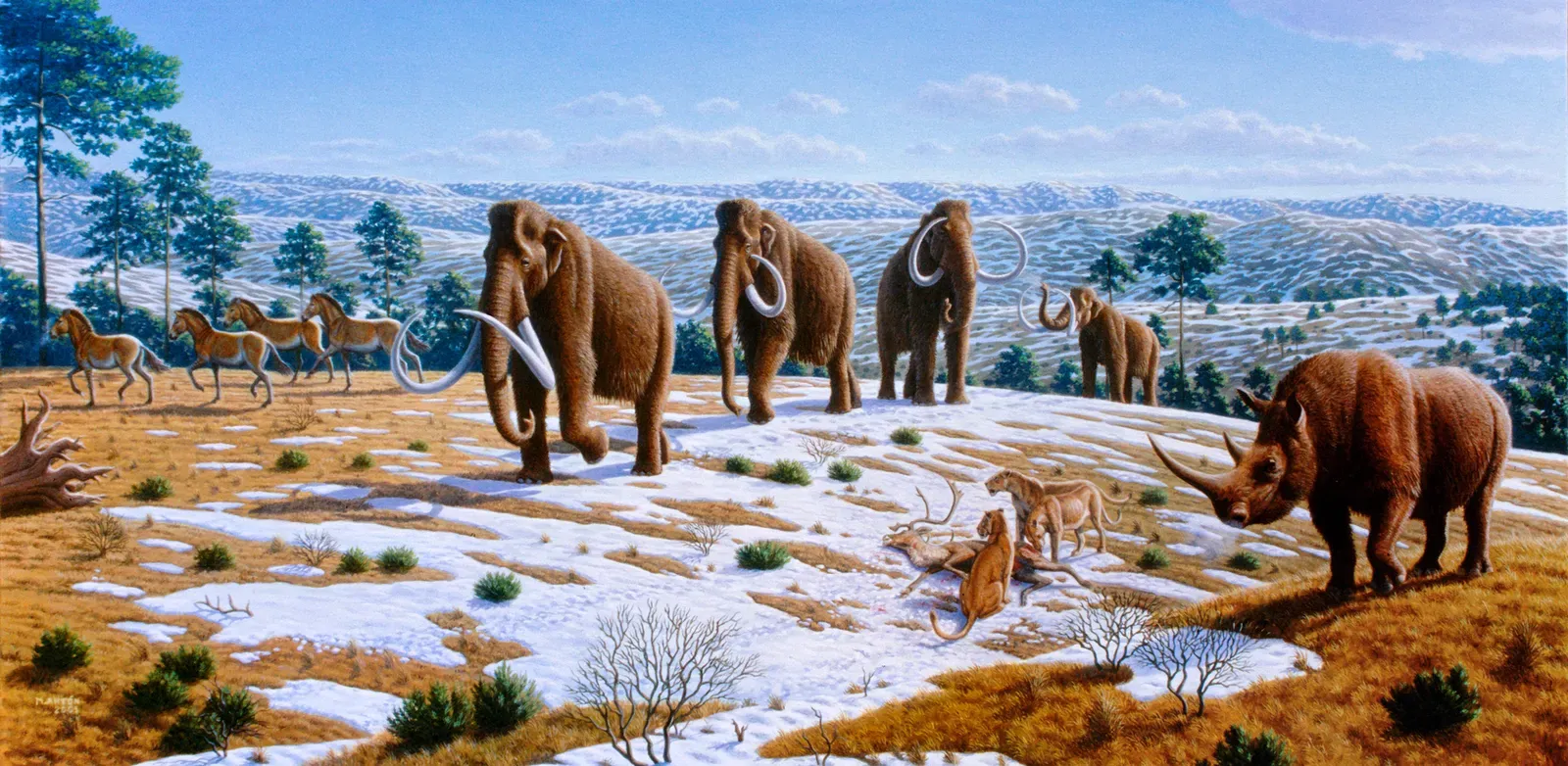
When you hear “mammoth steppe,” your mind jumps to woolly mammoths, and that’s absolutely fair – they really were the headline giants. If you had seen one up close, you’d be looking at an elephant-sized animal covered in shaggy hair, with long curving tusks and a high, domed head. But mammoths didn’t wander alone in some empty white wilderness; they shared the land with steppe bison, wild horses, woolly rhinoceroses, musk oxen, saiga antelope, and predators like cave lions, wolves, and scimitar-toothed cats. You would have been in the middle of a full, busy community of animals, not a frozen museum.
Imagine standing on a rise and watching a scene play out below you: herds of bison moving like a dark wave across the grass, mammoths slowly marching as living bulldozers, and scattered horses breaking into sudden runs. You’d also see smaller animals you might overlook at first – lemmings, arctic hares, foxes – fitting into little niches that helped keep the system running. In some ways, you could think of it as a colder, northern version of the African savannas you know today: crowded, noisy, full of dung, grazing, trampling, hunting, and constant motion.
How an Ice Age Grassland Could Be So Productive
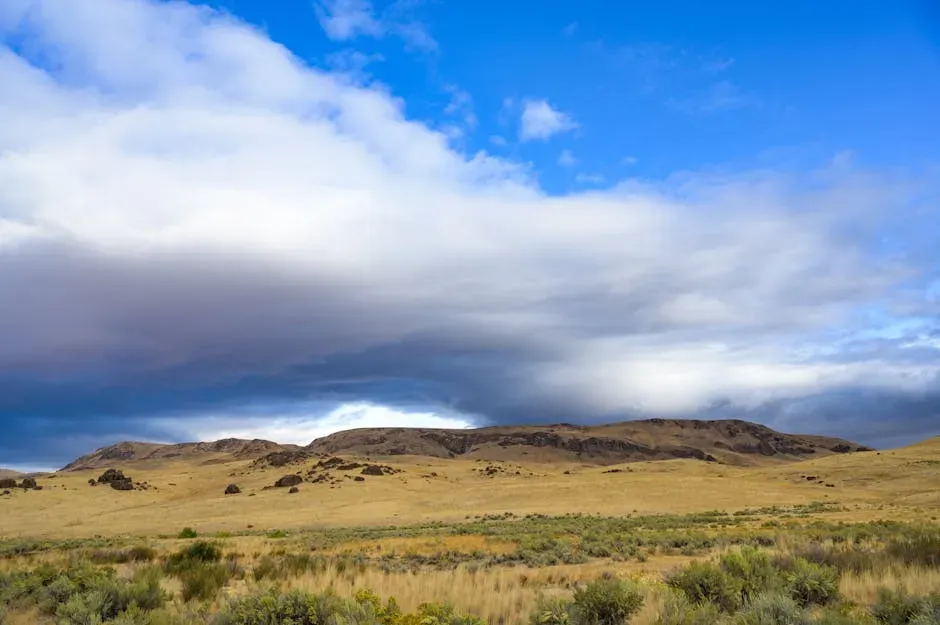
At first glance, you might wonder how a cold, dry landscape could support so many giant animals. The key is that the mammoth steppe was not a boggy, dark forest but an open, well-lit grassland where nutrients kept cycling efficiently. Grasses and forbs grew low to the ground and stored a lot of energy in their roots; when grazers ate them, they returned nutrients through dung and urine, and their constant trampling helped mix organic matter into the soil. You’d be walking on a system where animals and plants were locked into a tight feedback loop that kept productivity surprisingly high.
Winter would have been brutal for you – freezing winds, bitter cold, and snow – but many of these animals were built for it. Thick coats, fat reserves, and the ability to dig or scrape through snow to reach buried vegetation made survival possible. The steppe’s dryness actually helped, because deep, wet snow can be deadly for grazers, while thinner, wind-blown snow is easier to push aside. If you looked closely, you’d see that the very harshness of this environment filtered out species that couldn’t handle it, leaving behind a community of tough survivors that squeezed the most out of every brief summer and every frozen blade of grass.
Mammoths as Ecosystem Engineers: How They Shaped the Land
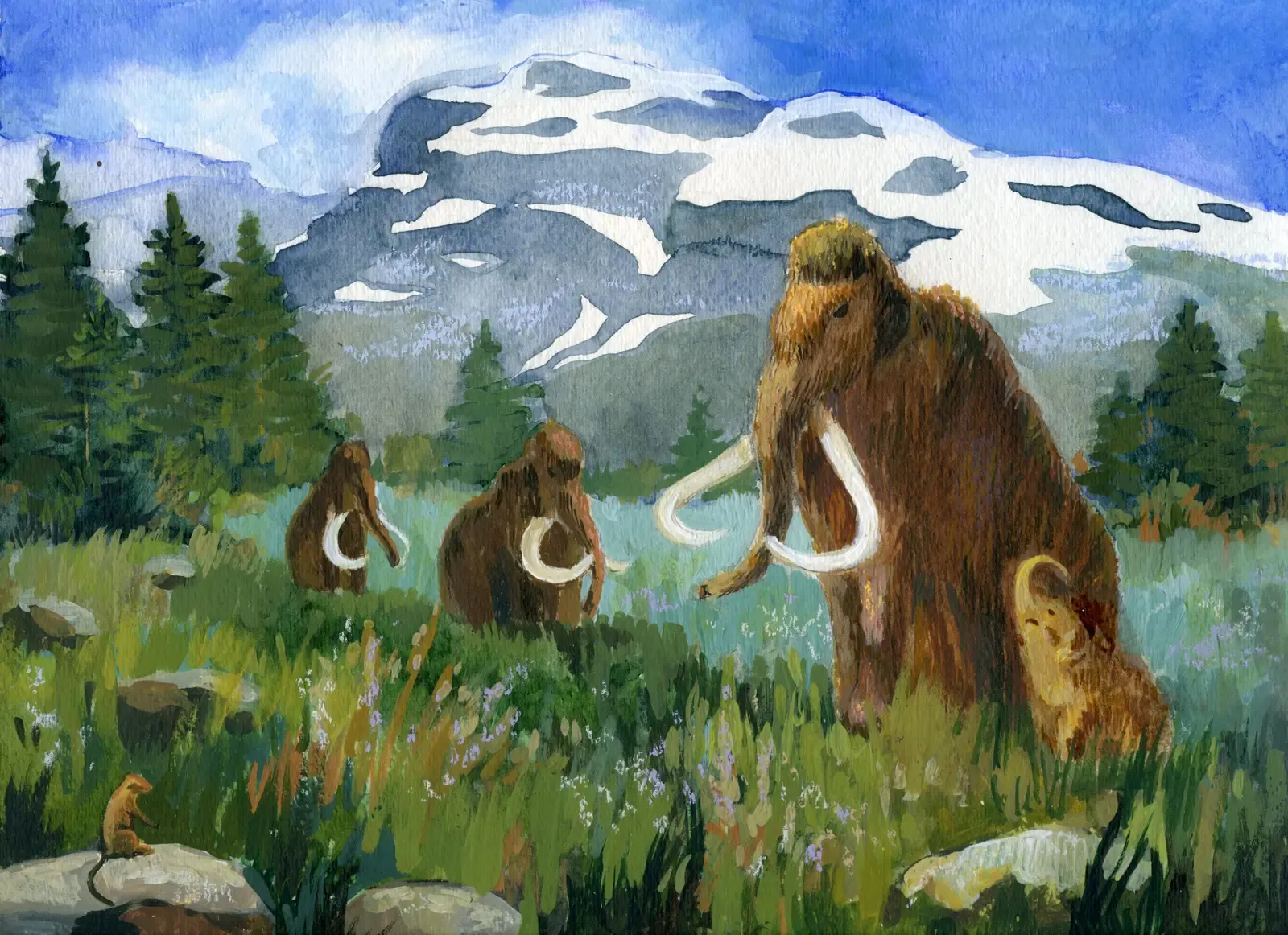
You might think of mammoths as just big herbivores, but they were more like ecosystem engineers wielding their tusks as tools. By constantly grazing, trampling, and knocking over young trees and shrubs, they helped keep the landscape open and grassy. If you had watched a herd move through, you’d see them break branches, strip bark, and churn up patches of soil, unintentionally creating space for grasses and herbs to regrow. In a very real sense, they were editing the landscape every day, nudging it toward an open steppe rather than a closed forest.
When you add in the effects of bison, horses, and other large grazers, you get what’s sometimes called a grazing lawn: a zone kept short and regrowing by the very animals that feed on it. You might compare it to mowing a yard; cut it often enough and you favor plants that can bounce back quickly. On the mammoth steppe, this cycle of eating and regrowing helped maintain the plants that fed the herds, which in turn supported predators and scavengers. Without these heavy, restless bodies constantly moving around, the ecosystem would not just lose species – it would start to become something fundamentally different.
The Disappearance: Climate Change, Humans, or Both?
If you jump forward in time to the end of the last Ice Age, you see the mammoth steppe unraveling. Temperatures began to rise, ice sheets retreated, and wetter conditions spread across many regions that had once been cold and dry. You would have watched shrubs invade, trees creep northward, and formerly open plains shift into patchy woodlands and mossy tundra. This wasn’t an overnight flip, but over thousands of years, the habitat that giant grazers depended on shrank and fragmented, squeezing their ranges tighter and tighter.
At the same time, you and your own species entered the scene with new tools, organized hunts, and the ability to move quickly across long distances. Archaeological evidence shows that humans hunted mammoths and other megafauna, and while the exact balance between climate pressure and human impact varies by region, you can be confident that both forces played a part. When you put a stressed animal population into a shrinking habitat and then add skilled hunters on top, the result is rarely gentle. Eventually, the last woolly mammoths survived only on isolated islands before disappearing entirely, and with them, the mammoth steppe as you would recognize it faded into memory.
What You Can Still See Today: Traces in Bones, Soil, and DNA
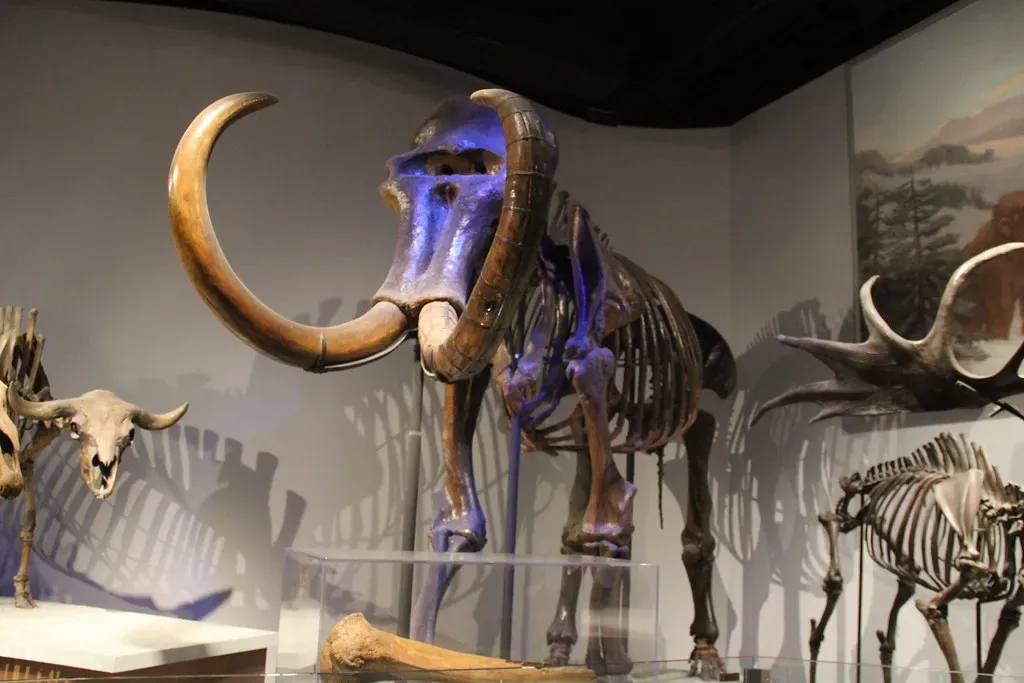
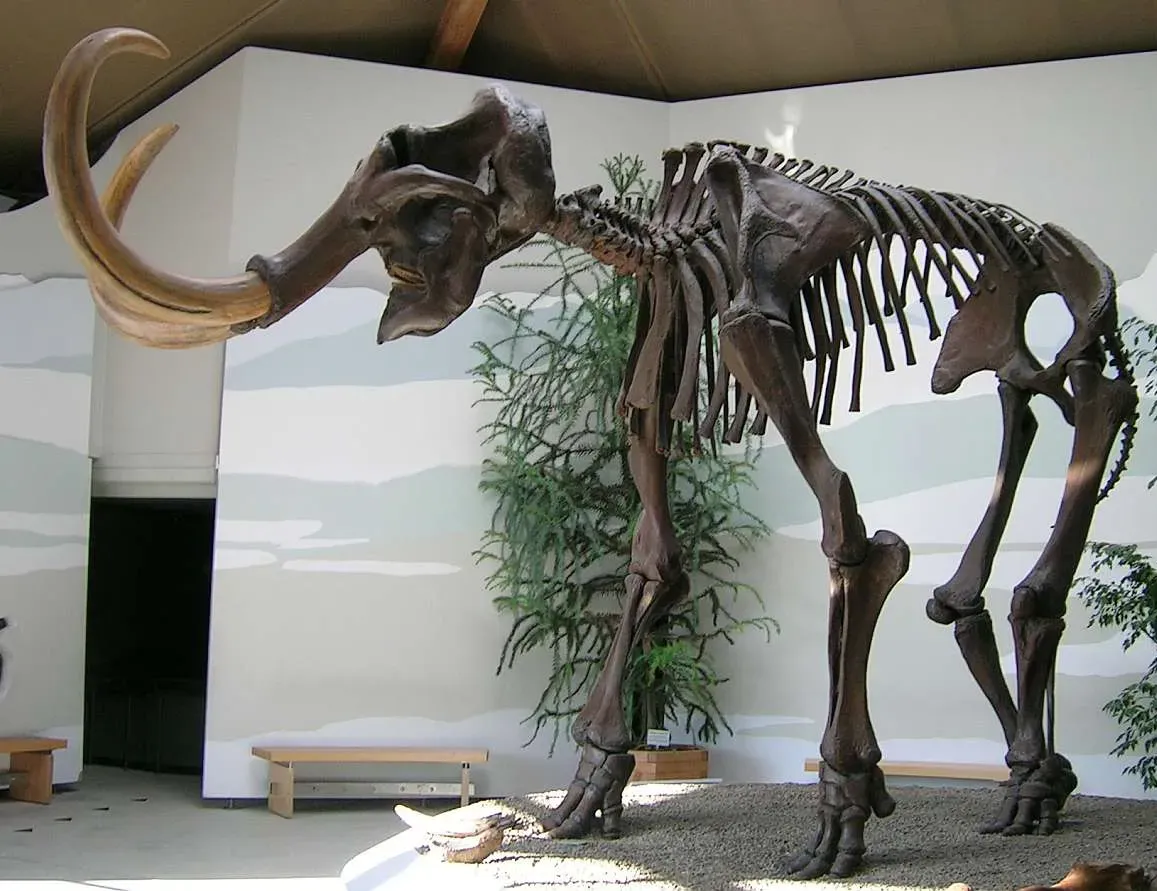
Even though the mammoth steppe has vanished, you can still read its story if you know where to look. Fossil bones scattered across Siberia, Alaska, and northern Europe tell you who lived there and roughly when they disappeared. In some frozen ground, you find remains so well preserved that hair, stomach contents, and even soft tissues survive, letting you peer into the diet and biology of animals that died tens of thousands of years ago. When you hold a mammoth tooth or a bison horn core in your hands, you’re touching a direct piece of that lost world.
Modern tools let you go even deeper. By drilling into permafrost and lake beds, researchers can pull out cores of sediment that trap pollen, plant fragments, and environmental DNA. When you analyze this material, you get a surprisingly detailed picture of which plants and animals once lived in a place, even if their bones are gone. You might be surprised to learn how often grass-loving species show up in regions that are now mossy tundra or forest, a quiet reminder that the ground beneath you has held very different communities in the past.
Bringing Back the Steppe? Rewilding, Pleistocene Parks, and Big Questions
In recent years, you’ve probably seen headlines about attempts to recreate aspects of the mammoth steppe, even talk of “de-extincting” woolly mammoths using genetic engineering. In parts of Siberia, projects are already underway that introduce bison, horses, and other large grazers to open terrain in the hope that their combined trampling and grazing will push the land back toward a grassier state. If you walked through one of these experimental “Pleistocene parks,” you might feel like you’re stepping into an echo of the Ice Age, minus the actual mammoths. The idea is that animals can help cool the ground, knock back shrubs, and promote grasses that store carbon in the soil.
But if you look closely, you realize this is not just a scientific experiment; it is an ethical and practical debate you are being invited into. Can you really rebuild an ecosystem when the climate, plant communities, and surrounding landscapes are so different from the past? Should you spend limited conservation resources trying to resurrect fragments of a lost world, or focus on protecting what still survives today? As you weigh those questions, the mammoth steppe becomes more than just a curiosity; it turns into a mirror for your own choices about how actively humans should shape the future of nature.
Conclusion: Why This Lost World Still Matters to You
When you trace the story of the mammoth steppe, you’re not just learning about mammoths and cold grasslands; you’re confronting how quickly an entire global-scale ecosystem can appear, flourish, and then vanish. You see how climate shifts, combined with human actions, can push even the mightiest animals over the edge. You also realize that the landscapes you take for granted – boreal forests, tundra, modern grasslands – are snapshots rather than permanence. The world beneath your feet has worn very different faces, and it will keep changing whether you act or not.
If you let that sink in, the mammoth steppe stops being a distant curiosity and becomes part of your own story. It reminds you that humans are not separate from ecosystems; you are one of the forces that build or break them. As you think about rewilding, climate change, and extinction today, you are really deciding what kinds of worlds future people will inherit and what sorts of giants, if any, will walk beside them. Knowing what was lost, what kind of world do you want to help create next?