When you think about dinosaurs, specifically the legendary Tyrannosaurus rex, you’re probably picturing massive jaws and thunderous footsteps echoing through ancient landscapes. These prehistoric beasts once ruled what is now the United States, leaving behind incredible evidence of their existence. The hunt for T rex fossils continues to captivate scientists and enthusiasts alike, sparking debates about where the most significant discoveries lie hidden beneath our modern terrain.
It’s honestly fascinating that only certain regions yield these treasures while others remain virtually silent. Let’s be real, not every state can claim bragging rights to hosting the tyrant lizard king. So let’s dive in to explore which American states have earned their reputation as T rex hotspots.
Montana: The Undisputed Champion of T Rex Discoveries
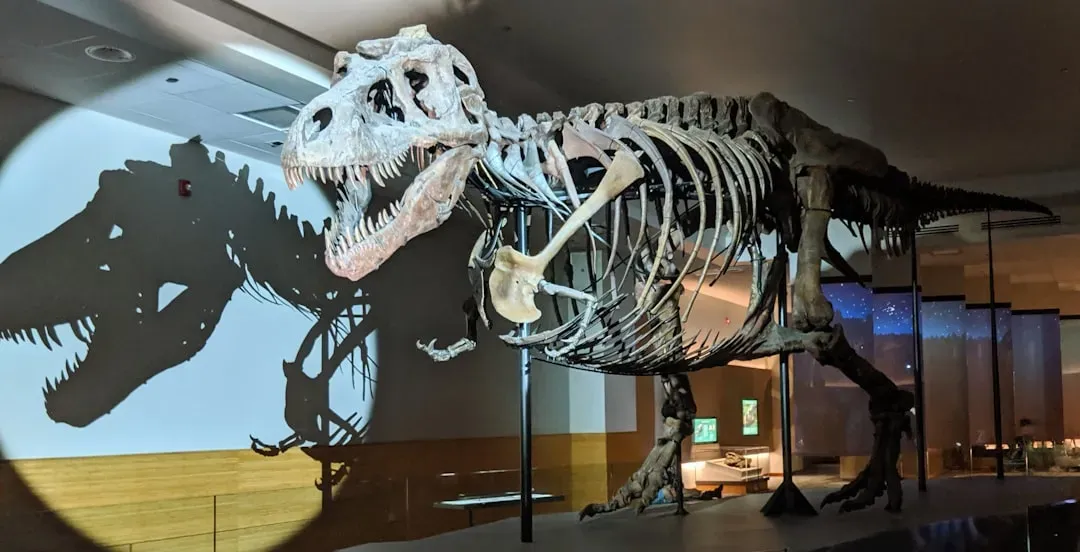
Montana stands as the premier destination for T rex fossil discoveries, particularly in states like Montana, Wyoming, North and South Dakota. The Hell Creek Formation in Montana is an especially prolific area for fossil recovery. What makes this region so special? The geological conditions preserved these ancient remains in ways that few other places could match.
Brown discovered a nearly complete T rex skeleton at Big Dry Creek, Montana, and the discoveries haven’t stopped since. In 1988, local rancher Kathy Wankel discovered another Tyrannosaurus rex in Hell Creek sediments in Montana, which became one of the most complete specimens ever found. Montana’s badlands continue to reveal their secrets, with recent student expeditions discovering a T rex bone in Montana’s badlands. The sheer number of significant finds from this state is staggering, making it the gold standard for T rex paleontology.
South Dakota: A Close Second in Fossil Riches
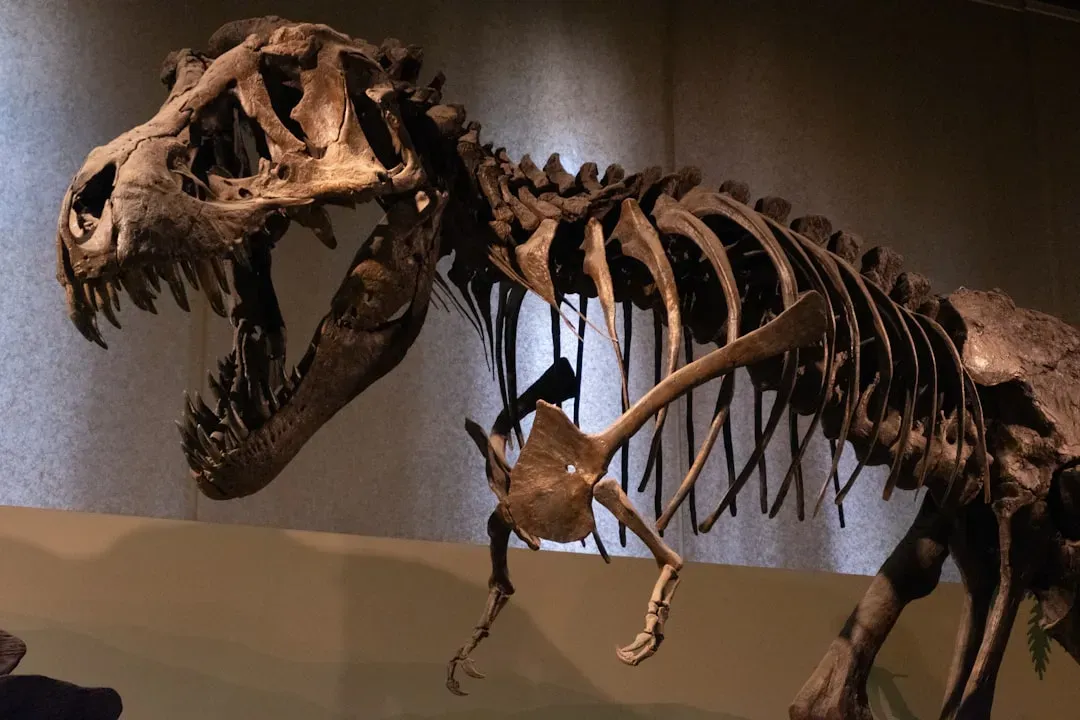
South Dakota might not have Montana’s fame, but it holds its own when it comes to remarkable T rex specimens. Stan, a fossil about 11.78 m long, was found in Hell Creek Formation, South Dakota, close to Buffalo in 1987. This particular specimen became one of the most recognized T rex fossils worldwide, eventually selling for a record-breaking amount.
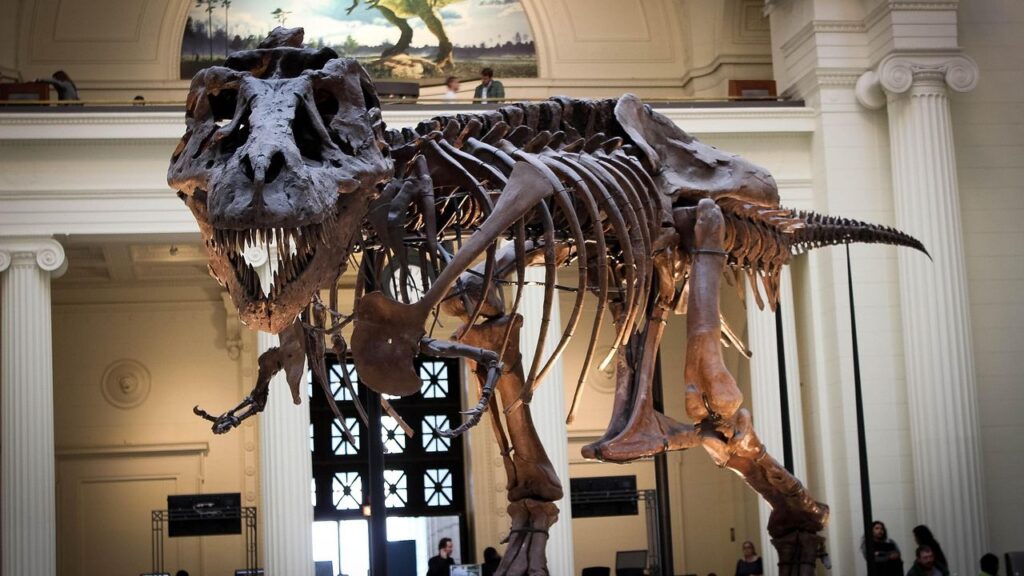
Susan Hendrickson discovered the best-preserved Tyrannosaurus currently known, in the Hell Creek Formation near Faith, South Dakota, on 12 August 1990. Known simply as Sue, this specimen revolutionized our understanding of T rex anatomy. The state’s fossil-rich formations continue to yield juvenile and adult specimens alike, with Tinker, a juvenile T rex, found in the Hell Creek Formation of western South Dakota. South Dakota’s contributions to T rex science cannot be overstated.
Wyoming: The Original Discovery State
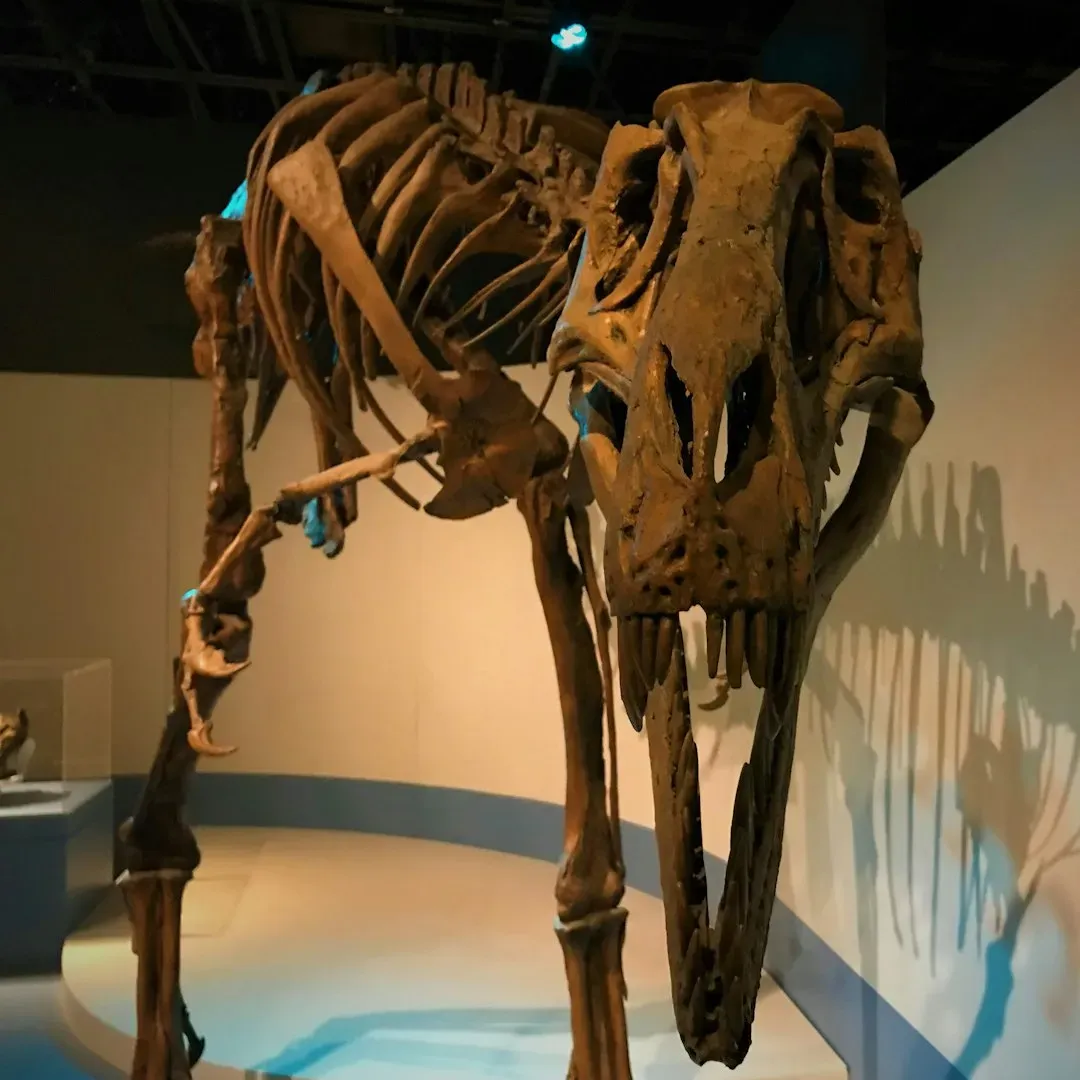
Here’s something that might surprise you. The first T rex fossils ever found were discovered in Wyoming around Newcastle close to a century ago. Despite this historic claim, Wyoming has often been called a T rex exporting state, with many specimens leaving for museums elsewhere. Barnum Brown found the first partial skeleton of T rex in eastern Wyoming in 1900.
The state’s Hell Creek and Lance Formations have produced numerous specimens over the decades. Lee Rex became the first T rex skeleton found in Wyoming to stay in the state, marking a turning point in keeping Wyoming’s paleontological heritage at home. Footprints of a 66 million-year-old tyrannosaur were found in Glenrock, Wyoming, representing only the second multi-step tyrannosaur track site known to science. Wyoming’s fossil record is deeper than most people realize.
North Dakota: An Emerging Contender
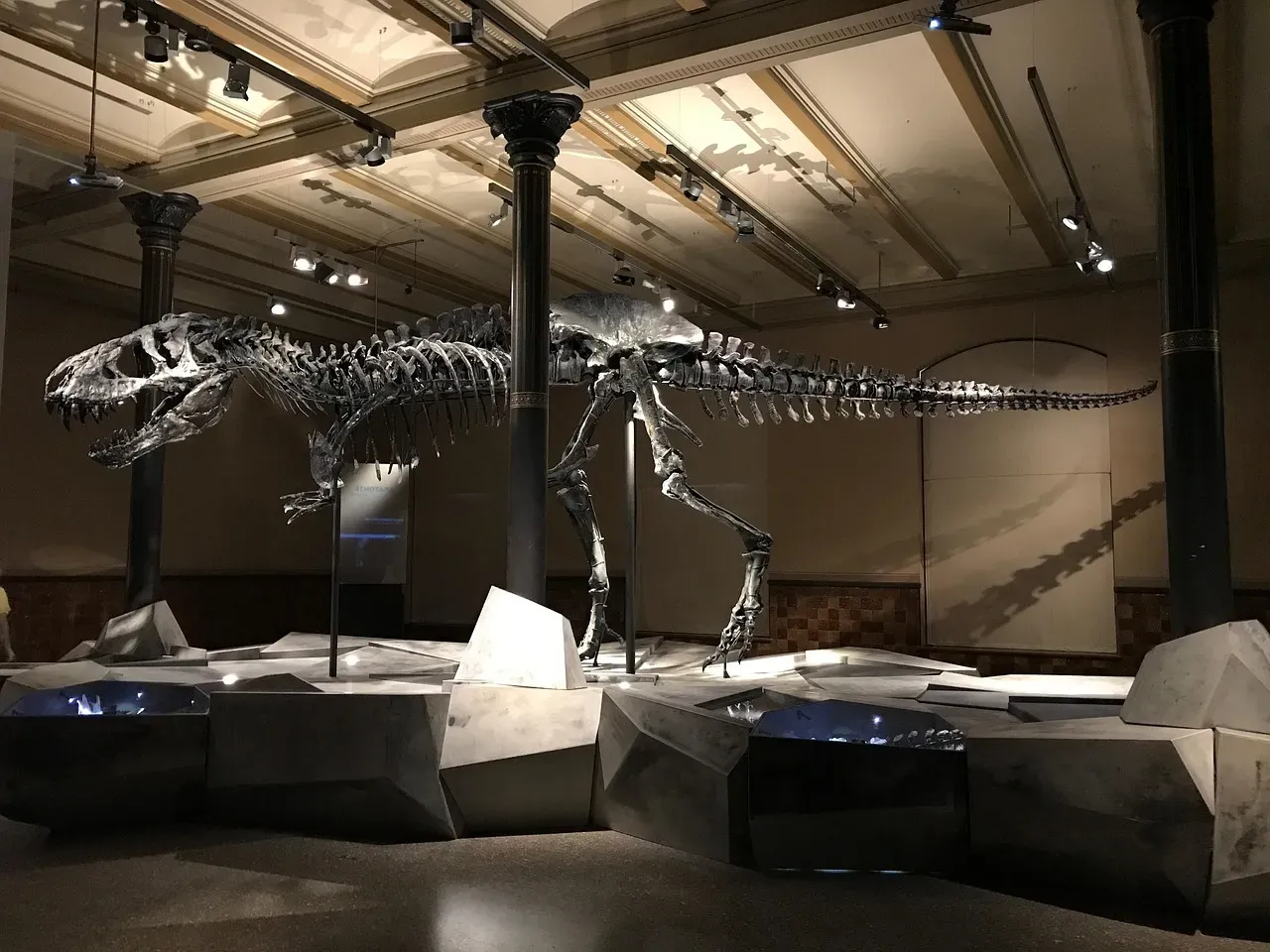
North Dakota doesn’t get as much attention as its neighbors, yet it holds fascinating T rex discoveries. In 2019, a T rex skull was found in North Dakota, featuring a unique cranial pathology. This find provided valuable insights into the health issues that affected these ancient predators.
More recently, the state made headlines with the discovery of a teenage T rex specimen, highlighting a critical growth phase. These younger specimens are particularly valuable because they help scientists understand how these creatures developed from hatchlings to apex predators. North Dakota’s geological formations continue to surprise researchers, proving that there’s still much to learn from this often-overlooked state.
Colorado: Limited But Significant Finds
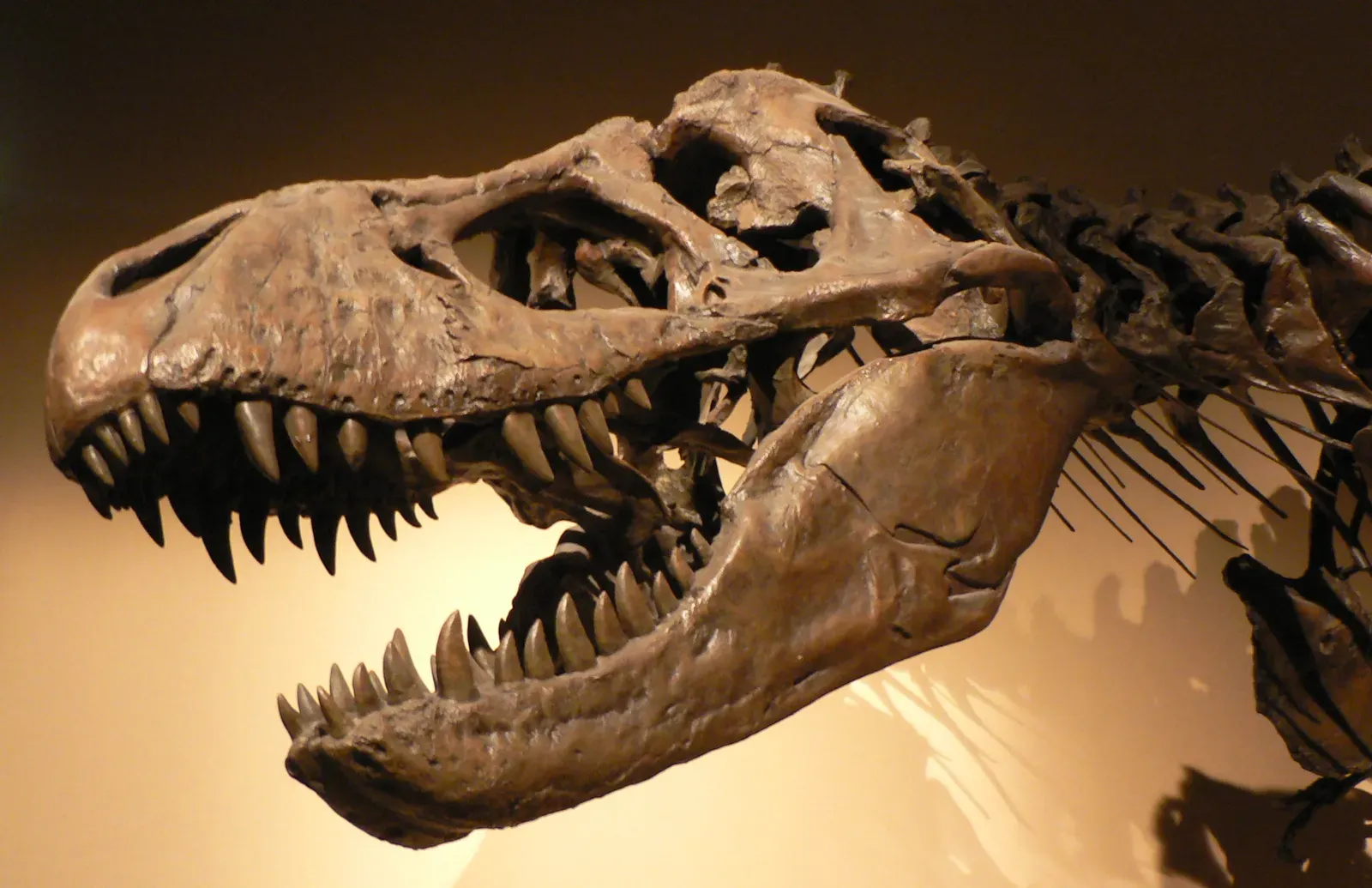
A tooth from what is now documented as a Tyrannosaurus rex was found in July 1874 upon South Table Mountain (Colorado), representing one of the earliest T rex discoveries in North America. Over the past century, scientists have found about 100 fossils, mostly in the Dakotas, Montana and Colorado.
While Colorado hasn’t produced the volume of complete specimens seen in Montana or South Dakota, its contributions remain scientifically valuable. The state’s geological diversity means that T rex fossils here often come from different time periods or environments than those found elsewhere. Every fragment helps build a more complete picture of how these animals lived and where they roamed during the late Cretaceous period.
New Mexico: The Southernmost T Rex Territory
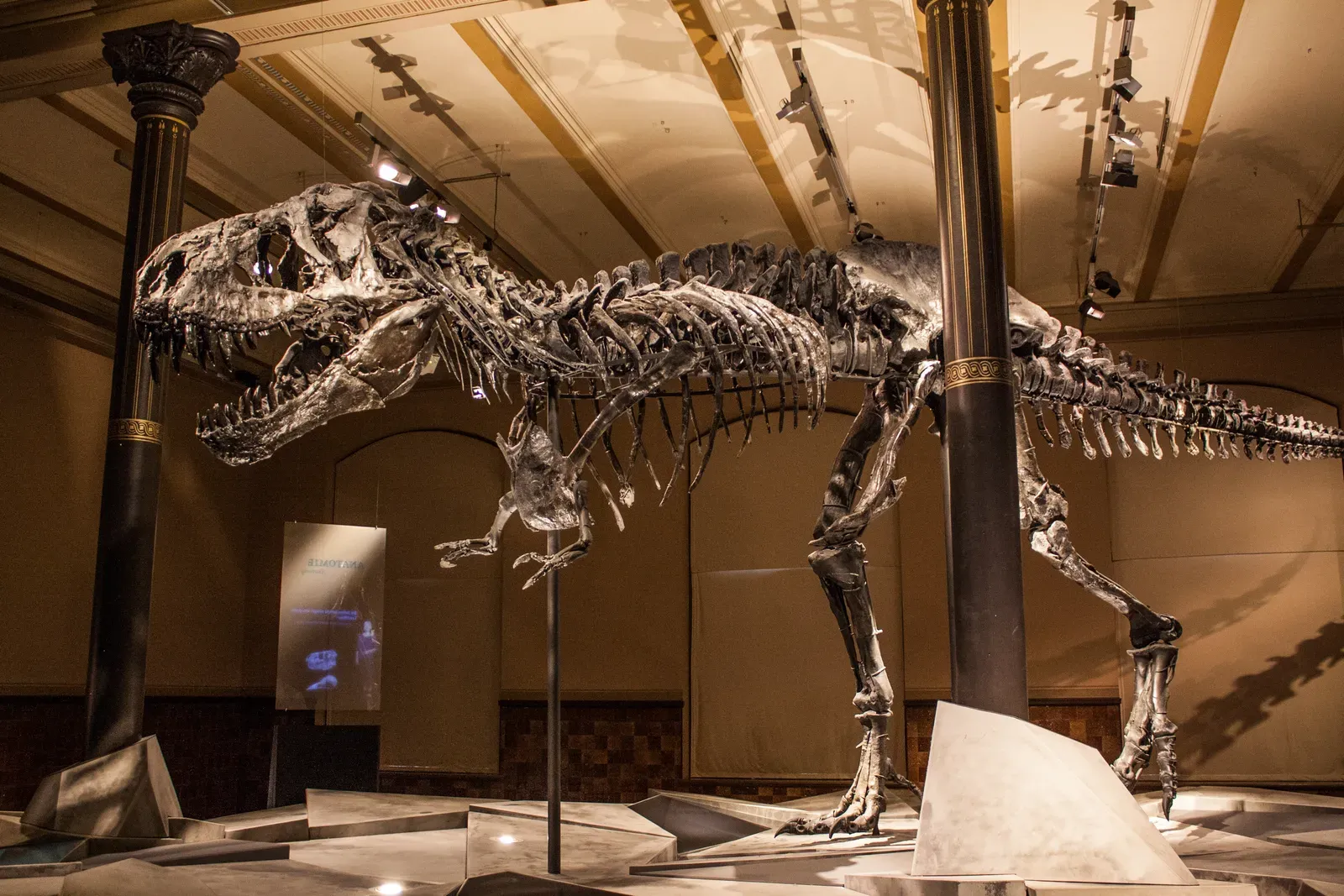
One of the few fossils of Tyrannosaurus rex reported from New Mexico, a lower jaw, was found near Elephant Butte Reservoir. New Mexico represents the southern edge of T rex range, making any discoveries here particularly interesting. Near Raton, a giant footprint made by Tyrannosaurus named Tyrannosauripus was discovered, the largest known footprint of a meat-eating dinosaur.
The state’s fossil record suggests that T rex inhabited more diverse environments than previously thought. These southern specimens help scientists understand the full geographic range and environmental adaptability of these magnificent predators. New Mexico’s finds may be fewer in number, but they’re invaluable for understanding the complete story of T rex distribution across ancient North America.
Texas and Utah: Occasional Discoveries Worth Noting
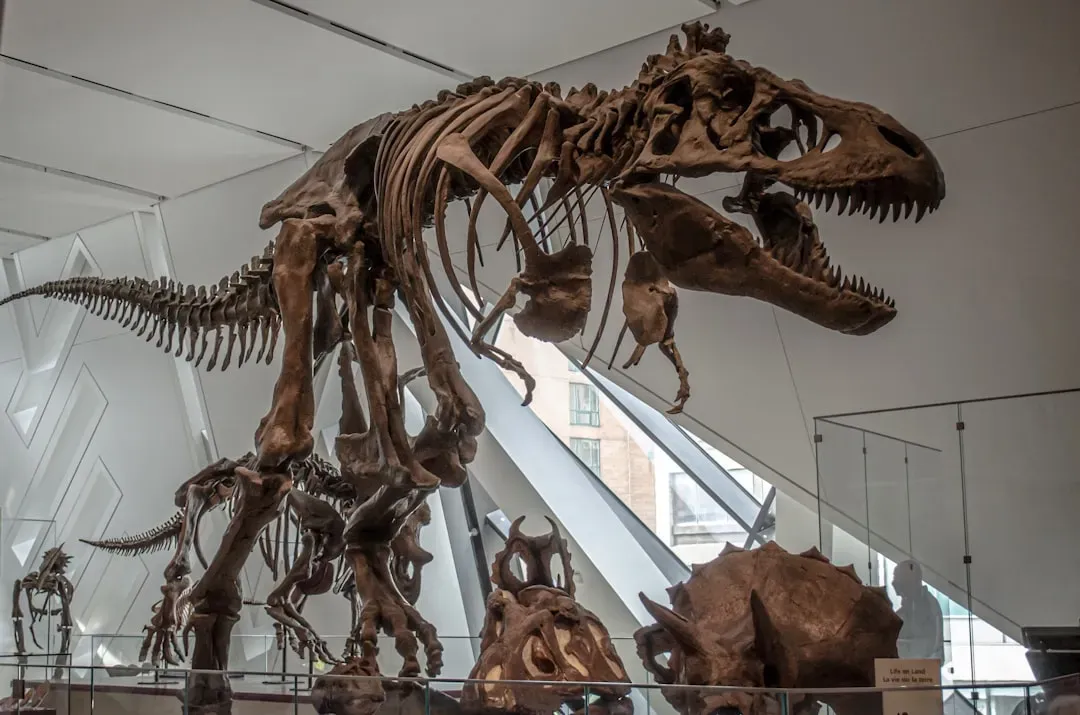
Fossils of different Tyrannosaurus species have been found in the USA in Montana, Texas, Utah, and Wyoming. Texas and Utah sit at the periphery of prime T rex territory, producing occasional but noteworthy specimens. A T rex skull was discovered in Utah in the 1930s, contributing to early understanding of these creatures.
These states demonstrate that T rex range extended beyond the core Hell Creek Formation area. While you won’t find the concentration of fossils seen in Montana or South Dakota, every discovery in these regions helps map the boundaries of where these animals lived. It’s a reminder that paleontology isn’t just about quantity, it’s about piecing together a continental puzzle from scattered clues.
Why These States and Not Others
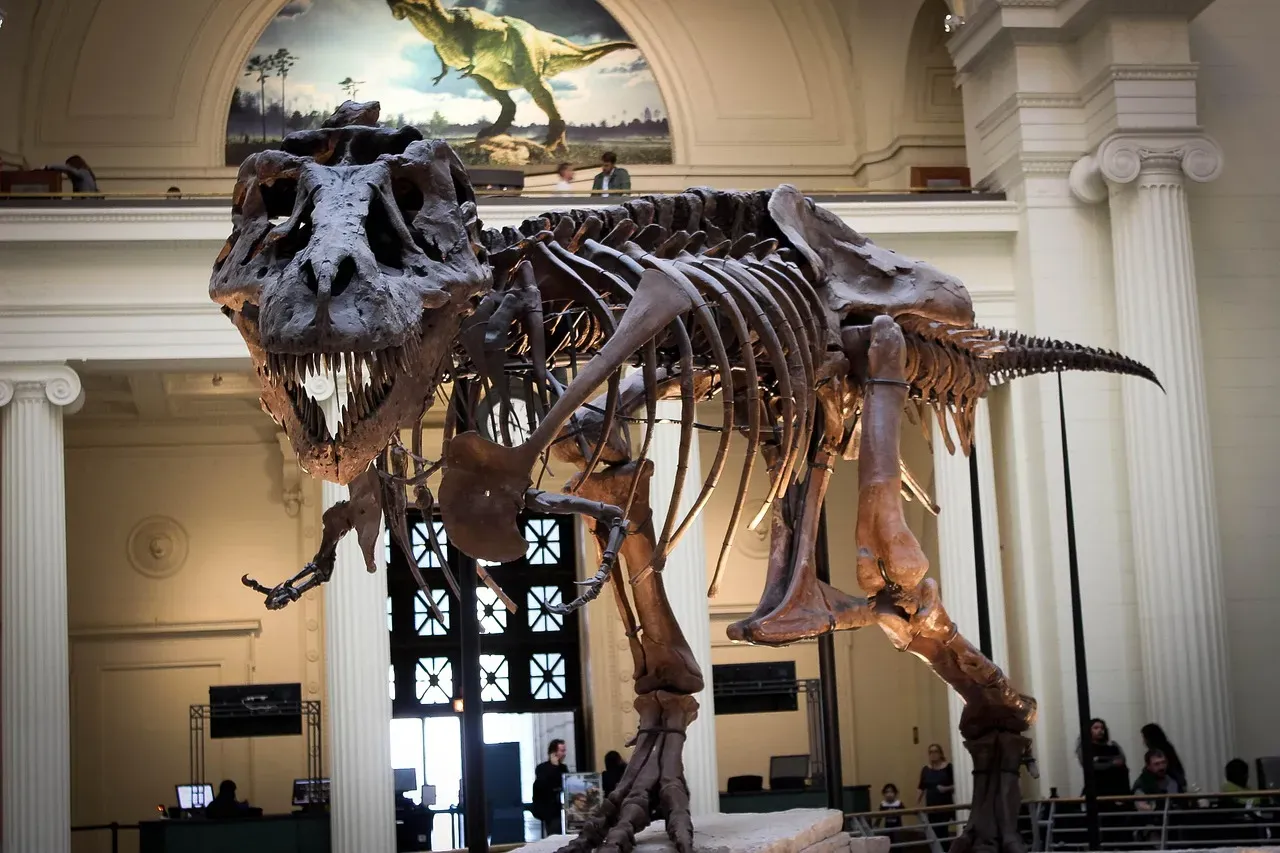
The answer lies in ancient geography and geology. Tyrannosaurus lived throughout what is now western North America, on what was then an island continent known as Laramidia. This landmass was separated from the eastern part of North America by a massive inland sea during the late Cretaceous period.
Fossils of T rex are found only in the Hell Creek Formation of Garfield county, Montana, and adjacent areas of the United States, in deposits dating from the Maastrichtian Age. The specific sedimentary conditions in these formations created perfect preservation environments. Eastern states simply lack the right rock layers from the right time period. Scientists deduce that we have found one out of 80 million T rex that ever lived, with every fossil discovered representing 80 million individuals that were not fossilized. That puts these discoveries in sobering perspective, doesn’t it?
Montana remains the undisputed king of T rex fossil discoveries, with South Dakota, Wyoming, and North Dakota forming a powerful supporting cast. These states share geological formations that perfectly preserved evidence of these incredible creatures for millions of years. As technology advances and more people search these fossil-rich badlands, who knows what spectacular finds await discovery?
The next time you hear about a T rex discovery, chances are overwhelmingly high it came from one of these western states. What do you think might still be hidden beneath the surface, waiting for someone to stumble upon it?