Beneath the sprawling landscapes of North America, millions of years of prehistoric life lie locked in stone, ash, and sediment, quietly waiting to be found. You might think the great dinosaur discoveries belong exclusively to far-off deserts or museum display cases, but the truth is far more extraordinary. From Nebraska cornfields to New Mexican red cliffs, the continent is riddled with paleontological treasures that most people never get the chance to appreciate. Some of them aren’t even that hard to visit.
What makes North American fossil sites so thrilling isn’t just their age or their scale. It’s the sheer variety, the unexpected locations, and the remarkable stories embedded in each layer of rock. Whether you’re a curious traveler, a budding scientist, or someone who simply wants to stare ancient time in the face, these ten sites will leave you genuinely astonished. Let’s dive in.
1. Ashfall Fossil Beds, Nebraska: North America’s Very Own Pompeii
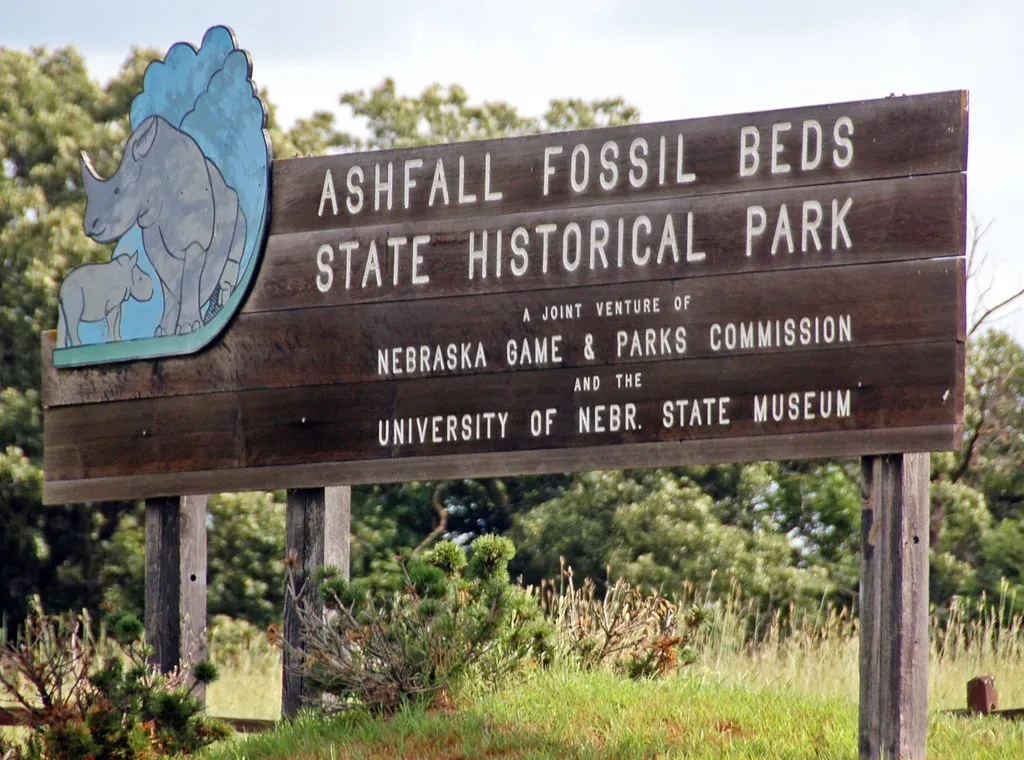
If you’ve never heard of Ashfall Fossil Beds, you’re in for something remarkable. Nearly 12 million years ago, volcanic ash engulfed an ancient watering hole in Nebraska, entombing innumerable animals. National Geographic has called the site the Pompeii of prehistoric animals. Honestly, that comparison earns every word of it.
The ash drifted downwind from the Bruneau-Jarbidge supervolcano eruption in present-day Idaho, nearly 1,000 miles west of the Ashfall site. A large number of very well-preserved fossil Teleoceras, small three-toed and one-toed horses, camels, and birds have been excavated, and many animals were preserved with their bones articulated. One rhino still bears her unborn fetus, while others retain the contents of their last meal. That last detail, I think, is what truly separates Ashfall from any other fossil site on the continent.
The 17,500-square-foot pavilion lets visitors observe as paleontologists carry out excavations of new discoveries exactly where the fossilized remains lie preserved, with walkways giving visitors a view of paleontologists at work during the summer field season. So far, 17 species of vertebrates, from barrel-bodied rhinos to long-necked camels, have been identified. You can watch scientists gently brush away ash from skulls that have waited underground for 12 million years. You really can’t put a price on that.
2. Ghost Ranch, New Mexico: Where Hundreds of Early Dinosaurs Met Their End
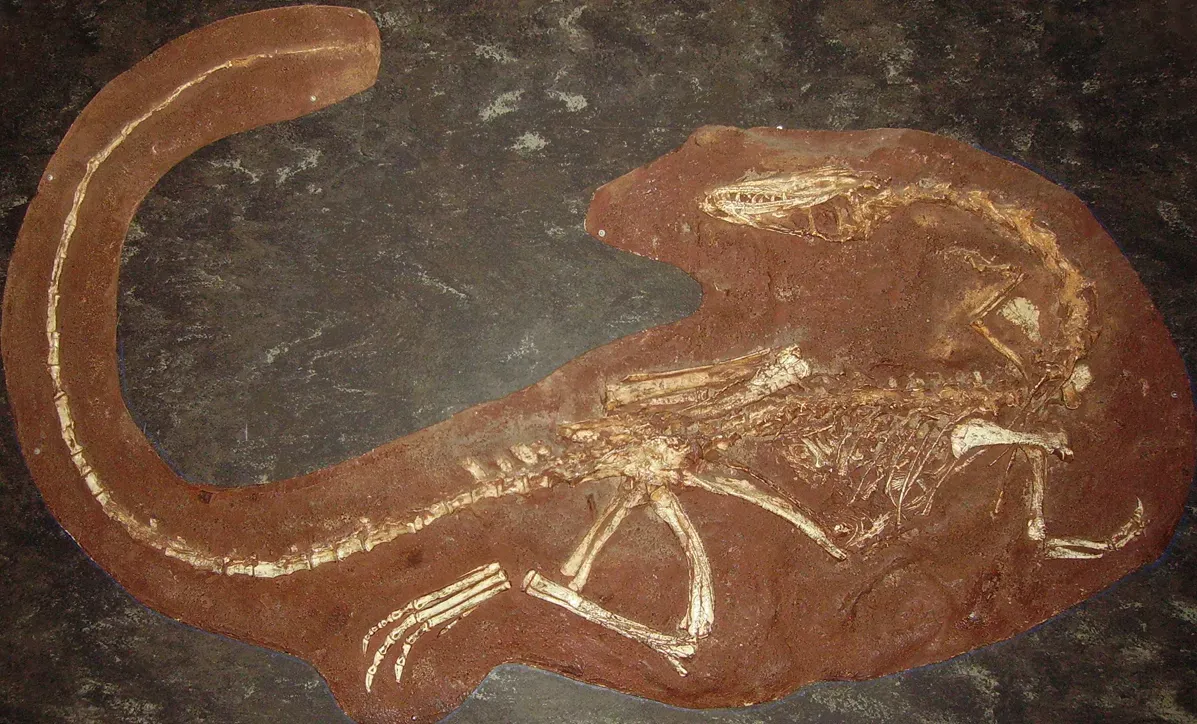
You may know Ghost Ranch as the place where artist Georgia O’Keeffe painted those iconic red-cliff landscapes. What you might not know is what lurks beneath those cliffs. Ghost Ranch’s Museum of Paleontology in New Mexico is situated in and around the Coelophysis Quarry, where red bedrocks have preserved fossils of more than 1,000 rare and prehistoric species. Some of the site’s best finds have included the 6-foot-long Tawa hallae, the Vancleavea, and the fast-moving Coelophysis, a 2-legged carnivore that lived about 200 million years ago.
In June 1947, a field crew led by Edwin H. Colbert from the American Museum of Natural History stopped at Ghost Ranch. They knew that other paleontologists had discovered fossils in the area. They soon found fragments of fossilized bone they recognized as belonging to the small dinosaur Coelophysis. Hoping to find a partial skeleton, Colbert and his crew carefully dug into the hillside, but instead of a partial skeleton, they found a dense bone bed of hundreds of preserved skeletons. The fossil record at the Whitaker quarry is exceptional in that the skeletons display a full spectrum of growth development, ranging from juveniles to fully grown adults, and both genders are represented. It’s a snapshot of a single species that you can hold your breath in front of. There’s nothing else quite like it.
3. Dinosaur National Monument, Utah and Colorado: A Wall of Ancient Bones
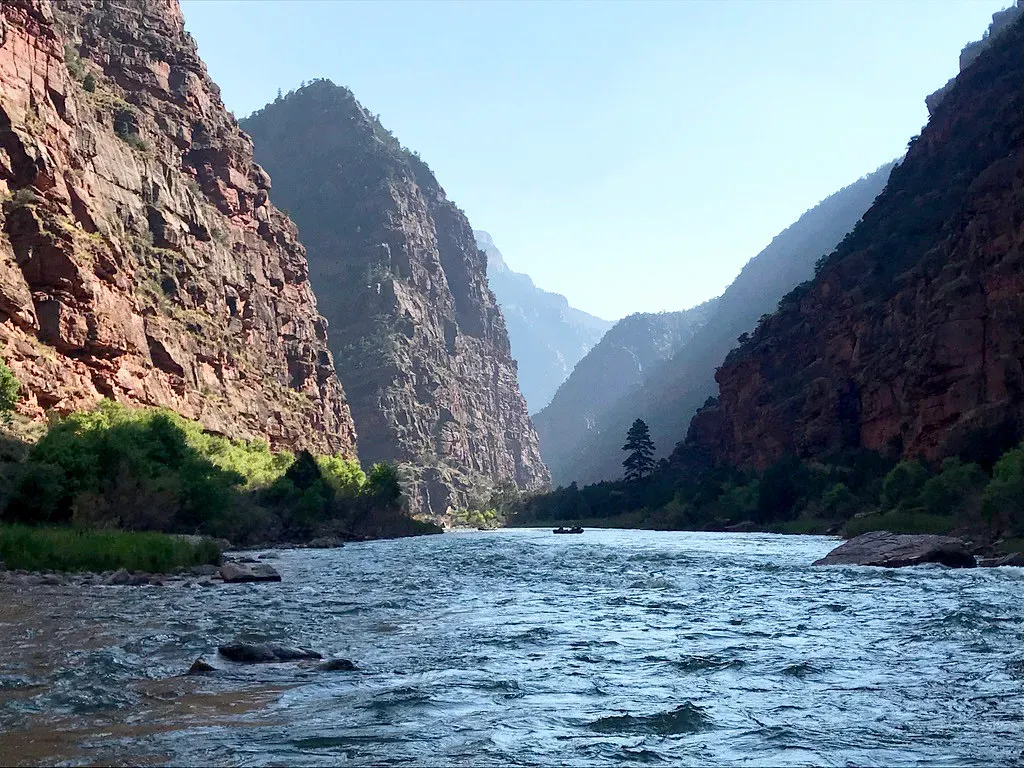
Dinosaur National Monument is regarded as one of the most famous fossil spots in the United States, situated in Utah’s Uinta Mountains, close to the Colorado border, preserving one of the greatest dinosaur fossil sites in North America, which was unearthed in 1909. Think about that: over a century of digging, and this place is still giving up its secrets.
Over 1,500 dinosaur bones remain embedded in the rock exactly as they were discovered in 1909. The visitor center built around this fossil jackpot lets you touch real 149-million-year-old dinosaur remains. Situated between Utah and Colorado, this stretch of mountains, canyons, and desert comprises a major chunk of the Morrison Formation, an expansive sedimentary rock unit that is considered the most productive source of near-complete dinosaur skeletons in North America. You’re not looking at replicas. You’re looking at actual ancient bones, still locked in rock, right in front of your face. It’s surreal in the very best way.
4. Fossil Butte National Monument, Wyoming: A 52-Million-Year-Old Lakebed
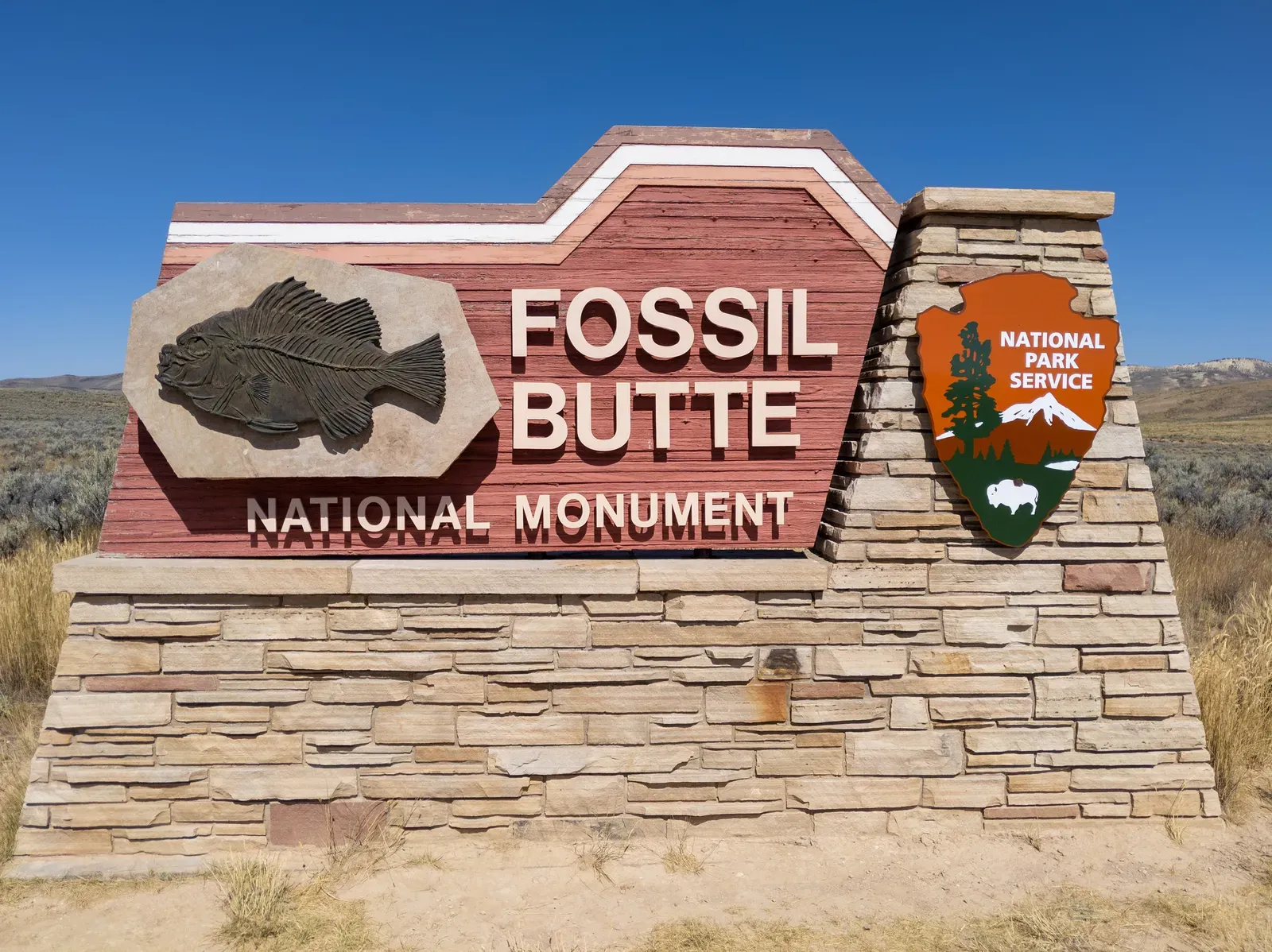
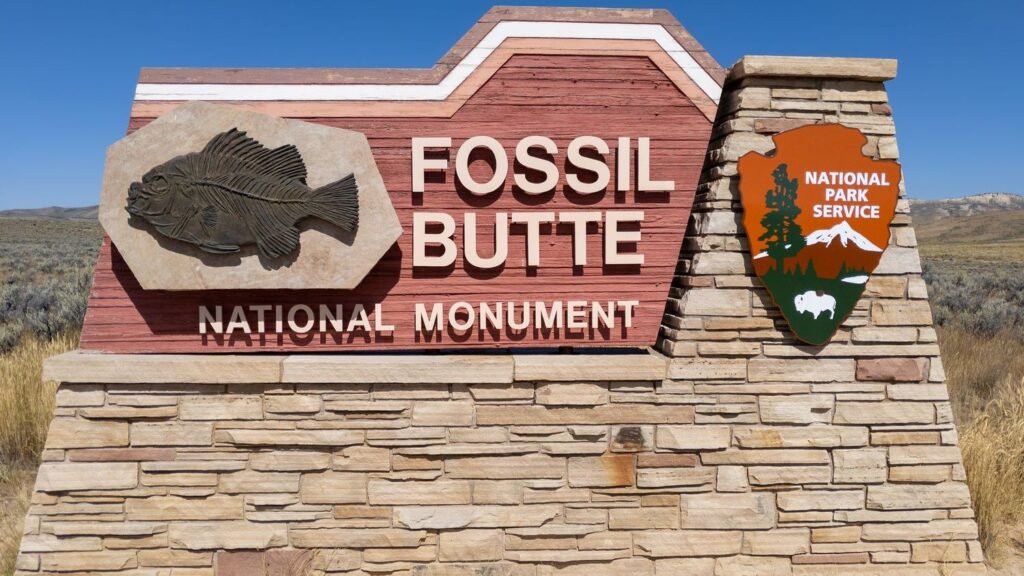
Fossil Butte National Monument protects a remarkable assemblage of Eocene-aged fossils from the Green River Formation. The 52-million-year-old Fossil Butte Member of the Green River Formation contains abundant fossils that provide the best record of Cenozoic aquatic communities in North America. This isn’t a desert full of massive dinosaur bones. It’s something subtler, and in many ways, more breathtaking.
The site was deposited in Fossil Lake, a shallow alkaline lake where rapid sediment helped preserve fish and other animals such as turtles, reptiles, birds, and mammals so that they were articulated, meaning the bones are in the same position as they would have been during life. Plant fossils including leaf impressions, seeds, and flowers, as well as those of insects and other invertebrates, have also been recovered from the park. Additionally, more than 10,000 different coprolites, or fossil dung, have been found. It’s hard to say for sure, but the sheer level of completeness here rivals any comparable site on the planet.
5. Grand Staircase-Escalante National Monument, Utah: The World’s Greatest Cretaceous Record
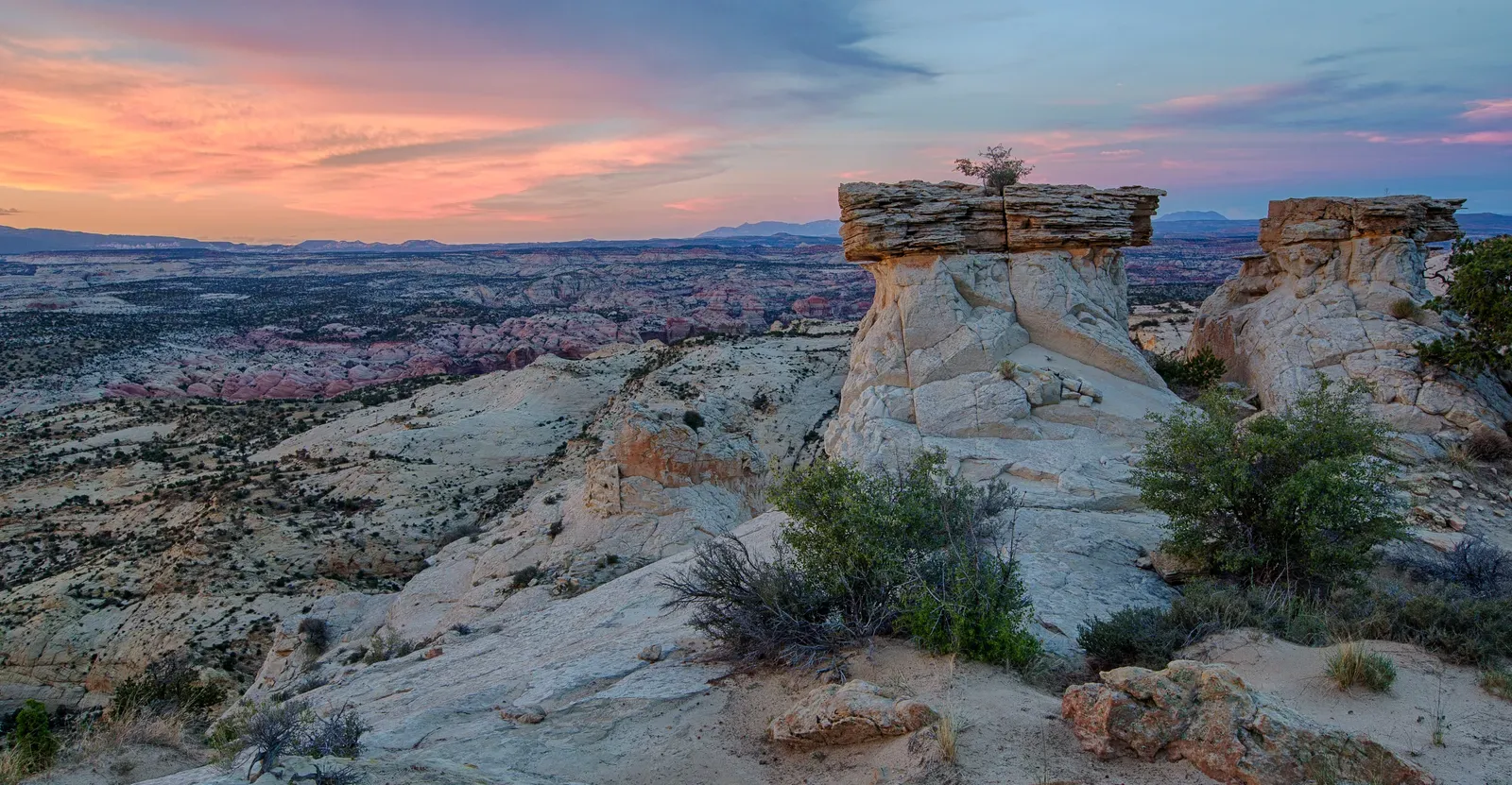
Here’s the thing most visitors to southern Utah don’t realize. Beneath those jaw-dropping sandstone formations is what may be one of the most scientifically significant fossil archives on Earth. Grand Staircase-Escalante National Monument, part of the expansive Colorado Plateau, is the site of the Kaiparowits Formation, a sedimentary rock array that is somewhere between 72 and 83 million years old, and by some accounts could contain the best and most continuous record of Late Cretaceous terrestrial life in the world.
Though only a tiny fraction of the area has been excavated by paleontologists, it has already proven unusually fruitful, yielding the only known specimen of a new Triceratops ancestor in 1998 among other fossils. Experts think there are many more bones waiting to be unearthed in the once-swampy region, as attested by the 2013 discovery of a brand new species closely related to Tyrannosaurus Rex. If you’re a fan of mystery, this site is essentially an entire geological chapter of prehistory that hasn’t even been fully read yet. That alone should make your pulse quicken.
6. Florissant Fossil Beds National Monument, Colorado: Secrets Beneath the Rockies
You would never expect a site just a couple of hours south of Denver to be holding some of the most delicate fossils in the world. Yet here we are. Florissant Fossil Beds National Monument features one of the richest and most diverse fossil deposits in the world, with up to 1,700 species. Sequoia tree fossils there are some of the largest-diameter petrified trees in the world, massive among the insect and plant fossils in the monument.
This site is one of the most diverse insect fossil sites in the world with an impressive trove of specimens from the late Eocene Epoch roughly 35 million years ago. Think of it like a prehistoric museum of nature itself, where the tiniest butterfly wing and the mightiest tree trunk both earned their place in stone. A visit to Florissant Fossil Beds begins in the visitor center with an orientation film called Shadows of the Past, hands-on exhibits about fossils and science, followed by a hike on the Petrified Forest Loop. It’s the kind of site that rewards curiosity at every single turn.
7. White Sands National Park, New Mexico: The Oldest Human Footprints in North America
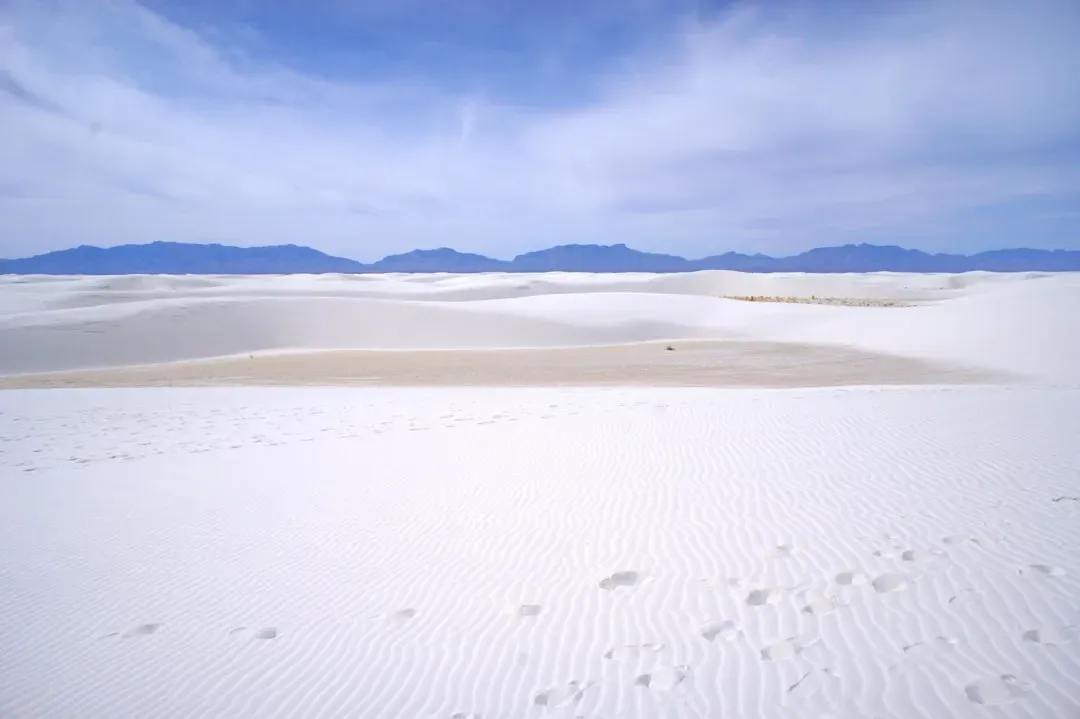
Most people visit White Sands for the gypsum dunes. Fewer realize they’re walking across one of the most historically explosive fossil sites on the continent. The Pleistocene fossil tracks of both humans and large mammals such as ancient camels, Columbian mammoths, Harlan’s ground sloths, and predators in White Sands National Park represent one of the most important fossil track sites in the world. These tracks were left during the Late Pleistocene near the shoreline of an ancient lakebed.
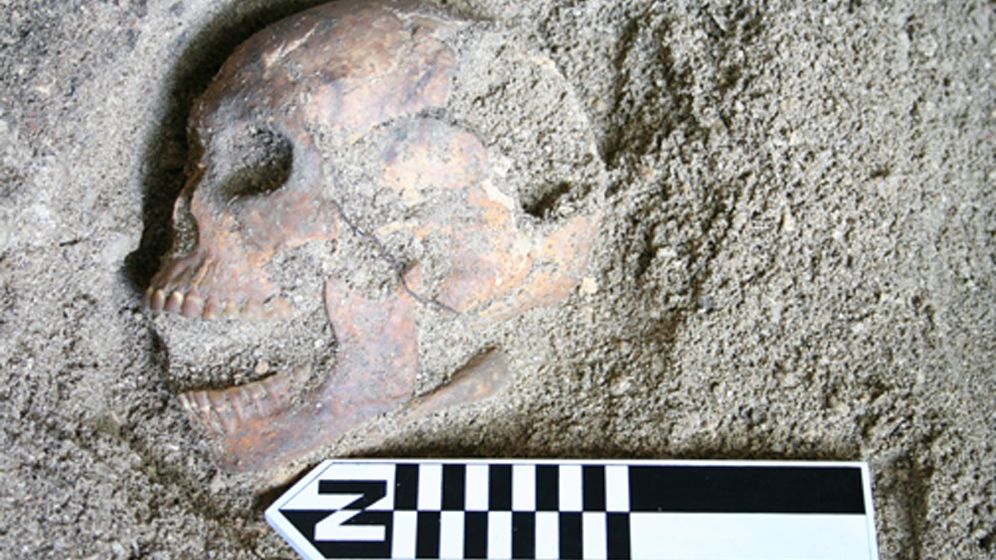
The site contains the oldest known human footprints in North America, which are about 23,000 years old, which revises the understanding of when humans arrived on the continent. That is not a small discovery. That’s a complete rewrite of early human history on this landmass. The soft playa sediments were an excellent surface for track formation, but tracks break down quickly once they are exposed at the surface. The fact that any of these have survived at all is nothing short of miraculous. You walk among giants here, both literally and figuratively.
8. John Day Fossil Beds National Monument, Oregon: A 45-Million-Year Story in Layers
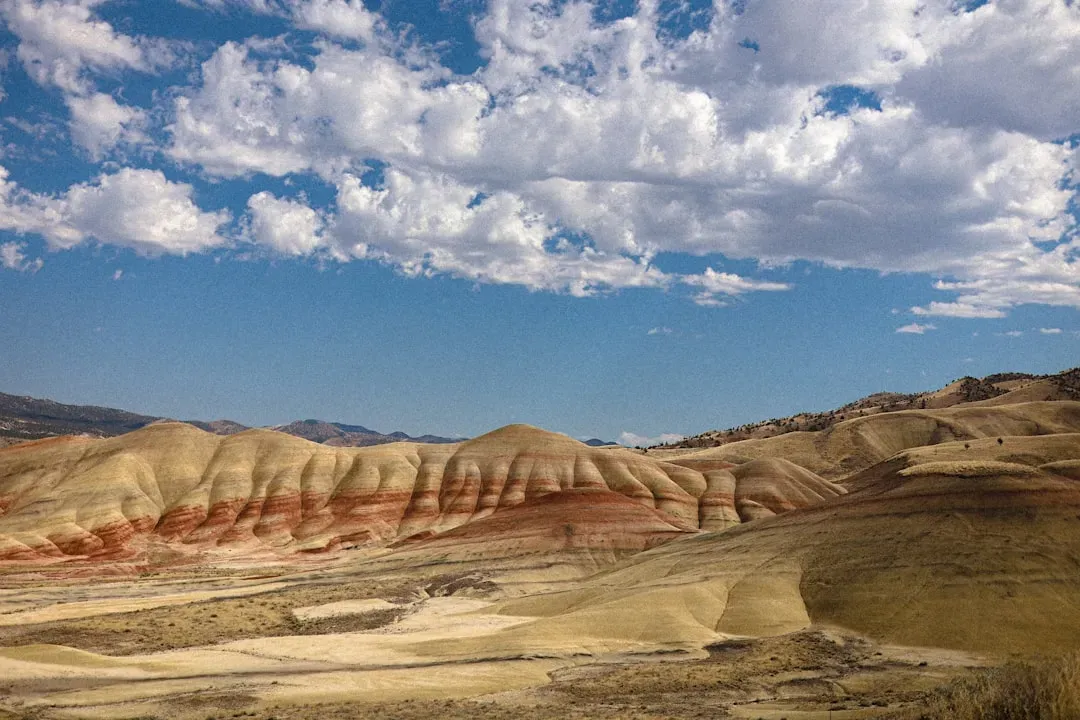
Very few places on Earth let scientists study the actual progression of evolution over an enormous stretch of time. John Day in Oregon is one of them. Over tens of millions of years, the shifting volcanic landscape of the John Day River basin has collected an impressive catalog of ancient life. Because of this, the three units of the monument established in the area, Clarno, Sheep Rock, and Painted Hills, are immensely valuable, among the few places on Earth where scientists can study the progression of evolution over a period of time.
The monument effectively records the “Age of Mammals,” the evolution of North American mammals after the dinosaurs went extinct to as recently as 5 million years ago. The most famous unit is the Painted Hills Unit, which features stunning color-banded hills and is spectacular at sunrise or sunset. Tiny four-toed horses, huge rhino-like brontotheres, crocodilians, and meat-eating creodonts roamed the ancient jungles that existed at the time. The fossilized remains of ancient palms and bananas are also found in the rocky towers. It is, without a doubt, part natural wonder and part genuine time machine.
9. Agate Fossil Beds National Monument, Nebraska: Where Prehistoric Mammals Piled Up
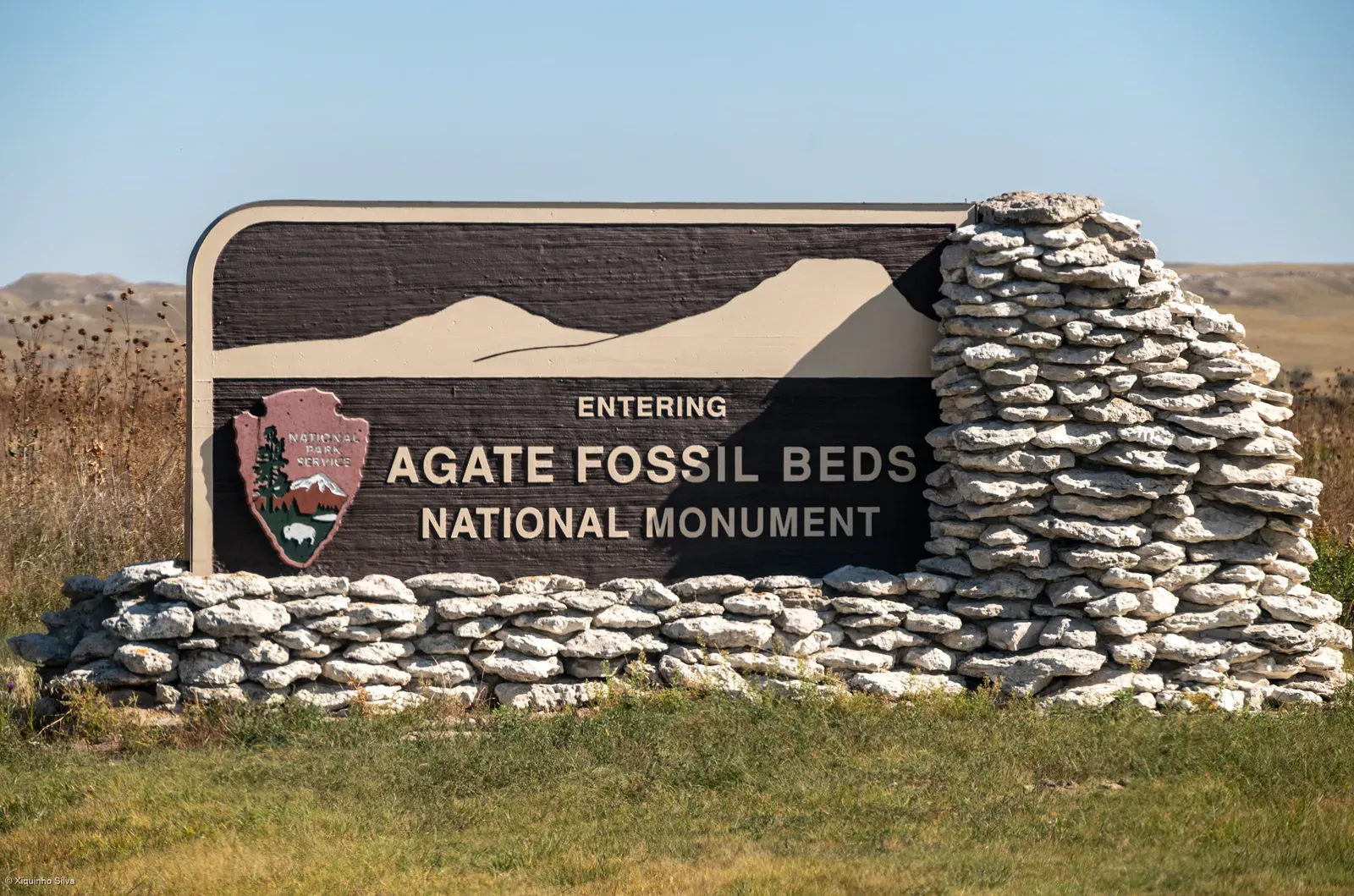
Nebraska has a habit of surprising people, and Agate Fossil Beds is Exhibit A. This isn’t a site of dinosaurs. This is where the mammals that replaced them left their bones in remarkable numbers. Agate Fossil Beds National Monument is a site of some of the best-preserved mammal bone fossils in the world. Mammal fossils found here are from the Miocene Epoch, 19 to 21 million years ago, and are the remains of animals that replaced the dinosaurs. A slab of the bone bed, some two and a half to four feet thick, is on display in the visitor center.
Especially notable discoveries have included Amphicyon, also known as a “beardog” that resembles neither a bear nor a dog, the pig-like Dinohyus, a short rhinoceros called a Menoceras, a Miohippus (prehistoric ancestor of the horse), the camel-like gazelle Stenomylus, Palaeocastor (land beavers), and an especially impressive 8-foot-tall animal with the head of a horse but the feet of a sloth. Let’s be real, that combination of animals sounds completely impossible. Yet all of them walked across what is now quiet Nebraska grassland. You can hike the 2.7-mile Fossil Hills or the one-mile Daemonelix Trail and explore the area’s fossils and history.
10. Cleveland-Lloyd Dinosaur Quarry, Utah: The Carnivore Mystery That Stumps Scientists
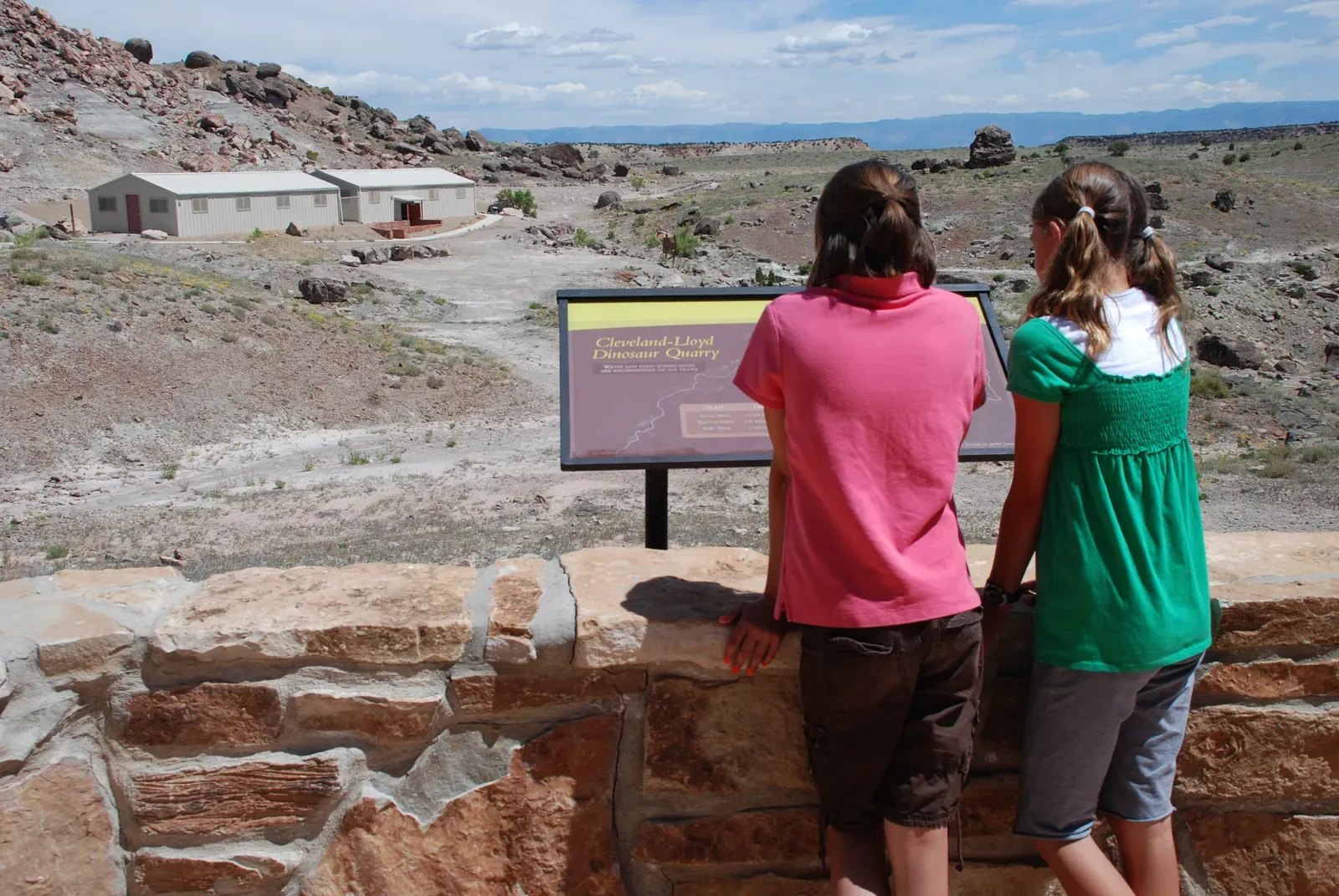
Some fossil sites have answers. Others have questions that even the best scientists in the world cannot resolve. Cleveland-Lloyd in Utah sits firmly in the second category, and that’s part of what makes it so utterly compelling. The Cleveland-Lloyd Dinosaur Quarry contains the densest concentration of Jurassic-aged dinosaur bones ever found. Scientists are still puzzled why more than three-quarters of the bones found in this area are from carnivores. That statistic defies easy explanation. Carnivores almost never outnumber herbivores in any ecosystem. Something very strange happened here.
Fossil hunters have been unearthing bygone beasts in this monument for over 100 years, and the list of species it has yielded includes icons like Allosaurus, Apatosaurus, Diplodocus, and Stegosaurus. You can see the dinosaur bones and learn about the research being conducted at this site, and then offer your own hypothesis about the mystery that persists even today. Think of yourself as a junior detective standing at the scene of a 150-million-year-old crime. Nobody has cracked the case. Maybe you’ll be the one who finally does.
Conclusion: The Ground Beneath Your Feet Has Secrets Worth Chasing
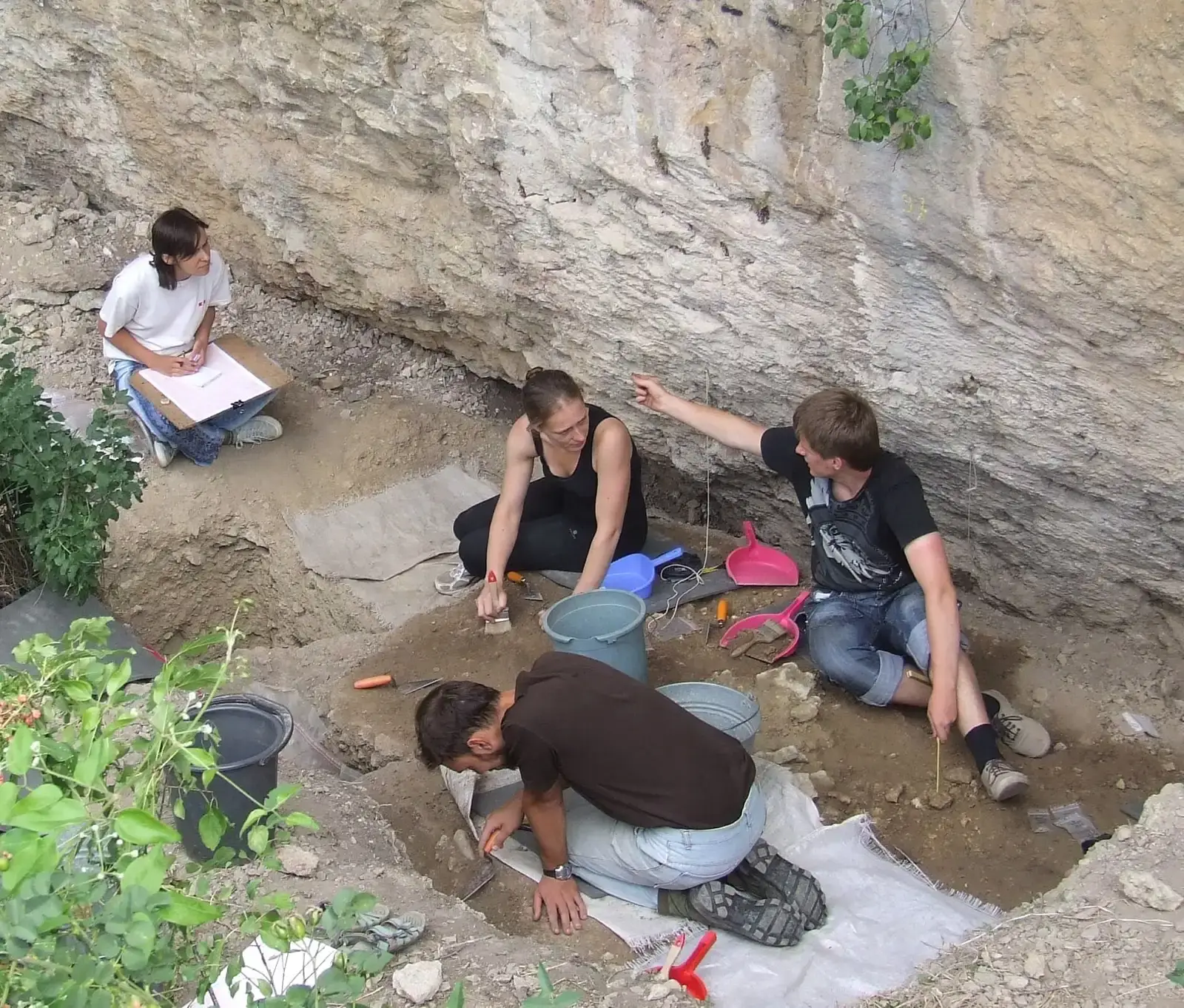
North America isn’t just a continent of modern cities and sweeping highways. It’s a continent layered in time, where every cliff face, dry lakebed, and rolling field may be hiding something that changes how we understand life on Earth. The National Park Service alone presides over more than 200 sites with documented paleontological resources, including many spots with museum exhibits or fossils still waiting to be unearthed. Hundreds more sites exist beyond those.
From rhinos buried alive by Yellowstone’s ancient volcanic fury to the oldest human footprints ever discovered on the continent, the stories locked in North American rock are deeply human, deeply humbling, and endlessly surprising. These aren’t just places for scientists in field hats. They’re places for anyone with a healthy sense of wonder and a willingness to look down at the ground with fresh eyes.
The next time you’re planning a road trip or a national park adventure, consider pointing your compass toward one of these ten marvels. You might just find yourself standing on the edge of something ancient and extraordinary. What would you have guessed was hiding there? Tell us in the comments!