Ask most people to name the scariest dinosaur, and the answer comes out almost automatically: T. rex. For decades, it has dominated movies, toys, video games, and our childhood nightmares as the ultimate prehistoric boss fight. The image is so ingrained that it feels almost wrong to question it. But that is exactly what many paleontologists have been doing, and the real story is far more interesting than the Hollywood version.
When scientists dig into the fossils, run biomechanical models, and compare T. rex to other prehistoric heavyweights, a more nuanced picture appears. Tyrannosaurus rex was absolutely terrifying in some very specific ways, but “strongest dinosaur” is a much messier title than it sounds. Strength can mean bite force, body mass, speed, durability, or even how long a species dominated its ecosystem. Once you start breaking those pieces apart, T. rex suddenly has serious competition.
What does “strongest” even mean for a dinosaur?
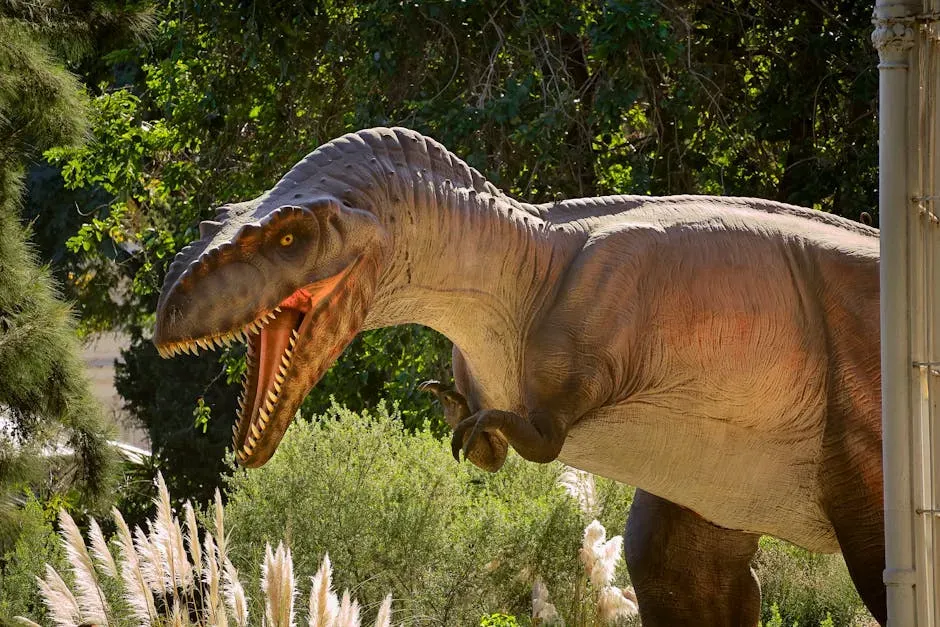
The first surprise for many people is that scientists do not actually use a simple “strongest dinosaur” label, because strength is not one thing. A creature might have the most powerful bite but be relatively clumsy, or be lightning fast but not very bulky. When we talk about T. rex, we are often mixing together different ideas: physical power, killing ability, ecological dominance, and even cultural impact. That cocktail of meanings is great for movie scripts, but it is not how biology works.
Paleontologists instead break strength into measurable pieces: bite force estimates, muscle attachment areas, bone thickness, speed models, and the kinds of animals a dinosaur could realistically hunt or fight. Once you compare dinosaurs trait by trait, it becomes obvious that no one species was the undisputed champion in every category. T. rex was extraordinary at some things and merely decent at others, while different dinosaurs excelled in their own ways. In other words, there was no single king; there was a whole league of very specialized monsters.
T. rex’s superpower: an astonishing bite, not an invincible body
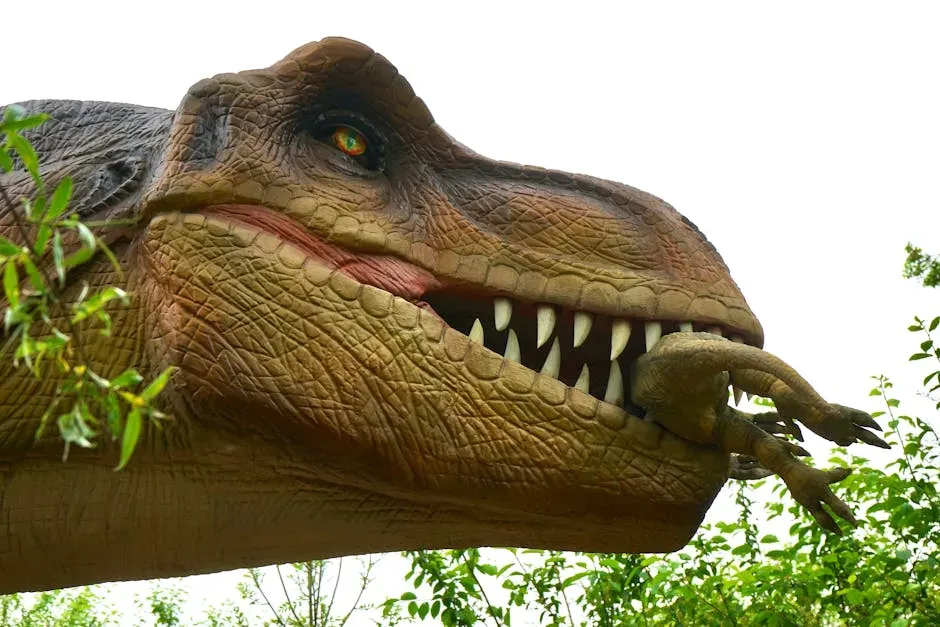
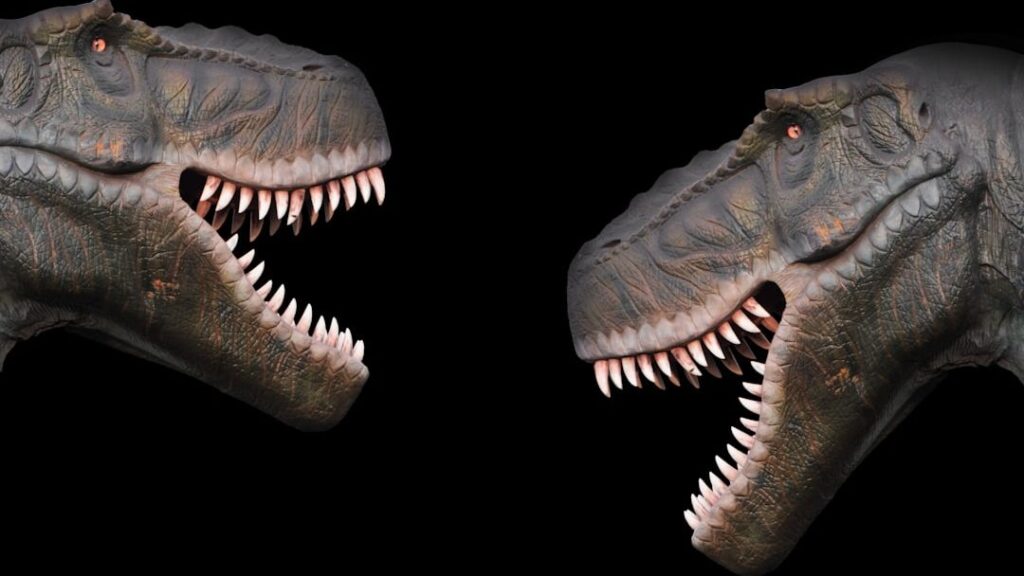
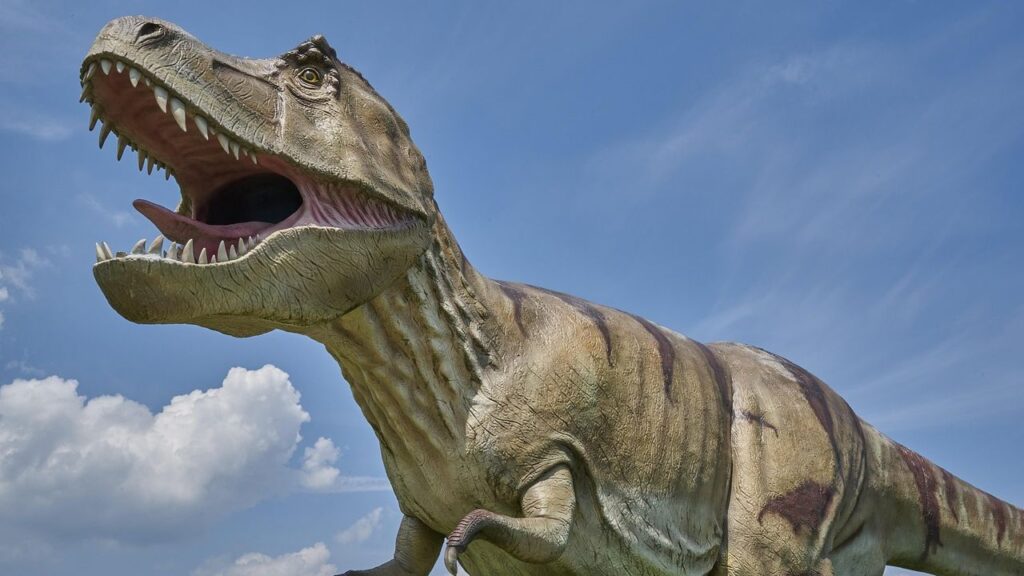
Where T. rex truly shines is bite force. Studies using computer models of its skull and jaw muscles suggest it could bite down harder than almost any land animal known, living or extinct. Its teeth were thick, more like bananas than knife blades, built to crush bone rather than simply slice flesh. That crushing ability meant it could turn large prey animals into splintered carcasses and likely swallow big chunks of meat and bone together.
But having a legendary bite does not make the entire animal unbeatable. The rest of the T. rex body, while powerful, had limits. Its arms were famously short, and although they were probably stronger than they look, they were not major weapons compared to its jaws and legs. Its body was big and muscular but not excessively bulky compared to some giant herbivores. In a straight body-mass contest against the heaviest dinosaurs or a comparison of armor and defense, T. rex starts to look less like a perfect monster and more like a specialist: a long-legged, bone-crushing predator, not a universal champion of raw strength.
Meet the rivals: Giganotosaurus, Spinosaurus, and other giant predators
If T. rex was supposed to be the strongest, then its rivals clearly did not get the memo. Giant carnivores like Giganotosaurus and Carcharodontosaurus were roughly similar in length, with some estimates putting them as long or slightly longer. They had huge skulls filled with serrated, knife-like teeth, and their bodies were built for powerful, slashing attacks. In terms of sheer size, they were at least in the same league, and some paleontologists argue they may have edged out T. rex in overall length, though not necessarily in mass.
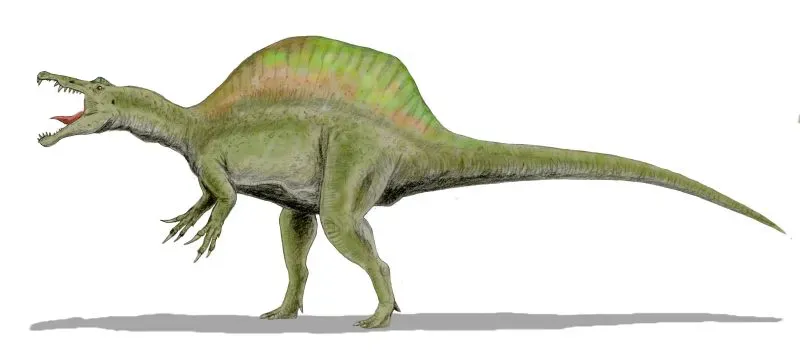
Then there is Spinosaurus, the sail-backed predator that has sparked intense debate. It was probably longer than T. rex and adapted to a semi-aquatic lifestyle, with a crocodile-like snout for catching fish and a body possibly suited for wading or swimming. Calling Spinosaurus the “strongest” does not really fit either, because it was doing something different: dominating river systems rather than sprinting across open plains after massive herbivores. Put simply, these predators were not playing the same game, and that makes a single strength trophy almost meaningless.
The true tanks: titanosaurs, sauropods, and armored juggernauts
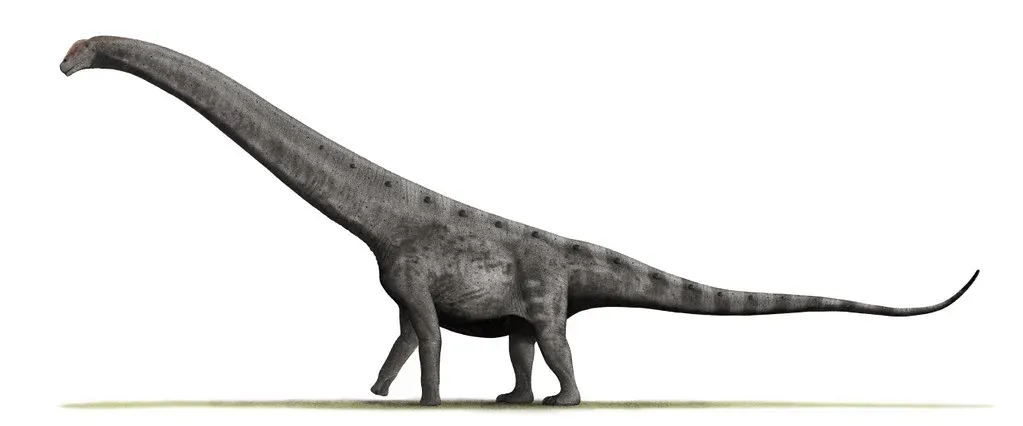
If raw size and resilience are your definition of strength, T. rex loses instantly to the giant sauropods. Massive long-necked dinosaurs like Argentinosaurus or Patagotitan reached weights many times greater than a large T. rex. Their bones were so massive and their bodies so colossal that most carnivores simply could not take on healthy adults. These giants were like moving apartment buildings, and surviving in that body for years required bones and muscles that could handle staggering loads.
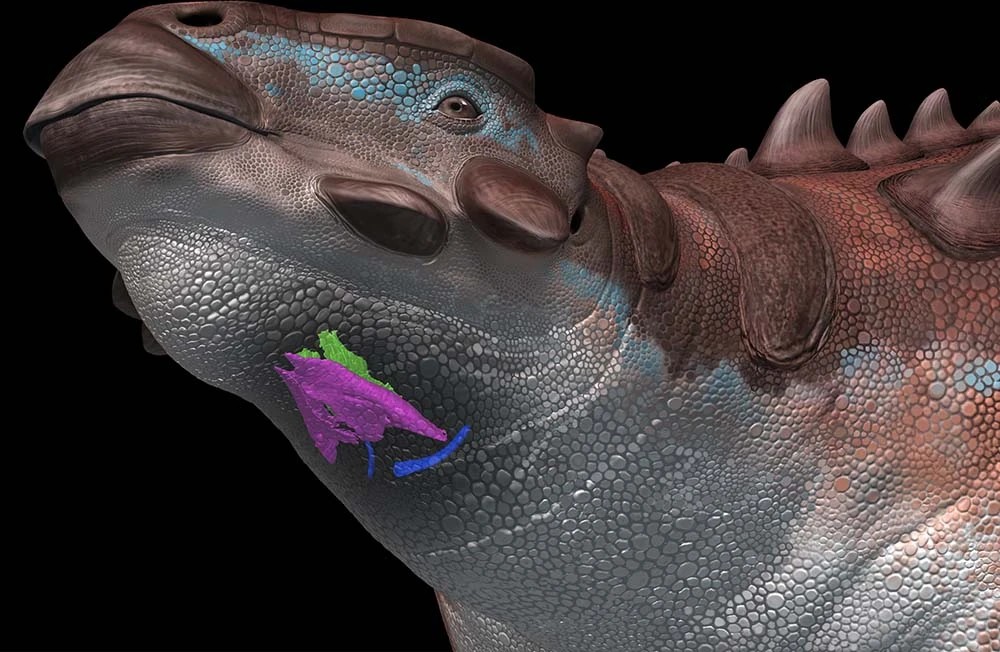
On another end of the spectrum, heavily armored herbivores like Ankylosaurus and various stegosaurs brought a different kind of strength to the table. Ankylosaurus, for instance, carried thick armor plates and wielded a heavy tail club capable of breaking bones. A T. rex attacking one of these living tanks risked serious injury or worse. That kind of defensive strength matters in nature, because survival is its own form of power. When you factor in armor, weaponized tails, and sheer bulk, T. rex starts to look less like the strongest dinosaur and more like one dangerous predator among many very dangerous animals.
Speed, agility, and brainpower: T. rex was strong, but not perfect
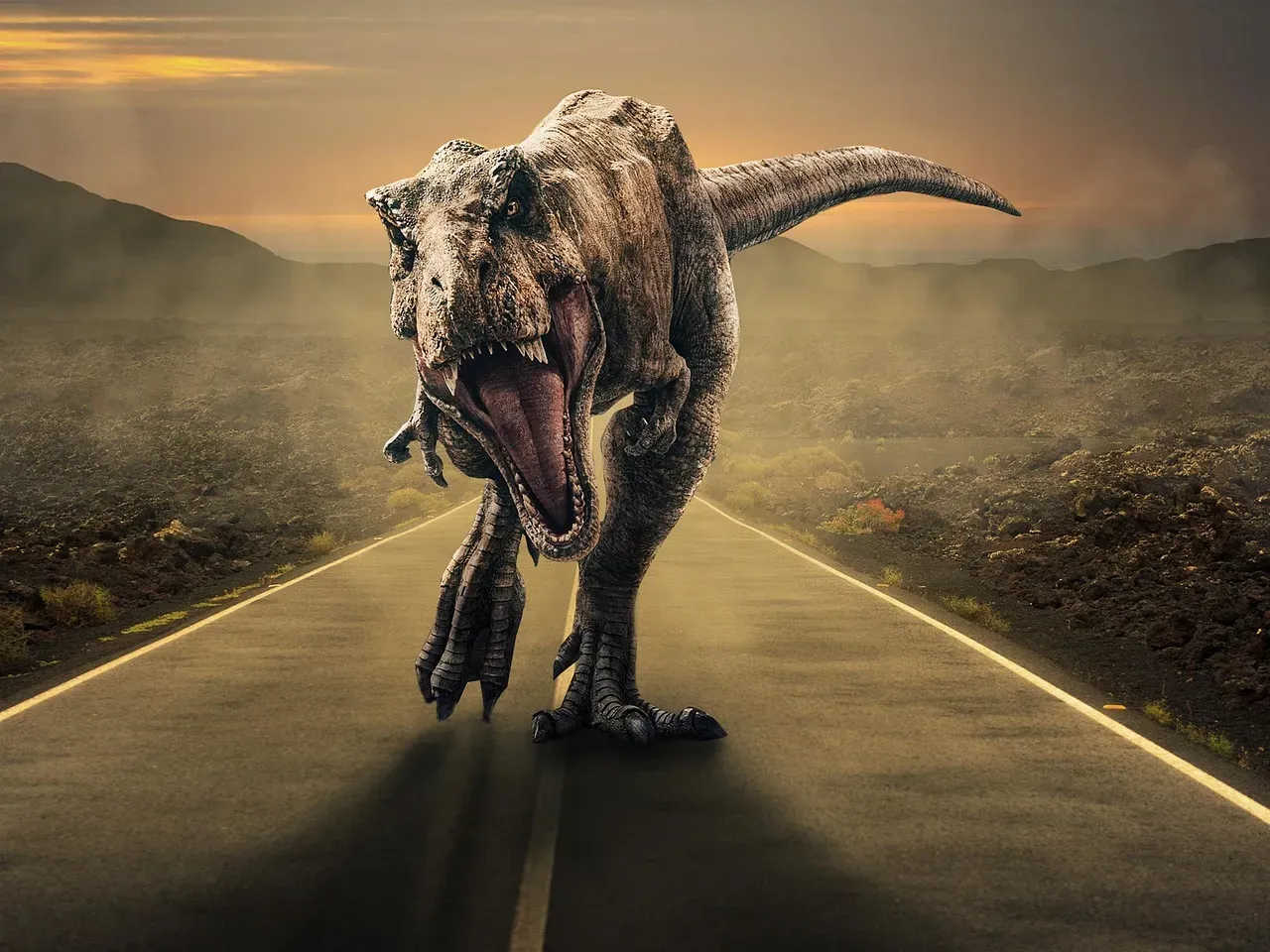
Strength is not just about who can push the most weight; it is also about how you use what you have. T. rex appears to have been surprisingly agile for its size, with powerful legs and a long tail to help maintain balance. Some models suggest it could move at a decent running or fast walking speed, fast enough to threaten large herbivores that could not easily outmaneuver it. Its senses also seem to have been sharp, with good vision and a strong sense of smell, giving it an advantage as both a hunter and a scavenger.
At the same time, it probably was not a sprinter in the way many people imagine from movies. Being that large puts limits on how fast an animal can safely move without breaking its own bones or tendons. Its intelligence was likely impressive compared to many other dinosaurs, but still nowhere near what we think of in modern mammals like big cats or primates. So while T. rex might have been one of the more capable and adaptable carnivores of its time, it still operated under strict physical constraints. Strong? Absolutely. Flawless? Not even close.
Ecological dominance: did T. rex rule its world more than others ruled theirs?
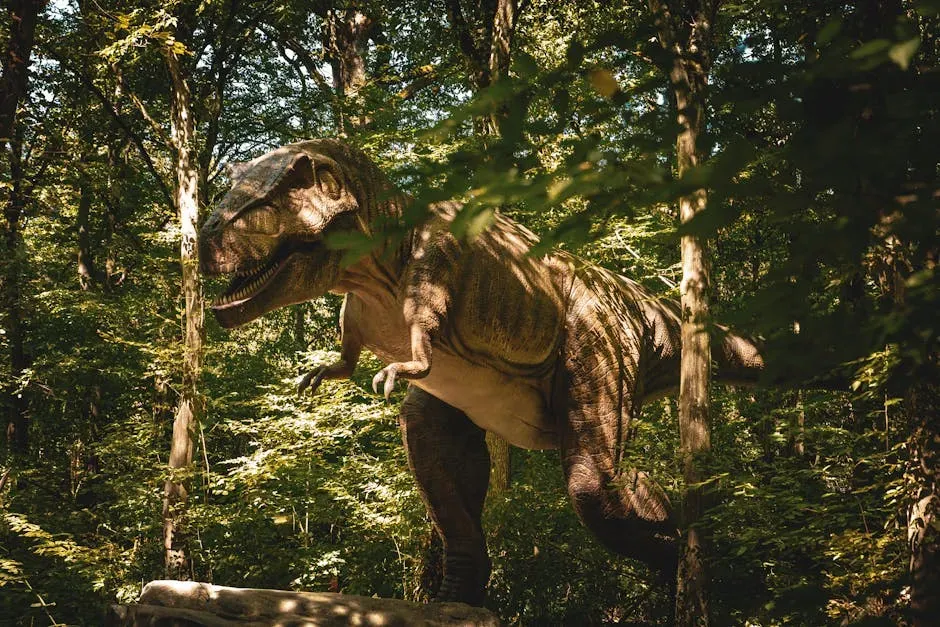
Another way to think about strength is in terms of ecological dominance: how firmly a species controlled its environment. In its Late Cretaceous ecosystems in North America, T. rex seems to have been the top large predator. Fossils from those regions often show T. rex as the main big carnivore, while other areas of the world at different times had multiple large predators sharing or splitting roles. In that sense, T. rex may have been unusually dominant, acting as the primary apex hunter over huge territories.
But even that dominance had limits. It shared its world with giant herbivores, smaller predators, and a constantly shifting climate and landscape. Other dinosaur ecosystems elsewhere had their own apex predators that were just as central to their food webs as T. rex was to its. So ecological strength turns out to be relative: Tyrannosaurus rex did not rule the entire age of dinosaurs, just its own region and time slice near the end of the Cretaceous. In other parts of the world and earlier eras, it would have been just one more terrifying newcomer among many.
Why T. rex became king in our culture, not in science
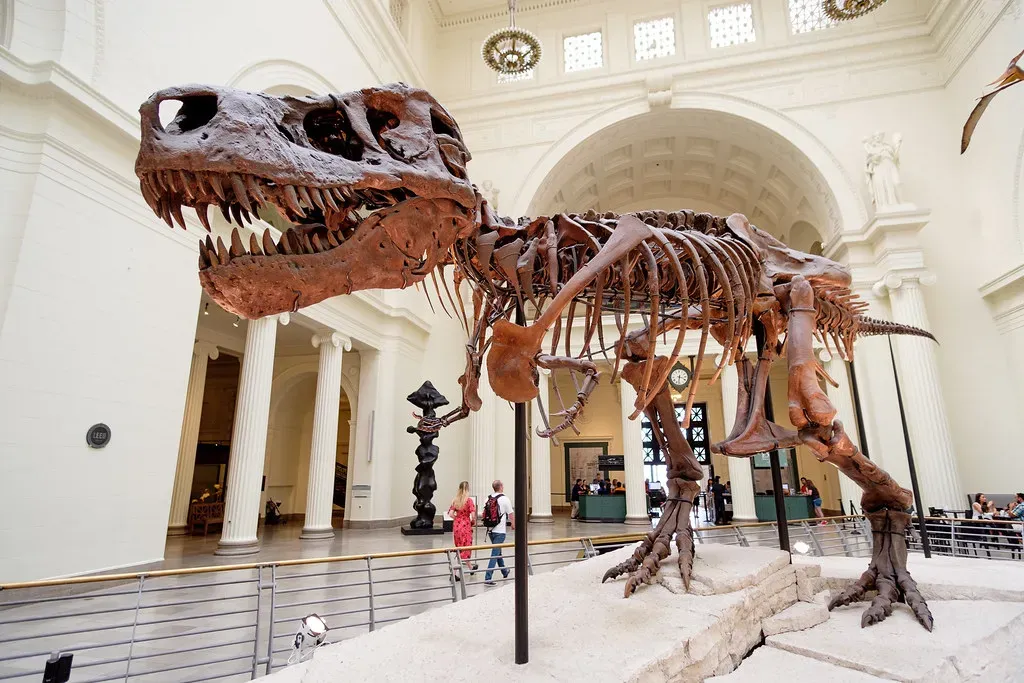
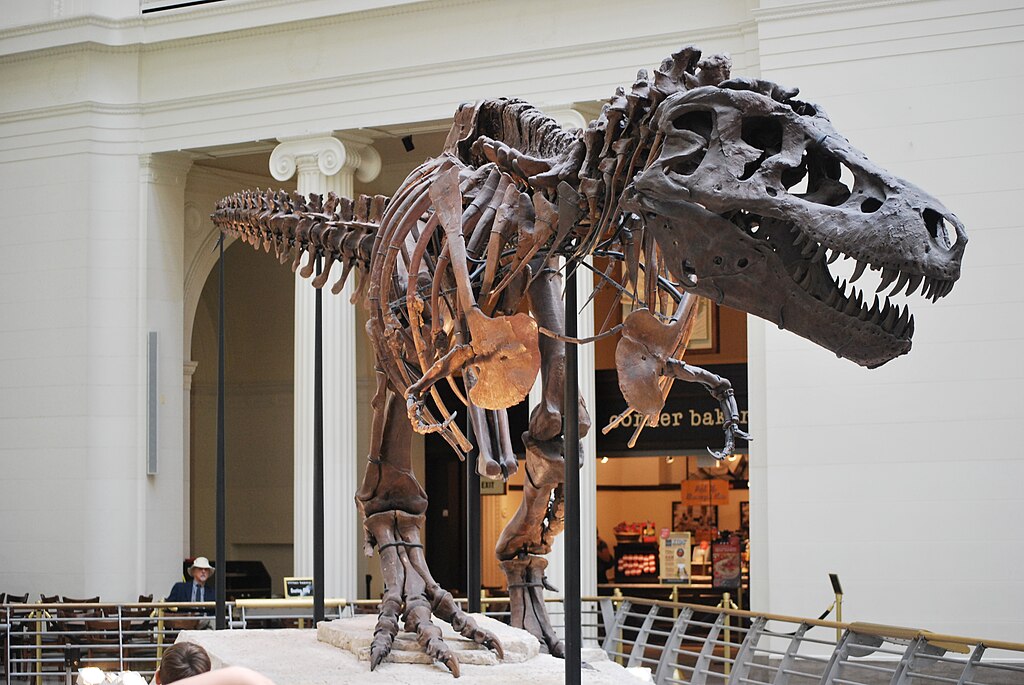
If T. rex was not objectively the strongest dinosaur, why does it feel like it is? A big part of the answer lies in timing and storytelling. The discovery of T. rex in the early twentieth century hit at a moment when public fascination with dinosaurs was exploding, and its bones were dramatic, well preserved, and displayed prominently in major museums. It became a kind of mascot for deep time, the poster child of prehistoric power, long before many of its rivals were known in detail.
Then came books, documentaries, and eventually blockbuster movies that locked T. rex into the role of undisputed champion. Once a story like that digs into popular culture, it tends to stick. New discoveries of equally gigantic or even larger predators never got the same spotlight. In classrooms and children’s books, it is simpler to say “T. rex was the king” than to explain the messy reality of multiple apex predators, shifting ecosystems, and different kinds of strength. Culturally, T. rex won the marketing war, even if the science tells a more complicated story.
How new research keeps shrinking the T. rex myth
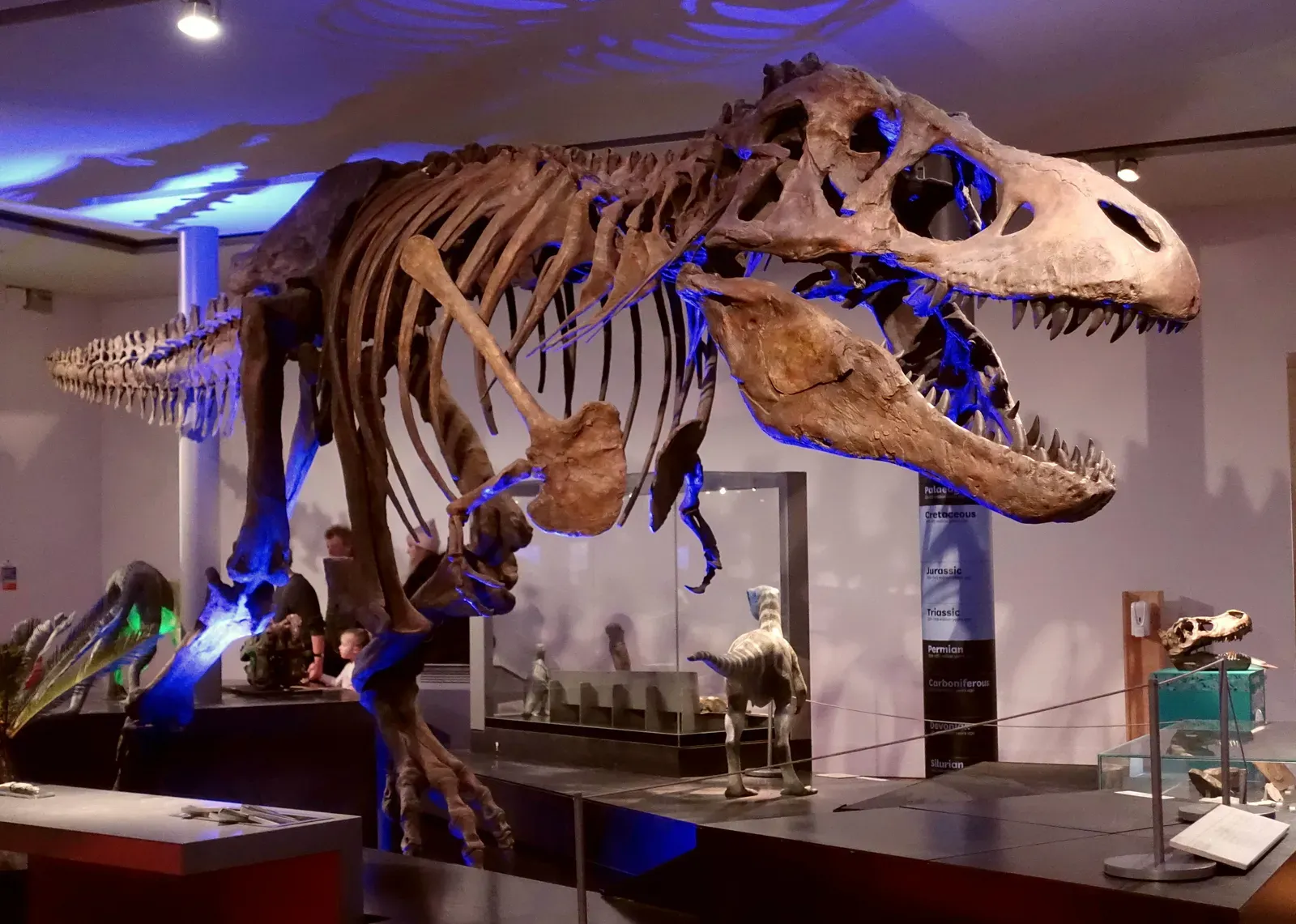
Over the last few decades, every major scientific advance in studying dinosaur biomechanics has chipped away at the overly simple view of T. rex as the ultimate dinosaur. High-powered computer models, better reconstructions of muscle mass, and more careful comparisons with living animals have all clarified where T. rex truly excelled and where it was just one contender among many. Some studies have lowered earlier speed estimates, others have fine-tuned bite force calculations, and many have explored how it grew and changed from juvenile to adult.
At the same time, new giant dinosaurs keep entering the conversation as more fossils are found and reanalyzed. Some of these rivals challenge T. rex in length, mass, or other features, while others completely reframe what we think a top predator can look like, such as semi-aquatic hunters. Each discovery forces scientists to ask more precise questions rather than cling to an old narrative. Instead of one king, we are gradually uncovering a complex cast of giants, each powerful in its own way. As that picture gets sharper, the idea of T. rex as the single strongest dinosaur looks more and more like a relic of an earlier, less informed era.
Conclusion: a terrifying specialist, not an all-powerful king
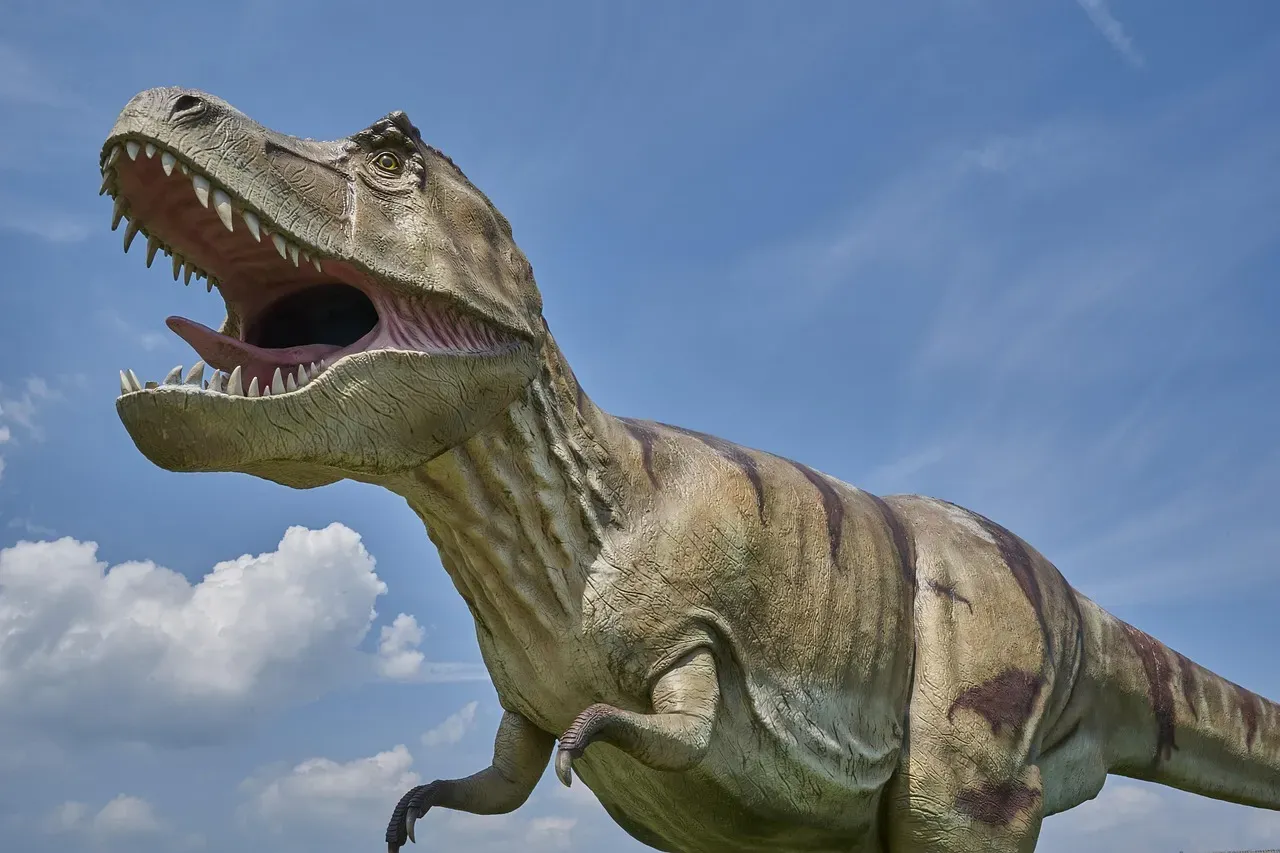
So, was T. rex the strongest dinosaur? If by strongest you mean the most powerful bite among land animals we know of, then it is a top contender and probably still wears the crown there. But if you widen the lens to include total body mass, armor, defensive weapons, speed, or ecological variety, the title falls apart quickly. Giant sauropods outclass it in sheer size, armored herbivores could seriously injure it, and other huge predators rivaled it in length and killing power, even if they hunted in slightly different ways.
In my view, that makes T. rex more interesting, not less. It was not an all-powerful final boss of evolution, but a brutally effective specialist that fit its time and place almost perfectly. It crushed bone, stalked massive prey, and dominated its ecosystem near the very end of the dinosaur era, then disappeared like everything else when the world changed overnight. Maybe the real lesson is that nature does not crown permanent kings; it creates waves of dangerous champions, each strong in their own specific niche. Knowing that, would you still call T. rex the strongest, or does it feel more like one legendary player in a very crowded league?