
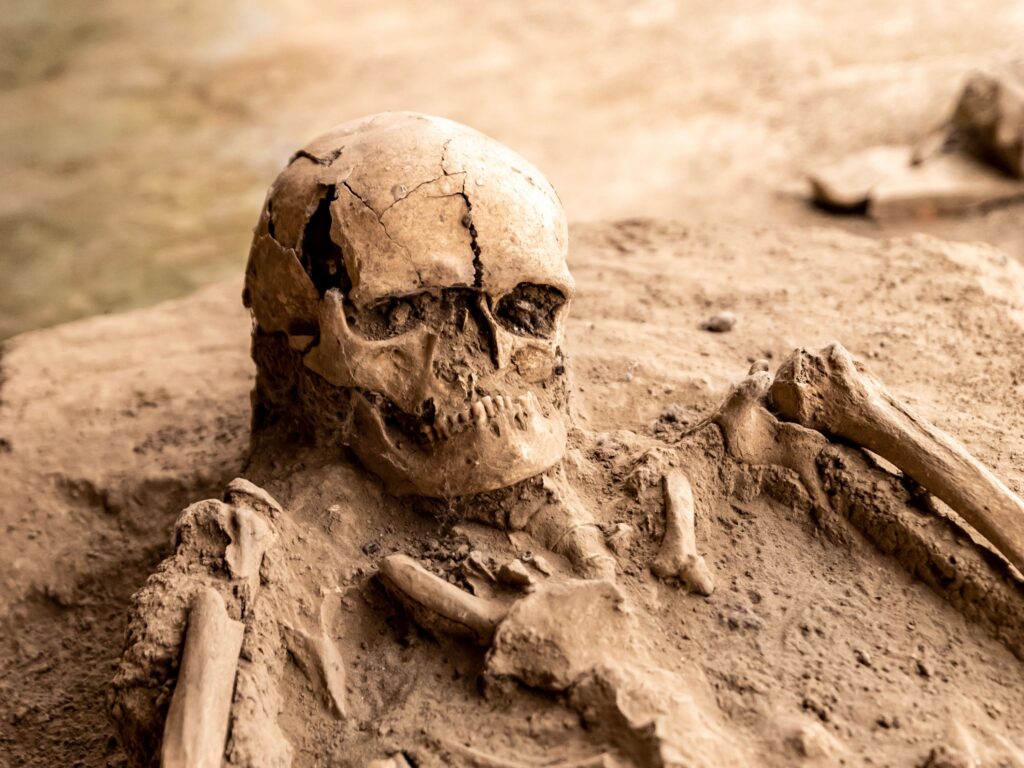
Imagine a team of future scientists digging through the layers of Earth and stumbling across… you. Not your selfies, not your old texts, but your fossil: the hardened, permanent echo of how you lived, moved, worked, and coped with being human in this weird century. If your personality could leave a mark in rock, what would it look like?
This is where astrology meets paleontology in the most playful way. We are going to blend what we know about how fossils form with the symbolic personality traits of each zodiac sign, then imagine the kind of remains a future research team might catalogue under your name. It is half science, half storytelling, and just speculative enough to make you wonder: if my habits turned to stone, what exactly would they reveal?
Aries: The Impact Crater Skeleton

Aries energy hits life like a meteor, so it is only fitting that your fossil looks like something catastrophic happened. Picture a skeleton frozen mid-sprint, bones slightly misaligned from a life of bumps, breaks, and risk-taking, surrounded by cracked sediment that hints at sudden impact or collapse. Future scientists would probably argue about whether you died in a heroic rescue attempt, a dare gone wrong, or simply by running headfirst into something you refused to slow down for.
Next to your bones, they might find fractured gear: a snapped helmet, a broken board, or the remnants of some high-adrenaline gadget. The layers of rock would show repeated micro-traumas healed over time, like tiny scars in the bone structure that whisper “they always bounced back.” Your fossil would be cited as evidence of a species that chose action over safety, momentum over caution, and courage even when it bordered on reckless.
Taurus: The Reclining Homebody Fossil
Taurus would not be discovered in some dramatic cliff face; your fossil would be found in what was once a solid, grounded home environment. Think of a skeleton in a relaxed, almost lounging position, surrounded by remnants of comfort and stability: dense bone density from good food, thick muscle attachments from steady, consistent movement, and maybe layers of pollen or plant matter from old gardens that once grew nearby.
Future scientists would probably classify you as a “sedentary but well-adapted” type, thriving in environments with reliable resources and low chaos. They might find evidence of repeated pathways worn into the ground where you walked the same daily routes, proof of loyalty to routines and spaces. Your fossil would tell a story of someone who valued comfort, nourishment, and physical connection to the land more than restless wandering.
Gemini: The Fragmented Double Specimen
A Gemini fossil would confuse researchers in the best way. At first glance, they might think they have found two individuals who died close together, only to realize the remains belong to one person constantly in motion, constantly shifting. Slight asymmetries in the skeleton could show varied habits: one arm with stronger bone density from overuse, leg wear patterns that look like you alternated between walking, pacing, and fidgeting.
Scattered around you, they might uncover layers of artifacts: early devices, writing tools, bits of communication tech all mixed in the same sediment. It would look like a person whose environment changed rapidly, with different life phases stacked like geological strata. Your fossil would become a case study in adaptation and curiosity, a reminder that some creatures survive by staying mentally nimble and never fully staying still in any one identity.
Cancer: The Shell-Within-a-Home Fossil
If future scientists discovered Cancer fossils, they would almost certainly be inside some form of shelter. Your remains might be curled slightly, as if protecting your core, with ribs and hands suggesting a person who held others close and guarded emotional territory like sacred ground. The sediment around you might show traces of domestic life: food remnants, cooking debris, or layered ash from repeated use of a hearth or cozy heat source.
They could interpret your fossil as a “nest-builder species,” one that invested in emotional and physical security more than outward conquest. The pattern of wear on your bones might show that you carried others, perhaps children or dependents, or that you repeatedly lifted and arranged objects to create comforting spaces. Your fossil would radiate the story of someone who treated home like a shell: sometimes heavy, always protective, rarely abandoned lightly.
Leo: The Monument Fossil in the Open
Leo’s fossil would not be hidden deep in some forgotten corner; it would sit in a prominent, open layer where others once gathered. The skeleton might be found upright or in a posture suggesting performance or leadership, surrounded by signs that people came and went around you: compacted ground, overlapping footprints fossilized in the sediment, maybe even remnants of structures that once resembled stages, seating areas, or central gathering spots.
To future researchers, your fossil would scream social significance. They might theorize that you held a leading or symbolic role in your community, based on the density of nearby remains, objects, and repeated traffic patterns. Even the osteological markers could suggest someone who projected outward: stronger chest muscles used for expressive movement, vocal strain evidence on certain bones where tendons attach, hinting at a life spent speaking up, not shrinking down.
Virgo: The Ordered Worksite Skeleton

A Virgo fossil would likely be found in what used to be a carefully maintained workspace or habitat, and the context would be almost unnervingly orderly. The sediment layers might show neat zones of different activities: an area for tools, a place for records or written materials, maybe even trace patterns of repeated cleaning or organizing movements. Your bones might reveal fine motor precision, with hand and wrist structures adapted for detail-focused tasks.
Future scientists would probably call you a “system optimizer,” someone whose existence made their environment more structured and efficient. They might find multiple fixes and repairs in the artifacts buried with you: mended objects, reworked tools, evidence of items being repurposed instead of discarded. Your fossil would stand as evidence that some individuals in the population were dedicated to reducing chaos, improving daily life, and quietly preventing everything from falling apart.
Libra: The Paired Fossil in a Balanced Setting
Libra’s remains would almost never turn up alone. More likely, archaeologists would uncover a pair of skeletons or a small cluster arranged in a way that suggests relationship, cooperation, or shared space. The bones themselves might show relatively even wear patterns, as though you balanced work and rest, physical and mental effort, more than most. Nothing too extreme, nothing overly neglected.
Surrounding you, the artifact distribution would probably look strikingly symmetrical: items in pairs, seating areas across from each other, pathways that mirror one another. Researchers might infer that you lived in an environment that prioritized social harmony and aesthetics, not just survival. Your fossil would be cited as an example of how some personalities seem almost engineered to negotiate, mediate, and keep the social fabric from tearing under pressure.
Scorpio: The Deep-Buried Mystery Remains
Scorpio fossils would be found deeper than most, both literally and metaphorically. Your remains might show signs of intense life phases: healed injuries, abrupt changes in diet visible in the chemical signatures of your bones, or stress markers that appear and vanish in cycles. It would look like you lived through extremes – loss, transformation, and rebirth etched straight into your physical structure.
The burial context would likely be unusual: maybe more deliberately concealed, with fewer casual artifacts and more meaningful, symbolic objects. Future scientists would argue over whether you were part of a secretive subgroup or ritual-heavy community. Your fossil would be proof that not every life was shallow or transparent; some were lived with profound emotional depth, heavy boundaries, and a willingness to walk through darkness others avoided.
Sagittarius: The Wandering Trail Fossil
Sagittarius would not leave a single neat fossil site; you would leave a route. Your remains might ultimately be found at the edge of some former frontier – near old travel corridors, ancient roads, or migration paths. Bone wear would show long-distance walking, strong leg structures, and maybe even the slight damage patterns that come from falls, trips, and constantly testing new terrain.
Scattered across multiple locations, scientists might find similar artifacts bearing the same distinctive patterns or markings, leading them to suspect one restless individual covered an unusually large area in a single lifetime. Your fossil would become a key example of a “ranging” personality type: people who survived and thrived by exploring, learning from distant groups, and refusing to stay confined to any one small patch of ground for too long.
Capricorn: The Cliffside Climber Skeleton

Capricorn fossils would most likely be found in elevated or rugged environments: once-steep hillsides, mountainous regions, or the remains of tall structures. Your bones might show strong, dense lower limbs and joints adapted to uphill strain, the kind of wear that comes from climbing – literally and metaphorically. Vertebrae might show compression from bearing heavy loads and responsibilities over long periods.
The context might include half-built or fully realized structural remains: long-term projects, constructed walls, terracing, or ambitious modifications of the landscape. Future scientists could label you a “vertical strategist,” someone who leveraged height, perspective, and long-term planning. Your fossil would prove that some humans were wired to keep pushing upward, even when the terrain fought back, seeing every obstacle as something to be engineered around rather than avoided.
Aquarius: The Communal Tech-Edge Fossil

An Aquarius fossil would probably be discovered in the remains of what once was an experimental or unconventional community space. The immediate area might show early traces of new technologies, odd layouts, or social structures that broke the usual patterns of traditional households. Your bones might not be the strangest thing about the site; the distribution of objects would be.
Researchers might find evidence of collaborative living: shared tools, communal seating, and strange arrays of electronic or mechanical remnants suggesting early adoption of emerging tech. They would likely theorize that you belonged to a subculture testing new ways of being human together. Your fossil would illustrate how innovation and social experimentation leave just as real a mark on the geological record as wars or natural disasters, even if it is subtler at first glance.
Pisces: The Water-Adjacent Dreamer Remains

Pisces fossils would be uncovered near old shorelines, riverbeds, or places that used to sit close to water. Your skeleton might show softer or more delicate bone features, with fewer hard-impact injuries and more gradual wear, as if you drifted rather than crashed through life. Chemical traces in your remains could show diets rich in aquatic foods or long proximity to humid, fluid environments.
The surroundings might be littered with objects related to music, rituals, or creative practices, suggesting you processed the world in symbolic, emotional ways. Future scientists could interpret your fossil as part of a group that blurred the line between the practical and the spiritual, between survival and meaning-making. Your remains would tell a story of someone who stayed close to tides – both literal and emotional – letting currents carry them where others insisted on marching.
Conclusion: What Story Will Your Bones Tell?
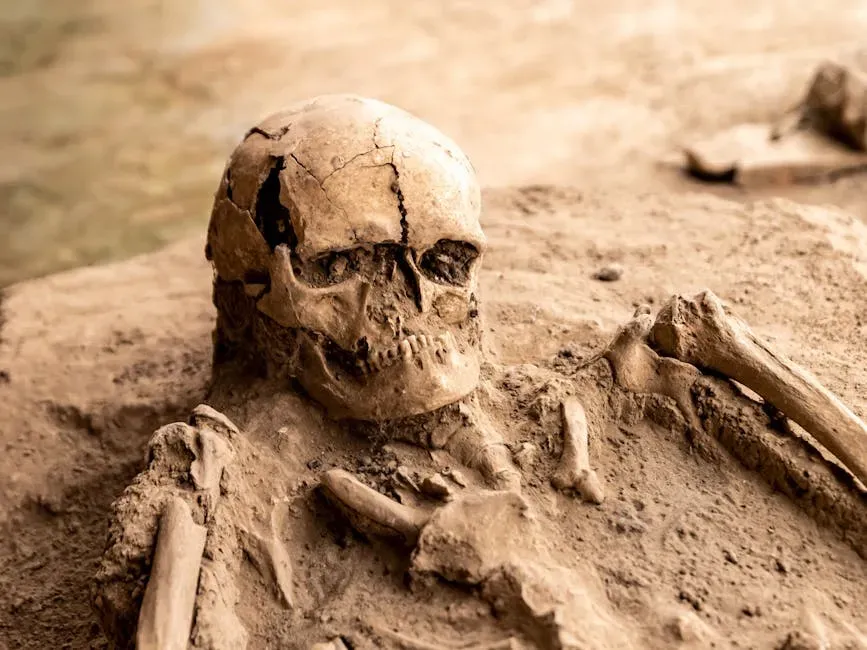
When I think about this thought experiment, what strikes me most is how even our real fossils already tell stories about personality in their own quiet way. Stress lines, healed fractures, signs of repeated motion, and the places where bodies are found all whisper about what people most cared about, feared, or pursued. Layering zodiac symbolism over that just makes those stories more colorful and relatable, like giving scientific data a poetic translator.
Maybe the real question is not which fossil fits your sign, but which habits you are hardening into your personal bedrock right now. Are you the impact crater, the nest-builder, the wanderer, the climber, or some mix of them all? One day, whether in stone or just in memory, your patterns will be what remains. If future scientists dug you up metaphorically, would you be proud of the life they reconstructed from your traces – or would their conclusions surprise you more than you expect?