
Picture yourself stepping into a device that could catapult you to yesterday or launch you into tomorrow. It sounds like pure fantasy, something reserved for blockbuster movies and dog-eared paperbacks. Yet here’s the thing: the universe doesn’t actually forbid it. Modern physics, with all its equations and observations, leaves the door slightly ajar. The question isn’t just whether time travel could happen, but what mind-bending consequences would unfold if it did. From paradoxes that challenge logic itself to technologies that might reshape existence, exploring time travel means grappling with the very fabric of reality.
The concept has haunted scientists and storytellers alike for over a century. Einstein’s equations whisper possibilities, quantum mechanics offers strange solutions, and every new discovery seems to add another layer of intrigue to this puzzle. What would you encounter if you really could slip through time? Would the universe protect itself from contradictions, or would reality simply unravel?
The Physics Foundation: Einstein’s Gift to Time Travelers
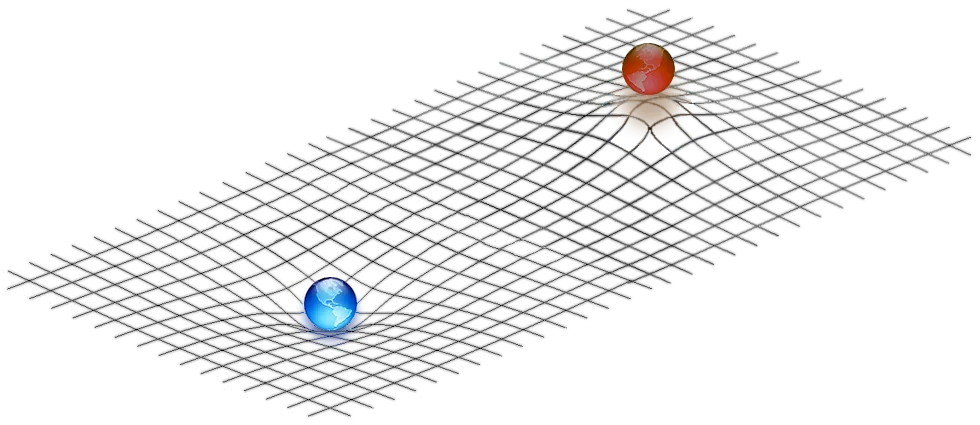
General relativity permits spacetime geometries with closed timelike curves, which describe the possible trajectory of an observer who returns exactly back to their earlier state, and in that sense time travel is physically possible. Think about that for a moment. The very theory that explains gravity and the cosmos also opens a theoretical window to time travel.
Time travel to the past is theoretically possible in certain general relativity spacetime geometries that permit traveling faster than the speed of light, such as cosmic strings, traversable wormholes, and Alcubierre drives, though semiclassical arguments suggest that when quantum effects are incorporated into general relativity, these loopholes may be closed. Einstein himself probably never imagined his beautiful theory would spawn such wild possibilities. Yet here we are, over a century later, still wrestling with what his equations truly allow.
The Grandfather Paradox: Logic’s Ultimate Test

Let’s be real: this is the paradox that keeps physicists up at night. A common example is a time traveler killing their grandfather so he can’t father one of their parents, thus preventing their own conception; if the traveler were not born, they could not kill their grandfather, so the grandfather proceeds to beget the traveler’s parent who begets the traveler, creating a self-contradictory scenario.
You might try to stop patient zero from becoming infected with a virus, but in doing so you would catch the virus and become patient zero, or someone else would, as the salient events would just recalibrate around you, with events adjusting themselves to avoid any inconsistency. Recent mathematical work suggests the universe might have built-in protection mechanisms. It’s almost as if reality has an immune system designed to prevent logical contradictions.
Bootstrap Paradoxes: When Things Create Themselves
The Bootstrap Paradox is a theoretical paradox of time travel that occurs when an object or piece of information sent back in time becomes trapped within an infinite cause-and-effect loop in which the item no longer has a discernible point of origin, and is said to be “uncaused” or “self-created”. Honestly, this one’s even weirder than the grandfather scenario.
Imagine receiving Shakespeare’s complete works from the future, then publishing them as your own, only to have them eventually sent back to you. Where did the plays truly originate? Wilson travels to the future and is given a notebook by his future self, then travels to an earlier point and uses the book’s information to set himself up; after the notebook becomes worn, Wilson copies the information into a new notebook and disposes of the original, later musing that the newly created one is actually the one given to him, raising the question of who wrote the book and where its information actually originated. The information exists, it’s useful, yet it never had an author. Reality shouldn’t work this way, but the math says it might.
Quantum Mechanics to the Rescue

A recent study combining general relativity, quantum mechanics, and thermodynamics demonstrates that time travel might be feasible without leading to logical contradictions. Here’s where things get fascinating. The subatomic world doesn’t play by our everyday rules.
In a universe with closed timelike curves, the laws of quantum mechanics would inherently erase many time travel paradoxes, as any system traveling through a time loop experiences a reset in entropy and memory, ensuring that causality remains intact and preventing contradictions like the grandfather paradox from arising. It’s hard to say for sure, but this suggests that the very fabric of quantum reality might automatically prevent paradoxes. The universe, it seems, knows how to protect itself from its own impossible scenarios.
Wormholes: The Universe’s Potential Subway System
Wormholes connect two points in spacetime, allowing travel in time as well as space; by accelerating one of a wormhole’s two mouths, it can be converted from one traversing space into one traversing time, though it would not be possible to travel back to a time earlier than when the wormhole was first converted into a time machine. Picture folding a piece of paper so two distant points touch. That’s essentially what a wormhole would do to spacetime.
Maintaining a stable, traversable wormhole would necessitate exotic matter with negative energy density to prevent it from collapsing, yet the energy requirements and exotic properties needed are currently hypothetical and not yet produced or observed. We’re talking about matter that has never been found in nature, with properties that seem almost magical. Still, nothing in physics explicitly forbids it. The technology would be beyond anything we can currently imagine.
The Self-Consistency Principle: Reality’s Safety Net
Most physicists have argued that if time travel exists, nature will always find a way to prevent contradictory situations through a “self-consistency principle,” suggesting that everything should align to create a logically coherent story, and recent work provides the first rigorous derivation of this principle directly from established physics by applying the standard framework of quantum mechanics and demonstrating that the self-consistency of history naturally follows from quantum laws.
Think about it this way: every attempt to change the past would mysteriously fail. Not because someone stops you, but because the universe itself conspires to maintain consistency. You can time travel, but you cannot do anything that would cause a paradox to occur. It’s simultaneously frustrating and elegant. You could visit the past, observe historical events, even participate in them, but only in ways that were always part of history.
Time Dilation: The Time Travel We Already Have
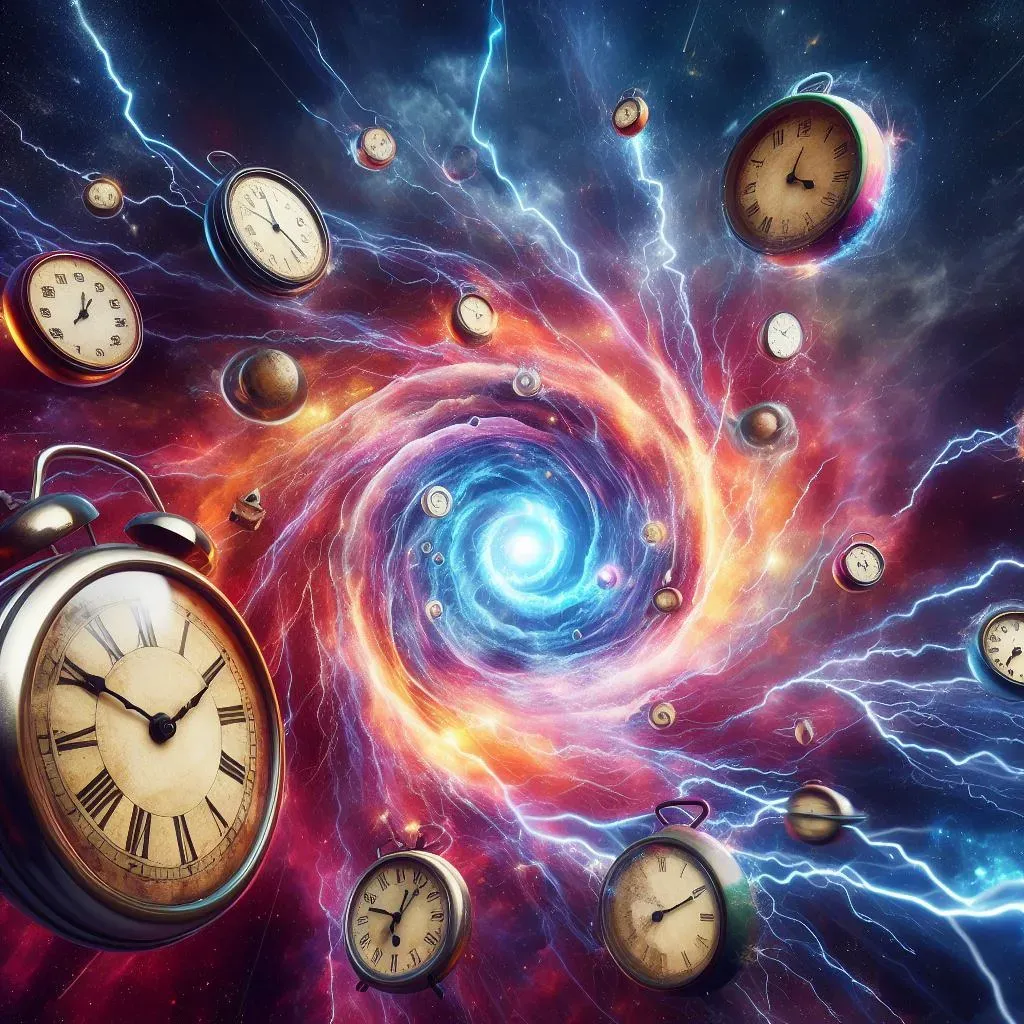
According to Einstein’s theory of relativity, time can be affected by gravity and motion, meaning that time can pass at different rates in different parts of the universe; for example, time moves slower near a massive object like a black hole. This isn’t theoretical anymore. We’ve measured it.
Astronauts on the International Space Station age slightly slower than people on Earth. GPS satellites must account for time dilation or they’d give you wildly incorrect directions. After six months aboard the ISS, where there is less gravity but greater velocity of movement, astronauts have actually aged roughly seven thousandths of a second less than the crew stationed on Earth. It’s a tiny difference, almost nothing really, but it proves the concept. Time isn’t the rigid, universal thing we experience in daily life.
The Ultimate Question: Should We Even Try?
Let’s say we figured it all out tomorrow. We cracked the code for stable wormholes, solved the paradoxes, built the machine. What then? The ethical implications are staggering. Could you resist the temptation to prevent tragedies, knowing full well that your interference might have been what caused them in the first place?
This does not mean practical time travel is on the horizon, but it does suggest that the idea isn’t as impossible as it might seem at first glance, and as research continues, both skeptics and enthusiasts will be watching to see whether nature truly permits such “bending” of reality and what hidden laws protect us from the most perplexing paradoxes imaginable. Perhaps the universe’s apparent safeguards against paradoxes are actually a feature, not a bug. Maybe we’re protected from ourselves by the very laws of physics.
The journey through time travel’s paradoxes and potentials reveals something profound about reality itself. The universe appears to be far stranger and more flexible than everyday experience suggests, yet simultaneously more rigorous and self-protecting than we might expect. Whether we’ll ever harness these possibilities remains uncertain, but the exploration itself expands our understanding of existence. What do you think – would you step through that door if it opened? Tell us in the comments.