You probably think of travel as booking a flight, grabbing a rolling suitcase, and scrolling through maps on your phone. But long before passports, planes, or even written language existed, people like you were already on the move, crossing mountains, deserts, and oceans with nothing but stone tools, fire, and courage. When you zoom out and look at this deep timeline, human history suddenly feels less like a set of dates and more like one long, restless road trip.
In this article, you’ll walk back tens of thousands of years and step into the footprints of the first travelers: early humans and their relatives who left Africa, reached Asia and Europe, braved the Siberian cold, and eventually crossed into the Americas and Oceania. You’ll see where the evidence is solid, where scientists are still debating, and how much of your own life story is tied to journeys that began before cities, before farming, even before your species fully existed in its modern form.
The First Great Departure: Early Humans Leaving Africa
If you trace your lineage far enough back, you end up in Africa, because that’s where the story of human travel really begins. Fossils and genetic evidence point to Africa as the birthplace of the genus Homo, with ancestors like Homo erectus walking the savannas long before your species, Homo sapiens, appeared. At some point over a million years ago, some of these early humans stepped beyond their African homelands and began exploring new territories in Eurasia.
When you picture that first departure, it’s not a single dramatic moment with a clear date; it’s more like a slow, generational drift. Groups followed rivers, game herds, and seasonal plants, gradually expanding their range. You can imagine families moving a valley at a time, never knowing they were part of a vast expansion that would eventually dot the map from the Mediterranean to East Asia. For them, it wasn’t exploration for its own sake. It was survival, curiosity, and the simple search for a slightly better place to wake up tomorrow.
Homo Erectus and the Earliest Long-Distance Wanderers
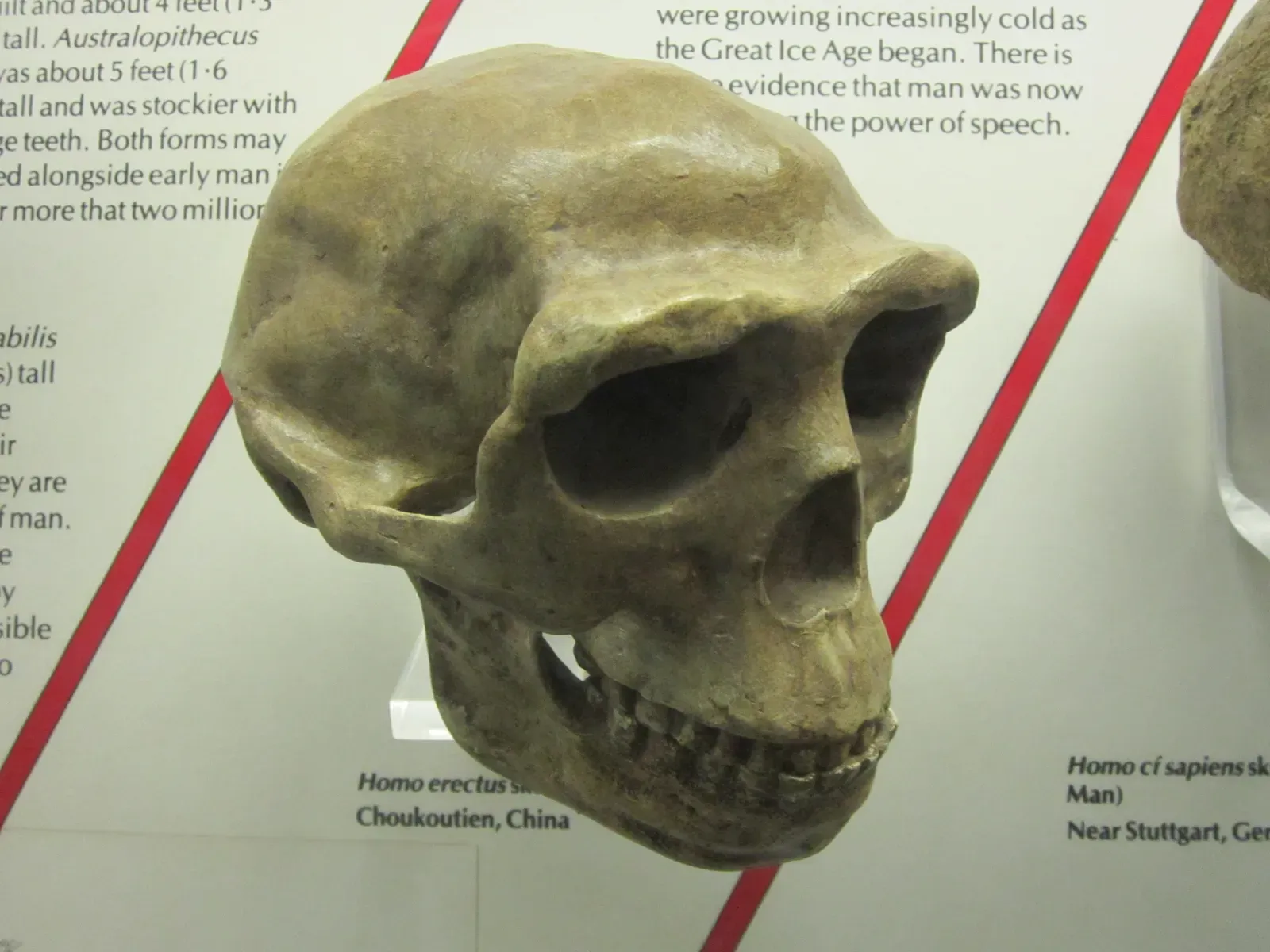
Long before your species existed, Homo erectus was already a seasoned traveler. Archaeologists have found their remains and stone tools in places as far apart as East Africa, the Caucasus region, the Middle East, India, China, and Indonesia, showing you that humans were capable of astonishing geographic reach long before modern technology. These travelers were not just drifting; they were adapting to forests, grasslands, and even cooler temperate regions with remarkable flexibility.
When you think about what it took for Homo erectus to spread this far, you start to appreciate the quiet brilliance behind those journeys. They learned to control fire, hunted medium to large animals, and likely had some form of social structure that allowed them to share knowledge about water sources, shelter, and safe routes. You might see them as the first test pilots of the human way of life: pushing into new environments, figuring out what worked, and passing those lessons down so the next generation could travel a little farther without starting from scratch.
Out of Africa Again: When Your Own Species Hit the Road
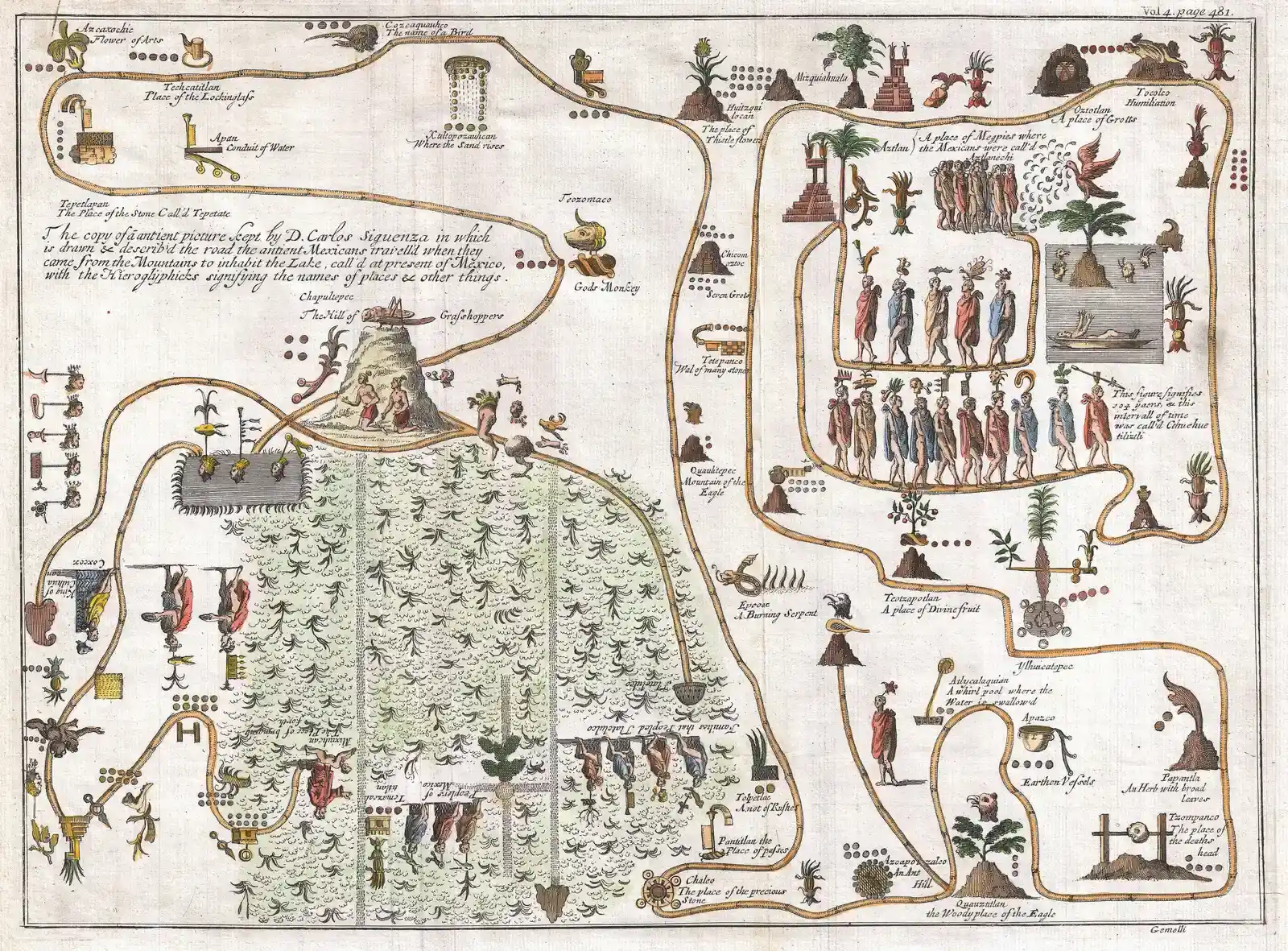
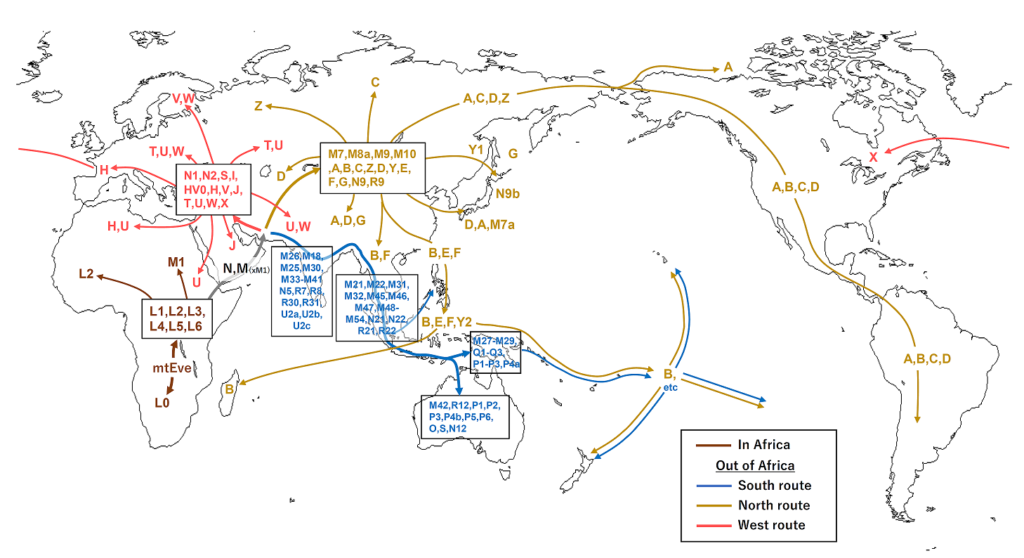
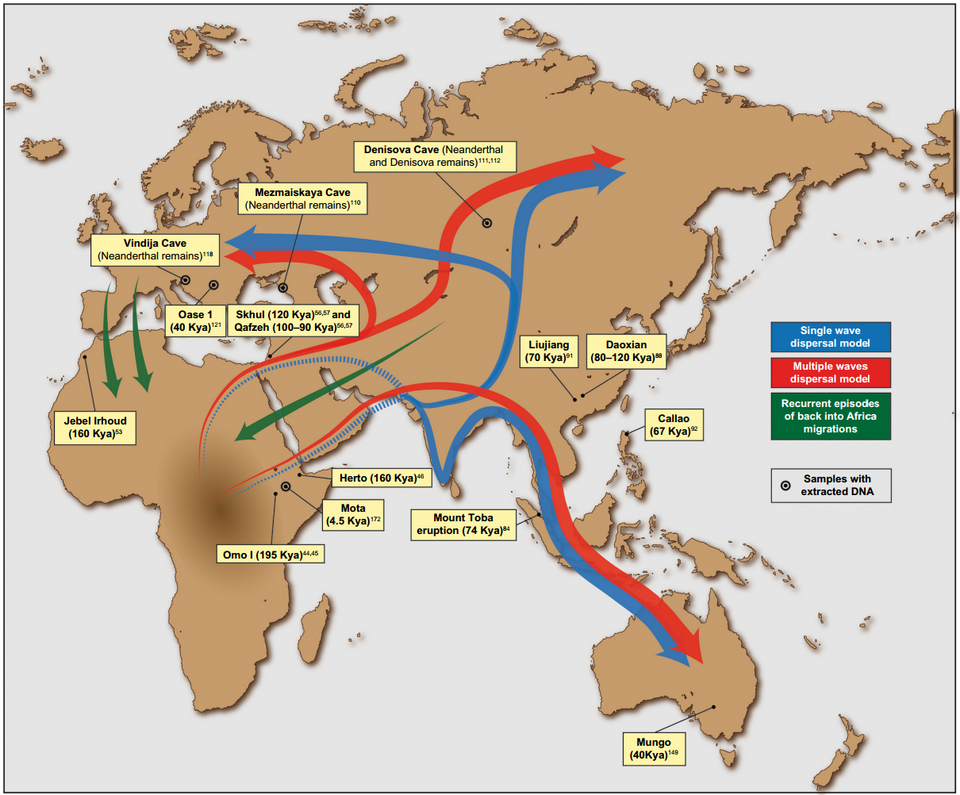
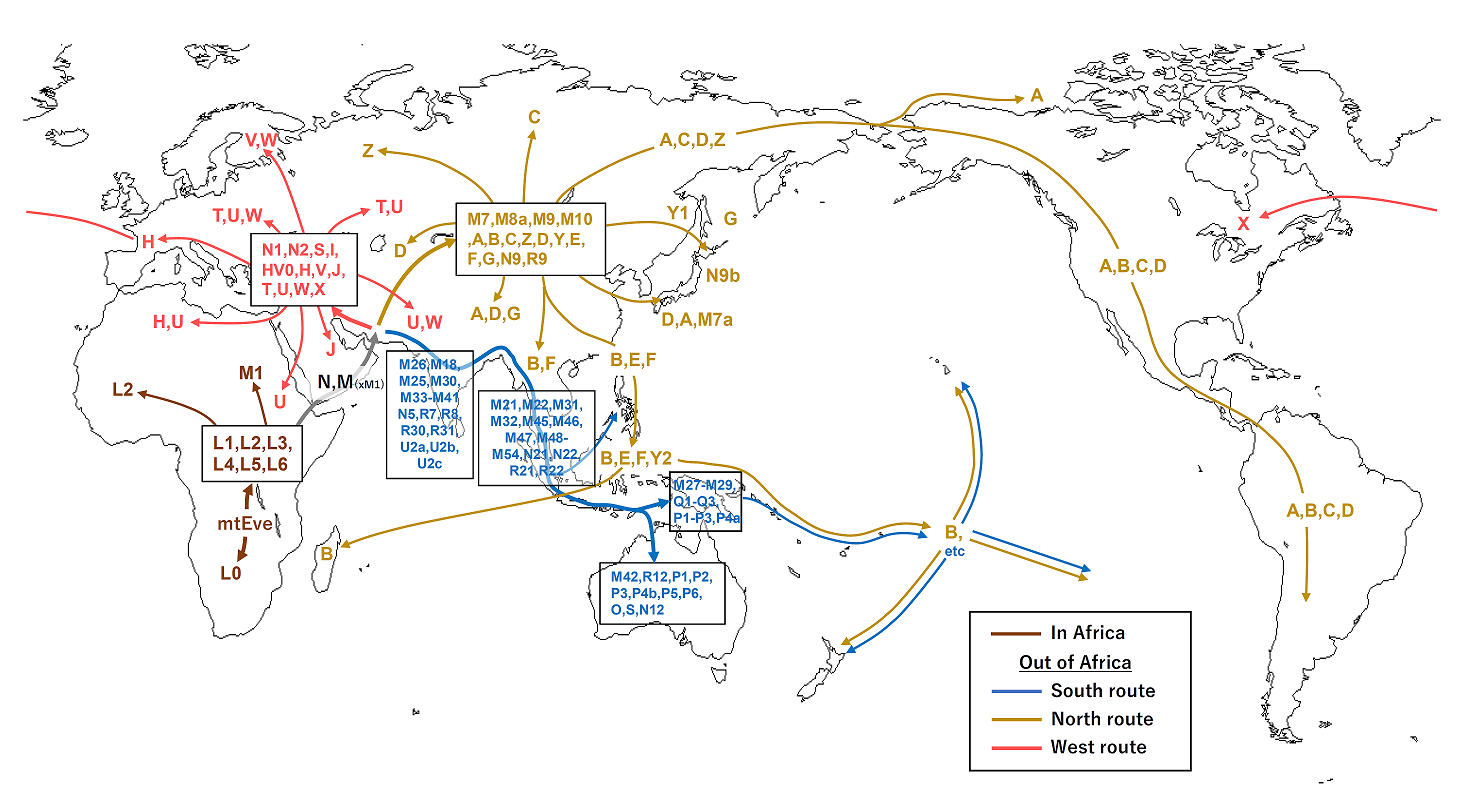
The big question you probably have is: when did people like you, anatomically modern humans, first leave Africa? The most widely supported evidence points to a major wave sometime around the last one hundred thousand years, with groups moving through northeastern Africa into the Arabian Peninsula and beyond. In caves and rock shelters across the Levant, Arabia, and later Europe and Asia, you find traces of these early travelers: stone tools, hearths, and sometimes bones that look strikingly like your own.
It’s tempting to imagine this as a single migration, but you should think of it more like pulses and waves. Some groups may have moved north and east along coastal routes, exploiting seafood and shoreline resources, while others pushed inland following rivers and grazing animals. Climate shifts opened and closed corridors, so what looked impossible for one generation suddenly became the only viable path for the next. In a very real sense, your species’ identity as a global traveler was forged not by one bold journey, but by countless small decisions to keep moving when conditions changed.
Crossing into Europe: Meeting Ice, Neanderthals, and New Challenges
When you follow the trail of early Homo sapiens into Europe, you step into a world that was colder, harsher, and already occupied. Neanderthals had been living in Europe and western Asia for hundreds of thousands of years before your species arrived, and they were well-adapted to cold climates. As modern humans entered these regions, you suddenly have two close human relatives sharing landscapes, hunting some of the same animals, and perhaps even competing for shelter and resources.
For you, the fascinating part is that evidence suggests there wasn’t just conflict but also contact and interbreeding. Genetic studies show that if you’re of non-African ancestry, you probably carry a small percentage of Neanderthal DNA, a lingering signature of meetings that happened tens of thousands of years ago. To survive in Ice Age Europe, early travelers had to master clothing, shelter, and complex hunting strategies, turning caves and rock overhangs into seasonal homes. Imagine arriving in a land where winters could last most of the year, and every misstep in planning might mean no food, no warmth, and no future for your group.
Reaching the Ends of Asia: From Monsoon Coasts to Frozen Siberia
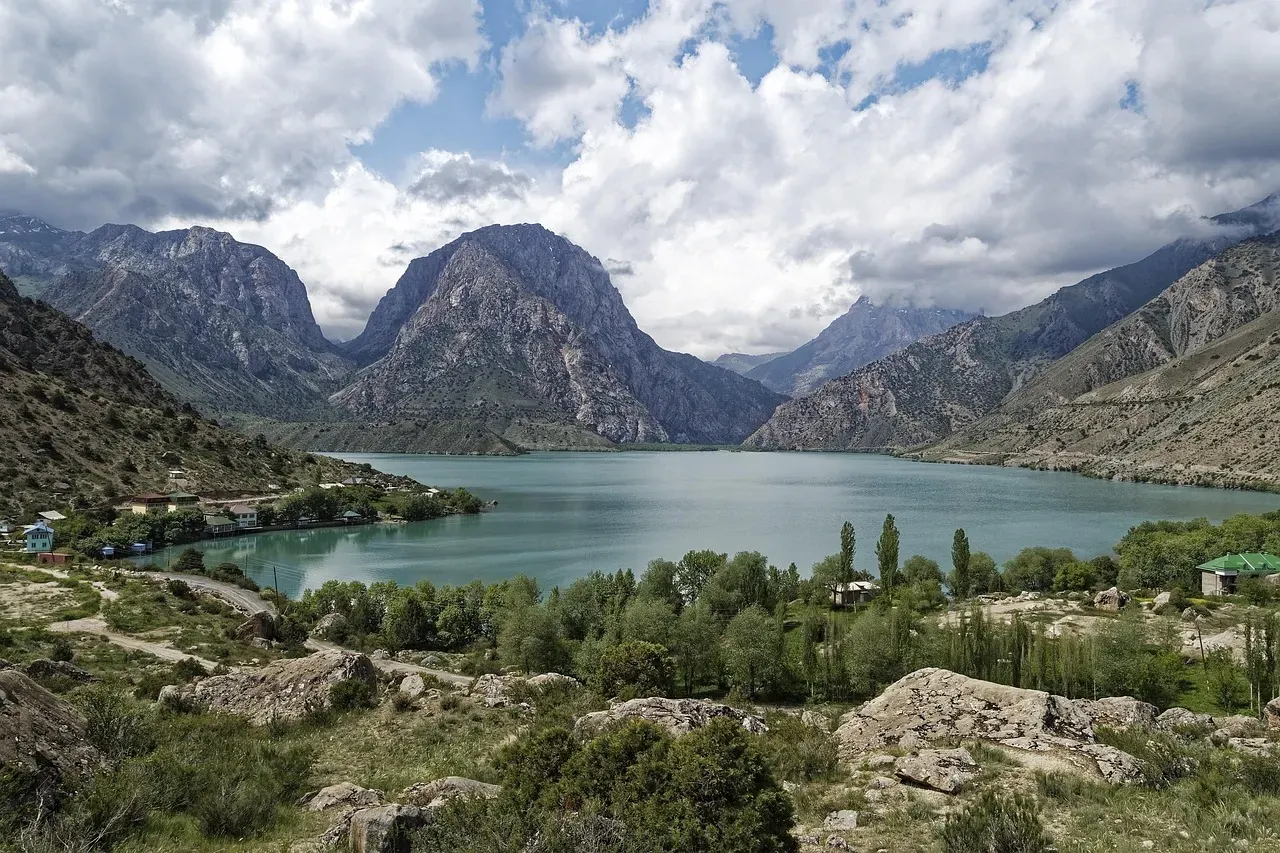
As you follow early modern humans further east, the diversity of landscapes they mastered starts to look almost unbelievable. From tropical coasts in South and Southeast Asia to the high plateaus of Tibet and the deep forests of East Asia, people adapted to monsoon rains, mountain cold, and shifting shorelines. Some research suggests that hugging the coasts may have helped groups move relatively quickly, using marine resources and simple watercraft along shorelines that are now mostly underwater due to later sea level rise.
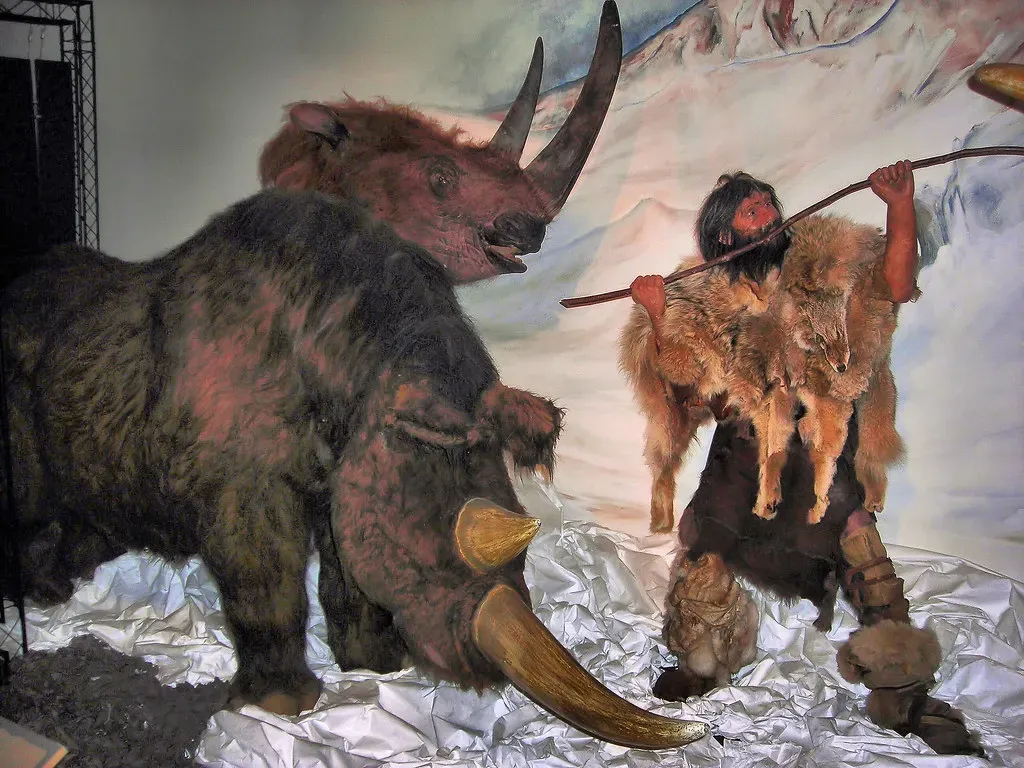
Then there’s Siberia, a place you might still think of as remote and brutally cold. For prehistoric travelers, it was even more daunting, yet they made their way there too. To survive, they would have needed advanced clothing, shelter technologies, and sophisticated hunting of large animals like mammoths and reindeer. You can almost feel the determination it took to push into regions where winter darkness stretched across months and the margin between life and death narrowed to how well you could predict animal movements and store food.
Into the Americas: Following Ice, Coastlines, and Debated Routes
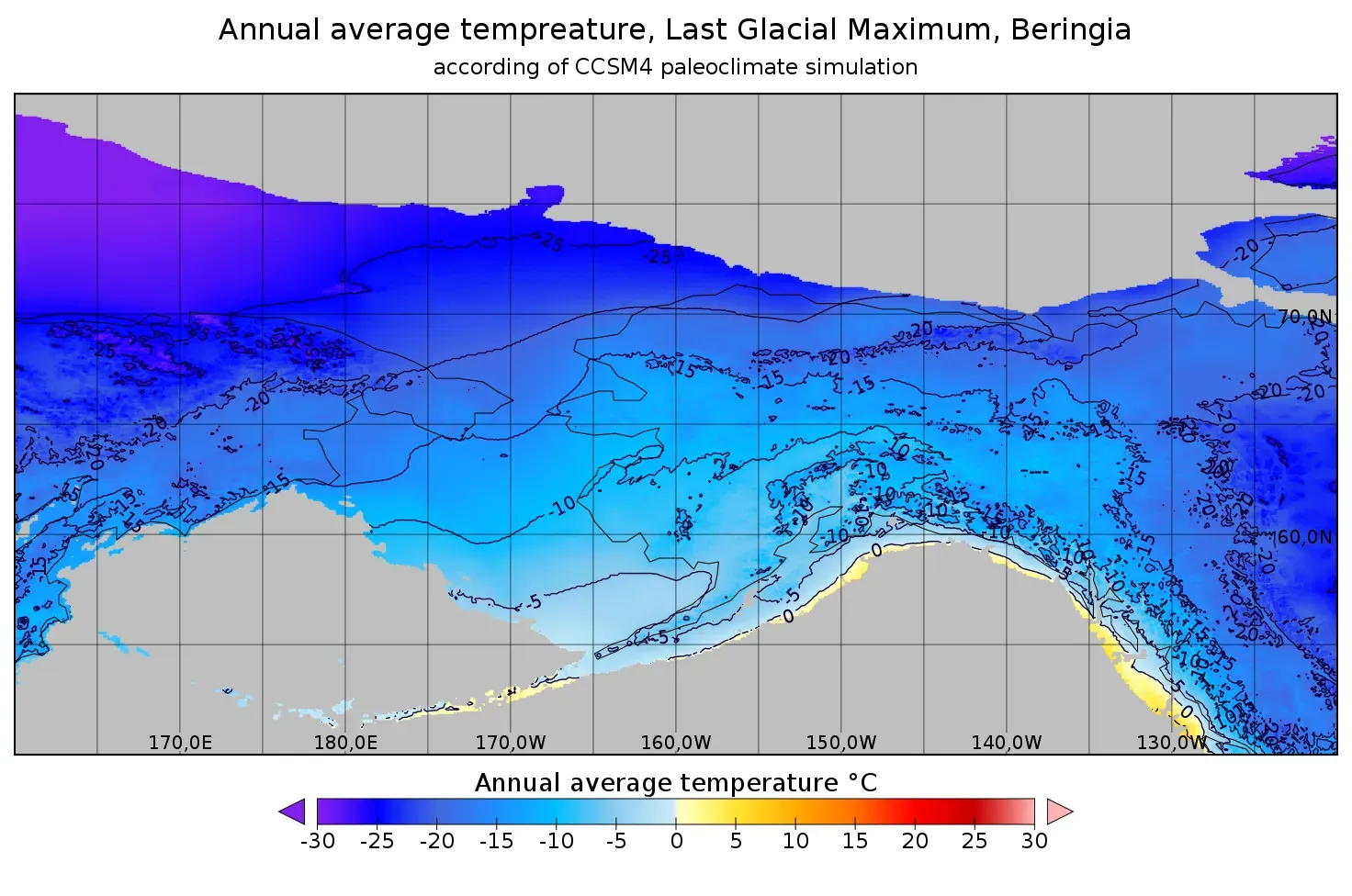
Few chapters of human travel are as debated and intriguing as the first journeys into the Americas. For a long time, the leading idea was that people crossed a land bridge from Siberia to Alaska during the last ice age, then moved south through an ice-free corridor. More recent research has added nuance, suggesting that coastal routes along the Pacific, or even earlier entries than once thought, may have played major roles. For you, the key takeaway is that the timing and paths are still being refined as new sites and genetic data emerge.
What is clear is that by the end of the Ice Age, humans had spread from the far north of North America all the way to the southern tip of South America. Imagine the variety you’d encounter on that journey: Arctic tundra, enormous plains, dense tropical forests, high Andean mountains, and coastal deserts. Wherever people went, they left behind stone tools, campfires, and eventually rock art and early signs of complex societies. You’re looking at one of the greatest expansions in human history, achieved without maps, compasses, or written instructions – just knowledge passed mouth to ear and skills shared around countless campfires.
Island Hopping and Ocean Voyages: The Bold Leap into Oceania
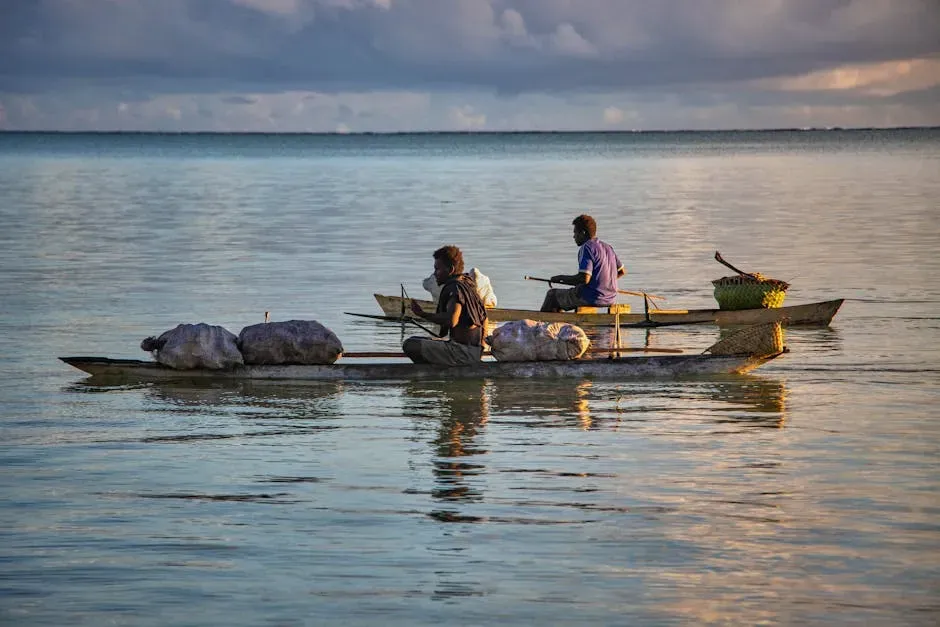
If you really want to appreciate how daring prehistoric travelers were, you should look at the settlement of Oceania. People reached places like Australia and New Guinea tens of thousands of years ago, at a time when sea levels were lower but still required open-water crossings. That means your distant relatives were building watercraft sturdy enough to cross straits and navigate coasts, using the stars, currents, wind, and the behavior of birds and sea life as guides long before metal tools or compasses existed.
Later, the expansion into the remote Pacific islands took this seafaring tradition to an even more astonishing level. Double-hulled canoes, navigational knowledge encoded in stories and training, and a deep understanding of ocean swells and cloud patterns allowed people to reach islands that are mere dots in the vast Pacific. When you stand on a modern ferry or airplane, it’s worth stopping for a moment and realizing that your sense of safety on the water or in the air was built on the courage and experimentation of people who dared to sail toward the unknown, with nothing but the horizon to tell them they were moving.
Why Your Ancestors Traveled: Curiosity, Pressure, and the Human Drive to Move
When you pull all these journeys together, you might wonder what really drove your ancestors to keep traveling. Part of the answer is practical: changing climates dried up water sources, shifted animal migrations, and transformed fertile areas into places where survival became precarious. In those moments, groups may have felt they had no real choice but to push into new regions, even if that meant risking famine, conflict, or simply the terrifying unknown.
But there’s another layer that you can probably recognize in yourself: curiosity and the urge to see what lies beyond the next hill. Humans are remarkably good at imagining that life might be better somewhere else, that there might be more game, richer soils, safer shelters, or just fewer rivals in the valley just out of sight. The same impulse that makes you book a trip to a place you’ve never seen likely powered countless tiny decisions to cross one more river, climb one more ridge, and set up camp just a little farther from home. Over thousands of years, those small choices added up to a species that covers the globe.
Conclusion: Seeing Your Own Journeys in a Deep-Time Mirror
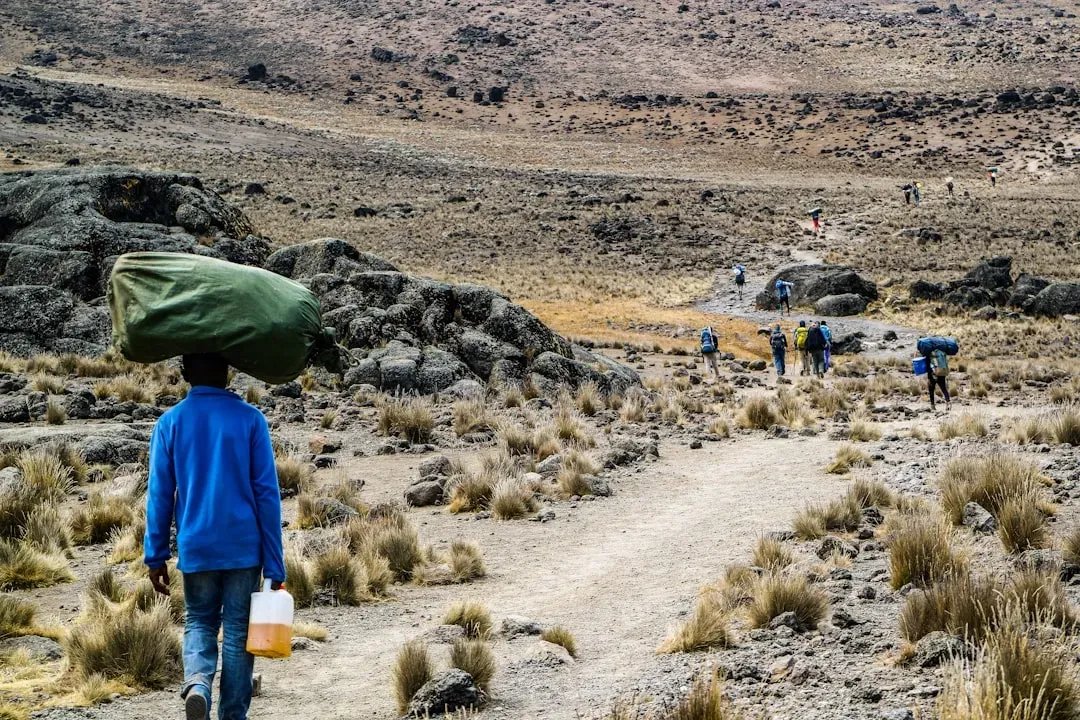
When you step back from all these timelines, fossils, and migration routes, you start to see your own life differently. Every time you move to a new city, take a long road trip, or even just feel that itch to get away for a weekend, you’re echoing patterns that began hundreds of thousands of years ago. You are the descendant of people who refused to stay put, who gambled their safety on the possibility of a better life somewhere they had never seen.
Understanding when humans first traveled is not just about pinning dates on a chart; it’s about recognizing travel as one of the core ways your species has always responded to challenge, opportunity, and curiosity. The continents you know today were stitched into a global human story by people walking, paddling, and sailing without ever knowing how far their descendants would go. Next time you look at a map or book a trip, you might ask yourself: in the long sweep of human journeys, where will your steps fit in, and what new horizon are you really chasing?