

Every morning, you wake up not just as a body, but as a someone. There is a feeling of being you looking out at the world, a kind of private movie no one else can see. From an evolutionary point of view, that is deeply weird. Natural selection is brutal and practical; it tends to keep traits that help survival and reproduction. So why would it bother with the dizzying richness of conscious experience instead of just running the brain like a silent machine in the dark?
Scientists have made huge progress linking brain activity to behavior, yet the question of why anything needs to feel like something remains stubbornly open. Some researchers argue consciousness gives animals powerful new ways to learn, predict, and plan; others suspect it might just be a flashy side effect of complex brains. The truth is, we still do not have a single clean answer. But we do have several serious, competing ideas – each one opening a different window into what it might mean, in evolutionary terms, to be a mind at all.
From Blind Algorithms to Felt Experience: The Core Puzzle
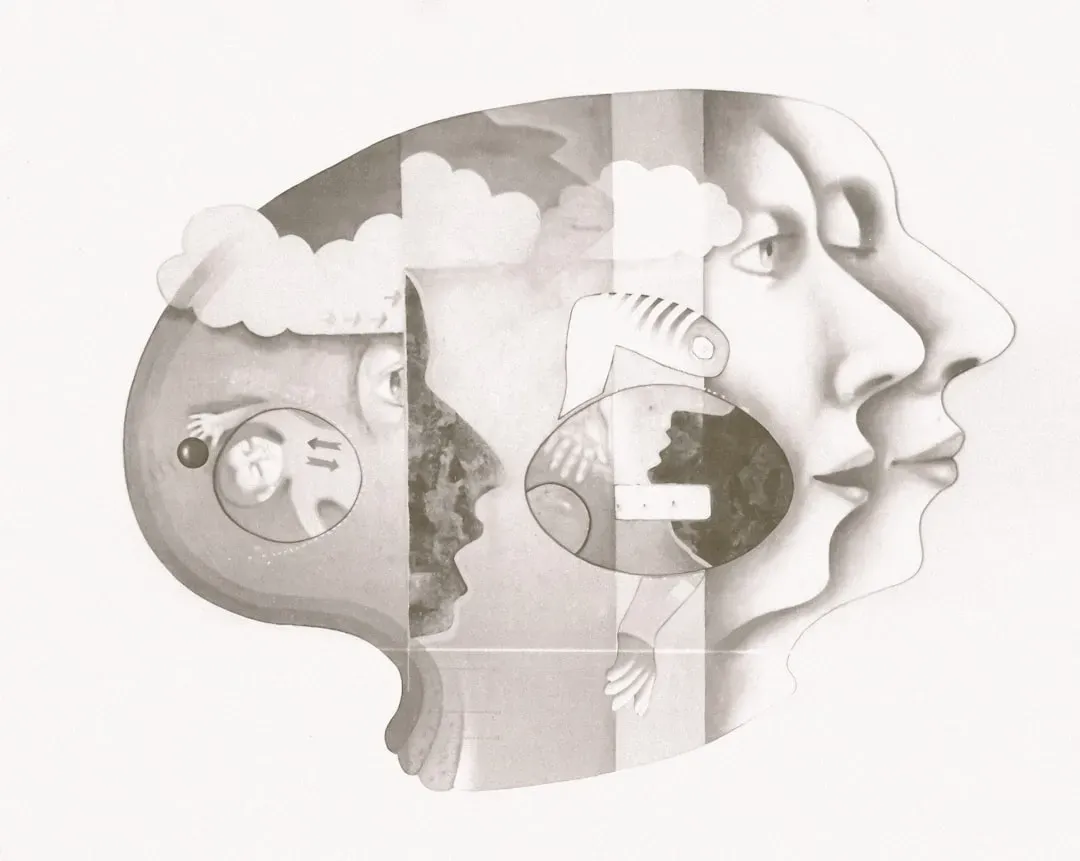
Here is the heart of the mystery: evolution can easily explain brains that process information, control muscles, and keep an organism alive. Computer programs already do versions of that without any hint of a subjective inner life. What is far harder to explain is why some of this information processing should come packaged with the feeling of pain, the color red, the sound of a friend’s voice, or the dread before an exam. From a strictly survival-focused point of view, it seems you could get all the necessary behavior from unconscious processing alone.
This is sometimes called the “hard problem” of consciousness: explaining not just what brains do, but why any of it is accompanied by experience. The evolutionary spin on that hard problem is even sharper: what selectable advantage did subjective experience confer that plain, efficient, zombie-like computation could not? Until we can answer that, claims about why evolution “produced” consciousness rest on educated guesses. They may be sophisticated, mathematically framed guesses – but guesses all the same.
Consciousness as an Evolutionary Upgrade for Flexible Behavior

One major camp of thinkers argues that consciousness evolved because it made animals more flexible and adaptable in complex environments. Instead of hardwired stimulus–response rules, conscious awareness might allow a creature to weigh options, imagine outcomes, and integrate different goals at once. If you can picture yourself climbing two different trees and mentally simulate which one has more fruit and fewer predators, you can choose more intelligently than a purely reflex-driven system.
In this view, subjective experience is tightly bound up with high-level functions like working memory, planning, and decision-making. Conscious states are the brain’s way of “broadcasting” important information to many subsystems at once, so they can coordinate behavior on the fly. That might have given early conscious animals an edge in messy, unpredictable settings – think social groups, changing seasons, or complex landscapes – where rigid instincts were not enough to survive. The catch is that we can see how flexible behavior is useful; showing that you need conscious experience, rather than just complex computation, to get it is much harder.
The Social Brain Hypothesis: Minds Evolved to Model Other Minds

Another influential idea says that consciousness really took off because of other people. Social living is cognitively brutal: to thrive in a group, you have to track who did what to whom, interpret subtle signals, and guess what others are thinking and planning. Some researchers argue that once brains evolved to model other minds, they naturally began to model their own processes as well, giving rise to self-awareness and the feeling of being a subject.
On this view, consciousness is a kind of internal social interface. The same machinery that lets you attribute beliefs, desires, and feelings to friends or rivals gets turned inward, generating a sense of an inner self with thoughts and emotions. This could be a huge selective advantage in primate-like societies, where alliances, reputation, and deception matter almost as much as food or shelter. Still, the theory does not fully answer why this self-model needs to be vividly experienced, rather than quietly computed in the background – so even here, the puzzle is softened, not solved.
Some proponents argue that building a conscious self-model could stabilize complex planning and communication, making it easier to explain, justify, and coordinate actions with others. If you can tell a group what you intend or how you feel, you can recruit help, repair conflicts, or manipulate rivals more effectively. According to this narrative, consciousness rides on the back of our social skills, turning raw neural fire into a story about “me” that fits into a community. Whether that story is strictly necessary for the underlying calculations, though, remains an open question.
The Pain and Pleasure Debate: Do Feelings Themselves Have Survival Value?

At a gut level, it is tempting to say consciousness evolved because pain and pleasure are such powerful motivators. Burns hurt, hugs feel good, and those feelings seem to push us toward survival and away from danger. But when you step back, it is not obvious that you need conscious pain to design an organism that rapidly withdraws from a threat. A robot can avoid hazards based on sensors and programmed rules without anything “hurting” inside it.
This leads to a subtle debate. One side holds that the felt quality of pain and pleasure focuses learning and attention in ways pure computation cannot. In other words, it is not just that pain correlates with tissue damage; the horrible experience of it forces an organism to prioritize avoiding similar situations in the future. The other side counters that every such example could, in principle, be implemented by unconscious signals and reinforcement. Until we can isolate specific evolutionary scenarios where feeling pain or joy does more work than having information about damage or reward, the argument stays suggestive rather than decisive.
Consciousness as a Byproduct: The “Spandrel” Possibility
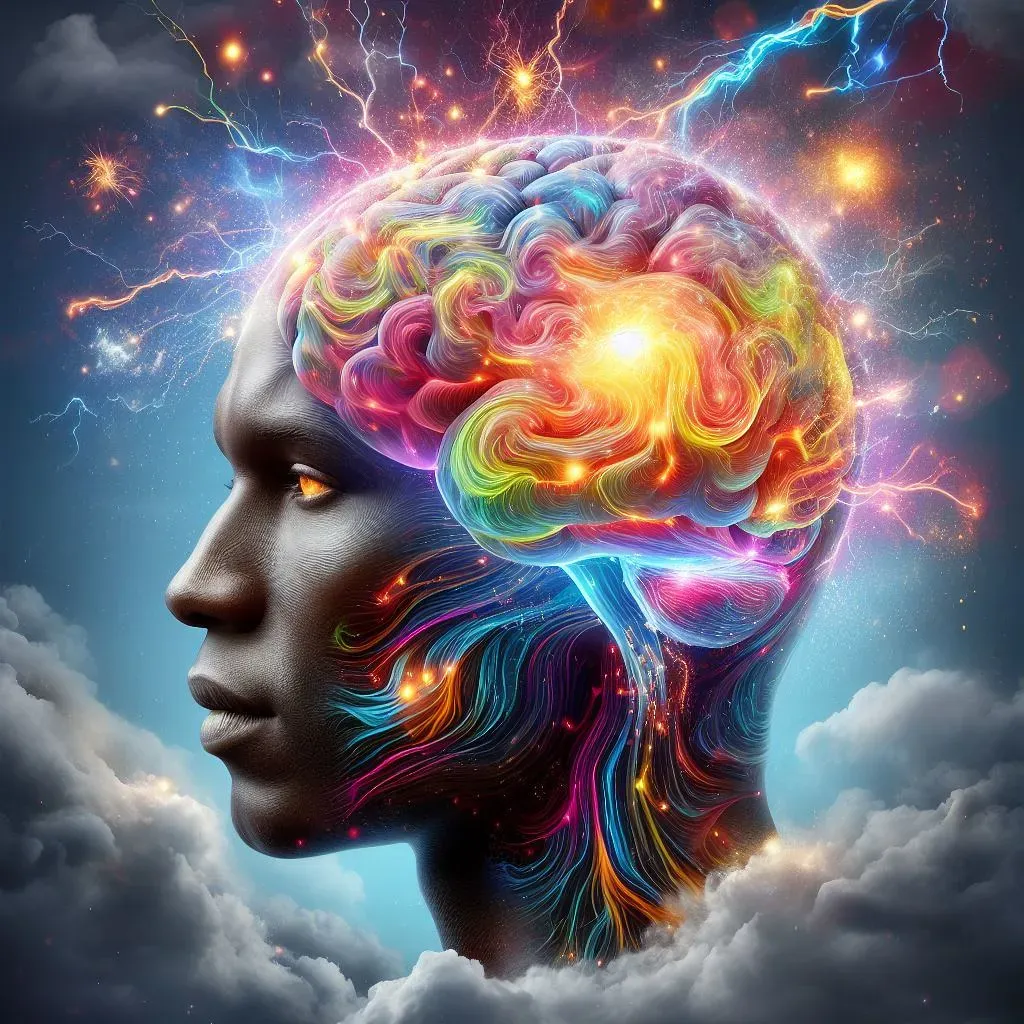
Not every trait is directly selected for. Sometimes evolution stumbles into side effects of other, more functional changes – what some biologists call “spandrels,” architectural leftovers that become visible features. On this line of thinking, once nervous systems became extremely complex to support perception, movement, memory, and learning, the rich flow of information reached a kind of critical density. Subjective experience might then emerge as an unintended consequence, not a primary target of selection.
If consciousness is a byproduct, we should expect it to co-occur with certain types of neural organization and information processing, but not necessarily carry its own specific survival function. That would help explain why the “why” question feels so slippery: we keep trying to assign a clean purpose to something that may not have one in the narrow, engineering sense. The challenge for this view is to say why such an energetically expensive feature – human brains use a large share of the body’s energy – would persist if it did absolutely no work. Evolution can tolerate some inefficiencies, but usually not large ones for very long.
Information, Integration, and Global Workspaces: Structural Clues Without Final Answers

Modern neuroscience has generated influential theories that link consciousness to how information is organized and shared in the brain. Ideas like global workspace theory and various integrated information approaches suggest that conscious states correspond to patterns where many specialized modules (vision, memory, decision-making, and so on) share data in a unified, coordinated way. When information is globally available, it becomes conscious; when it stays locked in local circuits, it does not reach awareness.
These frameworks are powerful because they can be tested with brain imaging, anesthesia studies, and disorders of consciousness. They help explain why certain kinds of brain damage or drugs reliably shut down awareness while others do not. But they mostly answer a “how” question – what brain configurations go along with consciousness – rather than the deep evolutionary “why.” Knowing that conscious states involve integrated networks still leaves open why evolution would have favored creatures for which that integration feels like something from the inside.
Artificial Minds and Animal Minds: How They Complicate the Story
The rise of advanced AI systems and richer research on animals has made the evolutionary story even more tangled. We now have machines that can recognize faces, navigate streets, and chat convincingly, all with no clear sign of subjective experience. At the same time, evidence suggests that many animals – such as corvids, cephalopods, and various mammals – show flexible problem-solving and perhaps rudimentary self-awareness. This combination forces an uncomfortable question: are we overestimating how tightly consciousness is linked to intelligence and complex behavior?
If relatively simple computational systems can mimic intelligent behavior without consciousness, that might strengthen the case that subjective experience is not strictly required for survival-oriented functions. On the other hand, the fact that diverse animal lineages seem to have evolved at least some form of awareness hints that experience may confer real advantages in certain ecological niches. Personally, I find this contrast sobering: the more we build clever unconscious machines and discover clever conscious animals, the less plausible it seems that there is a single, tidy evolutionary story that covers them all.
Where the Science Stands: My Take on What Evolution “Wanted”

Looking at the current science, I think the most reasonable stance is a messy, layered one. Consciousness probably did not appear because evolution “wanted” poetry, philosophy, or the feel of sunlight on skin. It likely rode in on the back of mechanisms for flexible control, predictive modeling, and social coordination in increasingly complex creatures. Once brains crossed certain structural thresholds – dense connectivity, strong integration, robust self-models – the lights came on, not as a luxury extra, but as an emergent mode of operation with real, if still poorly understood, behavioral payoffs.
At the same time, I do not buy the idea that consciousness has one single evolutionary function we are about to identify with a neat formula. It looks more like a package deal: part tool, part side effect, part narrative we tell ourselves about what our brains are doing. The honest answer, in 2026, is that science still lacks a simple explanation – and that might be exactly what we should expect from a trait as strange and multi-layered as experience itself. Maybe the more interesting question is not why evolution “bothered,” but what you choose to do with this improbably self-aware life you happened to inherit – what would you have guessed consciousness was for before you started asking?