The next time you step on a scale, consider this mind-bending fact: your weight isn’t actually constant everywhere on Earth. Depending on where you’re standing on our planet, you could weigh slightly more or less than what your bathroom scale tells you. The culprit behind this cosmic weight-loss trick? Our planet’s relentless spin through space, working like an invisible diet plan you never signed up for.
The Invisible Force That Lightens Your Load
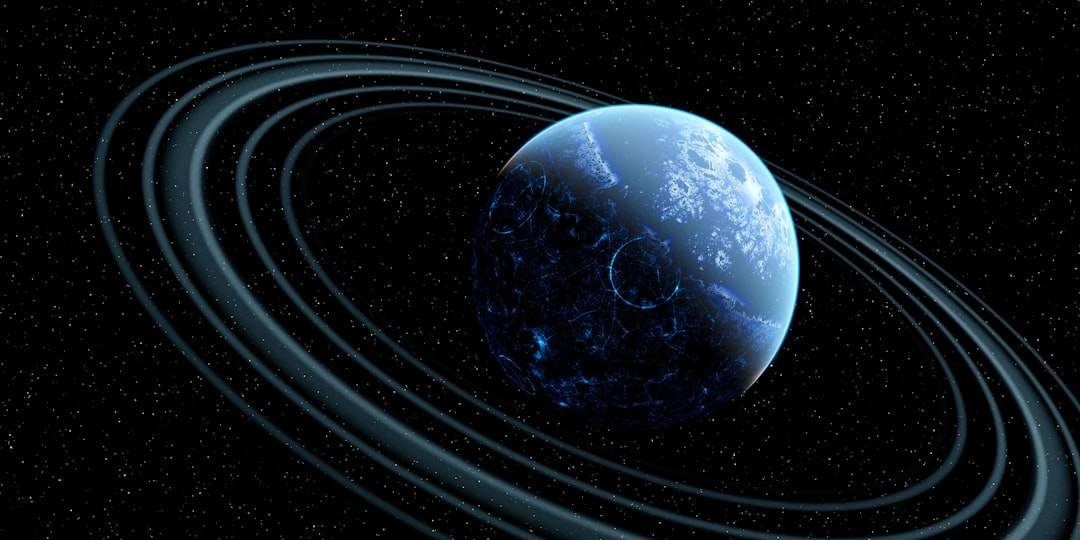
Every single second, Earth completes one rotation in roughly 24 hours, but this seemingly simple motion creates a powerful centrifugal force that’s constantly trying to fling you off into space. Since centrifugal force points outwards from the center of rotation, it tends to cancel out a little bit of earth’s gravity. Think of it like being on the world’s largest, slowest merry-go-round where the centrifugal force is strongest at the equator and weakest at the poles.
This outward force works against gravity’s pull, creating a subtle but measurable reduction in your apparent weight. The centrifugal force on your body at the equator is 0.034 m/s2 times the mass of your body. While that might sound tiny, it’s enough to make a noticeable difference when measured precisely.
The Great Weight Difference Reveal

The numbers behind this phenomenon are surprisingly dramatic when you break them down. Your total weight at sea level at the equator (gravity minus centrifugal force) is therefore approximately 9.780 m/s2 times your mass, whereas your weight is approximately 9.832 m/s2 times your mass at the poles. This translates to a weight difference that’s more significant than you might expect.
You weigh about 1% less at the equator than at the poles. For practical purposes, overall you’d weigh around 0.5 per cent less – about a third of a kilo for most of us. That means a person weighing 150 pounds at the North Pole would tip the scales at roughly 149.25 pounds if they traveled to the equator.
Earth’s Hidden Shape Secret
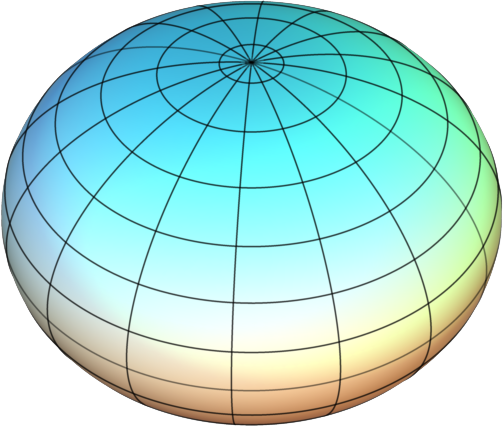
Our planet isn’t the perfect sphere that grade school globes suggest. Instead, he suggested it was an oblate spheroid – a sphere that is squashed at its poles and swollen at the equator. He was correct and, because of this bulge, the distance from Earth’s center to sea level is roughly 21 kilometers (13 miles) greater at the equator than at the poles. Isaac Newton first predicted this bulging effect centuries ago, and modern measurements have proven him absolutely right.
This equatorial bulge means you’re literally farther from Earth’s center when standing at the equator compared to the poles. The current World Geodetic System model uses a spheroid whose radius is 6,378.137 km (3,963.191 mi) at the Equator and 6,356.752 km (3,949.903 mi) at the poles. The difference might seem small, but gravity weakens with distance, contributing to your reduced weight at the equator.
The Pizza Dough Effect in Action

Imagine spinning pizza dough in the air – the faster it spins, the more it flattens and spreads outward. Much like spinning pizza dough, the centrifugal force generated by the Earth’s rotation pushes mass away from the axis of rotation, leading to a flattening effect at the equator. Earth behaves similarly, though over geological time scales rather than seconds.
This spinning motion creates what scientists call an oblate spheroid shape. Because of a planet’s rotation around its own axis, the gravitational acceleration is less at the equator than at the poles. The faster a planet spins, the more pronounced this effect becomes, making Earth’s relatively moderate rotation create a subtle but measurable bulge.
Why the Poles Pack More Gravitational Punch

Standing at either the North or South Pole puts you in a unique gravitational sweet spot. The centrifugal force at the poles is zero. Without any spinning force to counteract gravity, you experience Earth’s full gravitational pull. It’s like standing at the center of a carousel versus riding on the outer edge – the physics work completely differently.
In combination, the equatorial bulge and the effects of the surface centrifugal force due to rotation mean that sea-level gravity increases from about 9.780 m/s2 at the Equator to about 9.832 m/s2 at the poles, so an object will weigh approximately 0.5% more at the poles than at the Equator. This makes the poles the heavyweight champions of our planet’s surface.
The Speed Demon Equator

The equator moves at absolutely breathtaking speeds that most people never consider. Multiplying the value in rad/s by Earth’s equatorial radius of 6,378,137 m (WGS84 ellipsoid) (factors of 2π radians needed by both cancel) yields an equatorial speed of 465.10 metres per second (1,674.4 km/h). That’s faster than most commercial aircraft cruise!
This incredible velocity creates the strongest centrifugal force at the equator. Equatorial regions race nearly 1,600 kilometers (1,000 miles) per hour, whereas near the poles the planet rotates at a slow 0.00008 kilometers (0.00005 miles) per hour. The dramatic speed difference between equatorial and polar regions drives the weight variation we experience.
The Double Whammy Weight Loss
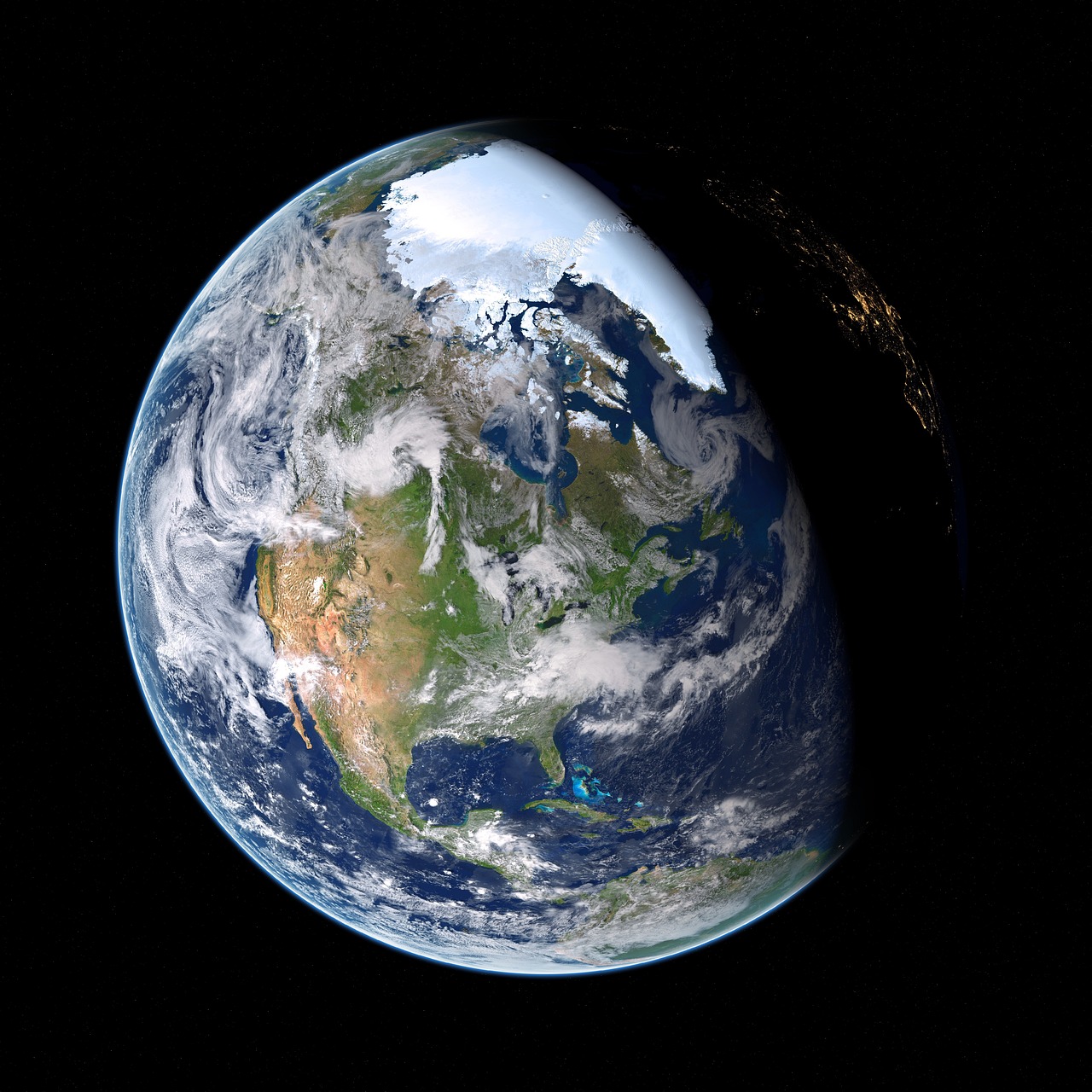
Your reduced weight at the equator actually comes from two separate but related effects working together. ‘Centrifugal force’ due to the spinning lowers your body weight by about 0.4 per cent at the equator relative to its weight at the poles. The Earth’s spin also causes the planet to bulge, so that at the equator you’re about 21km further from the Earth’s centre of gravity and so weigh around 0.1 per cent less.
The first effect comes from the spinning motion itself, while the second results from the shape change that spinning causes over millions of years. Together, these create a measurable weight reduction that has real-world implications for precision measurements and scientific equipment calibration.
When Gravity Plays Favorites with Geography

Real cities around the world demonstrate these gravitational variations in fascinating ways. The effect of latitude can be clearly seen with gravity in high-latitude cities: Anchorage (9.826 m/s2), Helsinki (9.825 m/s2), being about 0.5% greater than that in cities near the equator: Kuala Lumpur (9.776 m/s2). If you could magically transport a precise scale between these cities, you’d see the difference immediately.
This geographical weight variation affects everything from manufacturing precision to scientific research. Companies that create extremely sensitive measuring equipment must account for where their devices will be used, as the same object will register different weights depending on latitude.
The Illusion Your Body Creates

Despite these dramatic physics at work, your body doesn’t actually change in any fundamental way when you travel between latitudes. Note that your body itself does not change. Rather it is the force of gravity and other forces that change as you approach the poles. It’s purely the external forces acting upon you that shift, not your actual mass or composition.
These forces change right back when you return to your original latitude. In short, a trip to the equator is not a viable long-term weight-loss program. The effect is immediate and reversible, making it more of a physics curiosity than a practical solution for those watching their weight.
Conclusion

The next time you feel the urge to step on a scale, remember that Earth’s ancient dance through space is secretly influencing that number. Our planet’s spin creates an invisible carnival ride effect that makes you lighter at the equator and heavier at the poles, while simultaneously sculpting our world into a slightly flattened sphere that’s been stretching at the waist for billions of years.
This cosmic weight variation represents one of those beautiful intersections where everyday experience meets mind-bending physics. While the difference might only be about half a percent, it reveals the profound ways that planetary motion shapes our reality in ways we rarely notice. Whether you’re weighing yourself in Helsinki or Kuala Lumpur, you’re experiencing the direct consequences of living on a spinning ball of rock hurtling through space at incredible speeds.
What other invisible forces might be shaping your daily experience without you even realizing it?