Almost everyone has had that late-night moment: you’re lying in bed, your mind suddenly jumps to the idea of not existing, and your stomach drops. It feels almost taboo to think about, like staring directly at the sun. Yet this fear is one of the most common and powerful emotions humans share, cutting across cultures, ages, and belief systems. We joke about it, distract ourselves from it, and invent countless ways to avoid facing it head-on.
Neuroscience and psychology have spent decades trying to understand why death, something guaranteed for all of us, feels so uniquely terrifying. It turns out the answer isn’t simple. It lives in brain circuits built to protect us, in childhood memories, in cultural stories, in our sense of self, and in how we make meaning out of life. When you zoom in, fear of death is not just about “being scared of dying” – it’s a whole network of thoughts, predictions, and emotions woven into what it means to be human.
The Brain’s Survival Systems: Wired to Resist the End
At the most basic level, our fear of death starts in the oldest parts of the brain, the regions that evolved long before we could talk about “existential anxiety.” Deep in the brain, structures like the amygdala scan for danger and trigger alarm responses that can feel overwhelming: racing heart, tight chest, sudden urge to get away. From an evolutionary perspective, a brain that treats threats to survival as an emergency is a brain that keeps its owner alive long enough to pass on genes.
But these survival systems don’t really distinguish between a car speeding toward you and the thought of your own future nonexistence. The same networks that explode into action when you almost trip off a curb are recruited when you imagine your own death. This is why even a brief mental image of dying can spark a rush of physical anxiety. Your brain is not calmly “contemplating mortality”; it is responding as if a predator just walked into the room. On a neural level, fear of death is not an abstract philosophical issue – it’s processed as an immediate threat.
Consciousness Meets Its Own Limit: The Cognitive Shock
Humans occupy a strange cognitive space: we are aware that we exist, and we are aware that one day we won’t. That collision is psychologically explosive. Developmental research suggests that children gradually realize death is permanent and universal, and when that clicks, many go through a phase of intense worry or questions about dying. Our thinking brain, especially the cortex and regions involved in self-reflection, can imagine scenarios that have never happened – including our own final moment.
This self-awareness is a double-edged sword. It allows art, science, relationships, and long-term planning, but it also makes us uniquely capable of dreading our own demise. Psychologists sometimes describe this as a built-in conflict: our brain can imagine an endless future, yet rationally knows that future will stop. That mismatch can feel like staring at a logical error in the system that you can’t fix. The fear is not just about pain or loss; it’s about the mind unable to fully comprehend its own disappearance.
Uncertainty, Control, and the Terror of the Unknown
Our brains love prediction and control. On a simple level, knowing what comes next keeps us safe: you learn that the stove is hot, so you do not touch it again. On a more sophisticated level, you build careers, relationships, and plans on the assumption that tomorrow will behave roughly like today. Death breaks all of that. No matter how much you read, meditate, or philosophize, the exact experience of dying and what, if anything, comes after remains fundamentally unknown.
Psychologically, that kind of uncertainty is gasoline on the fire of anxiety. Studies consistently show that people often fear uncertain threats more than known painful ones. You can grit your teeth for a shot you know is coming, but waiting for an unspecified blow is often worse. Death is the ultimate unspecified blow: you do not know how, when, or what it will feel like. For a mind that survives by predicting and controlling, death represents a hard wall where prediction fails and control evaporates, and that loss alone can be terrifying.
Identity, Ego, and the Threat of Nonexistence
Fear of death is also fear of losing the story of “me.” Neuroscience suggests that our sense of self is built from many brain systems working together: memory networks, social processing, body awareness, and more. Over time, these create a narrative: your preferences, memories, habits, relationships, and dreams. Death threatens to delete that entire narrative, not just close a chapter. For many people, that feels like a kind of psychological annihilation that’s difficult even to think about without flinching.
In everyday life, we defend this sense of self constantly – we justify our mistakes, protect our reputations, and cling to identities that make us feel solid. Death laughs at all of that. It says that the main character will eventually be written out of their own story. That can trigger what some psychologists describe as ego defensiveness: we double down on our beliefs, values, and group identities as if building taller walls can somehow protect us from the inevitable. In that sense, fear of death quietly shapes things like our politics, our loyalties, and even our online personas more than we like to admit.
Culture, Religion, and the Stories We Tell About the End
No one faces death in a vacuum; we face it surrounded by stories. Cultures and religions across history have developed elaborate narratives about what happens after we die, how we should live in the meantime, and what death means. For some, it is a transition, a return, or a judgement; for others, it is simply the end of individual consciousness. These frameworks can soothe fear by offering continuity or justice beyond the grave, but they can also amplify fear if they emphasize punishment, loss, or cosmic uncertainty.
Psychologically, these stories act like emotional scaffolding. When a culture normalizes certain beliefs about death, individuals often internalize them so deeply that questioning them can feel threatening. Some people find enormous comfort in rituals, prayers, or philosophies that promise connection beyond death. Others feel more at peace accepting death as a natural biological endpoint, like a candle going out. Either way, the culture around us heavily influences whether death feels primarily terrifying, meaningful, mysterious, or even, in some rare cases, welcomed.
Attachment, Grief, and the Fear of Losing (and Being Lost)
Fear of death is not just about ourselves; it is also about the people we love. Attachment theory shows that humans are wired to form deep emotional bonds, especially with caregivers, partners, and close friends. Those bonds are powerful survival tools – being part of a group historically meant higher odds of staying alive. Death threatens to rip those bonds apart, whether through our own absence or the loss of someone we depend on. That looming possibility can fuel chronic background anxiety, even when we are not consciously thinking about it.
Grief research shows that the death of a loved one can literally reshape the brain’s activity, altering reward circuits, sleep patterns, and stress responses. Once you have experienced a devastating loss, your nervous system remembers. The mere idea of another loss – including your own death and what it would do to the people you love – can reactivate that pain. So fear of death is often tangled up with fear of causing suffering, fear of being forgotten, and fear that what matters most to us will be cut abruptly short. It is not only a fear of an ending, but a fear of unfinished love.
Modern Life, Anxiety, and Our Avoidance of Mortality
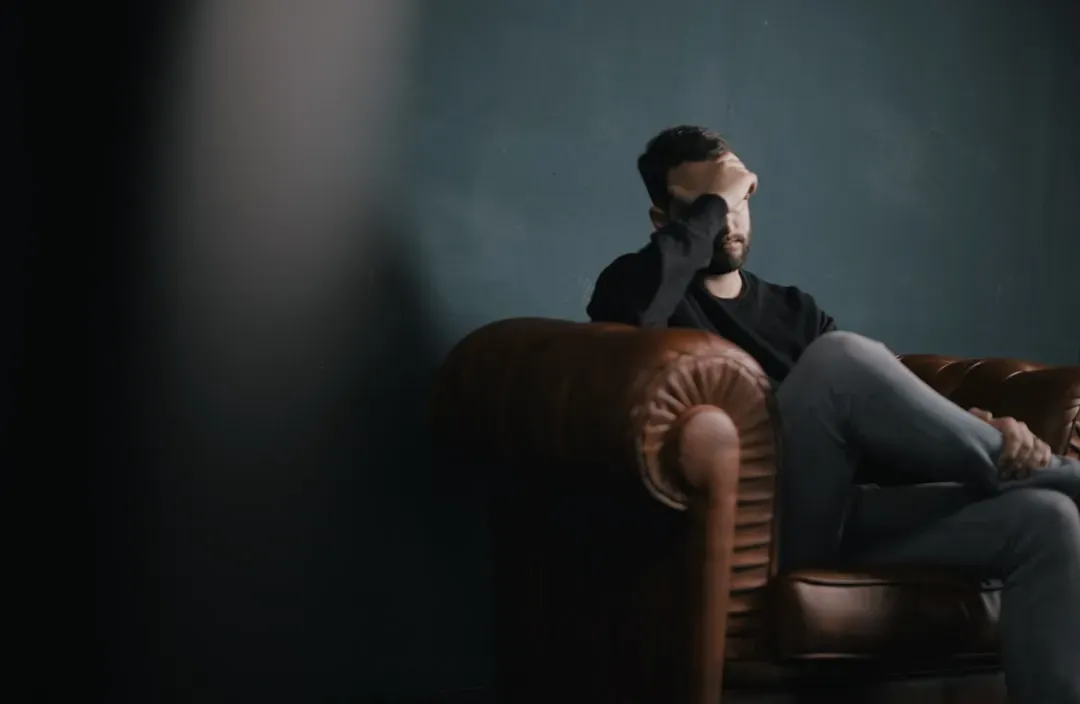
Strangely, many aspects of modern life both blunt and intensify our fear of death. On one hand, medical advances, longer lifespans, and cultural taboos around talking about death can make it easier to push the topic aside for decades. We outsource death to hospitals, funeral homes, and institutions, so most people rarely see it up close. On the surface, it can almost feel optional, like a problem for some distant future version of ourselves.
On the other hand, that very avoidance can keep fear of death lurking in the background, vague and unprocessed. Anxiety thrives in the dark. When mortality is treated as unspeakable, any reminder – a diagnosis, an accident, even a birthday with a big number – can hit like an emotional ambush. Many therapists now see that gently facing mortality, rather than pretending it does not exist, can actually reduce anxiety and increase appreciation for daily life. It is a bit like finally looking under the bed for the monster: the fear does not vanish, but it becomes clearer, more manageable, and strangely more compatible with living fully.
Can Understanding Our Fear of Death Make Life Better? (Opinion)

Here is the uncomfortable truth I think most of us feel but rarely say: fear of death is not something you “solve.” You do not read a book, adopt a belief, or master a breathing exercise and suddenly become completely calm about your own extinction. In my view, that is not even the goal. A certain amount of fear is a sign that your survival circuits are working, that you value your life and your connections. The real question is whether that fear quietly runs your life from the shadows or becomes something you can acknowledge, explore, and live alongside.
From where I sit, the most psychologically healthy stance is not fearless bravado but informed, honest intimacy with mortality. Learning what the brain does under threat, noticing how culture shapes our stories, talking openly about death with people we trust – these do not erase fear, but they can transform it. Instead of a paralyzing terror that makes us cling to routines and distractions, it can become a kind of sharp clarity that reminds us to love harder, waste less time, and live more according to what actually matters to us. If death is the one non-negotiable fact of our existence, maybe the real act of courage is not pretending it is far away, but letting the knowledge of it shape how fully we show up today. How differently would you live if you let your fear of death guide you toward what really counts, instead of just trying to outrun it?