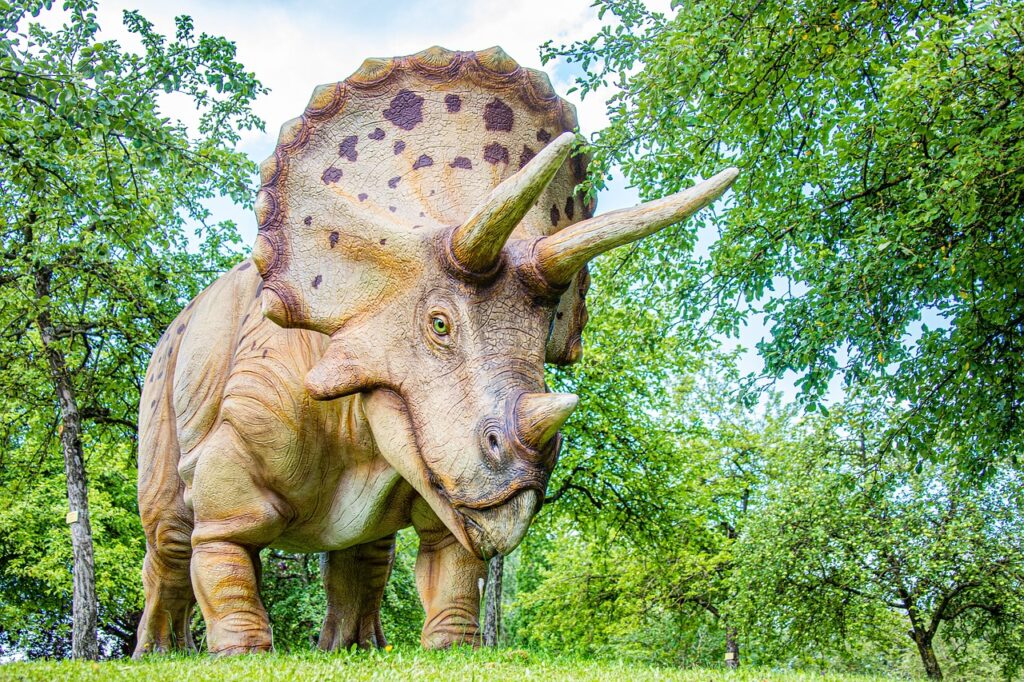
Triceratops has always felt oddly familiar, like the dinosaur world’s rhinoceros: big, tank‑like, three horns, frill on the back, end of story. But the more scientists dig into the rocks of western North America and the more powerful their tools become, the weirder this animal starts to look. Under that iconic silhouette, there might have been a creature far stranger, more dynamic, and more surprising than the toy you grew up with.
In the last couple of decades, CT scans, bone histology, and a flood of new horned-dinosaur fossils have forced paleontologists to rethink what Triceratops really was doing with its body, its brain, and its social life. Some of the old “facts” are now looking shaky, and a few ideas that once sounded wild are starting to feel plausible. If anything, the puzzle pieces suggest a dinosaur that lived a life closer to a mix of a bison herd, a dueling elk, and an armored tank than a slow, plodding plant-muncher.
Those Famous Horns May Have Been Less Like Weapons And More Like Faces
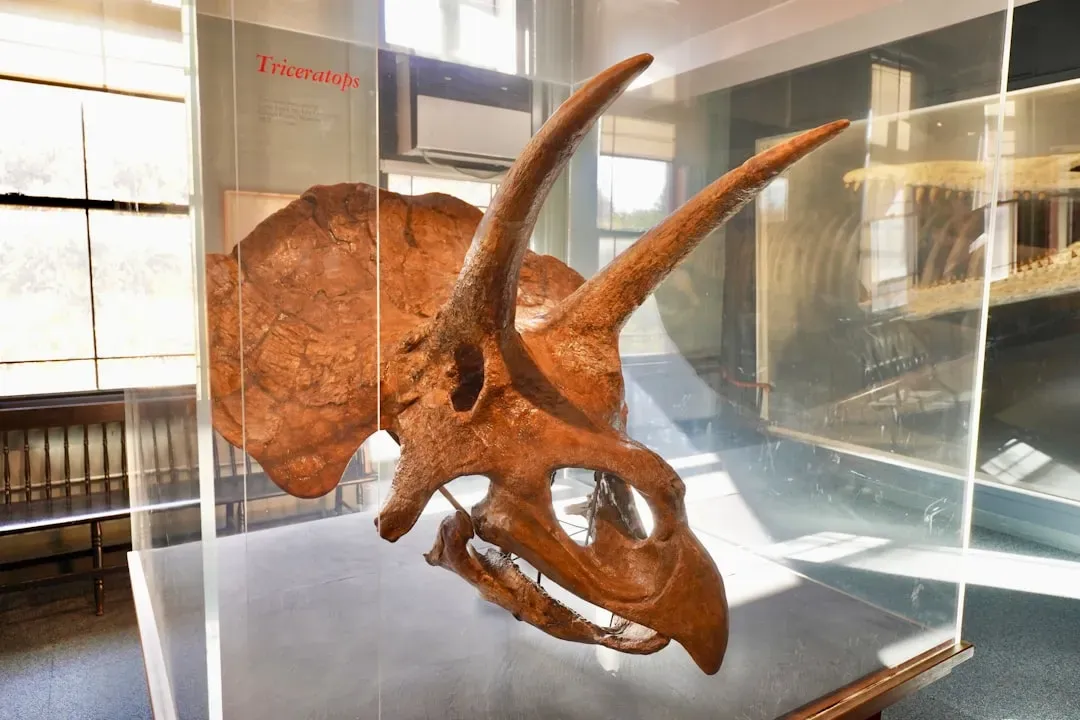
It is tempting to picture Triceratops as a living battering ram, charging like a movie monster with three spears on its head. Early on, that was almost the default view: horns equal fighting, preferably with Tyrannosaurus. But when researchers started looking closely at horned-dinosaur skulls, they saw something more nuanced: a huge amount of individual variation, reshaping with age, and patterns of damage that were not just simple stab wounds from predators.
Some paleontologists now lean toward the idea that those horns and the big facial shield were at least as much about communication and display as they were about combat. Think of them as a living ID card plus status badge, the way antlers can signal age and health in deer. This does not mean Triceratops never used them in a fight; it just suggests the “face” of Triceratops might have been part weapon, part billboard, and part social passport, which is a lot stranger than the cartoon version.
The Frill Was Probably Not Just A Neck Guard
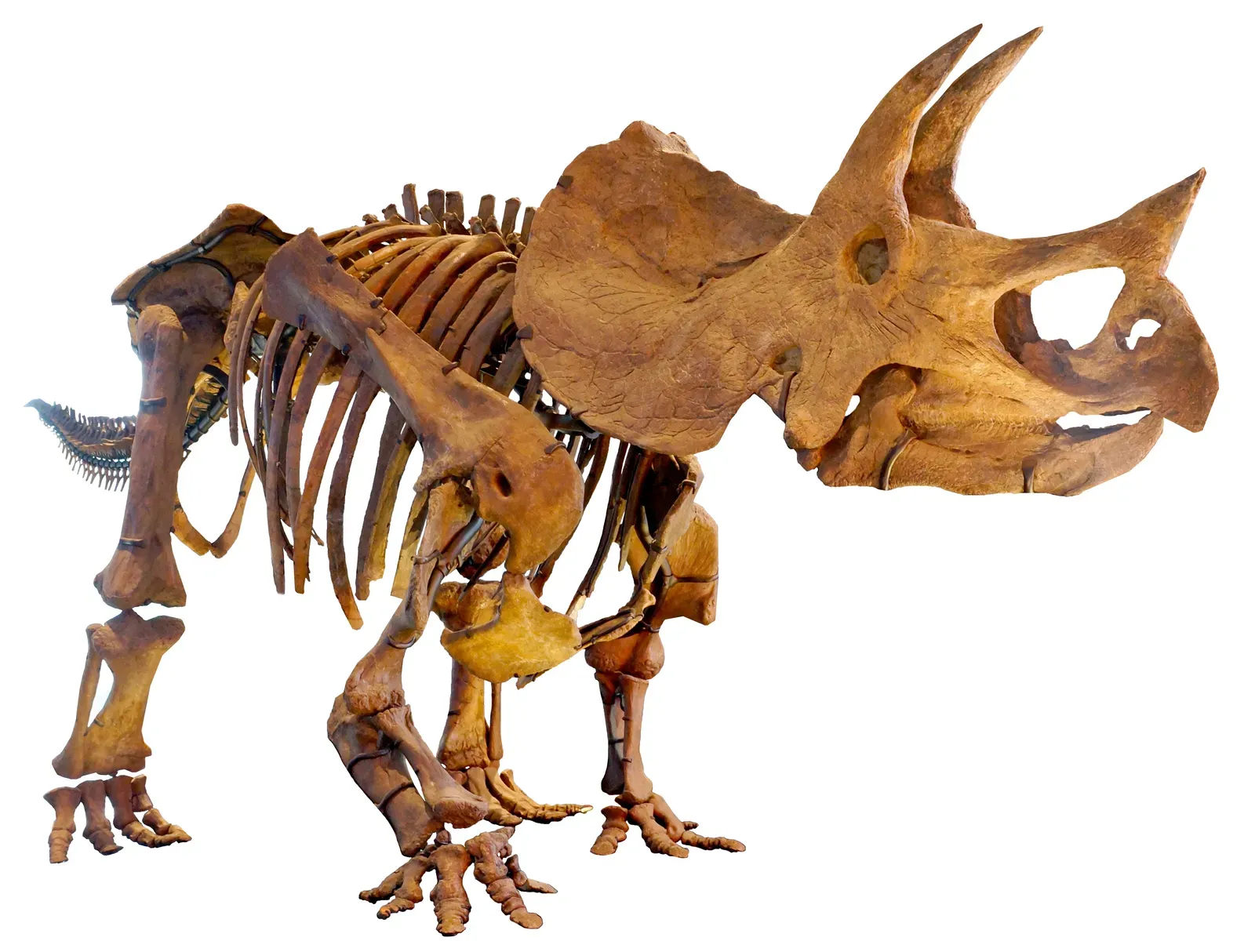
For years, the classic explanation for the frill was simple: armor. Put a big bony shield over the vulnerable neck and you make life harder for any hungry Tyrannosaurus. But detailed analysis of Triceratops frills shows they were not uniform slabs of bone. They had thin regions, large openings in some relatives, and complex patterns of blood vessels that hint at something more than just structural support.
Some scientists think the frill might have supported soft tissues, bright colors, or even a keratin layer that made it visually striking in life, more like a giant living signboard than a medieval shield. The blood supply hints at thermoregulation as another possible role, like a biological radiator helping to dump heat. If that is right, the back of a Triceratops’ head might have changed color, flushed with blood, or warmed up in the sun – less like static armor and more like a dynamic, living extension of its body language.
Bone Injuries Hint At Messy Social Lives, Not Just Predator Attacks
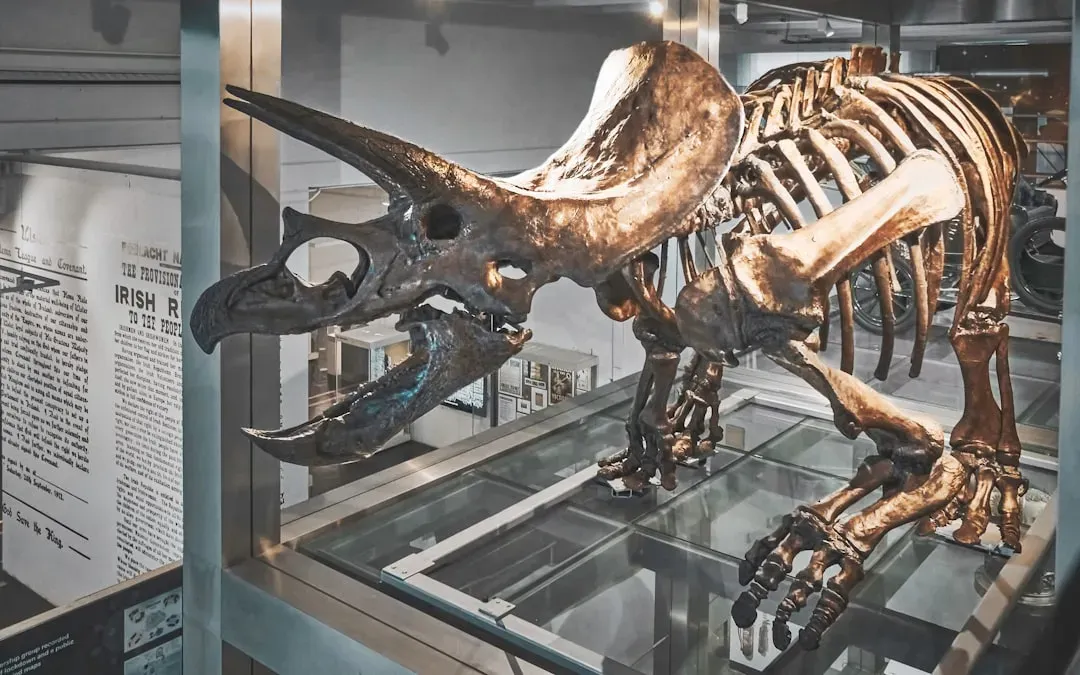
When researchers cataloged injuries on Triceratops skulls and frills, the pattern did not quite fit a simple “T. rex tried to eat me” story. Some wounds line up in ways that suggest horn‑on‑horn clashes with other Triceratops, and some healed in ways that mean the animal survived the encounter. In other words, a lot of the damage may have come from conflicts within the species rather than only from external threats.
That paints a picture of social behavior that is more complicated – maybe closer to the pushing matches you see in bison or muskoxen than a gentle plant-eater quietly nibbling ferns. If individuals were locking horns, testing each other, or fighting for mates or territory, then Triceratops life might have been noisy, stressful, and full of ritualized confrontation. That kind of behavior gives the horns a whole new context: they become tools in a social drama, not just last-ditch survival gear.
The Beak And Teeth Suggest A Surprisingly Extreme Eating Style
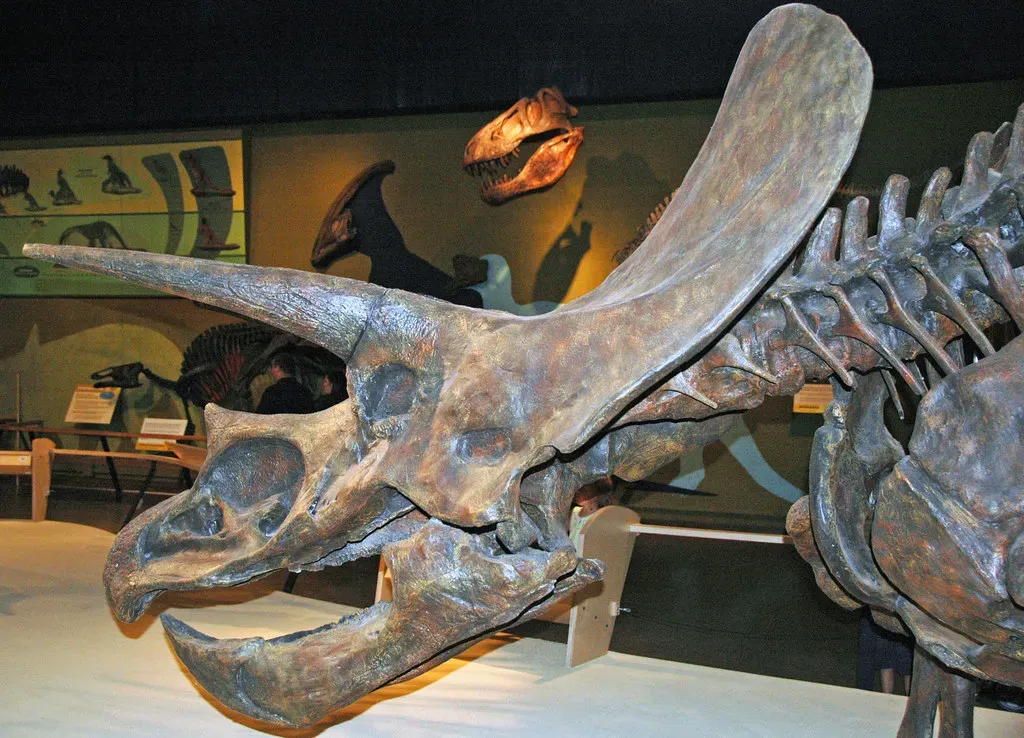
Triceratops’ mouth is easy to underestimate because the horns steal the show, but the business end of this dinosaur is its beak and the batteries of teeth hiding behind it. Microscopic wear patterns on the teeth and the way the jaws fit together suggest it could slice and grind tough, fibrous plants with serious force. Some researchers have proposed that it targeted especially coarse vegetation that other dinosaurs struggled to tackle.
There is even ongoing debate about whether it might have occasionally bitten into woody parts of plants or stripped branches in a way that would make it more like a living forestry machine. When you combine the beak, the jaw muscles, and the reinforced skull, you end up with something more extreme than a cow calmly grazing. You get an animal that could bulldoze its way through plant communities, reshaping its environment by sheer eating power, almost like a living, roaming mulcher.
Growth Stages Make Young Triceratops Look Almost Like Different Species
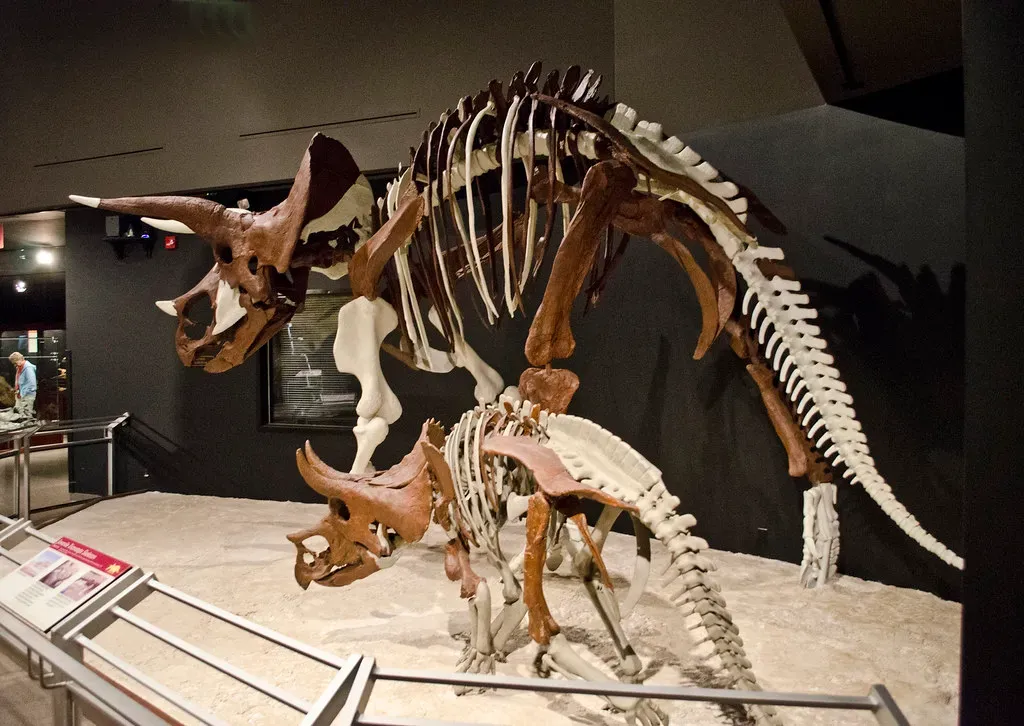
One of the strangest twists is how much Triceratops changes as it grows. Juveniles have proportionally shorter horns, different frill shapes, and skull features that really do make them look like separate species at first glance. It took a lot of careful comparison and bone histology to realize that some “new” horned dinosaurs described in the past were probably just younger stages of known animals.
This tells us that the life of a Triceratops was not just “small version, then big version” but a series of morphing shapes, almost like upgrading through several design versions of the same animal. Each stage might have lived slightly differently, faced different predators, or played different social roles. Imagine a teenager with a completely different head silhouette than the adult standing next to it – that level of transformation alone makes Triceratops stranger than its static museum mounts suggest.
The Brain And Senses Do Not Fit The ‘Lumbering Dummy’ Stereotype
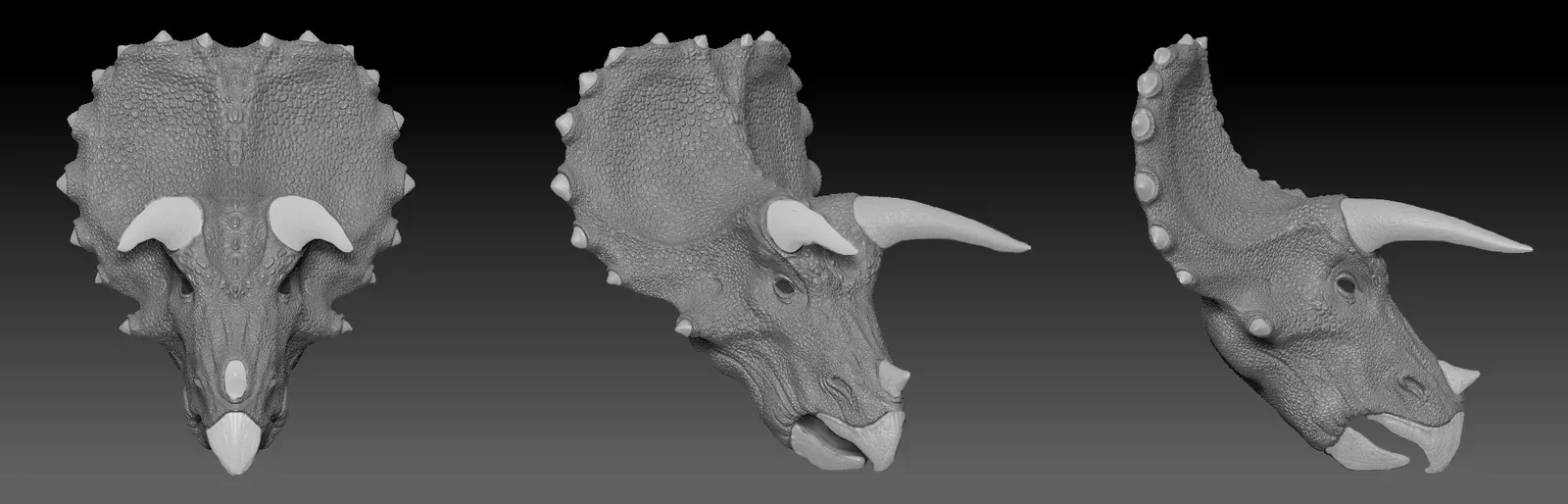
Triceratops is often cast as the slow, not‑so‑bright herbivore that exists mostly to get hunted by charismatic predators. But internal scans of skulls hint that this stereotype is too simple. The structure of the inner ear, for example, suggests it might have been decent at stabilizing its gaze and moving its head with some precision, not just plodding around without coordination.
Some features of the braincase and sensory regions suggest a reasonably sharp sense of smell and decent spatial awareness. That would make sense for an animal that had to navigate dense vegetation, identify members of its own group, and detect predators early enough to react. It might not have been plotting complex strategies, but it was probably not the dull-witted tank of popular media either – more like a wary, tuned-in grazer constantly scanning its world.
Its World Was A Shifting, Stressful Landscape At The End Of The Age Of Dinosaurs
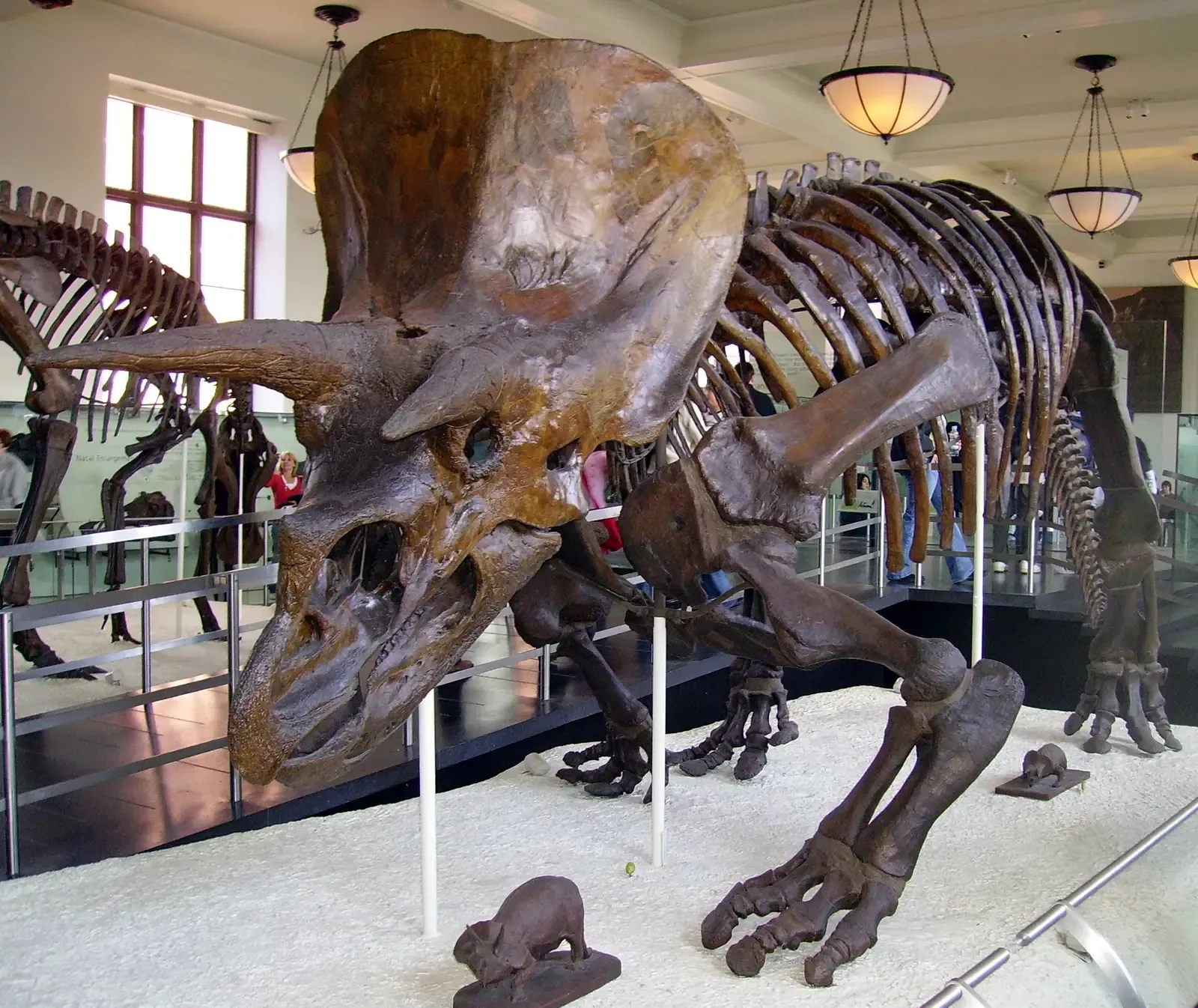
Triceratops did not live in some timeless dinosaur fantasyland; it existed in the final chapters of the Cretaceous, during a period that was dynamic and changing. The environment of western North America had river systems, floodplains, shifting coastlines, and a whole cast of other dinosaurs competing for space and food. That kind of setting demands adaptability, not just size and horns.
Some evidence points to changes in plant communities and climate patterns as the end of the Cretaceous approached. That means Triceratops likely had to cope with fluctuating resources, new challenges, and perhaps shifting predator pressures. The idea of this massive animal as a flexible survivor operating in a tense, late‑Cretaceous world adds an extra layer of strangeness: it was not just big, it was big and living right on the edge of one of Earth’s great mass extinctions.
Triceratops Might Have Been Part Of A Much Weirder Horned-Dinosaur Experiment
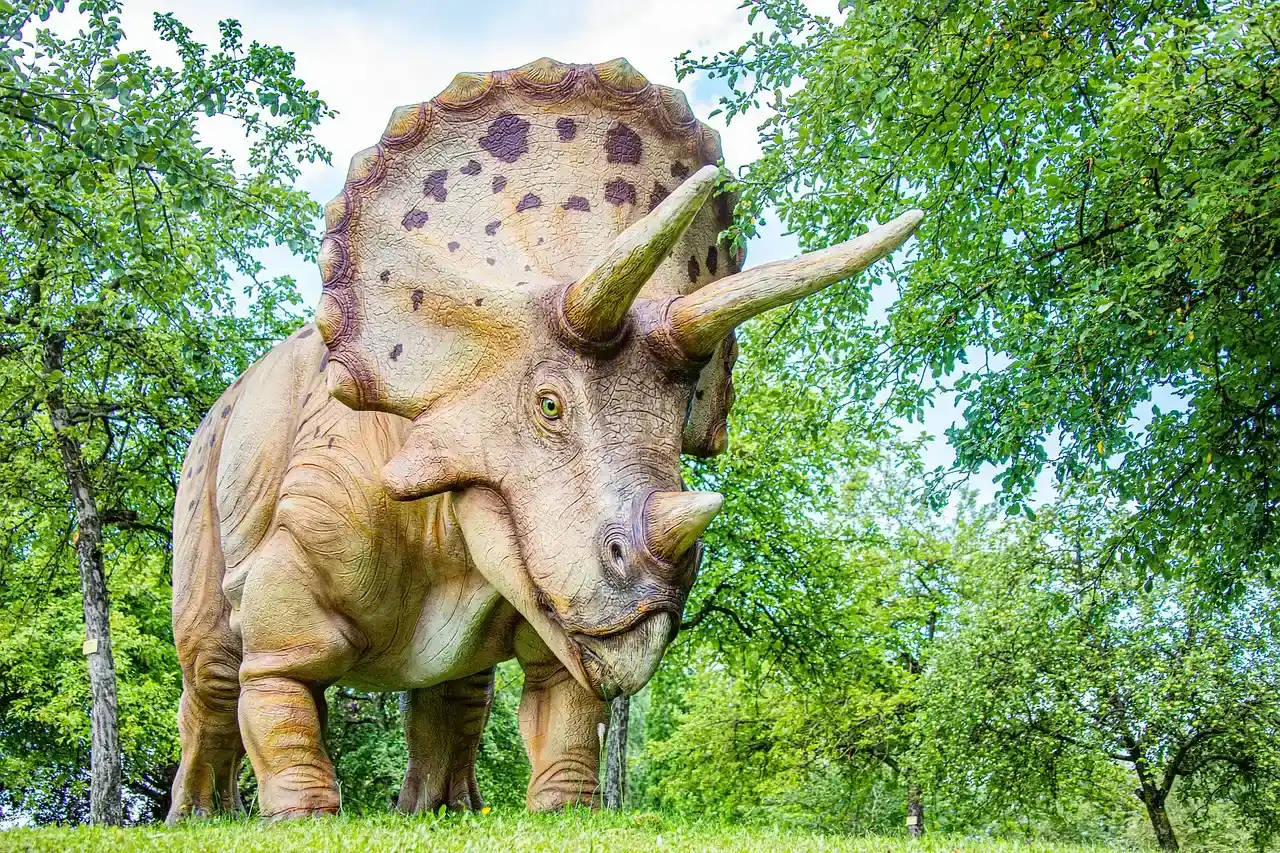
When you zoom out and look at Triceratops as one branch of a larger horned-dinosaur family tree, it starts to feel less like the baseline and more like a late, somewhat extreme version of a long evolutionary experiment. Its relatives sported wildly different frill shapes, horn patterns, and skull ornaments, some of which seem downright bizarre by modern standards. Triceratops, with its solid frill and forward-pointing horns, may have been just one solution among many to pressures we still do not fully understand.
That broader pattern suggests that horn and frill structures were evolving rapidly, possibly driven by social selection, visual communication, or complex ecological roles. Triceratops might have been the last prominent representative of a lineage that had been playing with bone as a signaling canvas for millions of years. Seen that way, it stops being a solitary icon and becomes the final verse of a long, strange song we are only beginning to hear clearly.
Conclusion: A Familiar Dinosaur That Might Never Have Been ‘Normal’
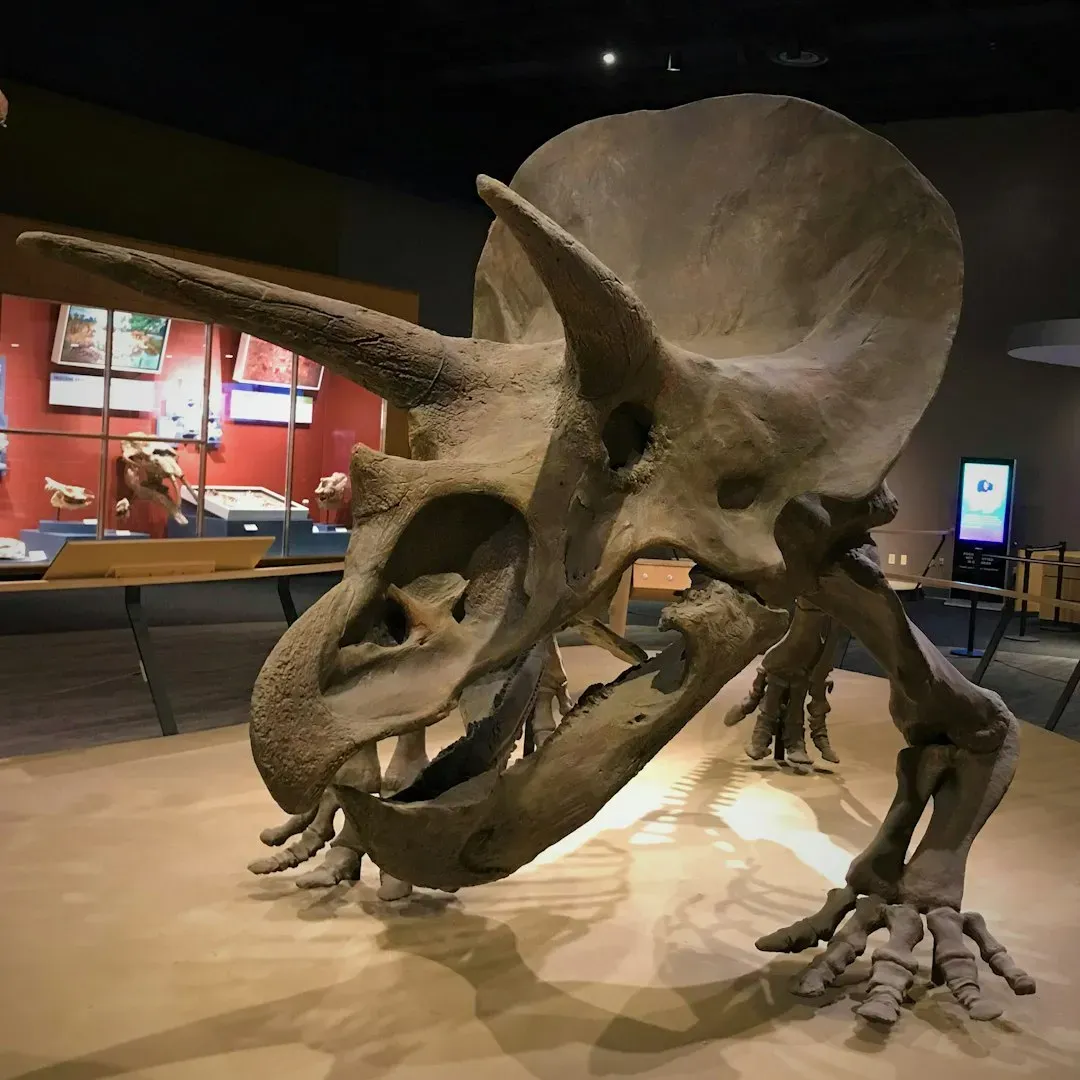
The more we learn, the less Triceratops fits the comforting image of a simple, armored plant-eater waiting around to be ambushed by predators. Its horns may have been social tools as much as weapons, its frill a living, possibly colorful structure, its teeth an industrial-scale plant-processing system, and its growth a dramatic transformation across life stages. Add in a complex social life, sharper senses than it usually gets credit for, and a role in a stressed, end‑Cretaceous ecosystem, and it starts to look like one of the strangest large animals that ever walked the planet.
My own opinion is that we still tend to underestimate just how alien these animals really were, because our brains keep trying to squeeze them into modern analogies like “rhino with a frill.” Triceratops was probably doing things with its body, its bones, and its behavior that do not map neatly onto anything alive today, and that is exactly what makes it fascinating. As new fossils and new technologies keep rewriting the details, one thing seems clear: the more we find, the stranger this dinosaur becomes. When you picture Triceratops now, are you still seeing a simple tank on legs – or something a lot wilder hiding behind that familiar silhouette?