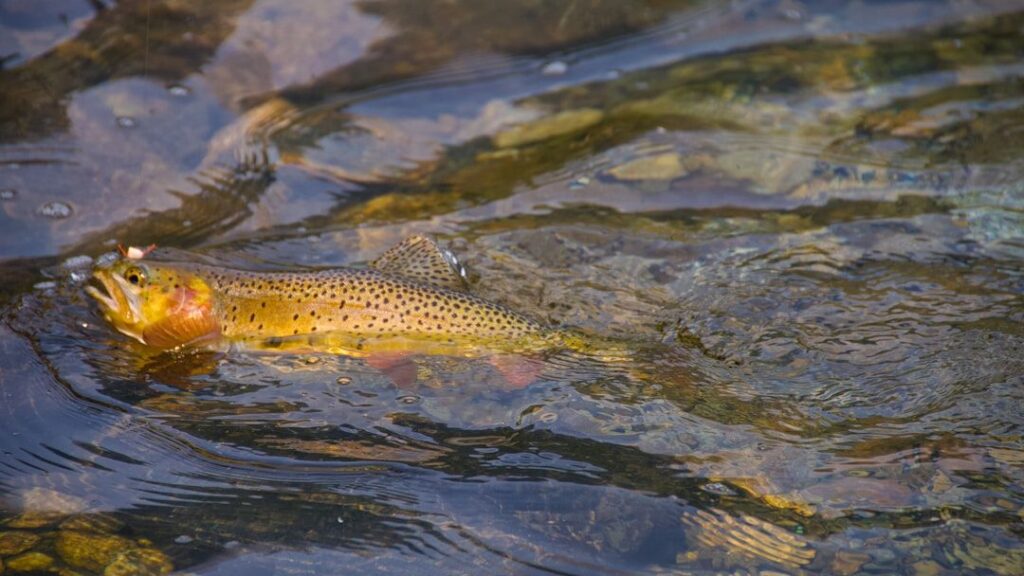
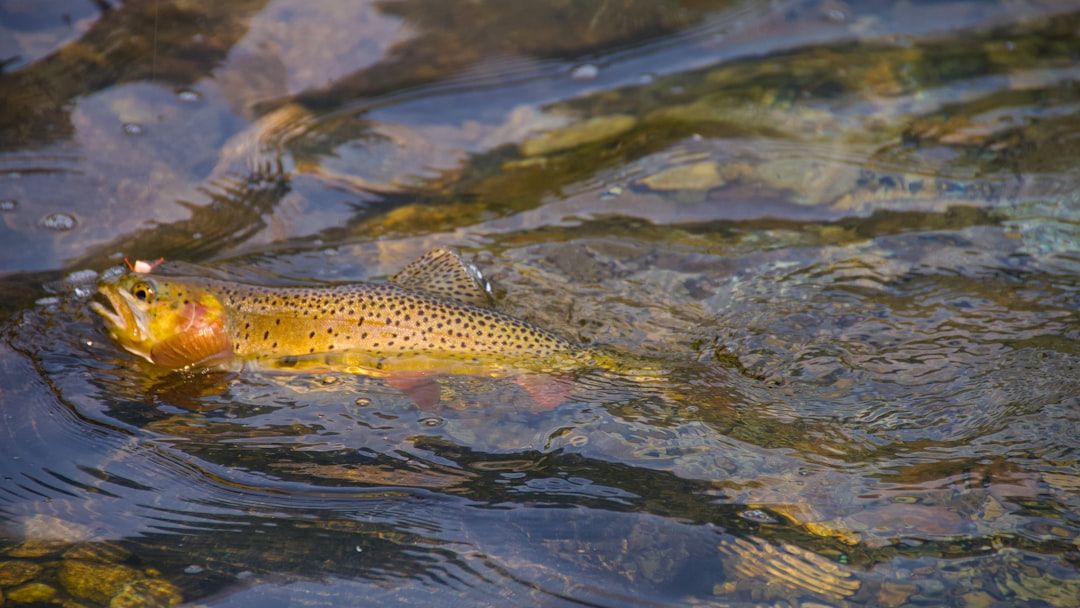
An experiment shows that yellow trout can grow larger than the wild strain – Image for illustrative purposes only (Image credits: Unsplash)
In the research facilities of São Paulo state, Brazil, controlled trials have revealed that yellow rainbow trout can reach greater sizes than the wild-type fish that dominate commercial farms. The work examined how selective breeding produces distinct color variants and measured their performance under standard aquaculture conditions. Results from the project now appear in the journal Aquaculture Reports, adding a new data point to ongoing efforts to refine trout production.
Breeding Crosses That Create Distinct Color Variants
The yellow, cobalt blue, and white phenotypes examined in the study result from deliberate crosses between wild-strain females and white albino males. This approach generates visible differences in appearance while preserving the core genetic background of rainbow trout, known scientifically as Oncorhynchus mykiss. Earlier investigations had already established that full albinism often reduces growth rates and weight gain in these fish.
Yet the latest trial indicates that the yellow variant escapes some of those limitations. The cobalt blue and white forms were also produced in the same breeding program, allowing direct comparison across phenotypes within the same experimental setting. Such targeted crosses illustrate how aquaculture researchers can explore genetic diversity without introducing entirely new strains.
Measured Growth Advantages in the São Paulo Trials
Under the conditions of the experiment, yellow trout consistently outperformed the wild strain in overall size at harvest. The wild strain remains the most widely farmed phenotype worldwide, valued for its hardiness and market familiarity. The yellow fish, however, demonstrated a clear edge in length and weight accumulation during the same rearing period.
Researchers maintained identical water quality, feed regimes, and stocking densities across all groups to isolate the effect of phenotype. This controlled design helped confirm that the observed size differences stemmed from the genetic variations rather than environmental factors. The findings stand in contrast to prior assumptions that any departure from the wild strain, especially those linked to albinism, would carry growth penalties.
Practical Considerations for Trout Producers
Commercial operations that raise rainbow trout may find value in incorporating the yellow phenotype where growth performance is a priority. Larger fish at market size can translate into higher yields per rearing cycle without changes to existing infrastructure or feed inputs. The study does not claim universal superiority for every farming system, but it supplies evidence that selective use of color variants can support production goals.
Breeders already manage multiple phenotypes in hatcheries, so shifting emphasis toward the yellow form would require only modest adjustments in broodstock selection. Continued monitoring will be needed to assess long-term traits such as disease resistance and fillet quality, areas not covered in the current report. The publication nevertheless provides a foundation for further trials in other regions with similar climate and water conditions.
Contribution to Broader Aquaculture Knowledge
The São Paulo experiment adds to a growing body of research on how visible genetic markers can serve as tools for improving farmed fish performance. By documenting that yellow trout exceed the wild strain in size, the work challenges the notion that all non-standard phenotypes carry inherent drawbacks. It also underscores the importance of region-specific testing, given that growth outcomes can vary with local water temperatures and feed formulations.
Future studies may examine whether the same advantage appears in different production scales or when the yellow phenotype is crossed with other established lines. For now, the data offer producers and researchers a concrete example of how targeted breeding can unlock modest but measurable gains in a widely cultured species.
Key points from the research:
- Yellow rainbow trout reached larger sizes than the standard wild strain in controlled São Paulo trials.
- Phenotypes were created by crossing wild females with white albino males.
- Earlier work linked albinism to reduced growth, yet the yellow variant showed no such penalty.
- Findings were published in Aquaculture Reports and focus on Oncorhynchus mykiss.