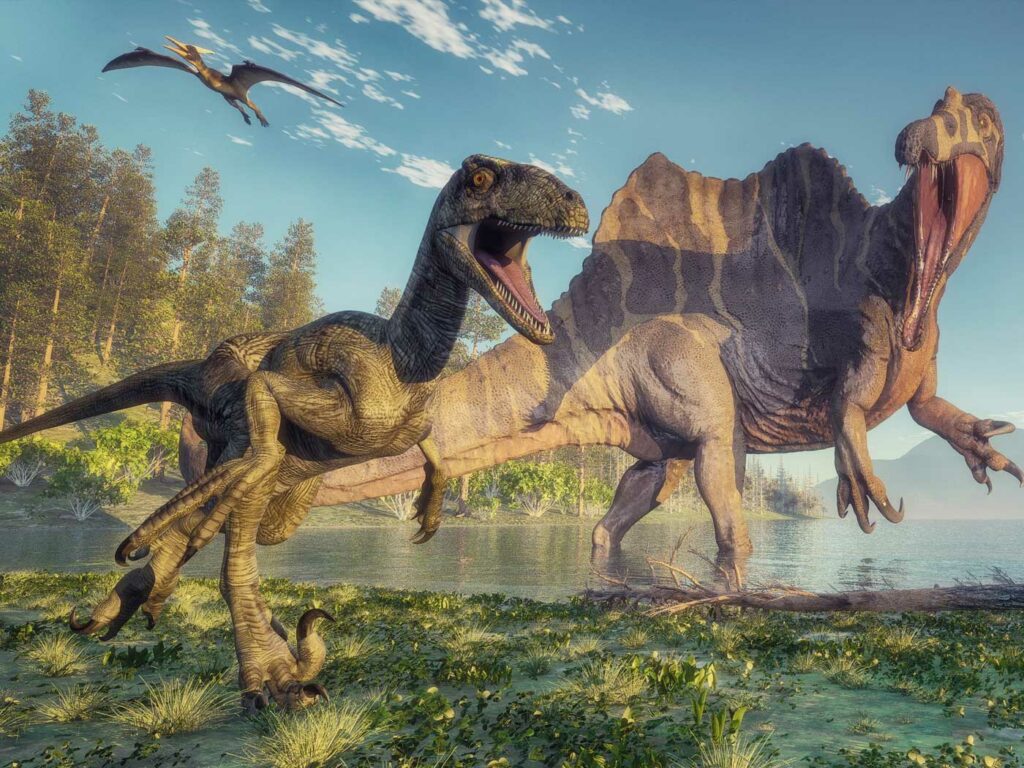
Dinosaurs dominated Earth for over 165 million years, evolving remarkable adaptations for survival in a world of giants and predators. Among their most impressive traits were bursts of speed that allowed small hunters to chase prey and large herbivores to flee danger. Scientists estimate these velocities through fossilized skeletons, trackways, and biomechanical models, revealing a roster of fleet-footed species that could outpace rhinos, bears, and even some of today’s quickest runners.
Lightweight Frames Fueled Blazing Accelerations
Lightweight Frames Fueled Blazing Accelerations (Image Credits: Wikimedia)
Paleontologists long noted that the swiftest dinosaurs shared slender builds, long tails for balance, and powerful hind legs. These features enabled rapid direction changes during hunts or escapes. Compsognathus, for instance, tipped the scales at under one kilogram yet achieved 65 kilometers per hour – matching greyhounds and impalas.
Similarly, Nanotyrannus relied on long limbs and a cursorial design, scoring high on metrics for chasing prey at 60 kilometers per hour. Such adaptations proved essential in environments teeming with threats, where a few seconds could mean life or death. These tiny titans demonstrated that size often yielded to agility in the race for dominance.
Ostrich Mimics and Raptor Hunters Dominated the Field
Ornithomimids like Gallimimus and Struthiomimus evoked modern ostriches with their tall statures and toothless beaks. Gallimimus stretched six meters long and hit 56 kilometers per hour while foraging in groups across Late Cretaceous floodplains. Struthiomimus, at 55 kilometers per hour, used its speed to dodge carnivores and snag small meals.
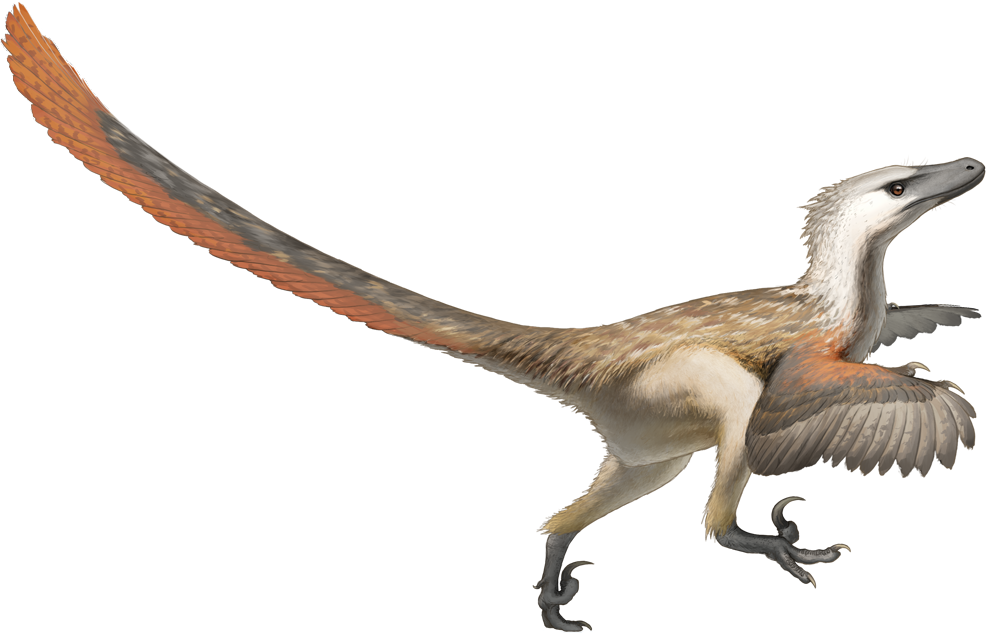
Raptors such as Velociraptor and Deinonychus brought terror with sickle claws and pack tactics. Velociraptor, turkey-sized with a lightweight frame and stabilizing tail, reached 40 kilometers per hour to tackle Protoceratops. Deinonychus, heavier at 70 kilograms, matched that pace while pursuing larger quarry like Tenontosaurus.
Even Giants Posted Impressive Times
Not all speed records belonged to the small; herbivores and predators alike clocked respectable velocities. Dryosaurus, a nimble Jurassic iguanodont under 100 kilograms, managed 43 kilometers per hour on slender legs amid Allosaurus territory. Triceratops, a 10-ton behemoth with horns and frill, surprised at 35 kilometers per hour – faster than expected for its rhino-like bulk.
Allosaurus patrolled Late Jurassic landscapes at 34 kilometers per hour, its lighter frame aiding skirmishes with Stegosaurus. Tyrannosaurus, the iconic apex predator, topped out at 30 kilometers per hour in short bursts, sufficient against lumbering hadrosaurs. These larger species highlighted how bursts of power compensated for sustained endurance.
| Dinosaur | Top Speed (km/h) | Approx. Weight | Era |
|---|---|---|---|
| Compsognathus | 65 | <1 kg | Late Jurassic |
| Nanotyrannus | 60 | Lightly built | Late Cretaceous |
| Gallimimus | 56 | 490 kg | Late Cretaceous |
| Struthiomimus | 55 | 150 kg | Late Cretaceous |
| Dryosaurus | 43 | 100 kg | Late Jurassic |
| Velociraptor / Deinonychus | 40 | ~70 kg | Late Cretaceous |
| Triceratops | 35 | 10,000 kg | Late Cretaceous |
| Allosaurus | 34 | 2,500 kg | Late Jurassic |
| Tyrannosaurus | 30 | 9,000 kg | Late Cretaceous |
Lessons from Fossil Trackways and Models
Estimates draw from hip heights, stride lengths in trackways, and computer simulations of muscle power. Small theropods excelled due to low mass and high leg-to-body ratios. Larger ones conserved energy for ambushes rather than marathons.
These speeds underscore a dynamic ecosystem where velocity shaped predator-prey dynamics across Triassic, Jurassic, and Cretaceous periods. Modern analogs like cheetahs and ostriches echo these ancient strategies.
Key Takeaways:
- Small dinosaurs like Compsognathus led with 65 km/h bursts, defying their size.[1]
- Raptors combined speed with claws for effective hunting packs.
- Even massive species like Triceratops outran expectations at 35 km/h.
Dinosaurs’ speed prowess reminds us that evolution favors the quick in brutal arenas. What surprises you most about these prehistoric racers? Tell us in the comments.