You probably grew up picturing dinosaurs as giant, scaly monsters thundering across dry land, roaring at the sky and chomping anything that moved. For a long time, that was the mental movie most scientists had too. Then, piece by piece, fossils started showing up that didn’t fit the script at all. Suddenly, dinosaurs had feathers, some swam, some brooded their eggs like birds, and others died in snapshot moments so clear you could almost step into the scene. As you dive into these ten discoveries, you’re not just learning random facts about old bones. You’re watching an entire world get rewritten in real time. You’ll see how a single tail, a patch of skin, or a nest of eggs can force experts to say, “We were wrong about that.” And the wild part? The story is still changing, which means almost everything you think you know about dinosaurs is, at best, a draft.
1. The First Known Swimming Dinosaur: Spinosaurus Reimagined
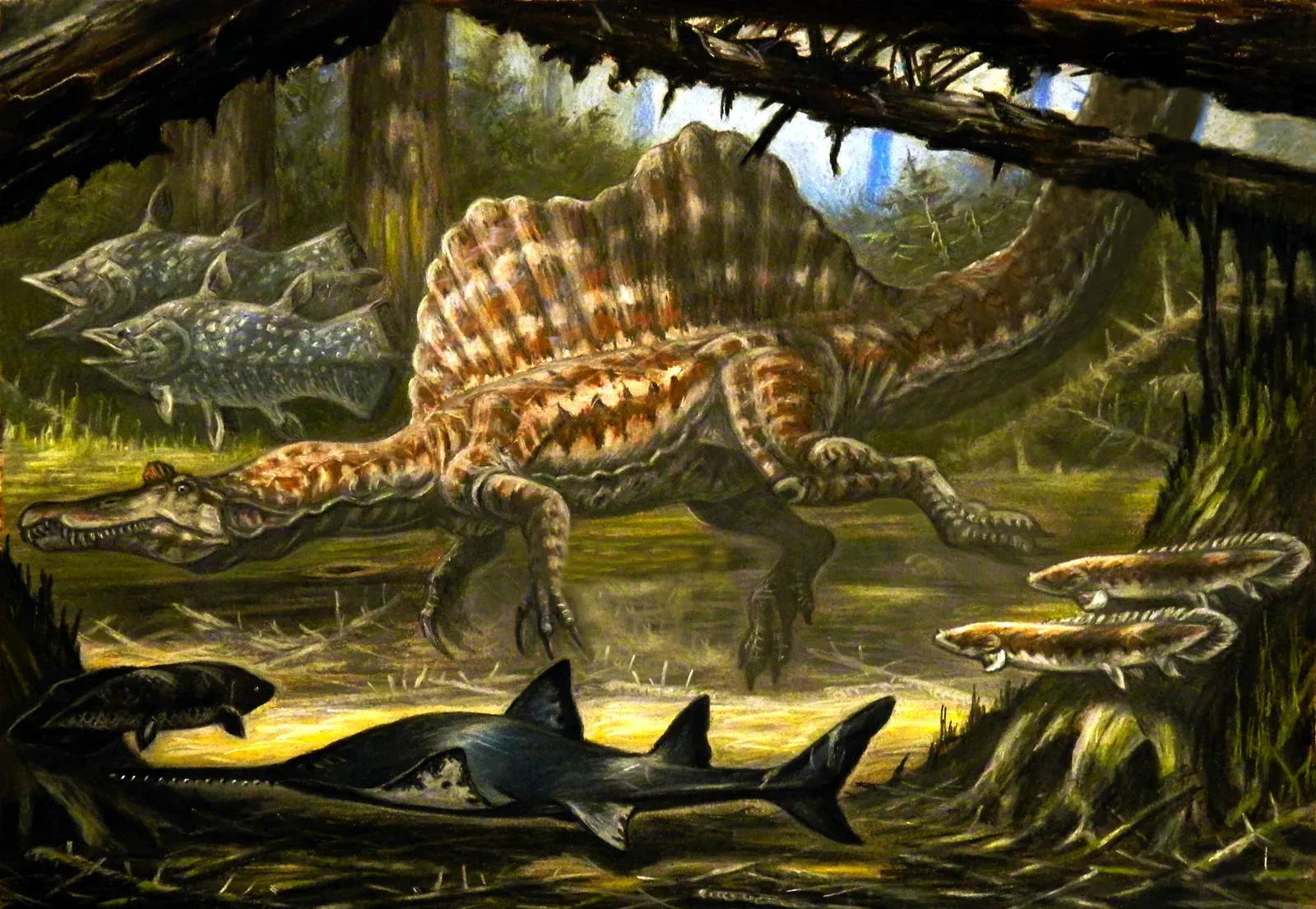
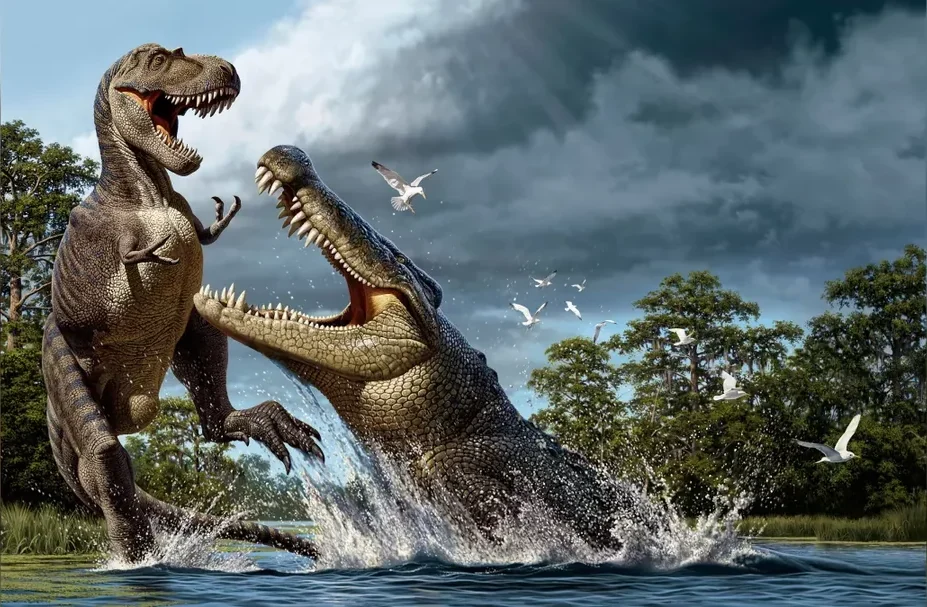
You were probably told that dinosaurs ruled the land while marine reptiles dominated the oceans. Then Spinosaurus crashed that neat little boundary. For decades, it was imagined as a T. rex knockoff with a weird sail, stomping along riverbanks. But new fossils from North Africa revealed a long, paddle-like tail that functioned less like a land predator’s counterbalance and more like a giant biological oar. That tail forced researchers to test it in water flumes, where models showed it could generate powerful thrust, much like a crocodile slicing through a river.
Suddenly, you’re no longer looking at a lumbering shoreline hunter but at a semi-aquatic predator built to move in water as much as on land. Follow-up discoveries of related species, including one found far inland in ancient river deposits, suggest you’re dealing with a whole group of fish‑hunting, river‑stalking spinosaurs that blur the line between “dinosaur” and “aquatic beast.” The debate is still ongoing about exactly how well they swam, but the old textbook claim that non‑avian dinosaurs were strictly land animals is gone. You now have to make room in your mental dinosaur zoo for a creature that behaved more like a monstrous, sail-backed heron or crocodile than a classic Jurassic Park villain.
2. Feathers Everywhere: Raptors, Tyrants, and the Fluffy Revolution
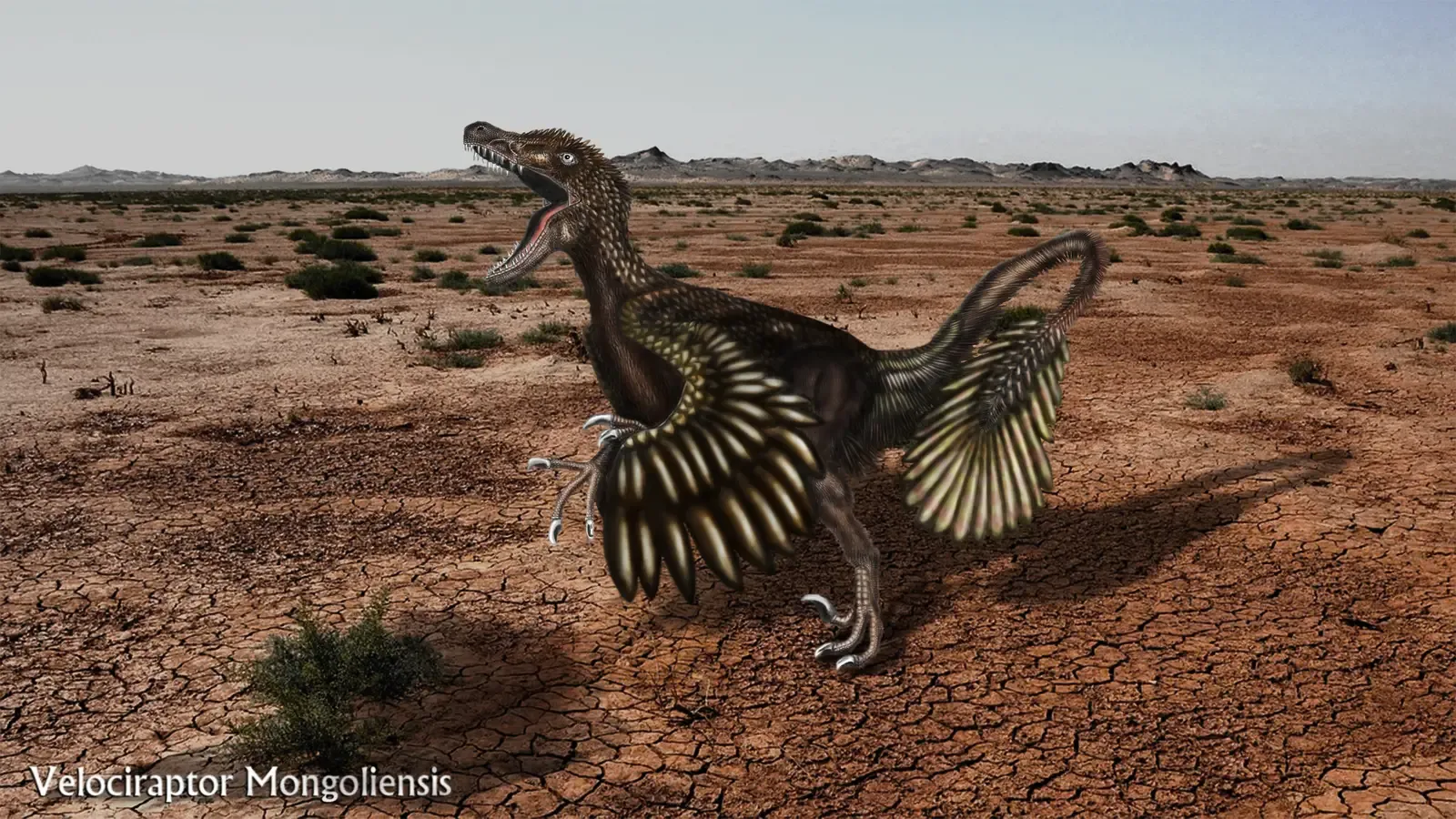
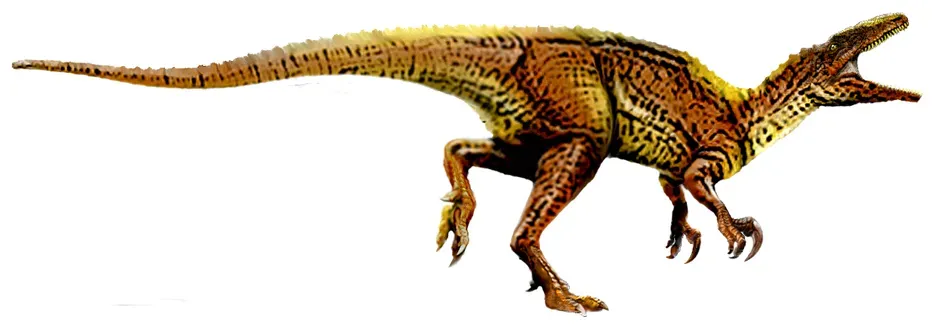
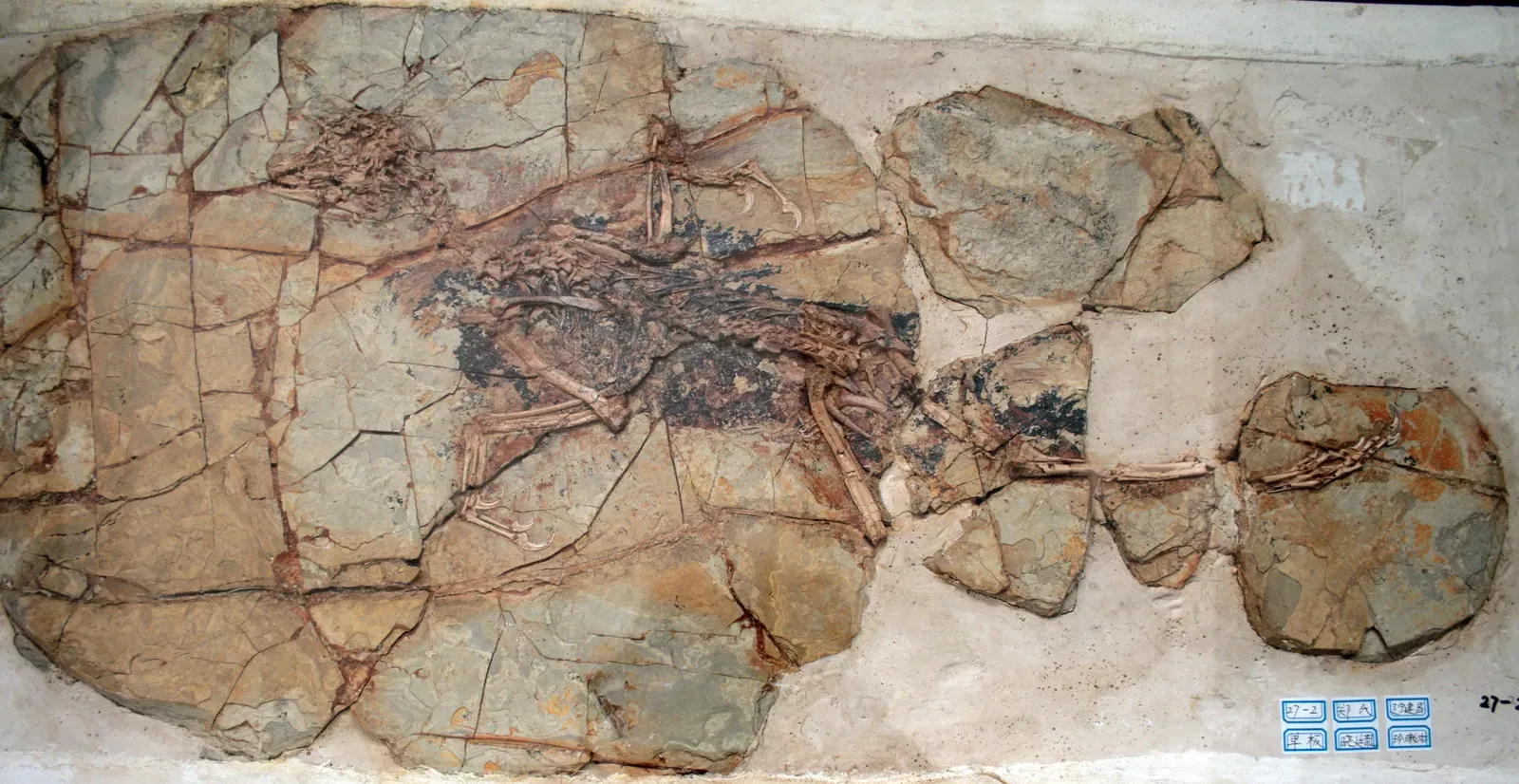
If you still picture Velociraptor as a naked, scaly assassin, you’re about twenty years behind the science. When paleontologists found quill knobs – little bumps where large feathers attach – on Velociraptor’s arm bones, it proved that this predator carried serious plumage. Then came discoveries like Zhenyuanlong, a close cousin of Velociraptor with huge, complex wings, and Yutyrannus, a large tyrannosauroid preserved with filamentous feathers. These fossils tell you that feathers weren’t just a quirky experiment in a few small species; they were widespread tools for insulation, display, and maybe even maneuvering.
That means your mental line between “dinosaur” and “bird” is basically an illusion. Many of the agile hunters you imagine sprinting across Cretaceous floodplains probably looked more like terrifying, oversized killer birds than movie reptiles. Feathers show up in a surprising range of dinosaur groups, and in some cases, they appear in species far too big to fly, hinting that flight was a side effect of features that first evolved for warmth or show. Once you see it that way, you stop thinking “dinosaurs kind of turned into birds” and start realizing “birds are living dinosaurs,” walking and flying past you every single day.
3. Dinosaurs That Sat on Their Eggs Like Birds
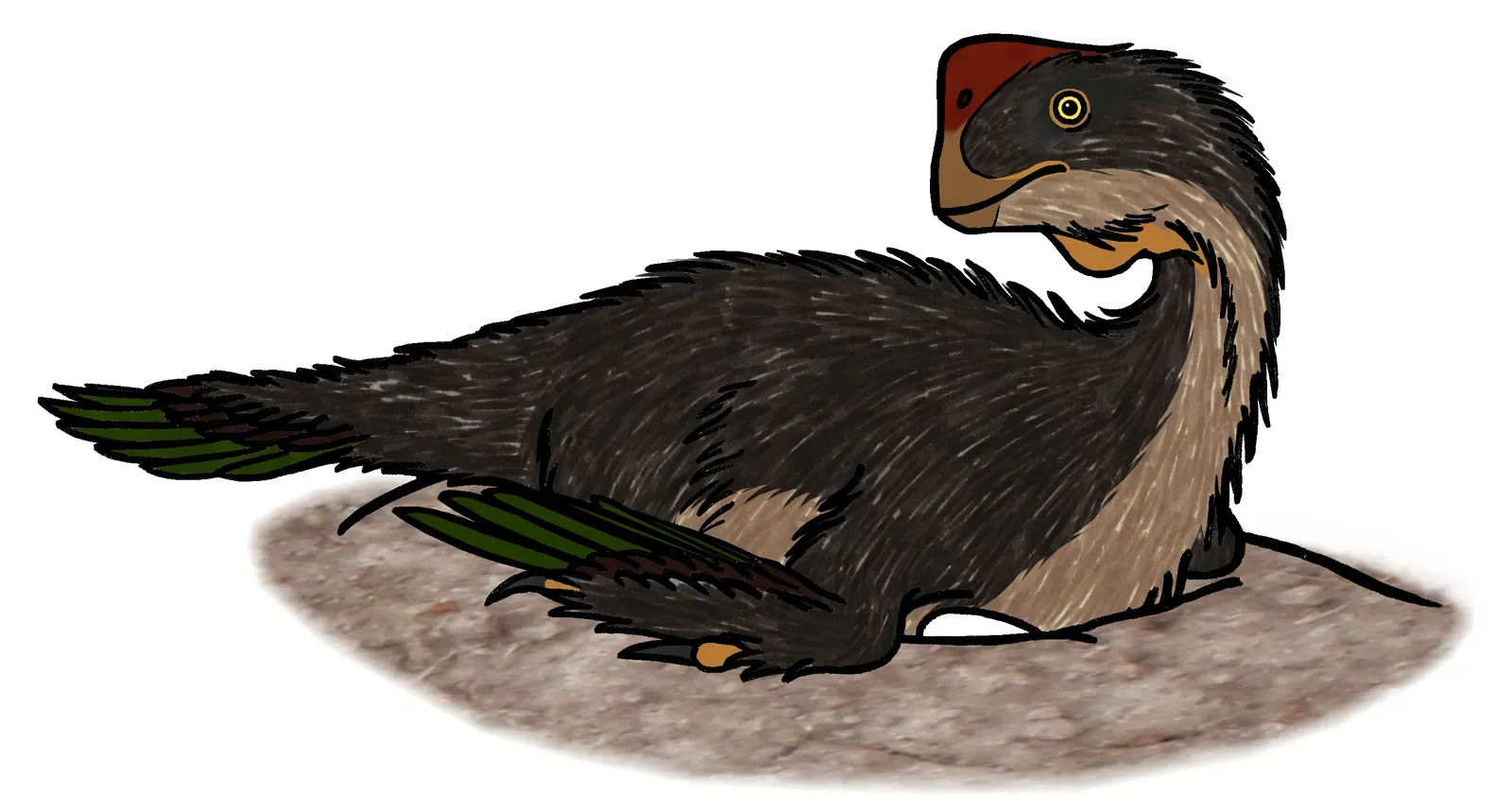
You might assume dinosaurs laid their eggs and walked away, leaving the next generation to fend for themselves. Then fossils from Asia changed that story in a single, almost heartbreaking image: an oviraptorosaur preserved in a brooding pose, arms and body curled protectively over a ring of eggs. Later finds gave you more of these scenes, some with embryos still inside the eggs. The pose is nearly identical to the way modern birds sit on nests, especially ground‑nesting species that shelter eggs and hatchlings with their bodies and feathered limbs.
This kind of evidence pushes you to rethink dinosaur behavior as warm, social, and nurturing rather than cold and indifferent. Brooding fossils suggest careful parenting, incubation, and maybe even coordinated nesting colonies, something you see in certain birds today. When you picture those eggs under the arms of a feathered dinosaur, you start to feel a strange familiarity, like watching a goose or a hen guard its clutch. Instead of distant, alien monsters, many dinosaurs become animals you could almost emotionally recognize: parents, not just predators.
4. The “Dueling Dinosaurs” Time Capsule
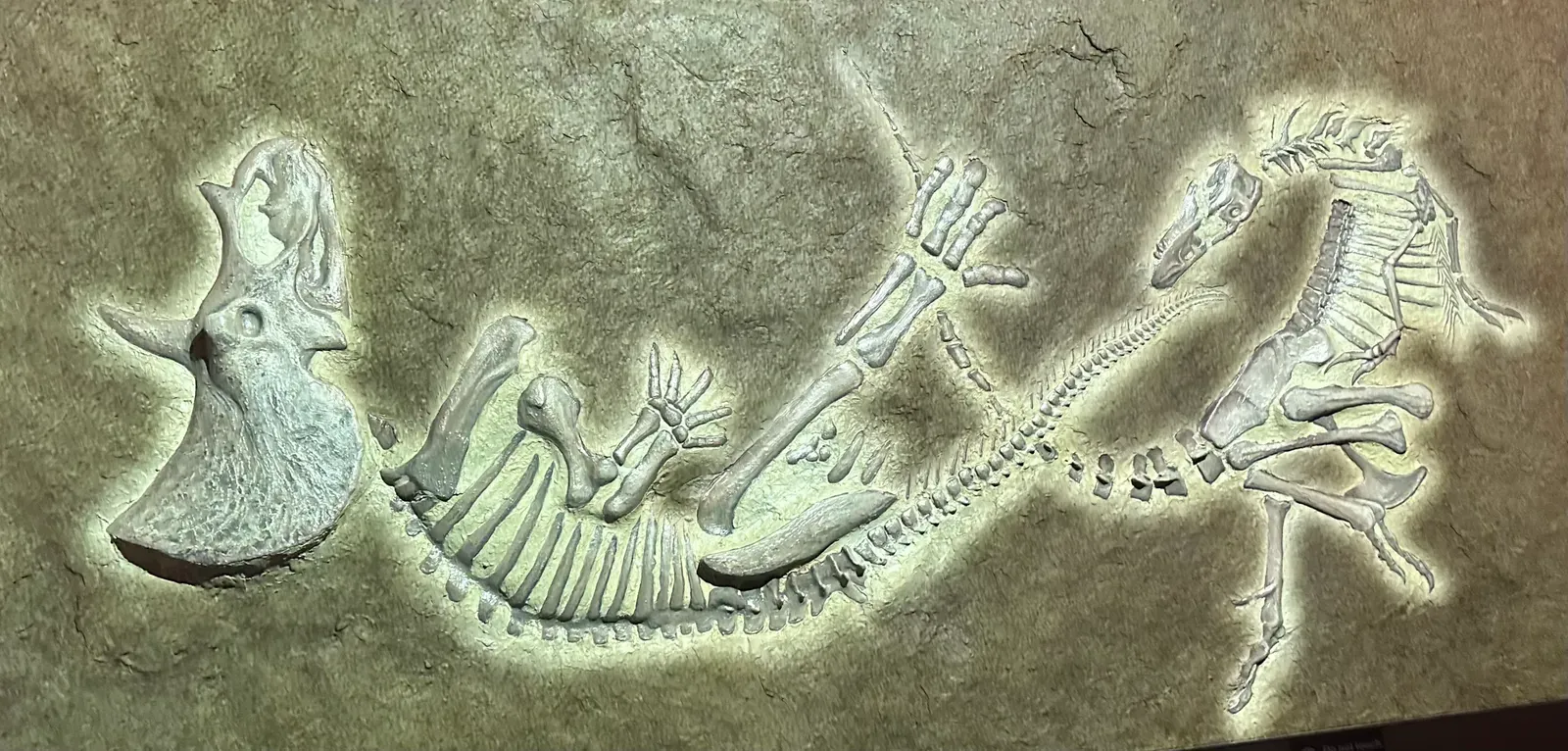
Imagine walking into a lab and seeing a Tyrannosaurus‑like predator and a Triceratops‑like herbivore wrapped around each other in death, preserved almost like a crime scene photograph. That’s what you get with the Dueling Dinosaurs fossil from Montana: two large animals, incredibly complete, preserved together in a way that strongly suggests they died locked in combat or at least in close interaction. For you, this is not just another set of bones; it’s a frozen moment of drama from sixty‑six million years ago, down to skin impressions and possible internal remains.
The specimen is so detailed that scientists can probe everything from growth patterns to how skin covered muscles to who might have bitten whom. There’s even an ongoing debate about whether the tyrannosaur in the fossil is a young T. rex or a separate species known as Nanotyrannus, a question that could reshape how you think about tyrannosaur diversity and growth. What makes this discovery mind‑blowing is the intimacy of it: instead of abstract averages and measurements, you’re watching two individuals in a likely life‑or‑death encounter. It feels less like paleontology and more like forensic science, and it reminds you that every skeleton was once a living animal with a story.
5. Soft Tissues, Proteins, and the Shock of Dinosaur Biology
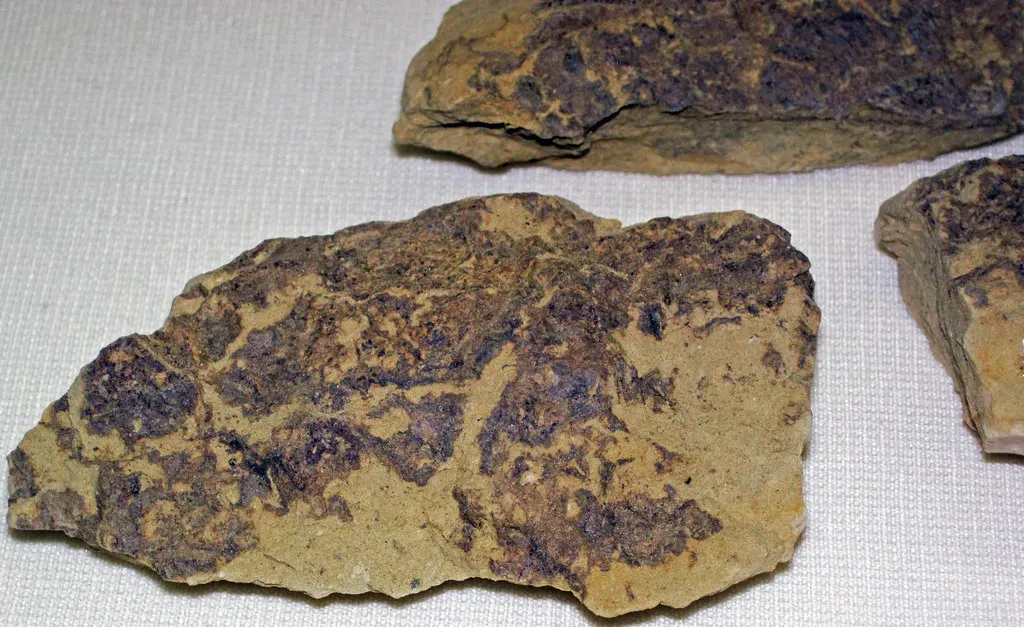
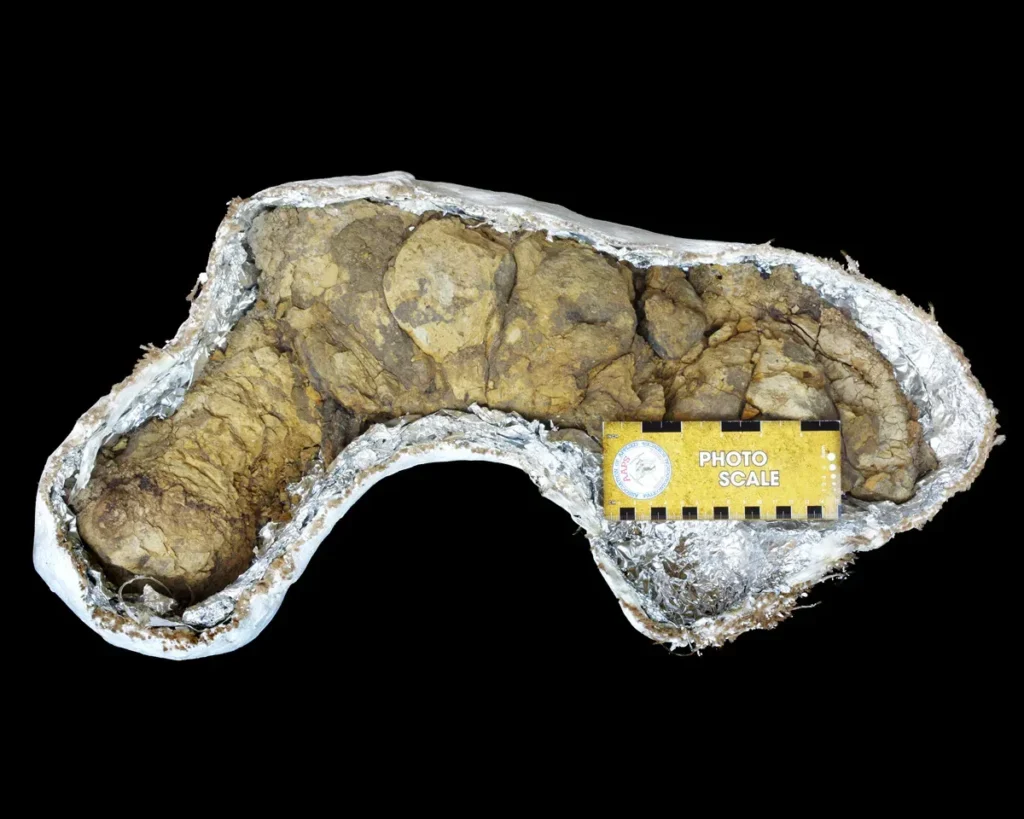
You probably learned that all you ever get from dinosaurs is mineralized bone, with every trace of original tissue long gone. Then researchers started finding something unsettling: microscopic structures in some fossils that looked like blood vessels and cells, and chemical signatures consistent with ancient proteins like collagen. In some cases, these remains came from exceptionally well‑preserved bones where mineralization locked internal structures away from complete decay. When you peer down the microscope, you’re not just seeing “rock shaped like bone,” but hints of actual biological material that once held these animals together.
On top of that, CT scans and advanced imaging have revealed medullary bone – a special type of tissue birds form when laying eggs – in at least one theropod, implying you can tell not only the sex but also the reproductive state of a dinosaur at death. That flips your understanding from “we will never know these details” to “you can sometimes catch an individual mid‑life stage.” It’s still a controversial field and researchers are careful not to overclaim, but the possibility that you can study dinosaur biochemistry, growth, and even aspects of their immune or reproductive systems feels almost sci‑fi. Suddenly, deep time does not feel quite as impenetrable as you were told.
6. Giant Long-Necked Reptiles That Hunted Like Fishing Rods
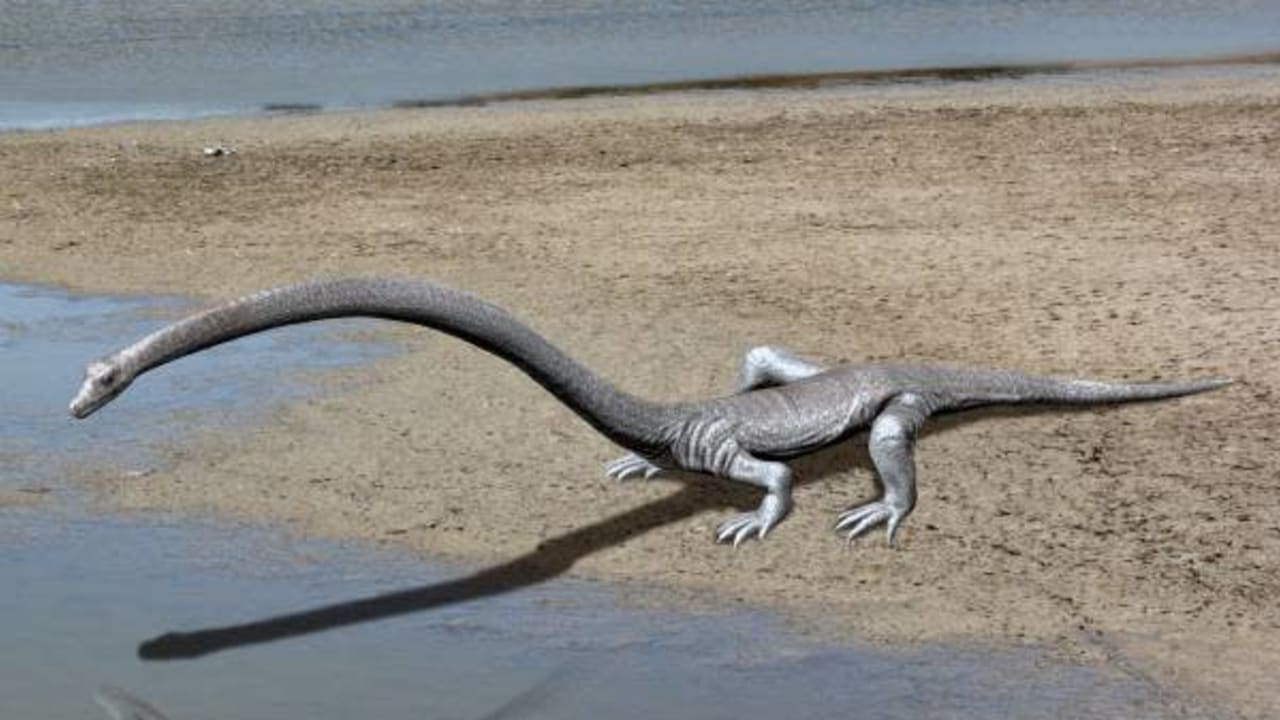
When you think “long neck,” your mind probably jumps straight to classic sauropods like Brachiosaurus lumbering across plains. But fossils of Triassic reptiles such as Tanystropheus and its even more extreme marine cousin Dinocephalosaurus force you to imagine something much stranger: bodies of moderate length with necks stretching as long as the entire rest of the animal. In some species, that neck consisted of only a handful of extremely elongated vertebrae, creating a rigid, pole‑like structure instead of a flexible snake of bone. These animals lived in or near shallow water, packed with fish and small prey.
Evidence suggests they used those absurd necks like stealthy fishing rods, keeping their bulky bodies hidden while only their small heads and long necks intruded into hunting zones. Picture yourself watching from above: a motionless shape lurking below, with a narrow, elongated neck sliding silently toward a school of fish. Once you see that image, you realize prehistoric ecosystems were filled with experimental body plans that look almost made up. It also undercuts the idea that “long neck” automatically equals “tall tree‑browsing land giant.” In deep time, nature reused the same basic idea for completely different purposes.
7. Pack-Hunting Raptors Frozen in a Single Block
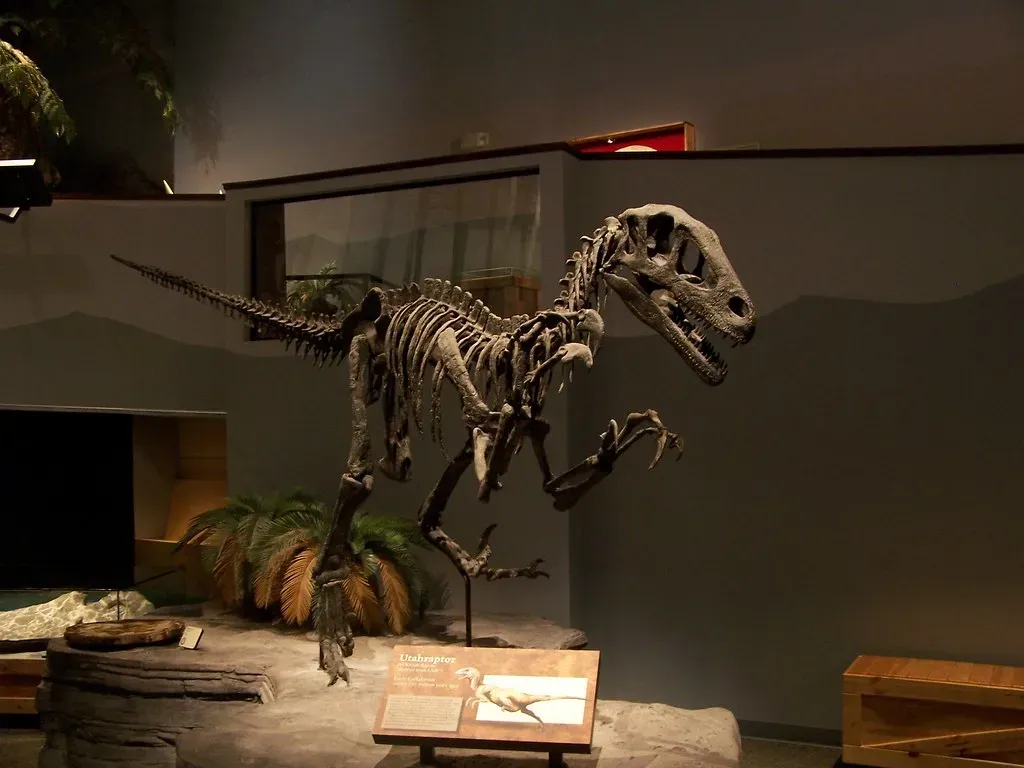
If movie raptors made you assume sleek hunters always worked in clever packs, scientists actually used to be more cautious. Then came the Utahraptor “megablock” from Utah: an eighteen‑thousand‑pound slab packed with the remains of multiple Utahraptors of different ages mixed with prey animals. As the slab is slowly prepared, you get juveniles, adults, and even partial skulls and shoulders emerging together, hinting that these predators may have been interacting socially rather than just coincidentally buried in one spot. The sheer density of bones forces you to consider complex behavior.
Now, it’s still risky to say “this proves pack hunting,” because fossils are messy and nature loves to trick you. But the combination of mixed ages, repeated individuals, and likely shared habitat suggests some level of group life, whether that means coordinated hunting, family groups, or at least shared scavenging. For you, this megablock works like a time‑lapse photo of a deadly event around a quicksand trap or collapsing mud pit, where multiple animals got caught over a short period. Instead of treating each skeleton as an isolated data point, you’re suddenly looking at social context – who lived with whom, who died together, and what that reveals about behavior you once thought impossible to glimpse.
8. Dinosaurs with Wings Too Big to Fly (On Purpose)
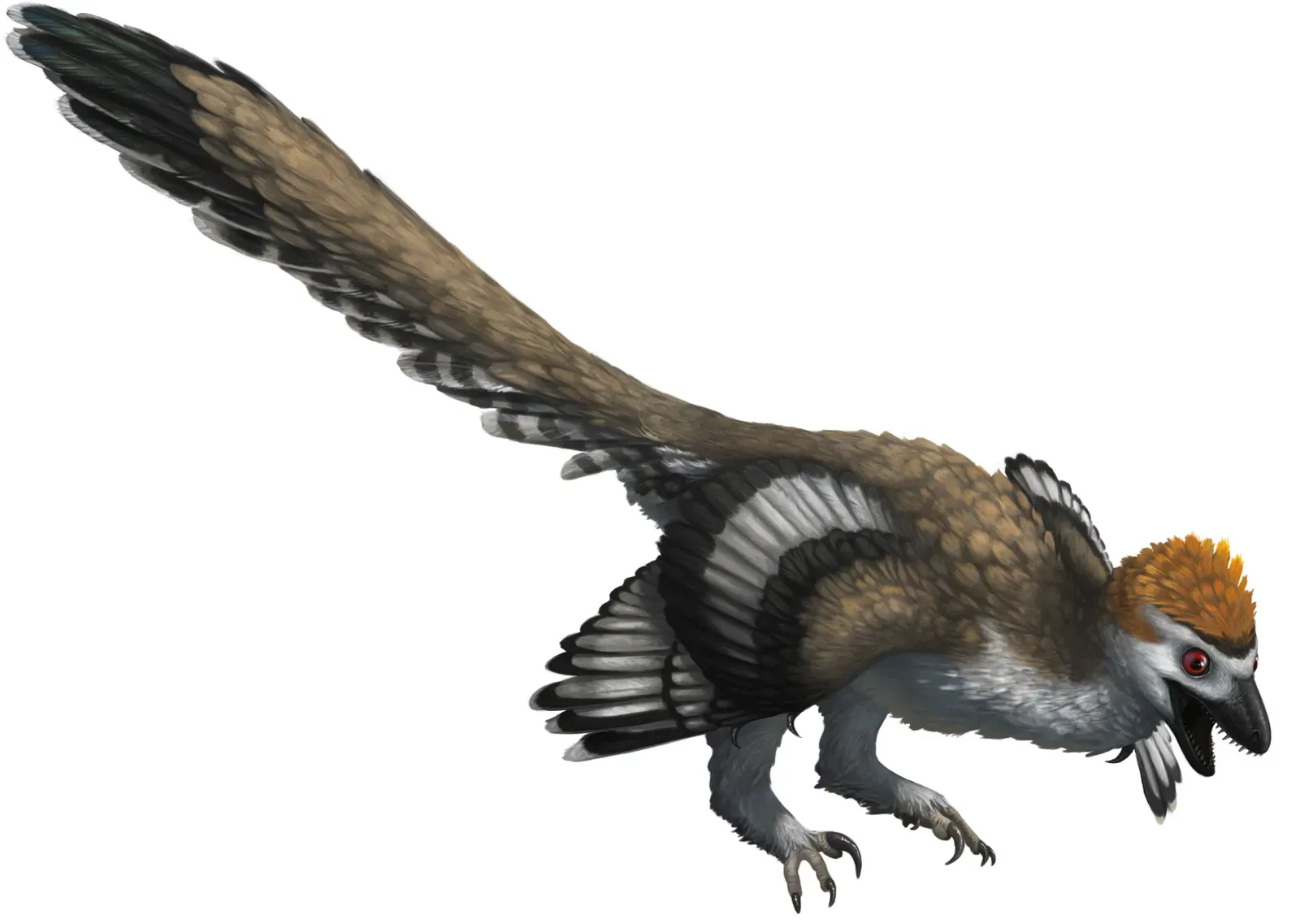
One of the most disorienting discoveries you meet in modern paleontology is a predator that clearly has big, elaborate wings but is far too big to fly. Species like Zhenyuanlong and large dromaeosaurs from Late Cretaceous deposits in China sported broad, bird‑like wings made of complex feathers, yet their body mass likely grounded them. That means you cannot treat wings as simple “flight or no flight” switches. Instead, you have to ask what wings were doing before powered flight became a thing: balancing, braking, display, intimidation, or helping pin down struggling prey.
Think of it like the way you might use your arms when you sprint downhill or wrestle – stabilizing, grabbing, and countering momentum. For these feathered predators, wings may have given better control when pouncing, helped them corner faster, or allowed dramatic visual signals in courtship or threat displays. The key shift for you is realizing that not every bird‑like feature evolved “for” flying, and not every flight‑capable structure was actually used to take off. Some dinosaurs carried the tools for flight as evolutionary baggage or as multi‑purpose gear, and their descendants later turned those features into something completely new.
9. A New Wave of Apex Predators in South America
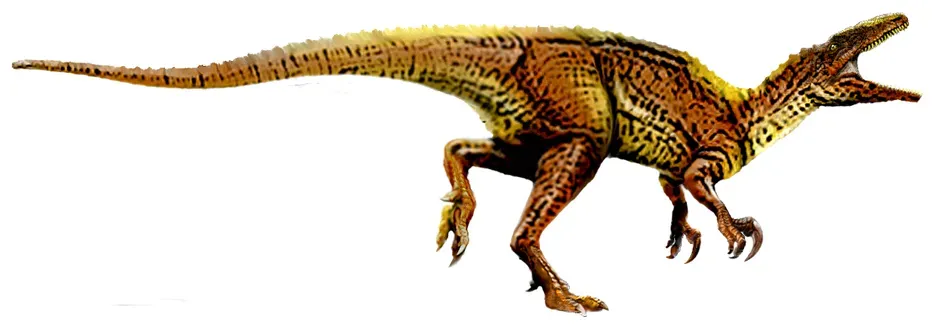
You might assume T. rex‑style tyrannosaurs were the undisputed top predators everywhere in the Late Cretaceous, but South America keeps surprising you with its own cast of terrifying hunters. Recent discoveries of large megaraptorid theropods, including a newly described species from Patagonia with enormous, blade‑like claws and the remains of a crocodile relative lodged in its jaws, show that this continent played by different rules. These animals combined speed, long arms, and massive hand claws, creating a very different kind of apex predator compared with the deep‑jawed, heavy‑skulled tyrannosaurs of North America.
When you picture this scene, you see a lean, muscular hunter sprinting across floodplains, slashing and grabbing rather than simply crushing. The presence of crocodile bones still in its mouth is like finding a smoking gun; it lets you literally see what was on the menu. Discoveries like this remind you that “dinosaur world” was not one homogeneous planet ruled by the same few celebrities. Instead, each region evolved its own strange top predators, shaped by local prey, climate, and geography. It’s a bit like comparing big cats across continents: tigers, lions, jaguars, and leopards all dominate, but in very different styles.
10. The Asteroid Impact Seen from Ground Level
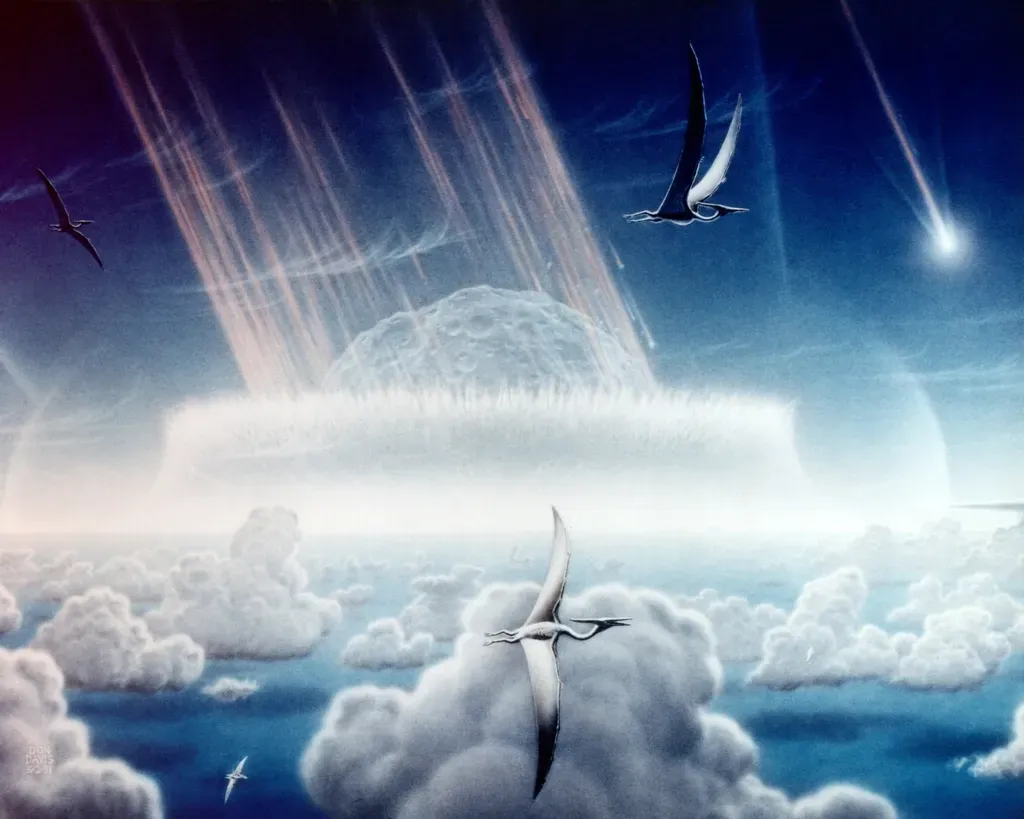
For years, the story of the dinosaur extinction felt distant and abstract: an asteroid hit, climate changed, and eventually most dinosaurs faded out. But when paleontologists uncovered sites preserving fish, plants, microtektites (tiny glass droplets from the impact), and other remains all jumbled together in a single, chaotic layer, the event suddenly snapped into focus. At some localities, you can see animals that seem to have died within hours or days of the Chicxulub impact, their bodies mixed with debris that literally fell from the sky. For you, that turns a vague catastrophe into a specific, horrible day in Earth’s history.
These deposits reveal a world in mid‑collapse: rivers choked with ash and glass, sudden surges of water, and stunned ecosystems. You are not just told that an asteroid ended the non‑avian dinosaurs; you can trace its fingerprints in sediments and fossils as if you’re reconstructing the timeline of a natural disaster. It also highlights how abruptly things can change. Dinosaurs had dominated for tens of millions of years, and then, in a geological blink, most of them were gone. When you realize some of the last dinosaurs may be lying just centimeters below layers rich in post‑impact debris, the distance between “then” and “now” feels hauntingly thin.
Conclusion: Your Dinosaur Picture Is Still Just a Draft
If you step back from all these discoveries, a pattern jumps out at you: every time you think you’ve got dinosaurs figured out, the ground shifts. Swimmers turn up where you expected land‑locked giants. Feathers sprout on predators you pictured as scaly. Parents guard nests, predators hunt in possible groups, and extinction stops being a dry line in a chart and becomes a real day when the sky literally fell. The old movie version of dinosaurs – just big lizards roaring at each other on a baked plain – doesn’t survive contact with the fossils.
The most honest thing you can say now is that your understanding of dinosaurs is a living work in progress. New CT scans, new chemical tests, and new digs will keep adding pages to the story and ripping out old ones. That might feel unsettling at first, but it’s also the most exciting part: you live in a time when some of the biggest questions about these animals are still open and you can watch the answers evolve. So the next time you see a pigeon strutting on the sidewalk or a heron stalking in a pond, will you see just a bird – or a tiny, surviving piece of a world we’re only beginning to understand?