Everyone knows the Tyrannosaurus rex. Everyone has seen the Triceratops on a museum poster. Dinosaurs have dominated our collective prehistoric imagination for so long that it’s easy to forget they weren’t the only extraordinary, terrifying, or jaw-dropping creatures evolution ever produced. Honestly, they might not even be the most interesting ones.
Long before and long after the age of dinosaurs, life on this planet was running wild with experiments. Creatures that defied logic. Bodies that scientists couldn’t even reconstruct correctly the first time. Animals so alien-looking that their discovery literally made conference rooms burst into laughter. You’re about to meet ten of them, and I promise you, none of them will disappoint. Let’s dive in.
1. Hallucigenia: The Creature Scientists Got Completely Backwards
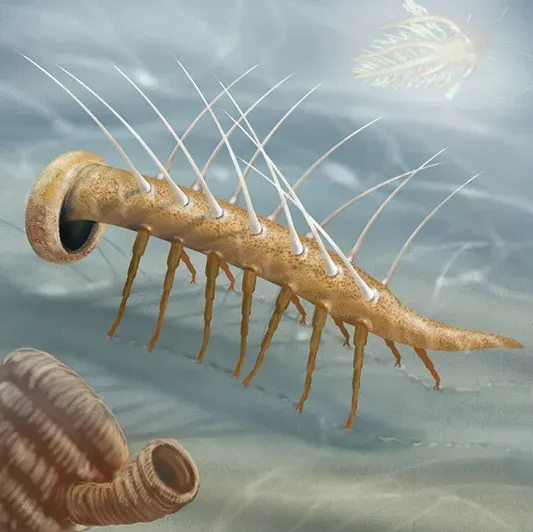
There’s a reason this thing is named after a hallucination. In his 1977 redescription of the organism, Simon Conway Morris recognized the animal as something quite distinct, proposing the name Hallucigenia because of the “bizarre and dream-like appearance of the animal.” That wasn’t just poetic flair. Scientists genuinely could not tell which end was the head and which was the tail.
Named for its bizarre form, Hallucigenia was a worm-like organism with elongated, spiny appendages protruding from its back. Living roughly 508 million years ago during the Cambrian Explosion, this oddity had a conical head and multiple pairs of articulated legs. When researchers finally put it under an electron microscope, they found a ring of tiny teeth below what appeared to be a pair of eyes. It is now known as an early ancestor of modern-day velvet worms, reflecting the experimental nature of evolutionary development during the Cambrian period.
2. Anomalocaris: The Shrimp That Ruled the World

Here’s the thing about Anomalocaris. More than half a billion years ago, the world’s oceans were stalked by a soft-bodied predator that looked unlike anything alive today. This bizarre-looking animal, or “unusual shrimp,” is widely regarded as the world’s first apex predator. Think about that for a second. The first thing at the top of the food chain looked like a nightmare shrimp wearing compound goggles.
Anomalocaris was the largest hunter of the Cambrian period, measuring up to a metre in length from its grasping, frontal appendages to the tips of its tail fans. The appendages are thought to have been used to catch and crush prey. More recently, science has revised the idea of it as a brute crusher. It’s now believed Anomalocaris was a hunter that relied on speed, agility and superior sight rather than strength. A swift, five-eyed, claw-armed swimmer with a circular mouth. Not exactly cuddly.
3. Opabinia: Five Eyes and a Vacuum Cleaner Trunk
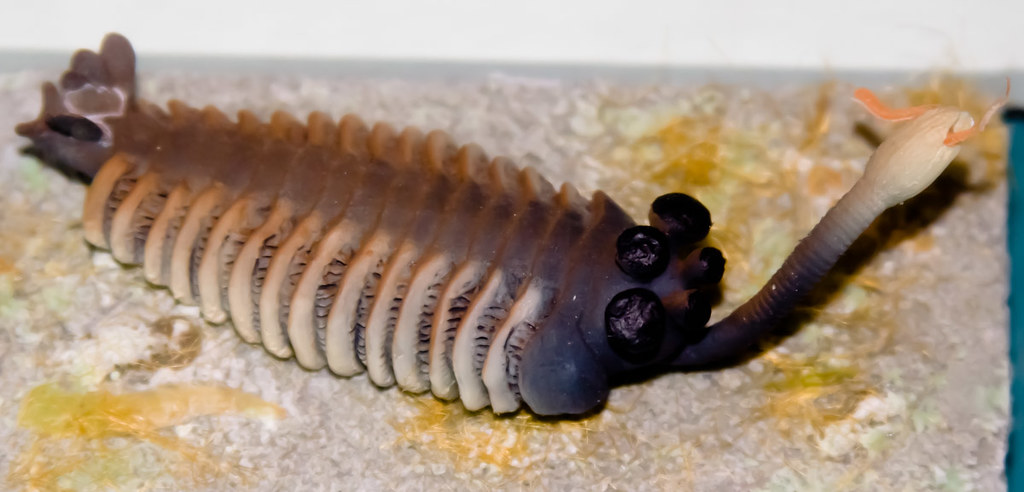
When paleontologists first presented Opabinia to colleagues in the 1970s, the audience laughed because it looked too bizarre to be real. This creature lived approximately 505 to 487 million years ago during the Cambrian period and had one of the strangest body designs ever discovered. You can hardly blame the scientists for laughing. Nothing in modern biology prepares you for a five-eyed soft-bodied animal with what can only be described as a claw attached to a vacuum hose growing from its face.
Opabinia’s most notable features included five eyes on top of its head and a flexible frontal appendage that resembled a vacuum cleaner hose with a claw at the end. This bizarre trunk was likely used to catch prey and pass it back to its mouth. It’s a genuinely unsettling design, like nature threw a bunch of spare parts together just to see what would happen. Despite its small size, Opabinia represents one of evolution’s early experiments with different body forms during the explosion of animal life in the Cambrian period.
4. Dunkleosteus: The Armored Fish With a Steel-Crushing Bite
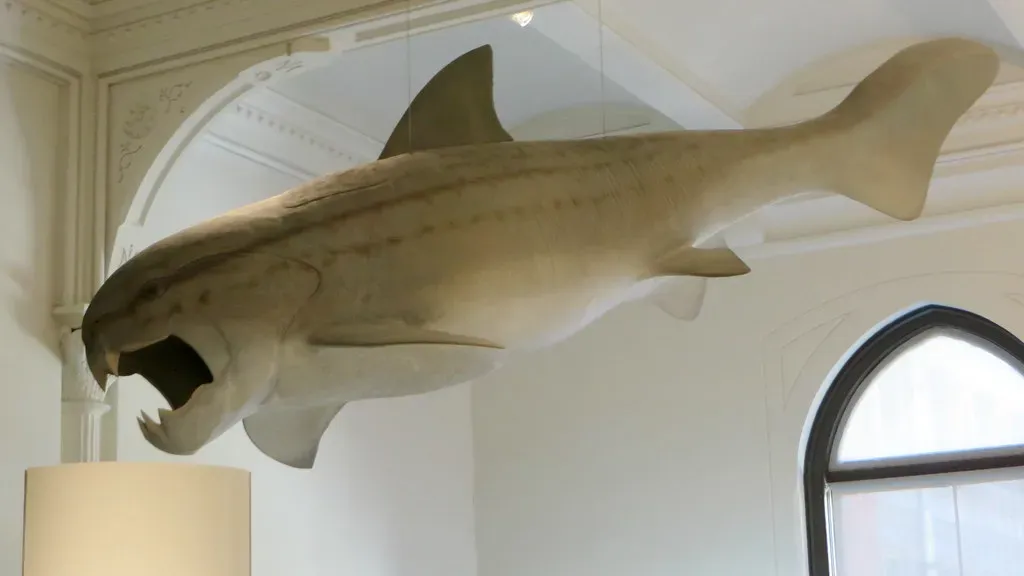
Sharks get all the oceanic glory, but long before great whites patrolled the seas, there was Dunkleosteus. Long before the reign of dinosaurs, during the late Devonian Period approximately 370 to 360 million years ago, this fearsome fish ruled the ancient seas. Measuring between 26 and 32 feet in length, this streamlined predator sported an armored head and a surprisingly “toothless” face. No teeth. Something far worse instead.
In place of traditional teeth, Dunkleosteus wielded two long bony blades that functioned like self-sharpening shears. These blades could generate an astonishing bite force of up to 8,000 pounds per square inch. To put that in perspective, that’s more than ten times the bite force of a lion. Special jaw muscles meant Dunkleosteus was able to open its mouth in less than a 50th of a second, creating a small vacuum that could suck in prey. A living, armored vacuum with self-sharpening bone blades. Nature was not messing around.
5. Helicoprion: The Shark With a Buzzsaw for a Jaw
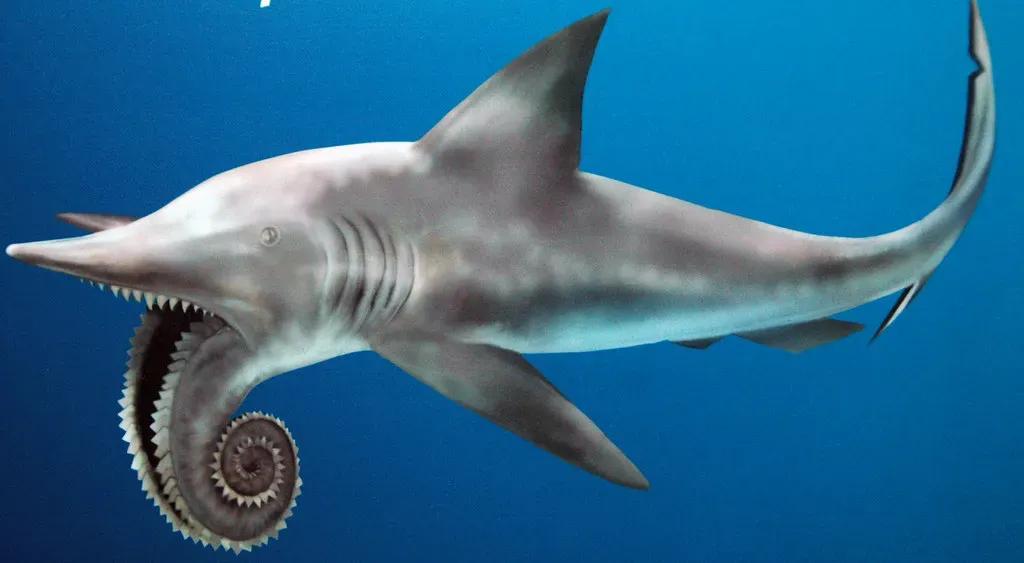
I know it sounds crazy, but Helicoprion was essentially a prehistoric shark that had a circular saw where its lower jaw should be. This creature lived around 270 million years ago and measured 20 to 25 feet long. It has puzzled scientists for over a century with its unusual spiral tooth whorl. For a long time, nobody could even figure out where the spiral was located on the body. Scientists guessed the nose. Some said the dorsal fin.
These “tooth whorls” adorned the shark-like Helicoprion as a serrated jaw used for snagging prey. Initial sketches had the mouth whorls unraveled, leaving one of the most unique depictions of a prehistoric creature ever rendered. It is now thought that the spiral jaw faced inward, and the rotating teeth acted as a circular saw for grinding up food, though this still remains a topic of debate. The tooth spiral could contain dozens of teeth arranged in a perfect whorl that just kept growing throughout the animal’s life. Evolution apparently decided that one set of replaceable teeth just wasn’t dramatic enough.
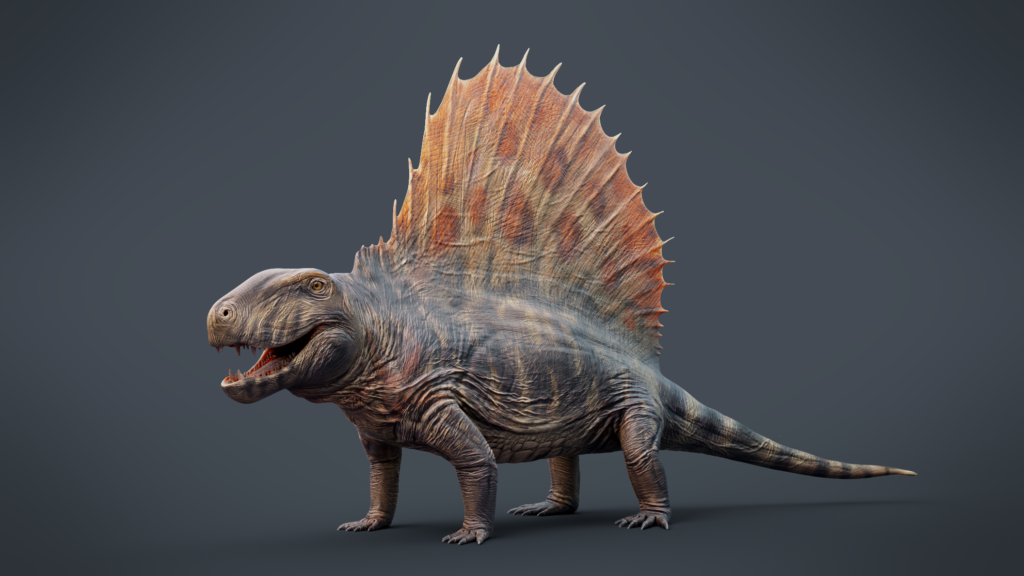
6. Dimetrodon: Your Mammal Ancestor With a Sail on Its Back
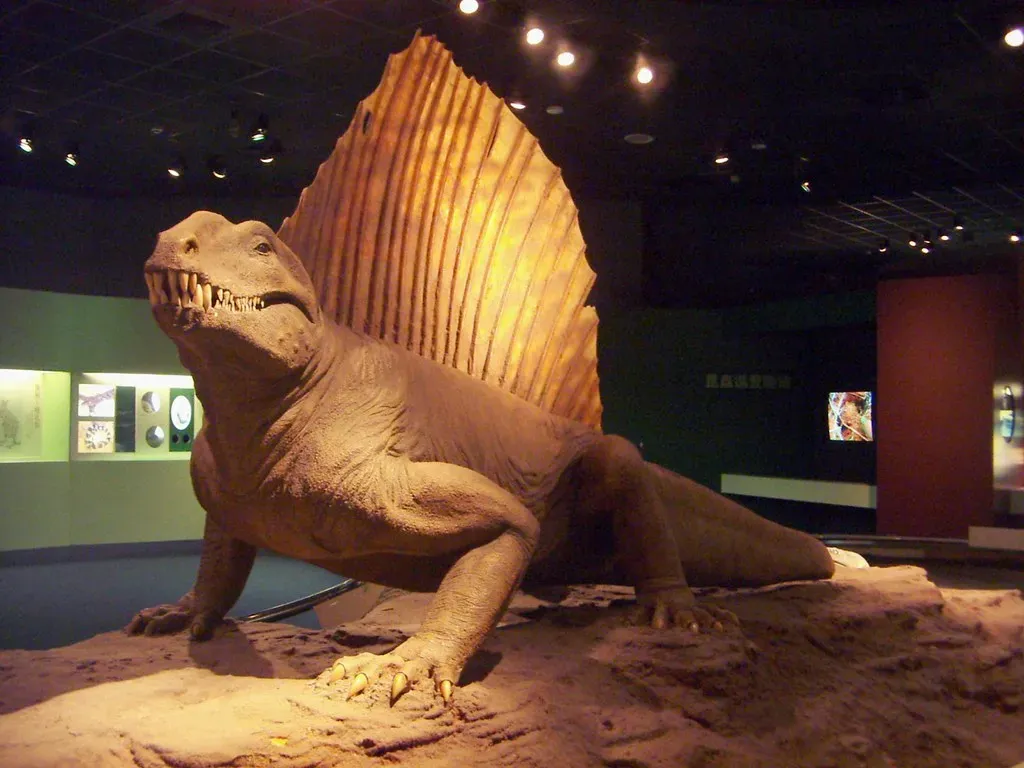
Pop quiz: is Dimetrodon a dinosaur? Almost everyone gets this wrong. Often mistaken for a dinosaur, Dimetrodon actually predated dinosaurs by millions of years. This massive predator roamed Earth about 295 to 272 million years ago during the Permian period. Here’s the part that genuinely surprises people. This scaly, tiger-sized beast wasn’t a dinosaur at all. In fact, it’s more closely related to us than Spinosaurus.
Its most iconic feature was that sail. For a long time, researchers thought its function was to regulate body temperature across a range of habitats. It’s now thought the sail was used as a giant billboard to display sexual readiness and scare off rivals. Think of it like a prehistoric peacock tail, except made of spiny bone and stretching dramatically off the back of a predator with different-sized teeth built for tearing flesh. Dimetrodon was actually more closely related to mammals than to dinosaurs, making it one of our distant evolutionary cousins. As a top predator of its time, it had a mouth full of different-sized teeth, hence the name Dimetrodon, meaning ‘two measures of teeth.’
7. Arthropleura: A Millipede the Size of a Car
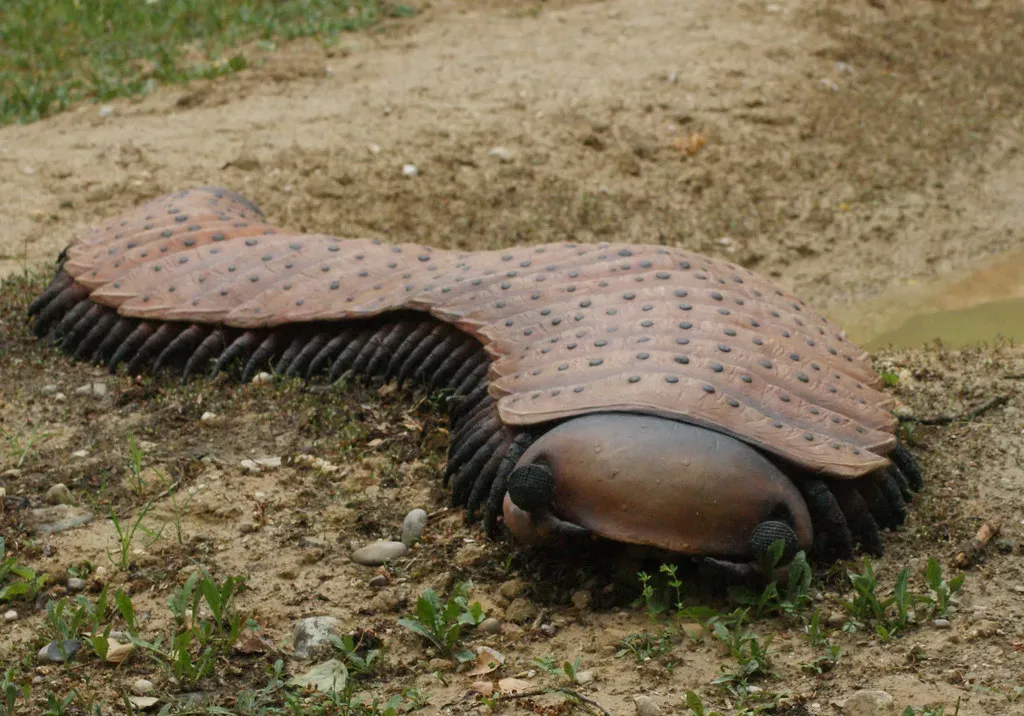
If you’re even remotely squeamish about bugs, look away now. Imagine a millipede so massive it could stretch up to 8 feet long. That’s Arthropleura, the largest known land invertebrate of all time, which inhabited the Earth during the Carboniferous period around 300 million years ago. For context, eight feet is roughly the length of a large sofa. Now imagine that sofa has hundreds of legs and is crawling through a prehistoric fern forest toward you.
This giant creepy-crawly lived during the Carboniferous period, a time when sprawling rainforests acted as the Earth’s ‘lungs,’ drawing in carbon dioxide and breathing out masses of oxygen. It’s thought there was five to ten percent more oxygen in the air during this time, which is one reason why Arthropleura grew so large. Although these creatures might look terrifying, their diets primarily consisted of decomposing vegetation. Their sheer size reflects the oxygen-rich environment of the time, which allowed for extraordinary growth in arthropods. Enormous, terrifying, and a vegetarian. Honestly, just as unsettling.
8. Titanoboa: The Largest Snake That Ever Slithered
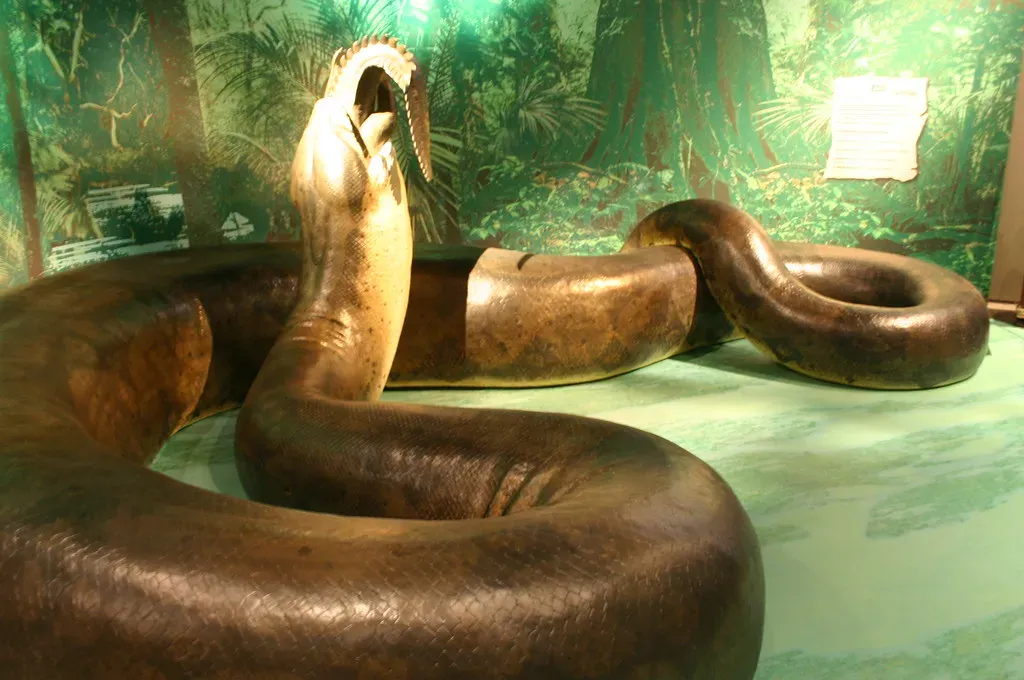
Forget what you think you know about big snakes. The green anaconda is impressive, sure. But Titanoboa makes the anaconda look like a garden hose. Titanoboa is an extinct genus of giant boid snake that lived during the middle to late Paleocene epoch, about 60 to 58 million years ago. Discovered in northeastern Colombia, it is widely regarded as one of the largest snakes ever known. The fossils were first found in a coal mine, and they were initially so enormous that workers mistook the vertebrae for crocodile bones.
Estimates state that Titanoboa reached lengths of roughly 12.8 to 14.3 metres. Its weight likely ranged between about 730 and 1,135 kilograms. These dimensions far exceed those of the largest living snakes, including the green anaconda and the reticulated python. Titanoboa evolved after the extinction of all non-avian dinosaurs, making it one of the largest reptiles to appear following the Cretaceous-Paleogene extinction event. Nature essentially looked at the extinction of the dinosaurs and said: time for a 47-foot snake. Sure.
9. Megatherium: The Giant Sloth That May Have Been a Predator
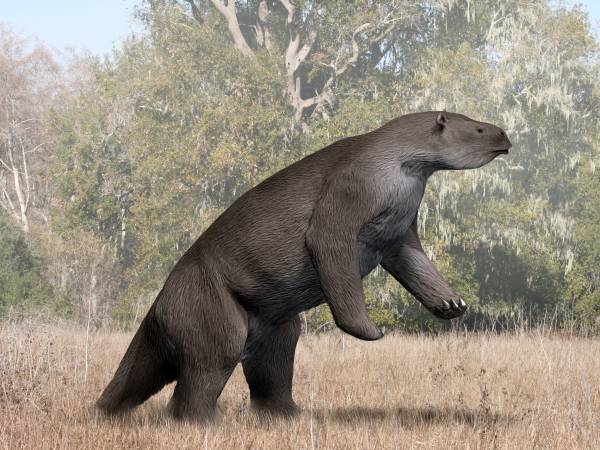
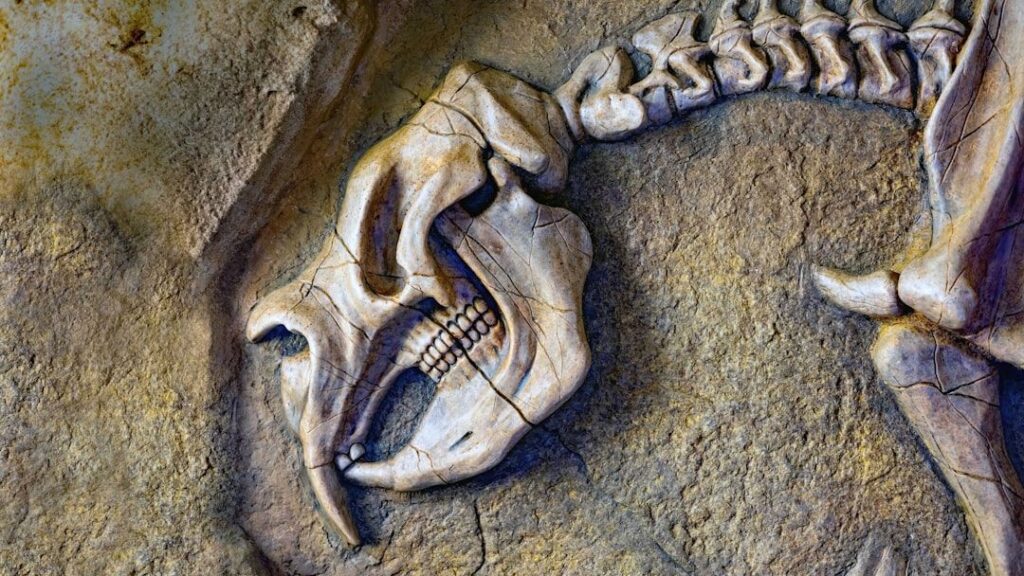
Modern sloths are peaceful, slow, loveable creatures that spend most of their lives hanging from trees. Their ancient relative was an entirely different story. This brute was a pretty large mammal. It was actually a giant ground sloth related to modern sloths. An inhabitant of South America during the Quaternary period, an adult standing on its hind legs could reach a height of 20 feet. That’s taller than most ceilings in a two-story house. On its hind legs.
Megatherium was previously regarded as a slow tree ripper. Recent studies show that its great claws might have been used for stabbing and killing. If this was the purpose of its claws, it would make the giant sloth the largest predator of the South American plains. The debate continues, and honestly I find the uncertainty even more fascinating. Its massive hindlimbs and hook-shaped claws suggest it could rear up on two legs to reach vegetation. Some researchers argue the claws were primarily for digging rather than climbing or defense. A 20-foot creature with enormous hooked claws whose diet remains a genuine scientific mystery. That’s the kind of animal that keeps paleontologists up at night.
10. Phorusrhacids: The Terror Birds That Ran Down Their Prey
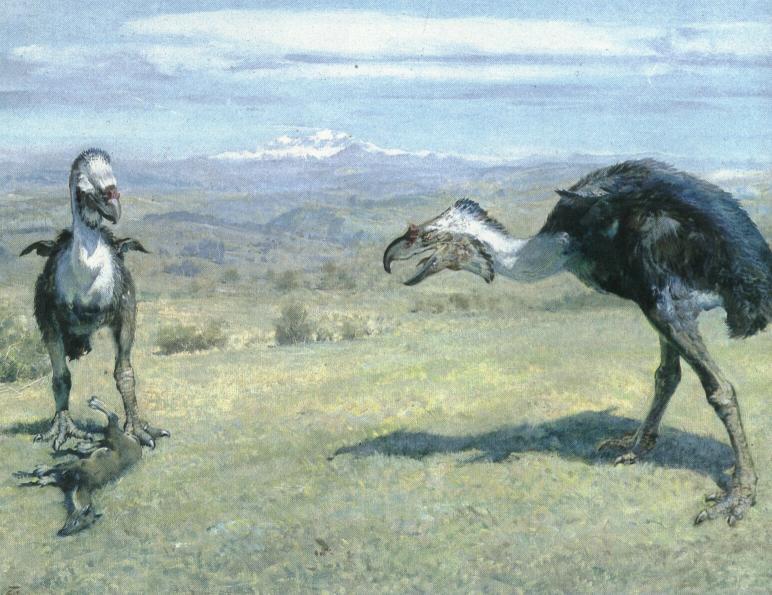
After the dinosaurs vanished, you might think Earth took a breather and produced gentler animals. You’d be spectacularly wrong. Phorusrhacids, colloquially known as terror birds, are an extinct family of large carnivorous, mostly flightless birds that were among the largest apex predators in South America during the Cenozoic era. Picture a bird roughly the height of a basketball hoop, with a hooked beak the size of a horse’s head, built entirely for running and killing.
Flightless birds with similar characteristics to the ostrich, phorusrhacids could reach land speeds comparable to cheetahs. Up to 1,000 pounds and 9 feet tall, these creatures could easily grasp a medium-sized dog in a single bite. They really deserve their nickname, the “terror bird.” The emergence of the Isthmus of Panama about 2.7 million years ago marked the beginning of the end for the terror birds of South America. As part of the fauna interchange that followed, many ancient carnivorous cats, dogs, and bears crossed into South America. This increased competition for food between the phorusrhacids and the invading species, and their population declined sharply afterward. The terror birds ruled for tens of millions of years before being outcompeted. That’s a dynasty even most dinosaurs couldn’t match.
Conclusion: The Strangest Show on Earth
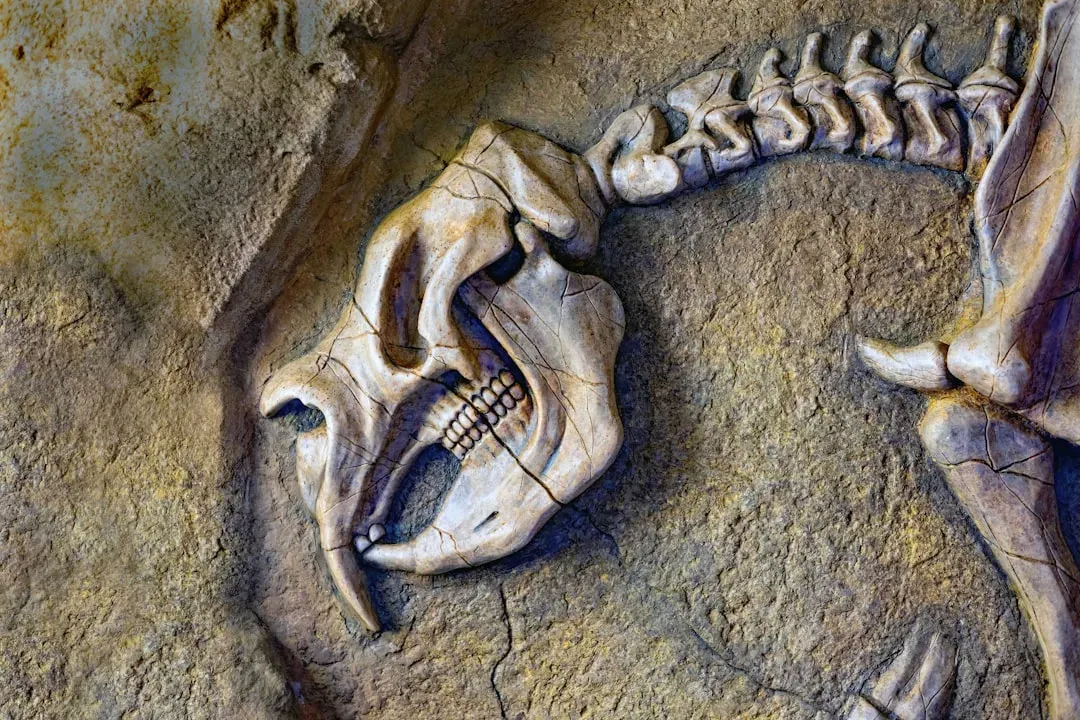
Dinosaurs are incredible. There’s no taking that away from them. But the prehistoric world was far wider, far weirder, and far more creative than any single group of animals. From a worm-like creature scientists reconstructed upside down, to a snake that weighed over a tonne, to a millipede the size of a small car, Earth’s history reads less like a natural history textbook and more like the notes from a very ambitious and slightly unhinged science experiment.
What’s genuinely humbling is that many of these creatures existed for far longer than dinosaurs did, ruled their ecosystems completely, and left behind fossils that still confuse and inspire researchers today. The deeper you go into prehistoric life, the more you realize that evolution has no rulebook, no boundaries, and absolutely no sense of restraint.
Which of these ten creatures surprised you the most? Drop your answer in the comments because honestly, picking a favorite feels almost impossible.