Picture this: you step out onto a warm, fern-choked floodplain, and instead of one movie-monster dinosaur stalking the horizon, you see an entire cast sharing the same stage. Giant predators circle herds of horned titans, tiny mammals dart between massive feet, and the sky itself is crowded with winged reptiles the size of vans. Prehistoric life was never a series of solo cameos; it was an overlapping, messy, dangerous community, far more intense than most films dare to show.
What makes it even wilder is that paleontologists can actually prove many of these creature combinations lived side by side, sometimes even finding tooth marks, embedded bones, or fossil trackways that capture them mid-interaction. When you start to connect who lived when, and where, the mental movie that unfolds is almost overwhelming. Let’s walk through ten pairs (or ensembles) of real prehistoric co-stars whose day-to-day lives would put any Hollywood script to shame.
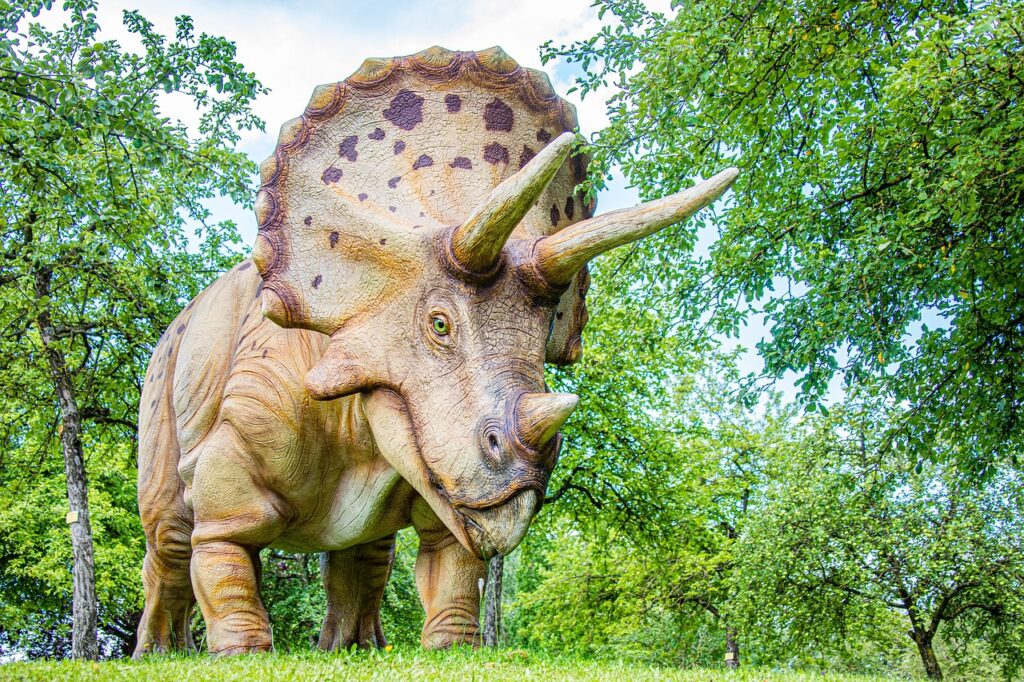
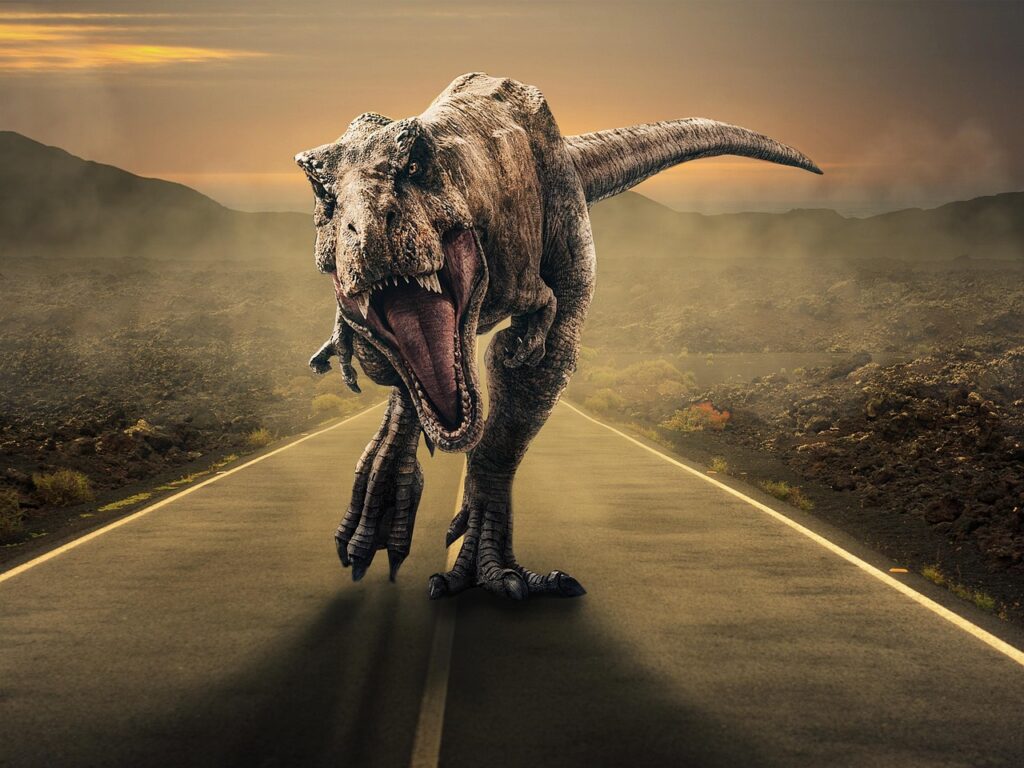
Tyrannosaurus rex and Triceratops: the ultimate late Cretaceous showdown
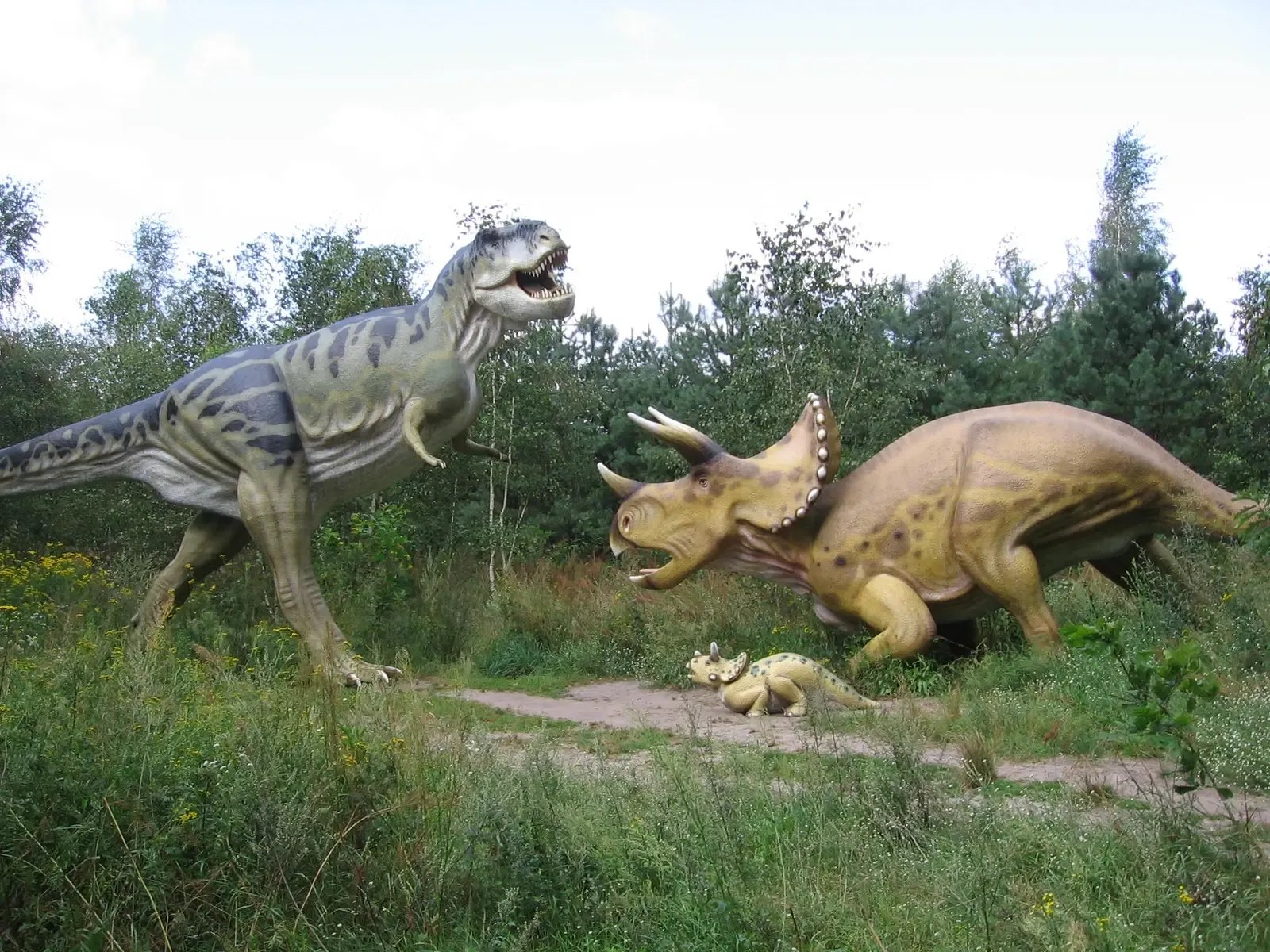
Everyone has seen T. rex and Triceratops squaring off in artwork, but this is one of those rare cases where the pop-culture matchup is absolutely real. Both lived in western North America around the very end of the Cretaceous, and their fossils show up in the same rock formations, like the famous Hell Creek. We’re not just guessing they interacted; paleontologists have found Triceratops bones with bite marks that match T. rex teeth and even partially healed wounds, suggesting some individuals survived brutal attacks. That means these confrontations weren’t just one-and-done; some herbivores carried the scars of repeated assaults.
It’s easy to imagine a cinematic one-on-one duel, but the reality was probably closer to a chaotic battlefield. Picture a small group of Triceratops adults and juveniles circling up while one or more T. rexes probe the defenses from different angles, like lions testing a herd of buffalo. Mud, noise, blood, and panic would define the scene far more than any clean, choreographed movie fight. Personally, I suspect the most common interaction wasn’t the glorious showdown but a scavenging T. rex picking over the carcass of a Triceratops that died from injury, disease, or simple bad luck – less glamorous, but much more in line with how real ecosystems work.
Velociraptor and Protoceratops: a death struggle frozen in stone
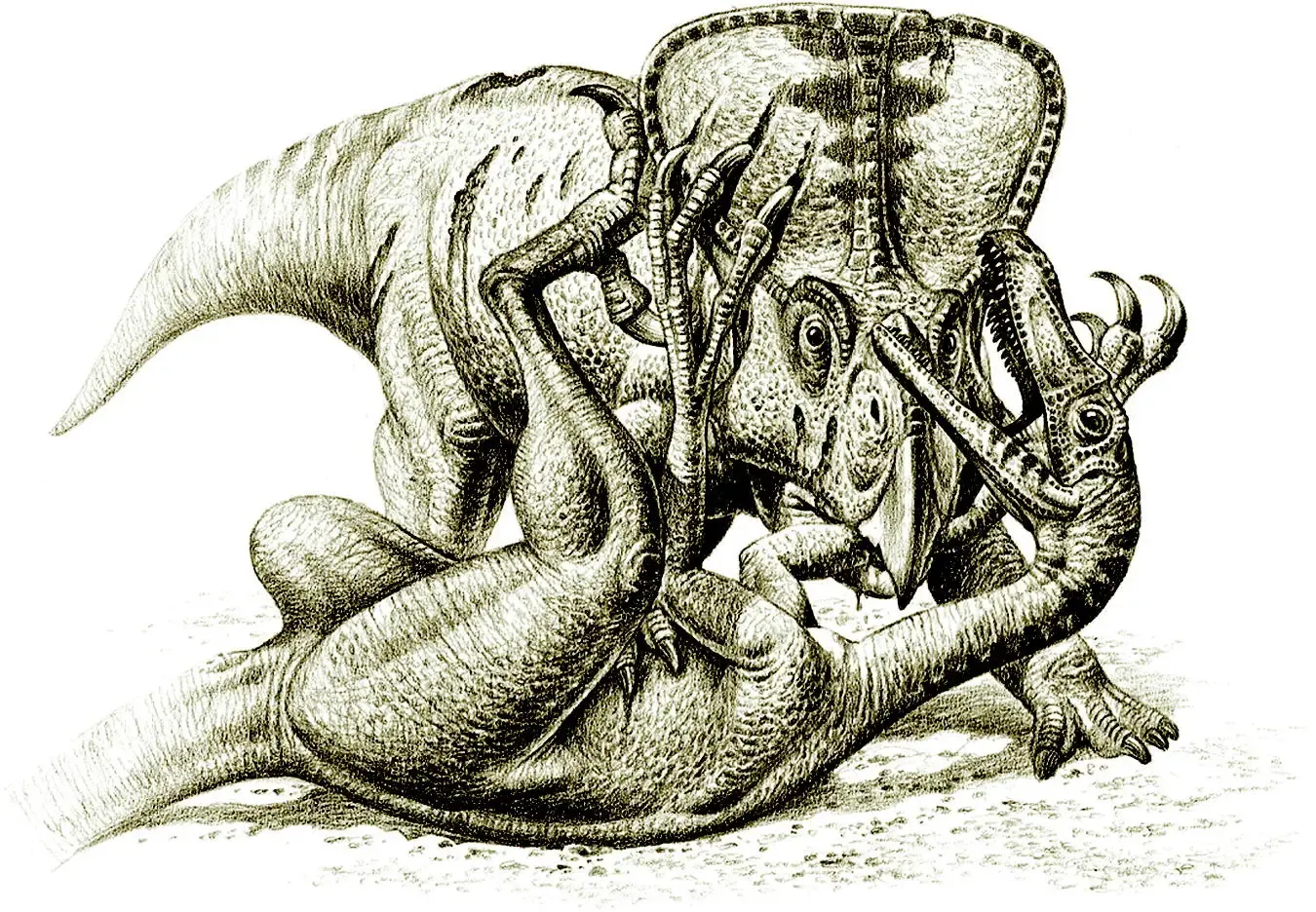
If you want something that sounds made up but isn’t, look at Velociraptor and Protoceratops from Late Cretaceous Mongolia. These two are immortalized in one of the most dramatic fossils ever found: a Velociraptor and a Protoceratops locked together, seemingly in the middle of a fight when they were suddenly buried. The raptor’s arm is caught in the herbivore’s beak, and the Velociraptor’s sickle claw is poised at the Protoceratops’ neck or torso. It’s basically a prehistoric freeze-frame of life-and-death combat, and it tells us this predator–prey relationship was not just theoretical.
What that fossil suggests is a much rougher, more desperate kind of hunting than the sleek pack chases shown in movies. Velociraptor was smaller than people often think – closer to a big turkey than a wolf – and taking on a stocky, horned Protoceratops would have been risky. I like to imagine the landscape as a dusty, dune-filled desert, where each ambush came with the chance that the prey might crush or bite back hard enough to end the hunter’s life. That fossilized pair is the prehistoric version of two boxers knocking each other out at the same time, a brutal reminder that in real nature, victories come with a serious price tag.
Spinosaurus and Carcharodontosaurus: river giants on a collision course
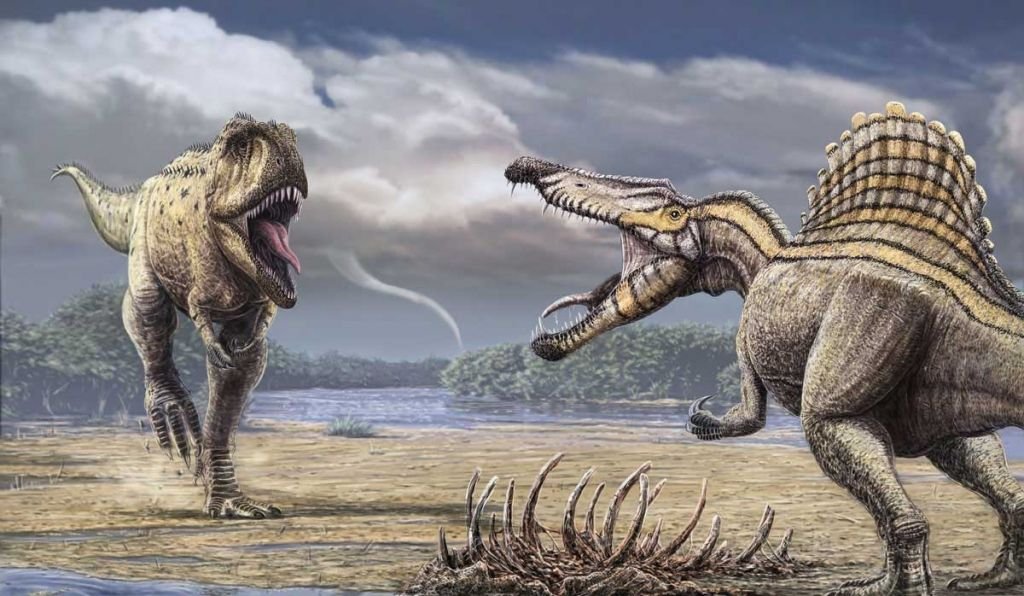
In the mid-Cretaceous of what is now northern Africa, two massive predators shared the same ecosystems: Spinosaurus, the crocodile-snouted, sail-backed hunter, and Carcharodontosaurus, a huge, deep-skulled carnivore similar in size to T. rex. Their fossils turn up in overlapping formations, indicating they weren’t separated by millions of years the way some movie mashups are. Most films portray apex predators as if they get the entire landscape to themselves, but here we have evidence of two top-tier carnivores patrolling the same floodplains and river systems. That alone suggests constant tension and competition.
Rather than endless gladiator battles, though, the drama was probably ecological, like two heavyweight champions specializing in different weight classes but occasionally stepping into each other’s ring. Spinosaurus seems to have been semi-aquatic, built for hunting fish and spending a lot of time in and around rivers, while Carcharodontosaurus was more of a classic land-based theropod. I imagine moments where a Spinosaurus drags a huge fish ashore, only to find Carcharodontosaurus watching hungrily from the tree line, both sizing each other up. Those standoffs – deciding whether to risk a fight or back off – would be far more nerve-wracking than any clean-cut movie duel.
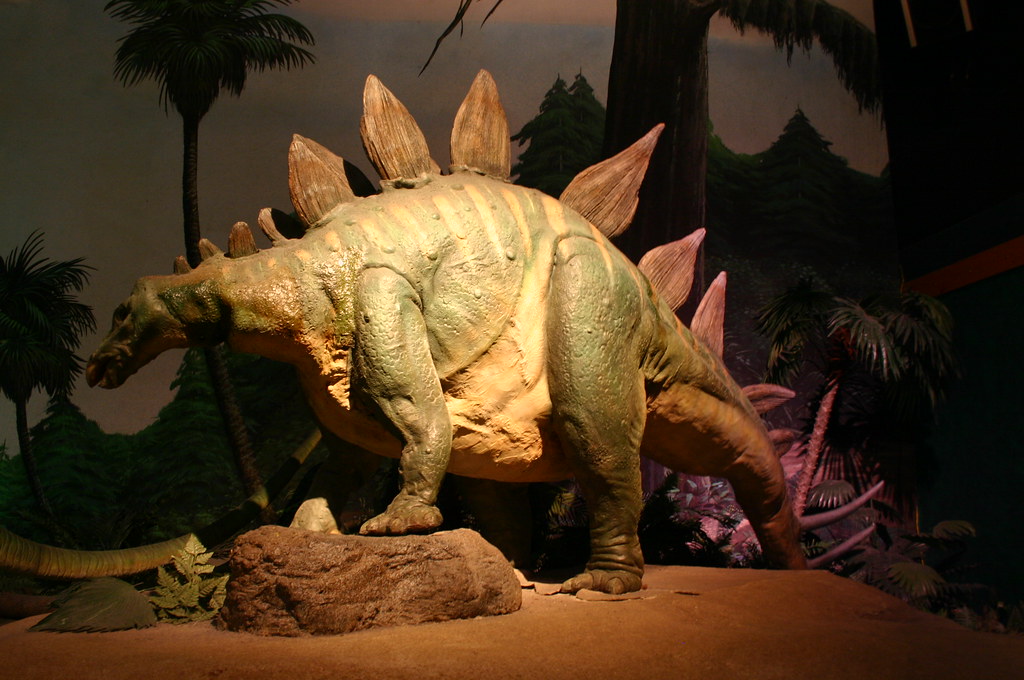
Allosaurus and Stegosaurus: Jurassic neighbors with spiked consequences
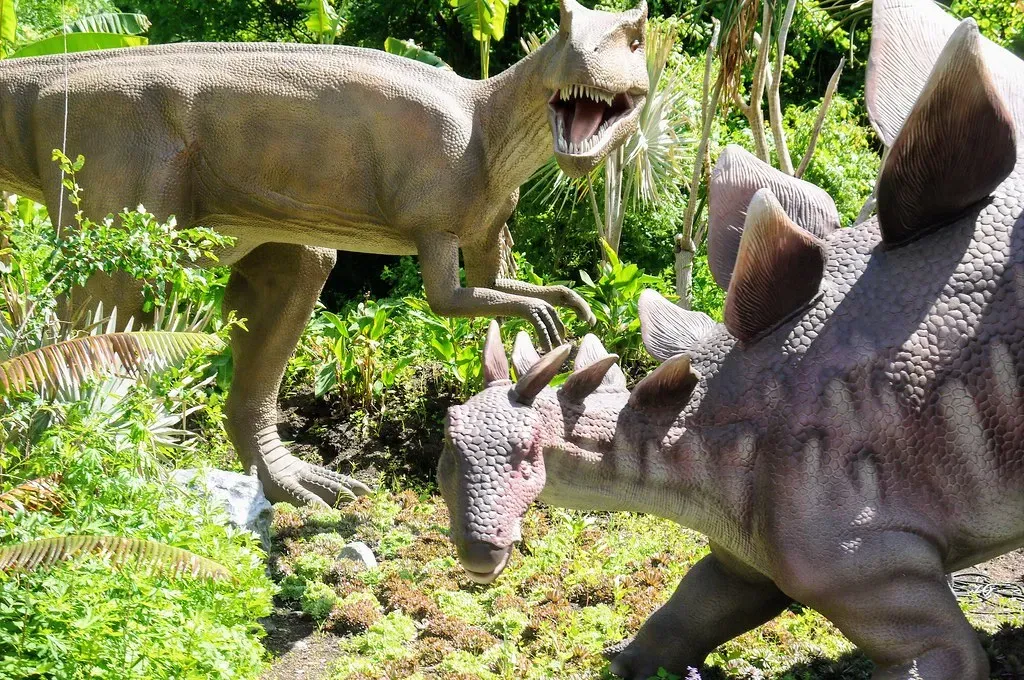
Move back to the Late Jurassic of North America, and you get another iconic pairing that is absolutely real: Allosaurus and Stegosaurus. Both show up in the Morrison Formation, and their bones have been found not just near each other, but with clear signs of violent interaction. There are Stegosaurus bones with injuries that match the size and shape of Allosaurus bites, and there is at least one Allosaurus specimen with damage that might correspond to a blow from a Stegosaurus tail spike. That is the sort of forensic evidence that turns textbook names into living, breathing antagonists.
Unlike the smooth, agile duels we see in animation, this would have been a clumsy, high-stakes mess. Allosaurus probably tried to flank and get behind Stegosaurus, avoiding those tail spikes, while the stegosaur would spin and lash out like a living mace. Imagine a predator charging in, slipping on wet mud, and suddenly being eye-level with a swinging tail tip driven by several tons of muscle. Personally, I think the real drama comes from imagining how many failed attacks happened: limping Allosaurus adults, broken ribs, missing tail spikes, and a landscape full of animals carrying evidence of battles they barely survived.
Ankylosaurus and Tyrannosaurus rex: armor versus bone-crushing bite
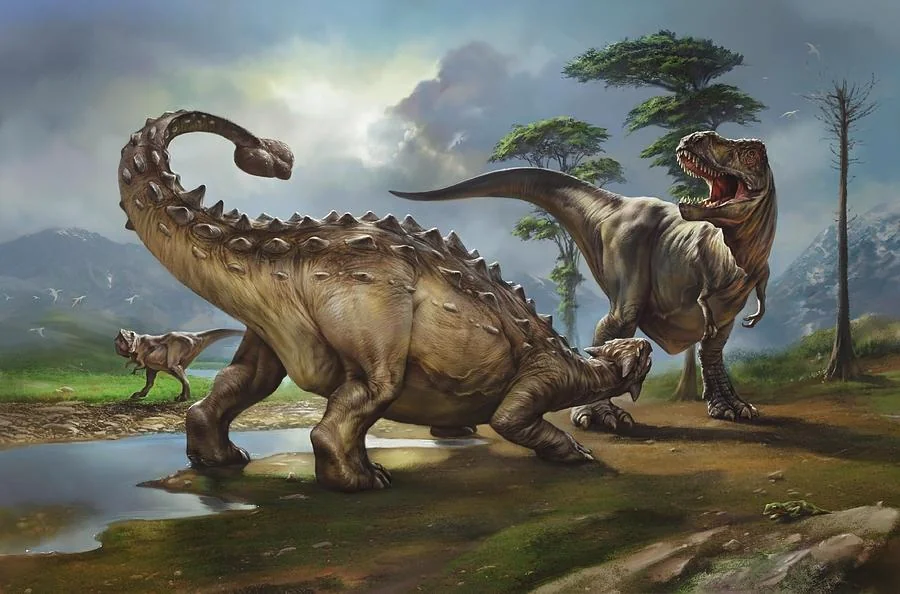
Staying in Late Cretaceous North America, Ankylosaurus and T. rex also overlapped, and that sets up one of the most hardcore matchups imaginable. Ankylosaurus was essentially a living tank, with heavy armor and a clubbed tail that could do catastrophic damage, while T. rex had one of the most powerful bites of any land animal known from the fossil record. There are ankylosaur relatives with injuries that suggest predator attacks, and there are tyrannosaur bones with damaged or healed areas that might reflect kicks or blows from heavily armed prey. You do not develop armor and a war-hammer tail unless something out there is genuinely terrifying you.
Instead of a quick pounce and takedown, imagine a slow, tense approach, with a T. rex testing an Ankylosaurus from different angles, perhaps trying to flip it or pry at its less-protected underbelly. Every misstep could mean a shattered leg or broken ribs from a tail strike, and every lunge could mean getting a tooth into softer flesh at the base of the armor. In my mind, these encounters were less like a movie chase and more like a sumo match or tank battle, with each side gambling lethal force in close quarters. The fact that both lineages thrived until the very end of the Cretaceous tells you neither side had an easy answer to the other.
Smilodon and giant ground sloths: Ice Age power struggles
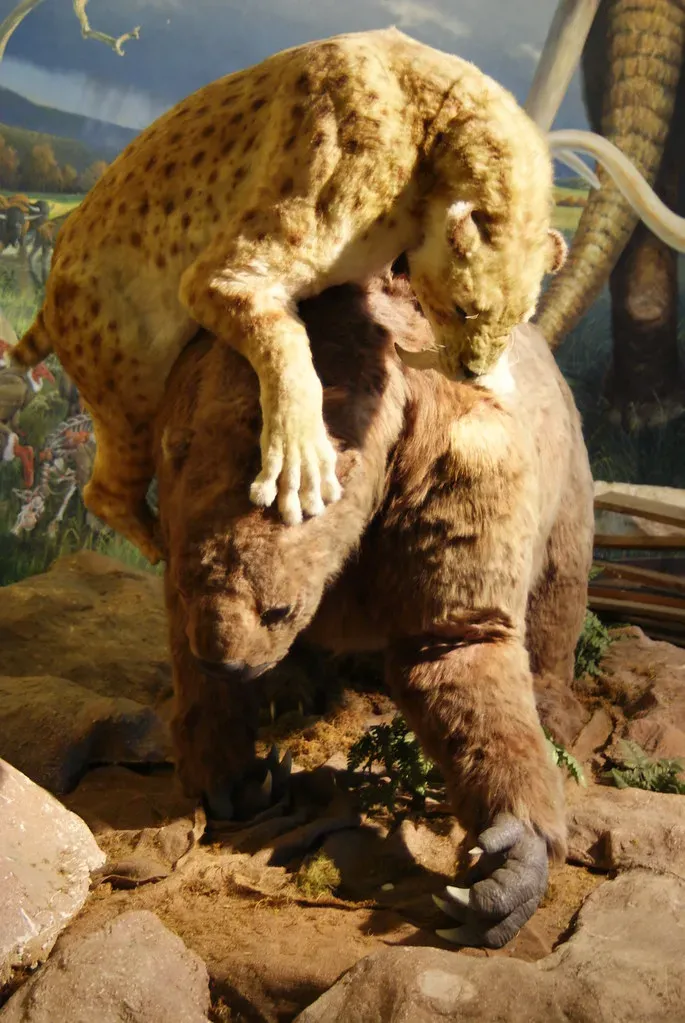
Jumping forward to the Ice Age, we leave dinosaurs behind but not the drama. In the Americas, the saber-toothed cat Smilodon shared its world with enormous ground sloths like Megatherium and Eremotherium in some regions. These sloths were nothing like their modern tree-dwelling cousins; they were towering, heavily built plant-eaters that could rear up and swing massive claws. Smilodon, with its elongated upper canines, was built for powerful, targeted killing bites, but those same teeth may have been vulnerable to breakage if a hunt went wrong.
Imagine a small group of Smilodon stalking a ground sloth near a waterhole at dusk, trying to get close enough for a precise throat or neck bite while avoiding the sweeping arms of a furious herbivore. A single successful hit from the sloth might crush ribs or snap a forelimb, effectively ending a cat’s hunting career. To me, the most intense part is that these predators were specialized to take big risks on large prey; smaller animals would not always justify the energy expenditure. A miscalculation wasn’t just a bad day at the office – it was the difference between being a legend of the Pleistocene and becoming an unmarked fossil in the sediment.
Megalodon and early baleen whales: giants in ancient seas
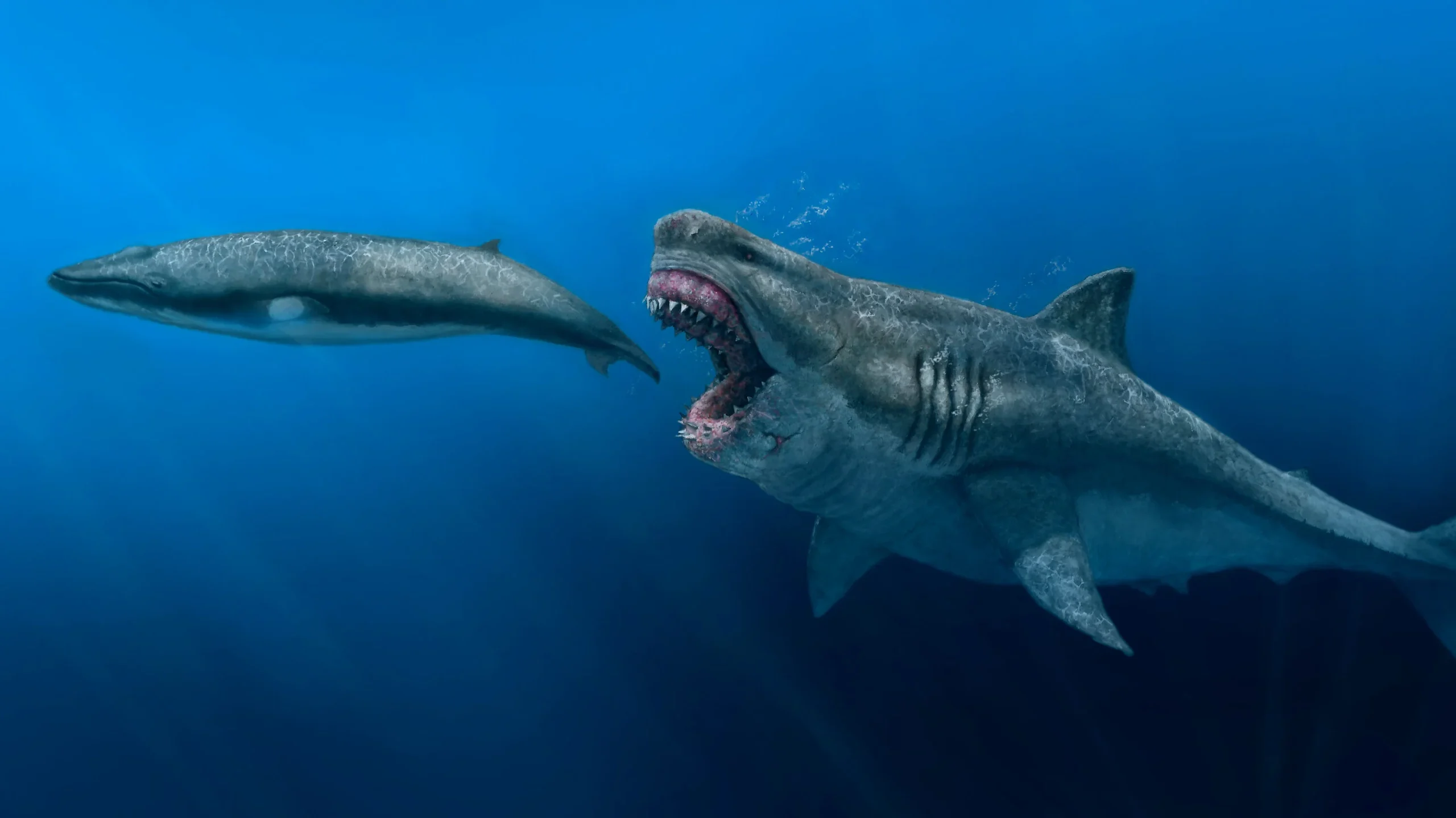
Out in the Miocene and Pliocene oceans, the massive shark commonly known as Megalodon coexisted with early baleen whales that were well on their way to becoming the ocean giants we know today. Fossils of whale bones with large, serrated bite marks matching Megalodon teeth give us chilling evidence of active predation or scavenging on these marine mammals. Instead of the usual shark-terrifies-swimmer movie plot, the real story was giant shark versus growing whale lineages locked in an evolutionary arms race. As whales got larger and formed groups, predation pressures likely shifted and intensified in complex ways.
Picture a coastal upwelling zone packed with life, where groups of primitive baleen whales migrate through, feeding, nursing calves, and resting, while enormous sharks patrol like silent submarines. A single strike from below could shear off fins or take huge chunks of flesh, and the injured whale, if it escaped, would become a living record of the encounter. Personally, I find this more haunting than any shark film: the idea of an entire ocean shaped by repeated, large-scale clashes between apex predators and rising titans of the sea. It’s less a jump-scare and more an epic, slow-burn struggle written in millions of tooth marks and healed fractures.
Deinonychus and Tenontosaurus: packs, ambushes, and desperate defenses
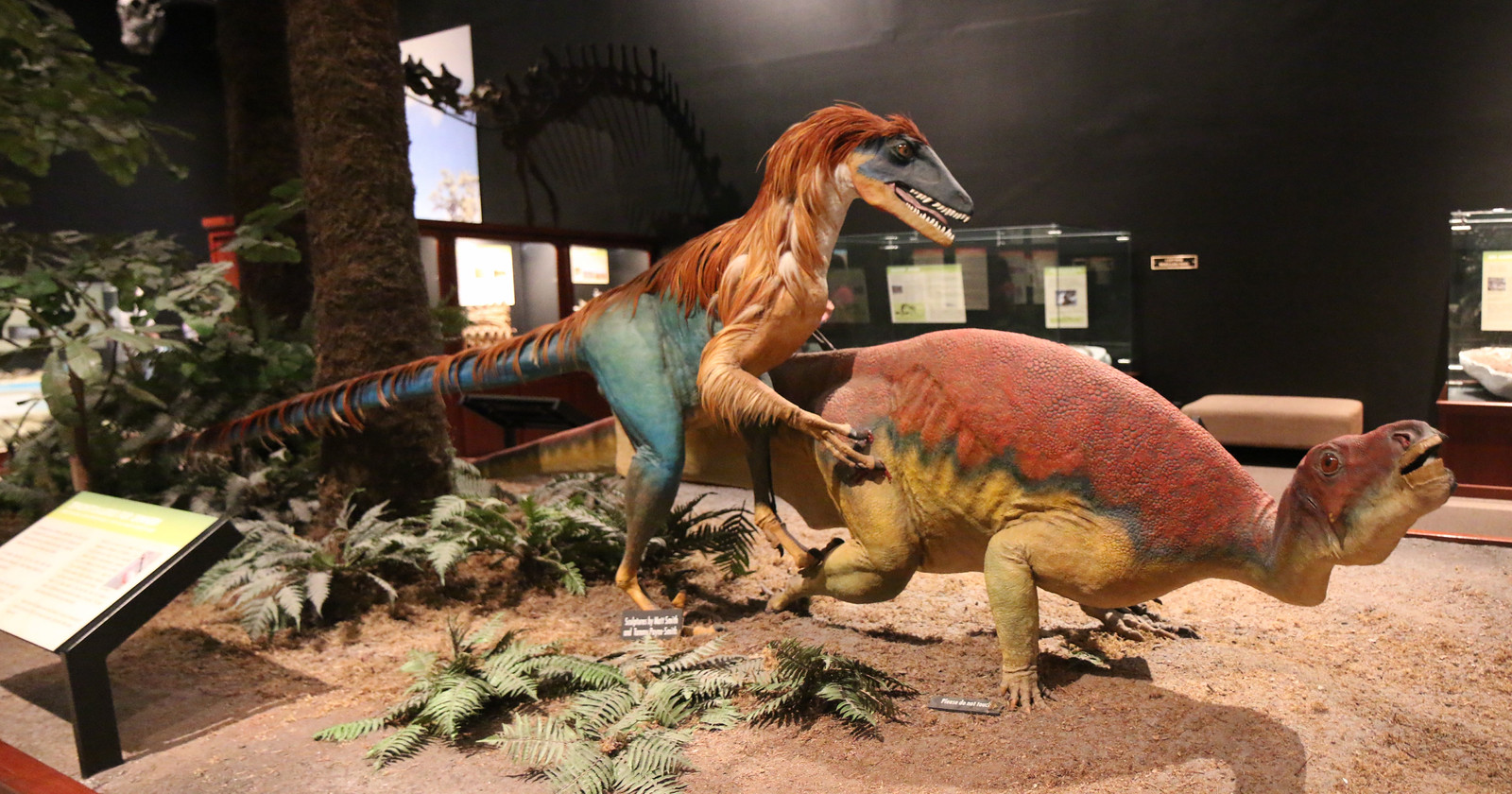
Back in the Early Cretaceous of North America, the medium-sized predator Deinonychus lived alongside the plant-eating dinosaur Tenontosaurus. At several sites, paleontologists have found multiple Deinonychus remains associated with Tenontosaurus skeletons, hinting at either pack hunting, group scavenging, or some combination of the two. This evidence helped inspire early ideas about active, bird-like dinosaurs and more dynamic ecosystems than the slow, lumbering scenes imagined decades ago. Whatever the exact behavior, the recurring association suggests that these animals interacted regularly and violently.
Visualize a partially forested floodplain where juvenile Tenontosaurus try to keep up with larger adults, constantly scanning the undergrowth for movement. Groups of Deinonychus might lurk at the edges, waiting for a young or injured individual to fall behind, then surge in, using speed and coordination rather than brute force. Movie depictions often push the “hyper-intelligent pack hunter” angle too far, but it’s clear they were not solitary ghosts either. In my view, the reality is more interesting: a flexible predator that switched between ambush, mobbing, and opportunistic scavenging depending on the circumstances, turning every Tenontosaurus stumble into a potential catastrophe.
Quetzalcoatlus and titanosaurs: aerial giants over sauropod herds
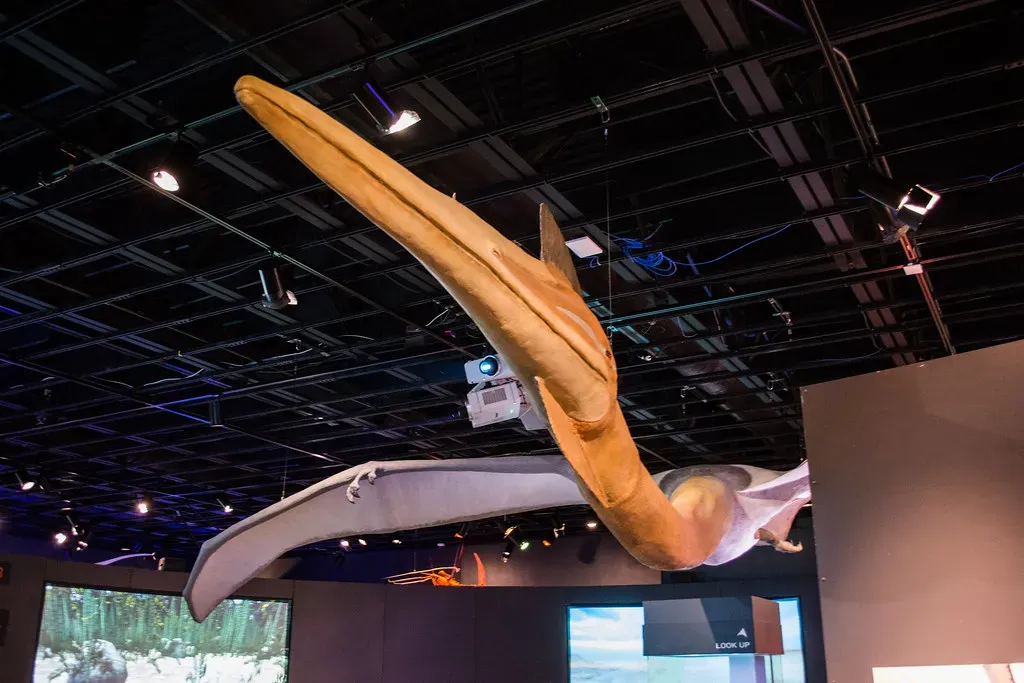
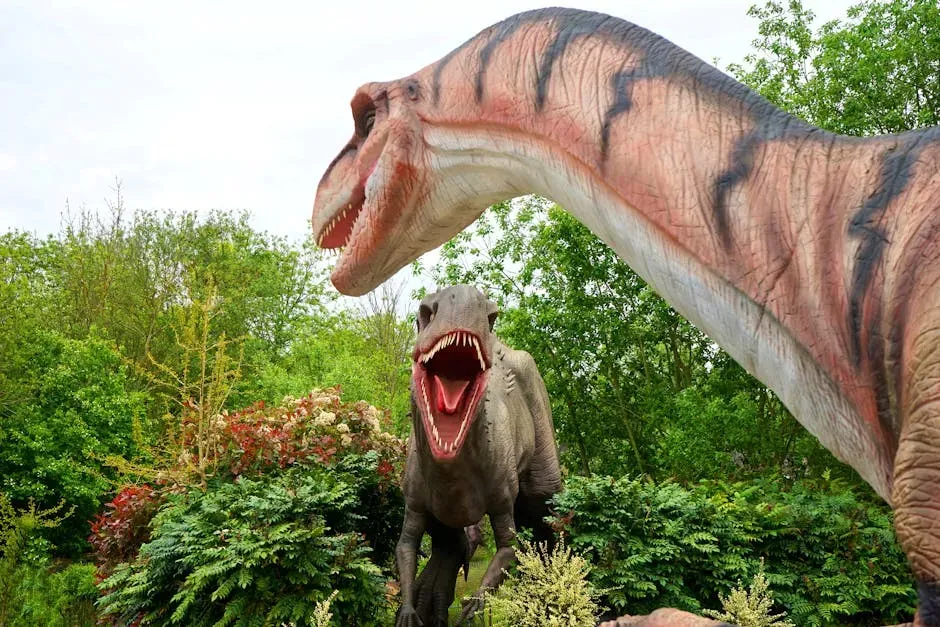
Near the end of the Cretaceous in what is now North America, giant azhdarchid pterosaurs such as Quetzalcoatlus likely shared their environment with long-necked sauropod dinosaurs, including massive titanosaurs in some regions. Quetzalcoatlus was one of the largest flying animals to ever exist, with a wingspan rivaling a small airplane, while titanosaurs were multi-ton plant-eaters dominating the ground. Evidence from related pterosaurs suggests some azhdarchids may have stalked land like stilt-legged predators, picking off small animals or scavenging. That immediately raises the prospect of these sky giants walking among or above sauropod herds, searching for vulnerable young or fresh carcasses.
Imagine a dusty plain where a herd of titanosaurs trundles toward a distant river, their footsteps shaking the ground and kicking up clouds of pollen and insects. Above and around them, Quetzalcoatlus glide in lazy circles or stride between the legs of the giants, watching for a weakened juvenile or a fallen adult. This is not the neat predator–prey duel movies love, but a layered, almost surreal scene of enormous animals using the same space in radically different ways. My personal hunch is that the most dramatic moments were not aerial dogfights, but sudden, opportunistic snatches of hatchlings or scavenging events, with these towering pterosaurs swooping down on sauropod tragedies like feathered grim reapers.
Early humans, cave lions, and cave bears: sharing shelters with rivals
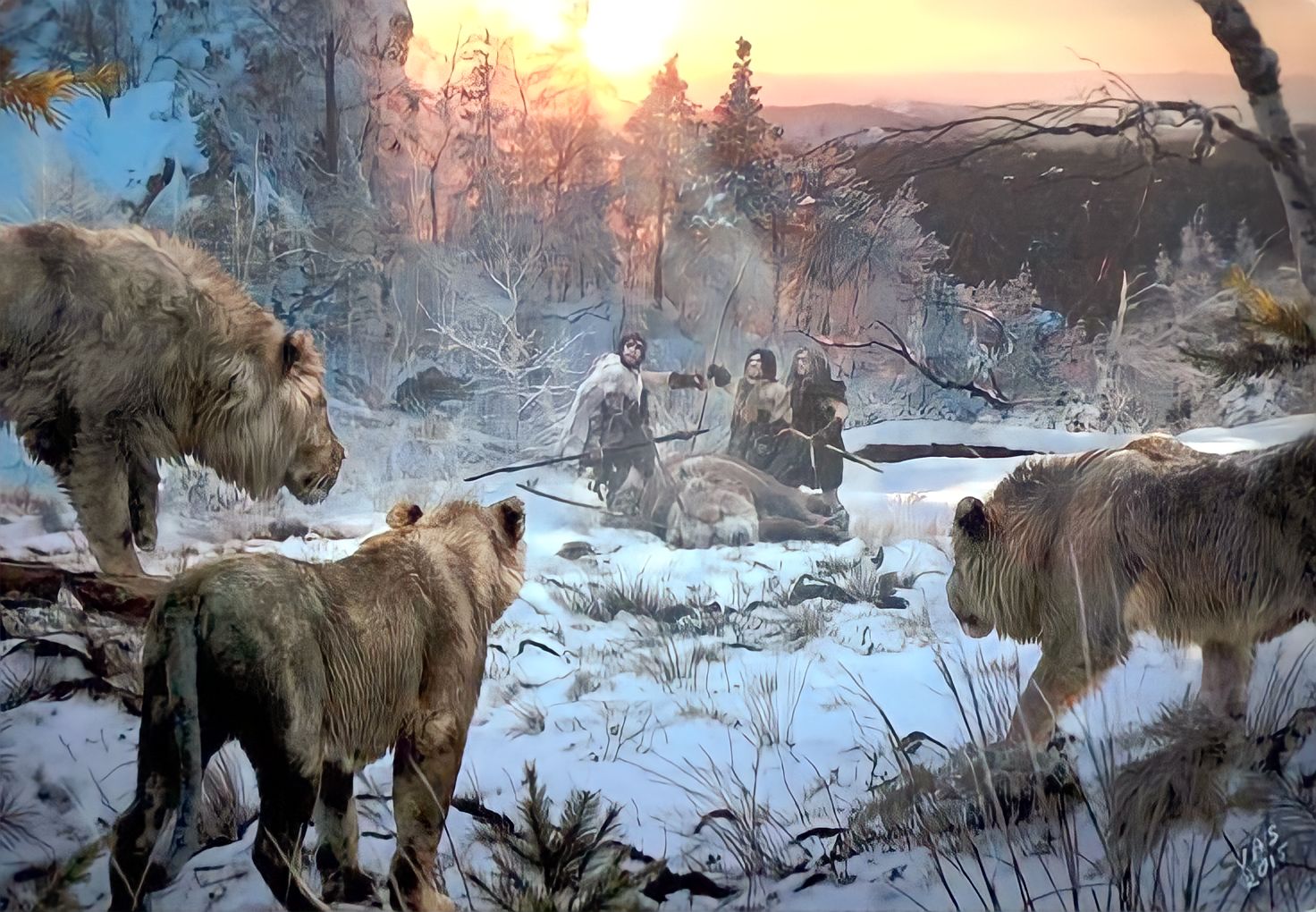
Fast forward to the Pleistocene of Eurasia, and you find one of the most unsettling coexistences of all: early Homo species sharing landscapes – and sometimes even cave systems – with cave lions and cave bears. Fossil evidence and cave deposits show overlapping use of certain shelters over time, with remains of humans, large carnivores, and their prey all mixed together. Imagine living in a world where stepping into the wrong cave at dusk might mean facing a fully grown lion or a massive bear that already considers that place home. This was not a distant, abstract food chain; it was direct, daily competition for the safest sleeping spots.
In my mind, this is as dramatic as any dinosaur battle because it puts us in the story. Picture a small human group returning to a familiar cave only to find bear tracks at the entrance, or a pride of lions raiding the same herds of herbivores the people depend on. There are signs of hunting, avoidance, and probably the occasional bloody confrontation. Unlike in movies where humans are always the unquestioned top predators, here we were just one dangerous animal among many, one more player in a tense, shifting Ice Age drama. The fact that we walked away from that world while lions and bears retreated or vanished says a lot about our adaptability – but it also hints at just how fraught those ancient nights really were.
Conclusion: prehistoric life was an ensemble drama, not a solo act
When you line up all these real coexistences – T. rex with Triceratops, Velociraptor with Protoceratops, Megalodon with early whales, early humans with cave lions and bears – a pattern jumps out: prehistoric worlds were crowded, competitive, and brutally interactive. The most striking thing is not the size of the animals, but the density of relationships: wounds that match teeth, predators tailored to the defenses of their prey, and whole ecosystems shaped by the constant push and pull between hunters, hunted, and opportunistic scavengers. Movies tend to isolate showpiece creatures for dramatic clarity, but the fossil record tells us the true drama came from overlapping lives, not staged one-on-one duels.
If anything, I think most films still underestimate how intense these interactions were. Real animals limp, heal, change strategies, and carry old injuries; they make bad decisions, panic, and sometimes get lucky in ways that no scriptwriter would dare include. To me, that messy, imperfect reality is far more gripping than any polished blockbuster: a world where every riverbank, cave, or forest edge was a potential flashpoint between species that knew each other all too well. Next time you see a lone dinosaur or Ice Age predator on screen, ask yourself: where are all its rivals, neighbors, and victims hiding just off-camera – and how much wilder would the story be if we let them all back into the frame?