When you picture the age of dinosaurs, you probably see giant predators stomping through forests and long-necked giants grazing on treetops. But you rarely picture the strange, armored, crocodile-like, or almost-mammal neighbors that lived right beside them. The dinosaur era, stretching for well over a hundred million years, was not a dinosaur-only show. It was more like a chaotic, overcrowded apartment building where very different tenants all tried to survive under the same roof.
In this article, you’re going to walk through that world and meet some of the lesser-known creatures that shared the planet with dinosaurs. Some looked vaguely familiar, others were so bizarre you’d swear they were invented for a sci‑fi movie. You’ll see early cousins of crocodiles, relatives of birds, primitive mammals, and even a prehistoric “platypus‑like” oddball. By the end, you’ll never think of the dinosaur age the same way again.
1. Deinosuchus – The Giant Crocodile That Hunted Dinosaurs
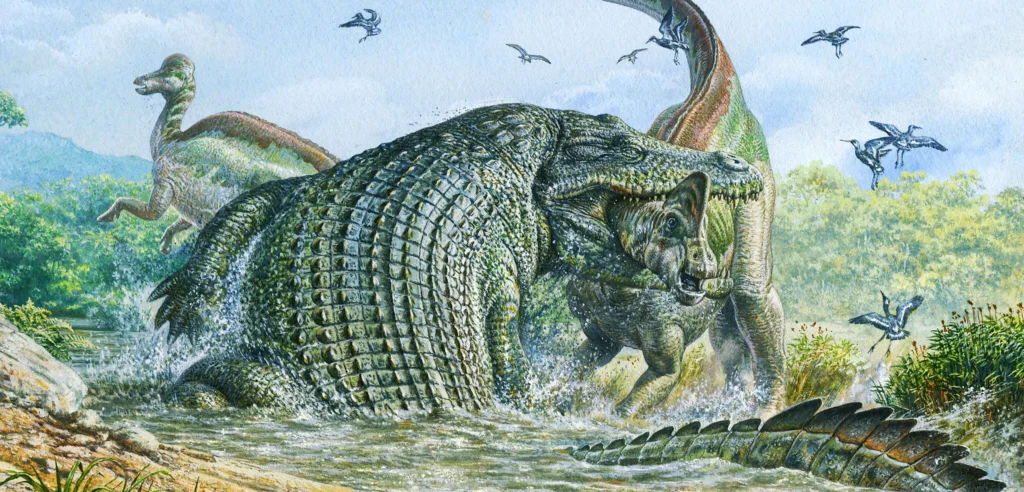
Imagine you are a hadrosaur coming down to a Cretaceous river for a drink, thinking your main worries are hungry tyrannosaurs lurking in the trees. What you do not see is a massive reptile hidden just below the surface, a relative of modern crocodiles called Deinosuchus. This monster likely grew longer than a bus, with a skull big enough that you would easily fit between its teeth. It lived in what is now North America during the Late Cretaceous, right alongside famous dinosaurs like Tyrannosaurus and duck-billed hadrosaurs.
When you think of crocodiles today, you might place them in swamps and rivers as ambush predators, and that basic lifestyle already existed when dinosaurs dominated the land. Evidence from bite marks on dinosaur bones suggests Deinosuchus sometimes preyed on them or scavenged their carcasses. So while dinosaurs ruled the land, you would have had these semi‑aquatic giants ruling the rivers and coastlines, proving that the age of dinosaurs was also an age of enormous crocodilian relatives. If you had stepped too close to the water’s edge, a dinosaur may not have been the thing that got you.
2. Plesiosaurs – Long-Necked Marine Reptiles of the Dinosaur Seas
If you dive beneath the waves of the Jurassic or Cretaceous oceans in your imagination, you leave the stomping ground of land dinosaurs behind. Now you’re in the territory of plesiosaurs: long-necked marine reptiles with broad, paddle‑like limbs that turned them into powerful underwater flyers. You might recognize them from old lake monster stories, but in reality they were sleek, specialized predators gliding through open seas while dinosaurs roamed the shores. They weren’t dinosaurs themselves, but they lived at exactly the same time.
As you picture one, you see an animal with a barrel-shaped body, four strong flippers, and a neck so long it almost seems impractical, ending in a small head packed with sharp teeth. Plesiosaurs used that flexible neck to snap up fish and squid‑like prey, while their bodies stayed streamlined. The same global changes that wiped out non‑avian dinosaurs at the end of the Cretaceous also brought an end to these marine reptiles. When you think about the dinosaur era, you really need to think beyond land, because a whole parallel world of reptilian hunters like plesiosaurs ruled the oceans at the same time.
3. Mosasaurs – Ocean Superpredators of the Late Cretaceous
Fast‑forward in your mind to the very end of the Cretaceous, and you find the oceans ruled by something even more fearsome: mosasaurs. If Deinosuchus was the river ambush specialist and plesiosaurs were swift-necked hunters, mosasaurs were the heavyweight champions of the open sea. They were marine lizards, closer to today’s monitor lizards and snakes than to dinosaurs, yet they conquered the ocean with long, muscular bodies and jaws packed with conical teeth. While dinosaurs like Triceratops wandered the coasts, mosasaurs patrolled just offshore.
You can think of a mosasaur as a massive, turbo‑charged Komodo dragon with flippers and a tail built like a shark’s. Fossil stomach contents show you they devoured fish, smaller marine reptiles, and even other mosasaurs. Some species were long enough that you could comfortably line up several cars along their backs. When the asteroid impact struck about the same time dinosaurs disappeared, these ocean predators vanished too. So when someone says dinosaurs were the top of the food chain, you now know that in the seas, creatures like mosasaurs clearly stole that crown.
4. Pterosaurs – Flying Reptiles Above the Dinosaur World
Look up into the Mesozoic sky and you wouldn’t just see flocks of early birds; you’d see pterosaurs, the first vertebrates to truly master powered flight. These flying reptiles often get lumped in with dinosaurs in your mind, but they formed their own separate group. While giant sauropods shook the ground and theropods hunted on two legs, pterosaurs soared overhead, fishing from coastlines, gliding over forests, and even stalking small prey on the ground. They shared the same ecosystems and the same dangers, including hungry dinosaur predators.
Some pterosaurs were tiny, smaller than the pigeons you see in cities today, while others like Quetzalcoatlus had wingspans as wide as a small airplane. You can imagine the visual drama of a Late Cretaceous scene: horned dinosaurs grazing, tyrannosaurs stalking, and enormous pterosaurs taking off like living hang gliders. Their wings were supported by an elongated fourth finger, a totally different design from bird wings, yet they conquered the skies for tens of millions of years. When you picture a dinosaur landscape, it only becomes truly alive once you also picture these strange, winged reptiles casting shadows over everything below.
5. Dimetrodon – The Sail-Backed Predator from Before the Dinosaurs (Still Not One)
You have probably seen Dimetrodon on old dinosaur posters or toys, with its huge sail rising from its back and a mouth full of blade‑like teeth. Here’s the twist: it never met a dinosaur in real life, because it lived tens of millions of years earlier in the Permian Period. Yet it often gets dragged into dinosaur conversations because it looks reptilian and intimidating. Even though it predates dinosaurs, it still helps you understand the long evolutionary road that led to the dinosaur age and even to you.
Dimetrodon belonged to a group called synapsids, which are actually more closely related to mammals than to modern reptiles. That means you’re more closely related to Dimetrodon than any dinosaur ever was. When you see artwork of early dinosaurs and their world, keep in mind that creatures like Dimetrodon represent an earlier “trial run” for large land predators. The ecosystems that came before dinosaurs shaped the ones dinosaurs inherited, so even though Dimetrodon was gone by the time dinosaurs evolved, its legacy lived on in the changing climate, landscapes, and evolutionary experiments that made the dinosaur age possible at all.
6. Mammaliaforms – Tiny Night Creatures in a Dinosaur’s Shadow
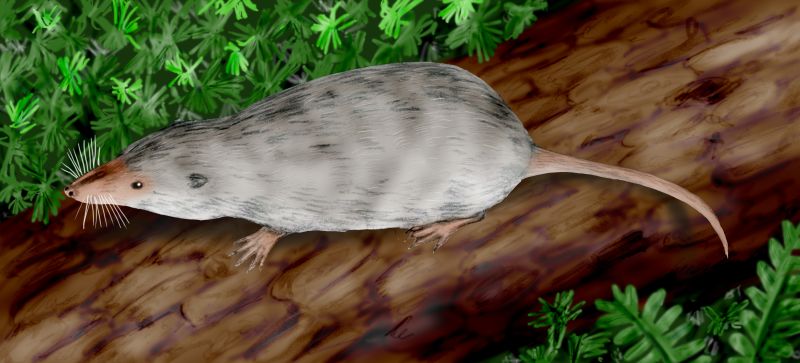
While you focus on giant dinosaurs, you might forget that your own mammalian story began under their feet. Throughout the Jurassic and Cretaceous, small mammaliaforms and early mammals scurried through the leaf litter, climbed branches, and probably hunted insects at night. You can imagine yourself shrunk down to their size, dodging dinosaur toes and hiding from sharp eyes. These creatures rarely reached more than the size of a rat or small cat, yet they were quietly experimenting with traits that would later define modern mammals.
Some of these early mammals had specialized teeth for chewing, good hearing, and perhaps even fur coats that helped them stay warm after dark. While dinosaurs hogged the big body sizes and most daytime roles, mammals adapted by occupying the overlooked corners of the ecosystem. You might think of them as living in the dinosaur era’s “night shift,” working around the giants that dominated the day. When the mass extinction at the end of the Cretaceous removed most large dinosaurs, these small, adaptable creatures were ready to expand. So even in the heyday of dinosaurs, your distant relatives were already there, biding their time in the shadows.
7. Ichthyosaurs – Dolphin-Shaped Reptiles of the Jurassic Seas
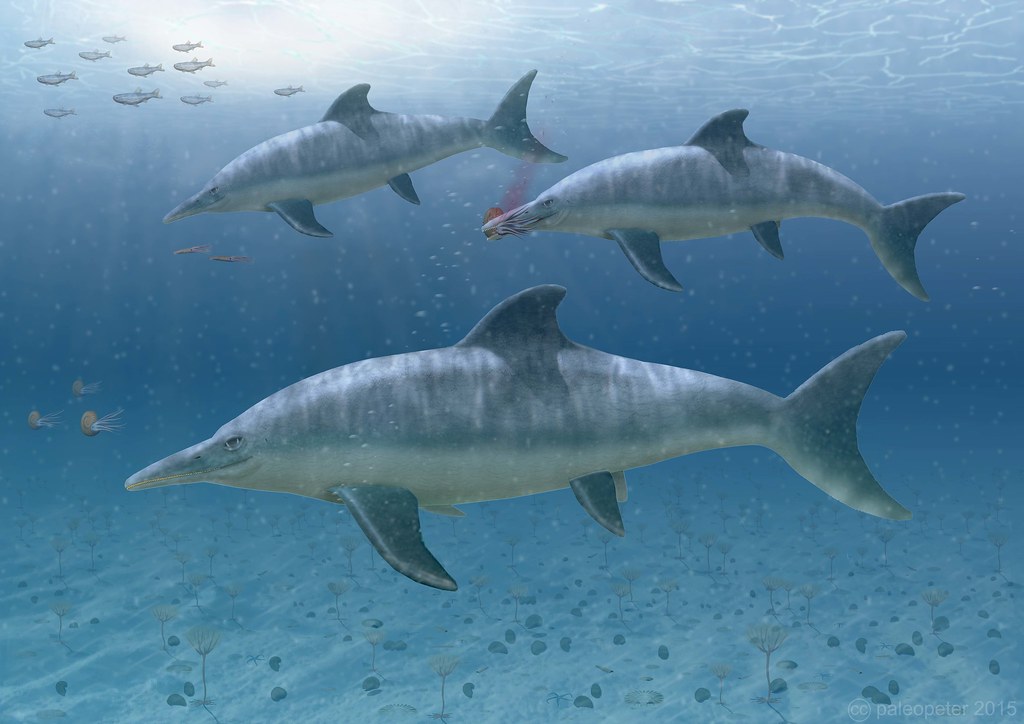
When you first see a reconstruction of an ichthyosaur, your brain probably jumps to dolphins or tuna rather than reptiles. These marine reptiles evolved streamlined, fish‑like bodies, big eyes, and long snouts filled with teeth, turning them into fast, agile hunters. They appeared early in the age of reptiles and were thriving while land dinosaurs were just getting started in the Triassic and Jurassic. As you picture the oceans at that time, ichthyosaurs were among the most successful large animals you would have seen cruising the open water.
Fossils show you that some ichthyosaurs gave birth to live young, just like many modern marine mammals, rather than laying eggs on land. That is a remarkable example of how evolution can lead very different animals down similar paths when they face similar environments. While dinosaurs were adapting to life on land, ichthyosaurs were perfecting the art of high‑speed pursuit in the sea. They eventually declined before the very end of the Cretaceous, opening space for groups like mosasaurs to rise, but for much of the dinosaur era they were the classic symbol of marine reptile success.
8. Notosuchians – Weird Crocodile Cousins That Lived on Land
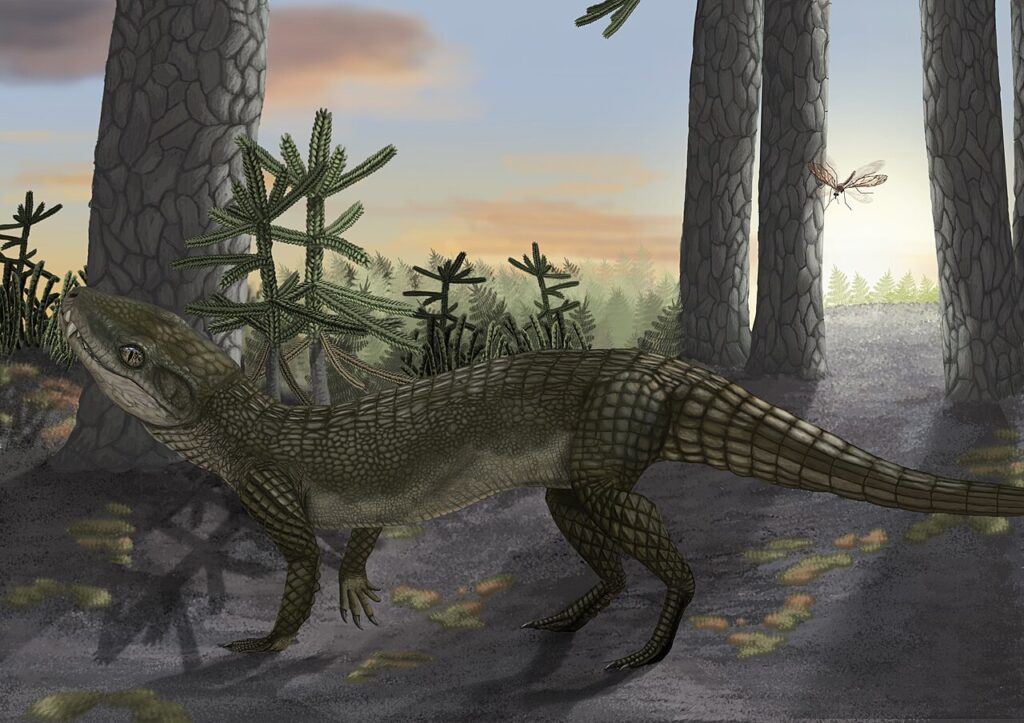
If you think all ancient crocodile relatives behaved like modern crocodiles, you are in for a surprise. During the age of dinosaurs, a group called notosuchians evolved into all sorts of weird, mostly land‑dwelling forms, especially in what is now South America and Africa. Some had shorter snouts and specialized teeth that suggest they ate plants or a mix of foods, more like mammal‑like omnivores than pure meat‑eating reptiles. Imagine walking through a Cretaceous savanna and seeing something that looks like a chunky, dog‑sized crocodile trotting on land rather than lurking in water.
These notosuchians shared their habitats with large dinosaurs, but they carved out very different roles. Instead of competing with giant sauropods or ferocious theropods, they focused on smaller prey, plants, or scavenging. Their diverse body shapes show you that crocodile relatives used to be far more experimental than the generally uniform crocodiles you see today. When you realize that, you start to see the dinosaur world as an ecosystem packed with unexpected side characters, not just a handful of famous stars. Creatures like notosuchians prove that even familiar groups like crocodiles once had a much stranger past.
9. Beelzebufo – The “Devilish” Giant Frog of the Dinosaur Age
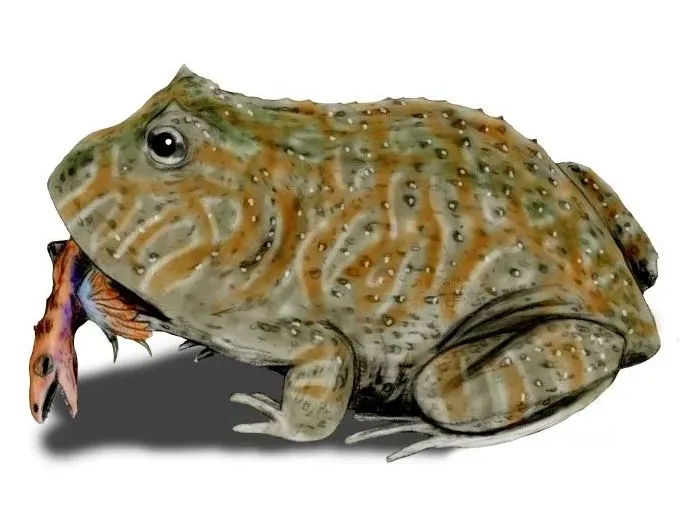
Now shift your attention from towering reptiles to something that, at first glance, seems modest: a frog. Beelzebufo, discovered in rocks from Late Cretaceous Madagascar, was no ordinary amphibian. You can picture a frog roughly the size of a dinner plate or even larger, with a broad head and strong jaws. Based on its skull and comparison with modern relatives, it may have been a powerful ambush predator, snapping up anything that could fit in its mouth, possibly including small dinosaurs and other vertebrates.
When you imagine a dinosaur landscape, you might fill it with roaring predators and crashing herbivores, but you probably forget that giant frogs were waiting quietly in the undergrowth. Beelzebufo reminds you that even the “small” roles in ancient ecosystems could be dramatic. Its presence alongside dinosaurs shows how complex these communities really were, with amphibians, reptiles, early mammals, and birds all interacting. Next time you see a frog hiding near a pond, it is worth remembering that its distant cousins once faced down baby dinosaurs instead of just insects.
10. Kriptobaatar and Its Kin – Burrowing Mammals of the Cretaceous
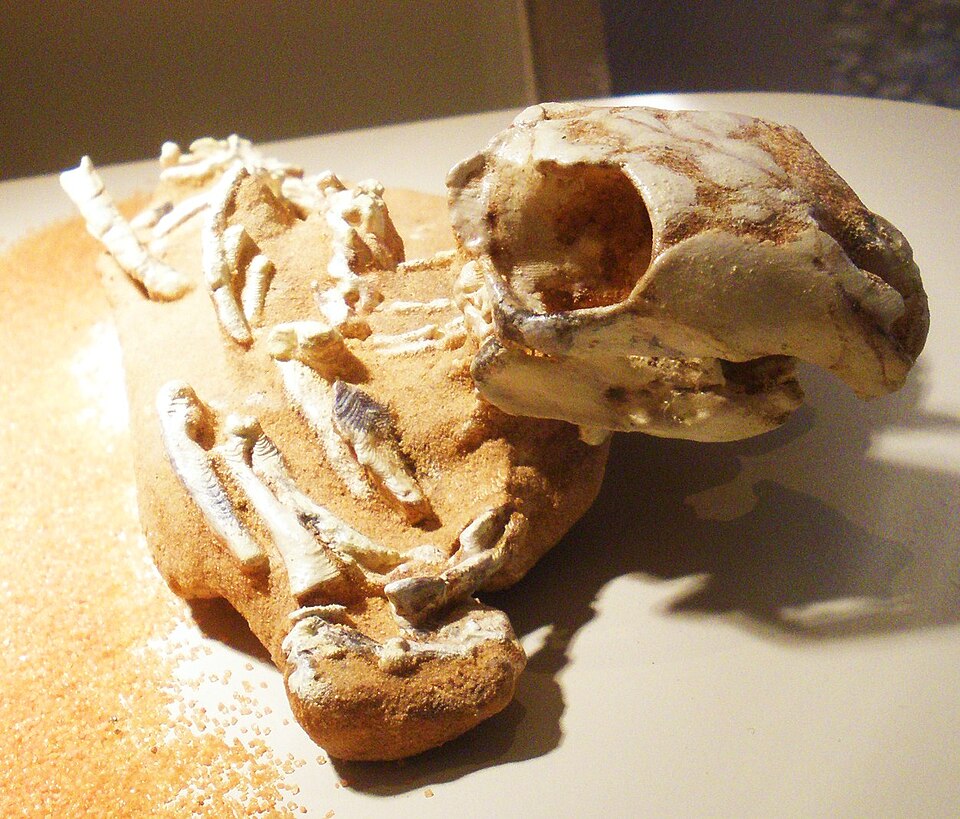
As you move toward the final chapter of the dinosaur age in the Late Cretaceous, you find small mammals like Kriptobaatar in what is now Mongolia. This animal belonged to a group called multituberculates, sometimes described as the “rodents of the dinosaur era” because of their gnawing front teeth and grinding back teeth. You can imagine Kriptobaatar scurrying through desert or semi‑arid landscapes, perhaps digging burrows or hiding among rocks while larger dinosaurs like Velociraptor prowled nearby. It lived its entire life in the shadow of much larger reptiles, yet it was well adapted to survive in that harsh environment.
Fossil evidence suggests to you that multituberculates were incredibly successful, lasting tens of millions of years and spreading across many continents. They show that even when dinosaurs seemed unshakeable, mammals were quietly diversifying behind the scenes. Kriptobaatar and its relatives were not impressive in size, but they were tough, resourceful survivors. When the mass extinction hit and dinosaurs (apart from birds) vanished, lineages like these helped set the stage for the modern mammal explosion. In a way, while you might think dinosaurs stole the spotlight, it was creatures like Kriptobaatar that prepared the world for your own eventual arrival.
Conclusion – Rethinking the Age of Dinosaurs
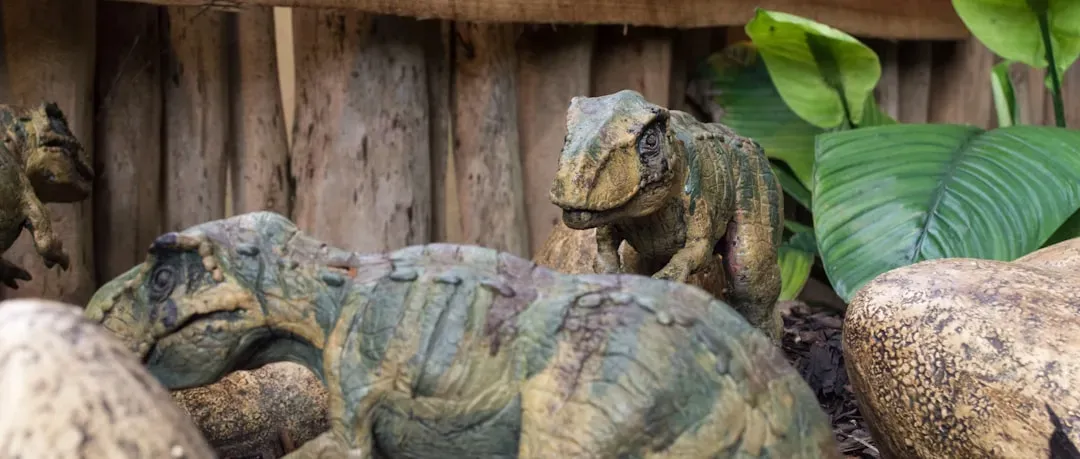
By now, you can see that the “time of the dinosaurs” was never just about dinosaurs. It was a crowded, dynamic world filled with giant crocodile relatives, flying pterosaurs, sleek marine reptiles, early mammals, and even oversized frogs. If you stood in a Late Cretaceous landscape, your senses would be overwhelmed not only by the dinosaurs around you, but by the flapping of pterosaur wings above, the splash of marine reptiles off the coast, and the quiet rustle of small mammals and amphibians at your feet. Dinosaurs were the celebrities, but they shared the stage with a surprising supporting cast.
When you think about that ancient world this way, you start to appreciate just how complex life on Earth has always been. Every era, including your own, is shaped not by a single dominant group, but by countless species interacting at once, all influencing each other’s fate. The creatures you met here are only a sample of the many lineages that thrived alongside dinosaurs. So the next time someone says dinosaurs once ruled a lonely, prehistoric Earth, you’ll know better: they lived in a vibrant, crowded neighborhood. Which of these unexpected neighbors surprised you the most?