
You face uncertainty more often than you realize: waiting for medical results, applying for a job, watching your bank balance during a rough month, or wondering where a relationship is headed. The way you think, feel, and act in those moments quietly shapes your mental health, your decisions, and even your relationships. You might think you’re just “stressed” or “bad at waiting,” but underneath that, specific traits are driving how you respond when the future is a giant question mark.
As you read through these ten traits, you’ll probably recognize yourself in some more than others. That’s not a problem; it’s actually the point. You’re not trying to become someone who loves uncertainty; you’re trying to understand how you handle it, so you can adjust where it hurts you and double down where it helps. Think of this as holding up ten different mirrors, each reflecting a slightly different version of you under pressure, when things feel wobbly and unclear.
1. Your Need for Control

When life gets unpredictable, your first instinct might be to tighten your grip. You plan more, double-check everything, and try to anticipate every possible outcome. If you’re honest, this can feel like building a mental spreadsheet for your entire life, where every scenario has its own column and backup plan. On the surface it looks responsible, but beneath it, there’s often a fear that if you loosen control even a little, everything might spiral.
If your need for control is high, uncertainty feels like a direct threat rather than just an uncomfortable situation. You may notice you get irritated when others “wing it,” or that you struggle in situations where you can’t gather all the information, like waiting on someone else’s decision. Learning to handle uncertainty better doesn’t mean giving up structure; it means recognizing when your drive to control is actually making you more anxious, not less, and practicing small experiments in letting go.
2. How Quickly Your Mind Jumps to Worst-Case Scenarios

When you do not know what will happen, your mind might rush straight to the darkest version of events. You send a message and do not get a reply, and suddenly you are sure the person is angry or pulling away. You notice a minor symptom and immediately worry it is something serious. Your imagination becomes a disaster movie director, and you are both the star and the only audience member, watching it on repeat.
This tendency to catastrophize is a major clue to . Your brain is trying to protect you by preparing for the worst, but it often leaves you exhausted and overwhelmed instead. If you find yourself spiraling into “what if everything goes wrong,” it helps to consciously ask, “What are some neutral or even positive possibilities here?” You do not have to pretend everything is wonderful; you just need to widen the lens so the worst-case scenario is not the only thing you see.
3. Your Tolerance for Waiting Without Answers

Uncertainty often shows up as waiting: waiting for lab results, a promotion, a reply, a payment, a decision. Pay attention to what happens inside you during that in-between space. Do you constantly refresh your email, doom-scroll, or mentally rehearse conversations that have not happened yet? Or can you park the unknown in the back of your mind and focus on what you actually can do today?
Your ability to tolerate “not yet knowing” is one of the clearest measures of . If waiting feels unbearable, you might rush into decisions just to have something settled, even if it is not the best choice. Building this tolerance starts small: you deliberately give yourself tiny gaps where you do not check your phone, you wait five more minutes before seeking reassurance, you notice the discomfort and ride it like a wave instead of fighting it. Over time, you prove to yourself that you can survive the suspense.
4. Your Relationship With Risk and Experimentation
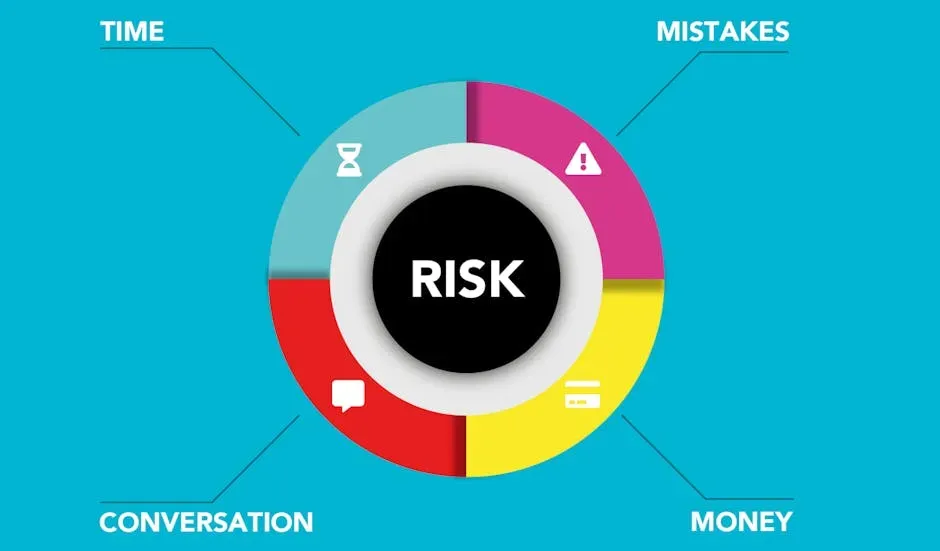
Uncertainty and risk are closely linked, but your attitude toward risk says a lot about how you move through the unknown. If you are extremely risk-averse, you might avoid applying for roles you are not “perfectly qualified” for, hold back from starting a new project, or stay in situations that feel stale simply because they are familiar. You treat uncertainty like a cliff edge rather than a possibility space.
On the other hand, if you handle uncertainty fairly well, you tend to view many decisions as experiments. You might think, “Let me try this for three months and see,” instead of “If I do this, it must work forever.” That experimental mindset reduces the pressure, because no single choice has to be perfect. Instead of needing a guarantee before you act, you allow yourself to learn by doing, and that makes uncertainty feel less like a threat and more like a testing ground.
5. How You Talk to Yourself When Things Are Unclear

Your self-talk in uncertain moments is a powerful, often overlooked indicator. When the future is foggy, do you tell yourself that you are doomed, that you always mess things up, that nothing good ever works out? Or do you remind yourself that you have handled tough situations before, that it is okay not to know yet, that outcomes are rarely all-or-nothing? The words you use with yourself either pour fuel on your anxiety or help contain it.
You might not even notice how harsh your inner voice becomes when things are up in the air. It can sound like you are just being “realistic,” but often it is your fear talking in a very convincing tone. Learning to handle uncertainty better involves deliberately shifting your inner dialogue from absolute, dramatic statements to more balanced ones. Instead of “This is going to be a disaster,” you might say, “This might be hard, but I can deal with it step by step.” That small change can dramatically lower the emotional temperature.
6. Your Need for Reassurance From Others

When you feel unsure, do you immediately reach for someone to tell you it is going to be okay? Reassurance-seeking is completely human, but the frequency and intensity of it reveal a lot about your tolerance for uncertainty. If you repeatedly ask the same question in different ways, or check in with multiple people hoping for the “right” answer, you are probably trying to outsource your discomfort instead of learning to sit with it.
There is nothing wrong with getting support, but when you rely on constant reassurance, it usually feels good only for a short time. The relief quickly fades, and you are back to worrying, sometimes even more than before. Handling uncertainty well means you can notice the urge to ask again and still choose to hold your own anxiety for a bit longer. You learn to say to yourself, “I do not have certainty yet, and that is uncomfortable, but I can manage this feeling without needing someone to fix it immediately.”
7. How Flexible You Are When Plans Change

Pay close attention to what happens when your plans are suddenly disrupted. Maybe a project timeline gets extended, a trip is cancelled, or someone changes their mind about something important to you. Do you adapt relatively quickly, even if you are disappointed, or do you feel completely thrown off and unable to recover your footing? Your flexibility, or lack of it, is a window into how well you move with uncertainty rather than against it.
If you tend to over-attach to a specific plan, any deviation can feel like a personal failure or a sign that everything is falling apart. You might replay what you “should” have done or become fixated on how unfair it is. Building more flexibility does not mean pretending to be happy about unwanted changes. It means giving yourself room to be frustrated while also asking, “Okay, given this reality, what can I adjust? What is still possible?” That mindset shifts you from helpless to adaptive.
8. Your Capacity to Stay Present Instead of Mentally Time-Traveling

Uncertainty tempts you to mentally time-travel: you jump ahead to all the things that might happen or back to all the ways you think you messed up. You replay conversations, scan possible futures, and try to predict reactions. By the end of it, you are exhausted, and nothing in the present has actually changed. Your ability to stay grounded in what is real right now is a core skill for handling uncertainty.
You do not have to become some perfectly serene, always-present person. But if you can catch yourself spiraling and gently redirect your attention to concrete, immediate actions, you suffer less. You might focus on the next email you need to send, the meal you are cooking, the person sitting across from you. It sounds almost too simple, but it is a way of reclaiming mental space from the endless “what ifs” that uncertainty triggers.
9. How You Interpret Ambiguous Signals

Uncertainty often shows up as mixed signals: a short text, a delayed reply, a neutral comment from your boss, a change in someone’s tone. The way you interpret these ambiguous cues tells you a lot about your emotional defaults. If you usually read them as bad news, rejection, or looming trouble, you are probably wired to assume danger when things are unclear.
This negative bias is extremely common, especially if you have been burned before. But it can cause you to suffer unnecessarily and sometimes even behave in ways that make your fears more likely to come true. When you notice yourself filling in the blanks with negative assumptions, you can pause and ask, “What else could this mean?” You are not forcing yourself to be blindly positive; you are simply giving yourself options instead of locking into the worst possible interpretation.
10. Your Willingness to Accept That Some Things May Never Be Fully Resolved

Some uncertainties eventually get resolved: you get the test result, you hear back about the job, you find out what someone really meant. But others linger. You might never fully understand why a relationship ended the way it did, whether a different career path would have made you happier, or what would have happened if you had made a different choice years ago. Your relationship to these permanent question marks is one of the deepest indicators of .
If you feel you must have closure for everything, you will stay stuck in endless mental loops, trying to solve unanswerable questions. Learning to live with open-endedness is uncomfortable but freeing. You gradually accept that not every story in your life comes with a neat, final explanation, and that this does not erase your growth, your worth, or your right to move forward. In a way, you stop demanding that life hand you a full instruction manual, and you start walking anyway.
Conclusion: Turning Uncertainty Into a Mirror, Not a Monster

When you look at these ten traits together, you start to see uncertainty less as an external problem and more as a mirror reflecting how you relate to control, risk, emotion, and yourself. You may recognize habits you are not proud of – catastrophizing, clinging to reassurance, freezing until you get guarantees – but that recognition is already a kind of progress. You cannot change how uncertain the world is, but you can change how you show up inside that uncertainty.
If you take anything from this, let it be this: you do not need to become fearless to handle uncertainty well; you just need to build enough inner stability to act, decide, and wait even while you are afraid. That might mean practicing tiny risks, softening your self-talk, or tolerating a bit more “not knowing” each week. Over time, you become someone who can look at the unknown and think, “I may not control what happens, but I trust myself to handle it.” When you picture yourself in your next uncertain moment, which of these traits do you want to lean on – and which are you ready to gently outgrow?