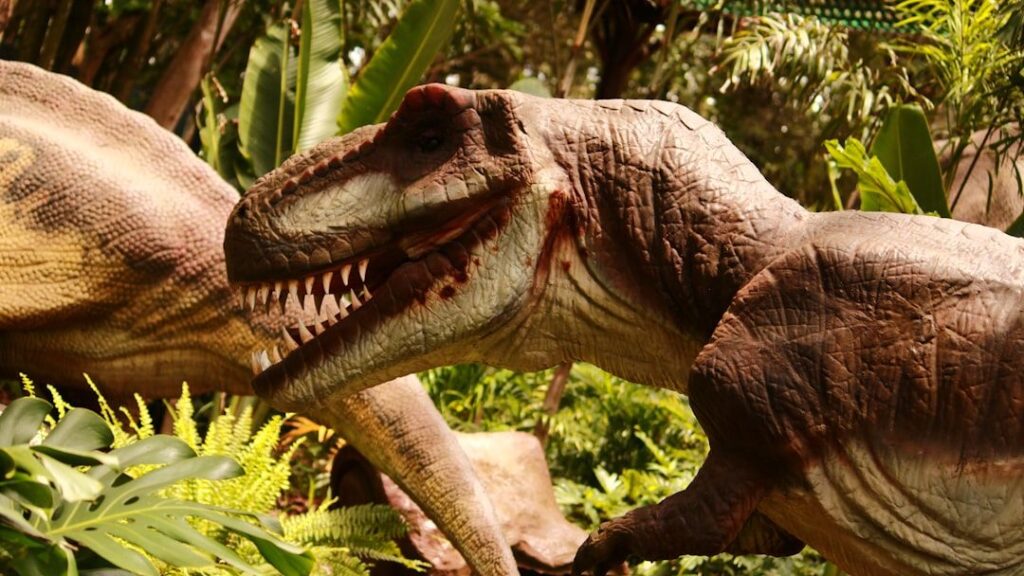
You probably grew up thinking T. rex was the undisputed king of nightmares. Big teeth, bone-crushing bite, that slow, thunderous stomp. But once you start digging into prehistoric life beyond the movie posters, you realize something uncomfortable: T. rex was just one monster in a whole planet full of them, and some of its rivals make it look almost… manageable. In different seas, swamps, and skies, other predators evolved that were bigger, sneakier, or just built to kill in ways that feel far more unsettling when you imagine actually running into one. If you dropped yourself into the wrong time and place, T. rex might not even crack your top three problems.
Spinosaurus: The Sail-Backed Swamp Stalker
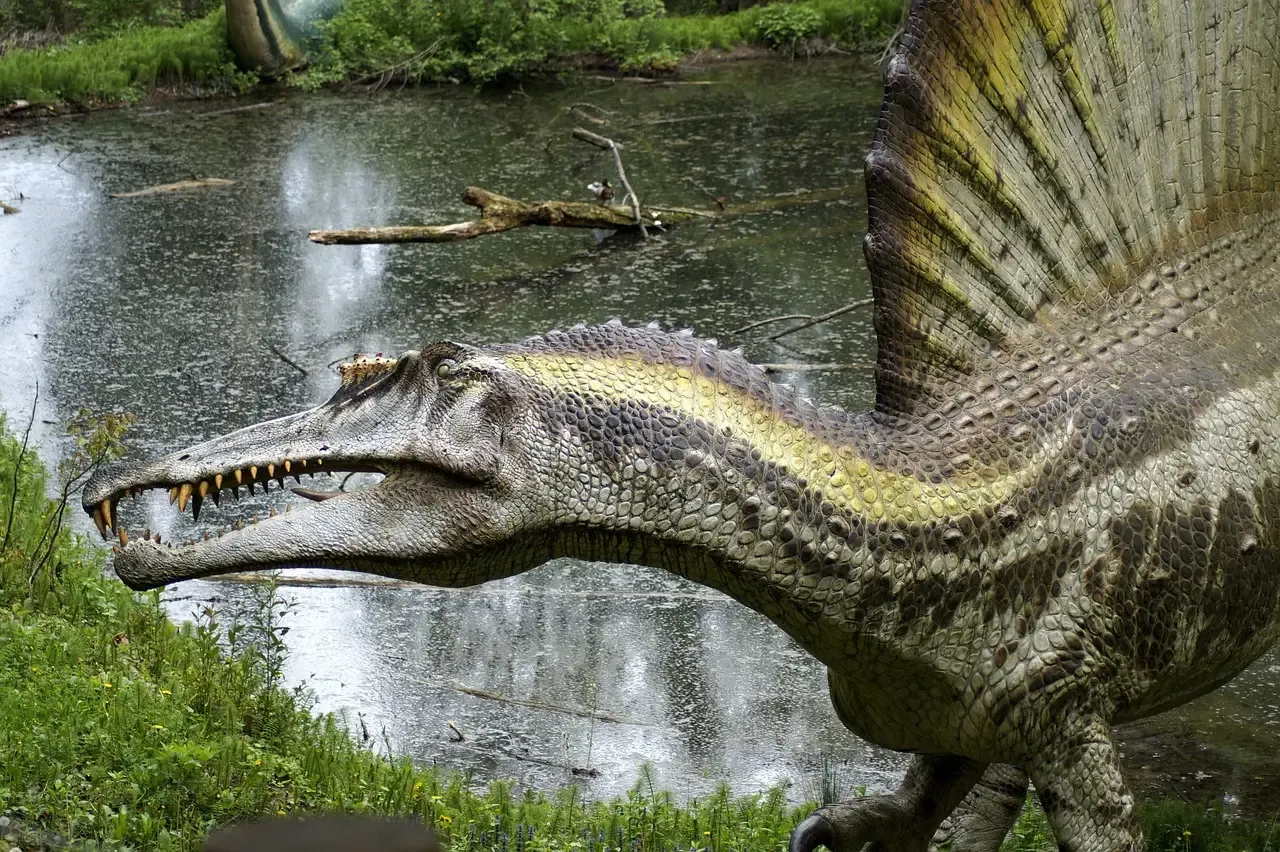
Imagine thinking you’re safe on land because the ocean is full of monsters… and then learning there’s a dinosaur that can hunt you in both. That’s Spinosaurus: a semi-aquatic, crocodile-snouted killer that grew longer , with some estimates putting it over fifty feet from nose to tail. Its long, narrow jaws were packed with conical teeth perfect for grabbing slippery prey, and its body seems built for a life spent cruising rivers and swamps, not just marching across dry plains. You are not “out of range” with this thing; you are always in someone’s hunting ground.
What makes Spinosaurus especially terrifying to you is that it erases the illusion of escape routes. You cannot just decide to dive into the water or head for the shallows, because that’s exactly where it shines. Evidence suggests it was semi-aquatic and capable of powerful swimming, more like a bizarre mashup of a heron, a crocodile, and a sail-backed dragon than a typical land dinosaur. You are not just dealing with size here, you are dealing with a predator that dominates multiple environments and looks like it walked straight out of a fever dream.
Megalodon: The Submarine-Sized Shark That Hunted Whales
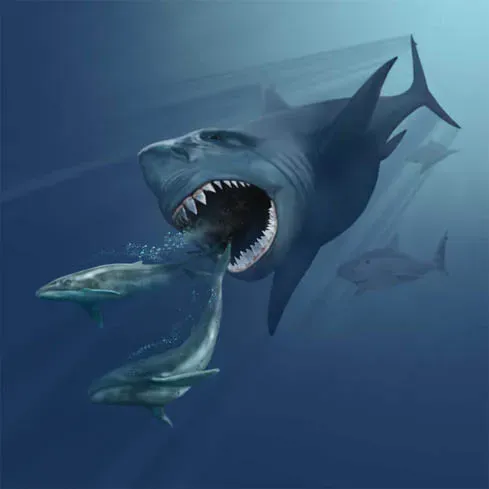
If you are honest with yourself, deep water already feels a little creepy. Now picture this: you are treading water, and somewhere below is a shark the size of a bus – or even a small train – circling in the dark. Megalodon was an enormous prehistoric shark, likely reaching over fifty feet in length, with hand-sized teeth designed to crush bone rather than just slice through fish. Its bite force has been estimated at levels that could crush a small car, and its preferred prey included early whales, not just little fish darting around coral reefs.
What really gets under your skin about Megalodon isn’t just the size; it’s the hunting style. Modern great white sharks, already terrifying, often go for surprise attacks from below, and Megalodon probably did something similar on a much bigger scale, targeting flippers and tails to disable huge marine mammals. You would never see it coming in murky water – one moment you think you are alone, and the next you are inside a moving jaw trap with no chance of escape. T. rex at least gives you the courtesy of thunderous footsteps and a visible horizon; Megalodon turns the whole ocean into an invisible ambush zone.
Mosasaurus: The Ocean’s Answer to a T. Rex
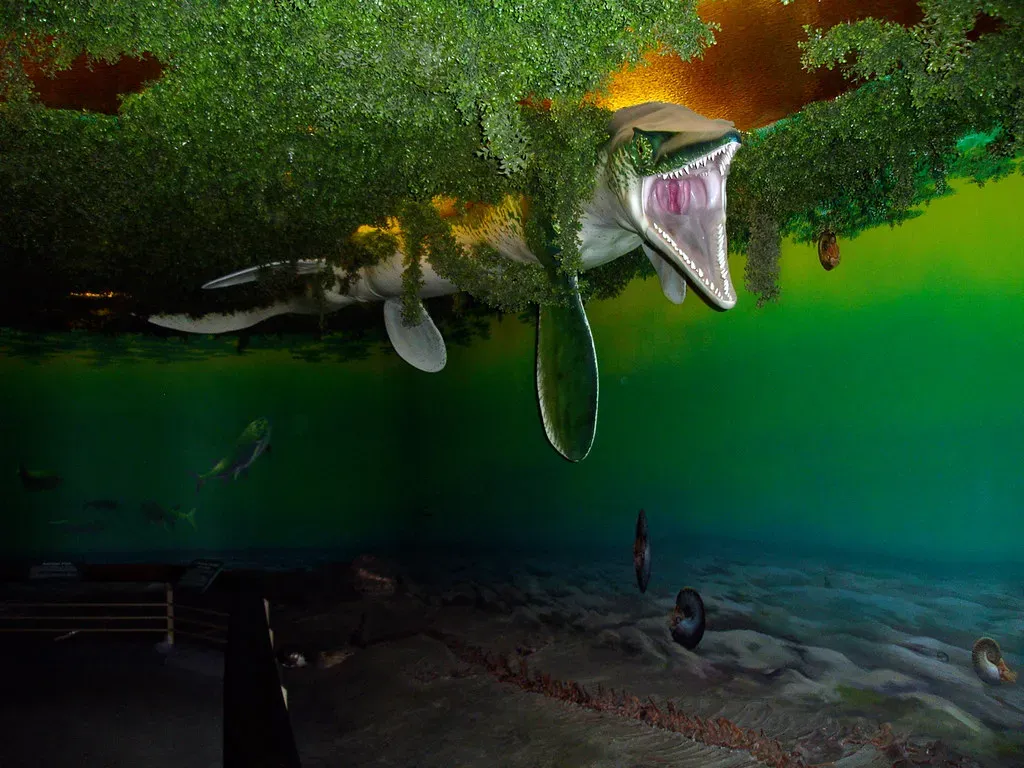
If you’ve ever felt a chill watching a crocodile slide under the water, Mosasaurus is that feeling multiplied by a hundred. This massive marine reptile, not a dinosaur but a distant relative of modern monitor lizards and snakes, dominated the Late Cretaceous seas. Some species stretched over forty feet, with long, muscular bodies, paddle-like limbs, and a powerful tail that could launch it forward in sudden bursts of speed. Its jaws were lined with sharp, recurved teeth perfect for grabbing and swallowing large prey, including sharks, other reptiles, and anything unfortunate enough to cross its path.
From your perspective as a potential victim, Mosasaurus is horrifying because it ruled an environment you cannot survive in for long anyway. You cannot outswim it, you cannot out-dive it, and you cannot hide in open water. Fossil evidence suggests it fed on large animals, even biting them in half or swallowing them whole. Picture yourself clinging to a piece of driftwood after a storm, exhausted and hopeful you might reach shore – then imagine a shadow passing underneath you that is as long as a city bus, turning upward with jaws already open. On land, you have at least some options; in Mosasaurus territory, you are just meat in the water.
Liopleurodon: The Ambush Torpedo of the Ancient Seas
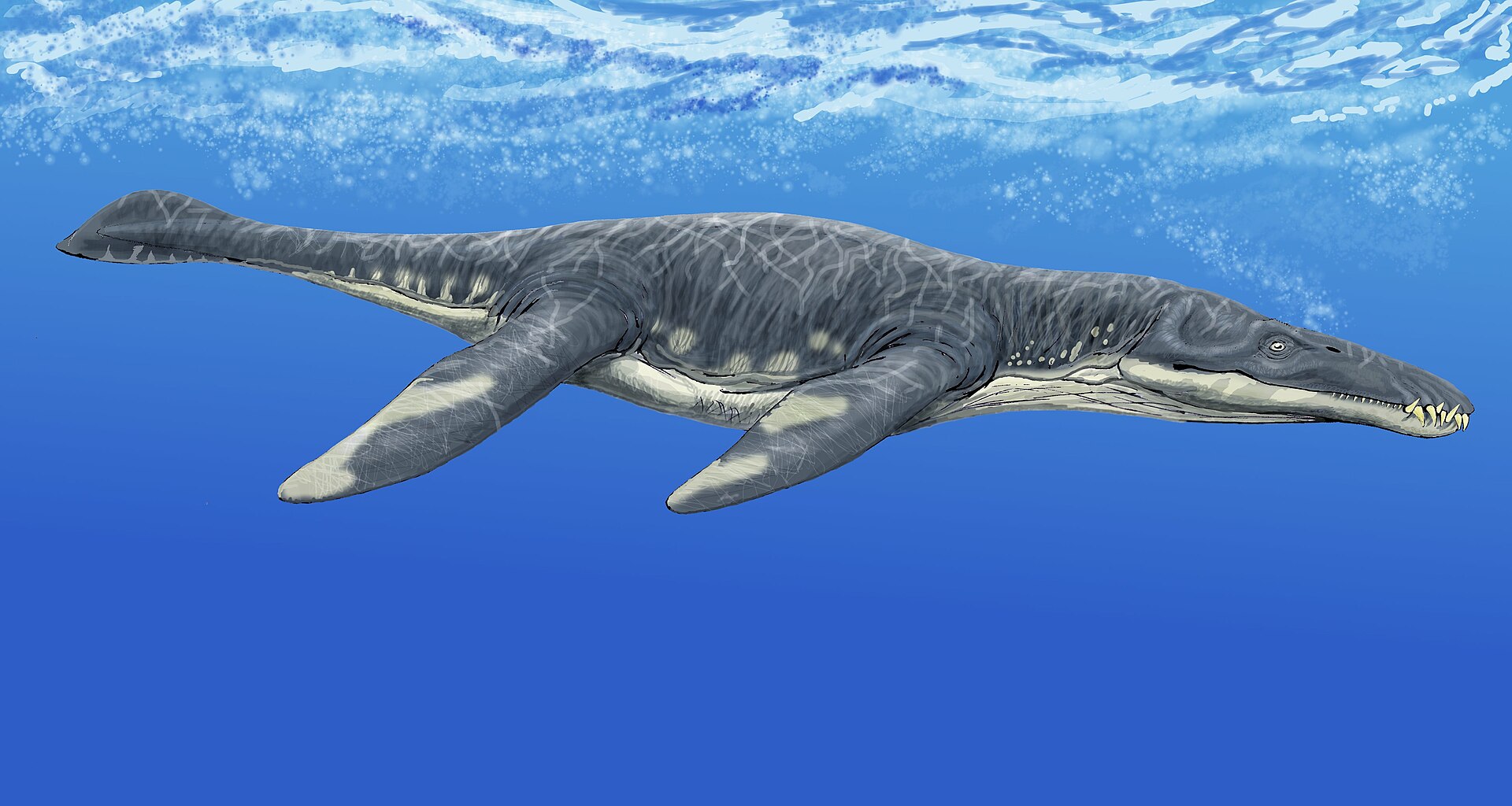
Liopleurodon takes the idea of a marine predator and strips it down to something brutally efficient: huge head, massive jaws, thick neck, and flippered body built for short, explosive bursts of speed. Although some older claims of its size were exaggerated, even more conservative estimates still put it at well over twenty feet long, with a skull that could measure more than a third of its entire body length. This is not a sleek shark; it is more like a living battering ram that happens to be able to swim.
For you, Liopleurodon is especially scary because its design screams ambush hunter. Instead of gliding lazily around like a lazy giant, it likely lurked at depth or near underwater slopes, then surged upward at high speed to snap into prey with a crushing bite. You would have almost no warning – no dorsal fin slicing the surface, no ripples ahead of time, just a sudden eruption of teeth and dark water. Unlike T. rex, which confronts you in open view, Liopleurodon turns the ocean into a three-dimensional trap where the killing blow comes from below or behind, when you are least ready.
Dunkleosteus: The Armored Guillotine Fish
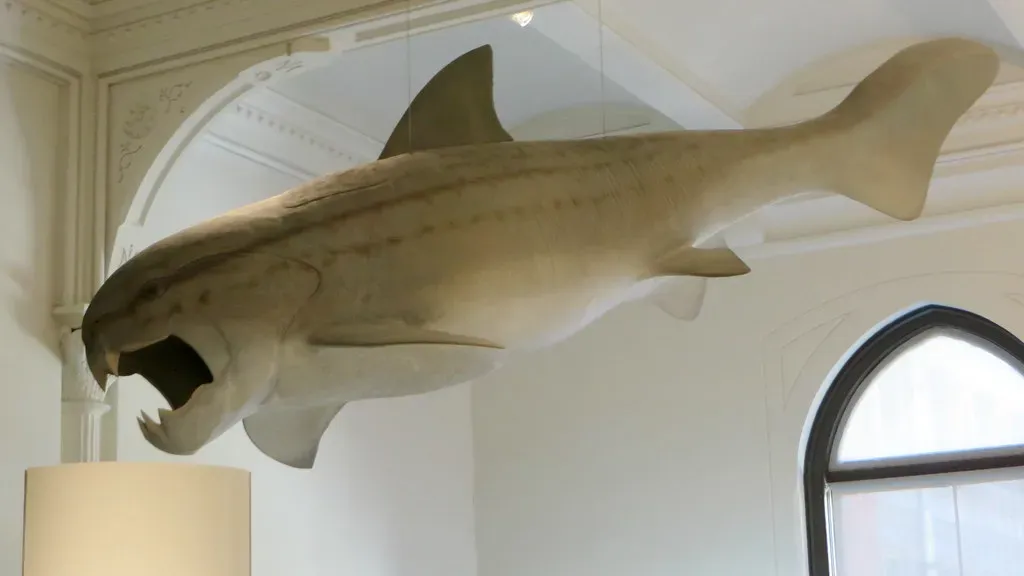
Long before dinosaurs, the oceans already had something that would make you never want to swim again: Dunkleosteus. This Late Devonian fish looked like a nightmare in armor, with bony plates covering its head and front body and a jaw mechanism that worked more like a pair of sliding guillotine blades than traditional teeth. Instead of individual teeth, it had sharpened bone plates that could slam shut with astonishing force, easily crushing armor, bone, and anything else in the way.
What makes Dunkleosteus really unnerving from your point of view is that it combines brute strength with explosive speed. Studies of its skull mechanics suggest it could open its mouth incredibly fast, creating a suction effect that pulled prey in before those bone blades clamped down. Imagine being a fish – or even a smaller marine reptile – feeling a sudden rush of water and then darkness as your entire world becomes the inside of a steel-trap mouth. T. rex breaks bones, sure, but at least you are on roughly the same scale; Dunkleosteus turns you into a snack in a single, mechanical-looking motion.
Deinosuchus & Sarcosuchus: SuperCroc Nightmares at the Water’s Edge
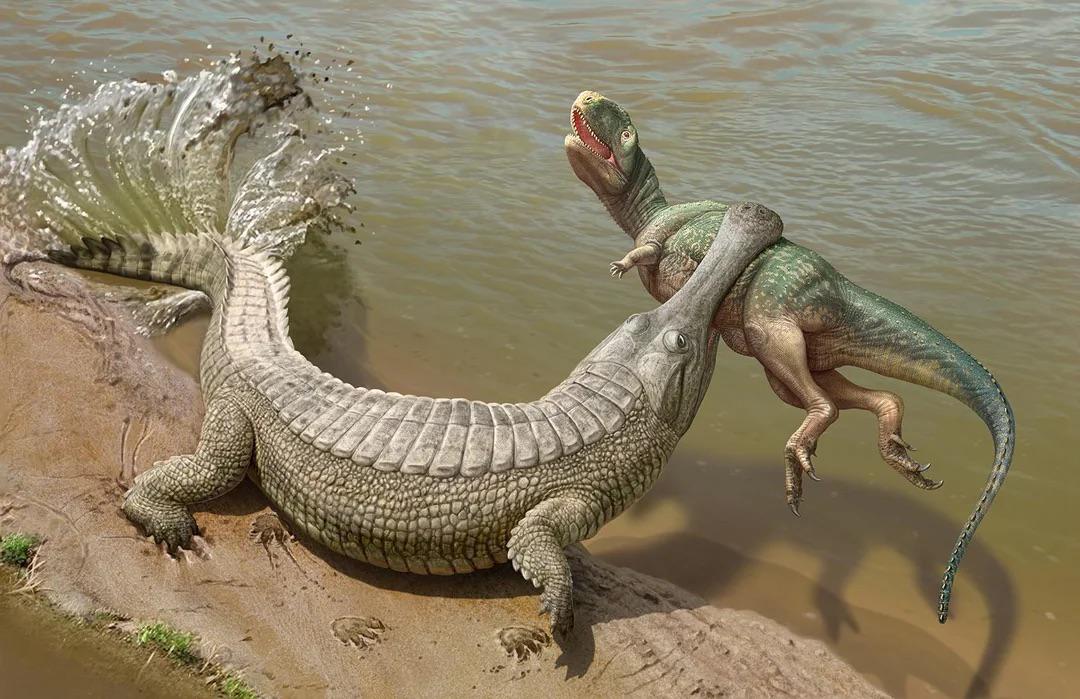
If modern crocodiles make you nervous, prehistoric croc relatives like Deinosuchus and Sarcosuchus will keep you away from rivers forever. Deinosuchus, which lived alongside dinosaurs in the Late Cretaceous, could reach lengths of around thirty to forty feet, far larger than any living crocodile. Fossils of dinosaur bones with matching bite marks strongly suggest it actively hunted large dinosaurs, dragging them into the water with terrifying ambush attacks. You are no longer at the top of the food chain just because you are taller than the local reptiles.
Sarcosuchus, often nicknamed “SuperCroc,” was similarly monstrous, growing to roughly forty feet and weighing many tons. It lived earlier, in the Cretaceous of what is now Africa and South America, lurking in rivers and wetlands. From your perspective, these animals are terrifying because they hunt at the one place almost every creature must visit: the water’s edge. You might think you are safe grazing, drinking, or even just washing your hands, and then the ground explodes as a multi-ton reptile launches out, grabs you, and rolls you under. Unlike T. rex, which you might see coming from a distance, these predators specialize in killing you in the one careless second you stop paying attention.
Giganotosaurus: The Sauropod Slayer
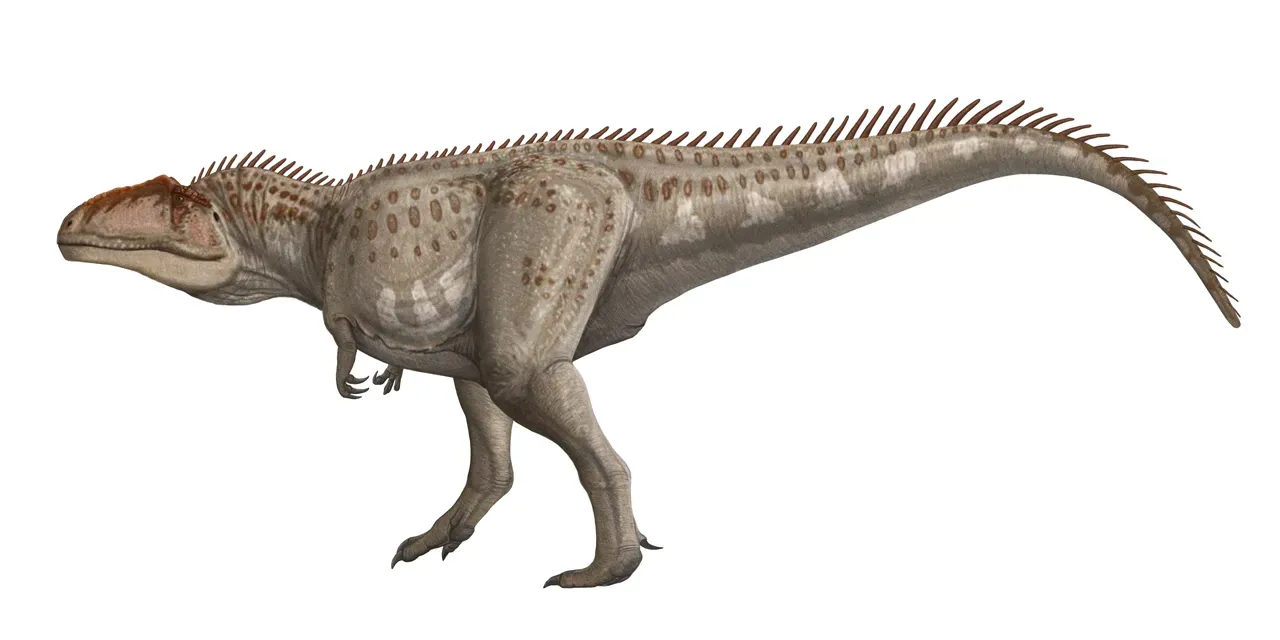
Giganotosaurus is what you get when nature asks, “What if we built something roughly T. rex-sized but tuned it for chasing down giants?” This massive theropod from South America reached lengths comparable to, and possibly slightly exceeding, T. rex, but with a longer, more lightly built skull and slicing teeth better adapted for taking chunks out of very large prey. Its environment included enormous sauropods, and its anatomy suggests it was built to harass and bleed such colossal plant-eaters rather than relying on a single bone-crushing bite.
For you, that means facing a predator that might not just attack alone. Some evidence and hypotheses suggest Giganotosaurus could have hunted in groups, at least opportunistically, to bring down gigantic herbivores. Picture several of these forty-foot predators circling a living mountain of flesh, rushing in to slash tendons and flanks, then peeling away before a tail or foot could connect. Now replace that sauropod with you and a handful of other humans. T. rex is horrifying one-on-one, but Giganotosaurus as part of a coordinated assault feels more like being surrounded by living chainsaws that have no intention of letting you escape.
Titanoboa: The Snake That Could Swallow You Whole
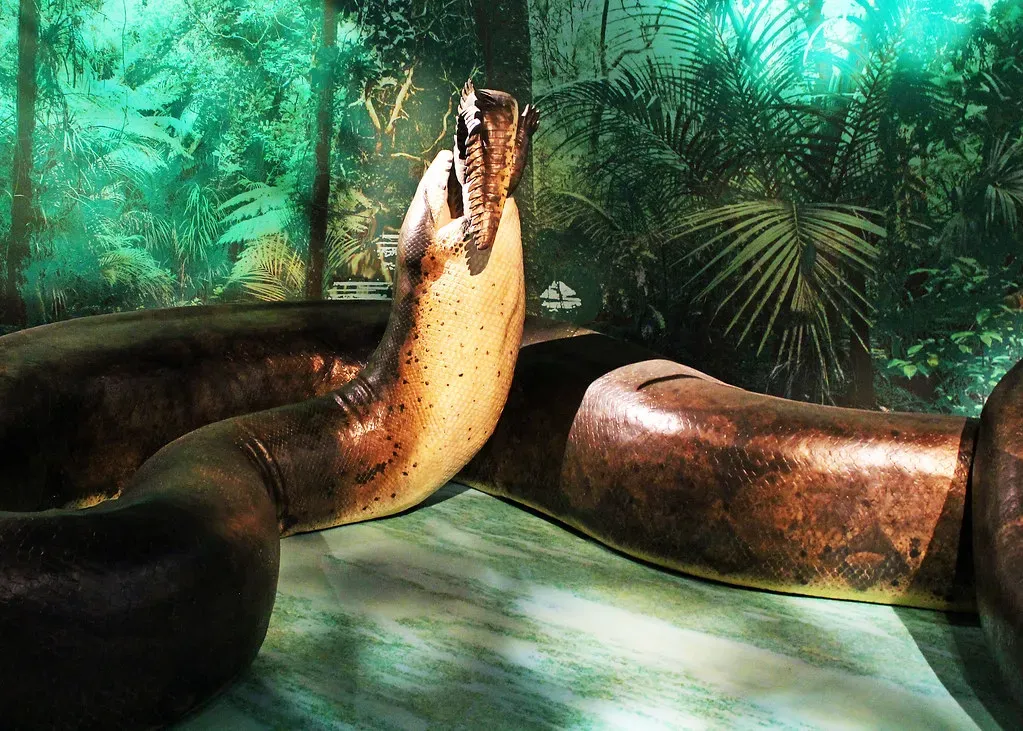
Modern giant snakes already creep you out? Titanoboa turns that discomfort into full-blown dread. After the extinction of the non-avian dinosaurs, this colossal snake slithered through the hot, swampy forests of what is now South America. Estimates suggest it could exceed forty feet in length and weigh well over a ton, making it thicker around than most people are tall. This was not just a big boa; it was a living, coiling siege weapon.
From your perspective on the ground, Titanoboa is nightmare fuel because it hunts in silence and up close. Instead of charging or roaring, it could lie partly submerged in warm, murky water, then strike with shocking speed, wrapping its massive coils around prey and crushing the life out of it through sheer pressure. Imagine walking through dense, humid jungle, hearing nothing but insects and birds, and then feeling something smooth and powerful wrap around your legs before you even register what is happening. T. rex gives you a chance to run; Titanoboa gives you a second or two to realize you are not getting out of those coils alive.
Quetzalcoatlus: The Sky Hunter with a Jet-Sized Wingspan
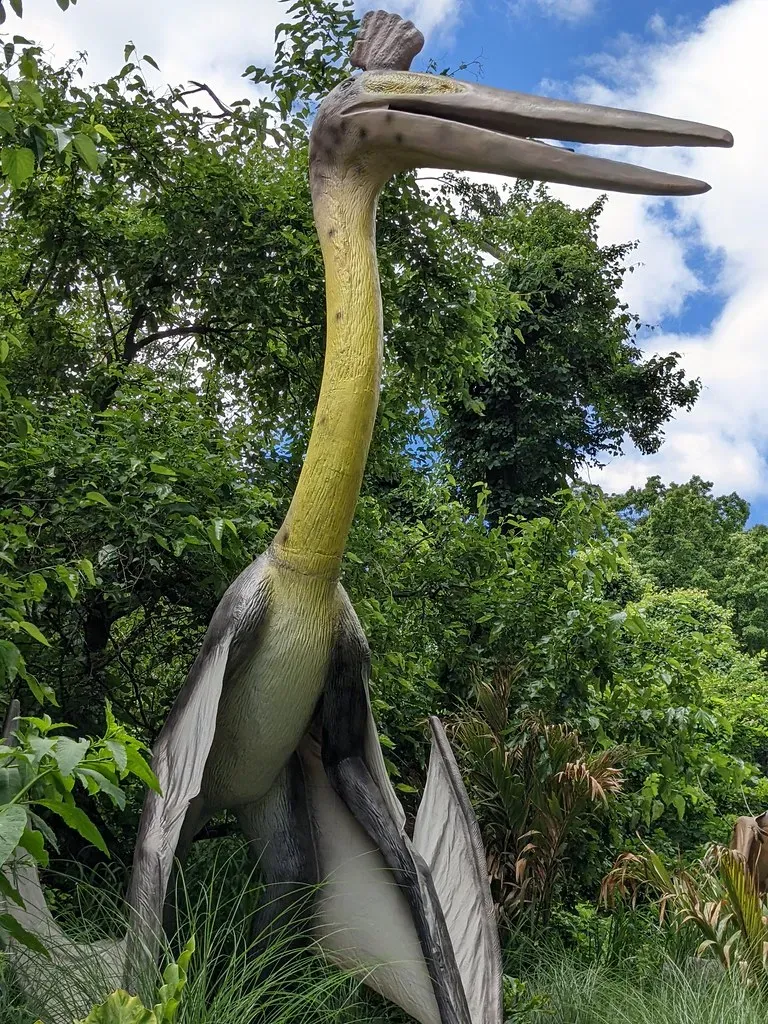
For most people, the sky feels like a safe escape zone – nothing up there is big enough to snatch you away. Quetzalcoatlus laughs at that assumption. This gigantic pterosaur is one of the largest flying animals ever known, with wingspans that may have reached over thirty feet, rivaling a small aircraft. On the ground, it would have stood as tall as a giraffe, with a long, toothless beak and a lightweight but strong skeleton adapted for both walking and flying.
What makes Quetzalcoatlus especially terrifying for you is the idea that it might have hunted large prey on land, not just fished from the air. Some paleontologists think it may have stalked across open plains like a nightmarish stork, jabbing down at smaller animals with its long beak, or even targeting juveniles of larger species. You can picture yourself crossing a wide, open floodplain, feeling exposed, and then spotting a distant shape that looks like a glider standing upright. By the time you realize it is alive and heading toward you, you are already in its strike zone. T. rex holds you to the ground; Quetzalcoatlus steals your illusion that danger cannot come from above.
Phorusrhacids: The Terror Birds That Chased You Down
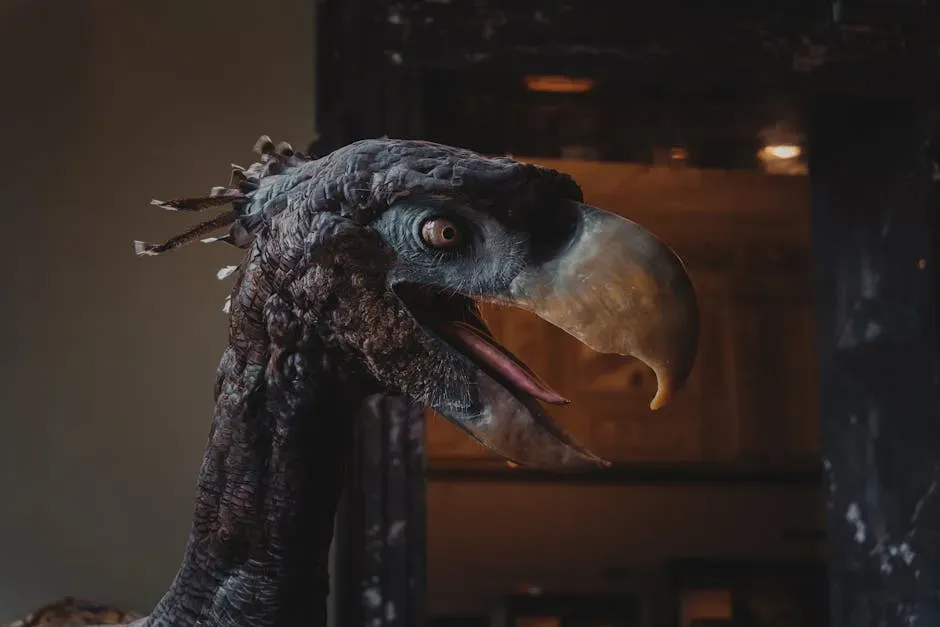
Now imagine losing dinosaurs, thinking the world has calmed down – and then getting introduced to the terror birds. Phorusrhacids were large, flightless predatory birds that roamed South America (and at times North America) after the dinosaurs were gone. Some species grew over eight feet tall, with massive hooked beaks, strong legs for running, and a build that looks eerily like an ostrich redesigned by a horror artist. These were not scavenging, shy animals; they were active hunters.
For you as a human-sized creature, terror birds are uniquely horrifying because they operate in your space: open ground, brush, and light forest. They do not need deep water, swamps, or massive bodies to be dangerous. Instead, they combine speed, sharp vision, and a bone-smashing beak that could strike downward like an axe. Imagine hiking across scrubland, hearing rapid footsteps behind you, and glancing back to see a sprinting, feathered predator closing the gap. T. rex might be too big to bother with you most of the time; a terror bird looks at you and sees exactly the right-sized meal.
Livyatan: The Whale That Hunted Other Whales
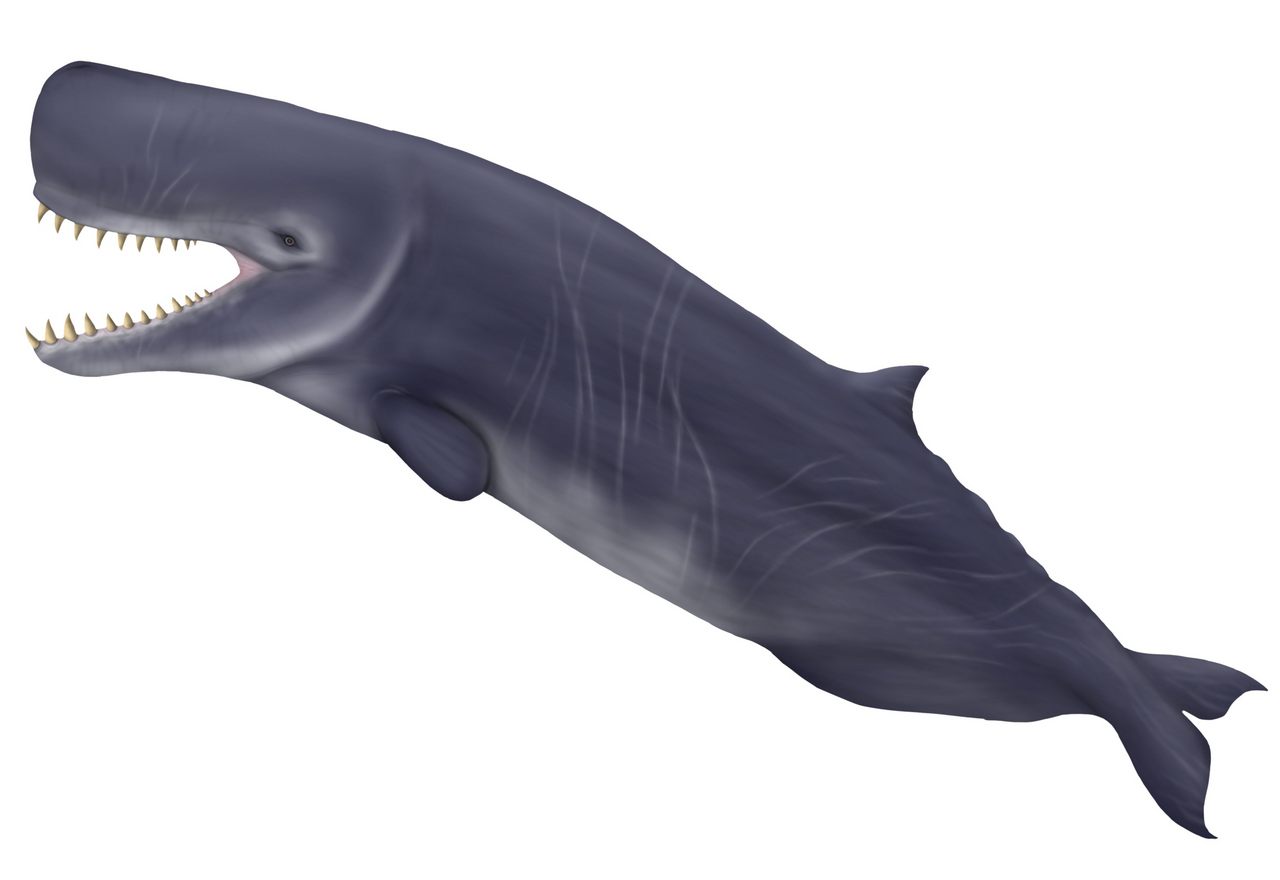
You might feel a little comforted thinking that prehistoric oceans were just shark territory, but then along comes Livyatan, a giant predatory sperm whale from the Miocene. Similar in size to modern large sperm whales, it carried an arsenal of huge, robust teeth in both jaws, some longer than a human forearm. Unlike modern sperm whales, which mostly eat squid, Livyatan appears to have been adapted for attacking large, fleshy prey – other whales included – using those massive teeth more like spears than delicate tools.
From your point of view bobbing at the surface, this is terrifying because it adds another top predator to an already hostile environment. Megalodon was prowling around the same ancient seas, and Livyatan may have competed with it for similar prey. You are suddenly in an ocean ruled by not one, but two apex killers the size of buses, each armed with different but equally horrifying weaponry. You do not just fear shadows circling below; you fear the possibility that something huge and intelligent is echo-locating you and closing in, not out of curiosity, but because you fit the category “meat.”
Why These Monsters Out-Terror T. Rex
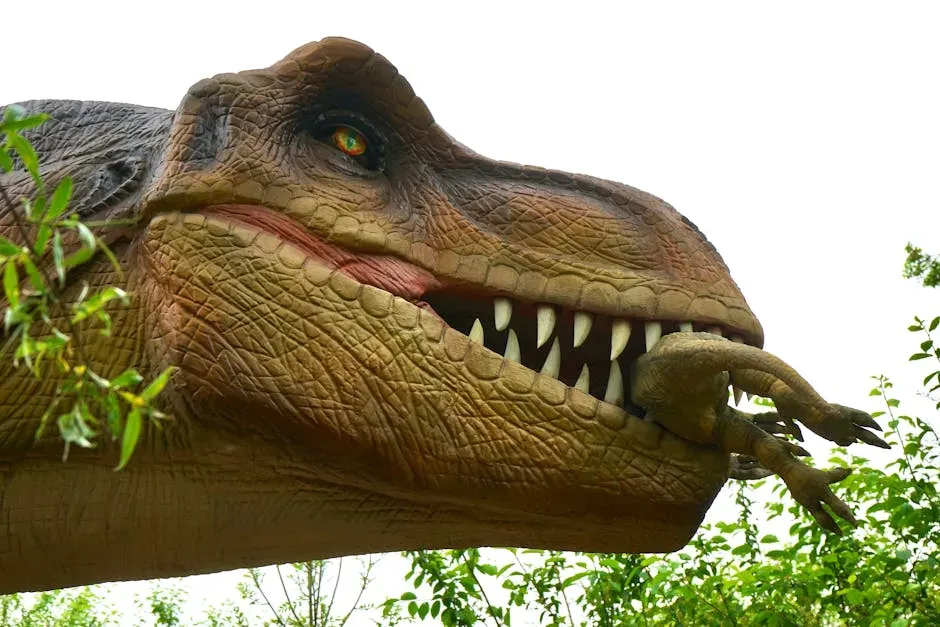
When you stack all of these creatures next to T. rex, you start to see why the classic movie villain is only one piece of a much darker puzzle. T. rex is genuinely terrifying – huge, powerful, and specialized for taking down large land animals – but it is also limited to one habitat and one style of attack. By contrast, you have predators that own the oceans, rule the skies, control the shorelines, and even slither silently through post-dinosaur forests. Each one adds a new way for nature to erase you: drowning, crushing, ambushing, dragging, or simply snatching you off your feet.
If you were somehow dropped into Earth’s deep past, your survival strategy would not just be “avoid T. rex.” You would need to fear quiet rivers where SuperCrocs wait, open seas where sharks and whales hunt each other, swamps where giant snakes glide unseen, and skies where enormous pterosaurs patrol like airborne spearmen. The deeper you look, the clearer it becomes that prehistoric Earth was not ruled by one king, but by a revolving cast of apex monsters, each perfectly tuned to its own brand of horror.
Conclusion: Would You Still Pick T. Rex as Your Worst Nightmare?
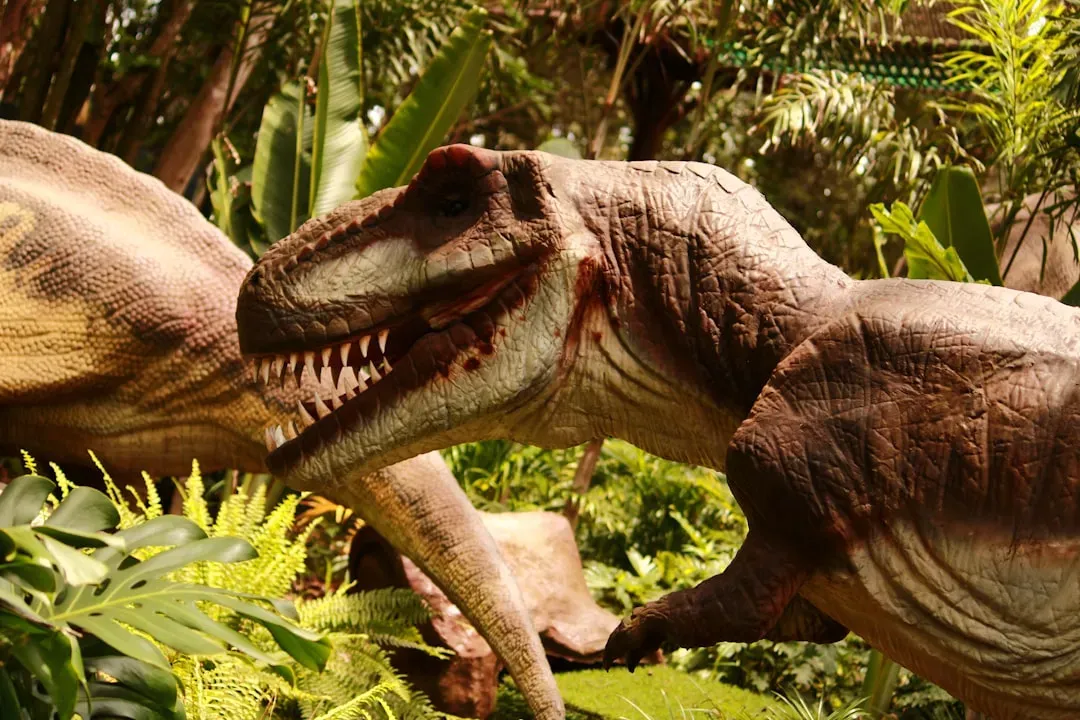
Once you meet this lineup, T. rex starts to feel almost familiar – still deadly, but no longer uniquely terrifying. You now have to imagine a world where you can be crushed by a snake, shredded by a fish, snatched by a flying reptile, or yanked into the depths by a croc the length of a bus. The real terror of prehistory is not any single animal; it is the realization that no matter where you go – land, water, or sky – something was already there, evolved over millions of years to make sure you never felt safe.
So if you had to choose, would you rather hear a distant T. rex roar across a floodplain… or float in silent water knowing Megalodon, Mosasaurus, or Livyatan might be circling somewhere below? Did you expect that the scariest part of prehistory would be how completely surrounded you are by things that can eat you?