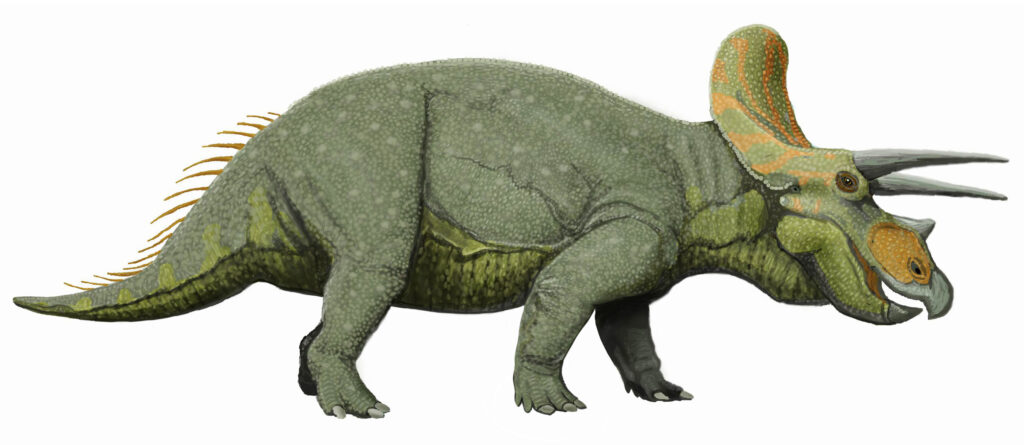
Most people picture Triceratops as a simple, armored plant-eater that spent its days grazing and occasionally head-butting a T. rex. That picture is almost entirely wrong, and it’s not even close.
New CT scans, bone histology studies, and mass fossil beds have quietly rewritten nearly everything paleontologists thought they knew about this three-horned icon – from what its “weapons” actually did, to whether it lived alone, to whether an entirely different dinosaur was secretly just an old Triceratops the whole time. Here’s what the fossil evidence actually says, starting with the one body part everyone assumed they already understood.
#12 – The Frill Was Never a Shield, and Scientists Finally Admit It
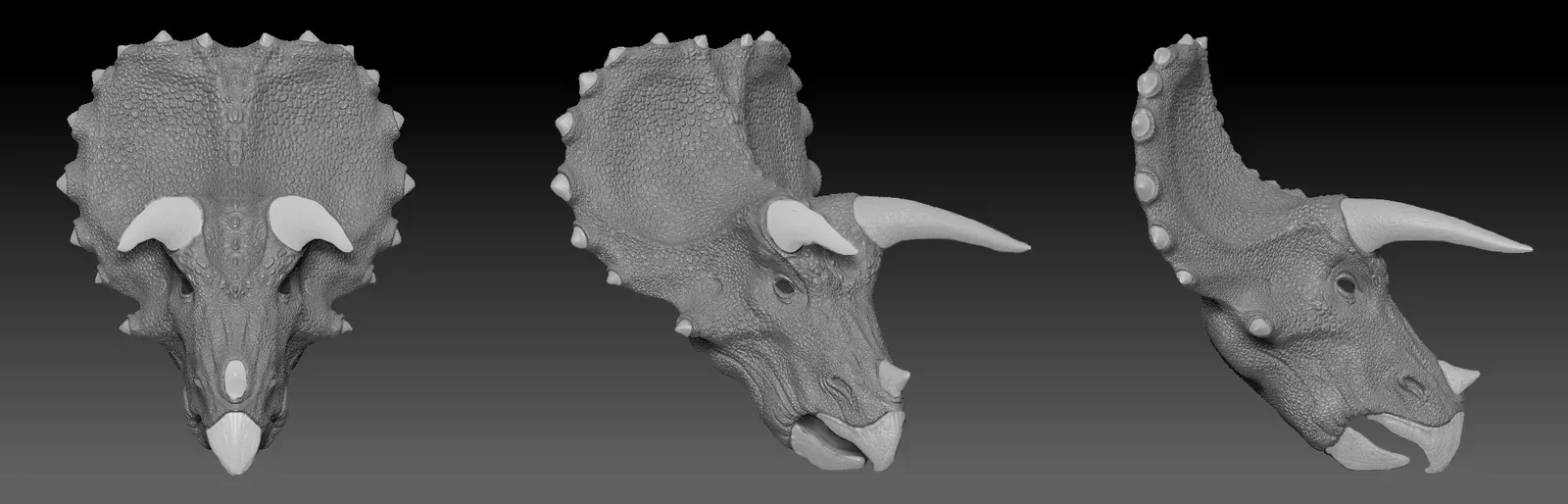
For decades, museum dioramas sold us the same image: a Triceratops raising its bony frill like a knight’s shield to block a Tyrannosaurus bite. That theory has been quietly discredited. Scientists continue to debate the primary purpose of this dinosaur’s frill, and early theories that it may have protected Triceratops from predators or acted as a radiator to help regulate body temperature have been discredited.
So what was it actually for? Most evidence now suggests the frill functioned to disperse body heat or aided species recognition, and was most likely related to courtship rituals and reproductive competition rather than active defense. Researchers now describe it as a case of “functional multiplicity” – rather than serving a single purpose, the frill likely evolved to fulfill multiple functions simultaneously, a concept that acknowledges natural selection often favors structures serving several adaptive roles at once. And that’s just the frill – wait until you see what the nose was hiding.
#11 – That Giant Nose Was Secretly an Air Conditioner for the Brain
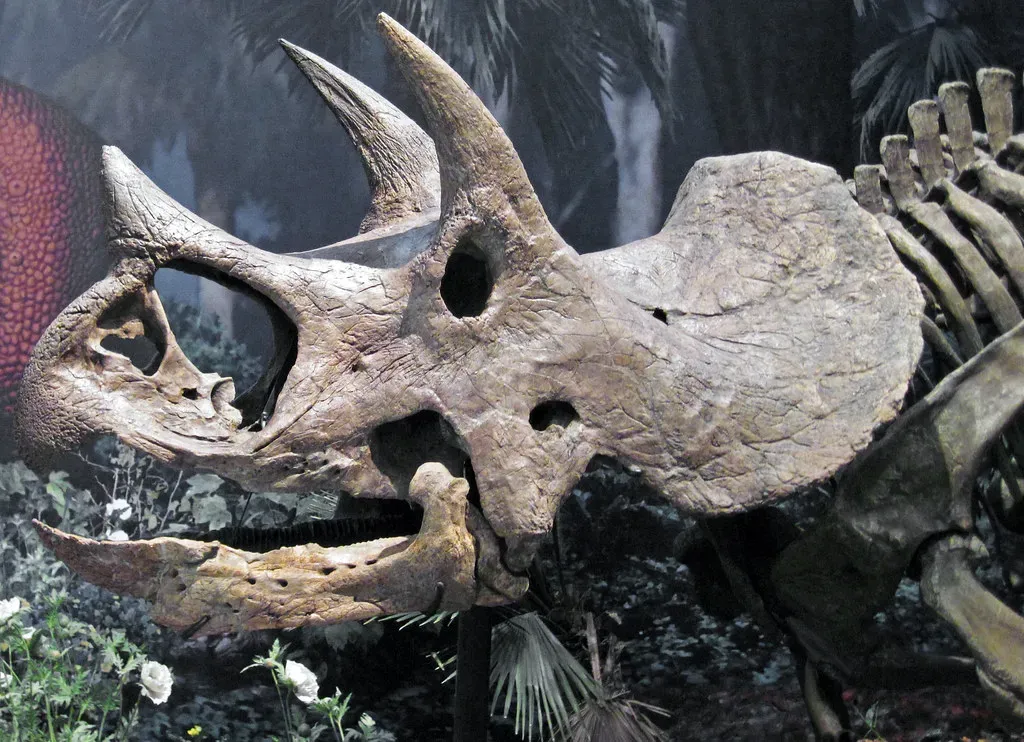
Everyone assumes the horns were the star of the Triceratops face. They weren’t even the most engineered part. Researchers from the University of Tokyo discovered that Triceratops possessed a unique network of nerves and blood vessels in its huge nose that doubled as a heavy-duty air conditioner. For over a century, that snout was just assumed to be for smelling.
The real engineering problem was heat. While the dinosaur is famous for its three-horned combat stance, the internal anatomy of its skull had long remained a black box, and the sheer size of its head presented a massive thermal engineering problem – how do you keep a brain cool inside a giant, bony helmet? Instead of being just a supersized nose for smelling, it likely housed intricate networks of nerves and blood vessels – and even special structures that helped regulate heat and moisture. The nose wasn’t the only overlooked body part working overtime.
#10 – Its Teeth Were More Advanced Than Almost Any Reptile Alive Today
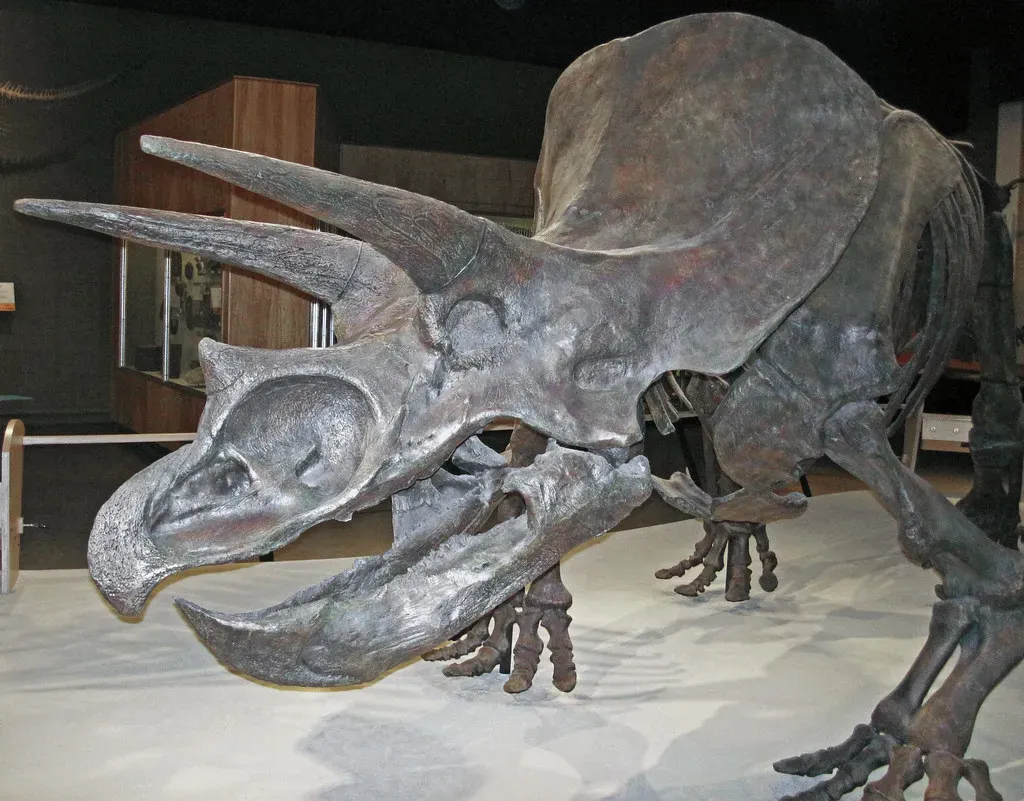
Triceratops teeth get almost no attention next to those horns. They should. A multiuniversity team of engineers and paleontologists concluded that Triceratops developed teeth that could finely slice through dense material, giving them a richer and more varied diet than modern-day reptiles. This wasn’t a hunch – it took a materials scientist to prove it.
The breakthrough came from an unlikely partnership. Professor Gregory Erickson had suspected dinosaur teeth had unique properties for years, but the technology to test that didn’t exist until engineer Brandon Krick, an assistant professor specializing in tribology, entered the picture. Tribology is the science of how surfaces of materials interact while in motion, and applying it to fossilized enamel revealed a cutting mechanism far more sophisticated than a simple grinding jaw.
Worth Knowing
- Tribology studies how moving surfaces interact – the same science used to test engine parts and machinery.
- Triceratops enamel contained multiple tissue layers, creating a self-sharpening edge with every bite.
- That layered structure let the teeth shear through tough, fibrous plants instead of just crushing them.
- Most living reptiles rely on simpler, single-function teeth by comparison.
And the teeth were just the beginning of a total personality overhaul for this dinosaur.
#9 – It Didn’t Live Alone. It Traveled in Massive Herds
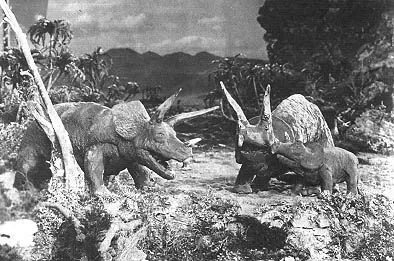
Textbooks used to insist Triceratops was a loner. The fossil record says otherwise, and the reversal happened fast. Triceratops fossils had typically been discovered as solitary individuals, but a 2009 article in the Journal of Vertebrate Paleontology reported the first Triceratops “bonebed,” containing three juvenile remains together and suggesting gregarious, possibly herding behavior.
Then came a discovery that changed everything. In 2013, researchers searching for Tyrannosaurus in Wyoming stumbled onto a group of Triceratops that had lived and died together, and after a decade of excavations had uncovered over 1,200 bones belonging to at least five individuals. Analysis of the teeth found at the site indicates they were migratory and traveled together across long distances. Some researchers now argue herds numbered in the hundreds or even thousands of individuals – a claim still hotly disputed among paleontologists. The herd discovery was wild, but it’s nothing next to the identity crisis waiting in #8.
#8 – Torosaurus Might Secretly Just Be an Old Triceratops
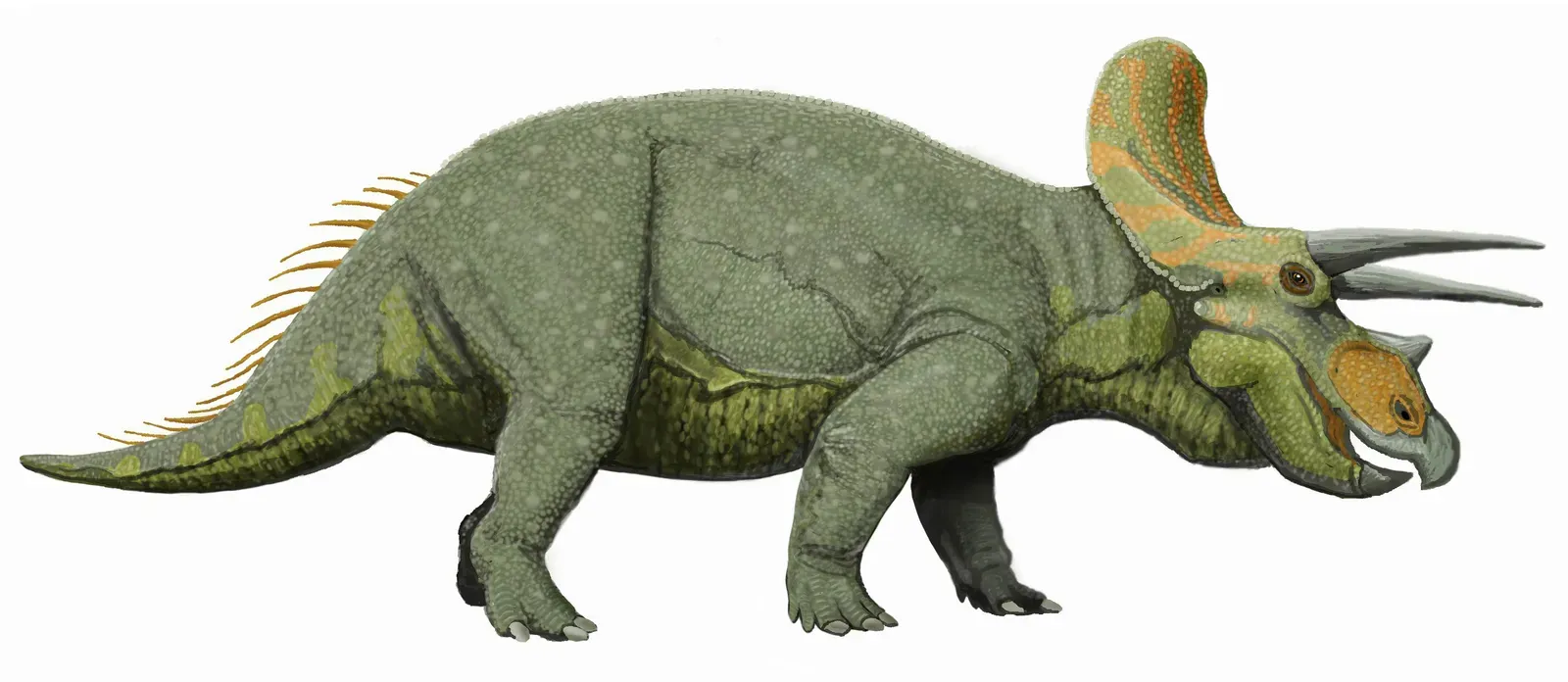
Here’s the theory that almost erased a beloved dinosaur from existence. In 2010, two paleontologists argued Torosaurus never actually existed as its own species. The argument was elegant: Torosaurus, the related ceratopsian with a longer frill and two large oval holes through it, was not a separate dinosaur at all – it was just what Triceratops looked like when it was very old.
The evidence behind it was surprisingly compelling. Triceratops bones showed signs of being metaplastic, capable of significant remodelling over the animal’s lifetime; horn orientation changed from backward-pointing in juveniles to forward-pointing in adults; and thin areas on Triceratops frills in roughly 50% of subadult skulls corresponded in position to the large holes in Torosaurus frills. Critics fired back hard, and a later ontogenetic staging analysis showed that skulls assigned to Torosaurus are not consistently more mature than those assigned to Triceratops, with both spanning a range of growth stages. The debate is still unresolved today. That naming controversy is bizarre, but the next fact is downright brutal.
#7 – It Actually Survived Tyrannosaurus Attacks – More Than Once
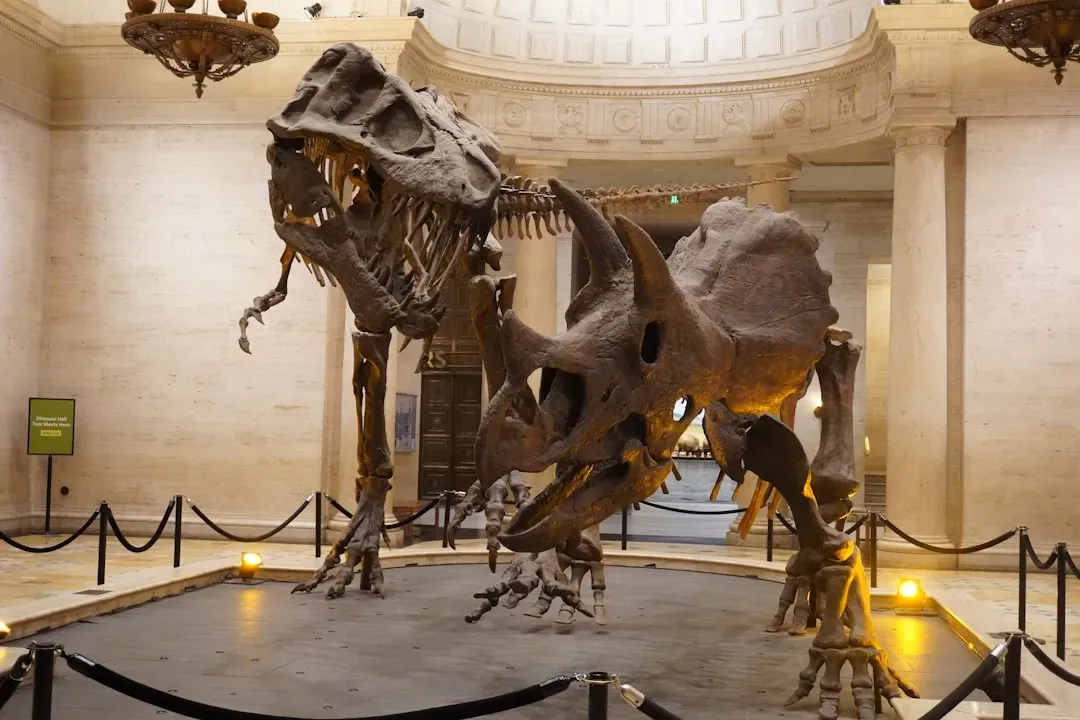
Movies love showing Triceratops losing every fight to T. rex. The fossils tell a messier, more heroic story. A partial Triceratops fossil collected in 1997 has a horn that was bitten off, with bite marks matching Tyrannosaurus – and the horn healed after being bitten, indicating that at least some Triceratops survived these encounters.
Other specimens show just how brutal these encounters could get. Healed wounds on the fossil skull of a Triceratops, matching the size and shape of Tyrannosaurus teeth, are a strong sign that the tooth scrapes resulted from attempted predation, not scavenging. Not every encounter ended well, though – one pelvis examined by researchers was riddled with roughly 80 bite marks attributed to Tyrannosaurus rex, with about 17% of the iliac crest removed by repetitive, localized biting.
Fast Facts
- A 1997 fossil shows a Triceratops horn that was bitten off and later healed.
- Separate skull wounds match the exact size and shape of Tyrannosaurus teeth.
- One examined pelvis carried roughly 80 individual bite marks.
- About 17% of that pelvis’s iliac crest had been chewed away by repeated biting.
Surviving T. rex is impressive, but the horns had their own secret transformation.
#6 – Its Horns Physically Changed Direction as It Aged
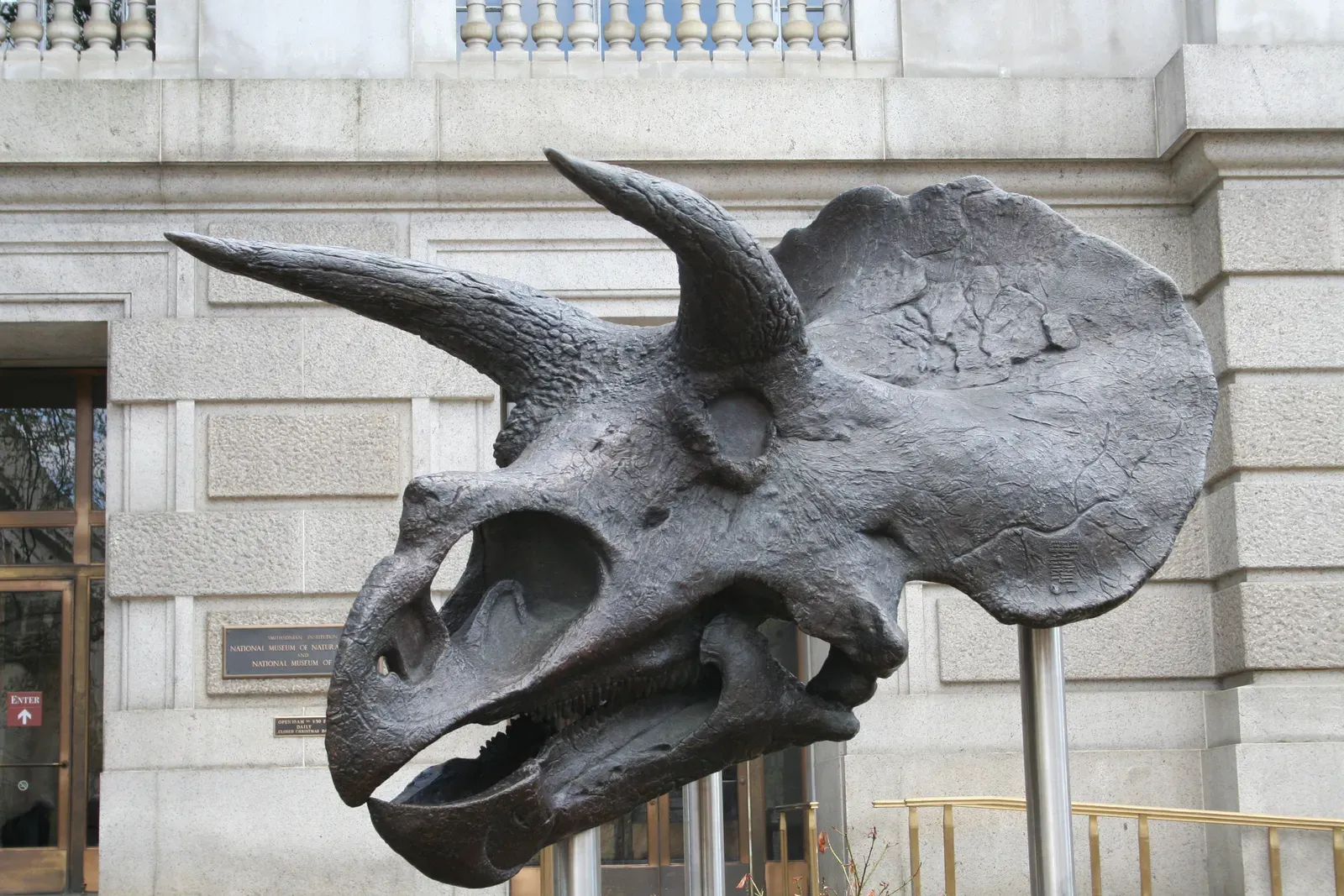
A baby Triceratops and an adult Triceratops didn’t just look different in size. Their horns pointed in opposite directions. Horn orientation changed from backward-pointing in juveniles to forward-pointing in adults, a transformation dramatic enough that early collectors sometimes mistook juveniles and adults for entirely different species.
This wasn’t a minor cosmetic shift – it reflects a skull that kept remodeling itself throughout life. Fossil studies reveal that the horns of Triceratops changed as the dinosaur aged, a discovery that forced scientists to re-examine dozens of specimens once classified as unique species. Several of those “extra species” quietly disappeared once researchers realized they were simply looking at Triceratops at different points in its life cycle. So the horns changed shape – but did they even work the way we assumed?
#5 – Those Horns May Have Been Built for Showing Off, Not Fighting
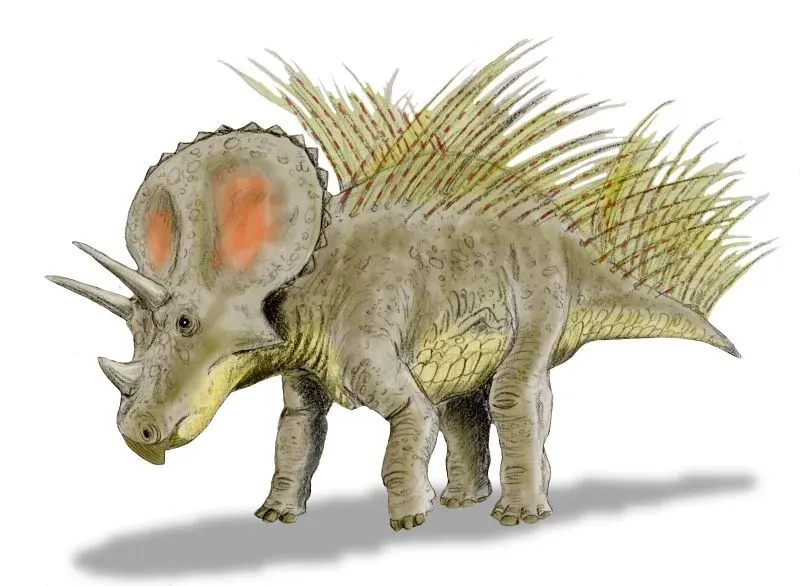
Forget the gladiator imagery. The horns’ main job might have been looking impressive, not winning duels. Research currently favours courtship display and mate selection as the primary function of the horns and frill, with defensive use against predators possible but not established as the main driver of these structures.
That doesn’t mean combat never happened – it just wasn’t the main event. A 2009 study revealed that Triceratops routinely used its horns in combat with rivals, much as deer and moose lock horns in violent competition for mates, which lines up with display-driven evolution seen across the animal kingdom. Some paleontologists go further, suggesting unusually long horn cores on some specimens indicate colorful crests used like peacock feathers as a sign of health – a controversial idea that current fossil pigment evidence still can’t fully confirm. Long before scientists figured out what those horns were for, they didn’t even know what animal they belonged to.
#4 – Scientists Originally Thought Its Horns Belonged to a Giant Bison
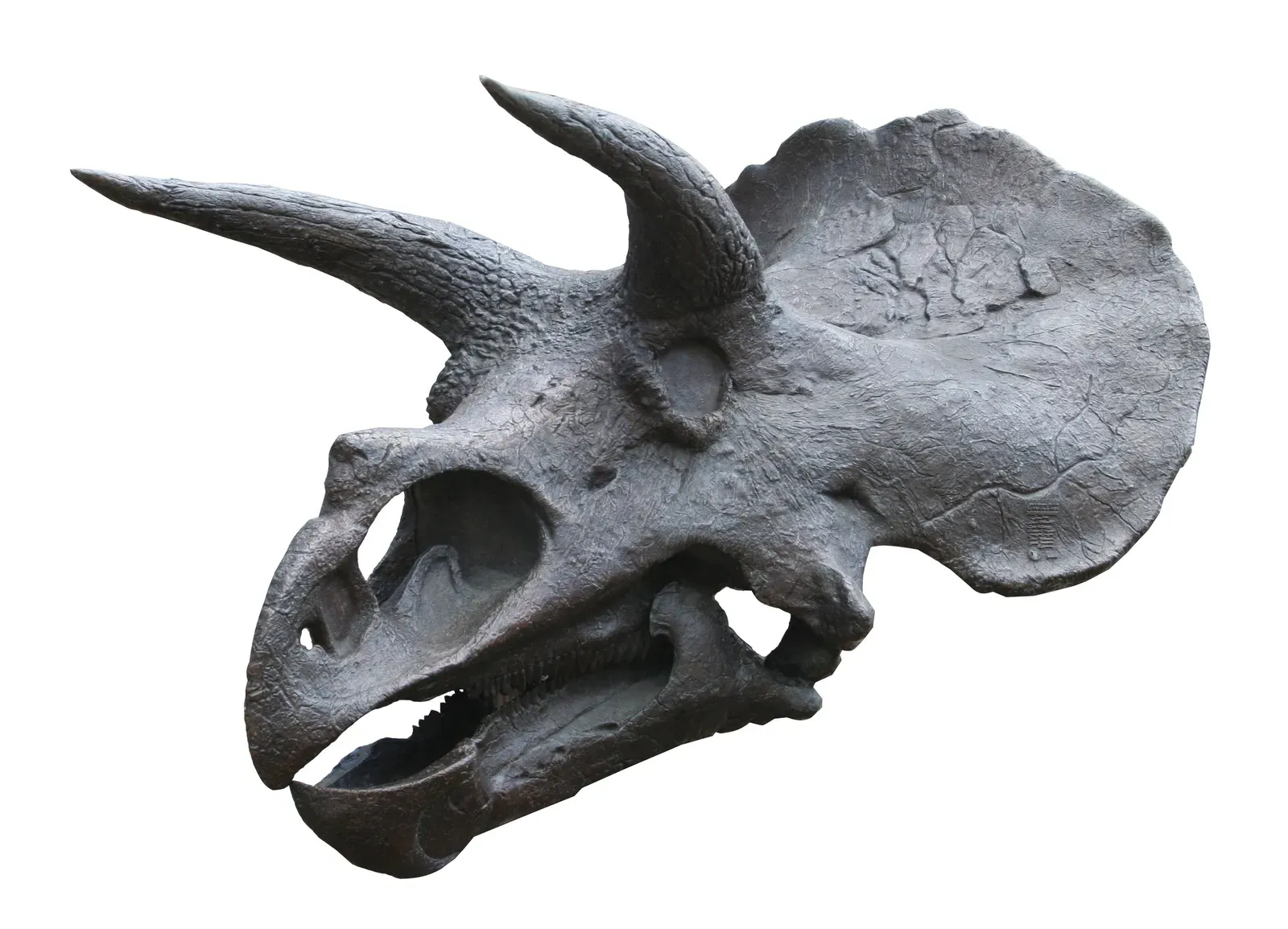
Before anyone knew what Triceratops was, they thought they’d found a monster cow. This mix-up is one of paleontology’s most embarrassing early moments. When paleontologists first discovered Triceratops fossils in the late 1800s, they thought the bones belonged to a giant bison, because scientists were still learning about dinosaurs and the idea of a horned reptile was surprising.
The correction only came after more digging, literally. It was only after more fossils were uncovered that experts realized this was an entirely new species, a discovery that helped expand understanding of dinosaurs and showed that horned dinosaurs, called ceratopsids, once thrived in North America. The original bison label stuck around long enough to leave a permanent mark on the scientific record – the species was briefly filed away under a name referencing bison horns before anyone connected it to dinosaurs at all. That mix-up looks even funnier once you see how enormous the real skull actually was.
#3 – Its Skull Was One of the Largest Ever Grown by a Land Animal
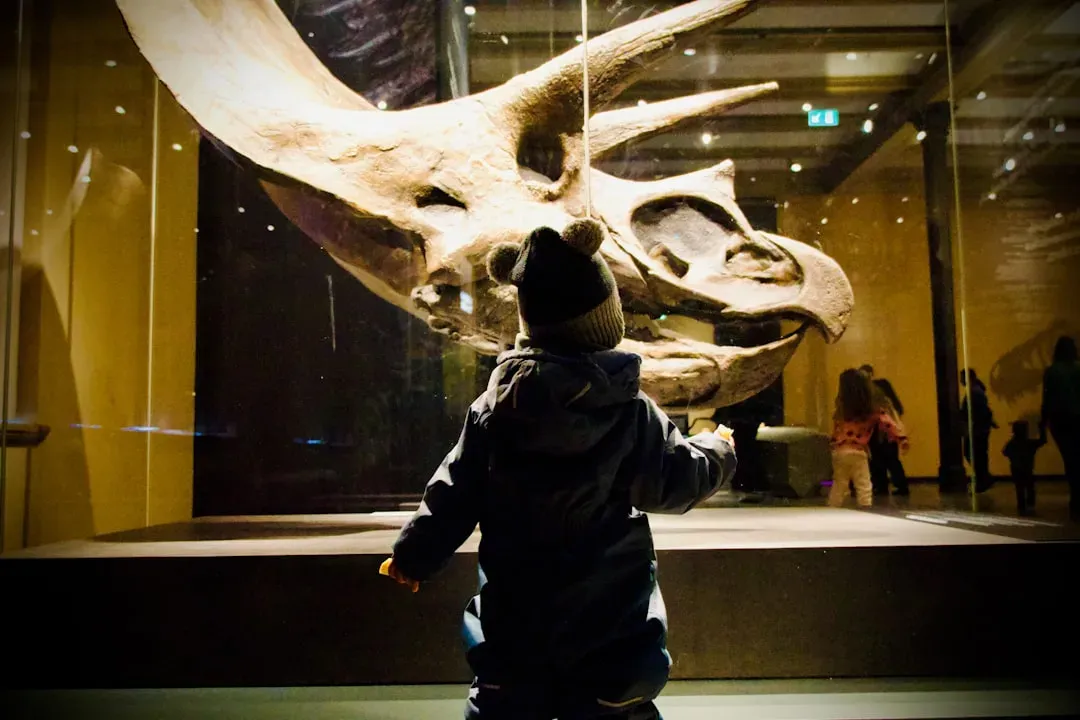
Most people underestimate just how absurd a Triceratops skull actually was. It wasn’t just big – it was proportionally enormous. Triceratops could grow up to 30 feet long and weigh between six and twelve tons, with a head making up nearly one-third of its body length – the frill and three horns together gave it one of the largest skulls of any land animal ever discovered.
Some individual specimens push that record even further. Triceratops’ enormous head might have been all it took to send other dinosaurs running – some recovered skulls measure up to 10 feet long. That’s a head roughly the size of a small car, attached to a body that had to support it while walking, feeding, and fighting off predators. Engineers studying the skull’s internal structure are still trying to fully explain how the neck muscles managed the load.
Quick Compare
- Full body length: up to 30 feet – in the same range as a school bus.
- Skull length: up to 10 feet – close to the length of a small car.
- Head-to-body ratio: the skull made up nearly a third of the animal’s total length.
- Body weight: six to twelve tons, putting it in the same weight class as a couple of adult elephants.
That skull size makes a lot more sense once you see where hundreds of them ended up buried together.
#2 – A Single Wyoming Dig Uncovered a Mass Grave No One Expected
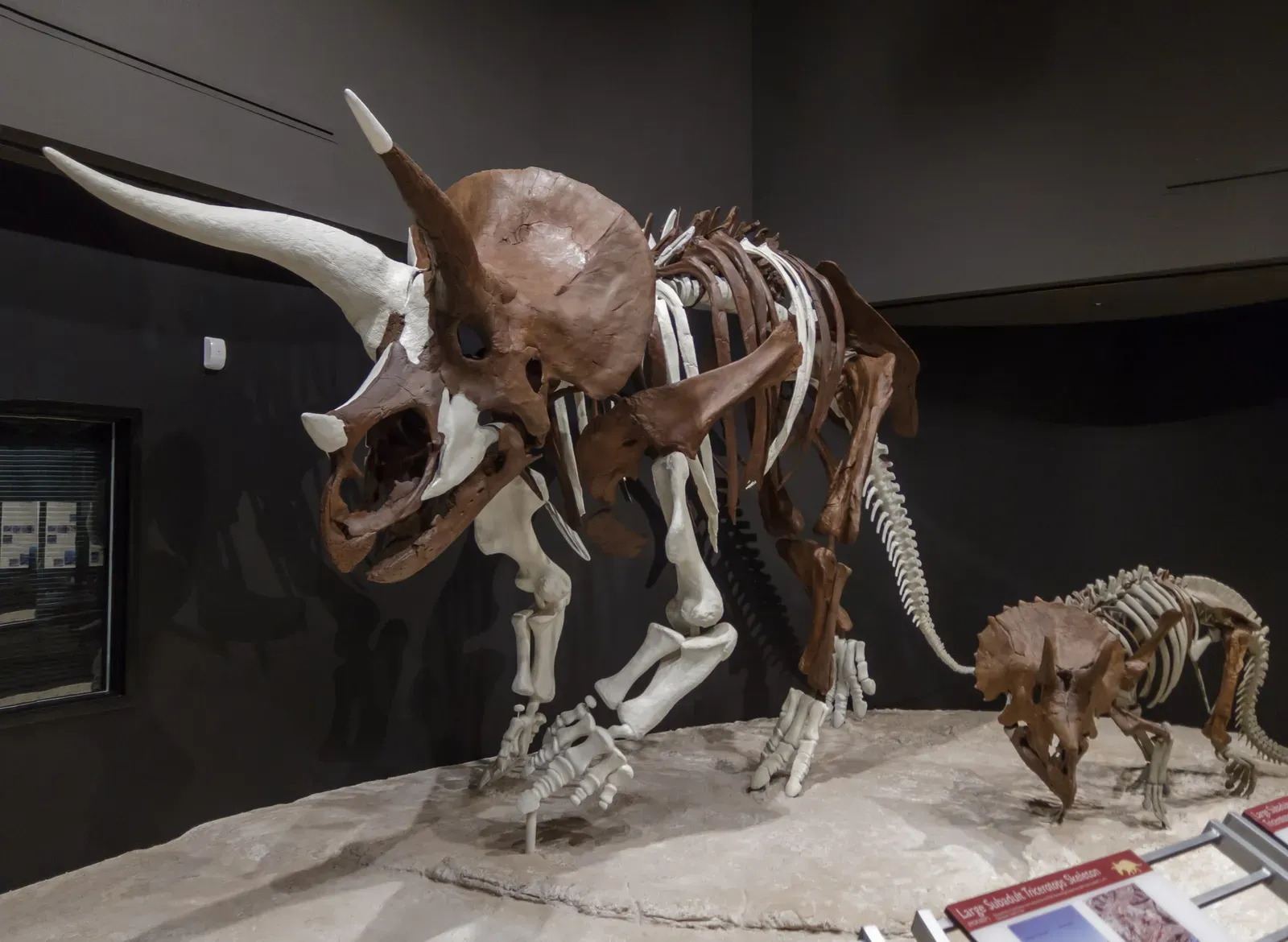
This discovery flipped the “solitary dinosaur” myth on its head almost overnight. Nobody was even looking for Triceratops when they found it. In 2013, researchers searching for Tyrannosaurus in Wyoming stumbled on something unexpected – a group of Triceratops that had lived and died together.
What they eventually excavated stunned the paleontology community. After a decade of excavations, they had uncovered over 1,200 bones belonging to at least five individuals, indicating the individuals died together as a group, potentially in a swamp. Tooth analysis added another twist: these weren’t just neighbors who happened to die nearby – analysis of the teeth found at the site indicates they were migratory and traveled together across long distances. That single Wyoming site did more to overturn the “lonely dinosaur” myth than a century of prior digs combined. As wild as that mass grave was, nothing tops the timing of when Triceratops actually went extinct.
#1 – Triceratops Was Almost Literally the Last Dinosaur Standing
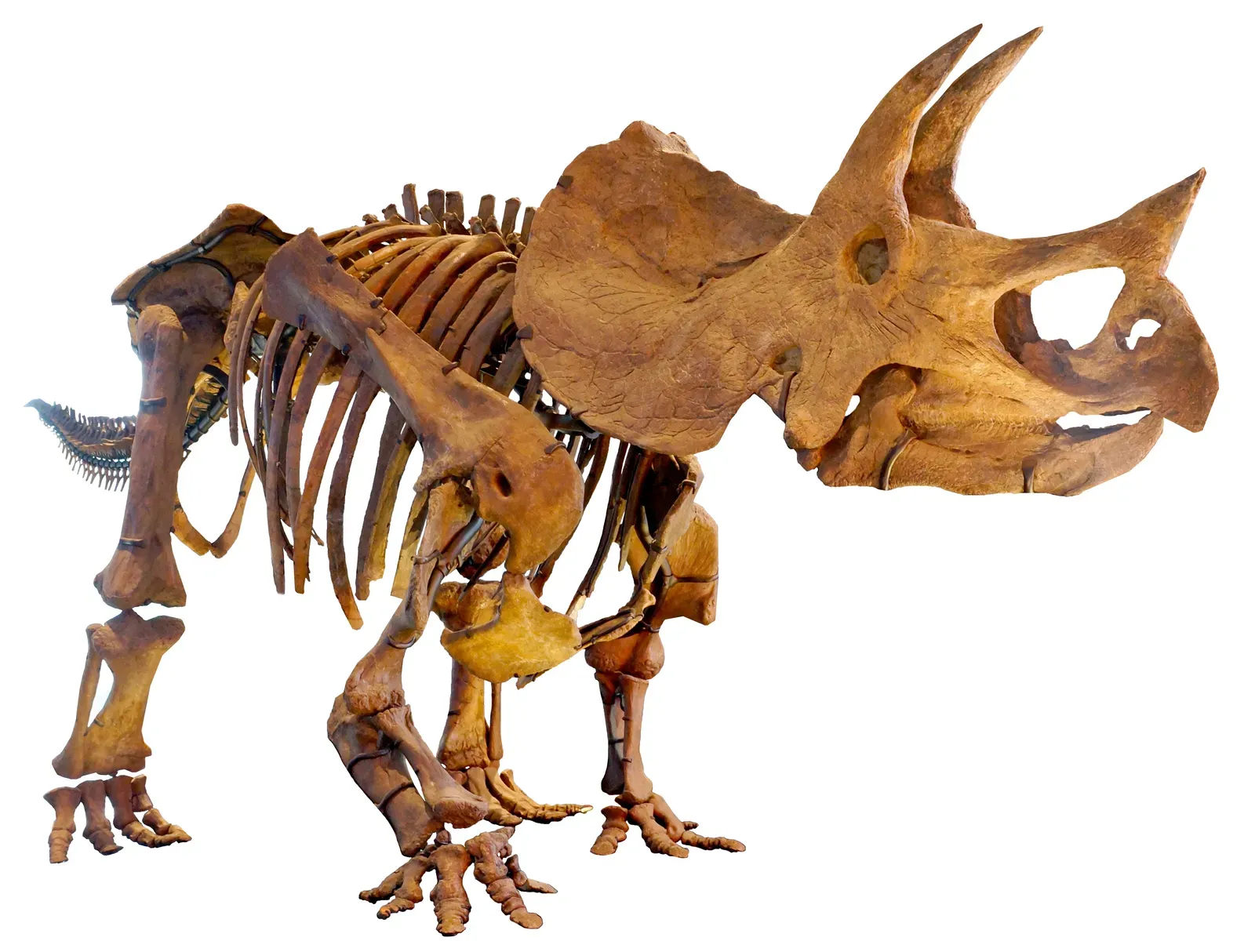
Of everything scientists have quietly admitted, this is the one that hits hardest. Triceratops didn’t just live millions of years ago – it lived right up until the very end. Triceratops lived about 68 to 66 million years ago, just before the mass extinction that ended the reign of the dinosaurs, making it one of the last known dinosaurs to roam Earth.
That timing makes every Triceratops fossil scientifically priceless. Because it lived so close to the extinction event, Triceratops plays an important role in scientific research – its fossils help scientists understand what life was like right before the asteroid impact that changed the planet forever. Somewhere out there, a Triceratops herd was migrating across ancient floodplains in the final days before the sky changed forever, completely unaware it was witnessing the last chapter of the entire dinosaur age.
At a Glance
- Lived: roughly 68 to 66 million years ago, at the very end of the Late Cretaceous.
- Extinction event: the Cretaceous-Paleogene boundary, triggered by an asteroid impact.
- Fossil significance: one of the last large dinosaurs before that boundary.
- Scientific role: helps researchers reconstruct ecosystems right before the impact.
Few animals in the fossil record carry that kind of narrative weight.
The Bottom Line
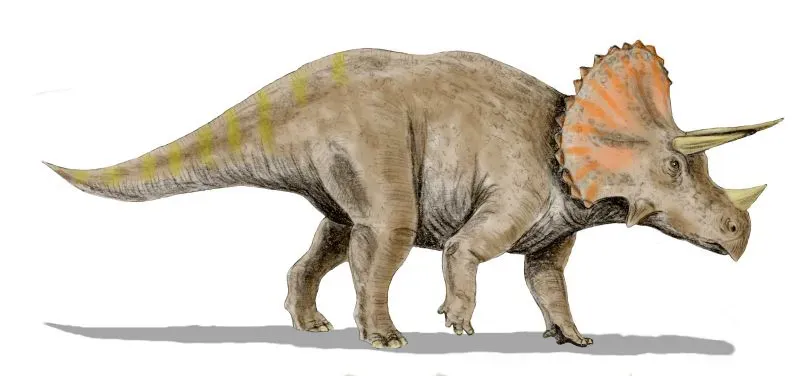
The real Triceratops story is messier, smarter, and far more social than the museum diorama version most of us grew up with. Its frill was likely a display piece, not a shield, its nose doubled as a cooling system, and it may have traveled in herds numbering in the hundreds.
Even its identity is still contested – Torosaurus might just be Triceratops grown up. Honestly, the “boring plant-eater” reputation never made sense once you look at the evidence; this was one of the most anatomically over-engineered animals to ever walk the planet. Which of these facts surprised you the most? Drop it in the comments.