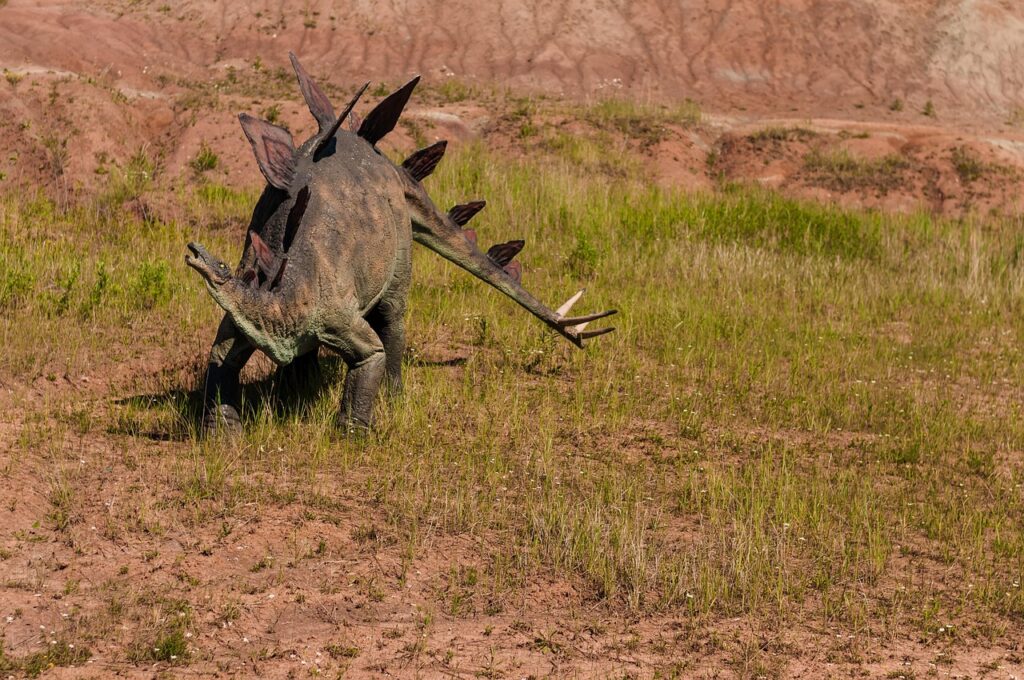
Picture the dumbest, slowest dinosaur you can think of. Chances are you just pictured a Stegosaurus – a spiky green lawnmower with a brain the size of a walnut, too dim-witted to do anything but chew ferns until something bigger came along and ate it. Almost everything in that mental picture is wrong, and paleontologists have known it for years.
For nearly 150 years, this dinosaur has been misnamed, miscounted, assembled from the wrong bones, and blamed for its own extinction. Some of those corrections only became official within the last decade. Here are the 13 “facts” about Stegosaurus that science has quietly walked back – starting with the name itself.
#13 – The “Roof Lizard” Name Was Based on a Total Misread
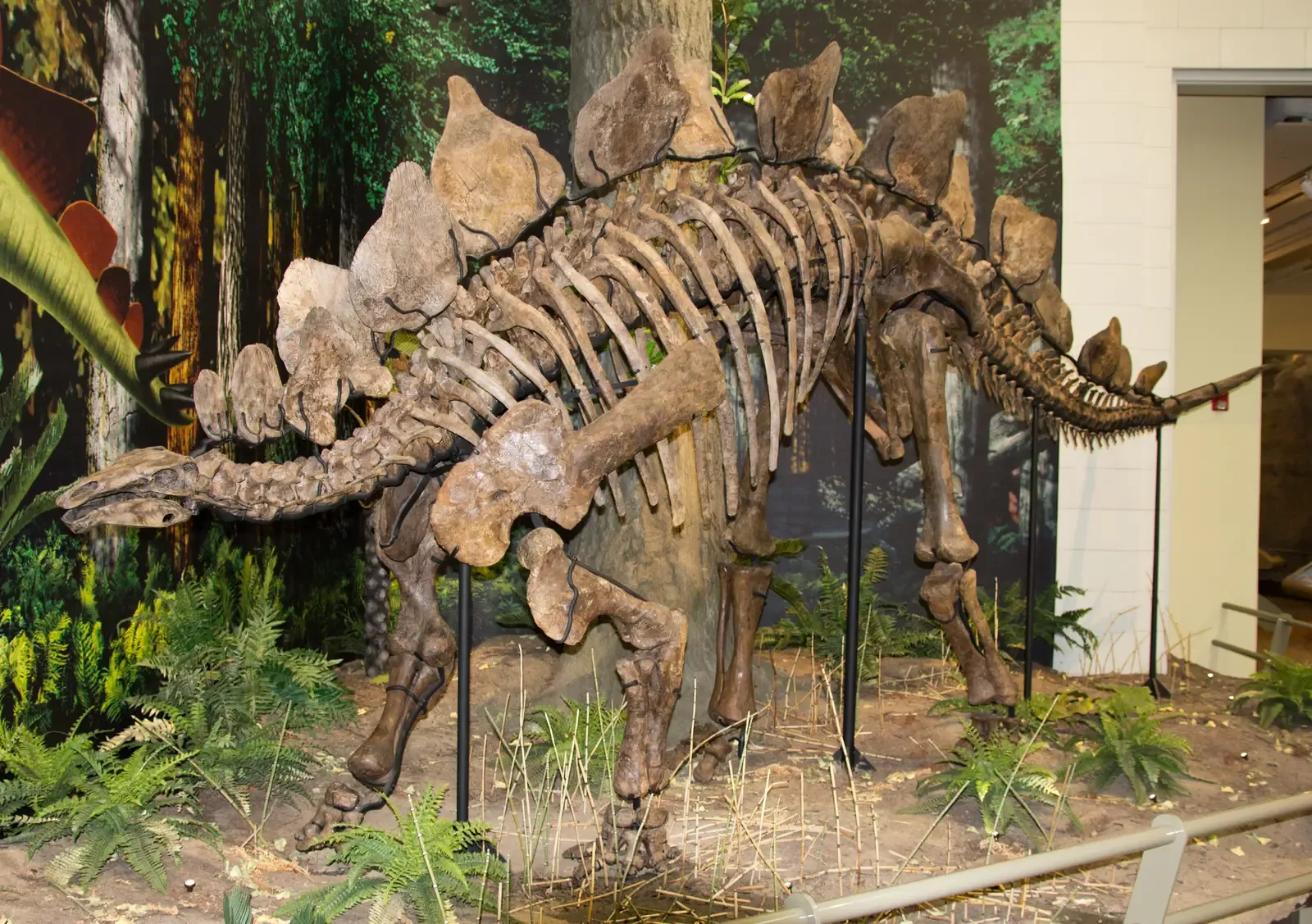
The single most famous name in dinosaur history was built on a mistake nobody caught for years. When Othniel Charles Marsh first described this animal in 1877, he thought it looked like a giant turtle and imagined the triangular plates as pieces of a shell forming a bony “roof” over the animal’s back. That’s where the name Stegosaurus – literally “roof lizard” – comes from.
The plates were never a shell, and they definitely weren’t lying flat. Marsh pictured them arranged horizontally like enormous shingles, but we now know these strange bones stood straight up along the spine. What they were actually for is still debated, but the name itself has been wrong since the day it was published, and the genus has carried that inaccurate label for almost 150 years without anyone bothering to fix it. That’s not a small footnote – it’s like naming an animal after a body part it never had and just leaving it that way forever. Even stranger, the fossil that officially defines the entire genus turned out to be almost useless.
#12 – The Original “Type” Fossil Turned Out to Be Basically Worthless
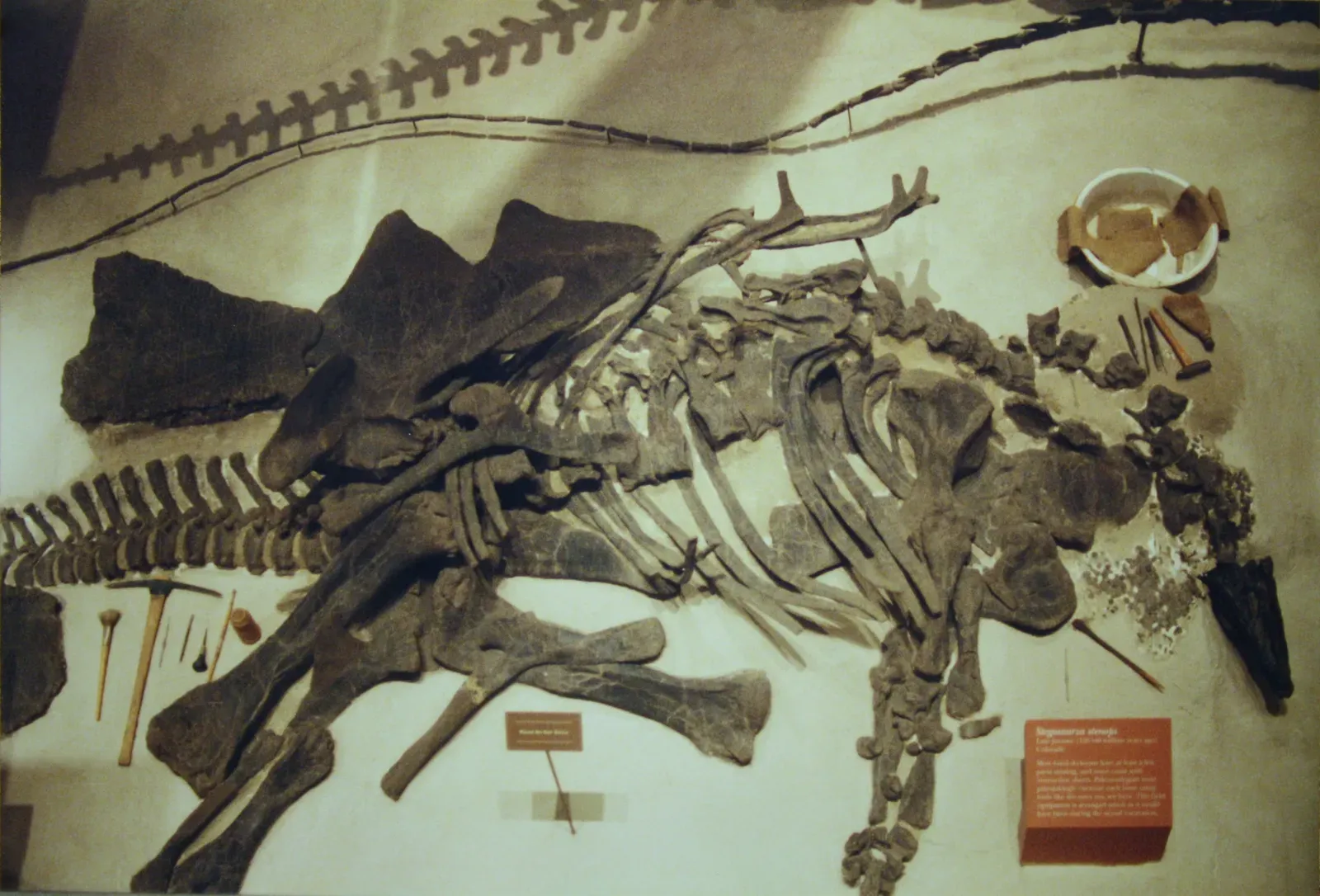
For over a century, the scientific identity of Stegosaurus legally rested on a pile of bones that couldn’t actually do the job. Later preparation and analysis revealed that the original type specimen, Stegosaurus armatus, was too fragmentary and ambiguous to reliably anchor an entire genus – a real problem for a dinosaur this famous.
It gets messier than a simple filing error. Marsh had also mistakenly lumped in fossils that didn’t even belong to Stegosaurus, including teeth from the sauropod Diplodocus and a tibia from Allosaurus. In 2013, the International Code of Zoological Nomenclature quietly swapped the official type species to the far better-known Stegosaurus stenops. Most casual dinosaur fans have no idea the genus underwent a legal identity change this recently – and the classic skeleton everyone memorized in school has its own hidden secret.
Fast Facts
- Original name assigned: Stegosaurus armatus (1877)
- New official type species: Stegosaurus stenops
- Switch made official: 2013, via the International Code of Zoological Nomenclature
- Original bones mistakenly included Diplodocus teeth and an Allosaurus tibia
#11 – The Iconic Skeleton Was Secretly a Frankenstein Mashup
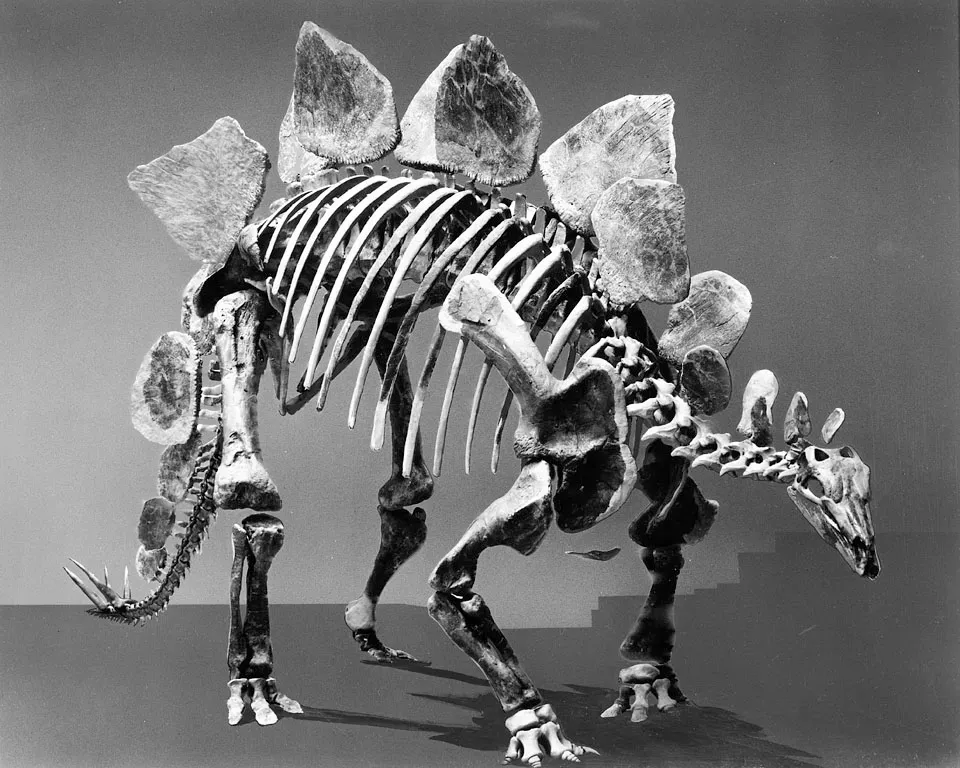
That famous eight-spiked textbook silhouette most of us grew up with never came from one animal. It’s a composite – Marsh stitched together bones from several different specimens and openly admitted the mount was only meant to represent a general archetype, not one real individual.
The bigger problem was an assumption that snowballed for decades. After noticing that tail spike counts varied between specimens, Marsh concluded these must be entirely different species of Stegosaurus. He never seriously considered that individual animals might simply have lost a spike, or that a few extra spikes might turn up elsewhere on a skeleton. A single missing spike could accidentally create an entirely new “species” in Marsh’s mind – that’s how loosely taxonomy worked during the frantic Bone Wars. And for a while, those spikes weren’t even placed on the tail.
#10 – Those Spikes Were Almost Mounted on the Wrists
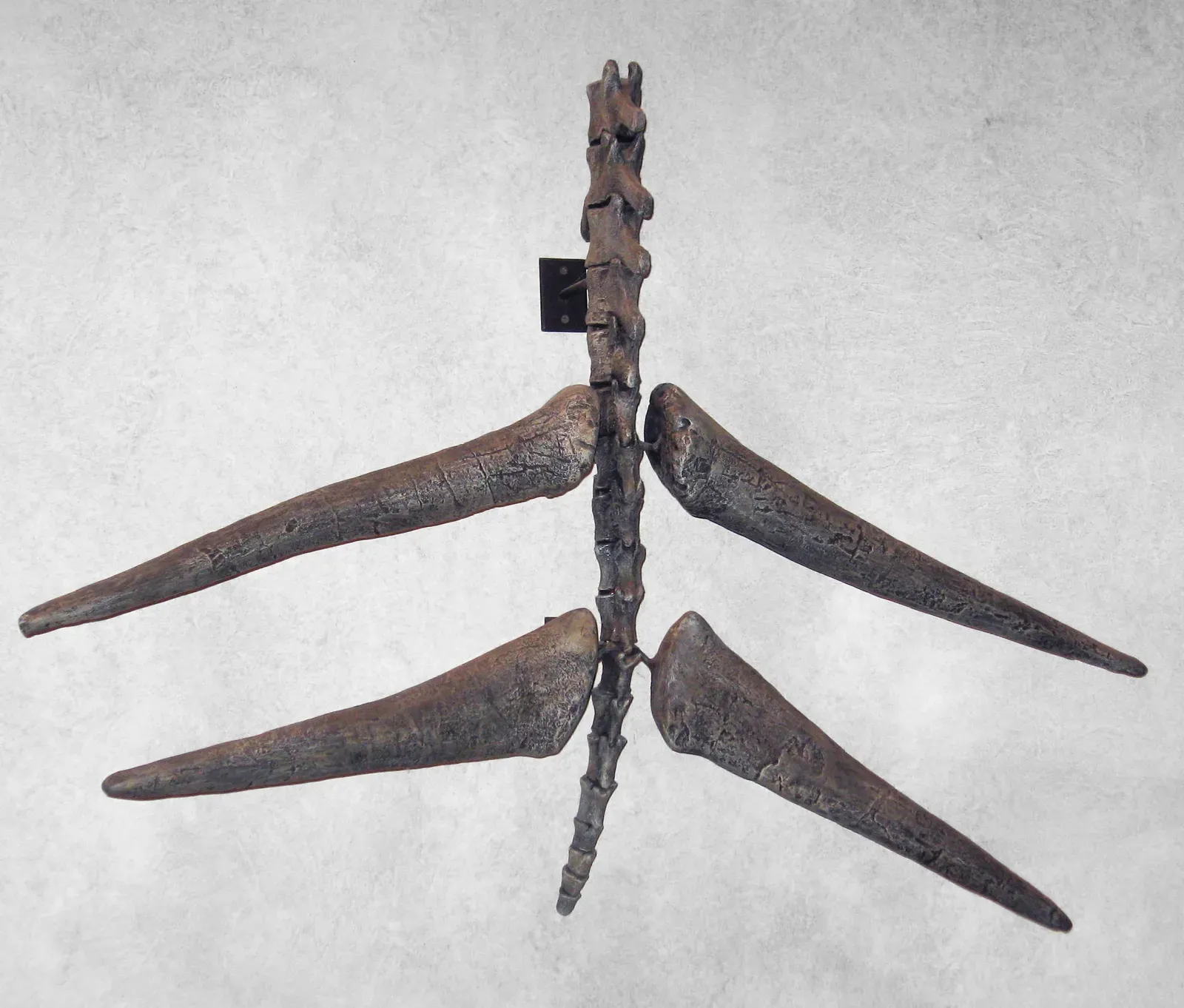
Before the tail spikes made sense to anyone, Marsh seriously floated the idea of strapping them to the wrists like Jurassic brass knuckles. In 1880, he proposed the spikes were defensive wrist weapons that Stegosaurus could swing while rearing back on its tail for balance.
The theory didn’t survive contact with better fossil evidence. Not long after, one of Marsh’s field collectors sent back a quarry sketch showing spikes lying in direct association with the tip of the tail. Several other Stegosaurus specimens confirmed the same pattern, and the wrist-spike idea was scrapped for good. One hand-drawn field sketch is the only reason kids today don’t grow up thinking Stegosaurus fought like a spiked-glove boxer – that’s how thin the margin was between the two theories. A different myth about this dinosaur, though, managed to survive for over a hundred years.
#9 – The “Second Brain” in Its Hips Never Existed
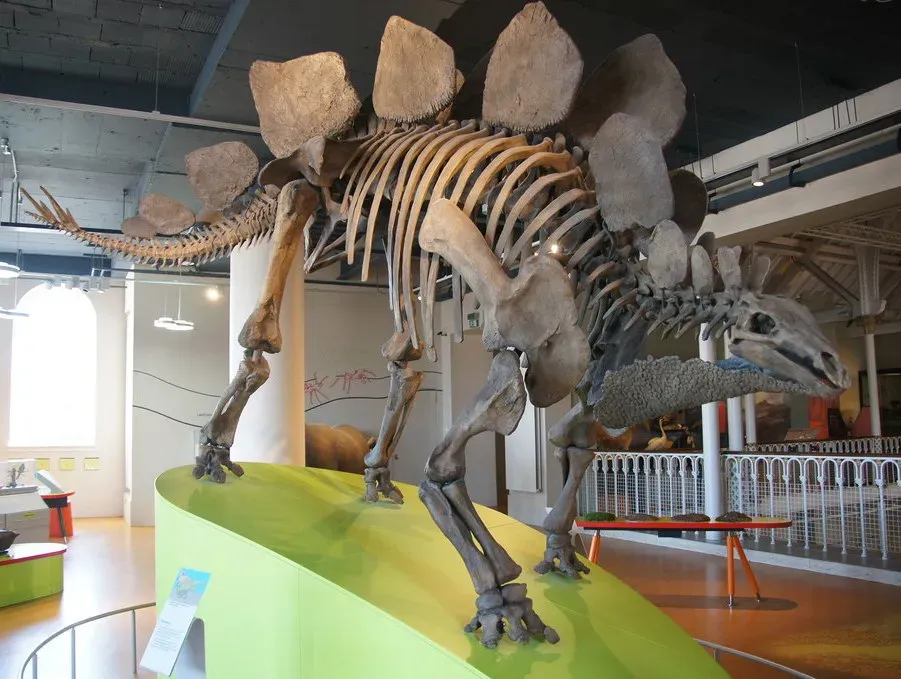
For decades, museum plaques told millions of visitors that Stegosaurus carried a backup brain in its rear end to help control its massive hindquarters. It never did. The myth grew out of a real anatomical feature – a large cavity in the pelvis where the spinal cord widens into what’s called a lumbosacral enlargement.
Paleontologists have since rejected the idea completely, and no other animal, living or extinct, has ever been shown to have a functional second brain. What the cavity actually held is still unclear, though one leading idea is a glycogen body – a structure found in modern birds that may play a role in energy storage rather than thinking. The theory should have died decades earlier on that logic alone. The brain Stegosaurus actually had, meanwhile, deserves a second look of its own.
Worth Knowing
- No animal, living or extinct, has ever been confirmed to have a functional second brain
- The pelvic cavity is technically called a lumbosacral enlargement
- Leading modern explanation: a glycogen body, similar to structures found in living birds
- The cavity’s exact function is still unresolved more than a century after discovery
#8 – Its Walnut-Sized Brain Didn’t Make It Stupid
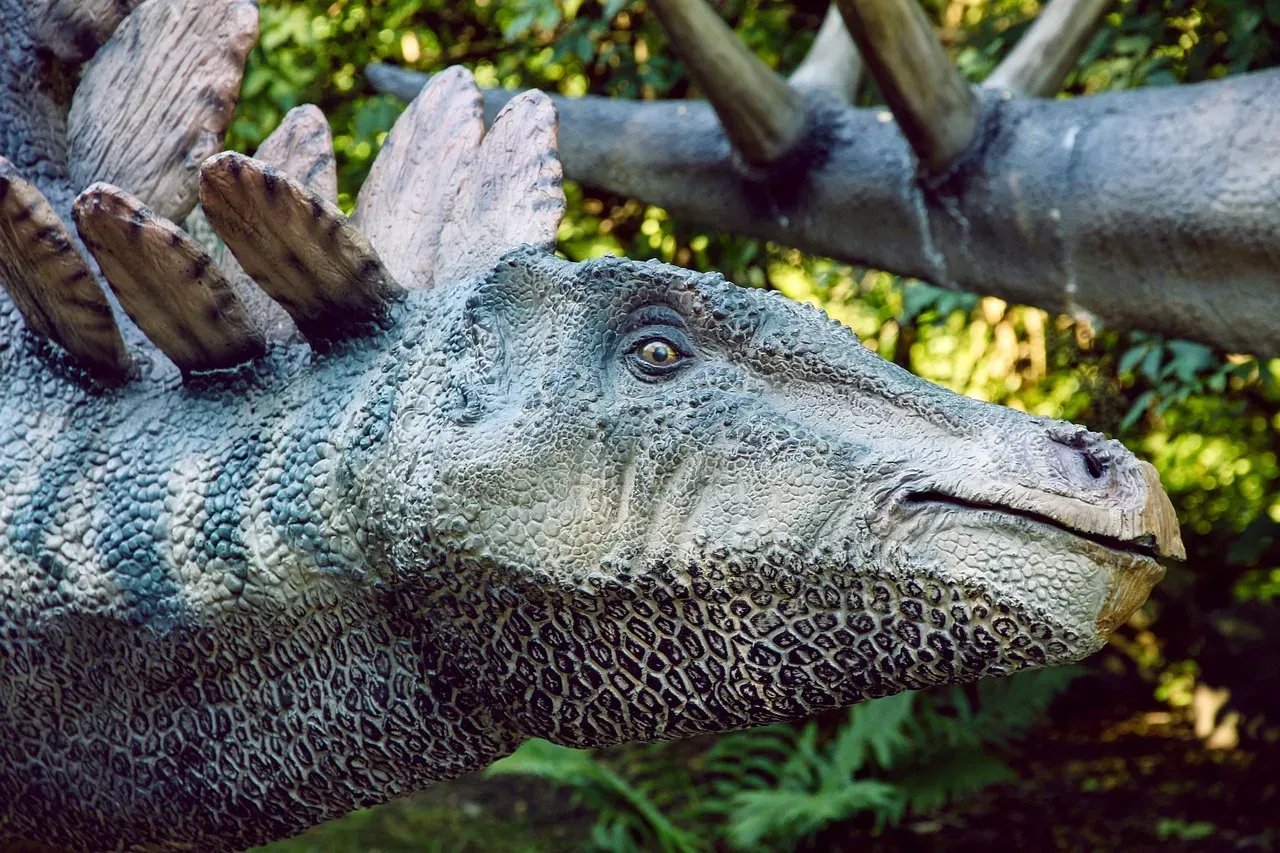
The “dumbest dinosaur” joke has outlived the science that supposedly backed it up. Paleontologists today see Stegosaurus less as a lumbering idiot and more as a specialized animal that did exactly what evolution needed it to do: survive long enough to reproduce.
That reframing matters more than it sounds. Stegosaurus was probably as smart as it needed to be, the same way a cow or a rhino is perfectly equipped for its own life even though neither would pass a standardized test. Comparing brain-to-body ratios across wildly different animals was never a fair measure of intelligence in the first place, and most popular science writing still gets this backward. It’s one of those quietly controversial takes paleontologists rarely say out loud on a museum placard. The plates on its back have their own debunked legend, too.
#7 – The Plates Were Not Space Heaters After All
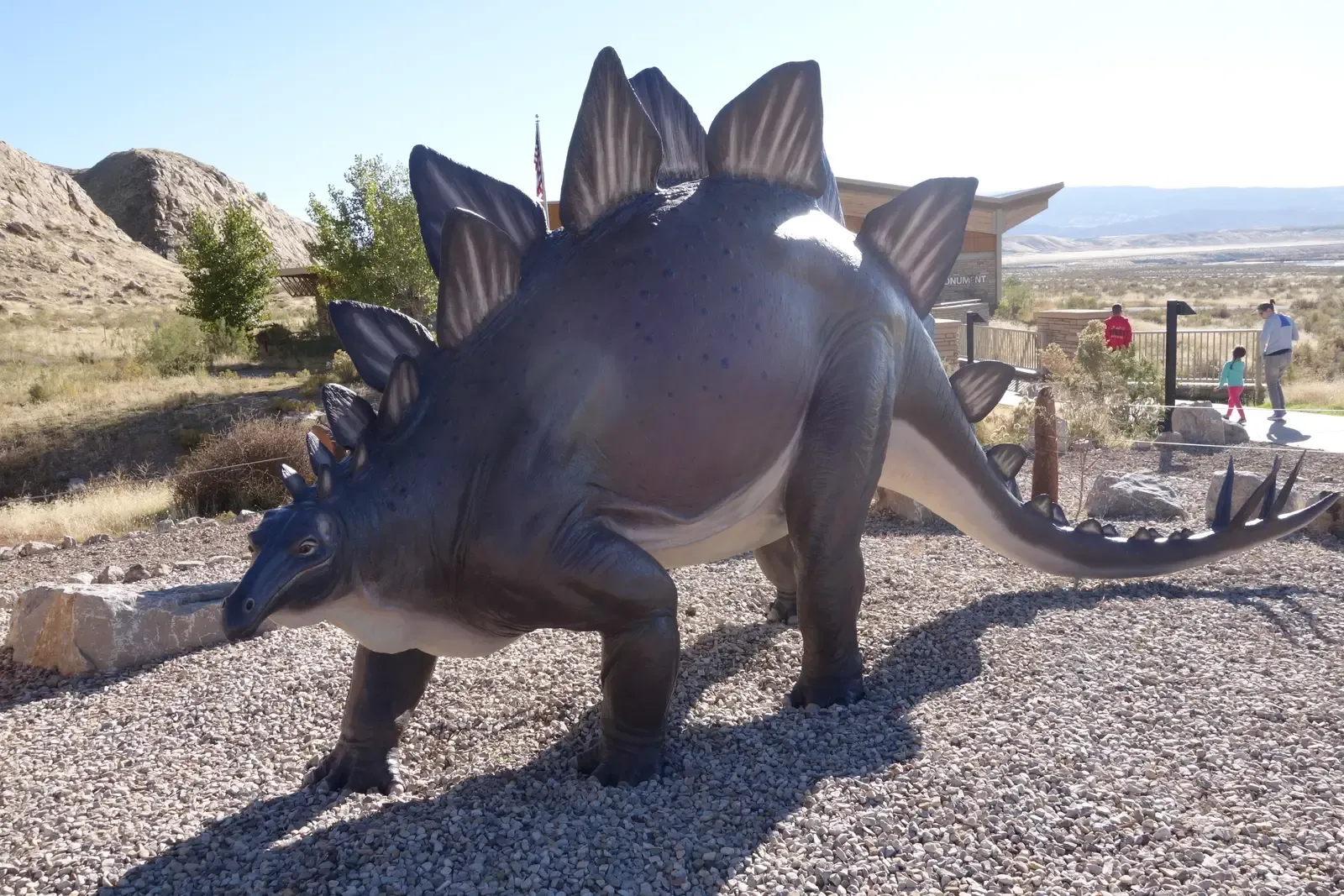
The most repeated “fact” about Stegosaurus has fallen out of favor with the very scientists who first proposed it. In 1976, paleontologist James Farlow and colleagues used wind-tunnel models to argue that the plates helped dissipate body heat, treating Stegosaurus as a cold-blooded animal that needed a built-in radiator.
That model has aged badly. Mounting evidence for elevated metabolisms across many dinosaur groups undercuts the idea that thermoregulation was ever the main driver behind the plates’ evolution. A newer, more compelling line of research points somewhere else entirely: the plates may have functioned as species recognition signals, helping Stegosaurus tell its own kind apart from other armored dinosaurs sharing the same landscape. The plates were probably billboards, not radiators – and even their layout on the body took over a century to get right.
#6 – The Plates Didn’t Even Stand in a Neat Single Row
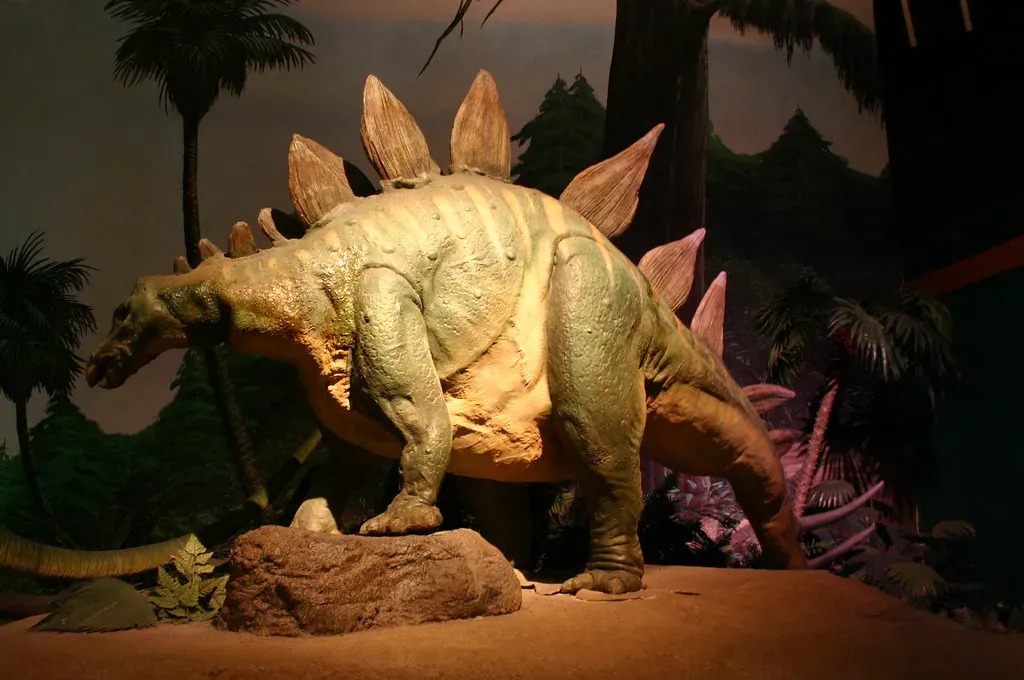
Even after Marsh figured out the plates stood upright rather than lying flat, he still got the layout wrong. By 1891 he had arranged them in a single row down the spine, but quickly realized the plates would have overlapped each other in that position, which made no anatomical sense.
The real arrangement is stranger than a simple row. The plates sit in two staggered rows of alternating pairs, transitioning near the tip of the tail into a line of genuinely intimidating spikes, each over 30 centimeters long. Researchers studying the plates’ shape later found that their asymmetry, or chirality, makes the display theory even more plausible – two staggered rows would have given Stegosaurus a much larger, more striking silhouette from the side than two parallel rows ever could. Even the basic geometry of this dinosaur’s signature feature took over a century to nail down. And that wasn’t the only old idea that made Stegosaurus look worse than it was.
Quick Compare
- 1891 theory: single row of plates down the spine
- Problem: plates would have physically overlapped – anatomically impossible
- Current model: two staggered rows of alternating plates
- Payoff: a larger, more eye-catching silhouette from the side
#5 – It Wasn’t an “Evolutionary Failure” Doomed by Its Own Armor
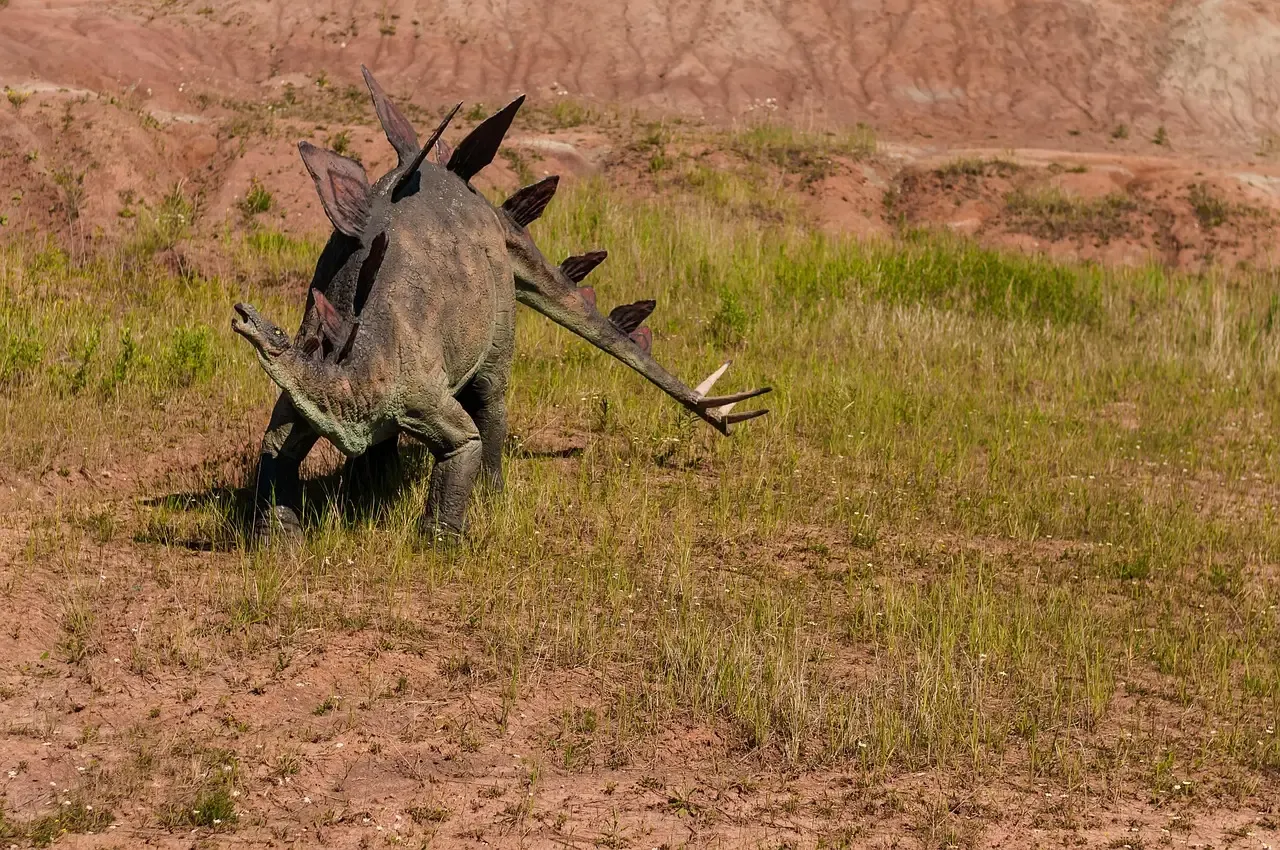
Old textbooks basically accused Stegosaurus of investing badly in its own evolution and paying for it with extinction. This framing had deep roots in outdated mid-century thinking, particularly the now-abandoned idea of “phylogeronty” – the notion that entire animal lineages could age and degenerate the way an individual creature does.
Combined with the animal’s bizarre armor, this led some 20th-century paleontologists to paint Stegosaurus as a misshapen creature that had evolved in the wrong direction and was simply waiting out its own extinction. That “doomed dead-end” narrative said far more about the cultural anxieties of the time than about actual biology. Decades of careful re-examination have replaced it with the picture of a far more capable, active animal – one whose tail weapon, it turns out, was very much for real.
#4 – Its Tail Spikes Weren’t Just for Show
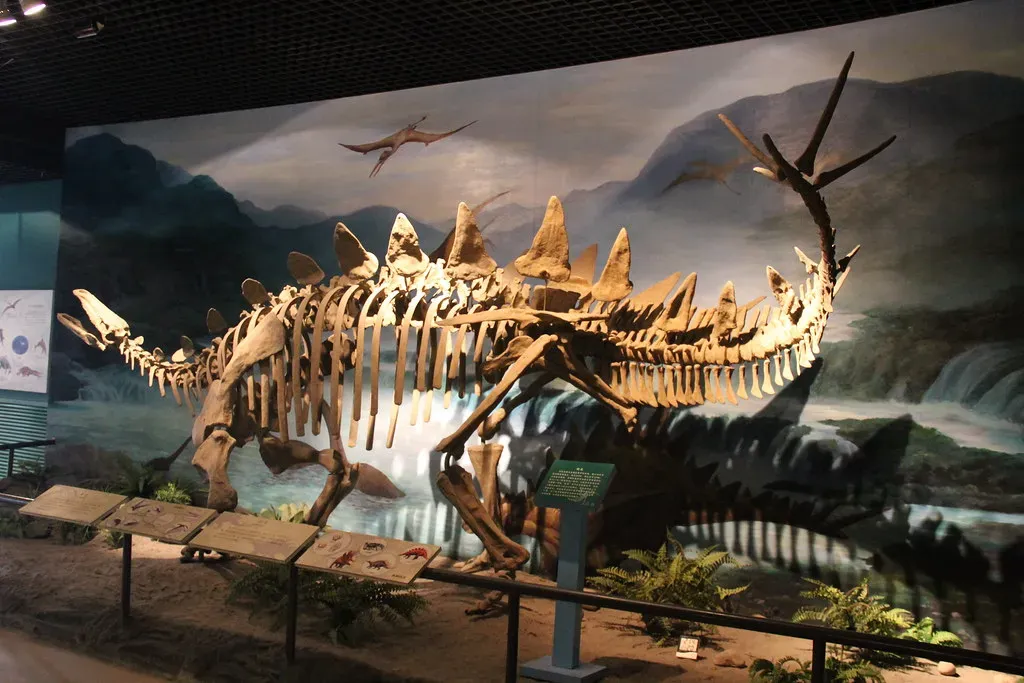
For decades, some respected researchers insisted the thagomizer – the spiked tail tip – was pure decoration and nothing more. Paleontologist Charles Gilmore argued as much back in 1914, and the display-only theory stuck around for most of the 20th century.
Physical evidence eventually settled the argument. A 2001 study of fossil tail spikes found a surprisingly high rate of trauma-related damage, consistent with repeated use in actual combat rather than passive display. The tail’s anatomy backs this up: unlike other armored dinosaurs, Stegosaurus lacked ossified tendons in its tail, giving it far more flexibility. By planting its large hindlimbs and pushing off with its short, powerfully muscled forelimbs, it could swing that spiked tail around with real speed and precision. A “decorative” spike doesn’t usually accumulate fracture damage from repeated impact – and it turns out this wasn’t even the only kind of Stegosaurus walking around.
#3 – There Wasn’t Just One Kind of Stegosaurus
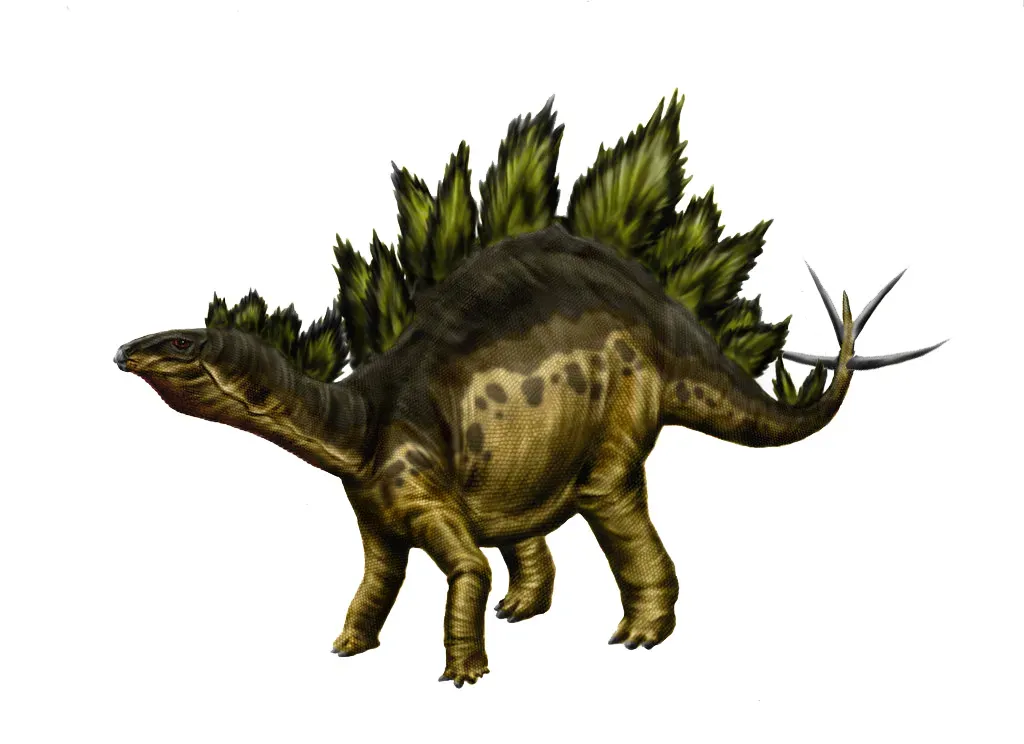
Marsh named a dizzying pile of Stegosaurus species during his career, and later scientists spent the next century cleaning up the mess. Most of those names turned out to be invalid or simple duplicates, leaving just two well-supported species and one poorly known third.
But the real story goes beyond tidying up a species list. Research published in PLoS ONE examined the plates of Stegosaurus mjosi and found they came in two distinct shapes – short and wide, or tall and narrow – that appear to correspond to sex rather than age or species. Females likely carried one plate type, males the other. It’s one of the first solid pieces of physical evidence that male and female dinosaurs looked visibly different from each other, not just biologically. And the reputation this animal has for being slow doesn’t hold up much better than its species count once did.
#2 – It Wasn’t as Slow and Sluggish As Textbooks Claim
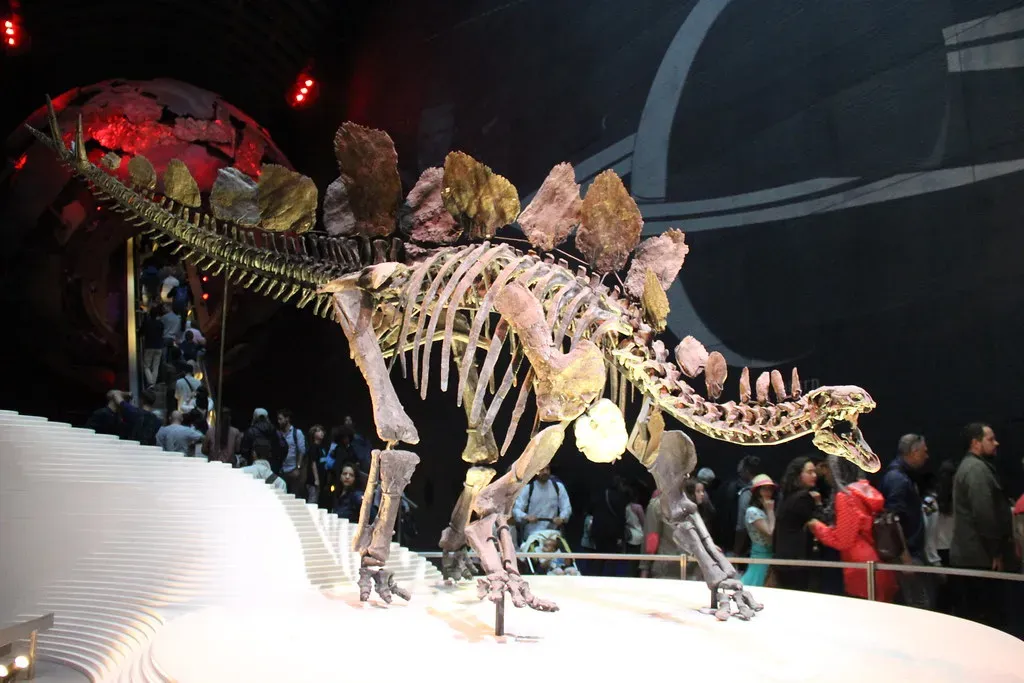
Stegosaurus gets stereotyped as a plodding tank, and in fairness, its body wasn’t built for speed. Its front legs were noticeably shorter than its rear ones – a difference so pronounced that the animators behind 1999’s Walking with Dinosaurs gave the creature an odd forward swagger just to make the mismatched limbs look natural on screen.
Slow forward movement, though, is not the same as being helpless. As covered above, Stegosaurus could plant its powerful hindlimbs and pivot its whole rear end using its short, muscular forelimbs, swinging a spiked tail into position with real speed. A slow walking pace and a fast defensive reflex are two completely different traits, and conflating them is exactly how the “lumbering tank” stereotype took hold. This animal was never built to chase anything – it was built to rotate a weapon into position fast, and one fossil finally proved it used that weapon for real.
At a Glance
- Front limbs noticeably shorter than rear limbs
- Built for defensive pivoting, not pursuit or flight
- Slow gait did not mean a slow tail swing
- 1999’s Walking with Dinosaurs altered the animal’s on-screen gait to suit the mismatched limbs
#1 – The “Peaceful Herbivore” Myth Is Officially Busted
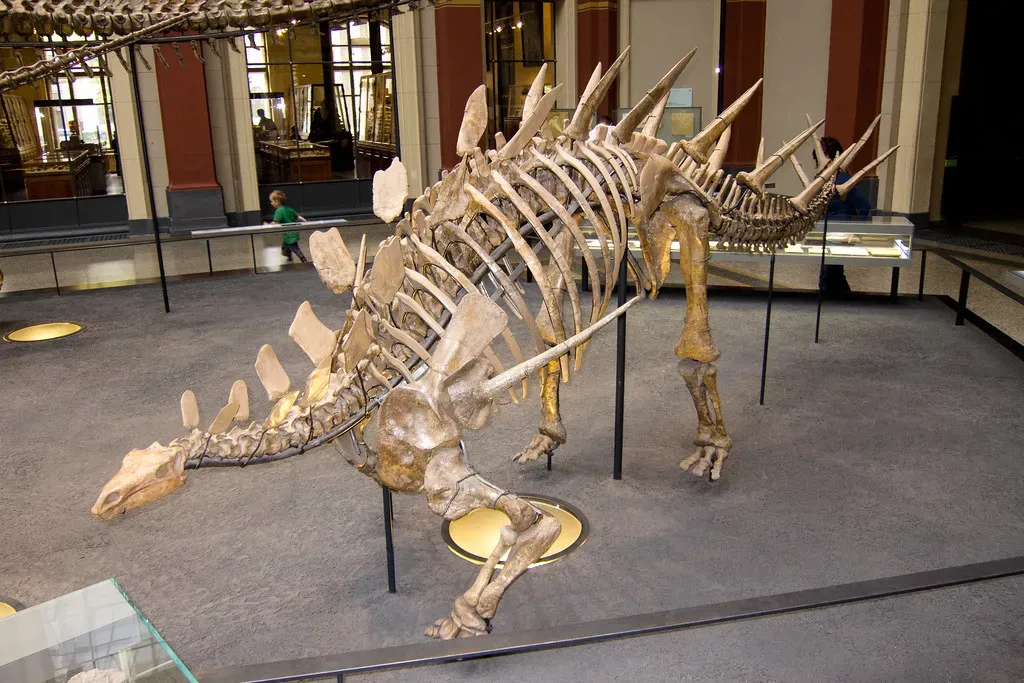
This is the fact that finally silenced decades of debate over whether Stegosaurus ever really used its tail spikes in a fight. A fossilized Allosaurus tail vertebra was found with a puncture wound whose shape and dimensions match the cross-section of a Stegosaurus tail spike almost exactly.
The bone around the wound shows clear signs of partial healing, meaning the Allosaurus survived the attack and carried that injury for the rest of its life.
Findings reported in a peer-reviewed paleopathology study of the specimen
Researchers ruled out other possible causes before reaching that conclusion, and a diagram published alongside the study shows a Stegosaurus tail spike fitting the puncture almost perfectly. One fossilized wound is now the closest thing paleontology has to a photograph of a Jurassic fight caught mid-swing. It’s the single finding that moved Stegosaurus from “passive plant-eater” to “animal that could seriously hurt a top predator – and made it prove it.”
The Bottom Line
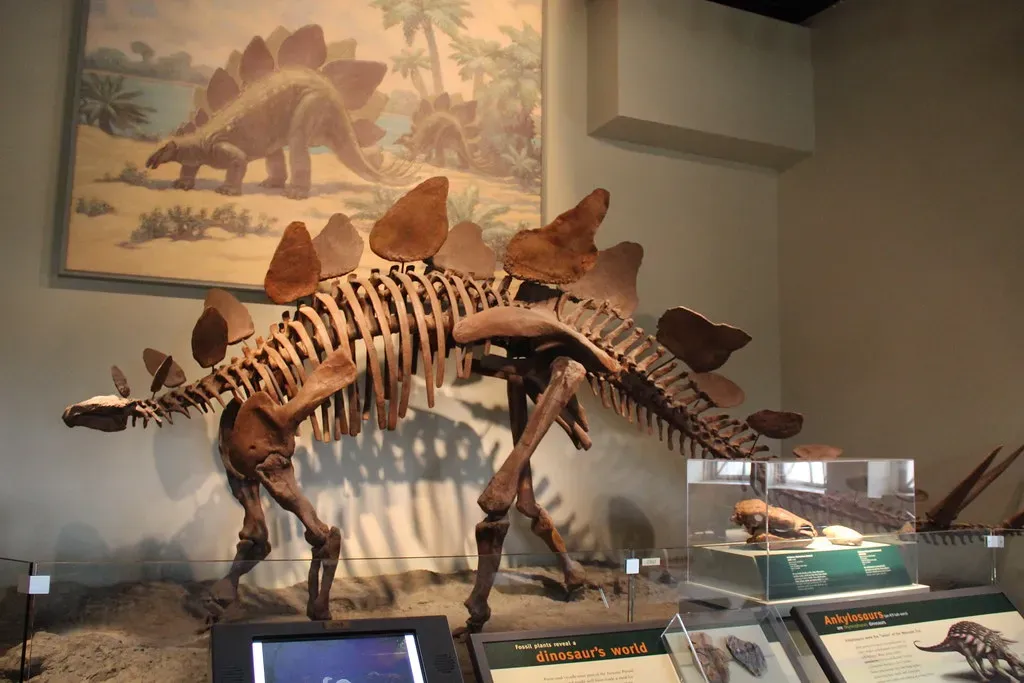
Almost everything the public still believes about Stegosaurus – its name, its brain, its plates, even its extinction – has been quietly corrected by paleontologists over the last 150 years, and most of those corrections never made it past the museum gift shop. The real story is messier, weirder, and honestly more impressive: a dinosaur whose tail spikes left a healed puncture wound in a living predator, whose plates were probably a mating billboard rather than a thermostat, and whose brain size never stopped it from being exactly as capable as it needed to be.
If you ask us, the “dumb, slow tank” version of Stegosaurus that most people still picture is the biggest myth on this entire list, and it’s overdue for retirement. Which one of these corrections surprised you the most? Drop it in the comments.