There are creatures from prehistory that stretch the limits of what you’d expect biology to permit. The Quetzalcoatlus is one of them. Standing as tall as a giraffe and spreading wings wider than a city bus, it was not a dinosaur in the strict sense, but a pterosaur – a flying reptile that shared its world with Tyrannosaurus and massive sauropods during the final chapter of the Cretaceous period.
What makes this animal so compelling, even today, is how much of it remains genuinely uncertain. Its bones are scarce, its weight debated, and its flight mechanics still argued over in scientific journals. Yet from what researchers have pieced together over more than five decades, what emerges is a portrait of one of the most extraordinary animals that ever existed.
The Discovery That Stunned the World of Paleontology
The first Quetzalcoatlus fossils were discovered in Texas, from the Maastrichtian Javelina Formation at Big Bend National Park, dated to around 68 million years ago, in 1971 by Douglas A. Lawson, then a geology graduate student at the University of Texas at Austin. He was not hunting pterosaurs. Lawson was at Big Bend searching for the bones of titanosaur sauropods, such as Alamosaurus, when the pterosaur bones were discovered.
Lawson announced the discovery in a 1975 article in Science, and in that pre-Jurassic Park era, when public fascination with paleontology was at a slow burn, he encountered an unexpected burst of celebrity. The animal still needed a name. Wann Langston warned Lawson that if he didn’t name it soon, somebody else would, so Lawson christened it Quetzalcoatlus northropi, after the feathered serpent god of the Aztecs and the pioneer aviation designer John Northrop.
A Size That Defies Easy Comparison
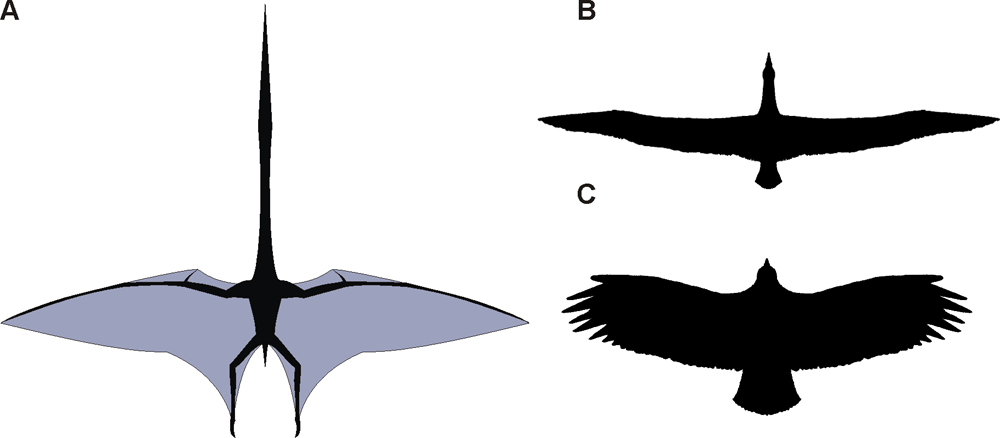
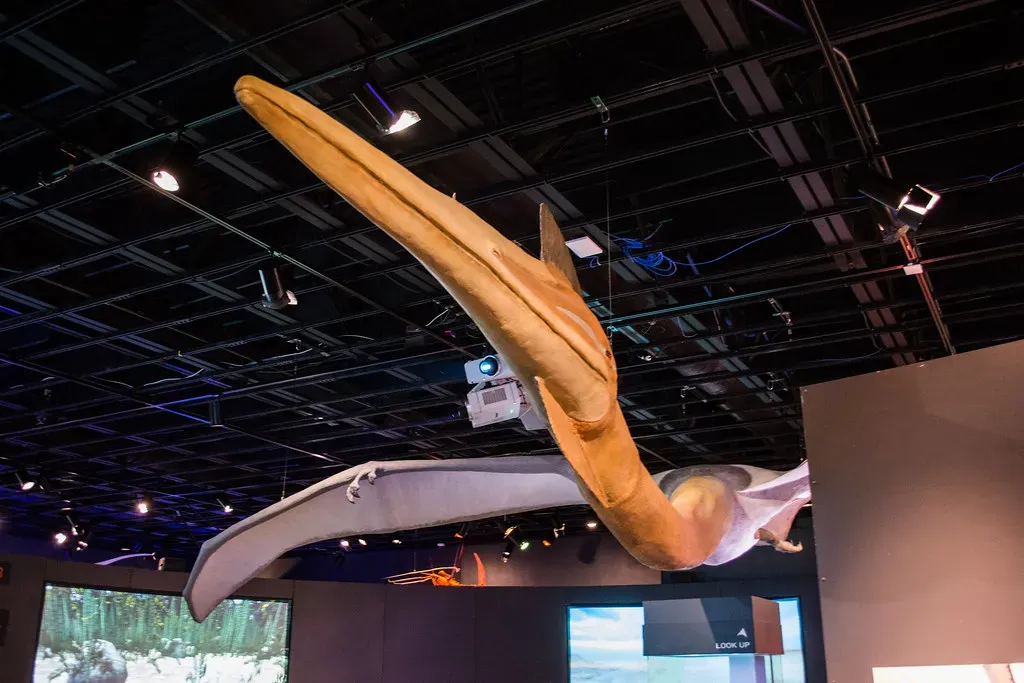
One member of the genus, Q. northropi, is widely believed to have been the largest flying creature that ever lived. Paleontologists contend that members of the species stood about 5 meters, or 16 feet, tall and had a wingspan of up to 11 meters, or 36 feet. For context, that wingspan exceeds the length of most transit buses. Even with its birdlike hollow bones, Quetzalcoatlus weighed between 250 and 550 pounds and had about a 36-foot wingspan. By comparison, an albatross weighs about 18 pounds and has an 11-foot wingspan.
Body mass estimates for Quetzalcoatlus have historically been variable. Mass estimates for giant azhdarchids are problematic because no existing species shares a similar size or body plan, and published results vary widely. That uncertainty is not a failure of science, it’s simply an honest reflection of just how fragmentary the fossil record for this animal truly is. Only one adult skeleton of Quetzalcoatlus has ever been discovered, and that consists of fragments of just one wing.
The Takeoff Problem: How Did It Actually Fly?
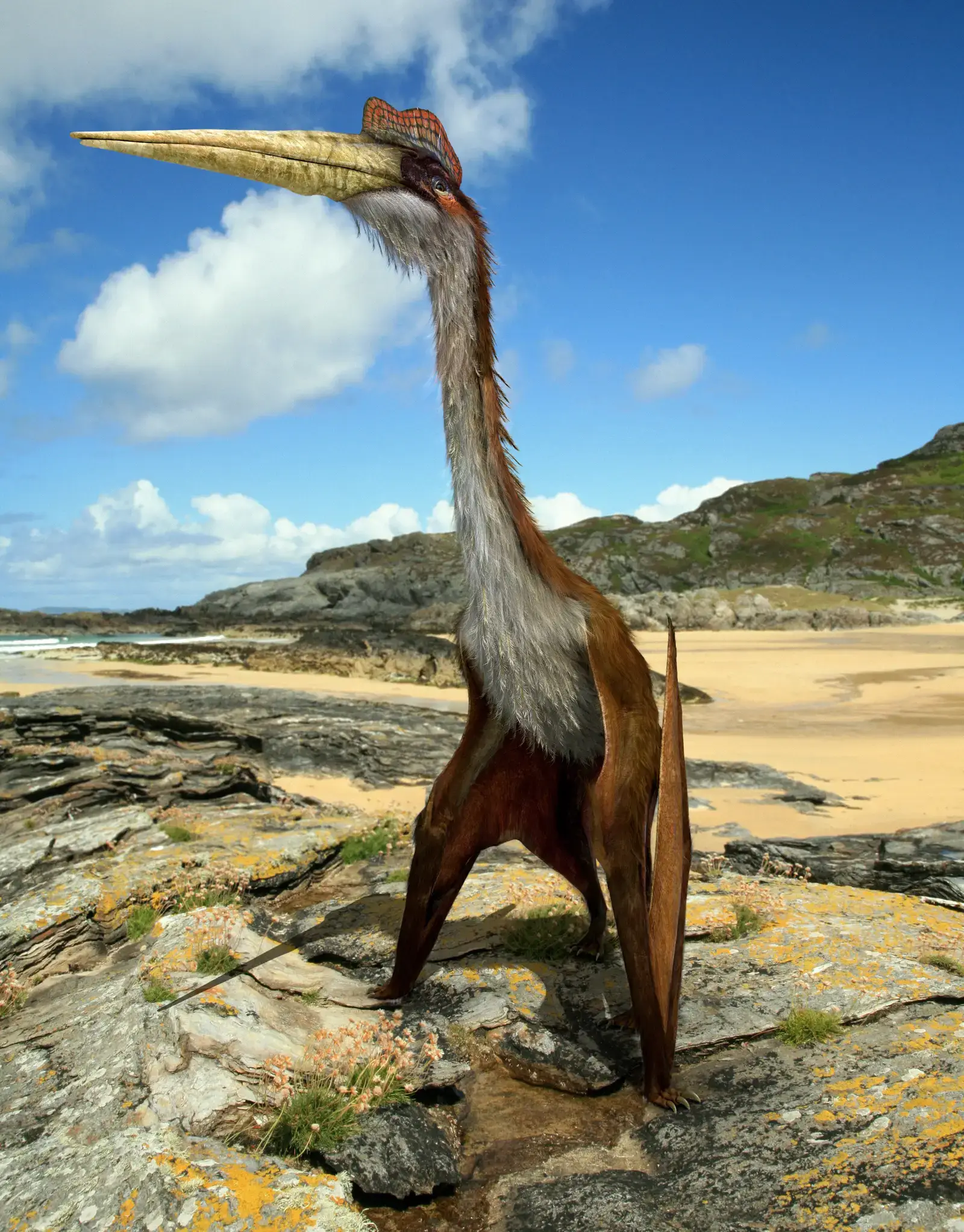
Scientists have long debated how or even whether Q. northropi could fly, given the pterosaur’s massive size and weight. The mechanics seem almost impossible until you look at the skeleton more carefully. An analysis of existing Quetzalcoatlus fossils in 2021 provided evidence that Q. northropi could indeed fly. Because of its massive wings, it likely took off by leaping some 2.5 meters, about 8 feet, into the air. With enough of a jump, it could flap its powerful wings to reach an altitude at which it could soar like a condor.
Biomechanical modeling of Quetzalcoatlus skeletons demonstrated a leaping quadrupedal launch mechanism, where the animal jumped up to 2.5 meters using powerful hindlimbs and forelimbs before initiating flight with wing flaps. This is strikingly different from how birds take off. Pterosaurs with their 35-foot wingspans may have launched themselves airborne by using all four limbs, their wings and legs. It’s a solution that would look utterly alien by today’s standards, but one the evidence now increasingly supports.
A Stork From the Cretaceous: The Feeding Debate
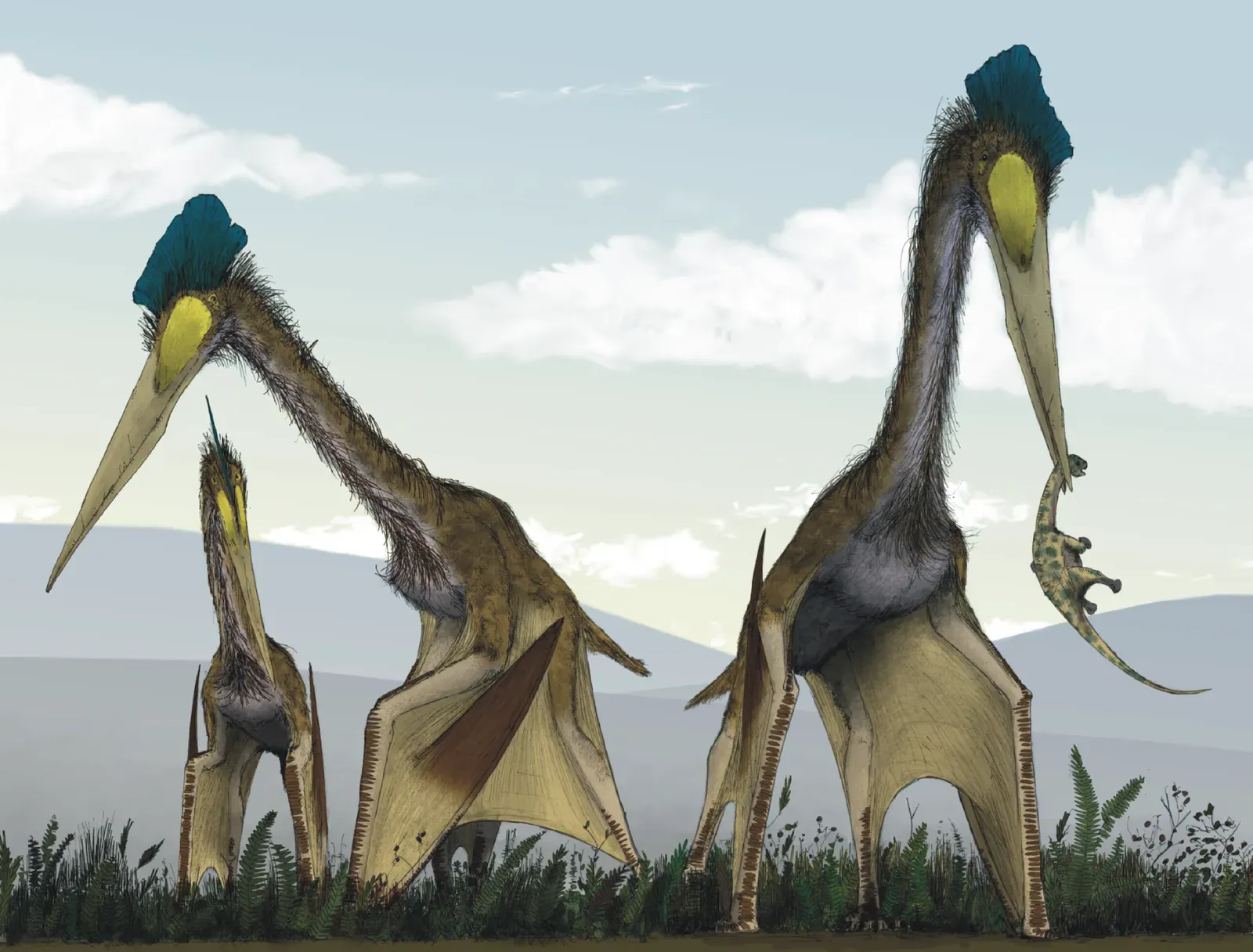
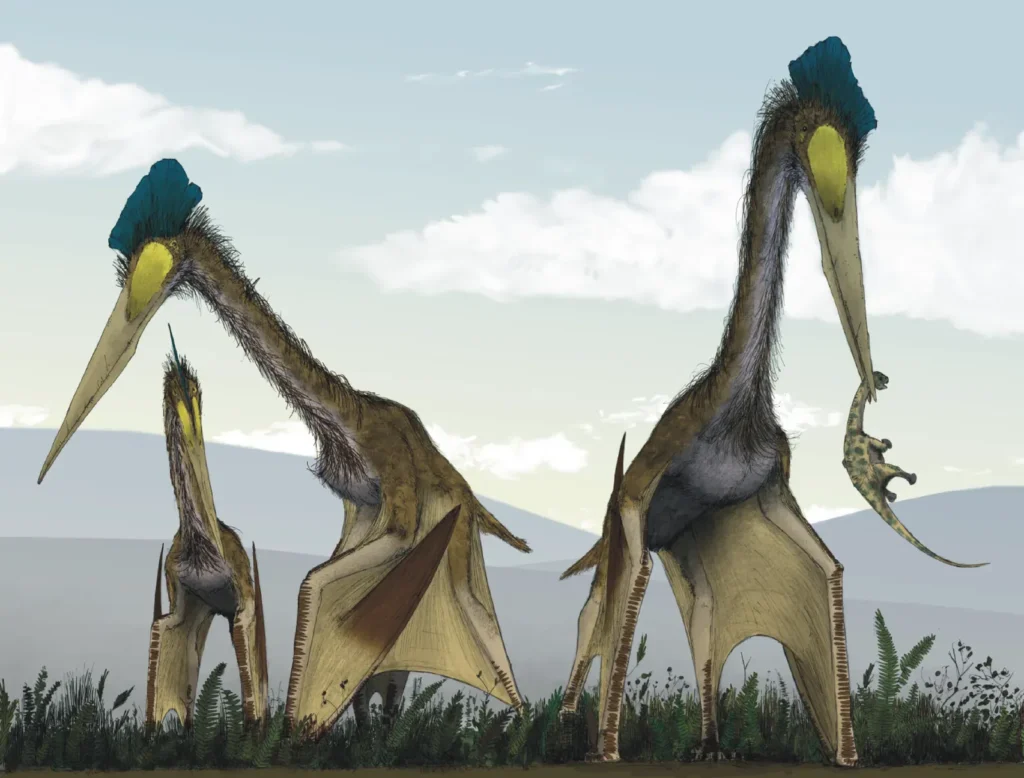
Historical interpretations of the diet of Quetzalcoatlus ranged from scavenging to skim-feeding like the modern skimmer bird. More recent research has found that it most likely hunted small prey on the ground, in a similar way to storks and ground hornbills. This has been dubbed the terrestrial stalking hypothesis and is thought to be a common feeding behavior among large azhdarchids. The shift in thinking is significant, since it reimagines the animal not as an aerial predator but as a patient land hunter.
The anatomy possessed by azhdarchids was indicative of terrestrial prey capture. Researchers argued that the family were ecologically closest to storks or ground hornbills, and coined the term “terrestrial stalker” to collectively describe them. One analysis elaborated that the proportions of azhdarchids would have been consistent with them striding through vegetated areas with their long limbs, and their downturned skull and jaws reaching the ground. It is unlikely that Quetzalcoatlus ate dinosaurs, since it had a long jaw with no teeth, which was better suited to probing for invertebrates in the wet areas it inhabited.
Not One Animal but Two: The Species You May Not Know
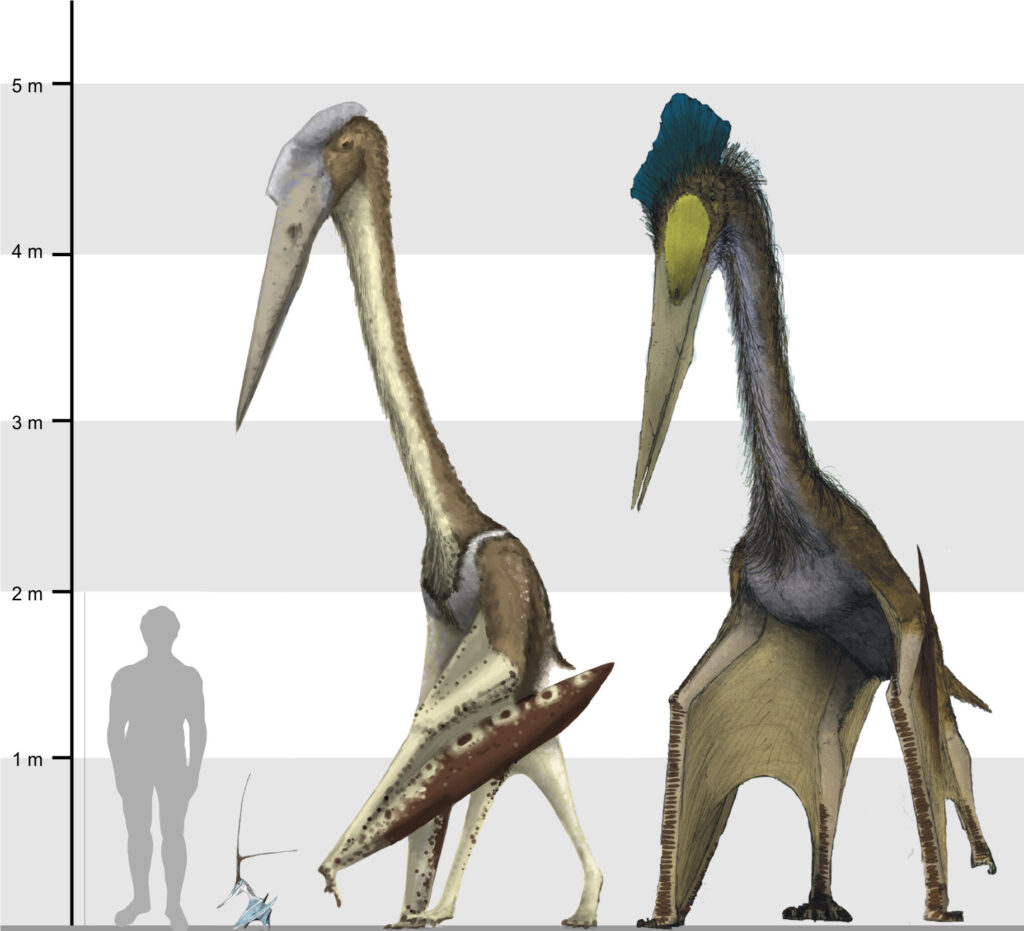
The remains of a second species were found between 1972 and 1974, also by Lawson, around 40 kilometers from the Q. northropi locality. In 2021, these remains were assigned to the name Quetzalcoatlus lawsoni by Brian Andres and, posthumously, Wann Langston Jr., as part of a series of publications on the genus. For decades, researchers weren’t even sure whether these smaller specimens were a separate species or just juveniles of the giant. Not all Quetzalcoatlus species were super-sized. Fossils of Quetzalcoatlus lawsoni show a smaller version with a wingspan of about 15 feet, or 4.5 meters. While still huge compared to modern birds, this smaller species was more agile and adapted to hunting small animals closer to the ground.
The two Quetzalcoatlus species both called Big Bend home about 70 million years ago, when the region was an evergreen forest instead of the desert of today. Each led a distinct lifestyle. By examining the geological context in which the fossils were found, researchers determined that the larger Quetzalcoatlus might have lived like today’s herons, hunting alone in rivers and streams. The smaller species, in contrast, appeared to flock together in lakes, with at least 30 individuals found at a single fossil site. Two species, side by side, living completely different lives.
A Body Built for the Impossible
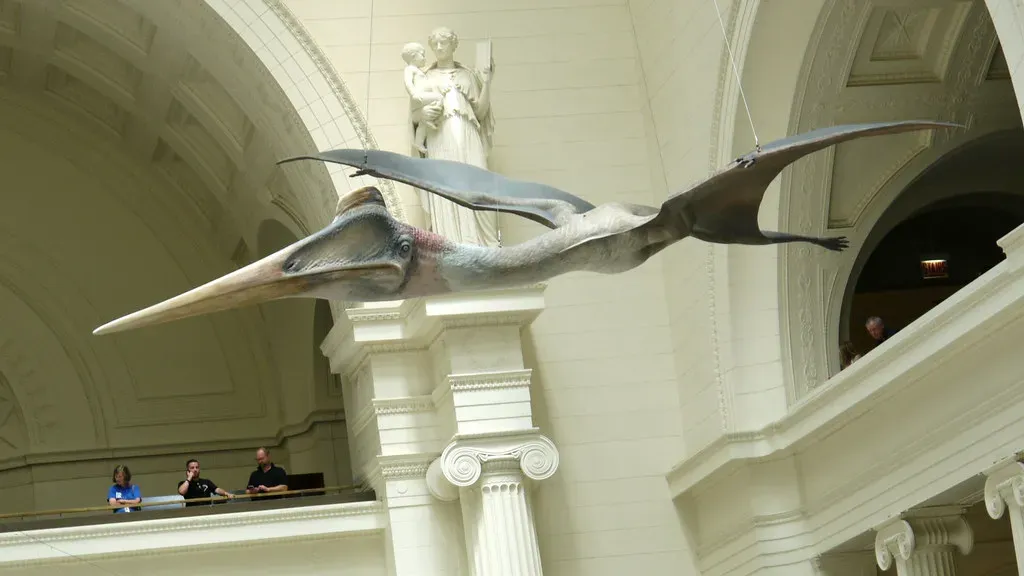
Quetzalcoatlus was a large pterosaur with a wingspan of between 10 and 12 meters but lightly built for its size. Estimates of its adult weight range between 75 to 544 kilograms. Despite that, it contained large air sacs and had stiff, thin-walled hollow bones. These hollow bones weren’t just a minor adaptation. They were an engineering solution that made the difference between flight and grounded impossibility. The animal’s wings consisted of a delicate membrane of skin stretched between the elongated fourth finger of each hand and the hind legs. Quetzalcoatlus had a thin head, which may have been as long as 2 meters or more, and may have had an elongated crest, and a long, thin, toothless beak.
Unlike the serpent god it was named after, Quetzalcoatlus had no feathers. Its body, including wings of skin and fibers of keratin, was covered with hair, as in all pterosaurs. Like dinosaurs, it was likely warm-blooded and active. It had lost its tail, presumably to improve maneuverability, and its 6-foot neck and 4-foot crested skull suggest a stork on steroids. That combination of lightness, reach, and power made it genuinely unlike anything alive today.
The Legacy That Reached Into Aviation
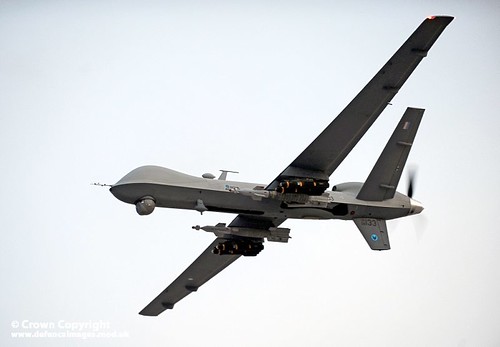
In 1985, the US Defense Advanced Research Projects Agency, DARPA, and AeroVironment used Q. northropi as the basis for an experimental ornithopter unmanned aerial vehicle. They produced a half-scale model weighing 18 kilograms, with a wingspan of 5.5 meters. That a prehistoric animal inspired a serious military UAV project says something about how remarkable its design truly was. Coincidentally, Douglas A. Lawson, who discovered Q. northropi in Texas in 1971, named it after John “Jack” Northrop, a developer of tailless flying wing aircraft in the 1940s.
Upon its debut, Quetzalcoatlus northropi graced the cover of Science, was featured in Time, and in 1981 made the cover of Scientific American. Its cultural reach has only grown since. The species would become referenced by over 500 scientific publications, with Quetzalcoatlus northropi becoming the single most cited pterosaur species. Few prehistoric animals have so thoroughly crossed over from the fossil record into the wider cultural imagination, and fewer still have done so by being, as the evidence suggests, genuinely that extraordinary.
Conclusion
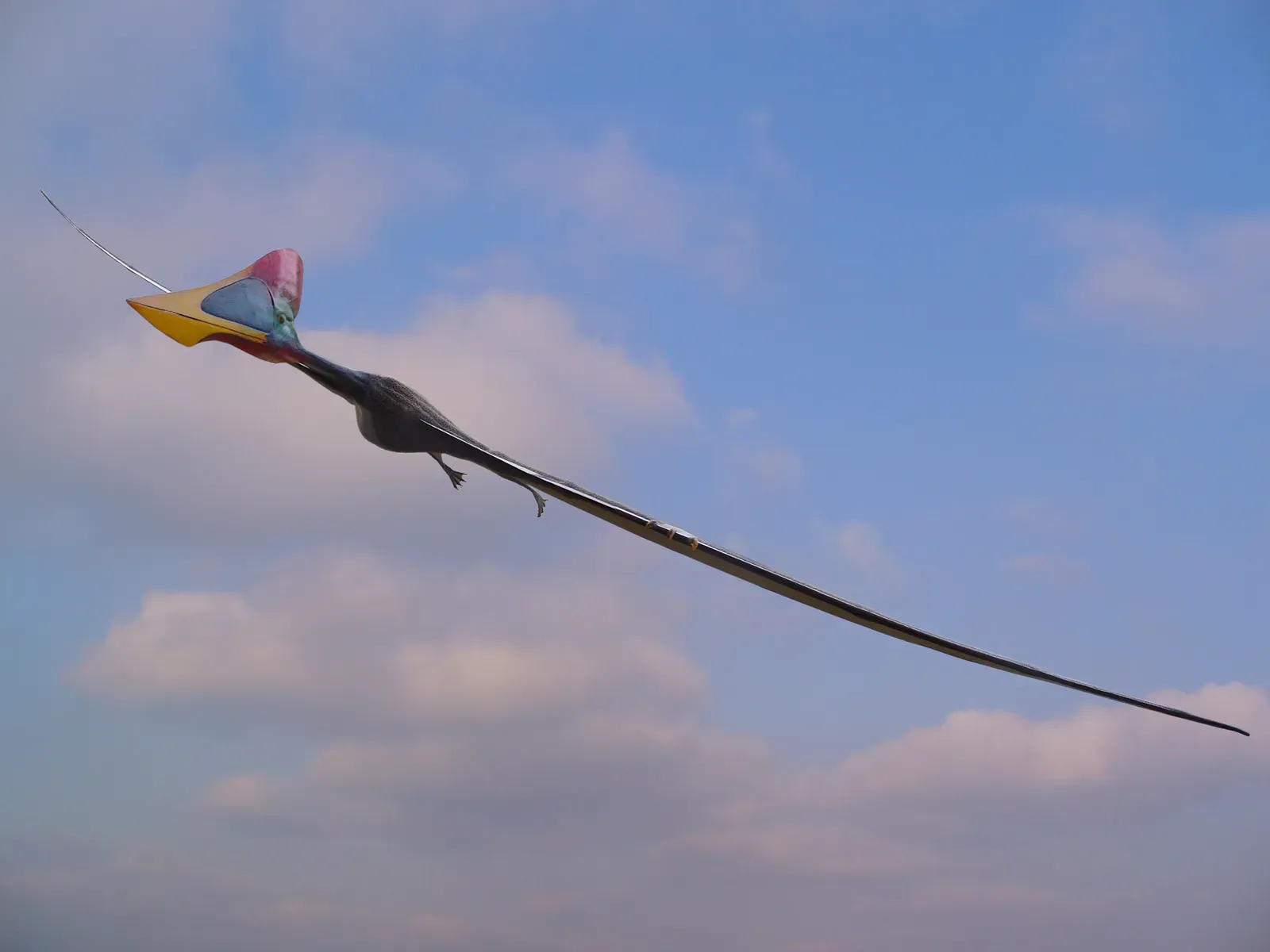
What the Quetzalcoatlus ultimately reveals is how much biology can stretch without breaking. It was a flying reptile that stood as tall as a giraffe, hunted like a stork, and took off from the ground using a vaulting leap that no modern animal replicates. Its bones were thin enough to enable flight, yet robust enough to absorb the stresses of one of the most powerful takeoffs in the history of vertebrate life.
The fossil record for this animal is thin, the weight debates are still unresolved, and questions about its full range of behavior will likely linger for generations. That’s not a frustrating gap in our knowledge. It’s an invitation. Since Douglas Lawson first described Quetzalcoatlus in 1975, this giant pterosaur has captured imaginations as the largest known flying animal in Earth’s history, and recent advances in biomechanics, paleoenvironmental studies, and sensory anatomy have dramatically expanded our understanding of how this creature lived, moved, and thrived. The more carefully we look, the more astonishing it becomes.