When most people think about dinosaurs, they picture massive creatures stomping through ancient forests or roaming vast plains. Yet what if I told you that some of the most extraordinary prehistoric reptiles made their homes depths? While technically not all were “true” dinosaurs by scientific definition, these magnificent marine predators shared the same time period and often possessed the same fearsome characteristics that make dinosaurs so captivating.
The ancient seas were absolutely teeming with incredible creatures that would make today’s great white sharks look like minnows. These were the apex predators of their time, perfectly adapted for life in the water with streamlined bodies, powerful flippers, and hunting instincts that would give any modern marine predator serious competition. So let’s dive into the depths of prehistoric oceans and meet seven of the most remarkable aquatic giants that once ruled the waves.
Mosasaurus – The Ocean’s Ultimate Apex Predator
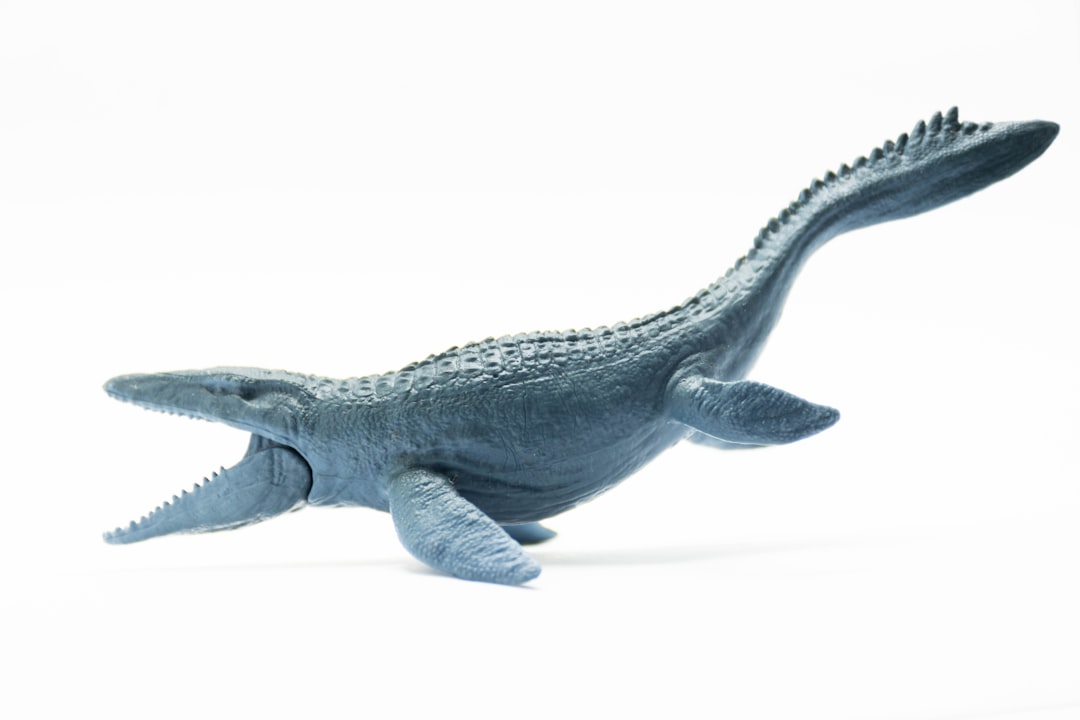
In just 4 million years, they evolved into 15-meter apex predators, exploiting the collapse of ichthyosaurs and pliosaurs. The Mosasaurus was truly the king of Cretaceous seas, reaching lengths that would dwarf most modern whales. These marine giants emerged after other ocean predators had declined, quickly filling the vacant ecological niche.
What made Mosasaurus so terrifyingly effective was its incredible adaptability. They were Streamlined with bilobed tail flukes (Platecarpus, Prognathodon) for speed and rigid, keeled scales to reduce drag. Side-facing nostrils helped them to directional smell to track prey, while two lungs and parallel bronchi mirrored whales’ efficiency. Think of them as the ultimate underwater missile, perfectly designed for high-speed pursuits through ancient oceans.
Plesiosaurs – The Long-Necked Marine Giants
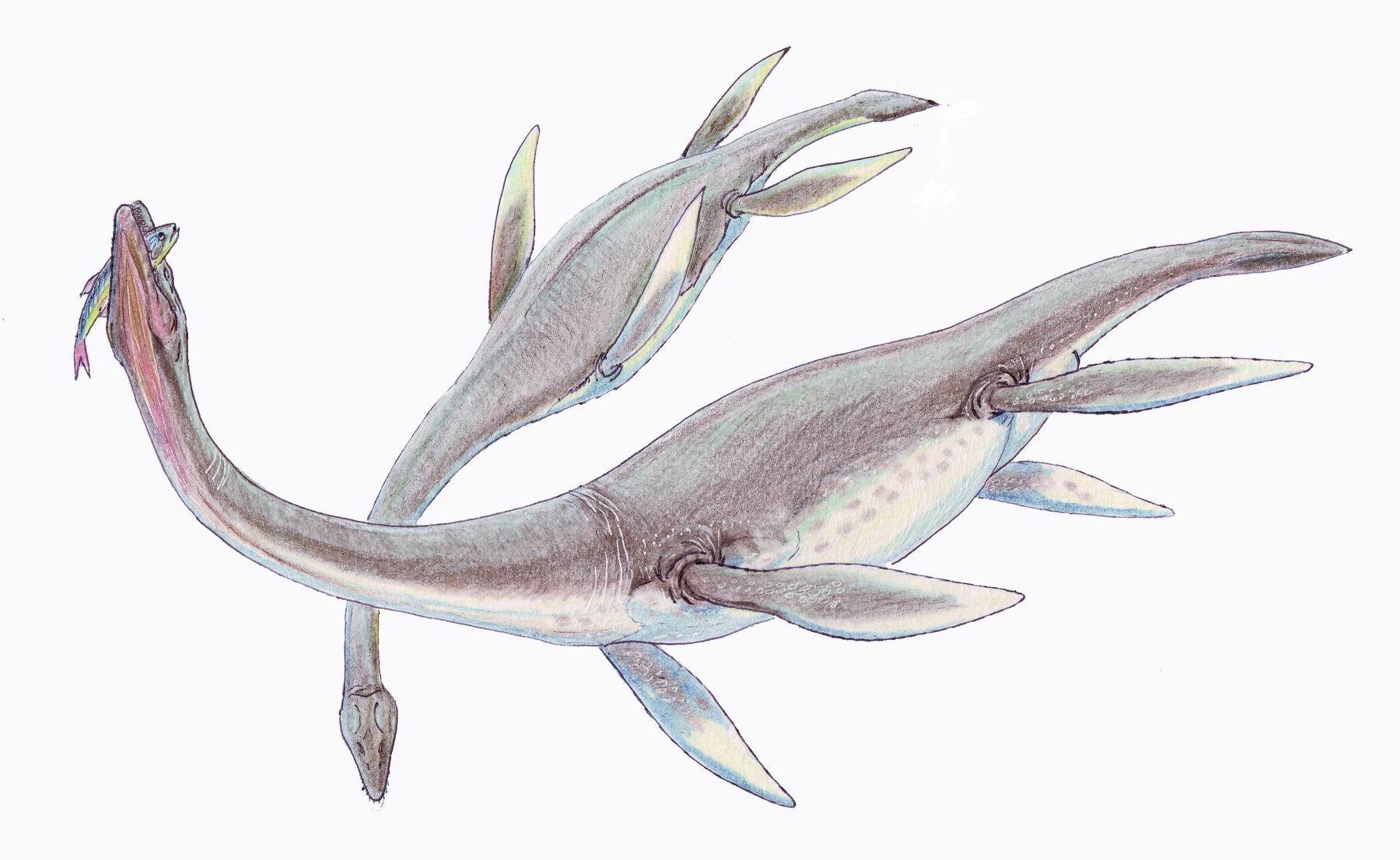
Plesiosaurs were large, carnivorous reptiles. Thought to prey on Ichthyosaurs. Their name came from the Greek for “near to lizards”, and they typically had broad bodies, flippers and short tails. These creatures looked like something straight out of mythology, with necks so extraordinarily long they often comprised more than half their total body length.
The most remarkable thing about plesiosaurs was how deceptive their appearance could be. Using computer modeling, scientists studied the drag of Plesiosaurus as compared to other marine reptiles and modern-day dolphins and whales. Surprisingly, Plesiosaurs had an impressive drag per unit volume, leading researchers to believe they may have been adept swimmers. Despite looking ungainly, they moved through water with surprising grace, using their four flippers like underwater wings.
Ichthyosaurs – The Dolphin Mimics of Prehistoric Seas
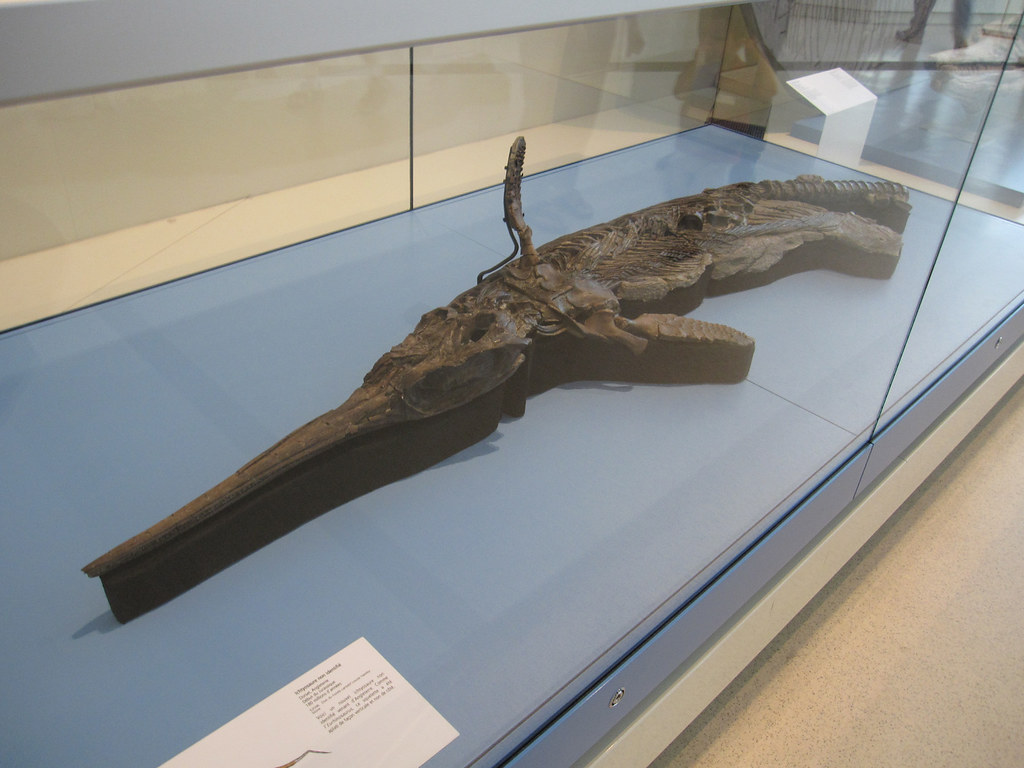
Despite its dolphin-like appearance, Ichthyosaurus was a ancient marine reptile, not a mammal or dinosaur. They Evolved from land reptiles, and adapted fully to ocean life, becoming streamlined for efficient swimming. These remarkable creatures represent one of evolution’s most stunning examples of convergent design, independently developing the same sleek body plan as modern dolphins millions of years before mammals even dominated the seas.
Ichthyosaurs were the ultimate fish-hunting specialists of their time. These marine reptiles were piscivorous hunters, it fed on fish and squid, confirmed by fossilized stomach contents (coprolites). Sharp eyesight aided prey detection, while thickened ear bones suggest it sensed vibrations to track targets. Their hunting success was so remarkable that they thrived in oceans worldwide for over 150 million years.
Shonisaurus – The Gentle Giant of Ancient Oceans
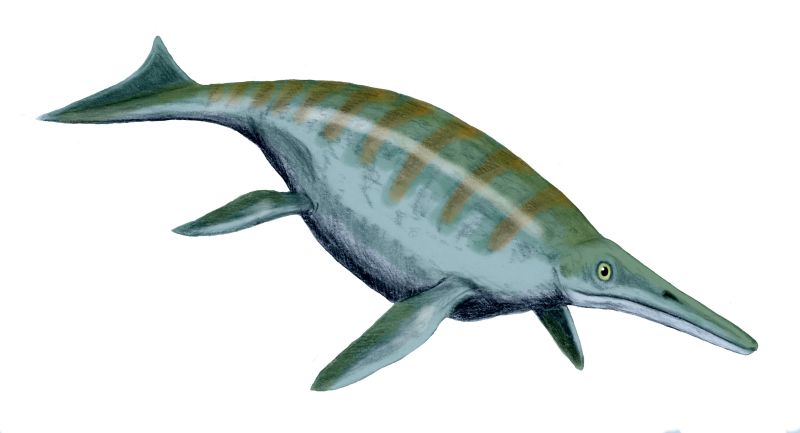
The Shonisaurus, also known as fish lizard, was a member of the ichthyosaur family. It could reach 30 tons! That would be equivalent to two sperm whales. Imagine encountering a creature the size of two modern sperm whales gliding silently through Triassic seas. This was no ordinary predator though.
These aquatic reptiles were Triassic giants reaching 15 meters, Shonisaurus was a slow-swimming ichthyosaur with a downward-curving tail fluke, distinct from later species. Juveniles had teeth for catching small prey, but adults lost them entirely, specializing in soft-bodied squid. The adults became peaceful giants, more like massive underwater vacuum cleaners than fearsome predators, filtering soft-bodied prey from the ancient seas.
Dakosaurus – The Crocodile That Conquered the Open Ocean
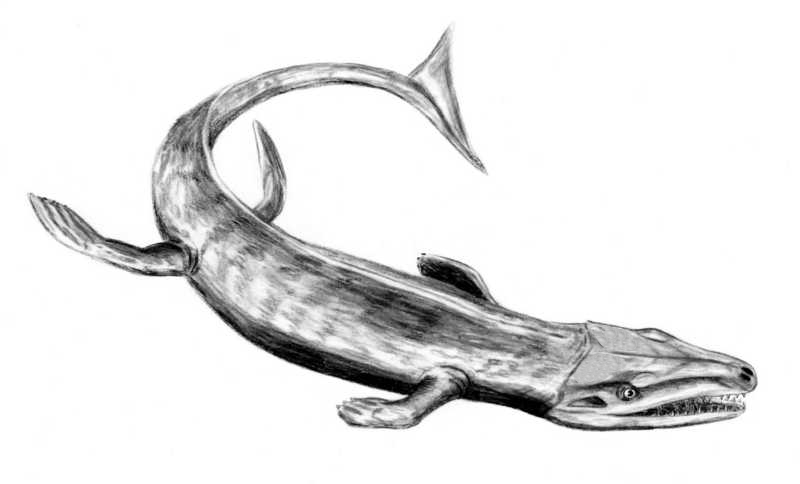
Nicknamed “Godzilla” for its deep, serrated-toothed skull, Dakosaurus was a 4-5 meter marine crocodile ruling Jurassic-Cretaceous oceans. Adapted for open waters, it boasted paddle-like flippers and a tail fluke, diverging from land-dwelling kin. When paleontologists first discovered this creature, they were so impressed by its fearsome appearance they nicknamed it after the most famous movie monster of all time.
What made Dakosaurus truly extraordinary was how completely it had abandoned its crocodilian heritage for ocean life. Its robust jaws and compressed teeth targeted large prey – fish, marine reptiles – anticipating the mosasaurs’ later dominance. Unlike piscivorous marine crocodiles, Dakosaurus’s anatomy suggests apex predation: bone-crushing bites and salt glands (inferred from cranial cavities) to expel seawater toxins. This was no ordinary crocodile lurking in rivers; this was the ocean’s own version of a living torpedo.
Spinosaurus – The Controversial Swimming Giant
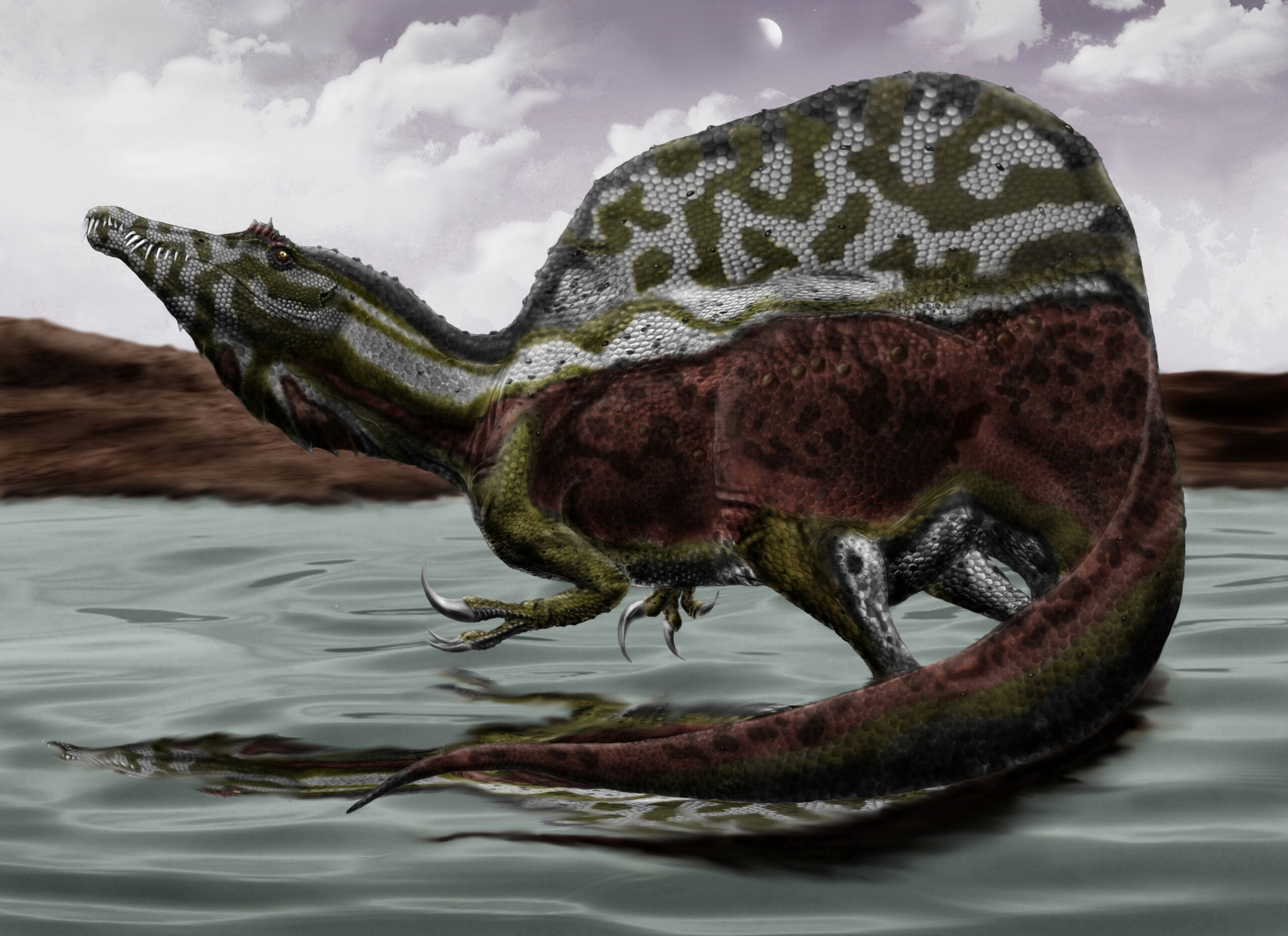
Recent discovery of the high-spined tail of that skeleton, however, led to a bolder conjecture that S. aegyptiacus was the first fully aquatic dinosaur. Two stages are clarified in the evolution of Spinosaurus, which is best understood as a semiaquatic bipedal ambush piscivore that frequented the margins of coastal and inland waterways. Few prehistoric creatures have sparked as much scientific debate as Spinosaurus, the sail-backed giant that may have been the first truly swimming dinosaur.
The evidence for Spinosaurus as an aquatic predator is fascinating yet contentious. Now, with evidence from the newly analyzed tail, there’s a strong case that Spinosaurus didn’t merely flirt with the shore but was capable of full-fledged aquatic movement. Collectively, the findings published today suggest the giant Spinosaurus spent plenty of time underwater, perhaps hunting prey like a massive crocodile. Whether it was a true swimmer or just an expert wader remains hotly debated, yet its massive paddle-like tail suggests it was far more at home in water than on land.
Hesperornis – The Toothed Diving Bird
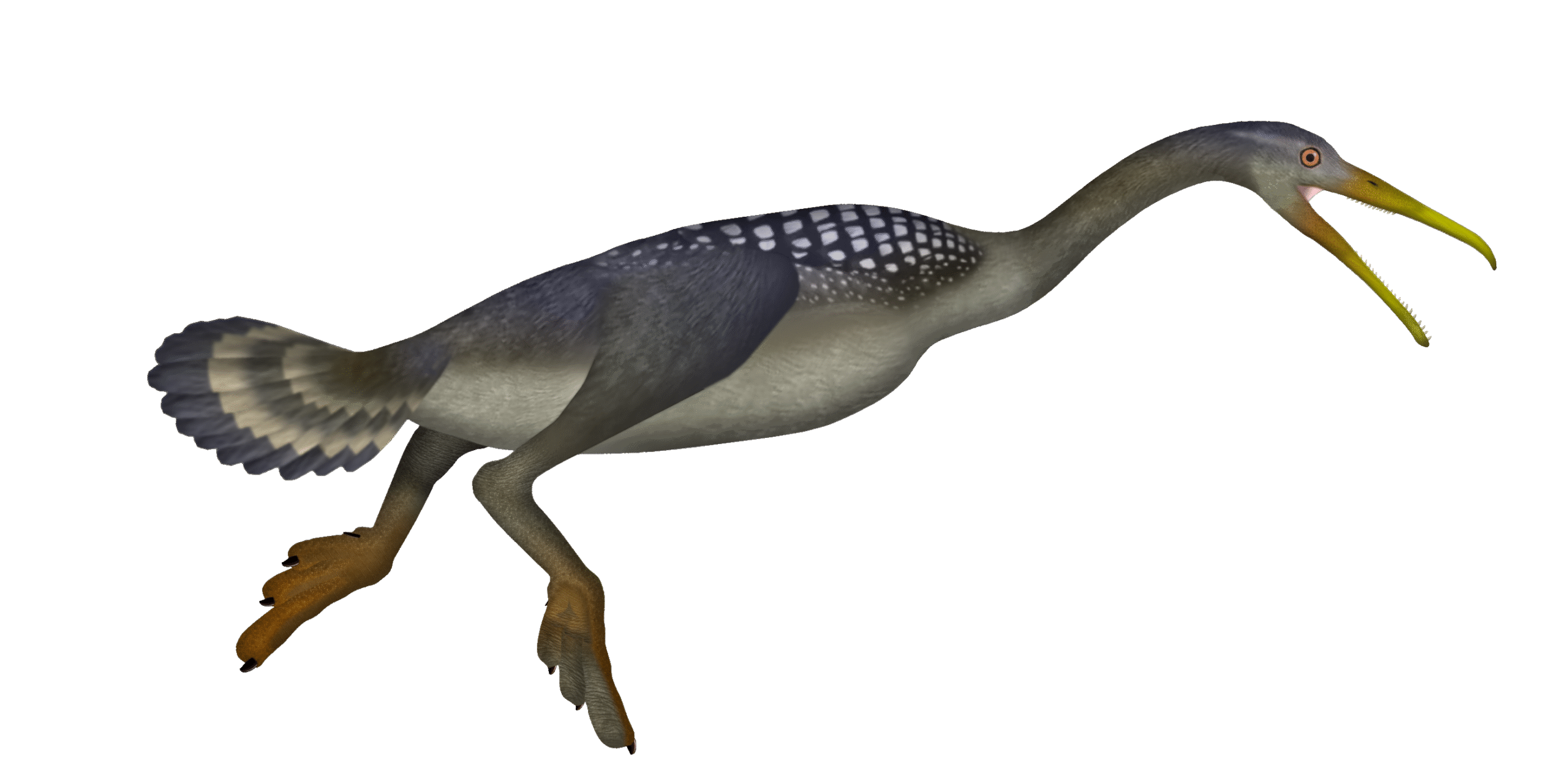
The Hesperornithiformes (sometimes referred to as Hesperornithes) are the first known birds to have adapted to a fully aquatic lifestyle, appearing in the fossil record as flightless, foot-propelled divers in the early Late Cretaceous. This unremarkable specimen was the first look at a remarkable group of extinct animals, the first dinosaurs to adapt to a fully aquatic lifestyle and the earliest group of birds to swim away from the ability to fly. These weren’t your typical feathered friends; they were specialized underwater hunters that gave up flight entirely for aquatic mastery.
Hesperornis was a large bird, measuring about 1.5–2 metres (4.9–6.6 ft) long and weighing around 18-41 kilograms (40-90 lb). It had virtually no wings, and swam with its powerful hind legs. Like many other Mesozoic birds such as Ichthyornis, Hesperornis had teeth as well as a beak. Picture a bird the size of a small kayak, armed with a mouth full of sharp teeth and legs positioned so far back it could barely walk on land. These remarkable creatures represent birds’ most successful invasion of marine environments during the age of dinosaurs.
Conclusion
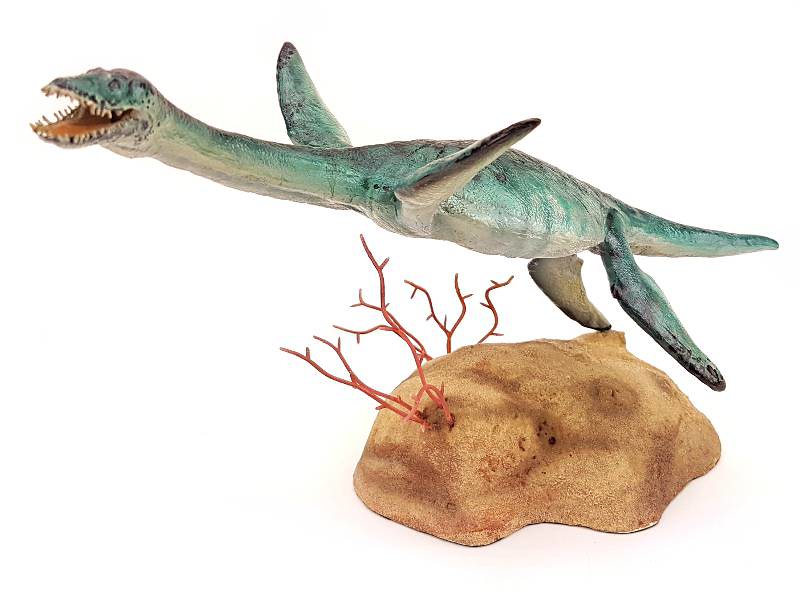
These seven marine giants remind us that the prehistoric world was far more diverse and extraordinary than we often imagine. From the massive Mosasaurus that could swallow a small car whole to the graceful Hesperornis diving through Cretaceous seas with its toothy grin, each creature represents a unique solution to the challenges of ocean living. They developed incredible adaptations – from flexible paddle-like tails to specialized salt glands – that allowed them to dominate ancient seas for millions of years.
What strikes me most about these creatures is how they challenge our preconceptions about both dinosaurs and ocean life. They weren’t just land animals that occasionally got their feet wet; they were fully committed marine predators that had completely restructured their bodies for aquatic life. The next time you’re swimming , just imagine what lurked beneath the waves 100 million years ago. What do you think about these ancient ocean rulers? Tell us in the comments.