You probably grew up hearing that birds are the only dinosaurs still alive today, gliding and flapping where giant reptiles once thundered across the ground. But long before anything you’d recognize as a bird spread its wings, the skies were already crowded with fierce, bizarre, and sometimes downright elegant fliers. They were not dinosaurs in the strict scientific sense, but flying relatives called pterosaurs, and for more than 150 million years they owned the air while dinosaurs ruled the land.
When you picture these ancient sky rulers, you might imagine a generic “pterodactyl” screeching over crashing waves. The reality was far stranger and more diverse. From insect-hunting gliders with long tails to giraffe‑sized giants that stalked the ground like terrifying herons, these animals turned flight into an arms race of speed, size, and style. Let’s dive into seven of the most impressive pterosaurs that were ruling the skies long before the first true birds figured out how to leave the ground.
1. Dimorphodon: The Early Experiment in Flight
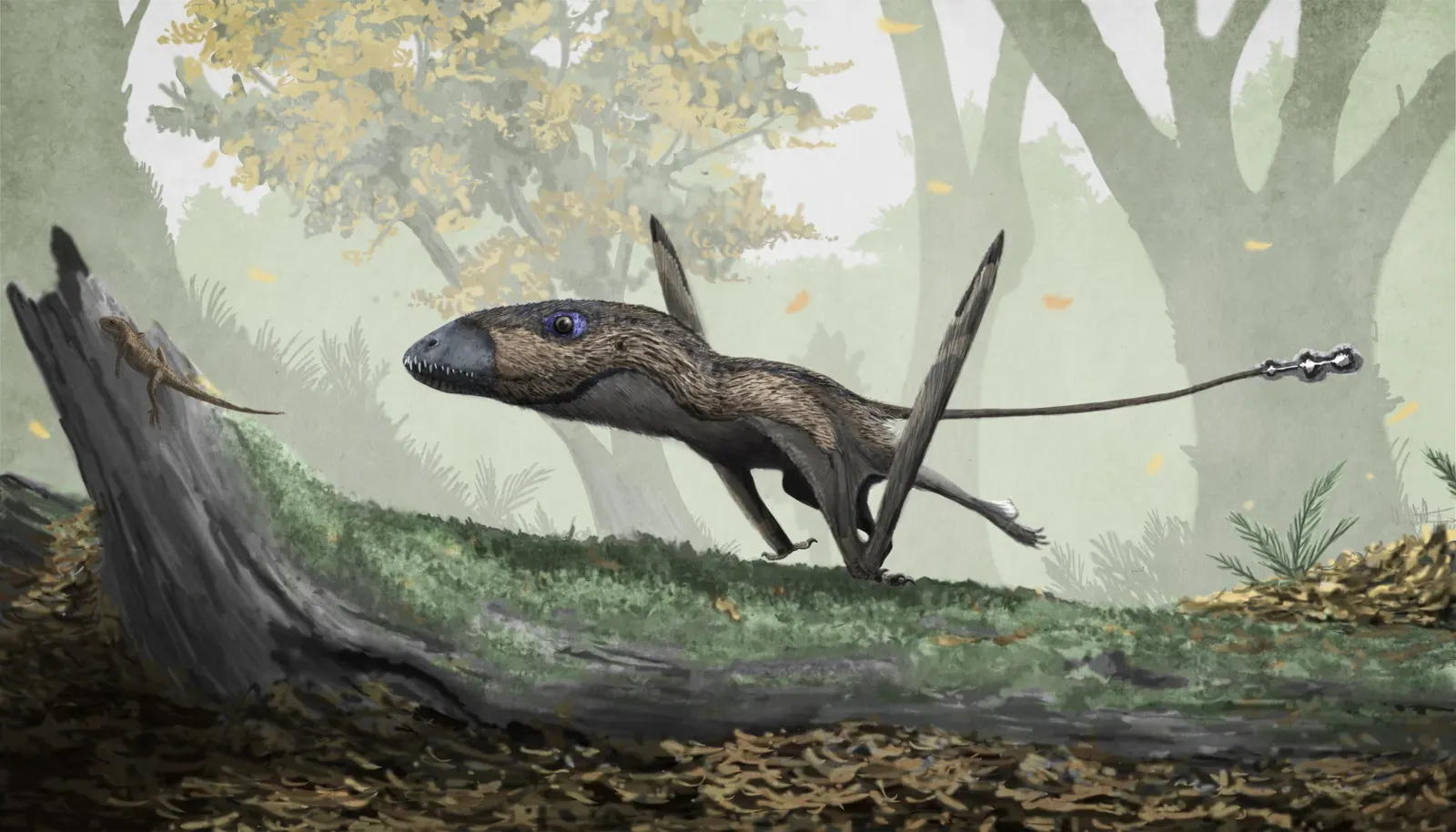
If you could step back into the Early Jurassic and look up, Dimorphodon would probably be one of the first fliers you’d notice. You’d see a creature with a wingspan of around one and a half meters, a big, blocky head, and a long tail tipped with a diamond‑shaped vane. Its name literally refers to its “two types of teeth,” and that odd dental mix tells you it wasn’t just plucking fish from the water but likely snapping up insects and small land animals too. You’re looking at one of the early experiments in powered flight among pterosaurs, still carrying some primitive features compared with later, sleeker forms. ([britannica.com](https://www.britannica.com/animal/pterosaur?utm_source=openai))
When you imagine Dimorphodon on a cliff face, you can picture it clambering around on all fours, using strong limbs and curved claws to launch into the air. Its wings were membranes stretched from an elongated fourth finger back to its body, supported by internal fibers that helped keep the surface taut and controllable. You’re not seeing the effortless, soaring flight of later giants here; instead, you’re watching a nimble, adaptable animal that mixed gliding with short bursts of flapping flight, testing what was possible long before birds ever tried. ([britannica.com](https://www.britannica.com/animal/pterosaur?utm_source=openai))
2. Rhamphorhynchus: The Tail‑Banner Hunter of the Jurassic Seas
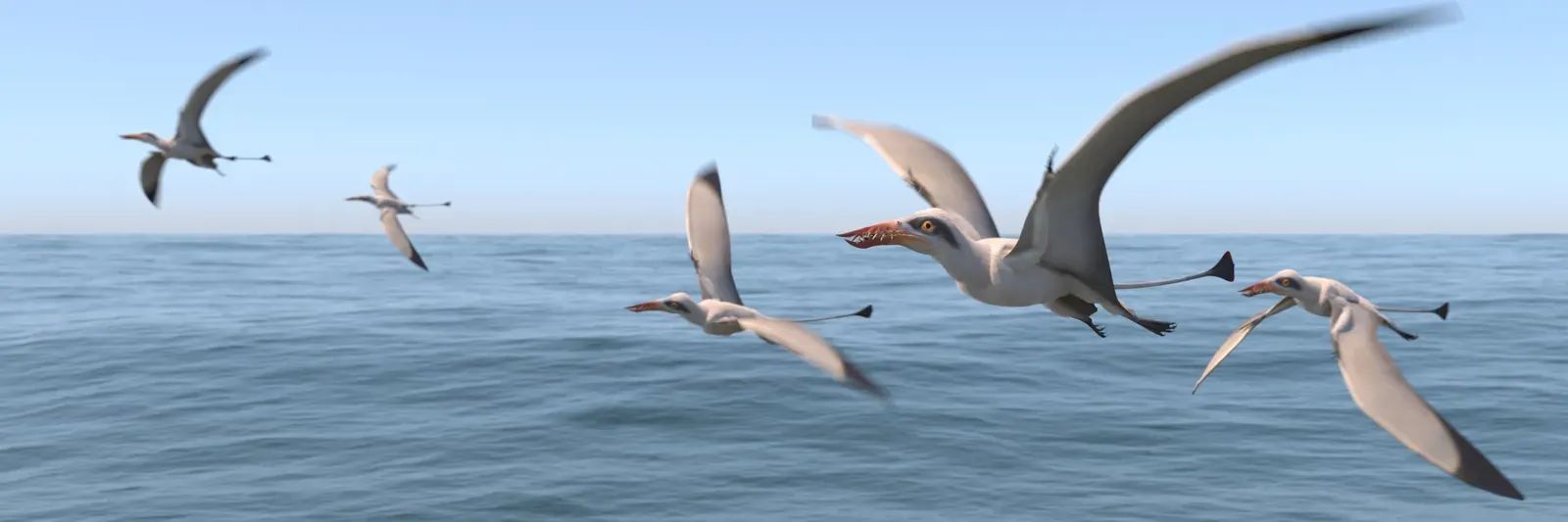
Shift your mental time machine forward into the Late Jurassic, and you find Rhamphorhynchus patrolling ancient coastlines like a squadron of night fighters. You’d recognize it instantly by that long tail ending in a distinctive, stiffened vane that may have acted like a built‑in rudder. Fossils have even turned up with fish remains preserved in the body cavity, so when you picture this animal, you should imagine it swooping low over the water, banking hard to snatch slippery prey from the waves. Its narrow jaws bristled with forward‑pointing teeth, like a natural fish trap. ([britannica.com](https://www.britannica.com/animal/pterosaur?utm_source=openai))
If you were standing on a Jurassic beach at dusk, Rhamphorhynchus would probably remind you of a cross between a kite and a swift, using the tail vane for stability in gusty coastal winds. Its wings were relatively long and narrow, built for efficient soaring over open water rather than tight maneuvering in forests. You’re seeing a specialist here, one shaped by life at the ocean’s edge, where missing a fish meant going hungry but misjudging a wave could mean getting dragged under. Long before seabirds like albatrosses appeared, Rhamphorhynchus had already written an early chapter in oceanic flight. ([nationalgeographic.com](https://www.nationalgeographic.com/science/article/pterosaurs?utm_source=openai))
3. Pterodactylus: The Little Icon That Started It All
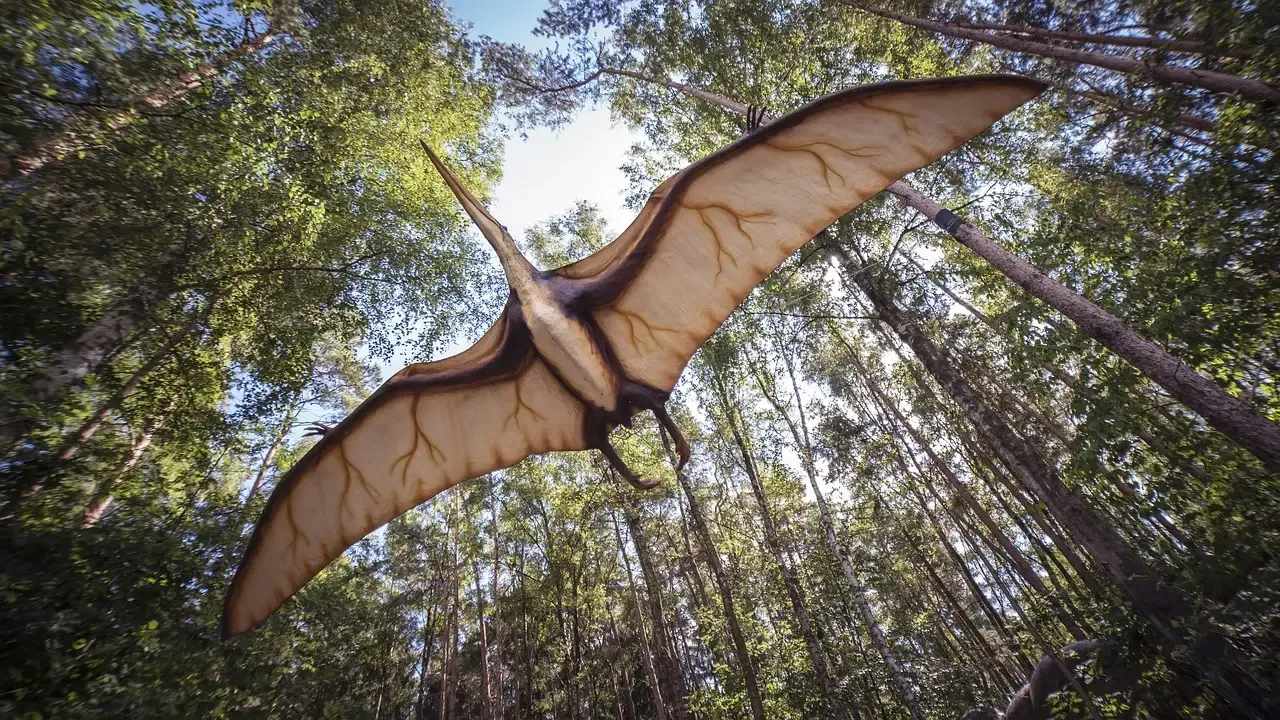
When you hear the word “pterodactyl,” you probably imagine something huge and terrifying, but the real Pterodactylus was surprisingly modest in size. Its wingspan was often less than a meter, making it closer to a big gull than a monster. It lived in the Late Jurassic, near lakes in what is now Europe, sharing the skies with other small pterosaurs. You’re looking at one of the first pterosaurs ever described by science, and even though it wasn’t the largest or the strangest, it became the iconic “flying reptile” in the public imagination. ([britannica.com](https://www.britannica.com/animal/pterodactyl?utm_source=openai))
If you picture yourself by those ancient lakes, Pterodactylus might be gliding overhead in loose flocks, picking off insects or small aquatic animals near the surface. Its shorter tail and proportionally longer head show you how pterosaurs were evolving away from the older, long‑tailed forms toward more advanced shapes. In many ways you’re seeing a blueprint for later, more specialized pterosaurs: lightweight bones, a sophisticated wing membrane, and a body that had already begun to adapt to a fully aerial lifestyle long before the first true birds flapped past. ([en.wikipedia.org](https://en.wikipedia.org/wiki/Pterosaur?utm_source=openai))
4. Pteranodon: The Toothless Soaring Master
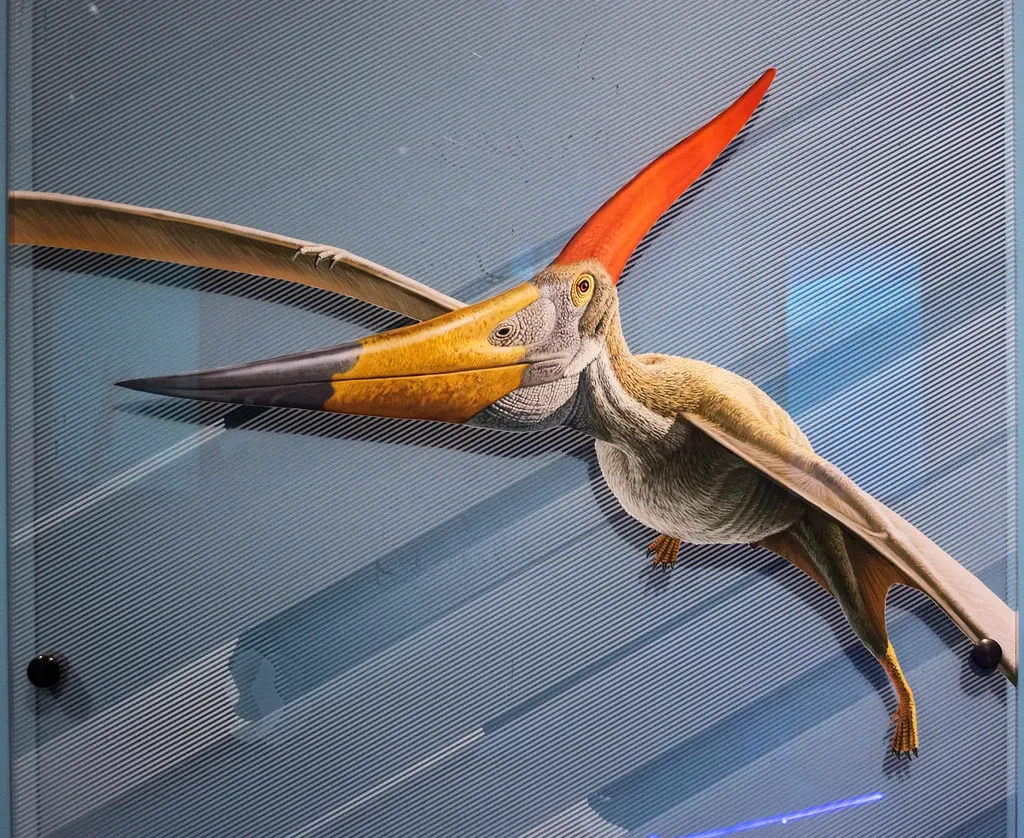
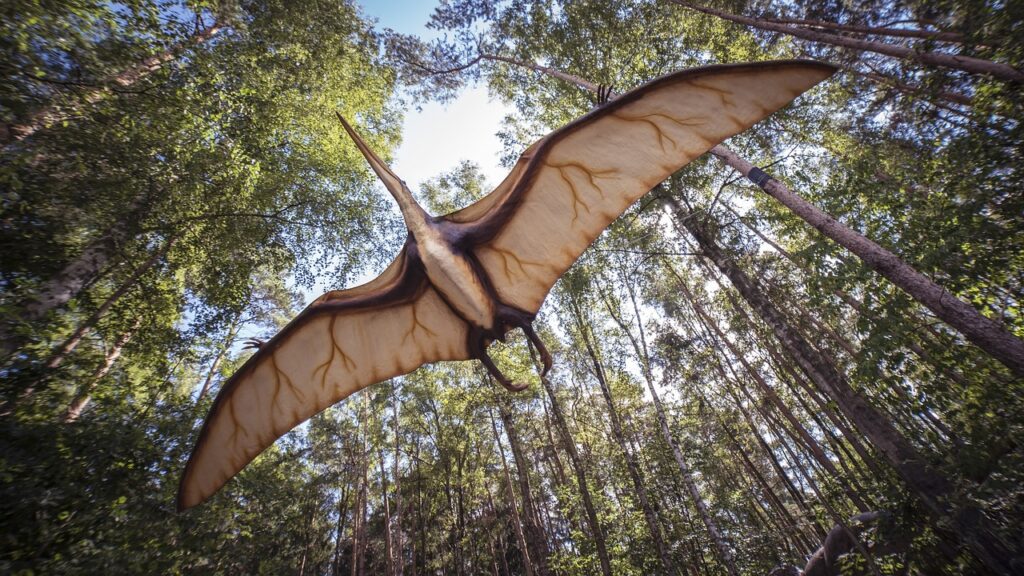
Now jump ahead into the Late Cretaceous, and you meet Pteranodon, the classic “ocean glider” of prehistory. You’d spot it by its enormous wingspan, which could reach roughly seven meters in some individuals, and by the distinctive crest sweeping back from its head. Unlike earlier pterosaurs, it was completely toothless, with a long, pointed beak that seems perfect for snagging fish. When you watch it from a Cretaceous shoreline, you’re seeing an animal built to live much of its life on the wing. ([britannica.com](https://www.britannica.com/animal/Pteranodon?utm_source=openai))
Modern seabirds like albatrosses give you a good mental model for Pteranodon’s lifestyle. You can imagine it using ocean winds and thermal updrafts to glide for long distances with minimal effort, touching down on the water’s surface only briefly to grab fish or squid. Its skeleton shows you a lightweight frame, enormous wing bones, and adaptations that suggest strong, controlled flight rather than clumsy flapping. Long before you’d ever see a pelican or gannet dive, Pteranodon was already carving paths through Cretaceous skies, showing just how fine‑tuned pterosaur flight could become. ([nationalgeographic.com](https://www.nationalgeographic.com/science/article/pterosaurs?utm_source=openai))
5. Tapejara: The Crest‑Crowned Acrobat of the Cretaceous
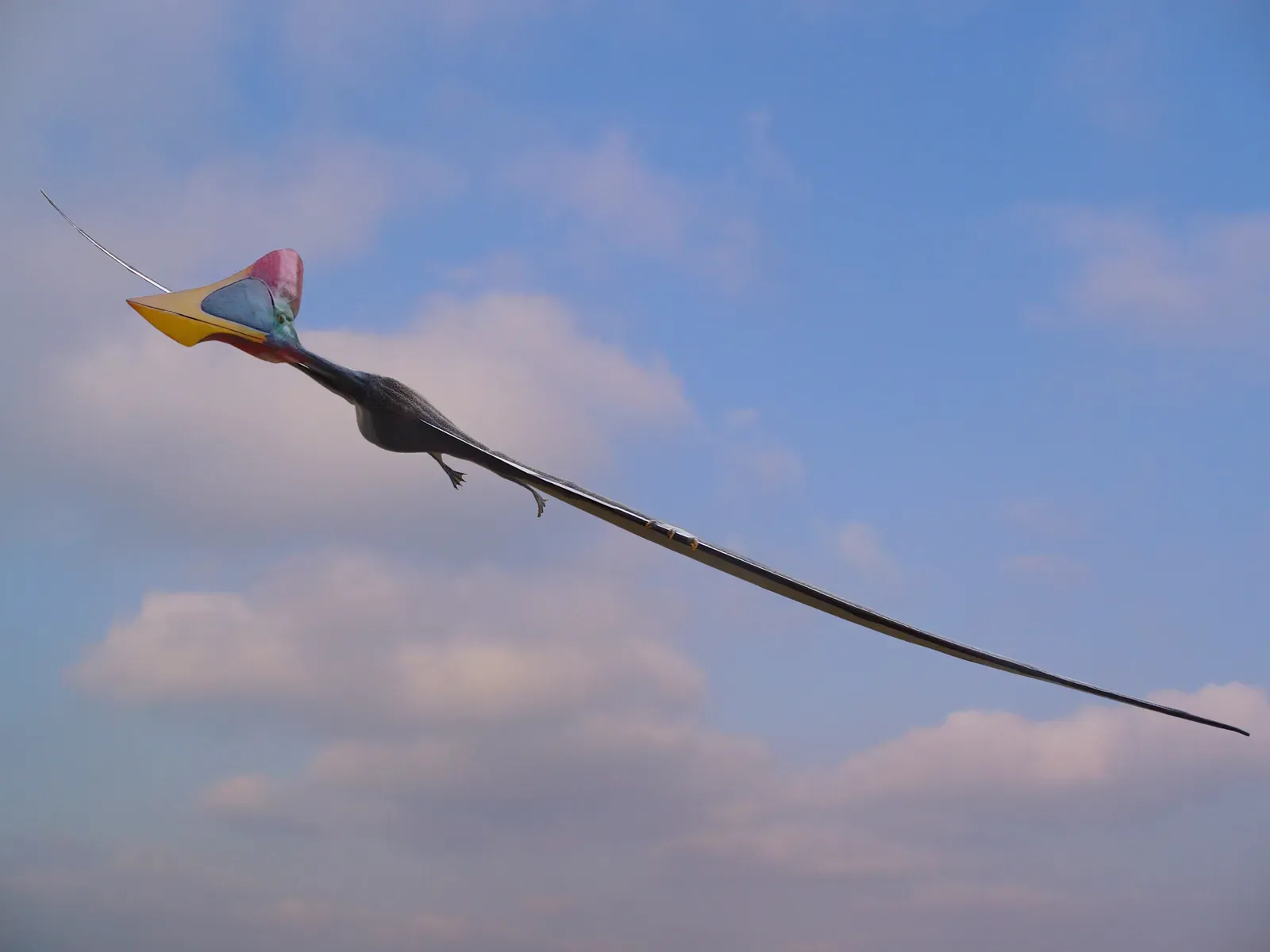
When you picture Tapejara, you should think less “bat with a beak” and more “flying billboard.” This medium‑sized pterosaur carried a huge, sail‑like crest rising from its head, some species sporting shapes so dramatic they look almost unreal in reconstructions. It lived during the Early Cretaceous in what is now Brazil, in a landscape of lagoons and forests. You’re not just looking at a functional flier here; you’re staring at an animal that turned its head into a showpiece, probably for display, species recognition, or even sexual selection. ([nationalgeographic.com](https://www.nationalgeographic.com/science/article/pterosaurs?utm_source=openai))
In your mind’s eye, place Tapejara weaving through coastal cliffs or low over forest edges, using relatively broad wings for agile, short‑range flight. Some researchers have suggested that certain species may have been fruit eaters, plucking nuts or fruit from trees, which would make them more like modern parrots or toucans than seabirds. That massive crest might have influenced how it handled the wind, acting a bit like a vertical stabilizer on an airplane. When you watch Tapejara in your imagination, you’re seeing how pterosaurs did not just master flight; they used it as a canvas for spectacular body designs that would make any bird look conservative. ([nationalgeographic.com](https://www.nationalgeographic.com/science/article/pterosaurs?utm_source=openai))
6. Dsungaripterus: The Hard‑Beaked Shell Crusher
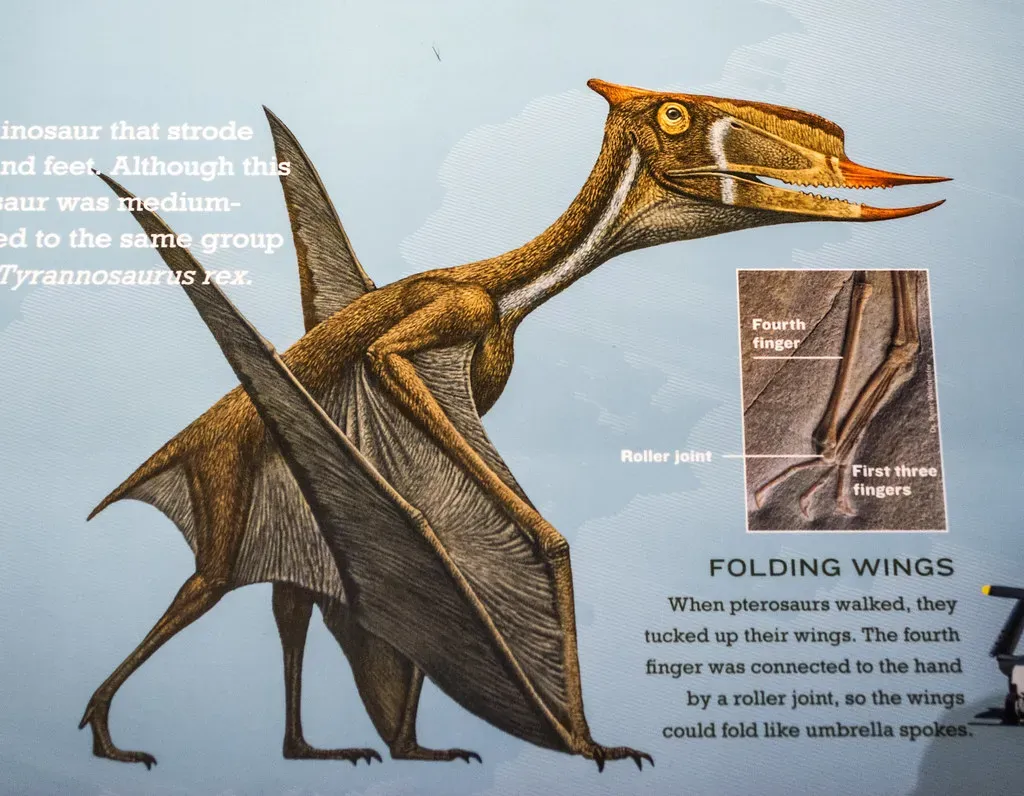
If you’ve ever watched a shorebird crack open shellfish, you already have a hint of how Dsungaripterus likely made a living. This medium‑sized pterosaur had a wingspan of about three meters and a very unusual skull: long, upturned jaws with a toothless tip at the front and robust, blunt teeth farther back. You can imagine it probing along mudflats or rocky coasts, using that reinforced beak to pry up hard‑shelled prey and then crushing them in its powerful back teeth. It lived during the Early Cretaceous in what is now China, taking advantage of coastal and river environments. ([newworldencyclopedia.org](https://www.newworldencyclopedia.org/entry/Pterosaur?utm_source=openai))
When you visualize Dsungaripterus on the ground, it might remind you more of a stalking wader than a soaring seabird. Its robust limbs suggest it was comfortable walking or even trotting around, launching into the air when needed rather than living permanently on the wing. In the sky, it still would have been an impressive sight, but its anatomy tells you that flight was only part of its story. Long before you’d see specialized birds cracking mollusk shells, Dsungaripterus was already exploiting that niche, proving that pterosaurs were not just generic fliers but finely tuned to all kinds of diets and habitats. ([nhm.ac.uk](https://www.nhm.ac.uk/discover/the-truth-about-pterosaurs.html?utm_source=openai))
7. Quetzalcoatlus: The Giant That Turned the Sky into a Runway
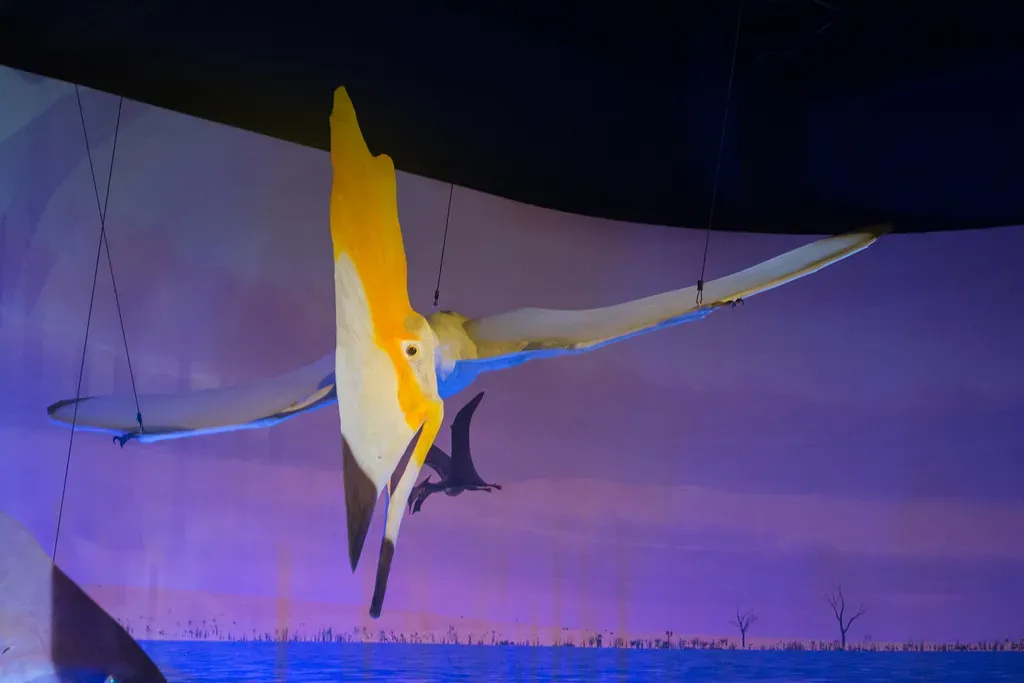
When you finally meet Quetzalcoatlus, you’re face to face with one of the largest flying animals that has ever lived, and it instantly changes how you think about what flight can be. This Late Cretaceous azhdarchid pterosaur likely reached a wingspan of around ten to twelve meters in the largest species, with some individuals standing as tall as a giraffe at the shoulder when on the ground. You can picture it stalking across floodplains in what is now North America, using a long, toothless beak to snatch up small animals in a way that feels eerily similar to a giant stork or heron. ([britannica.com](https://www.britannica.com/animal/Quetzalcoatlus?utm_source=openai))
For a long time, you might have heard debates about whether something that big could truly fly, but recent analyses of its bones and body proportions strongly support the idea that it did. You can imagine Quetzalcoatlus using a powerful, quadrupedal launch, pushing off with all four limbs to catapult itself into the air, then catching thermals to soar over vast distances with broad wings. In flight, it would have cast a shadow bigger than a small airplane, owning the sky in a way no bird ever has. When you picture this animal gliding above the last generations of non‑avian dinosaurs, you’re seeing the climax of pterosaur evolution, a final, breathtaking statement before the end‑Cretaceous extinction wiped these sky rulers away. ([britannica.com](https://www.britannica.com/animal/Quetzalcoatlus?utm_source=openai))
Conclusion: When You Look at a Bird, Remember Who Flew First
The next time you watch a gull riding the wind or a hawk circling high above, you can mentally rewind the clock and imagine pterosaurs filling that same space, doing many of the same jobs millions of years earlier. You’ve met early experimenters like Dimorphodon, ocean hunters like Rhamphorhynchus and Pteranodon, showpieces like Tapejara, specialists like Dsungaripterus, and giants like Quetzalcoatlus that pushed the limits of what bone and muscle can do. Each one shows you that the sky has never been a blank backdrop; it has always been a fiercely contested frontier.
Birds eventually took over after the great extinction at the end of the Cretaceous, but by then the rules of flight had already been written in the language of membranes, hollow bones, and daring leaps into empty air. When you look up today, you’re seeing only the latest chapter in a story that began long before feathers ever mattered. Knowing that, does the sky feel a little older, stranger, and more crowded with ghosts than you expected?