
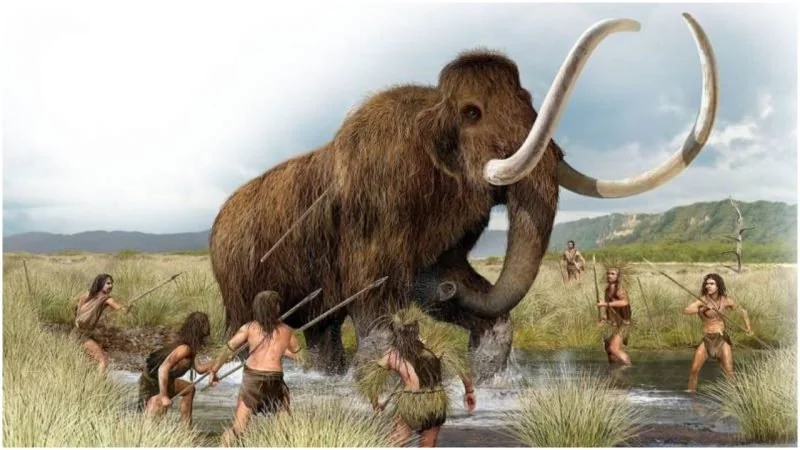
There’s something uncomfortable about looking at a fossil and realizing the last thing it ever saw might have been us. We like to imagine humans as noble stewards of the planet, but our history with big animals is much messier, full of spears, traps, and disappearing giants. When you zoom out over the last fifty thousand years, the pattern is hard to ignore: wherever our species arrived, the largest animals usually did not stick around for long.
That does not mean every extinction was simple, or that climate and natural change did not play a role. But in a surprising number of cases, the evidence points straight at human hunting as the final, decisive shove over the edge. Some of these creatures were so extraordinary that it almost feels like losing mythical beasts. Others look uncomfortably like the animals we still hunt today. Let’s walk through seven of the clearest, best-supported examples – species where humans were not just bystanders, but almost certainly the executioners.
The Woolly Mammoth: Icon of the Ice Age, Casualty of Human Persistence
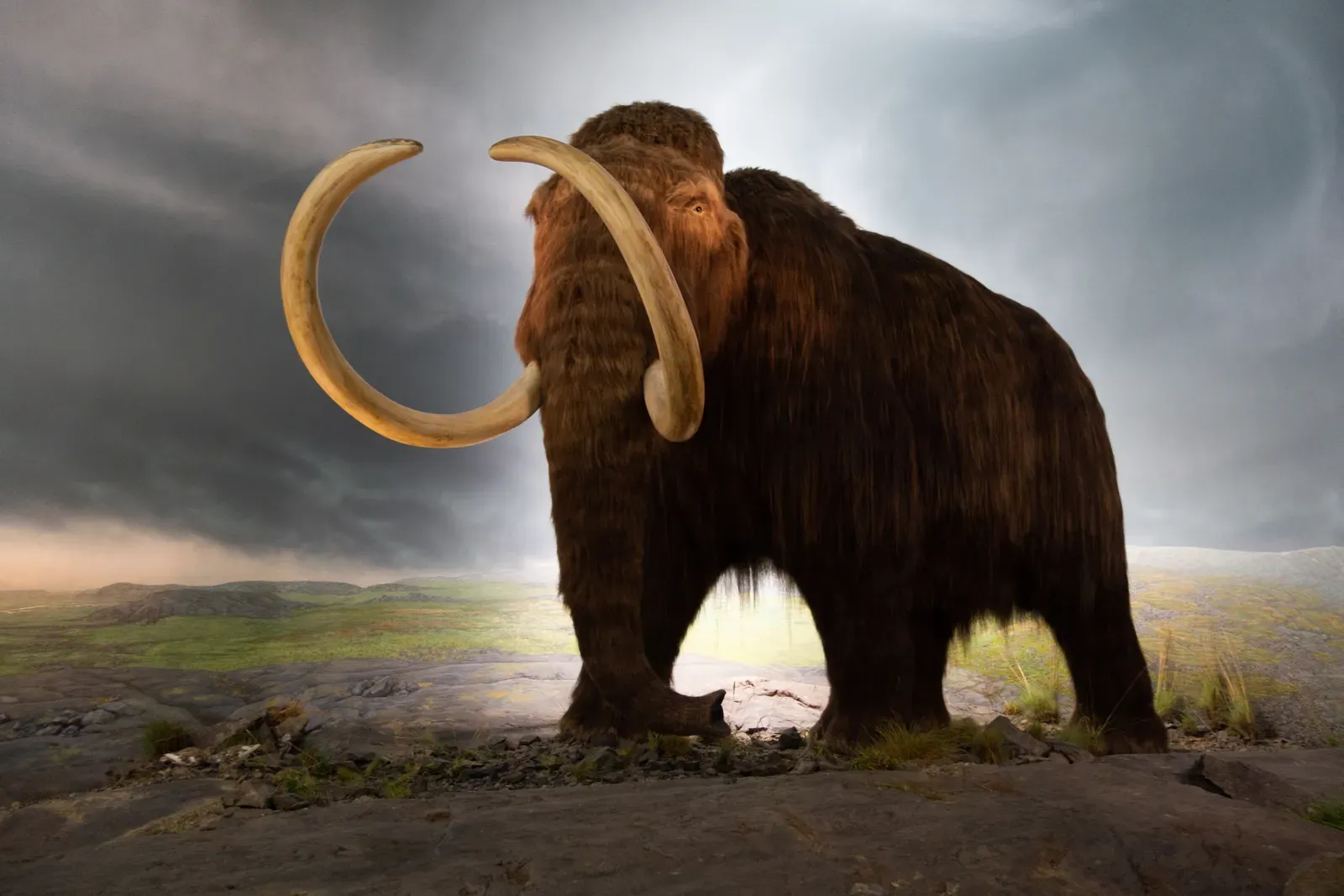
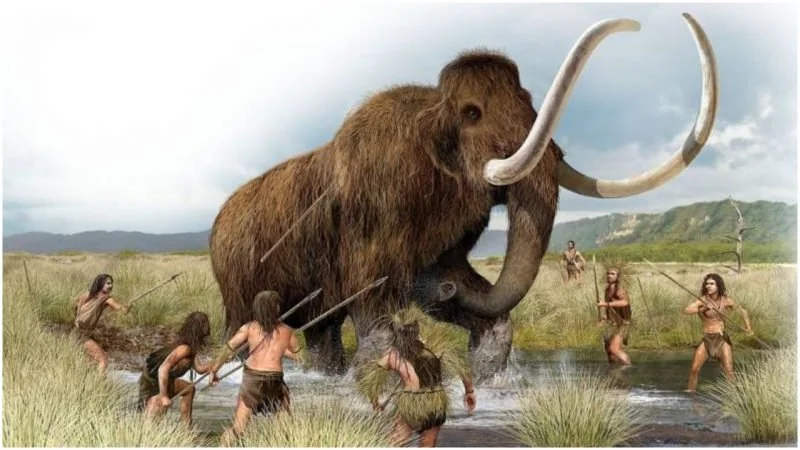
Few animals symbolize the lost Pleistocene world like the woolly mammoth, shaggy and towering, with curling tusks longer than a person is tall. These giants roamed vast areas of Eurasia and North America for hundreds of thousands of years, surviving multiple glacial cycles, predators, and brutal cold. Yet within a few thousand years of widespread human arrival in their habitats, mammoths vanished from almost all of their range, leaving only scattered island holdouts before they finally disappeared.
Archaeological sites are packed with mammoth bones bearing clear butchery marks, alongside stone tools and evidence of organized hunts. Some Ice Age kill sites show dozens of mammoth remains piled together, suggesting coordinated group hunting and perhaps even driving herds into traps or bogs. Climate warming at the end of the Ice Age certainly stressed mammoth populations, shrinking cold steppe habitats, but the timing is suspicious: mammoths manage repeated climate shifts just fine – until humans with advanced weapons, social coordination, and relentless hunting pressure arrive almost everywhere they lived.
The Woolly Rhinoceros: Built for Cold, Not for Clever Apes
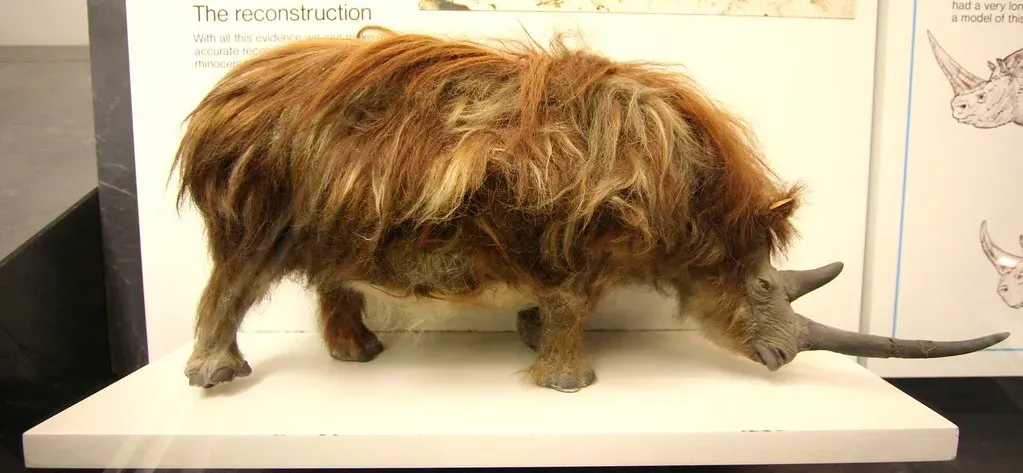
The woolly rhinoceros once trudged across the same frozen grasslands as mammoths, covered in thick fur and armed with a massive, forward-curving horn. This animal was perfectly adapted to the cold, scraping snow aside with its horn to reach tough grasses beneath. Fossils and cave art show it was a familiar presence to Ice Age people, and that alone should make you pause: prehistoric humans painted what they saw, and they saw woolly rhinos often enough to sketch them in detail.
For a long time, climate change was treated as the main suspect in the woolly rhino’s disappearance. But new genetic and climatic evidence points to a more nuanced story, where the species appears relatively stable through earlier warming periods, only to crash around the time humans spread widely across its range. Bones with signs of butchering, spear wounds, and the same pattern we see with other megafauna suggest that hunting layered on top of environmental stress was a deadly combination. A tough, one-ton rhino can shrug off cold; it can’t shrug off organized, tool-wielding hunters who learn exactly how to bring it down.
The Giant Ground Sloths: Slow, Enormous, and Tragically Easy Targets
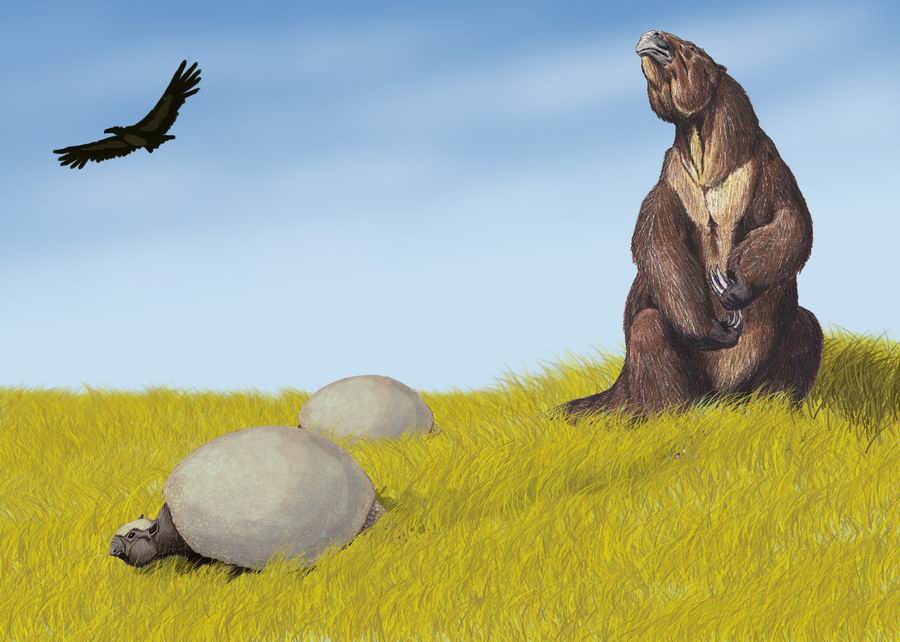
If you imagine a sloth, you probably see a small, tree-hugging creature asleep on a branch – but its extinct giant relatives were a different story. Some ground sloths in the Americas were as big as elephants, lumbering across open terrain with massive claws and surprisingly powerful limbs. They were primarily plant-eaters, not predators, which already put them at a disadvantage once humans showed up. There is compelling evidence that when people first entered the Americas, these animals had never encountered a hunter like us.
Archaeologists have uncovered ground sloth remains with cut marks from stone tools, along with footprints and activity traces that appear to show humans stalking and processing them. These giant herbivores had slow reproductive rates and limited defensive behavior beyond size and claws. That works fine against ancient predators that take a few individuals now and then; it fails catastrophically against coordinated hunting, where people can return season after season, generation after generation. Once you start picturing a large, slow, curious animal watching hunters approach without much fear, the story of their rapid decline becomes heartbreakingly clear.
The Irish Elk (Giant Deer): Antlers as Wide as a Car, and a Dangerous Attraction
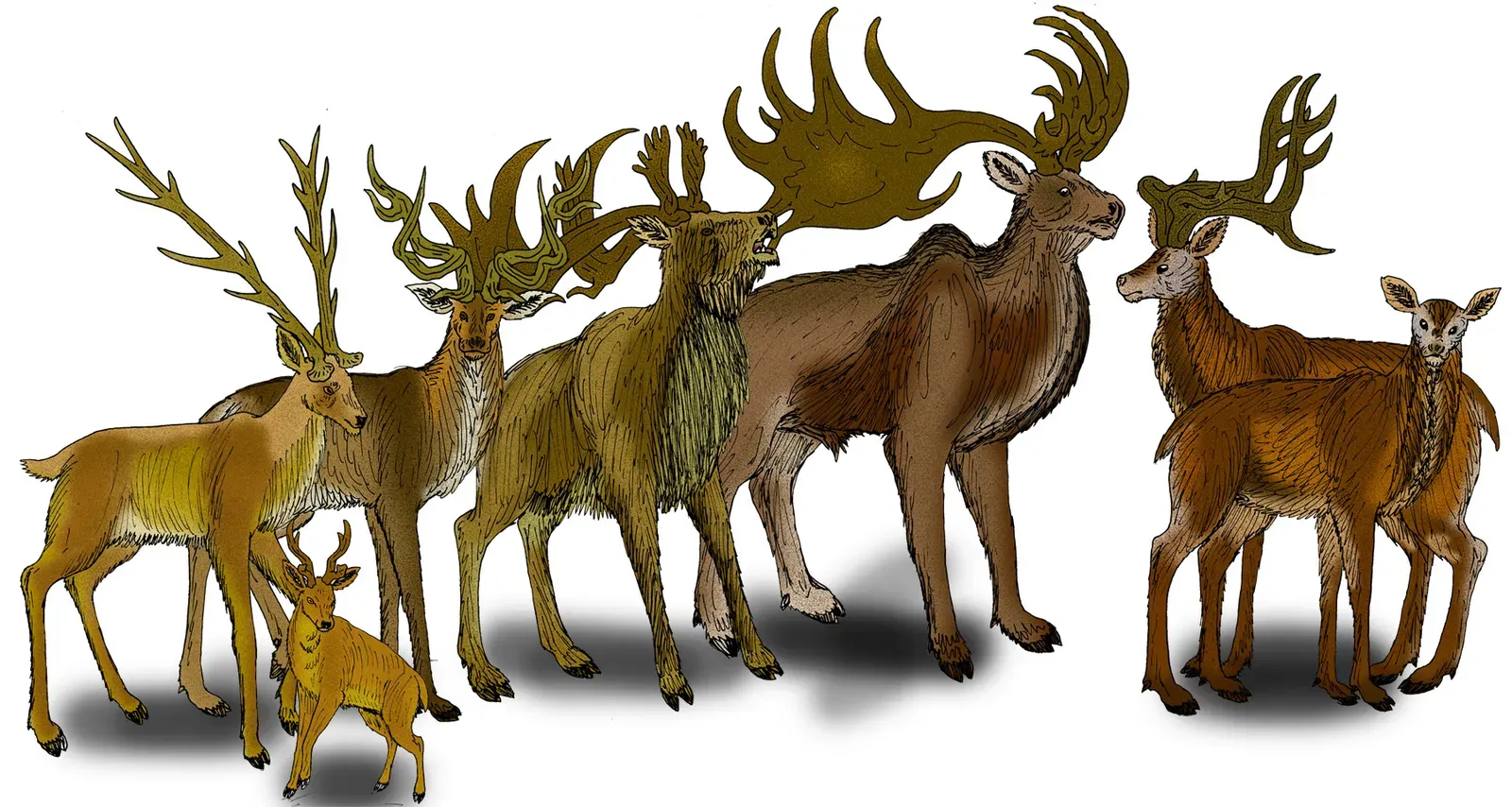
The so-called Irish elk, more accurately known as the giant deer, carried antlers so huge they seem almost unreal – spanning wider than a typical car is long. Males likely used these antlers for display and combat during breeding season, turning them into walking billboards advertising strength and status. Unfortunately, anything that enormous and impressive also becomes very visible to hungry humans, especially in open landscapes where there is nowhere to hide those spectacular racks.
Fossil records show that these deer persisted through earlier climate shifts, adapting to changing vegetation and ice advances. Their final disappearance coincides closely with human presence, and there are sites where giant deer bones lie mixed with stone tools and other hunted species. Big-bodied, showy animals with predictable seasonal behavior are perfect hunting targets, and a species that invests so heavily in antler growth has less energy margin to survive sustained human pressure. It is hard not to see those magnificent antlers as both a triumph of evolution and an evolutionary trap once our species entered the scene.
The American Mastodon: Forest Giants in the Crosshairs of Early Americans
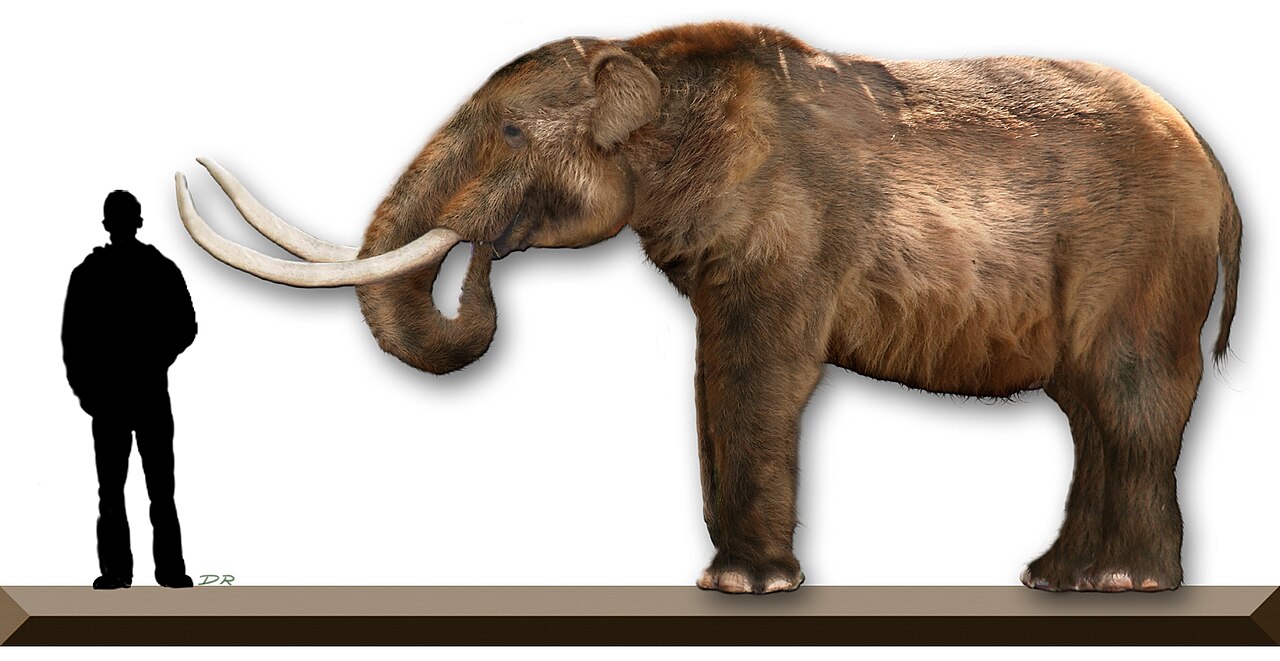
Before forests in North America echoed with chainsaws, they echoed with the low rumbles and snapping branches of mastodons – relatives of elephants, but with different teeth and a preference for wooded and swampy environments. Mastodons endured multiple ice ages and shifts in vegetation, thriving in mixed landscapes of forest and wetland. Then humans appeared across the continent, bringing spear tips engineered specifically to penetrate thick hides and heavy muscle.
Some of the most striking Paleoamerican archaeological finds are mastodon skeletons embedded with stone spear points, as well as bone tools carved from mastodon remains. These are not ambiguous scratches; they are clear signs of direct hunting and carcass processing. While changing climate certainly rearranged habitats, mastodons had previously handled such rearrangements over long geological timescales. What changed at the end of the last Ice Age was the addition of highly capable human predators, able to track herds, cooperate in groups, and kill even the largest animals. When a slow-breeding giant becomes a prime food source for a rapidly expanding human population, the math just does not work out in the giant’s favor.
The Moa of New Zealand: Flightless Birds That Never Stood a Chance
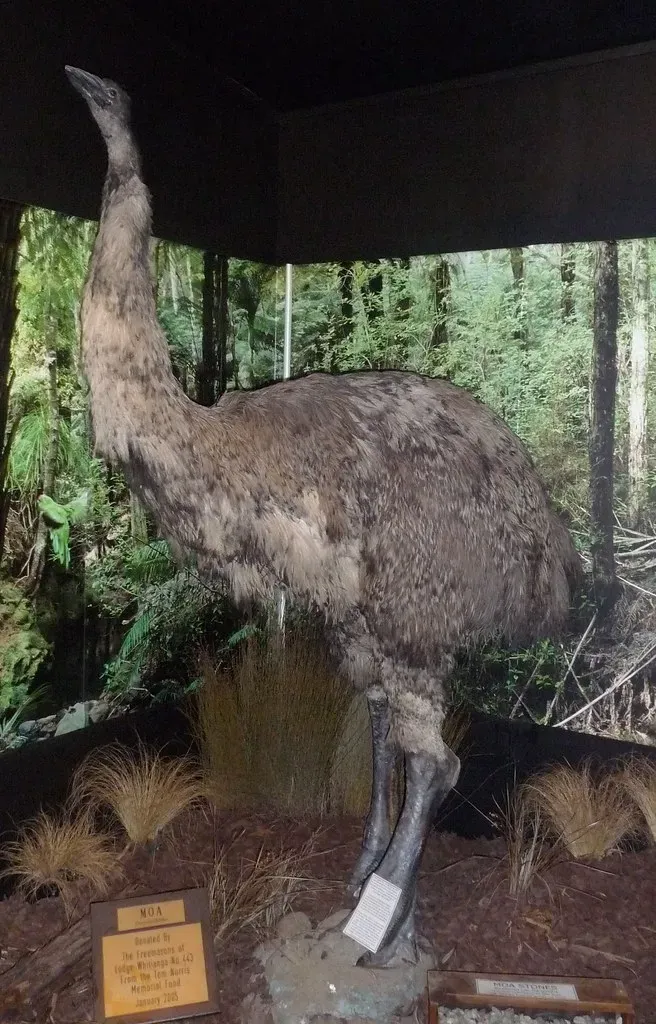
New Zealand’s moa were colossal, flightless birds – some species taller than a person even without stretching their long necks. They had no land mammals hunting them for millions of years, which shaped a world where birds dominated many ecological roles. When Polynesian settlers first arrived roughly a thousand years ago, they entered a landscape filled with naive, unafraid birds that had never evolved to worry about ground-based primates throwing spears or setting traps.
Within only a few centuries of human settlement, all moa species were gone. Archaeological sites in New Zealand contain piles of moa bones, burned and broken during cooking, and evidence that these birds became central to the diet and culture of the new human inhabitants. Moa were large, slow to reproduce, and easy to hunt once people learned their habits and nesting grounds. Add in habitat burning and changes to the landscape, and you have a perfect example of rapid, human-driven extinction. Unlike older Pleistocene cases where climate and hunting are tangled together, the moa story is astonishingly quick and overwhelmingly human in its cause.
The Dodo: A Modern Symbol of Human-Driven Extinction
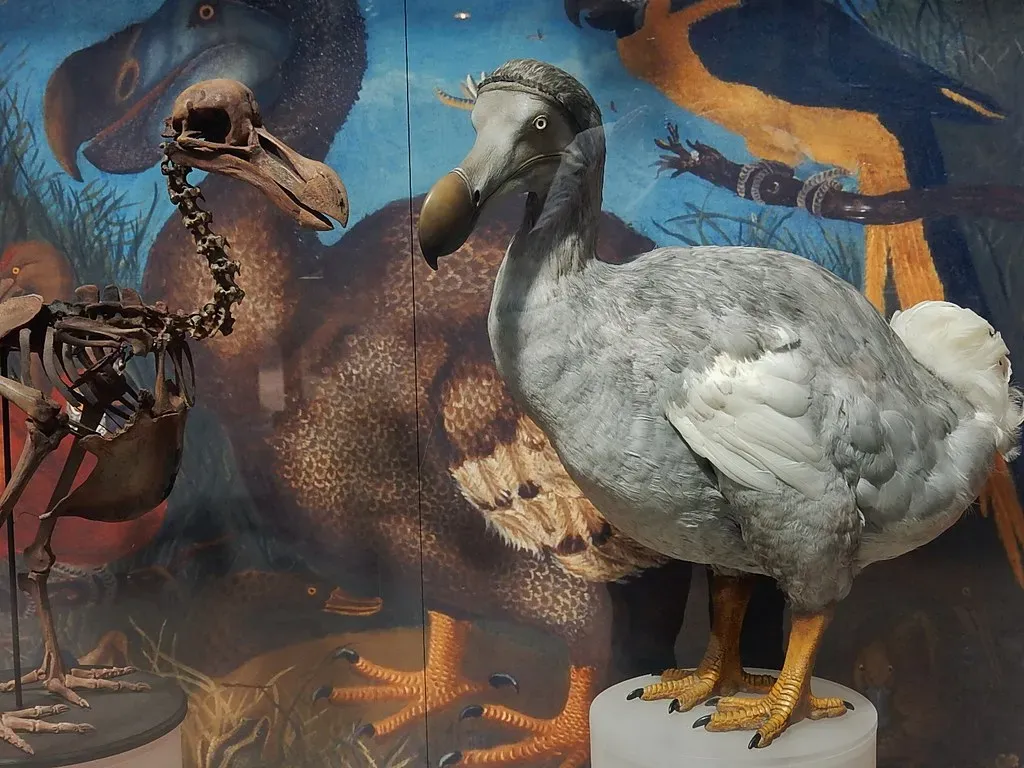
The dodo has become a cultural shorthand for extinction, often treated as a silly, bumbling bird that practically asked to disappear. In reality, it was a large, flightless pigeon perfectly adapted to the isolated island of Mauritius in the Indian Ocean, where it faced no terrestrial predators before humans arrived. When sailors and colonists reached the island in the late fifteen hundreds, they found a tame, ground-dwelling bird that did not know to fear them, because it had never needed that instinct before.
Humans hunted dodos directly for food, but the killing did not stop there. They also brought along pigs, rats, dogs, and other invasive species that raided nests and destroyed habitat. Written accounts from the period, combined with subfossil bones, show how rapidly dodos went from abundant to gone – likely in less than a single human lifetime. Unlike ancient megafauna where we have to piece together clues over tens of thousands of years, the dodo’s story unfolded in real historical time, under direct human observation. It is one of the clearest, least-deniable examples of our species pushing another large animal clean off the map.
Conclusion: The Pattern We Do Not Want to See
When you line these stories up, the pattern is brutally simple: big, slow-breeding animals meet fast-learning, tool-using hunters, and the big animals lose. Climate and natural change always matter, but in each of these seven cases, human hunting is not just a background factor – it is the sharp edge that finishes the job. It is no accident that mammoths, mastodons, giant ground sloths, woolly rhinos, giant deer, moa, and dodos all unravel shortly after humans arrive with better weapons and growing populations.
It is tempting to frame these extinctions as ancient mistakes, committed by people who did not know any better, but that lets us off the hook too easily. The uncomfortable truth is that the same impulses – expanding, exploiting, assuming abundance will last – are still with us, only now amplified by industrial technology and global trade. If our ancestors could wipe out a mammoth with stone-tipped spears, imagine what we can erase with factory trawlers, bulldozers, and rifles. The real question is whether we finally learn from the ghosts of these lost giants, or whether future generations will talk about elephants, whales, and rhinos the same way we talk about mammoths and dodos today. Which side of that story do you want to be on?