You do not have to be a scientist to feel your stomach flip when you stand in front of a wall of dinosaur bones or a field of stone trees that started life before mammals ever ruled the planet. Across the United States, there are a handful of places where the rocks are not just old scenery, but time capsules that still hold the textures, shapes, and even last moments of prehistoric life. These are not abstract museum ideas; they are real landscapes you can walk through, breathe in, and touch with your own hands.
In these seven geological wonders, you are not just looking at fossils – you are stepping into ancient forests, lakes, ash-choked waterholes, and meandering Jurassic rivers. Each site freezes a different moment in Earth’s story, from early dinosaurs to ancient horses to dragonflies that fell into quiet lake mud. If you have ever wanted to feel what “deep time” really means, this is where you start.
Florissant Fossil Beds, Colorado – A Lake That Trapped an Entire Ecosystem
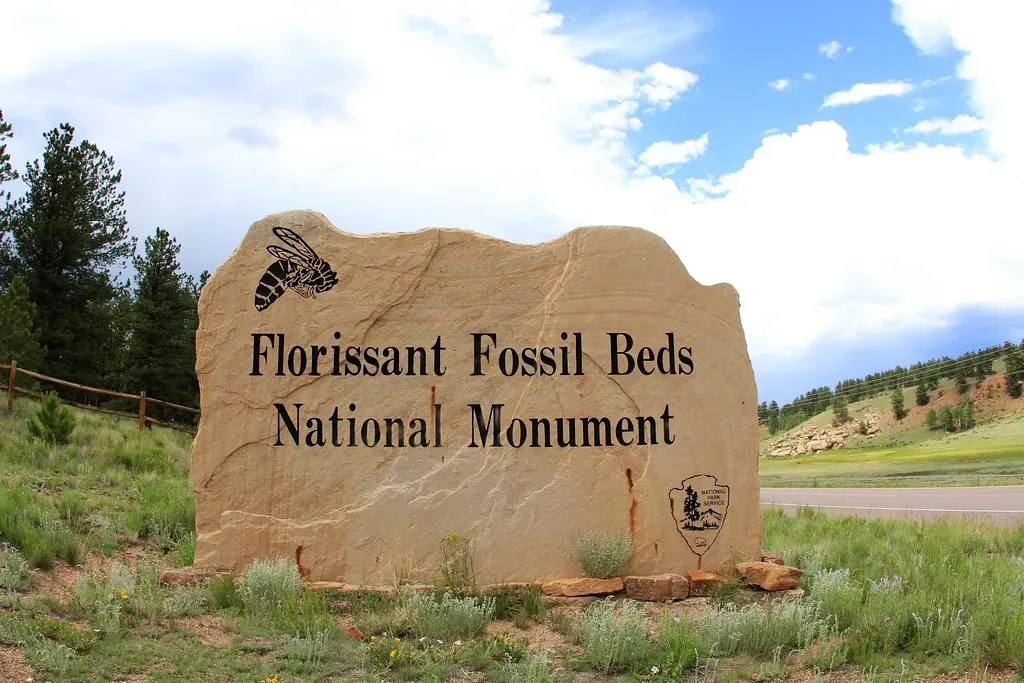
Imagine standing in a Colorado mountain valley and realizing that beneath your feet lies one of the richest collections of fossil plants and insects in the world. At Florissant Fossil Beds National Monument, you are walking over the floor of an ancient lake that existed more than thirty million years ago, during the Oligocene Epoch. Volcanic eruptions in the nearby mountains repeatedly dusted this lake with fine ash, turning peaceful waters into a natural archive that locked in delicate leaves, flowers, seeds, and insects with astonishing detail. You are not just seeing “fossils”; you are seeing wing veins in ancient butterflies, leaf edges in long‑vanished plants, and tiny features that usually never survive time.
On the surface, you wander past massive petrified redwood stumps – some of them so wide you could park a small car on top – reminders that this valley was once home to towering redwood forests similar to those in coastal California today. Trails take you past the famous “Trio,” a cluster of redwood trunks that grew from the same root system, hinting at the dense, moist forest that once shaded this lake. When you step into the visitor center, you shift scale completely, from giant trees to paper‑thin shales that reveal ants, wasps, beetles, and spiders that look like they died yesterday. As you study those fossil insects, you get a rare chance to compare ancient climate and ecosystems with what you experience outside the window right now, turning a simple visit into a quiet lesson in how quickly environments can change.
Dinosaur National Monument, Colorado & Utah – A Jurassic Riverbed Frozen in Stone
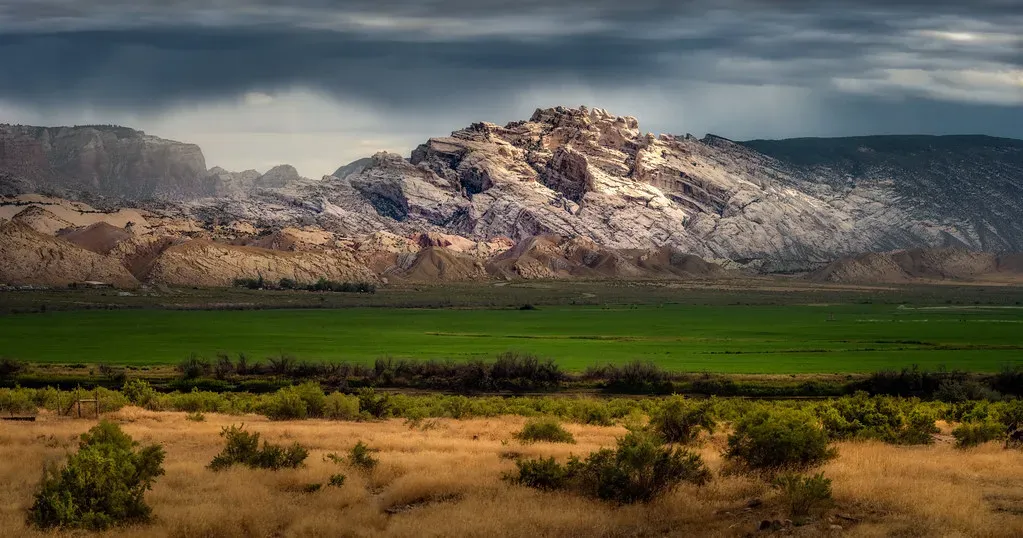
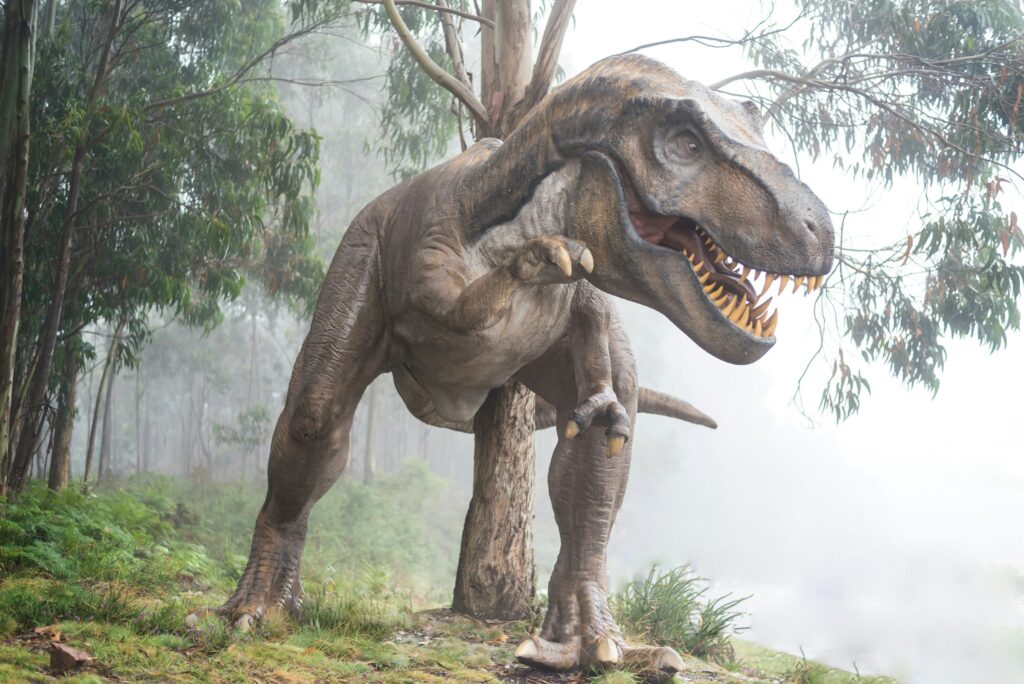
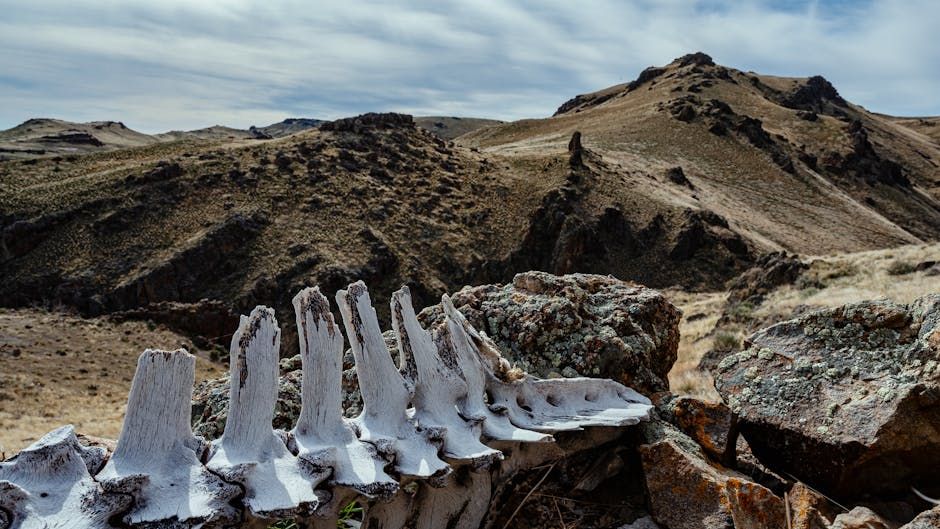
When you step into the Quarry Exhibit Hall at Dinosaur National Monument, it feels almost surreal. In front of you, an entire cliff face is studded with dinosaur bones still embedded in the rock, as if a Jurassic river just dried up and left its skeletons behind. This sandstone layer, known as the Carnegie Quarry, formed about one hundred and fifty million years ago in a braided river system where carcasses were swept along, buried, and preserved. You can spot the huge vertebrae and leg bones of sauropods like Apatosaurus and Camarasaurus, along with predators and smaller animals, all crowded together in a way that makes the river’s ancient power feel uncomfortably real.
Unlike a typical museum display where the story has been carefully rearranged, here you see the chaos of nature exactly where it happened. Geologists interpret the quarry as a channel deposit from a shifting river, something like a prehistoric version of today’s Platte River, constantly moving sediment and bodies alike. As you trace the bones up the wall, you are also tracing a moment in deep time – one flood, one bend in one river, preserved for millions of years. Outside the hall, the folded and tilted rock layers around the monument remind you that even mountains and rivers are temporary, but a single good burial can keep an animal’s story alive far longer than its species, its ecosystem, or the world it knew.
Petrified Forest National Park, Arizona – A Rainbow of Stone Trees from the Age of Early Dinosaurs
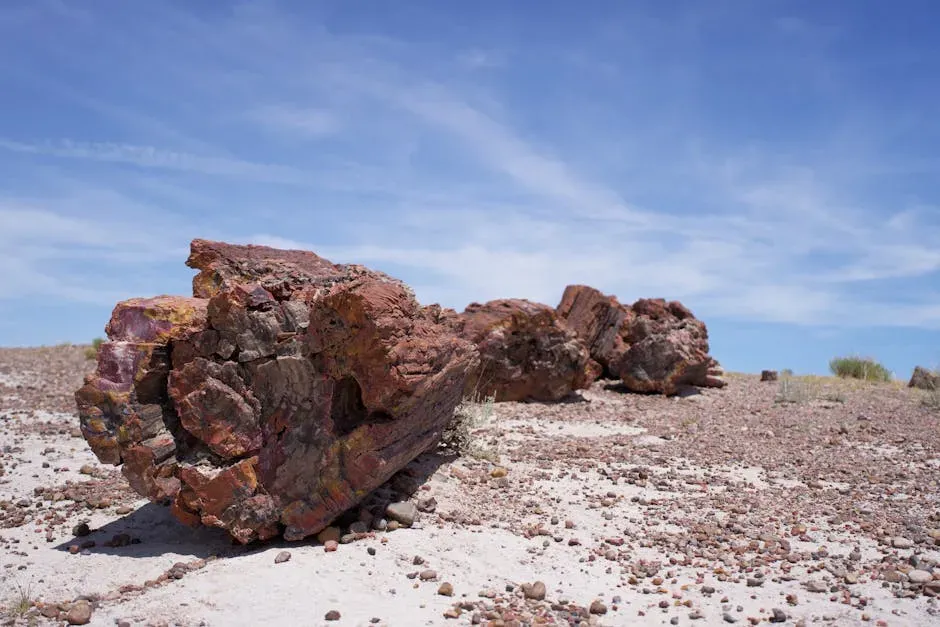
At Petrified Forest National Park, your first reaction is often disbelief: whole tree trunks, broken into segments, lie scattered over the desert like a logging operation that somehow turned to quartz. These logs are more than two hundred million years old, dating back to the Late Triassic, when this part of Arizona was a lush floodplain crisscrossed by rivers. Fallen conifer trees were buried in sediments rich in volcanic ash, and over time, groundwater carrying dissolved minerals seeped into their cells. The original organic material decayed away, but mineral crystals – especially quartz colored by iron and other elements – grew in its place, turning wood into stone without losing its structure.
When you look closely at a polished cross‑section of one of these logs, you can see growth rings, knots, and textures that still faithfully record how that tree grew before dinosaurs truly came into their own. The surrounding Chinle Formation also hides bones of early dinosaurs, crocodile‑like reptiles, and amphibians, hinting at a restless ecosystem evolving toward the world you know. Walking among the petrified logs, you move through a landscape that has shifted from swampy lowlands to arid badlands, yet still holds the memory of ancient forests in vivid reds, yellows, and purples under your boots. The park forces you to hold two ideas at once: everything changes, but some traces refuse to fade.
Badlands National Park, South Dakota – Eroding Hills That Leak Mammal Fossils

Driving into Badlands National Park, you might first think you are on another planet. Razor‑edged ridges, steep gullies, and striped hills stretch in every direction, sculpted from soft rock that erodes quickly in wind and rain. That erosion is exactly why this place is such a treasure for prehistoric life: the rocks are constantly shedding their skin, revealing new fossils as older layers crumble away. Here, you are stepping into the world after the dinosaurs, roughly thirty to forty million years ago, when strange mammals like brontotheres (rhino‑like giants), nimravids (saber‑toothed predators), and oreodonts (sheep‑like plant‑eaters) dominated the Great Plains.
As you hike the badlands, you are actually walking through a stack of ancient floodplains, rivers, and soils laid down over millions of years. The rock bands and color changes in the cliffs mark shifts in climate and environment the way tree rings record years, except that here the evidence stretches across entire valleys. Even though you cannot legally pick up and keep fossils inside the park, you can often spot bone fragments weathering out of the slopes, hinting at skeletons still hidden inside the hills. Every thunderstorm and snowmelt reshapes the gullies, so the landscape is always editing itself, but the story it tells remains the same: life rebounded after the age of dinosaurs with a wild diversity you rarely hear about in school.
Hagerman Fossil Beds, Idaho – The Stronghold of the Ancient Horse

At first glance, Hagerman Fossil Beds National Monument looks deceptively quiet: rolling bluffs along the Snake River in southern Idaho, with no towering dinosaur skeletons in sight. Yet under those bluffs lies one of the most important fossil horse sites on the planet, preserving the late Pliocene world from around three to four million years ago. Hagerman is best known for Equus simplicidens, often called the Hagerman horse, a species that closely resembles modern zebras and is considered one of the earliest members of the modern horse genus. Fossils from this site – especially at the famed Hagerman Horse Quarry – include dozens of individuals, giving you an unusually detailed snapshot of a single species and its herd behavior.
The monument also preserves a wide range of other animals: mastodons, camels, early river otters, rodents, and birds that once lived along lakes and wetlands in a milder climate than today. You cannot see the active quarries themselves on a typical visit, but the visitor center puts you face to face with mounted skeletons and skulls that bring these animals back to life in your imagination. Standing on the overlook above the Snake River, you can picture herds of horses moving across the floodplain where irrigated fields sit now. Hagerman quietly reminds you that modern ecosystems – and even familiar animals like horses – are just the latest versions in a very long series of experiments.
Ashfall Fossil Beds, Nebraska – A Mass Death Scene Preserved by Volcanic Ash
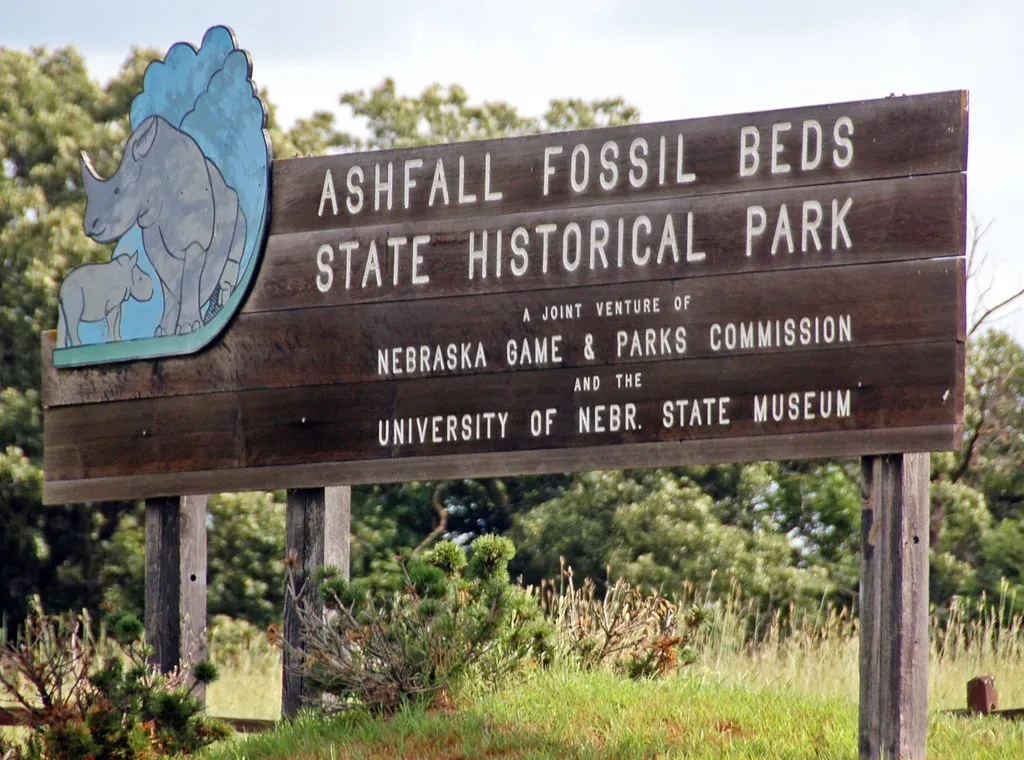
If you have ever wondered what a disaster looks like when it is frozen in time, Ashfall Fossil Beds State Historical Park in Nebraska gives you an almost unsettling answer. About twelve million years ago, a distant volcanic eruption in what is now the Yellowstone region sent a blanket of fine ash drifting over the Great Plains. At a watering hole in this area, herds of rhinoceros‑like mammals, horses, camels, and other animals gathered as they always did, not knowing that breathing in that ash would slowly poison them. Their bodies collapsed near the water and were buried where they fell, preserving an entire community caught in the middle of a single catastrophic event.
Today, you can stand inside the Hubbard Rhino Barn, where paleontologists excavate skeletons still lying in their original positions, complete with articulated limbs and sometimes even stomach contents. You see layers of bones stacked through the ash, revealing how different species died at slightly different times as the disaster unfolded. Because the animals are preserved so completely, you can learn about their age, health, injuries, and even social behavior from a single site. Instead of scattered bones across a wide area, you get a vivid, almost cinematic freeze‑frame of life and death on the Miocene plains. It is sobering and fascinating at the same time, a reminder that sometimes the earth writes its history in moments, not just eras.
Green River Formation, Wyoming – The Perfect Stillness of Fossil Lakes
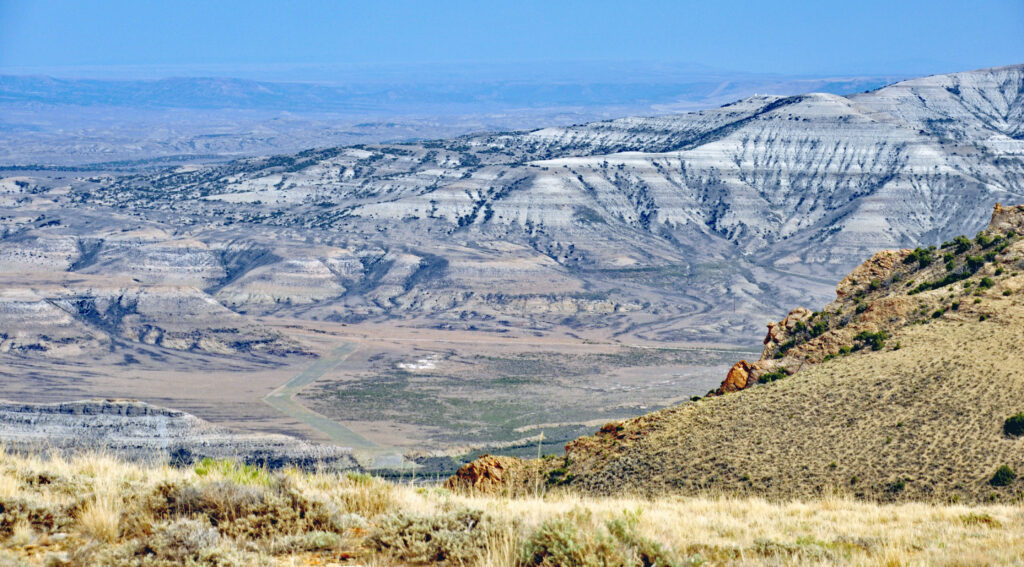
In southwestern Wyoming, the Green River Formation offers you one of the world’s best windows into ancient lake ecosystems from the early Eocene, about fifty million years ago. The fine‑grained limestones here formed at the bottom of long‑lived, quiet lakes where dead fish, plants, and other organisms sank into oxygen‑poor mud. Because scavengers and bacteria were limited in those conditions, extremely delicate details – fish fins, scales, even soft tissues in rare cases – were preserved before they could decay. When you see a Green River fish fossil, you are looking at a creature so finely recorded that you can sometimes tell its last meal from the contents of its gut.
These rocks do not just capture fish; they also preserve leaves, insects, and even occasional birds and mammals, giving you a layered portrait of both the water and the shoreline. The formation is so rich that private quarries in the region legally allow visitors to split slabs and find their own fossils, turning your day into a personal excavation into deep time. From a scientific standpoint, the Green River Formation is crucial for understanding how freshwater ecosystems responded to warm global climates in the early Cenozoic. For you as a visitor, it offers something more intimate: the quiet thrill of holding in your hand a fossil fish that swam in a lake tens of millions of years before humans existed at all.
Conclusion: Walking Through Deep Time, One Outcrop at a Time
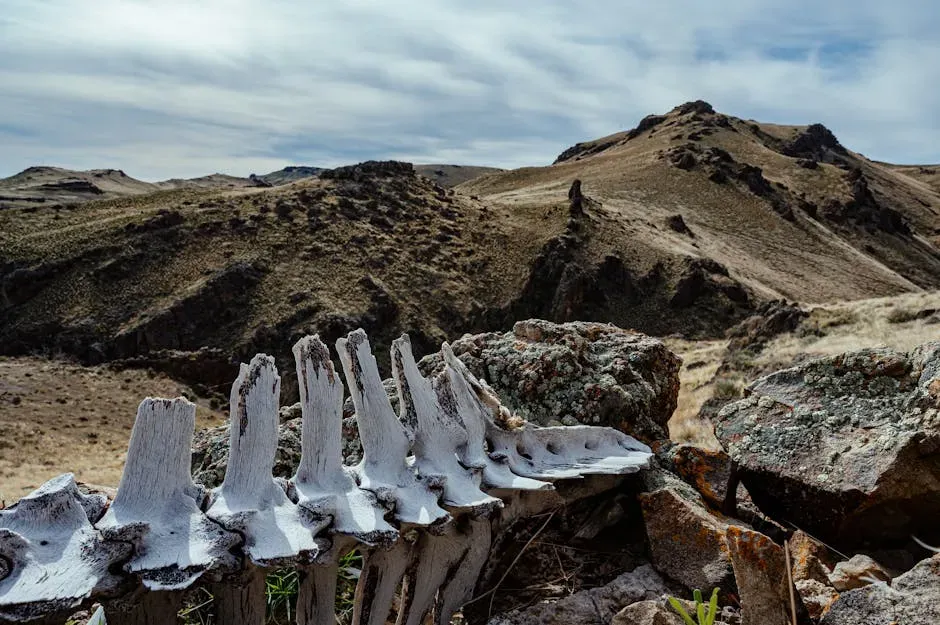
When you connect these seven places in your mind – an insect‑rich lake bed in Colorado, a dinosaur‑stuffed river cliff on the Utah border, stone forests in Arizona, crumbling mammal hills in South Dakota, horse‑haunted bluffs in Idaho, an ash‑buried watering hole in Nebraska, and serene fossil lakes in Wyoming – you start to feel how varied prehistoric life really was. Each site nails down a different chapter: the age of early dinosaurs, the rise of complex forests, the flourishing of mammals, and the repeated shocks of volcanic eruptions and climate shifts. Together, they show you that Earth’s past is not a smooth, simple timeline, but a tapestry of sudden events, quiet lakes, catastrophic ashfalls, and slow erosion that continues today.
Visiting any one of these places changes the way you think about time, but seeing several turns you into a kind of geologic traveler, hopping from era to era while your own life continues at human speed. You realize that what feels permanent now – roads, farms, even cities – will one day be just another layer in the rock record, if it survives at all. The fossils preserved in these geological wonders are not just curiosities; they are warnings, comfort, and perspective all at once. So the next time you feel rushed by your calendar, ask yourself: when you stand in front of a two‑hundred‑million‑year‑old tree turned to stone, what does “urgent” really mean to you?