If you grew up thinking megalodon was just a supersized great white from movie posters, you’re in for a shock. The real animal that cruised Earth’s oceans millions of years ago was stranger, more powerful, and in some ways more mysterious than anything Hollywood has dreamed up. When you dig into what scientists have actually figured out from a handful of teeth and a few vertebrae, the picture that emerges feels almost unreal.
What makes it even wilder is that almost everything you “know” about megalodon is built from fragments you could hold in one hand. From those scraps, researchers have reconstructed a giant predator that rewrote the rules of life in the oceans. As you read through these seven facts, you’ll see where the science ends, where the myths begin, and why the truth is somehow even cooler than the legend.
1. You Can Hold the Key to Its Size in the Palm of Your Hand
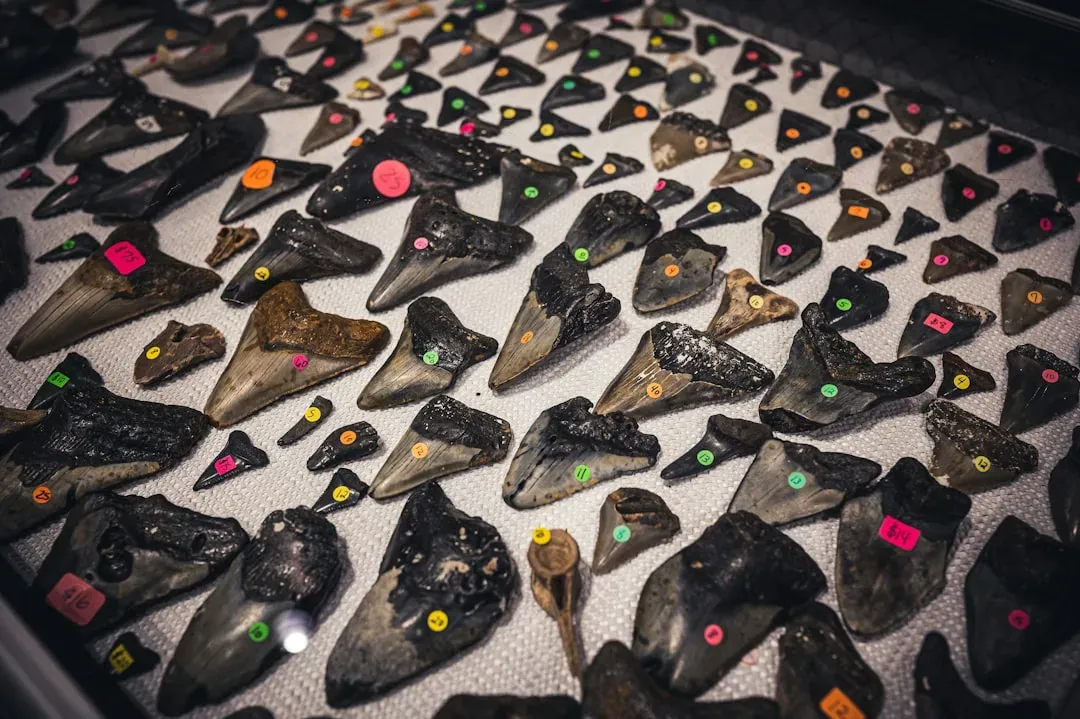
You do not have a complete megalodon skeleton sitting in a museum anywhere on Earth. That’s not because it never existed, but because sharks, including megalodon, built their skeletons out of cartilage, which usually rots away instead of fossilizing. What actually survives are the teeth and, much more rarely, a few hardened vertebral centra, the dense cores of their backbone. So when you picture that 60‑foot monster, you’re really looking at an educated reconstruction built almost entirely from teeth.
Here’s the wild part: by comparing megalodon tooth size and shape to living sharks, especially great whites and their relatives, scientists can work backward and estimate body length. When you see a single fossil tooth bigger than your whole hand, you’re essentially holding a measuring stick for an animal that may have stretched roughly two to three city buses end to end. You would probably walk past a megalodon tooth in a small fossil shop and never guess it is one of the main reasons you “know” how big the largest shark in history really was.
2. Its Bite Force Makes a T. rex Look Almost Modest
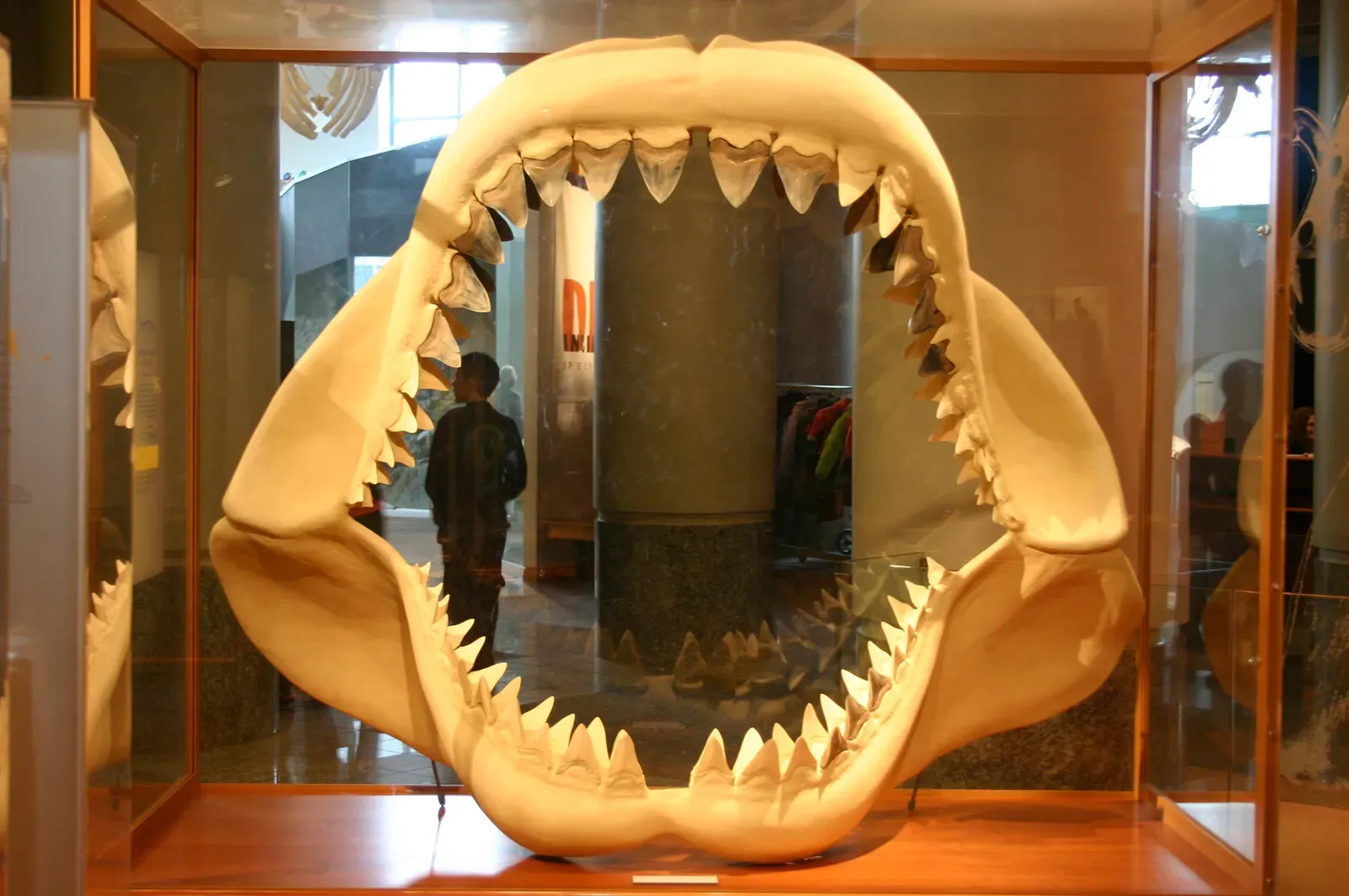
When you think of the strongest bite in history, your mind probably jumps straight to Tyrannosaurus rex crunching through bone. But if you ran the numbers the way biomechanists do, megalodon very likely leaves even that celebrity dinosaur in the dust. By scaling up modern shark jaws and modeling how big megalodon’s head would have been, researchers estimate a bite force in the tens of thousands of pounds, possibly up toward car‑crushing territory. You are talking about a jaw that could span roughly the length of a small car door and slam shut with absolutely brutal power.
To put that in perspective for yourself, your own bite force is measured in the low thousands of newtons at most, and you are already able to crack nuts or bite through tough crusts without thinking. A megalodon’s bite was orders of magnitude beyond that. It was built not just to tear flesh, but to break through thick bone and even whale skulls. If you were somehow unlucky enough to be inside that mouth, you would not be struggling; you would be confetti.
3. Baby Megalodons Were Already the Size of a Car
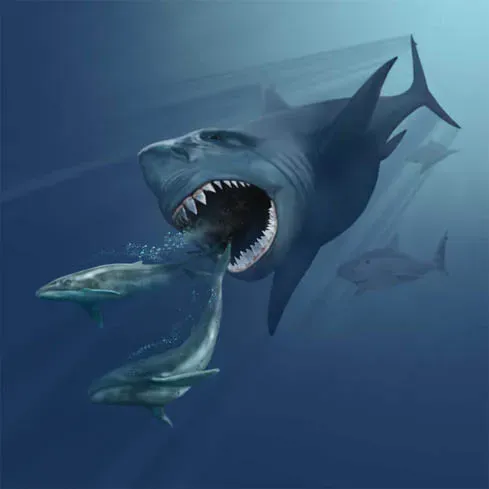
You probably imagine megalodon pups as just biggish sharks working their way up through the food chain. In reality, you would have been looking at a “baby” that already rivaled a modern great white shark. By studying growth rings in rare fossil vertebrae, scientists have estimated that newborn megalodons may have been around eleven to thirteen feet long. In human terms, that means a “newborn” megalodon would already have been longer than most family cars you see on the highway.
There is evidence that, like many modern sharks, megalodon gave birth to live young and may have practiced a brutal strategy where embryos ate unfertilized eggs in the womb to bulk up before birth. Combine that with fossil sites interpreted as ancient nursery areas, and you get a picture of young megalodons starting life not as fragile little fish, but as powerful mid‑sized predators in sheltered coastal zones. If you had gone for a swim in one of those nurseries, you would have been wildly out of your weight class from the very first fin that circled you.
4. It Turned Whales into Bite‑Sized Snacks
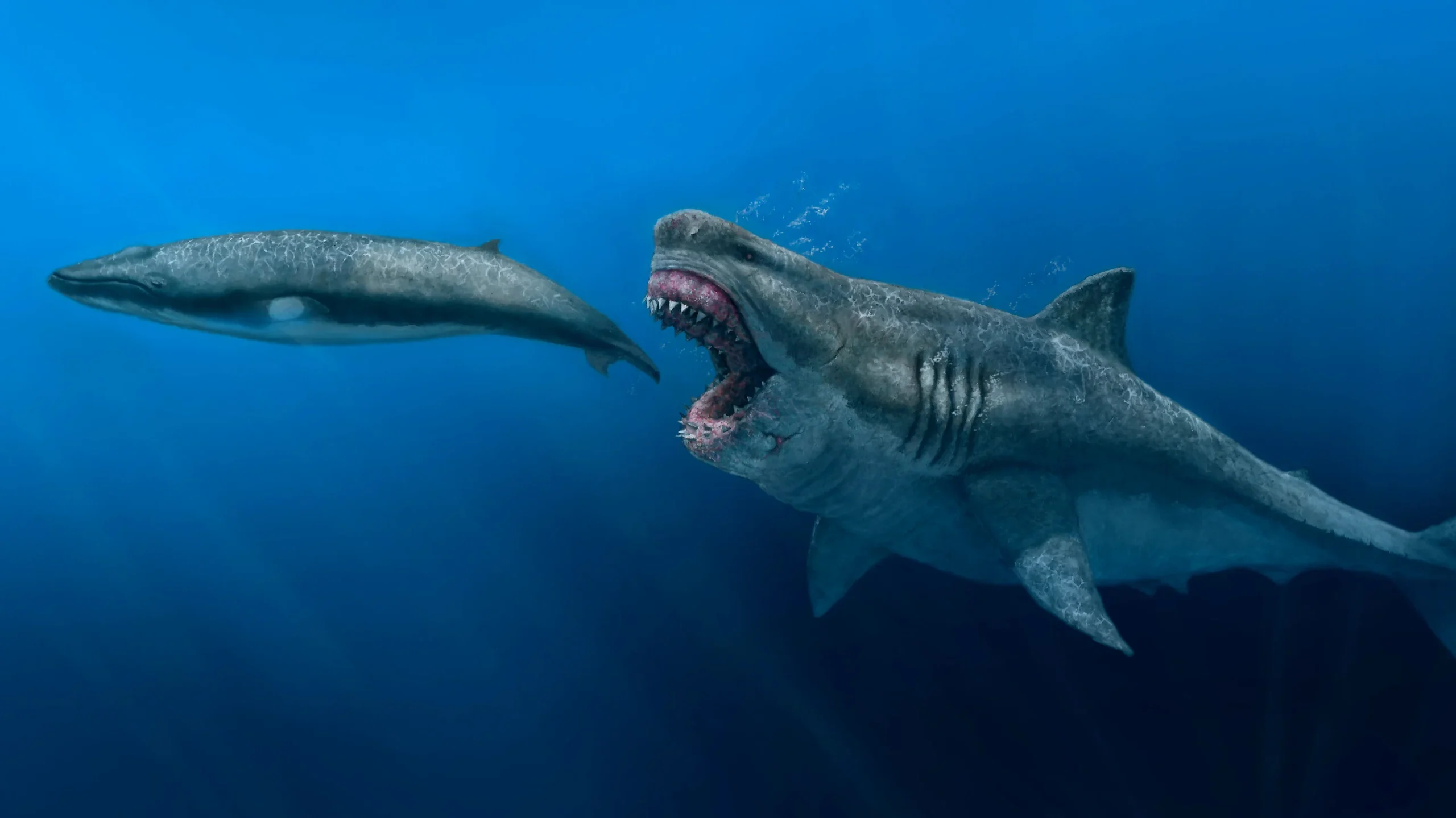
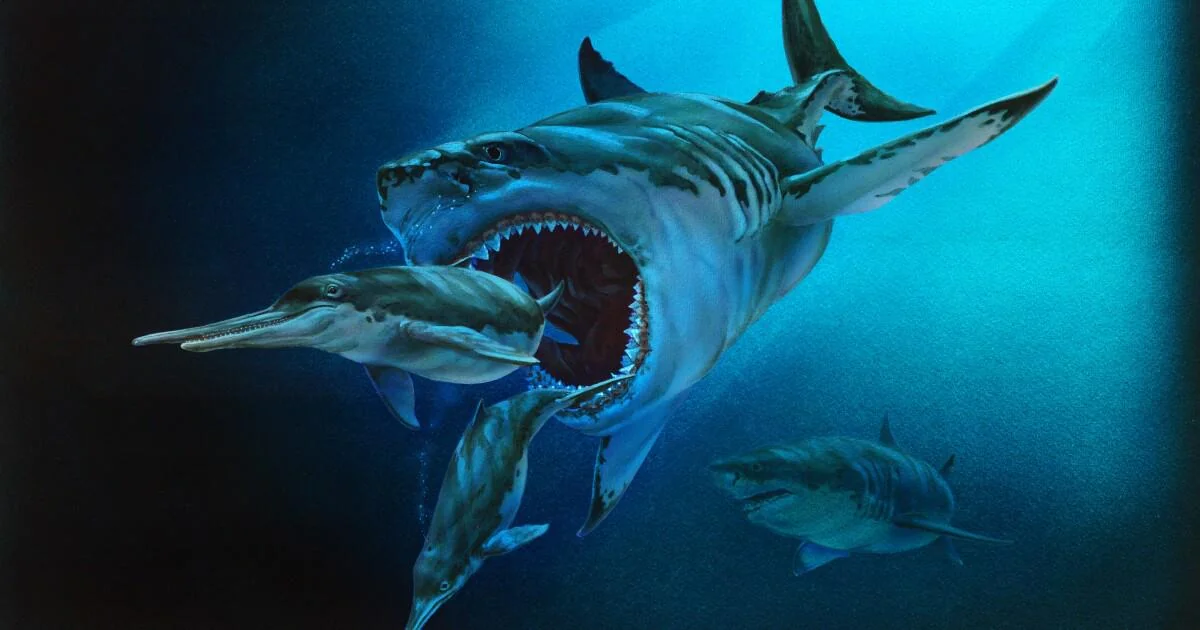
You might think of whales as the untouchable giants of the sea, but in megalodon’s world, they were more like the main course. Fossil whale bones from the Miocene and Pliocene often show deep, semicircular gouges and broken sections that match the shape and spacing of megalodon teeth. When you look at those bones, you are essentially looking at a crime scene: a giant shark slamming into a whale, biting off huge chunks of flesh, and sometimes crushing bone outright.
What makes this even more jaw‑dropping is that some of the prey would have been about the size of orcas and even larger early baleen whales. You are used to modern great whites taking seals or the occasional smaller whale, but megalodon pushed that to a different scale. Picture a predator so large that a dolphin would have been a light snack and a mid‑sized whale more like a single hefty serving. In your mental food chain, whales sit comfortably near the top; in megalodon’s day, they were a regular menu item.
5. Scientists Have Found Ancient Shark “Daycares”
If you assume giant prehistoric sharks were just roaming endlessly through open ocean, this next fact will change the way you see them. Paleontologists have identified fossil sites around the world – Panama, Maryland, Florida, the Canary Islands and others – where the megalodon teeth are consistently smaller and represent younger individuals. When you see that pattern repeated across regions and time, it looks very much like dedicated nursery areas, the ancient equivalent of guarded shallow bays where young sharks could grow with fewer threats.
For you, that means megalodon was not just an oversized eating machine; it had a life cycle and behavior that echoes what you see in modern sharks. Some species today give birth in warm, shallow waters where pups can hunt smaller prey and avoid larger predators. Megalodon seems to have followed a similar strategy, just on a monstrous scale. Imagine wading out into what looked like a calm Miocene lagoon and realizing it is effectively a daycare for car‑sized shark pups – suddenly those gentle waves look a lot less inviting.
6. Megalodon Is Definitely Extinct – No Matter What the Movies Say
If you secretly like to imagine a giant shark lurking in the deepest trenches, you are not alone; books and movies have leaned hard into the fantasy of a surviving megalodon. But when you stack that idea against actual evidence, it falls apart fast. Megalodon teeth show up in rock layers from roughly twenty‑three million to a bit over two and a half million years ago, and then they simply stop. You do not find fresh megalodon teeth in recent sediments, you do not find modern whale carcasses with matching bite marks, and you certainly do not see any reliable sonar or video of a creature that big in today’s oceans.
On top of the fossil gap, you have to remember how food webs work. An animal on that scale would need to eat an enormous amount of large prey, constantly. You would expect to see a clear signature in modern whale populations, strandings, and bite injuries if something like megalodon were still around. Instead, what you see is that once megalodon disappears in the fossil record, some whale lineages start trending larger and moving into colder waters, likely taking advantage of the missing top predator. You do not have to give up the fun of the legend, but you do have to admit that in the real world, the giant shark is gone.
7. The Real Animal Was Not Just a Giant Great White
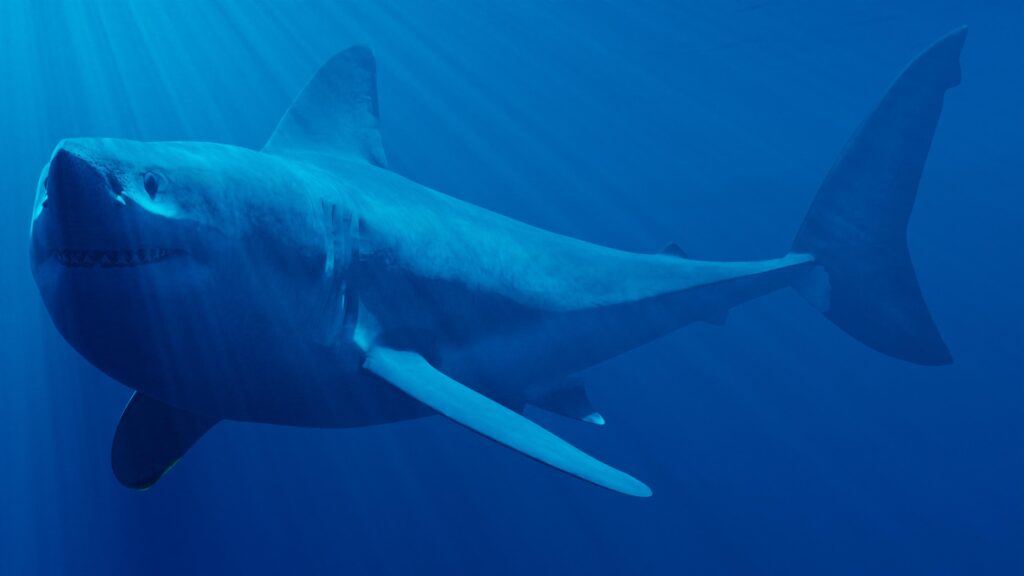
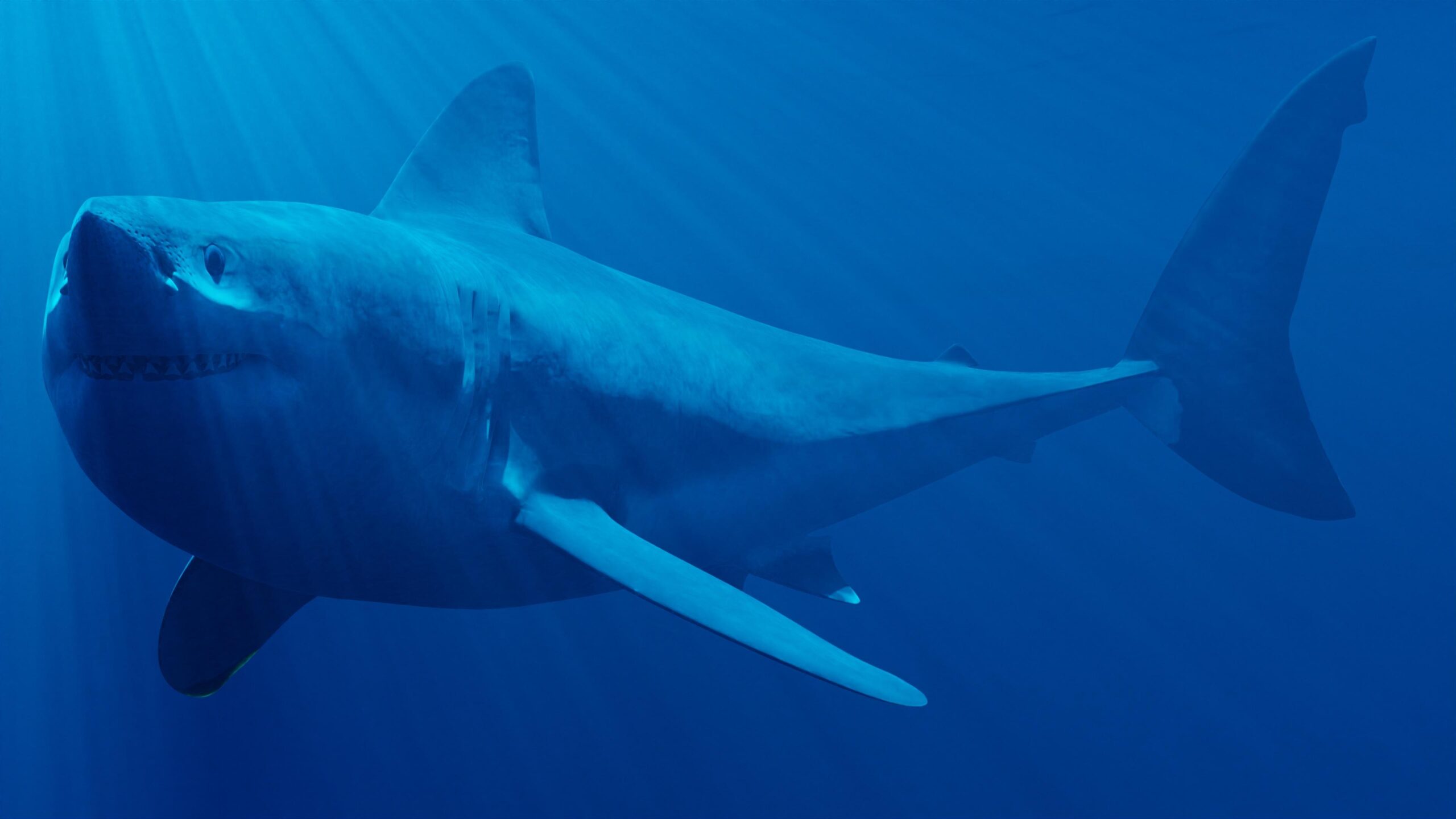
Pop culture has sold you a very specific picture: megalodon as a scaled‑up great white, just copy‑pasted and stretched. Earlier scientific work even leaned in that direction, treating the two as close relatives. But as more fossils and more detailed analyses have come in, that view has shifted. The teeth are similar enough to suggest some shared ancestry far back in time, but they also show important differences in shape and structure, and the overall body plan may have been longer and more torpedo‑like than the classic great‑white silhouette.
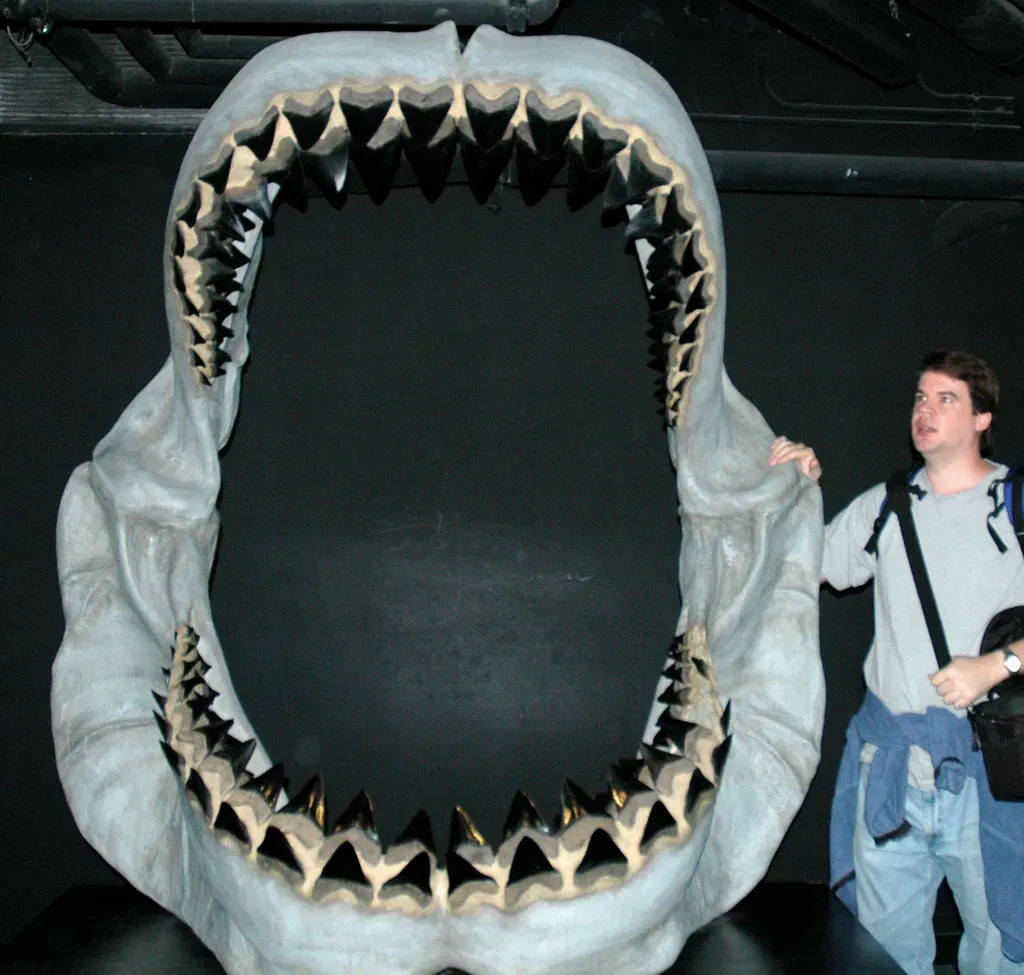
More recent studies that mesh tooth data with rare vertebrae and comparisons to a wider group of extinct sharks suggest that you should picture megalodon as its own kind of giant mackerel shark, not simply a white shark turned up to eleven. Its evolutionary story runs alongside, not directly into, the modern great white. When you see those dramatic museum jaw reconstructions, you are looking at an educated best guess, not a photograph. In a way, that makes megalodon more intriguing: you know enough to be sure it was a record‑breaking predator, but you still have room to imagine exactly how it moved, hunted, and ruled its ancient seas.
In the end, megalodon sits in a strange sweet spot between hard science and wild imagination. You can measure its teeth, model its bite, trace its rise and fall in the fossil record, and even map out its ancient nurseries, yet you will never see one swim past your boat. That gap between what you know and what you can only reconstruct is part of why this shark refuses to let go of your imagination. The next time you pick up a fossil tooth at a market or see a grainy “mystery shark” clip online, are you going to picture the legend, the evidence, or a bit of both?