If you picture the Ice Age ending in a single dramatic moment when mammoths, saber-toothed cats and giant sloths all dropped off the map at once, you’re not alone. That’s the version most of us quietly carry around in our heads: glaciers melt, everything big and hairy vanishes, and humans walk into a new, warmer world. But real history is messier, slower, and much more surprising. A shocking number of Ice Age giants and their close relatives refused to bow out on cue, clinging on in scattered refuges or shrinking down into new forms long after the “age of ice” was supposedly over.
Some of them survived into the age of the pyramids, others walked the same ground as early cities, and a few are, in a way, still with us today. Once you start looking, the line between “Ice Age relic” and “modern animal” becomes strangely blurry. Let’s dive into eight creatures whose stories stretch far beyond the simple classroom timeline – animals that stubbornly outlived the stereotype and force us to rethink what “extinct,” “survived,” and even “Ice Age” really mean.
1. Woolly Mammoths: The “Extinct” Giants That Outlived the Pyramids
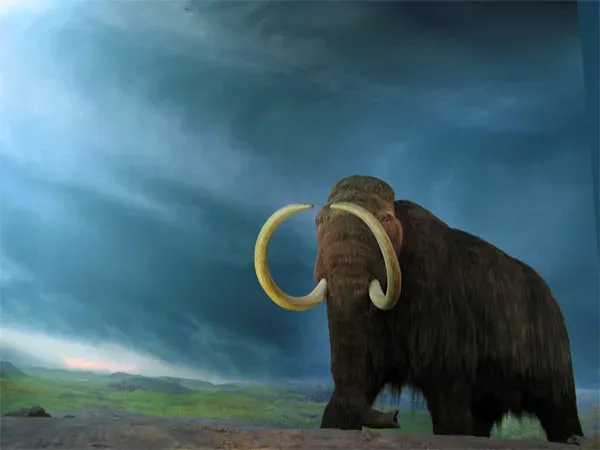
Most people mentally file woolly mammoths away alongside dinosaurs: ancient, impossibly distant, gone ages ago. But the truly surprising twist is that while mammoths vanished from most of the world roughly at the end of the last Ice Age, tiny isolated populations survived on remote Arctic islands for thousands of years afterward. On Wrangel Island in the Arctic Ocean, for example, mammoths held on until well into what we’d call recorded human history, at a time when complex societies and early civilizations already existed much farther south. In other words, while humans were building monuments and experimenting with writing systems, somewhere on a windswept island, shaggy mammoths were still trudging across the tundra.
These remnant herds lived in a kind of time pocket, cut off from the mainland and spared the rapid environmental and human pressures that wiped out their kin. Over time, they became smaller, a classic example of island dwarfism, and genetic studies suggest their populations were tiny and vulnerable. Yet the simple fact that they made it that far into the Holocene is a powerful reminder that extinction is often a drawn-out process, with ghost populations hanging on in overlooked corners. When people say mammoths are Ice Age animals, they’re not wrong – but it’s more accurate to say they were Ice Age animals that refused to leave the stage when everyone thought the show was over.
2. Mastodons: Forest Giants That Vanished Later Than Many Realize
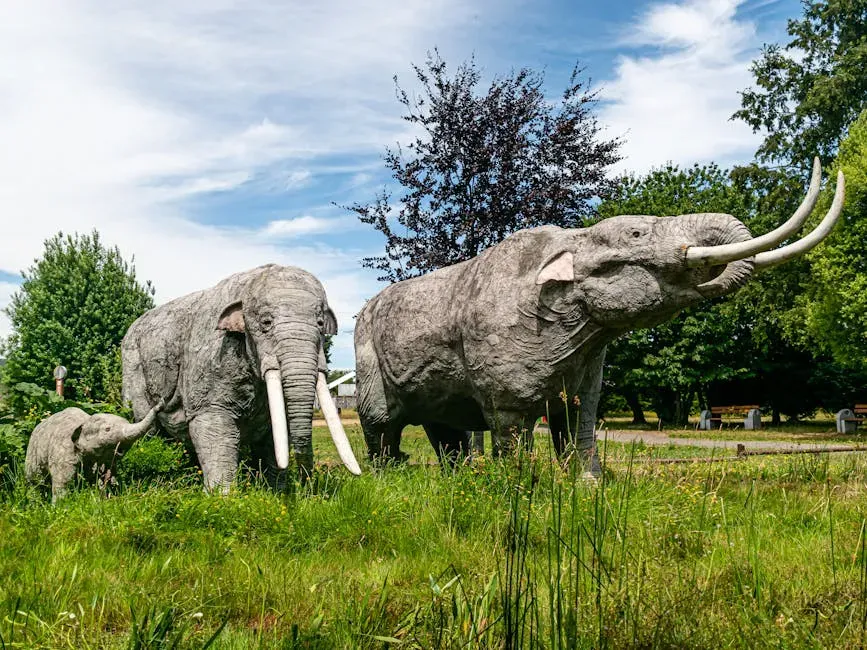
Mastodons tend to get overshadowed by their flashier cousins, the mammoths, but these shaggy, forest-loving relatives of elephants had their own long and complicated goodbye. They roamed North America for millions of years, browsing in woodlands rather than open steppe, and they didn’t all wink out the instant the big ice sheets started retreating. Instead, mastodons persisted in various pockets of suitable habitat as climates shifted and forests reshaped, surviving into the late Pleistocene while human hunters spread across the continent. For a surprisingly long time, mastodons and early people shared the same landscapes, leaving behind bones bearing cut marks that tell a quiet story of encounters we can only imagine.
What really bends the timeline is how close mastodons made it to the dawn of our modern world. Radiocarbon dates from different sites show that some populations survived beyond the coldest glacial peaks, into the more variable climates that followed. They were still around when ecosystems were in flux, when new species were arriving and others declining, holding on as long as their favored mix of wetlands and woodlands persisted. Eventually, a combination of habitat changes and human pressures appears to have pushed them over the edge, but they were not an early casualty of the Ice Age – they were among the last giants to leave the North American stage.
3. Saber-Toothed Cats: Not Vanished With the First Thaw
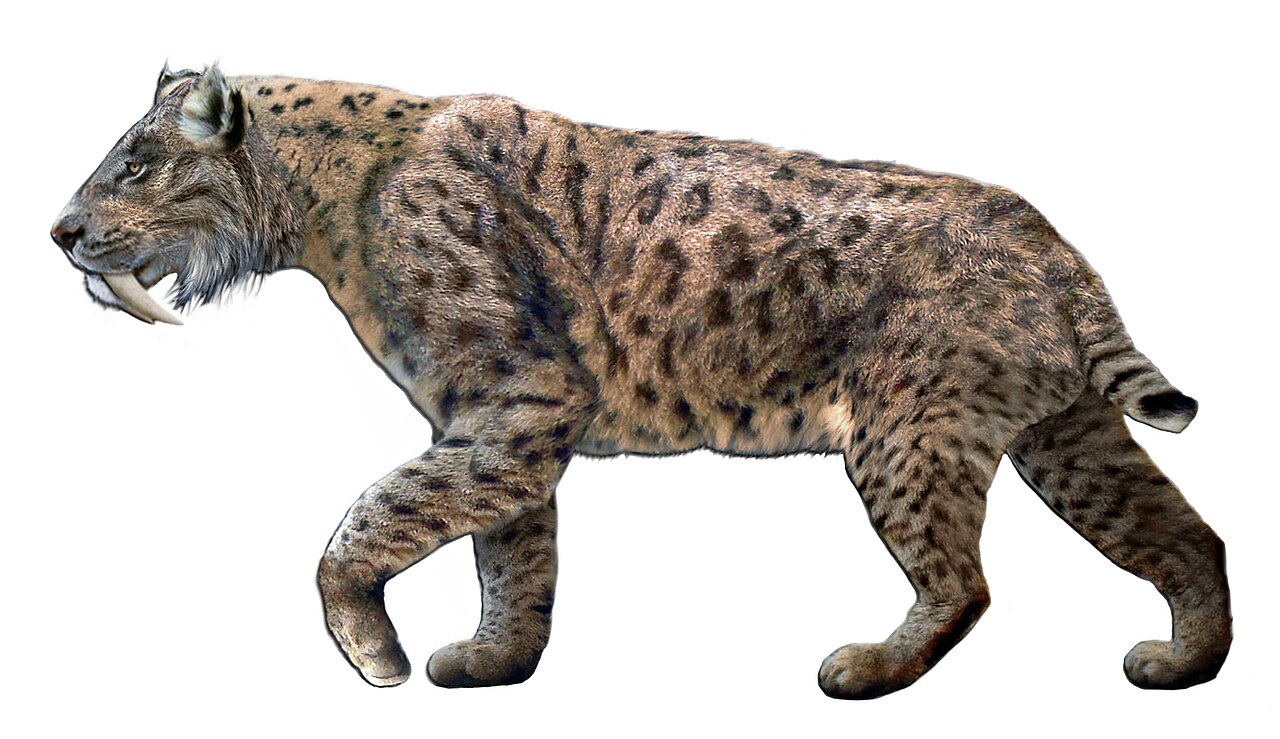
The classic saber-toothed cat, often called Smilodon in museum displays, is almost a mascot for Ice Age extinctions: hulking, powerful, with those iconic oversized canines. The popular image is that they disappeared right as the glaciers retreated, like nature closing a curtain on its deadliest predators. In reality, saber-toothed cats persisted far into the late Pleistocene and overlapped substantially with early human communities in the Americas. They were part of a rich predator guild that included dire wolves, American lions, and short-faced bears, and they hung on until much closer to the beginning of our current epoch than most people think.
Fossil evidence from sites like the La Brea Tar Pits in California shows that saber-toothed cats were abundant up to the very end of the Pleistocene, not slowly fading for ages beforehand. They were still actively hunting large herbivores like bison, camels, and young mammoths as climates warmed and ecosystems shifted. Their disappearance lines up with a period of intense environmental change and the loss of much of their big prey base, plus the rising influence of human hunting. Rather than being early victims of the melt, saber-toothed cats were among the last great carnivores to fall, stubbornly occupying their niche until the entire system they depended on collapsed around them.
4. Woolly Rhinos: Ice Age Tanks That Survived a Warming World
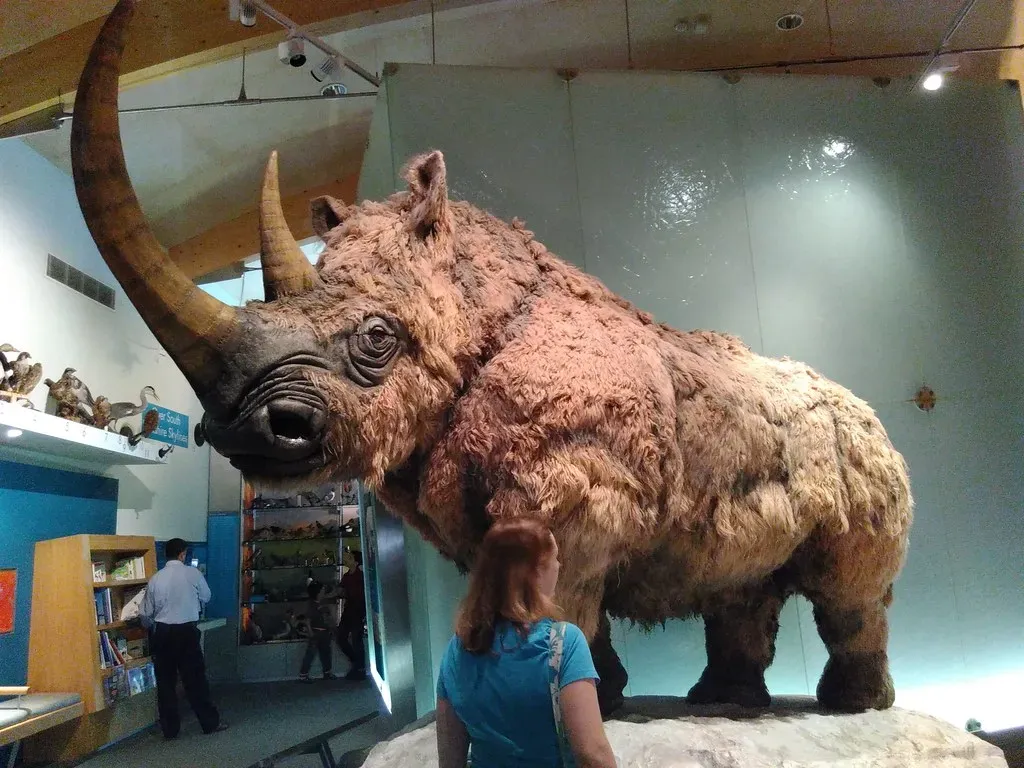
Woolly rhinoceroses look like something straight out of fantasy art – massive, shaggy, with an enormous front horn that seems almost exaggerated. It is easy to assume that creatures so perfectly adapted to cold steppe conditions vanished the instant the temperatures rose. Yet the fossil record tells a subtler story. These Ice Age tanks roamed Eurasia for a surprisingly long time, enduring repeated cycles of warming and cooling and persisting well into the late Pleistocene, long after the climate had already swung back and forth more than once. They were not fragile relics of a single frozen moment; they were specialists that had weathered change before.
What finally broke their streak seems to have been a combination of rapid environmental shifts and increasing human presence in their range. Studies suggest they survived several earlier warm phases, which undercuts the simple idea that a little extra heat alone killed them. Instead, the last woolly rhinos may have been hit by a convergence of stresses: shrinking suitable habitat, changing plant communities, and new predators armed with stone tools. The key point is that they did not blink out right at the start of warming; they pushed deep into a changing world, and only when the deck was thoroughly stacked against them did they finally disappear.
5. Giant Ground Sloths: Slow-Motion Survivors of the New World
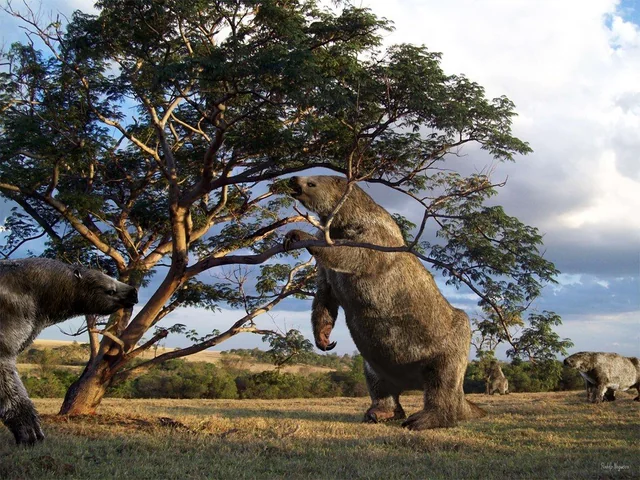
Giant ground sloths are the kind of animal that makes the Ice Age feel almost unreal: enormous, slow-moving herbivores that could stand taller than a person and rip down branches with powerful claws. People often imagine them as primitive beasts doomed from the start, but they actually proved to be remarkably persistent. In North and South America, different species of giant ground sloths survived well into the late Pleistocene and even into the early Holocene in some regions, overlapping with humans for thousands of years. These were not distant strangers to our species; we shared coastlines, caves, and valleys with them.
Some island and coastal populations, especially in parts of the Caribbean, appear to have clung on long after their mainland relatives were gone. Protected by isolation and slightly different local climates, they effectively stretched the ground sloth timeline deep into the era of modern humans. Eventually, as humans colonized more islands and reshaped ecosystems through hunting and habitat changes, even these holdouts vanished. Still, the image of ground sloths lumbering through tropical forests while human communities were already developing complex cultures is hard to shake. It drives home the fact that Ice Age megafauna were not remote relics; they were neighbors, and in a few places they stayed our neighbors far longer than our mental timelines allow.
6. Glyptodonts: Living Tanks That Made It Into Human Times
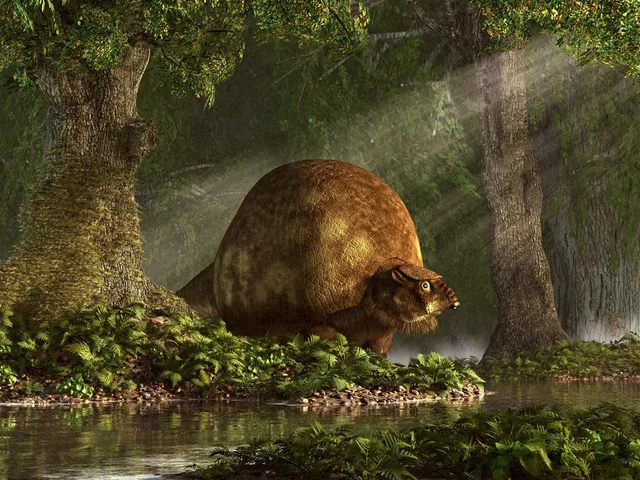
Glyptodonts looked like someone fused an armadillo with a small car: huge, domed shells, stout bodies, and in some species a heavy, clubbed tail. They are usually presented as quintessential Ice Age oddities, as if they belonged to a world so alien it had nothing to do with ours. But these armored herbivores survived deep into the late Pleistocene in South America, sharing landscapes with early human groups for longer than many people realize. Archaeological and fossil evidence shows overlaps in time and space that make it clear humans probably saw these walking tanks up close, not just as bones in the ground.
Some sites suggest that people may even have used parts of their shells, which would not be shocking given how thick and durable those bony domes were. Glyptodonts were not dragged instantly into extinction by the first wave of warming temperatures; they persisted as grasslands and open habitats shifted, adapting as long as their food resources remained stable. In the end, a mix of climate change and human hunting likely contributed to their disappearance, but their story is more drawn out and intertwined with ours than the simple “Ice Age ended, weird stuff died” narrative. They were among the last of a very old lineage, and they held on until the world was undeniably and irreversibly different.
7. American Cheetahs and Other Ice Age Sprinters That Lasted
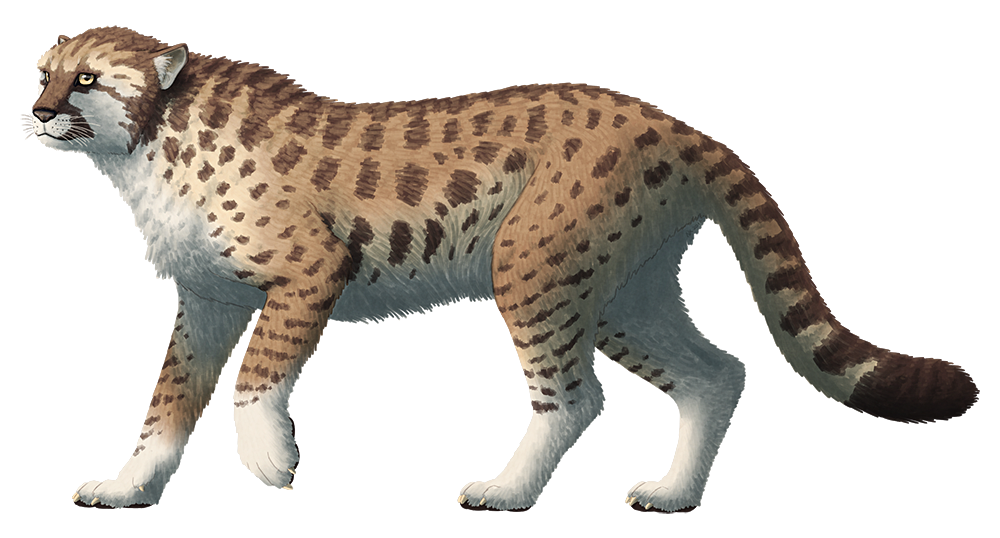
Most people are surprised to learn that North America once had its own cheetah-like cats, built for speed on open ground much like their African relatives today. These so-called American cheetahs were sleek ambush sprinters that likely helped shape the evolution of fast prey species such as pronghorn antelope. While they are often mentally lumped with early glacial faunas, they persisted into the later stages of the Pleistocene, long after the Ice Age had gone through multiple cycles of growth and retreat. They were not fragile specialists that melted with the first hint of warmth; they lived through repeated environmental swings.
By the time they vanished, the ecosystems they inhabited were already undergoing dramatic change, with plant communities shifting and many of the larger grazers declining. Human arrival in North America added another twist, bringing new hunting pressures and competition. The important point is that these sprinting predators lasted long enough to leave a lasting legacy: modern pronghorns still carry speed that seems almost excessive for today’s predators, like they are tuned to outrun ghosts. The American cheetahs may be gone, but they survived into a phase of Earth’s history where their influence still echoes in the behavior and design of living animals.
8. Muskoxen: Ice Age Survivors Still Walking Among Us
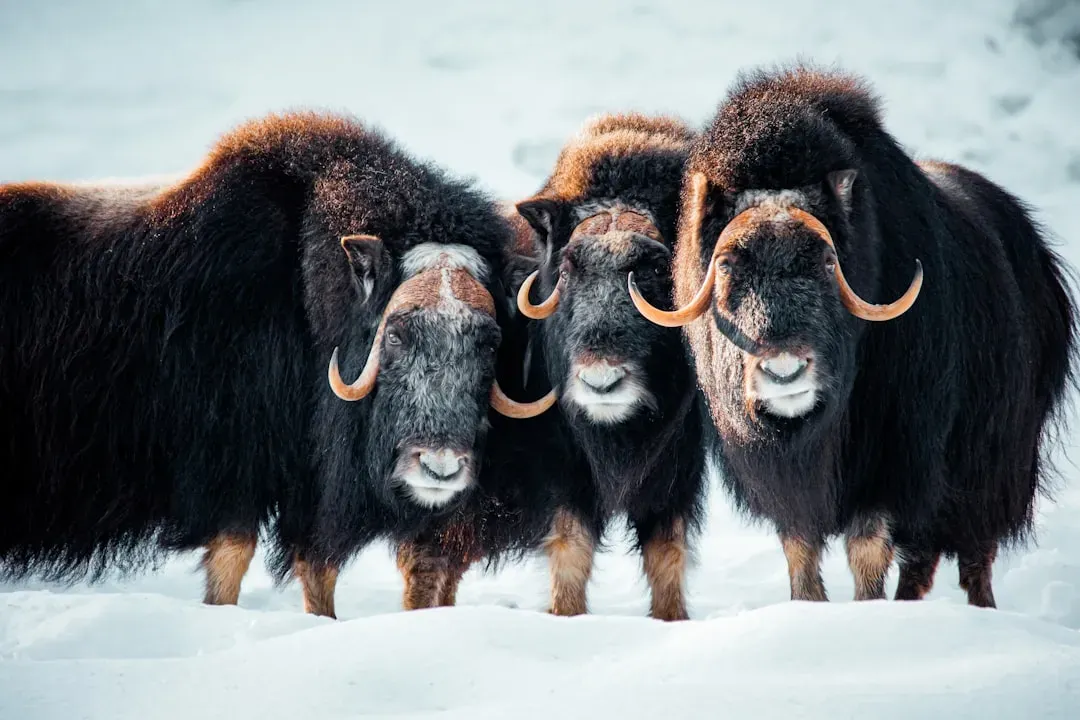
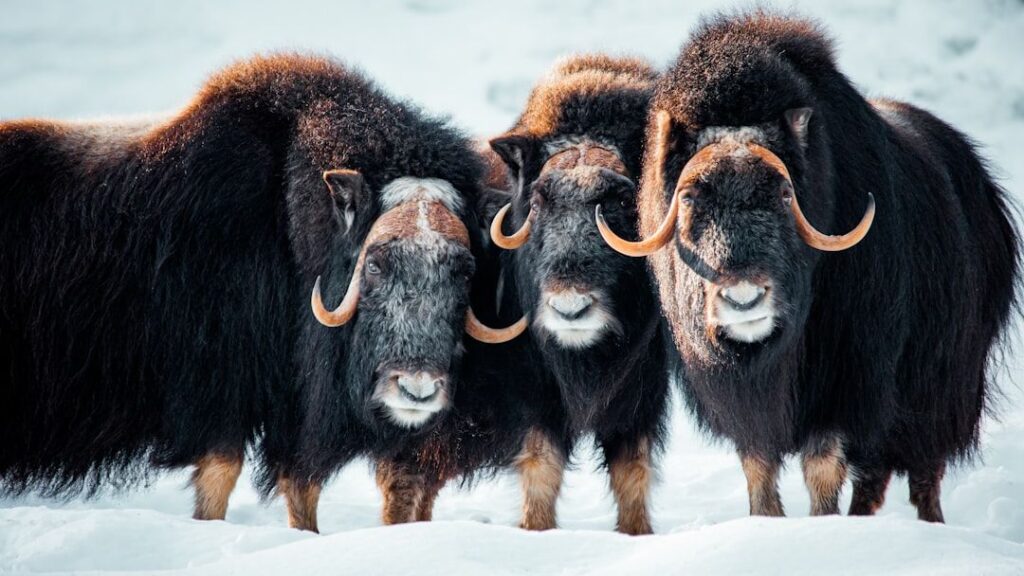
Unlike many of the creatures on this list, muskoxen never left; they simply stepped quietly out of the spotlight. These shaggy, horned bovids are living fossils in the best sense of the word, with roots that go back to the Ice Age tundra. While their range has shifted dramatically over time, their basic body plan and lifestyle remain close to what their Pleistocene ancestors practiced on frozen steppes. They endured not just the end of the last Ice Age but the entire span of human civilization so far, still roaming Arctic regions today. When you watch a herd of muskoxen bunch up against the cold, you are looking at an Ice Age survival strategy that has been running on repeat for tens of thousands of years.
What kept muskoxen going when so many other large cold-adapted mammals disappeared is still being studied, but a few likely factors stand out. They have flexible diets suited to tough Arctic vegetation, social behaviors that help them face predators and weather, and a range that stayed relatively remote from dense human populations for a long time. To me, they are a quiet rebuttal to the idea that all Ice Age megafauna were doomed the moment the thermostat nudged upward. Muskoxen managed to thread the needle: tough enough, adaptable enough, and lucky enough in geography to carry a piece of the Ice Age right into the twenty-first century.
Conclusion: The Ice Age Never Quite Ended the Way We Were Told
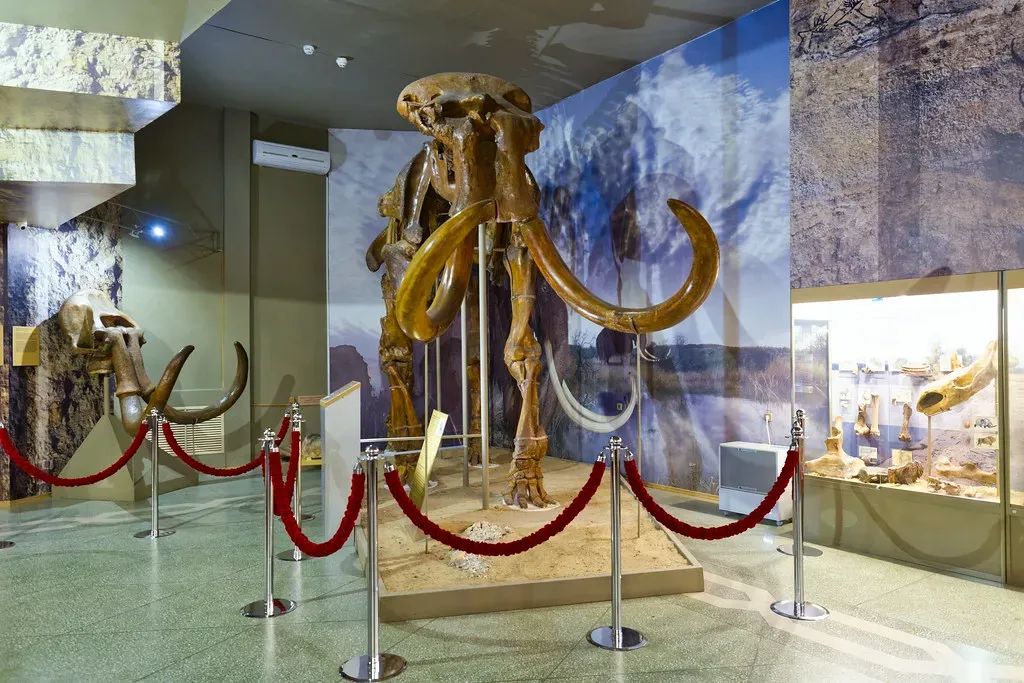
Once you step back and look at these stories together, the simple cartoon of the Ice Age collapsing overnight starts to feel almost childish. Woolly mammoths outliving ancient temples, ground sloths and glyptodonts dodging extinction long enough to meet human hunters, muskoxen still trudging over frozen ground today – all of this shows that nature does not flip clean switches. Extinction tends to be messy and uneven, with some lineages vanishing quickly while others cling on in hidden refuges, or quietly reinvent themselves in new forms. Personally, I think we do ourselves a disservice when we pretend the past came packaged in neat eras; the truth is more interesting, and a lot more unsettling.
These long-lived survivors also force us to own our role in the endings. Many of these animals did not simply lose a climate lottery; they ran headfirst into an increasingly clever, adaptable primate that changed landscapes faster than evolution could keep up. That should make us uncomfortable, especially as we watch modern species face a similar squeeze of warming environments and human expansion. Maybe the most honest way to think about the Ice Age is not as something that ended, but as a chapter that bled into ours and never really closed. Knowing that, the question that lingers is simple and a bit haunting: which of today’s creatures will future humans be shocked to learn almost made it all the way to their time?