Imagine trying to solve a murder mystery where the crime scene is over 66 million years old, the witnesses are long dead, and the only clues you have are fragments of bone buried in rock. That is, honestly, the kind of impossible puzzle paleontologists wrestle with every single day. The story of mass extinction is not just about vanished creatures. It is about how we, as humans, try to make sense of a deep, almost incomprehensible past.
Some of the theories proposed across the centuries sound outlandish by today’s standards. Others are surprisingly sophisticated, even if the evidence has since shifted. Either way, they reveal something fascinating: smart minds arriving at very different conclusions when staring at the same ancient bones. So strap in, because this journey through nine of history’s most puzzling extinction theories is about to get genuinely strange and surprisingly compelling. Let’s dive in.
1. The “Too Big to Survive” Theory
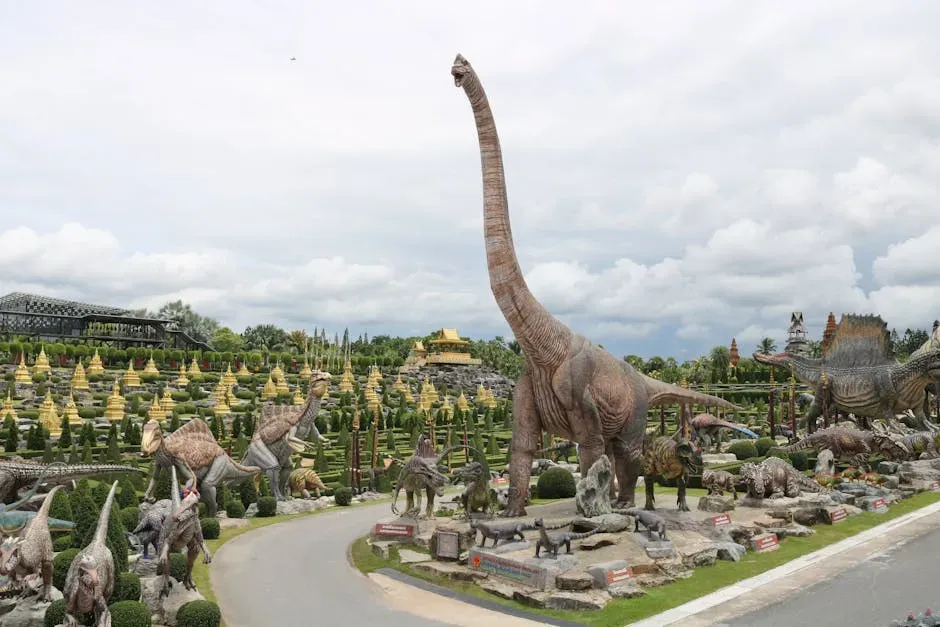
Here is one that sounds almost intuitive at first, you look at a massive Brachiosaurus or a hulking Triceratops and you think, surely something that enormous just could not sustain itself forever. For a long time, this was a popular explanation. If the animals grew too large, the thinking went, they would eventually outpace their own food supply and simply collapse under their own biological demands.
Most of the largest dinosaurs, however, actually lived millions of years before the mass extinction event itself. That one fact alone pulls the rug right out from under the theory. Still, paleontologists can say for certain that some proposed explanations for the extinction of nonavian dinosaurs are simply not true, and this is right near the top of that list. It is one of those ideas that feels logical until you actually look at the timeline.
2. The Thin Eggshell Hypothesis
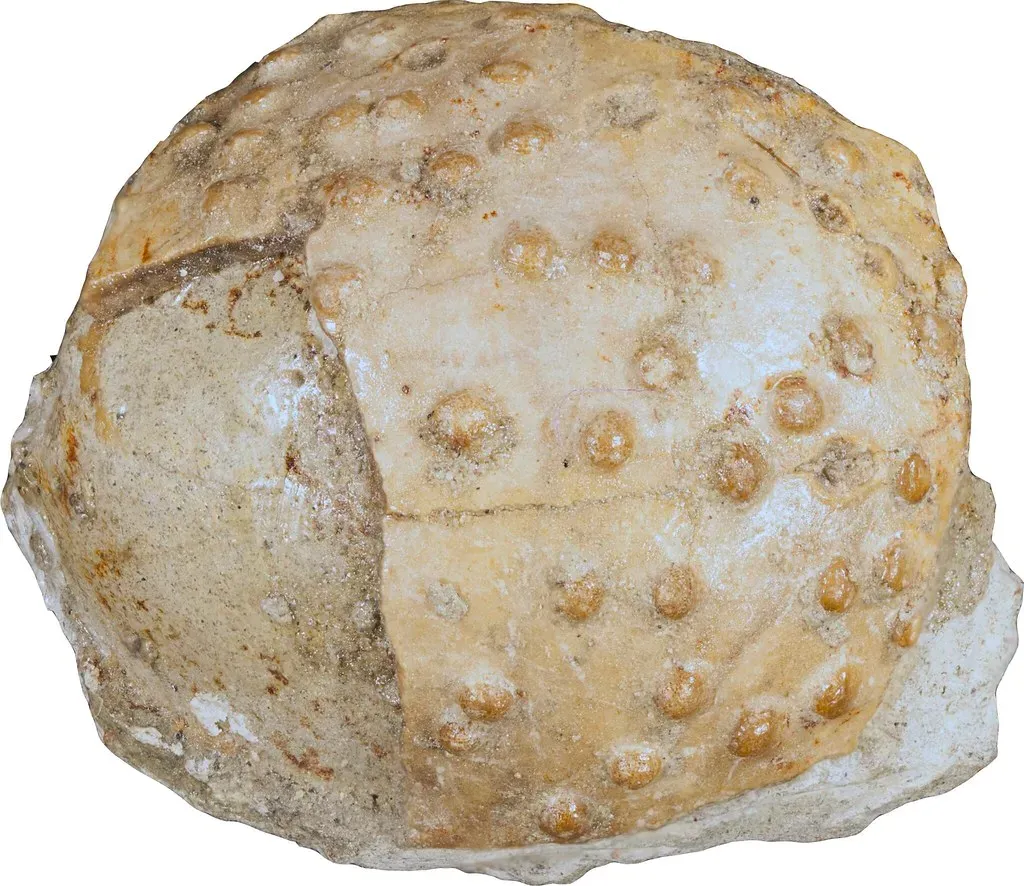
This one is more subtle, and honestly a bit more interesting. The idea was that dinosaur eggshells became increasingly thin over time, making reproduction progressively more difficult. You can think of it like a population slowly losing its ability to replace itself, generation by generation, until the numbers just fell off a cliff.
Although some dinosaurs did have unusually thin eggshells, many others did not. Many survivors, including birds (living dinosaurs), crocodiles and turtles, all have thin eggshells. That is the killer detail. If thin eggshells were truly lethal, you would expect all those thin-shelled survivors to have disappeared too. They did not. The theory, while creative, simply cannot account for why some thin-shelled lineages thrived right through the extinction boundary and are still with us today.
3. Dinosaurs Eating Their Own Eggs Into Oblivion
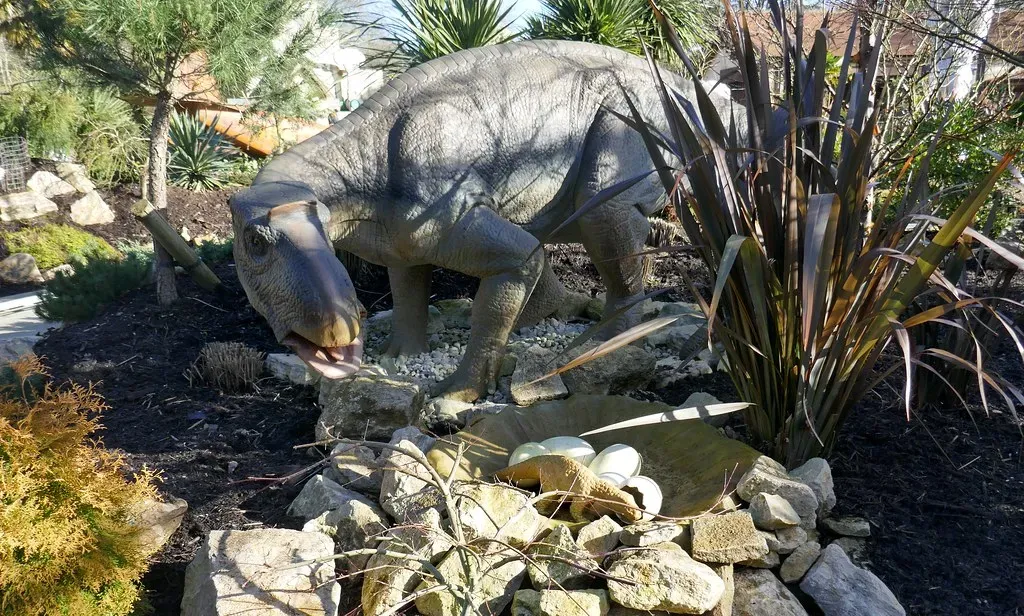
George Wieland, an early 20th-century paleontologist, argued that the dinosaurs ate themselves into extinction. I know it sounds crazy, but hear him out. The idea was that carnivorous dinosaurs developed such a taste for eggs that they systematically depleted the reproductive output of the entire group. It is essentially a prehistoric overhunting story, except the hunters and the prey were the same species.
In the years since Wieland’s 1925 hypothesis, fossil evidence has confirmed that dinosaurs, snakes and even mammals preyed on dinosaur eggs and infants, but never at a rate that could have caused mass extinction. So there is a kernel of biological truth buried in there, egg predation was real. It just was not the smoking gun. Wieland was onto actual behaviour, but the scale he imagined was wildly exaggerated.
4. The Overactive Pituitary Gland Theory
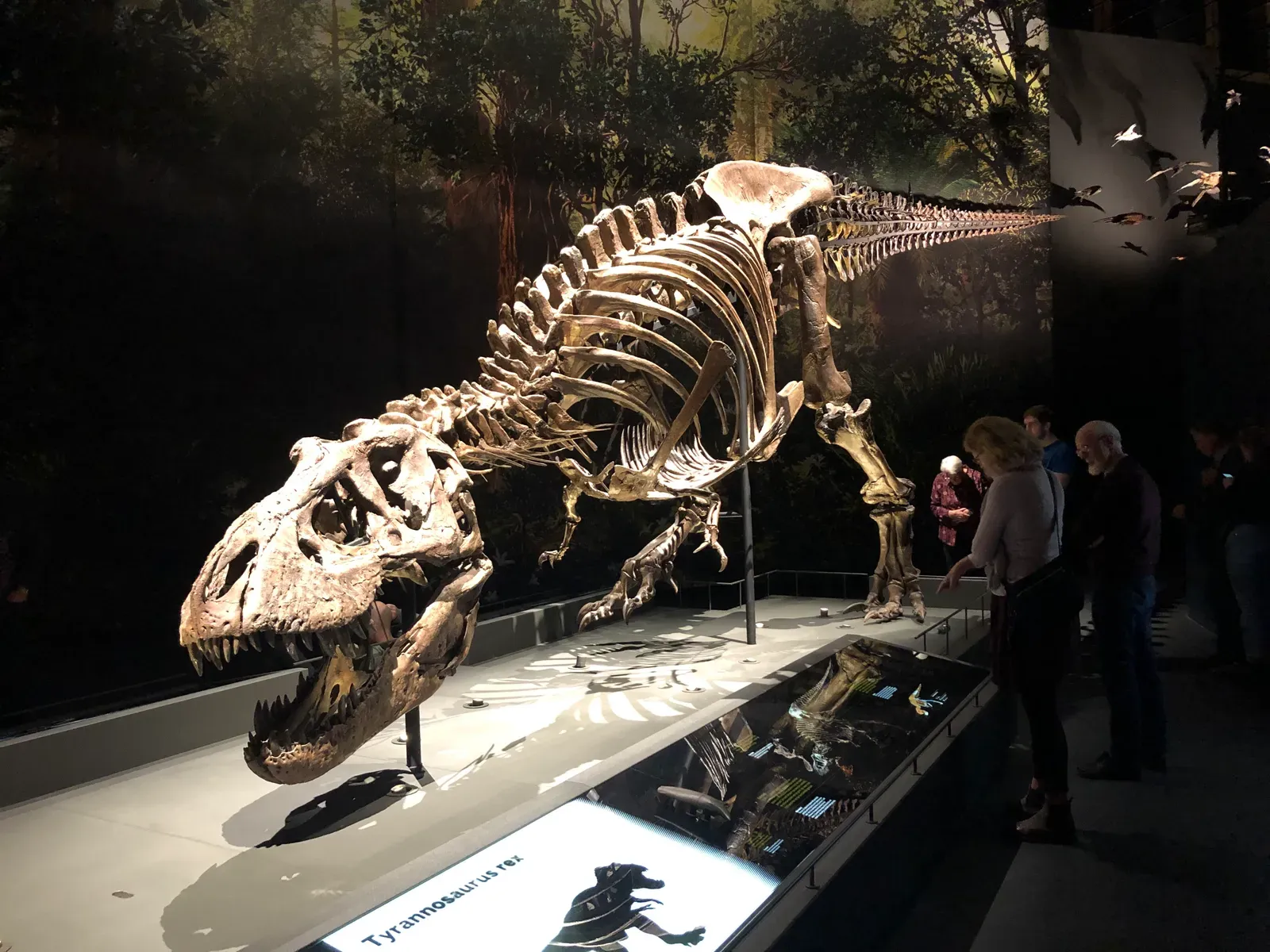
This one comes courtesy of Baron Franz Nopcsa von Felső-Szilvás, one of the most eccentric figures in the history of paleontology. Early in the 20th century, Nopcsa suggested that a shortage of food, a “low power of resistance” and even diminished sex drive contributed to the demise of the dinosaurs. His favourite theory, though, was death by overactive glands. He believed that dinosaurs grew to their tremendous size thanks to secretions from their pituitary gland. Eventually, he argued, the gland drove the growth of dinosaurs to such excess that the animals became pathologically huge and grotesque.
It reads almost like a Victorian horror story, a creature undone by its own biology, growing until it simply could not function anymore. Nopcsa tried to tie human pathologies to the conundrum of dinosaur extinction, but there’s no indication that the pituitary had anything to do with immense dinosaur sizes or their disappearance. Still, you have to admire the creativity. He was trying to apply real endocrinology to a prehistoric problem, even if the application was wildly off target.
5. The Supernova Radiation Theory
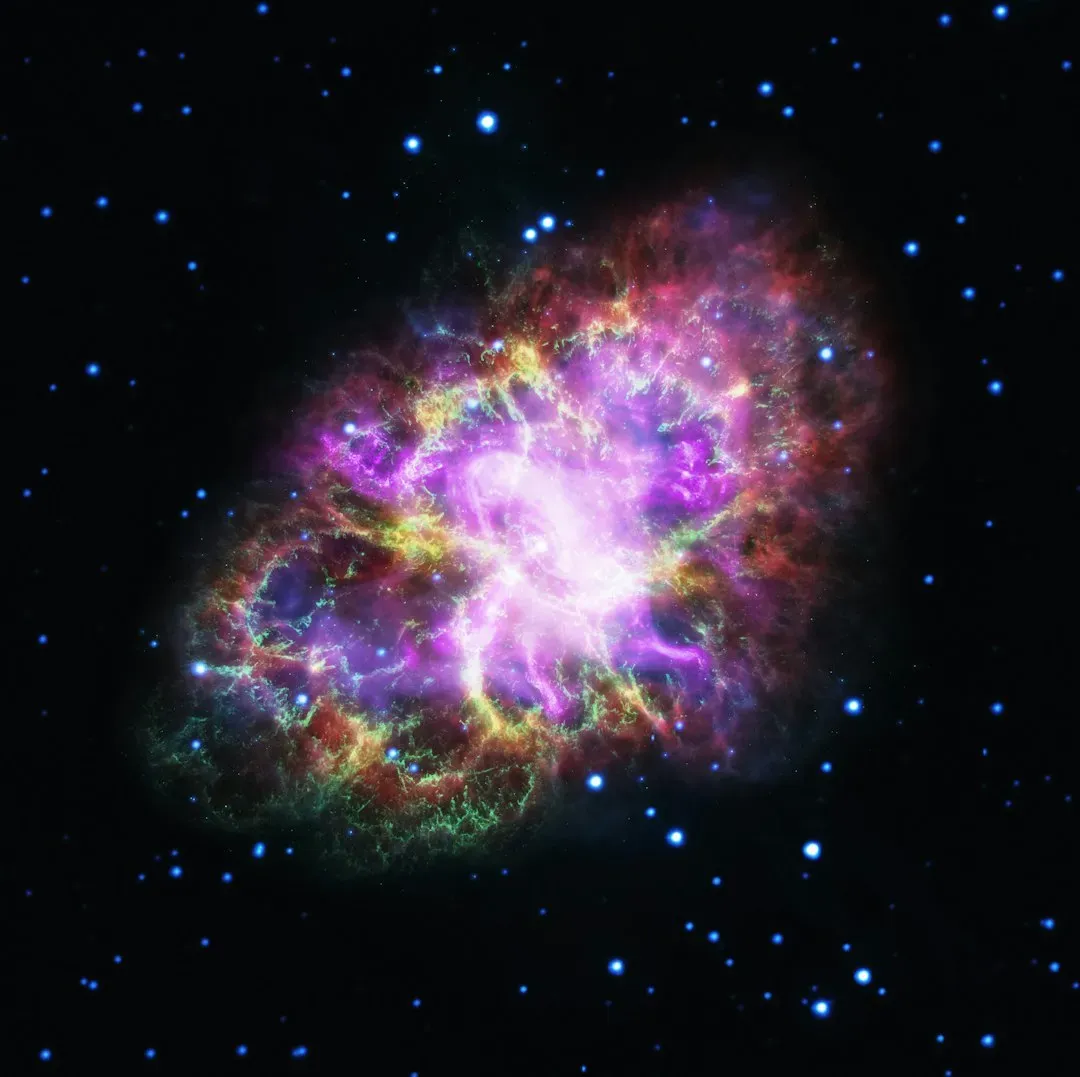
Before the asteroid impact hypothesis gained widespread credibility, in 1971 physicist Wallace Tucker and paleontologist Dale Russell suggested another kind of death from above. Their idea: a nearby star exploded in a supernova, bombarding Earth with lethal doses of radiation. Although the researchers lacked any direct evidence for their idea, they proposed that a nearby supernova could have had catastrophic consequences for life at the end of the Cretaceous. The explosion of a neighboring star, Tucker and Russell proposed, would bombard the upper atmosphere with X-rays and other forms of radiation that would quickly alter the climate, causing temperatures on Earth to plummet.
It is a genuinely terrifying image when you think about it: a star dying hundreds of light-years away, and its death rippling all the way to Earth with devastating consequences. No evidence of such a nearby event 66 million years ago has ever been uncovered. The absence of evidence is not proof of absence, but in this case, the geological record just does not cooperate with the theory. It remains one of the most dramatic “what ifs” in all of paleontology.
6. Mammal Competition and Egg Raids
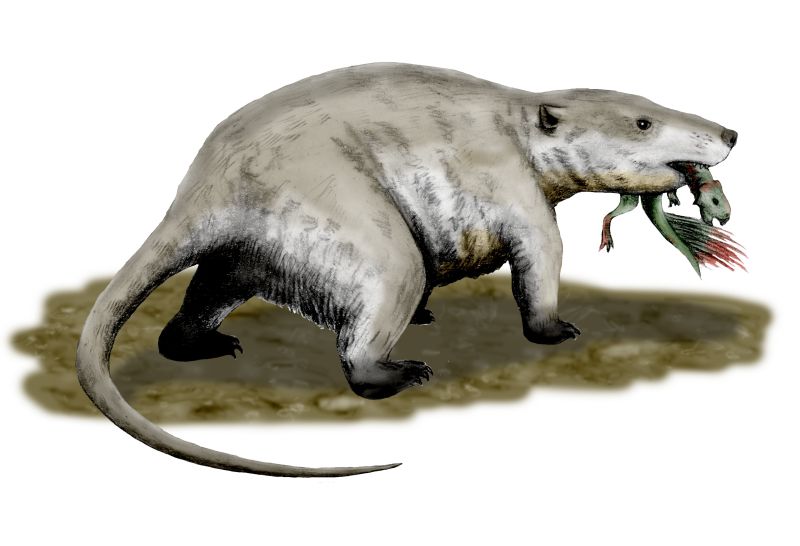
Some theories held that competition between dinosaurs and mammals was the cause of the great Cretaceous extinction. The idea was that small, scrappy early mammals outcompeted dinosaurs by raiding their nests, consuming their eggs in enormous numbers, and slowly strangling dinosaur reproduction over time. Until the recent theories about extraterrestrial collisions, some ideas about the disappearance of dinosaurs centered around mammals beating them in the struggle to survive.
There is something poetically satisfying about this narrative, the scrappy underdogs finally toppling the giants. The problem is that mammals had coexisted with dinosaurs for tens of millions of years without ever gaining the upper hand. Scientists also disagree about the amount of time it took for the extinction to take place. Some think it happened in several days. Others say it took from hundreds of generations to over half a million years. That intense disagreement over timeframe makes it nearly impossible to neatly pin the blame on gradual mammalian pressure alone.
7. The Pleistocene Megafauna Overkill Hypothesis
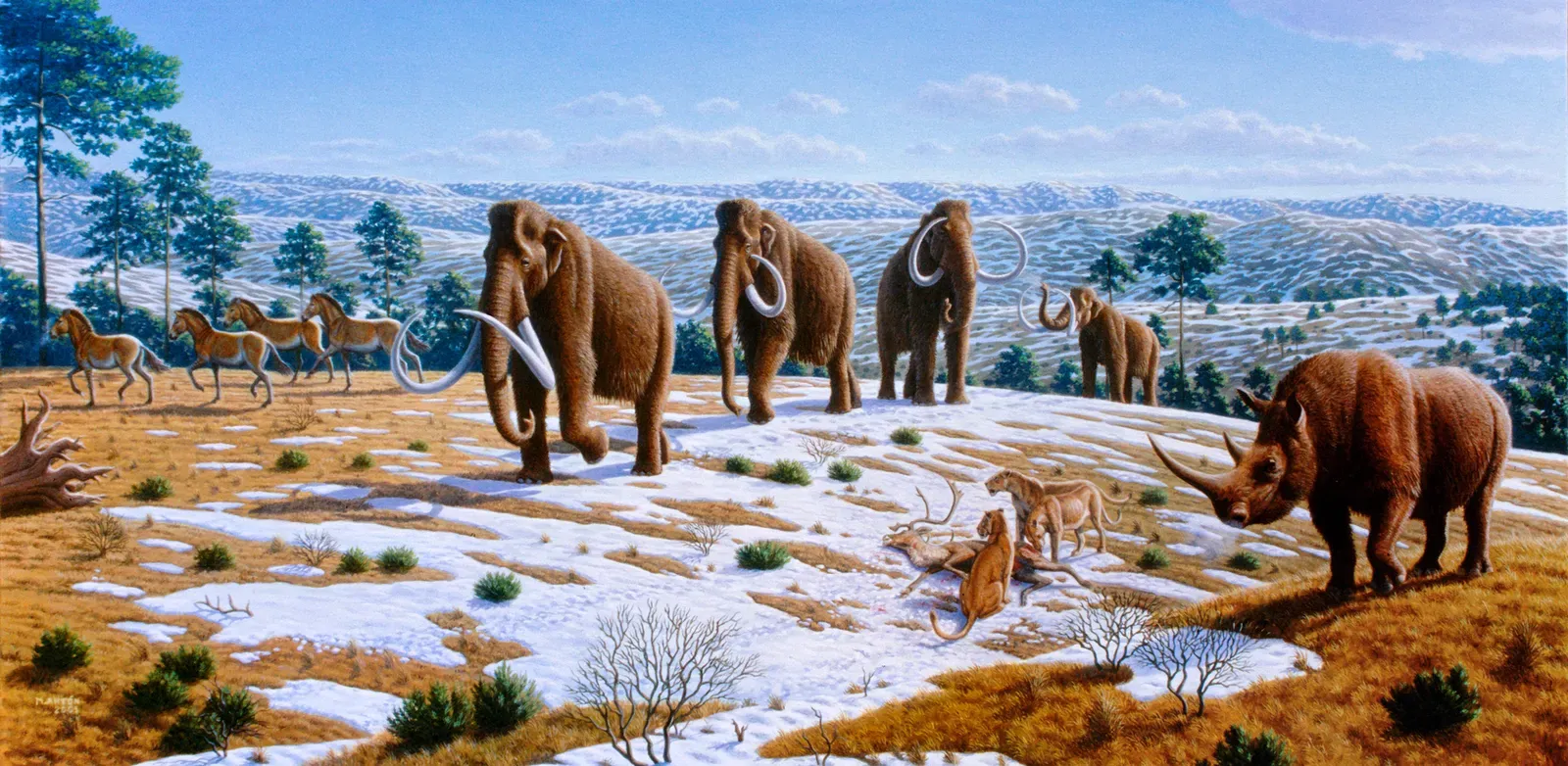
Shift forward from the dinosaurs and you arrive at a different puzzle entirely. Around 12,000 years ago, a staggering number of large mammals, think woolly mammoths, giant ground sloths, and massive cave bears, vanished from the planet. After centuries of debate, paleontologists are converging towards the conclusion that human overkill caused the massive extinction of large mammals in the late Pleistocene. The theory is that small bands of early humans, spreading into previously untouched continents, hunted naive megafauna to complete collapse.
Evidence supporting the prehistoric overkill hypothesis includes the persistence of megafauna on some islands for millennia past the disappearance of their continental cousins. For instance, ground sloths survived on the Antilles long after North and South American ground sloths were extinct, woolly mammoths died out on remote Wrangel Island 6,000 years after their extinction on the mainland, and Steller’s sea cows persisted off the isolated and uninhabited Commander Islands for thousands of years after they had vanished from elsewhere. That pattern is striking. The animals that survived longest were the ones living where humans had not yet arrived. Coincidence? It is hard to say for sure, but the correlation is difficult to ignore.
8. The Deccan Traps Volcanic Extinction Theory
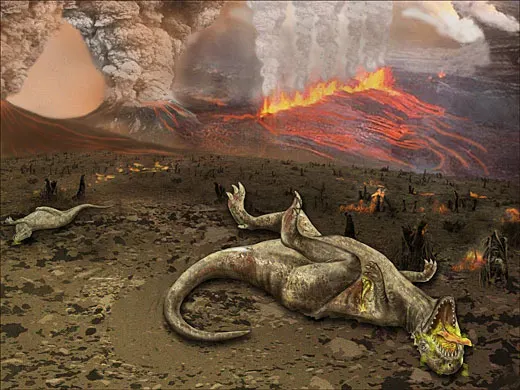
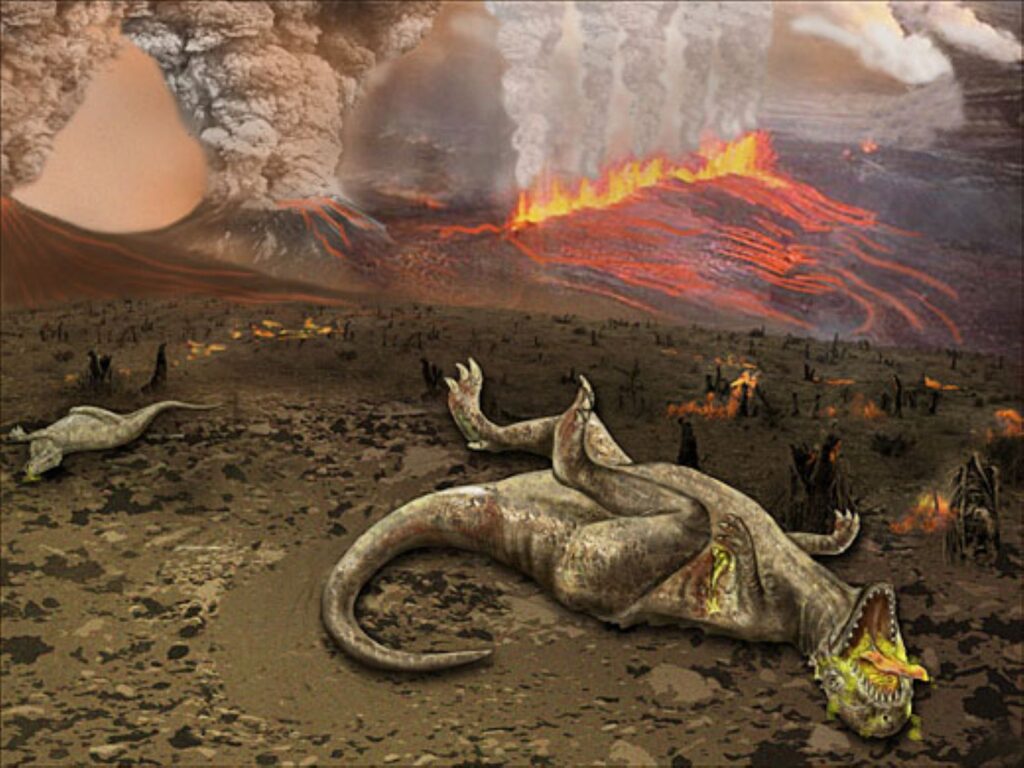
While the asteroid impact story dominates popular culture, a persistent and serious group of scientists has argued for a very different culprit: volcanoes. The Deccan Traps theory was first proposed in 1978 by geologist Dewey McLean but quickly lost traction. The Deccan Traps are an area of volcanic flood basalts in Western India spanning roughly 1.3 million square kilometers that were created by massive volcanic activity during the same time period in which the Chicxulub impact occurred. The scale of those eruptions is almost impossible to grasp, an area of lava fields the size of a small continent.
Researcher Gerta Keller determined that ocean temperatures rose seven to nine degrees Celsius during the most significant period of the Deccan eruptions. Along with ocean acidification, ozone reduction, acid rain, and a release of harmful gases, she asserts that these conditions were sufficient to have initiated the mass extinction. Increasingly, scientists trying to unravel this prehistoric mystery are seeing room for a combination of these ideas. It’s possible the dinosaurs were the unlucky recipients of a geologic one-two punch, with volcanism weakening ecosystems enough to make them vulnerable to an incoming meteor. Honestly, that combined scenario might be the most frightening of all.
9. The Great Dying and the Methane Hydrate Theory
Now we go back even further, to what scientists call the most devastating extinction event in Earth’s entire history. The Permian-Triassic extinction event, colloquially known as the Great Dying, was an extinction event that occurred approximately 251.9 million years ago, at the boundary between the Permian and Triassic geologic periods. It is Earth’s most severe known extinction event, with the extinction of 57% of biological families, 62% of genera, 81% of marine species, and 70% of terrestrial vertebrate species. Those numbers are staggering. Nearly everything, wiped clean.
The end of the Permian period 252 million years ago saw the greatest mass extinction in the geological record. Many theories have been advanced as to the cause, including a fall in sea level, severe climate change induced by methane release, intense volcanism, impact by a bolide, overturn of a stratified, sulfidic ocean, or a combination of these. One of the most haunting ideas involves massive methane hydrate deposits on the ocean floor suddenly destabilizing and releasing enormous quantities of greenhouse gases, triggering runaway warming in a matter of geological seconds. By some estimates, it may have taken up to 10 million years for the planet to recover from the devastation caused by the Great Dying. Ten million years. Let that sink in.
Conclusion
What you get when you survey these nine theories is not a list of failures. You get a portrait of human curiosity at its most tenacious. From overactive pituitary glands to exploding stars to methane-laced ocean floors, each theory represents someone genuinely trying to decode the deepest mysteries locked inside the rock beneath our feet.
Piecing together what happened has been a massive effort for paleontologists, and theories for what killed the dinosaurs and the rest of the planet’s Cretaceous inhabitants have ranged from the plausible to the downright zany. That spectrum, from the inspired to the bizarre, is precisely what makes this field so endlessly fascinating. The fossil record does not give up its secrets easily, and every new excavation has the power to rewrite what we thought we knew.
Science is not a straight line from ignorance to truth. It is a long, messy, wonderfully human argument with the past. Some of the theories above were wrong. Others may contain truths we have not fully unlocked yet. The next discovery could change everything. So here is something to think about: which of these ancient ideas do you think deserves a second look? Drop your thoughts in the comments below.