You usually picture dinosaurs stomping across a primeval landscape, not quietly tending a nest like a backyard robin. Yet some of the most astonishing discoveries of the last few decades have shown you a completely different side of them: careful builders, devoted parents, and surprisingly strategic planners. When you look closely at the nests they left behind, you start to see behavior, not just bones.
In the stories that follow, you are not just reading about fossils; you are peeking into moments frozen in time – parents guarding eggs, hatchlings scrambling around a nesting ground, and entire colonies returning year after year to the same place. As you move through these nine nests, you’ll notice something unsettling and inspiring at the same time: the line between dinosaurs and modern birds feels thinner than you might’ve ever imagined.
1. The “Egg Thief” That Turned Out To Be a Caring Parent
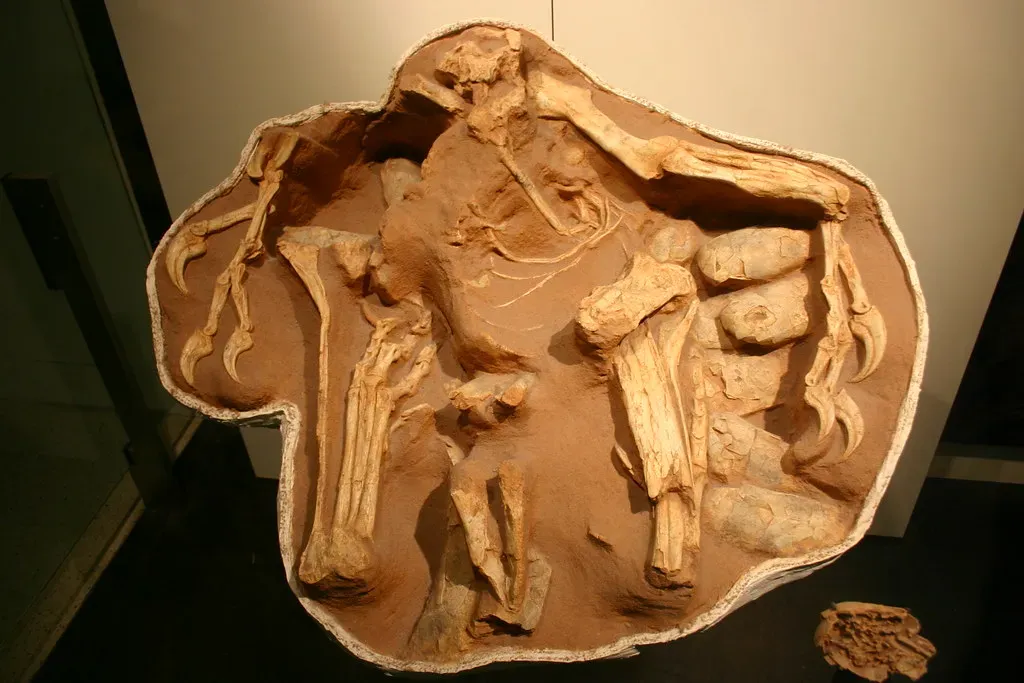
Imagine hiking in the Gobi Desert and stumbling across a skeleton sprawled over a ring of eggs, as if caught in the act of a crime. That’s pretty much what happened in the 1920s, when paleontologists found an Oviraptor lying on top of a nest and assumed it had been raiding someone else’s clutch. The dinosaur was branded an egg thief, and the name stuck for decades, shaping how people thought about this animal.
When you fast-forward to later discoveries and more careful study, the story flips. Additional Oviraptor and close relatives were found in nearly identical birdlike brooding poses, with eggs and even embryos that clearly belonged to them. You’re suddenly looking at a parent, not a predator, crouched over its own nest with arms spread protectively like a giant featherless chicken. It’s one of those rare cases in science where a fossil not only rewrites a name, but forces you to admit just how wrong your first impression can be.
2. A Dinosaur Caught Forever in the Act of Brooding
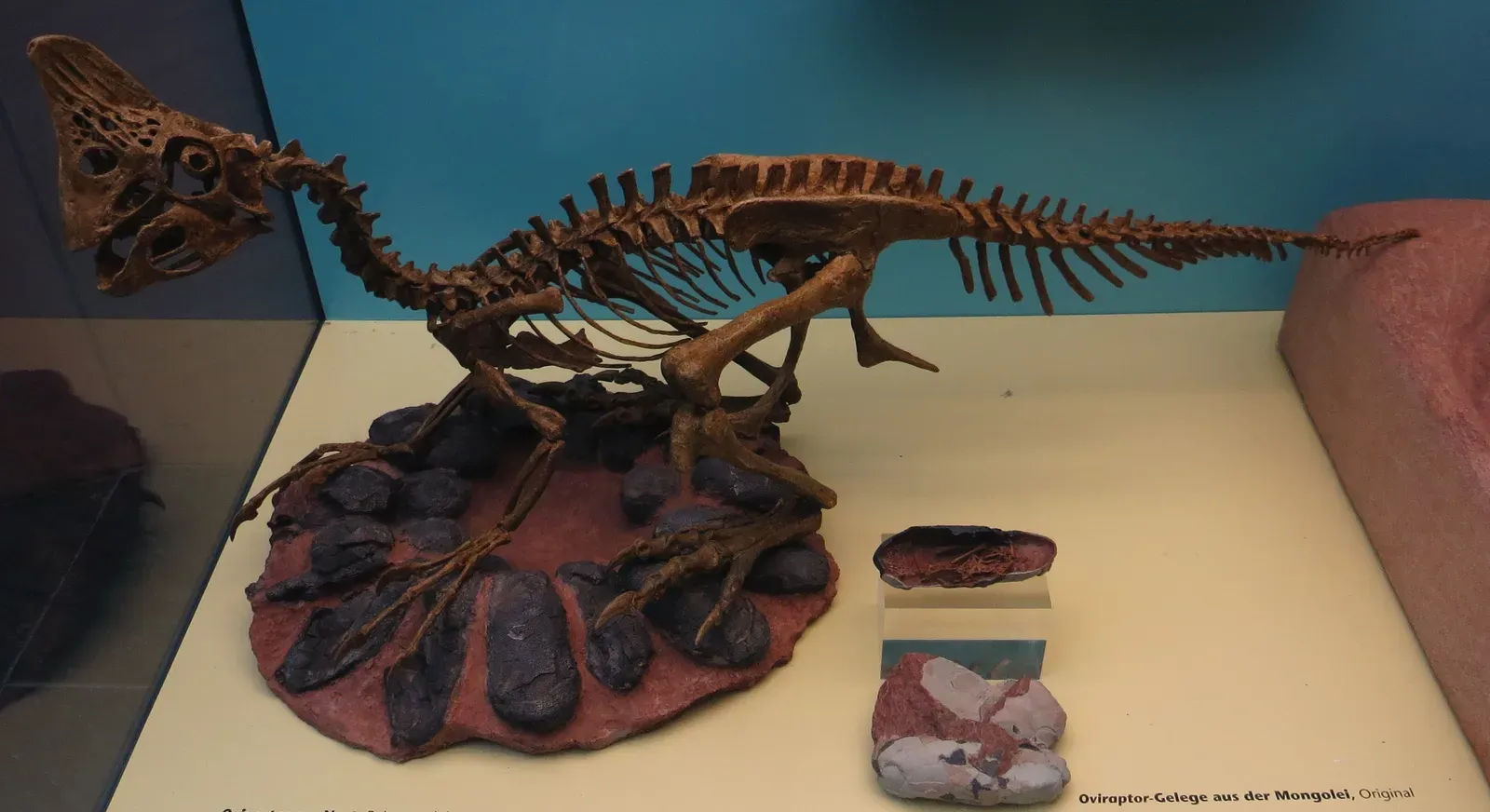
Now picture a medium-sized, birdlike dinosaur frozen in time, literally sitting on a circular nest of eggs, with several embryos still preserved inside those shells. You are not just seeing bones arranged in a lab; you’re seeing the exact posture this animal held in its final living moments, locked there by sediment before the eggs ever hatched. That kind of snapshot is almost absurdly lucky from your point of view as a modern observer.
What makes this sort of Oviraptorid nest so astounding is how closely it mimics what you see in birds today: the body centered over the eggs, limbs wrapped around the clutch, eggs arranged in a ring with the broader ends facing inward. You can imagine the animal shifting its weight, testing the eggs with its chest just as a goose or hen might. When you stand in front of this kind of fossil in a museum, you’re basically spying on parental behavior from more than sixty million years ago, and it feels oddly intimate.
3. The “Good Mother Lizard” Colonies of Maiasaura
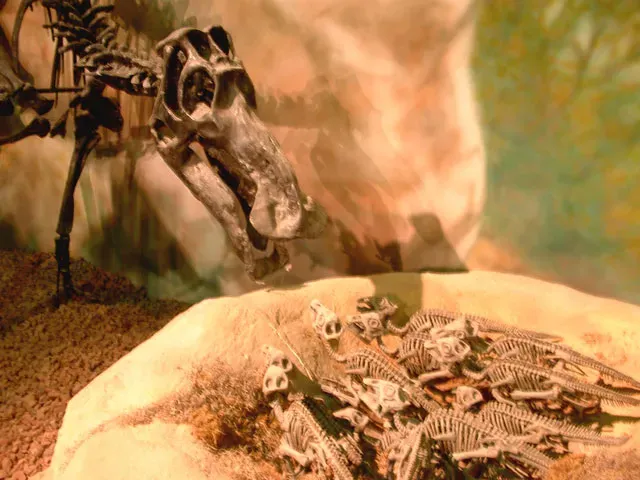
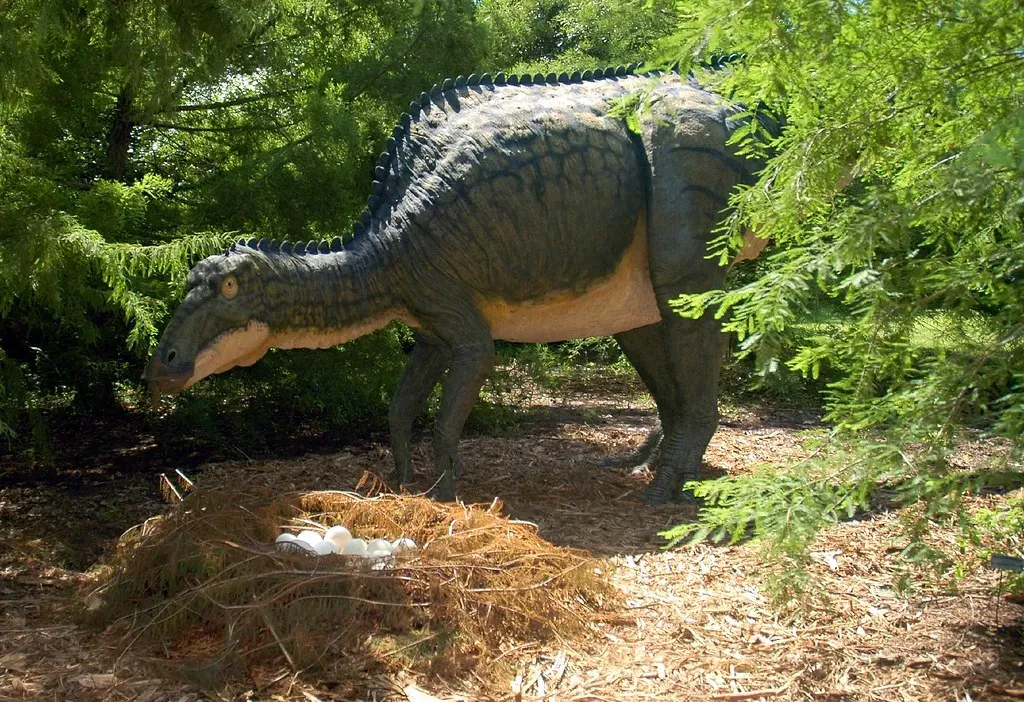
When you visit the badlands of Montana in your mind, you might picture scattered bones in lonely washes, but the duck-billed dinosaur Maiasaura tells you a totally different story. In the late twentieth century, paleontologists uncovered sprawling nesting grounds where this species returned season after season, building nest after nest in layered horizons. You are effectively looking at a dinosaur neighborhood, complete with generations stacked one above the other like a fossilized apartment building.
Inside those nests, you find crushed eggshells, tiny bones, and evidence that the hatchlings stayed put for a while instead of wandering off immediately. That suggests to you that parents probably brought food back to the nest, more like modern birds or some mammals than the cold, indifferent reptiles people once assumed dinosaurs were. When you hear that the very name Maiasaura translates to something like “good mother lizard,” it starts to feel justified rather than sentimental. You’re watching a species that invested in slow, careful upbringing, not just a quick sprint from egg to independence.
4. A Portuguese Nest Packed With Dozens of Tiny Embryos
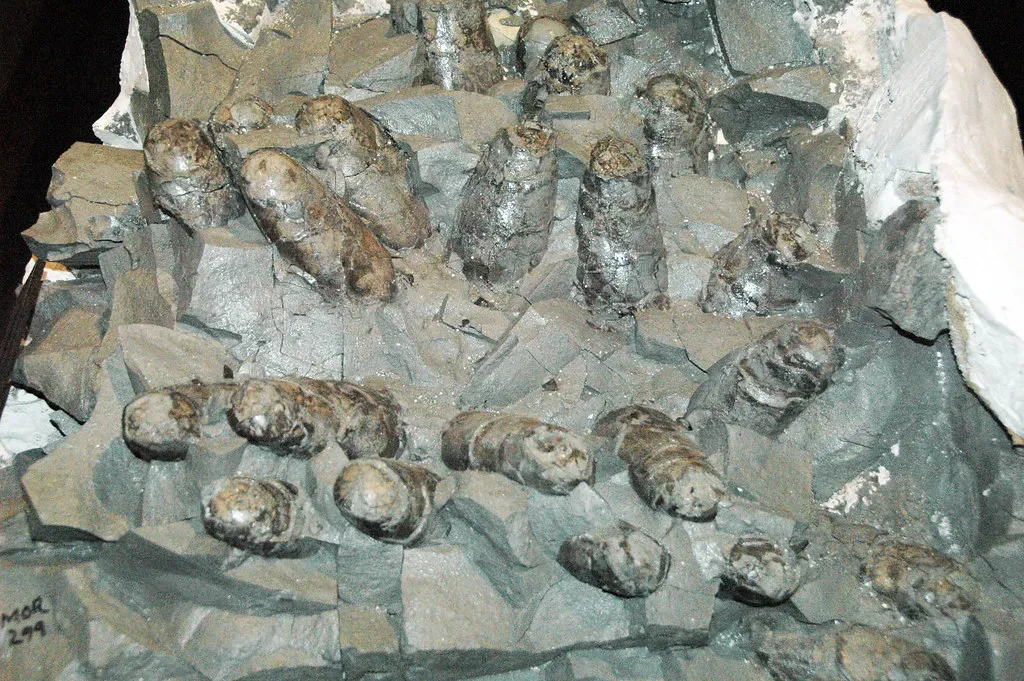
If you travel, even just in your imagination, to Portugal’s Atlantic coast near Paimogo, you walk into one of the most dramatic dinosaur nesting stories on Earth. There, in rocks from the Late Jurassic, paleontologists uncovered a nest containing a remarkable number of eggs and more than a few hundred tiny theropod embryonic bones and fragments. You’re seeing the remains of a nest likely belonging to a meat-eating dinosaur related to Lourinhanosaurus, all piled together in a single, spectacular fossil bed.
What grabs you about this nest is not just the number of embryos, but what they reveal about development and growth. By examining limb bones and skull fragments at different stages, researchers can piece together how these babies were forming before they ever saw the light of day. When you stand in that Portuguese museum and stare at this cluster, you’re really staring into a prehistoric nursery with a shocking amount of detail preserved. It is one of those finds that reminds you how much information can hide in what, at first glance, just looks like a jumble of broken eggs and bones.
5. The Theropod Eggs by the Sea at Lourinhã
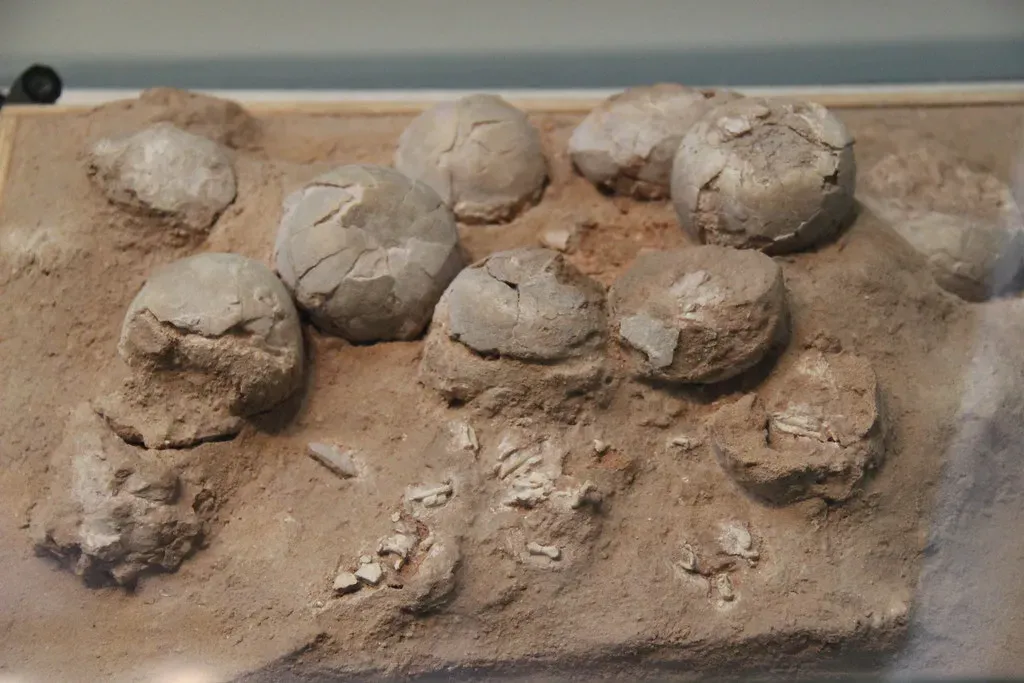
Not far from that big embryonic nest, the cliffs and beaches of Lourinhã have yielded more dinosaur eggs and nests than you might expect from a quiet coastal town. At Paimogo beach and other nearby sites, paleontologists have pulled out clutches that belonged to predatory theropods, some with eggs still arranged in their original patterns. You can almost imagine a nesting ground stretched along the shoreline, long before there were surfing tourists and seaside cafés.
For you, these Portuguese nests are a masterclass in how environment shapes nesting behavior. The sediments tell you that these dinosaurs were laying eggs in areas influenced by water, perhaps on gentle slopes or sandbars where flooding and erosion constantly reshaped the land. Each clutch that survived burial gives you a bit more insight into how risky it was to lay eggs in such a dynamic place. It makes you realize that for every nest you see, there were likely many, many others that storms and waves erased without a trace.
6. Sauropod Nesting Grounds the Size of Fields
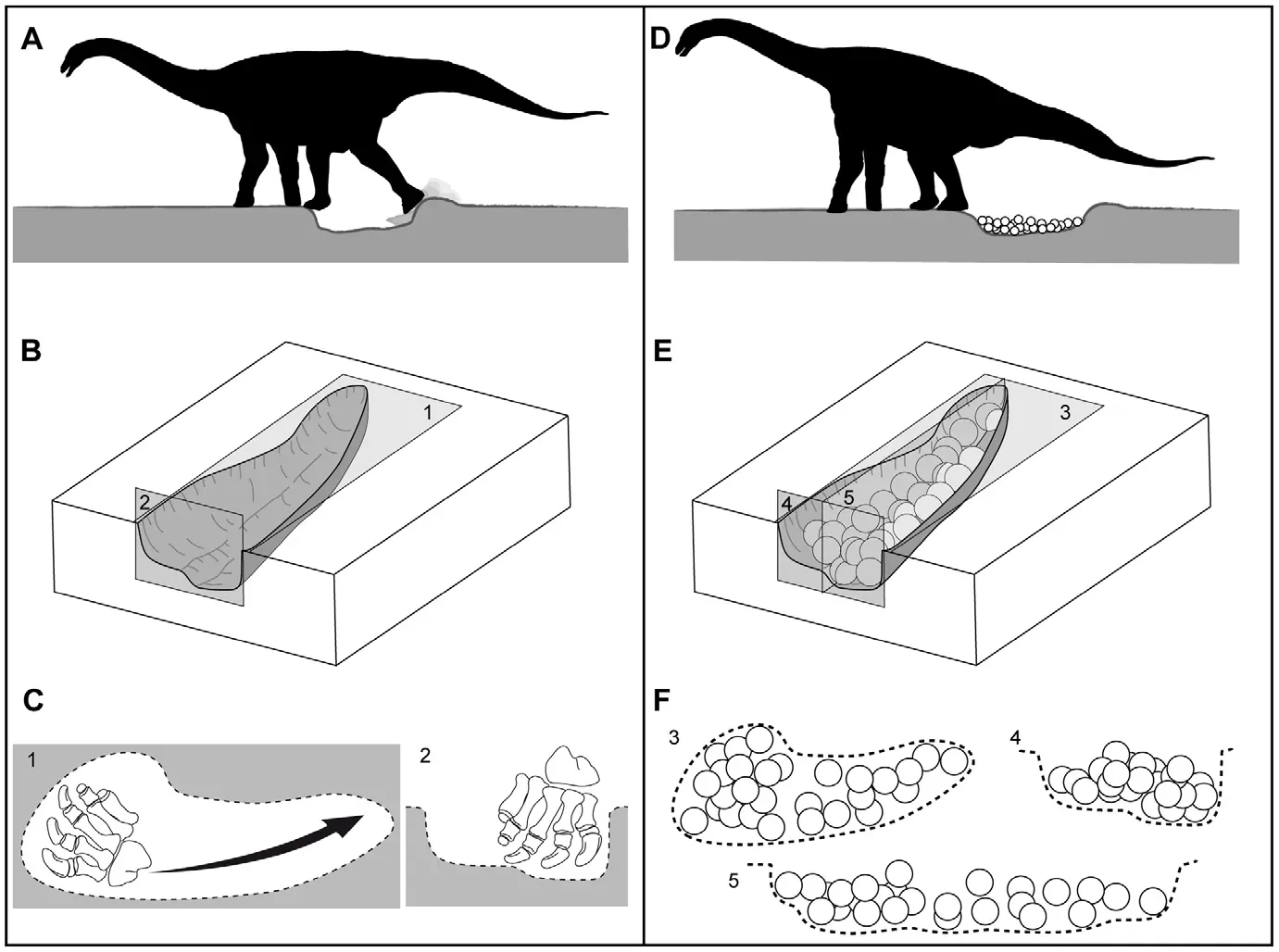
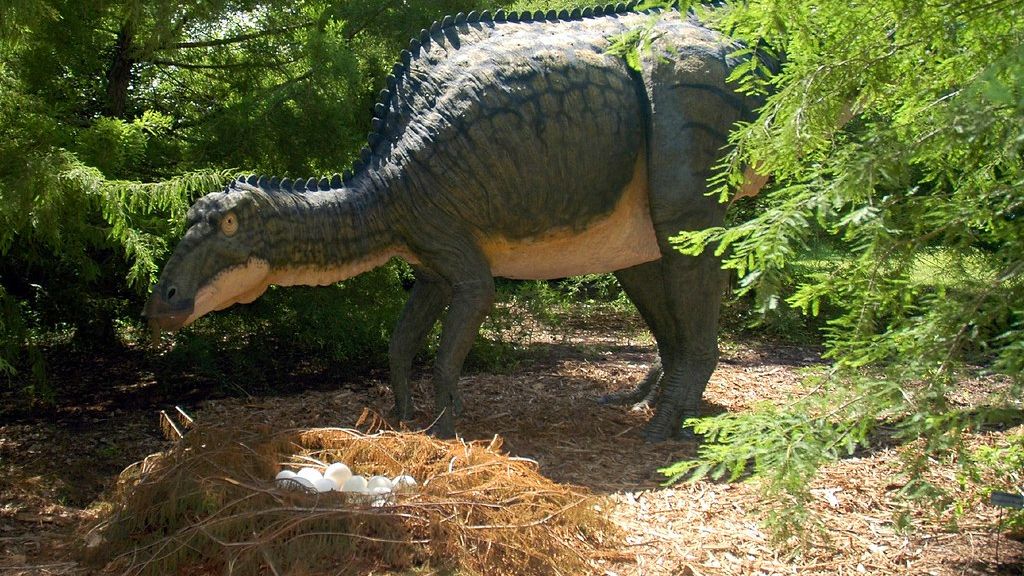
When you think of long-necked sauropods, you probably picture towering bodies and tree-stripping appetites, not delicate eggs the size of grapefruits or small melons. Yet in places like Argentina and India, paleontologists have uncovered massive nesting grounds where titanosaurs laid countless small eggs in shallow pits. You are looking at landscapes that were once dotted with low, round nests, almost like a prehistoric turtle beach scaled up to dinosaur size.
These nesting sites show you that even giants relied on safety in numbers rather than guarding each individual egg. The nests are often clustered but not overlapping, with shallow scrapes and relatively thin shells that suggest partial burial rather than deep coverage. You can infer that warmth came from sun and soil as much as from any adult body heat, a very different strategy from the brooding Oviraptorids. When you imagine walking through such a field, you might feel like you are tiptoeing across a minefield of ancient hopes and long-lost hatchlings.
7. Nests That Reveal Dinosaurs Reused the Same Sites
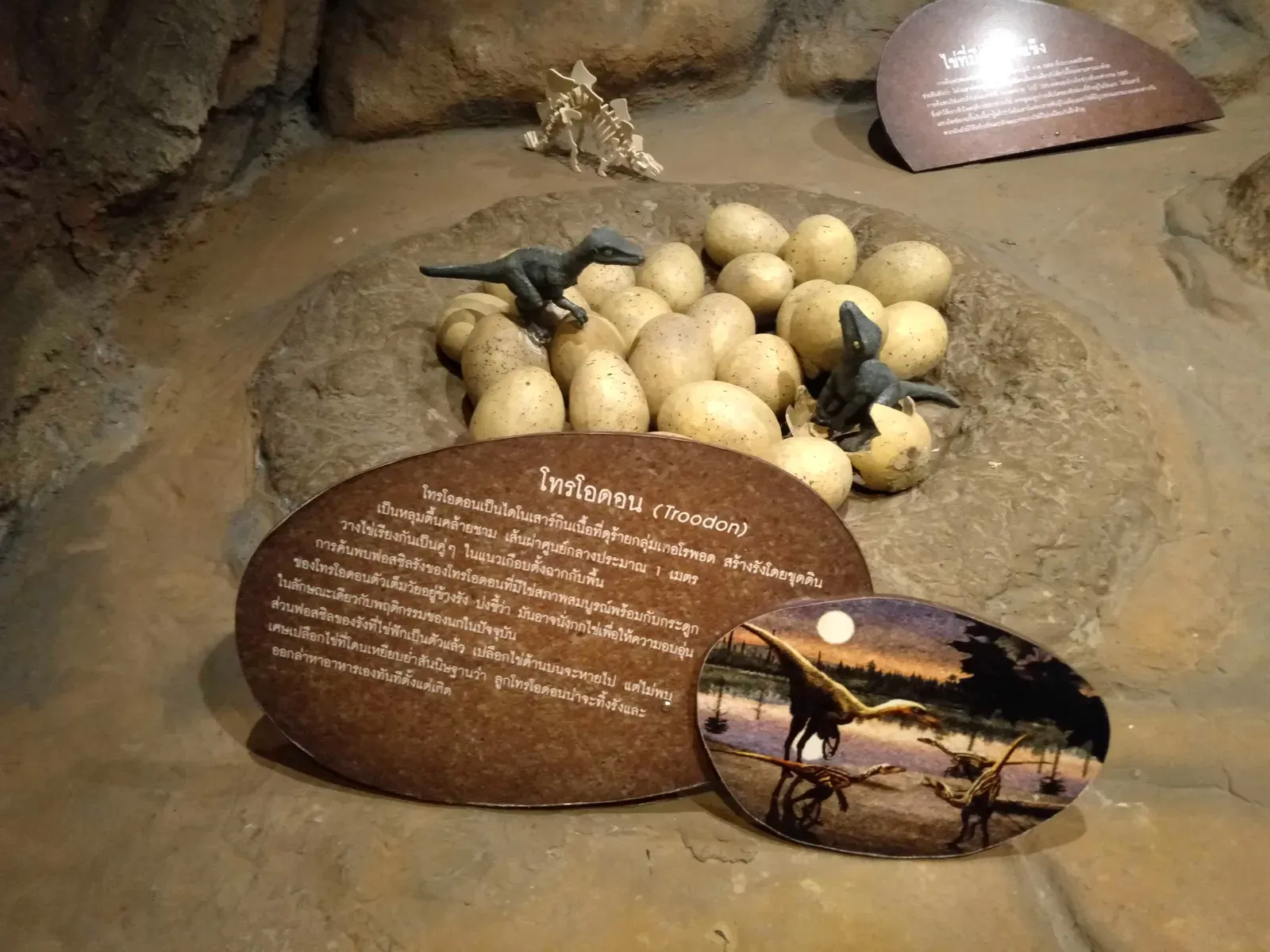
One of the more quietly shocking things you learn from dinosaur nests is how often the same ground was used again and again. In some Maiasaura nesting horizons, for example, layers of nests are stacked vertically, telling you that these animals returned to the same area season after season. You can almost picture the scene: flocks of duck-billed dinosaurs trekking back to familiar ridges, driven by some internal map the same way sea turtles and seabirds navigate back to their birthplace.
For you, that kind of site fidelity screams complex behavior and memory. It means these dinosaurs were not just wandering the landscape at random, but building traditions that lasted across generations. When you study those layered nests, you are really reading a multi-year diary written in mud, eggshells, and bones. It invites you to compare them to modern geese on their breeding grounds or salmon in their spawning streams, and to admit that dinosaur lives were patterned and predictable in ways you rarely appreciate at first glance.
8. Eggshell Science: How You Read Nesting From Fragments
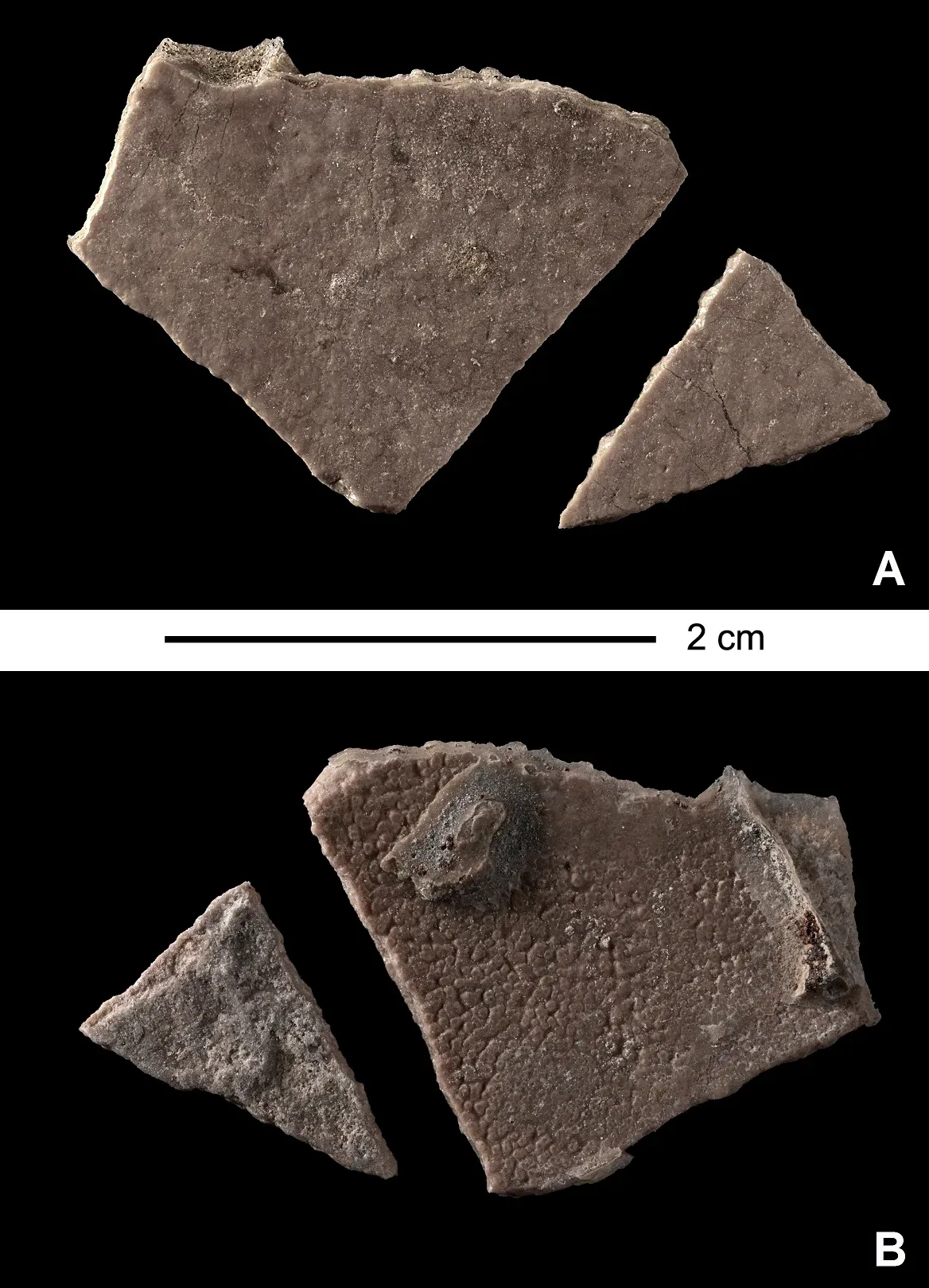
Not every astounding nest looks like a perfect circle of complete eggs with a dinosaur on top; more often, you are staring at scattered shards of eggshell and trying to reconstruct the story. Under a microscope, the thickness, pore structure, and layering of those shells tell you an amazing amount about how the eggs were incubated. You can infer whether they were buried, left in open nests, or partially covered, and even how much gas exchange and moisture movement was happening during development.
This is where you, as a curious observer, get to appreciate the quiet power of egg microstructure. By comparing fossil eggshells to those of modern birds and reptiles, researchers can reconstruct whether a nest was likely warm and dry on the surface or cool and damp under soil or vegetation. In some cases, the chemistry of the shell can even hint at the environmental conditions the embryos experienced. Suddenly, a handful of broken pieces becomes a window into nesting style, climate, and parental involvement, and you start to understand why paleontologists get so excited about what look like simple chips of stone.
9. Dinosaur Nests Reimagining Birds as Living Dinosaurs
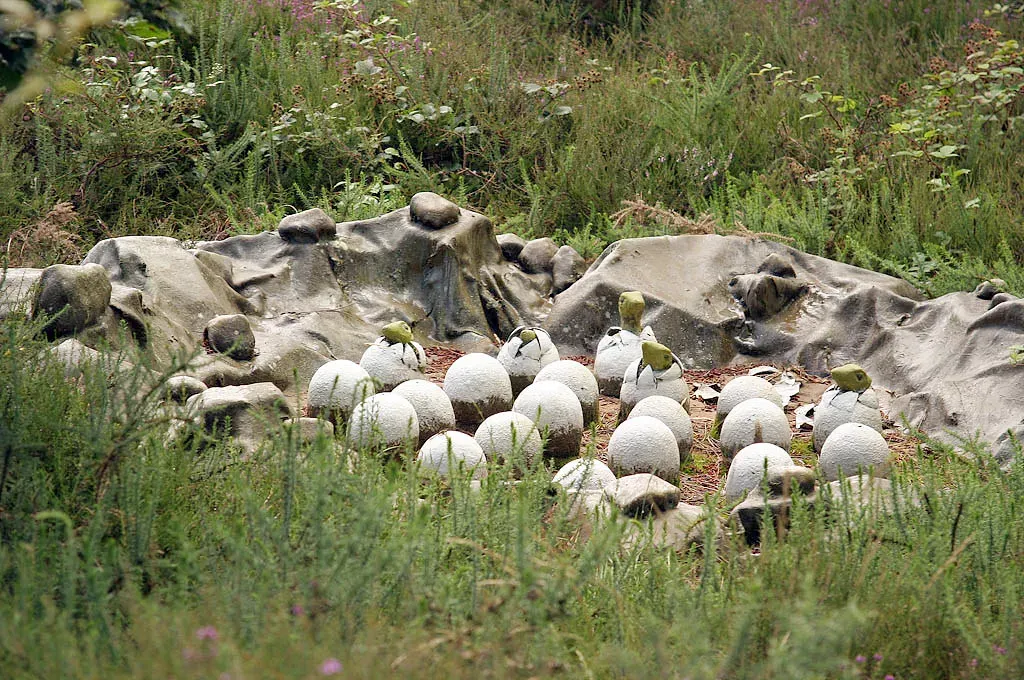
When you pull all these nests together in your mind – the brooding Oviraptorids, the sprawling Maiasaura colonies, the titanosaur fields, and the Portuguese embryo hoards – a pattern jumps out at you. The behaviors you are seeing feel very familiar from the modern world: brooding, colony nesting, site reuse, and egg care that goes well beyond what many reptiles do today. You are being gently pushed toward an unavoidable conclusion: birds are not just like dinosaurs; they really are dinosaurs, carrying those old nesting strategies forward.
Every time you watch a gull defend its nest on a rooftop or a backyard robin anxiously hop around its clutch, you are witnessing an echo of those ancient behaviors. The continuity runs deeper than feathers and hollow bones; it sits right in the choices animals make about where to place their eggs and how much to guard them. Once you see that connection, dinosaur nests stop being dusty fossils and start feeling like chapters in a very long, ongoing story that includes you, your local pigeons, and the entire living world around you.
Conclusion: What These Nests Really Tell You
By the time you’ve walked through these nine remarkable nests, you’re no longer just picturing dinosaurs as movie monsters roaring across the screen. You are picturing parents, neighbors, and migrants returning to the same spots year after year, staking their futures on pits of sand, circles of eggs, or carefully arranged colonies on windswept plains. These fossil nests quietly demolish the old stereotype of dinosaurs as cold, uncaring reptiles and replace it with a richer, more relatable image of animals making hard choices about survival and family.
For you, that shift is more than a fun fact; it’s a reminder that behavior leaves traces, even across tens of millions of years, if you know where to look. The next time you see a bird fussing over its nest, you might find yourself wondering which Late Jurassic or Cretaceous ancestor first tried that same trick in a world full of predators and uncertainty. If you could stand beside one of those ancient nests for just a few minutes, what part of your picture of dinosaurs do you think would change first?