Sixty-six million years ago, a catastrophic asteroid impact near Mexico’s Yucatán Peninsula triggered a mass extinction event that wiped out approximately 75% of Earth’s species, including the non-avian dinosaurs. This cataclysmic event forever altered the trajectory of evolution on our planet, clearing the ecological stage for mammals to diversify and eventually give rise to humans. But what if that asteroid had missed Earth entirely? What if dinosaurs had continued to evolve and thrive across North America and beyond? This alternative evolutionary timeline presents a fascinating thought experiment that challenges our understanding of biological development and raises profound questions about humanity’s place in the natural world.
The Asteroid That Changed Everything

The Chicxulub impactor, measuring approximately 10-15 kilometers in diameter, struck Earth with the force of billions of Hiroshima bombs. The immediate aftermath included tsunamis, global wildfires, and a nuclear winter effect as debris blocked sunlight for months or years. Paleontologists have found evidence that dinosaurs were still thriving and diversifying right up until this catastrophic moment. The randomness of this cosmic event is striking – had the asteroid arrived mere minutes earlier or later, it might have landed in the deep ocean or in a different location entirely, potentially resulting in a less severe extinction event. This cosmic roll of the dice effectively ended the 165-million-year reign of non-avian dinosaurs and redirected the course of evolutionary history on our planet.
Late Cretaceous North America: The Starting Point
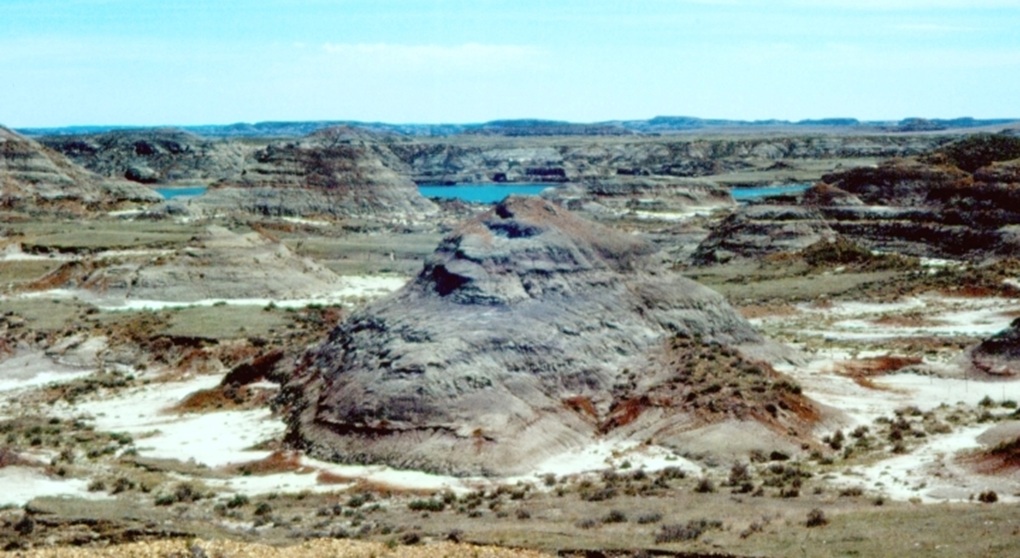
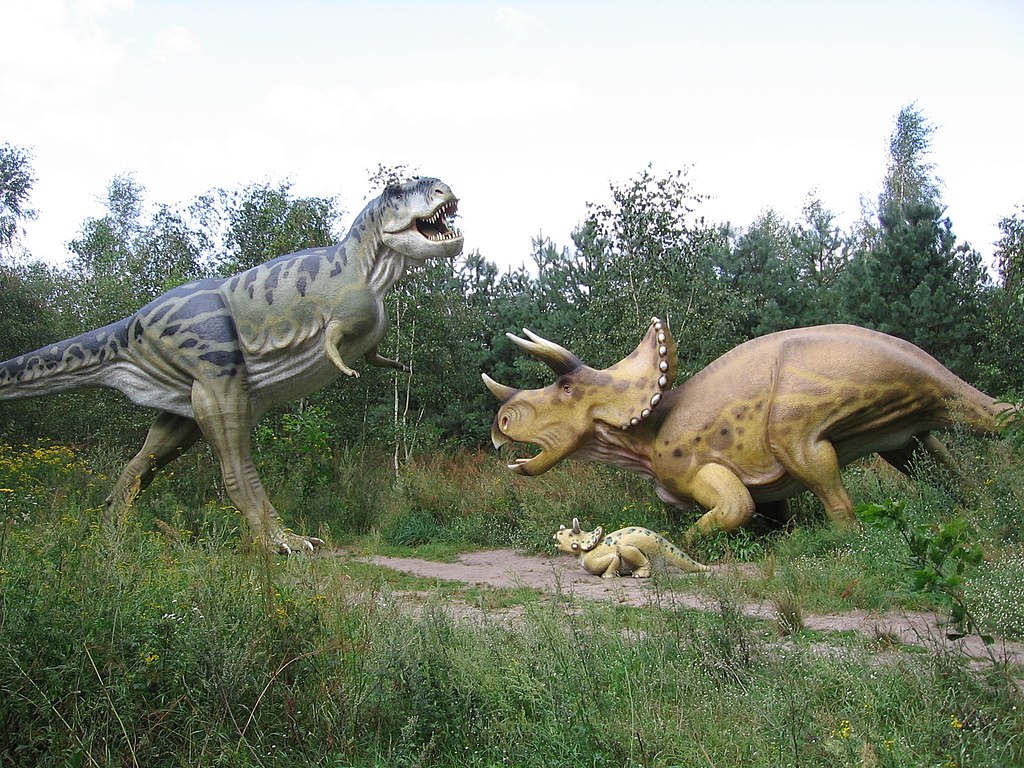
To imagine a world where dinosaurs never went extinct, we must first understand the ecosystem they inhabited just before their demise. Late Cretaceous North America was a remarkably different landscape from today, with a vast inland sea dividing the continent. The western region, known as Laramidia, hosted diverse dinosaur communities including the famous Tyrannosaurus rex, various hadrosaurs, ceratopsians like Triceratops, and armored ankylosaurs. The eastern portion, Appalachia, remained more isolated and developed its own unique dinosaur species. These environments were lush and productive, supporting complex food webs where dinosaurs occupied virtually every major ecological niche. Unlike the popular perception of dinosaurs as evolutionary dead-ends, fossil evidence indicates that dinosaur species were actively evolving and adapting to changing conditions right up until the extinction event.
Continued Dinosaur Evolution Through the Cenozoic

Had dinosaurs survived into the Cenozoic Era, their evolutionary trajectory would likely have continued along paths already visible in the fossil record. Theropod dinosaurs had been trending toward increased brain size and enhanced sensory capabilities for millions of years. This pattern might have continued, potentially producing even more intelligent predators with advanced problem-solving abilities. Herbivorous groups like ceratopsians and hadrosaurs were developing increasingly complex dental batteries and digestive adaptations that could have allowed them to exploit new plant resources as flowering plants continued to diversify. The warming and cooling cycles of the Cenozoic would have presented adaptive challenges, potentially driving dinosaurs to develop new thermoregulatory strategies including the possibility of true warm-bloodedness in more lineages. Some paleontologists speculate that certain dinosaur groups might have eventually developed forms of insulation beyond feathers, particularly in species that expanded into cooler northern and southern latitudes.
Mammals Remain in the Shadows
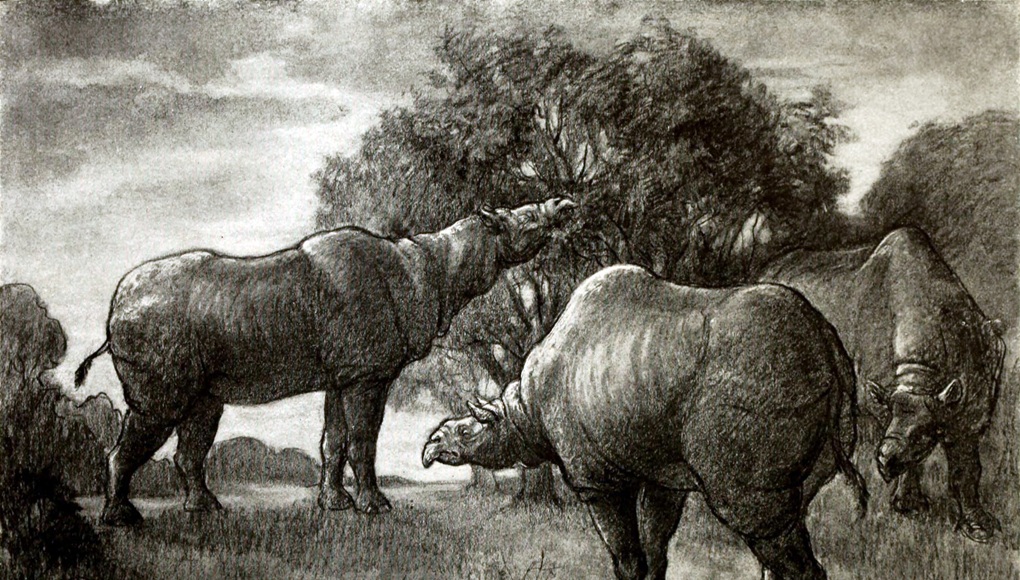
In our alternative timeline, mammals would likely have remained relatively small and ecologically marginalized, as they had been throughout the Mesozoic Era. The ecological niches that mammals explosively filled after the dinosaur extinction—from large herbivores to apex predators—would have remained dominated by dinosaurs and other reptiles. Mammals might have continued their nocturnal, insectivorous, and small omnivorous lifestyles, perhaps never exceeding the size of modern badgers or raccoons. The extraordinary adaptations that characterize modern mammals, from the aquatic specializations of whales to the flight capabilities of bats, might never have evolved in a dinosaur-dominated world. However, mammals had already begun developing larger brains and more complex social behaviors during the late Cretaceous, so they might have eventually carved out specialized ecological niches even in the presence of dinosaurs, perhaps becoming more diverse in forests, underground habitats, or other environments less dominated by large dinosaurs.
The Rise of Avian Dinosaurs
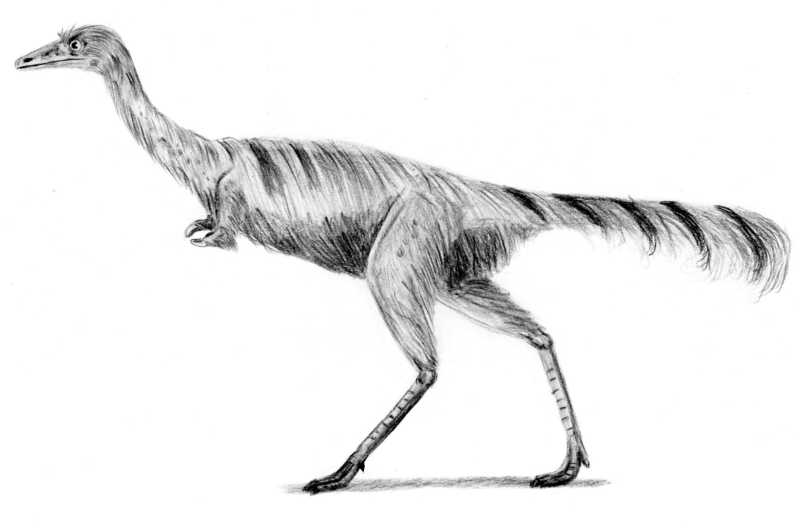
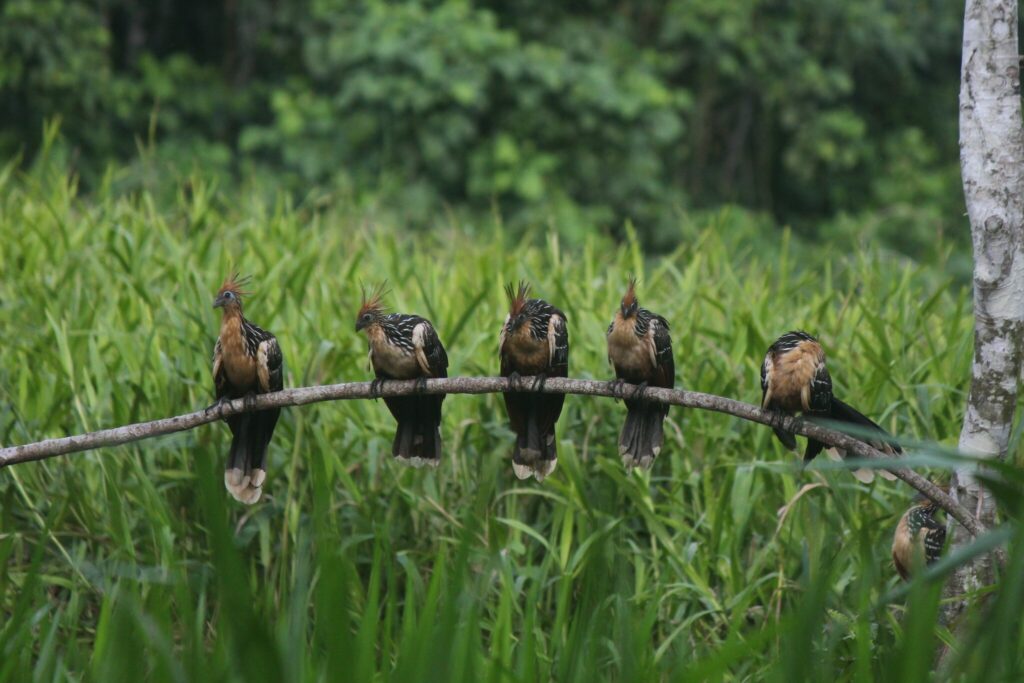
Birds, which are technically avian dinosaurs that survived the extinction event, would have evolved alongside their non-avian dinosaur relatives in this alternative timeline. The boundary between what we call “birds” and other small, feathered dinosaurs might have remained much more blurred without the extinction event that effectively separated their evolutionary paths. Avian dinosaurs might have faced more competition and predation from their non-avian relatives, potentially limiting their diversification compared to our timeline. Conversely, the continued presence of large, terrestrial dinosaurs might have provided additional selective pressure for flight adaptations in smaller dinosaur species. The remarkable diversity of modern birds—from tiny hummingbirds to flightless ostriches—demonstrates the evolutionary potential of this dinosaur lineage, which might have produced even more surprising forms had it evolved in the context of a continued dinosaur-dominated world.
North American Geography and Climate Changes

The Cenozoic Era brought dramatic changes to North America’s landscape that would have significantly impacted dinosaur evolution had they survived. The inland sea that divided North America gradually retreated, creating vast new territories for terrestrial dinosaurs to colonize and adapt to. The formation of the Rocky Mountains through continued tectonic activity would have created new alpine habitats and climate barriers, potentially driving speciation events among dinosaur populations. Perhaps most significantly, the global cooling trend that characterized much of the Cenozoic, culminating in the ice ages of the Pleistocene, would have presented enormous adaptive challenges for animals traditionally associated with warmer climates. Dinosaurs would have needed to evolve enhanced thermoregulation, seasonal migration patterns, or hibernation strategies to cope with colder winters, particularly in northern regions. These climate pressures might have driven the evolution of more sophisticated social behaviors, including possible seasonal migrations similar to those seen in modern birds.
Dinosaur Adaptations to New Plant Communities
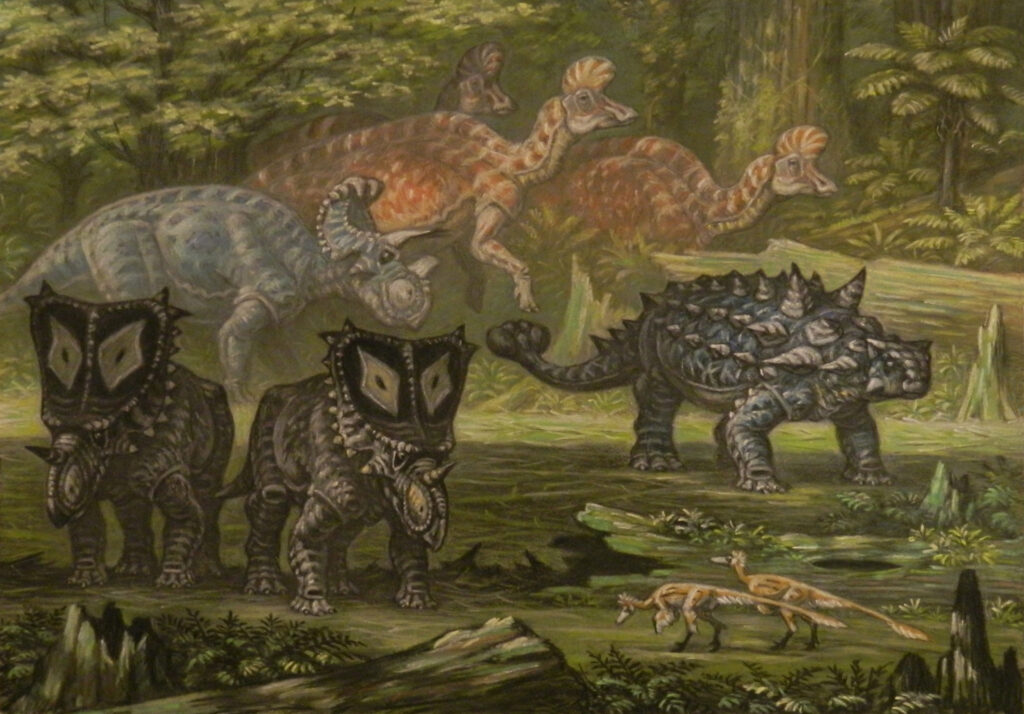
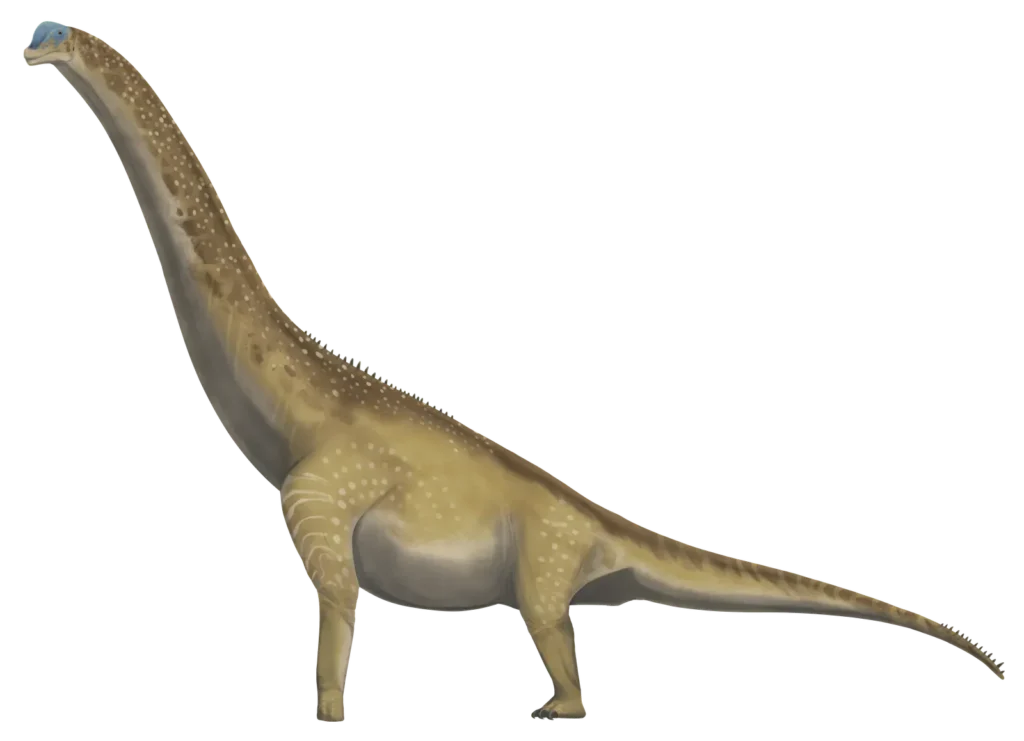
The Cenozoic witnessed a dramatic transformation in plant communities, with flowering plants (angiosperms) rising to ecological dominance over the gymnosperms and ferns that had been prevalent during much of the Mesozoic. This floral revolution would have presented both challenges and opportunities for herbivorous dinosaurs. Ceratopsians, hadrosaurs, and sauropods would have needed to adapt their feeding structures and digestive systems to process these new plant resources efficiently. Some dinosaur lineages might have developed more specialized relationships with particular plant groups, similar to the co-evolutionary relationships we see between modern herbivorous mammals and their food plants. The spread of grasslands during the Miocene epoch would have been particularly significant, potentially driving the evolution of new grazing dinosaur species with specialized teeth for processing silica-rich grasses. These hypothetical “grazing dinosaurs” might have developed high-crowned teeth similar to those that evolved independently in horses and other mammalian grazers in our timeline.
The Question of Dinosaur Intelligence
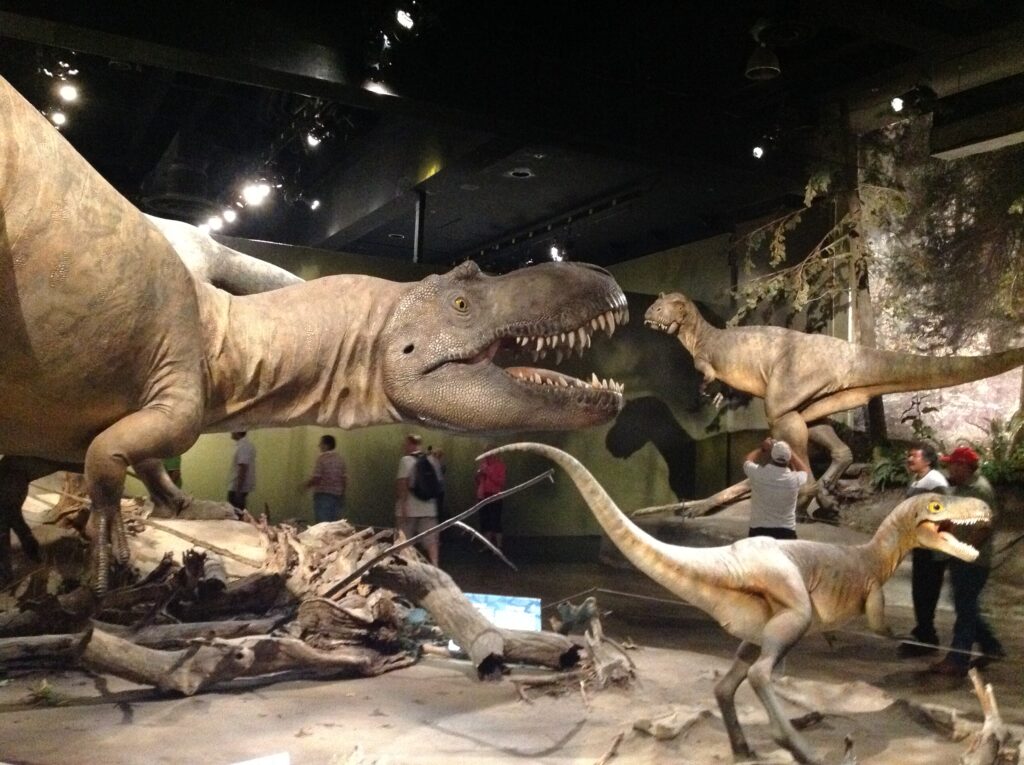
One of the most fascinating aspects of this alternative timeline concerns the potential cognitive evolution of dinosaurs, particularly among the theropods. Certain dinosaur lineages, especially the maniraptoran theropods closely related to birds, already showed trends toward increased brain size relative to body mass during the Late Cretaceous. Had this trend continued for another 66 million years, it’s conceivable that some dinosaur species might have evolved intelligence comparable to modern corvids (ravens and crows) or perhaps even primates. The troodontids, a family of small, bird-like theropods with relatively large brains, have been speculated as candidates for further cognitive evolution. Environmental pressures like climate change or competition might have selected for increased problem-solving abilities, social complexity, and tool use in some dinosaur lineages. While it’s unlikely any would have reached human-level intelligence, the possibility of moderately intelligent, tool-using dinosaur species cannot be ruled out in this alternative evolutionary scenario.
Social Structures and Behaviors
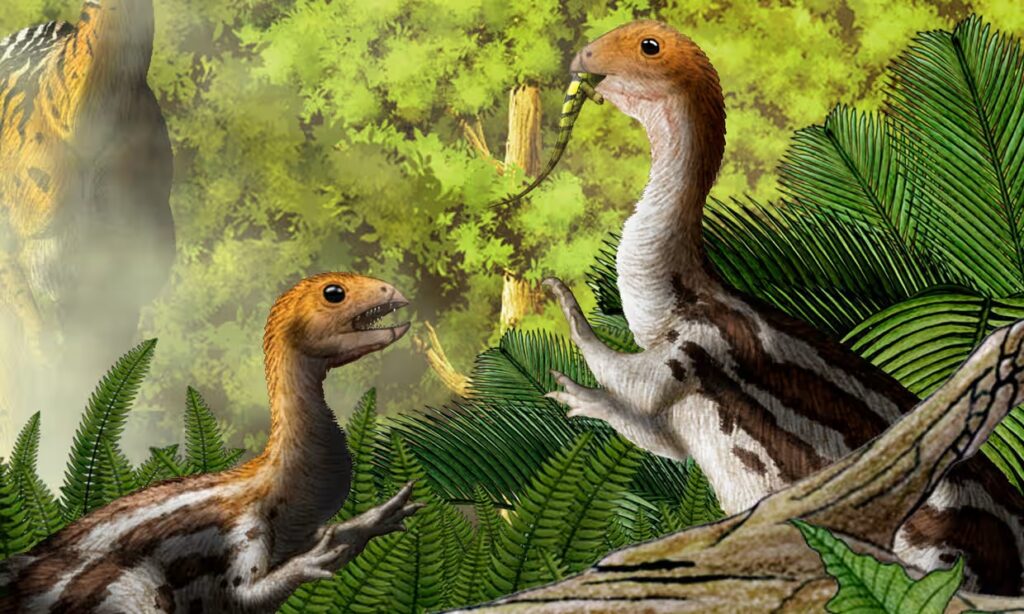
vidence from fossils suggests many dinosaur species already exhibited complex social behaviors, from pack hunting in some theropods to massive herding in certain herbivorous species. Given another 66 million years of evolution, these social structures might have become even more sophisticated in response to changing environmental pressures. Herbivorous dinosaurs might have developed more complex herd structures with specialized roles for different age groups and possibly forms of cooperative defense against predators. Predatory dinosaurs might have evolved more elaborate pack hunting strategies or even territorial behaviors similar to those seen in modern social carnivores. Parental care, already evident in many dinosaur groups, could have evolved into more extended family structures with multi-generational knowledge transfer. Some species might have developed seasonal migration patterns spanning thousands of miles across North America, creating ecological effects similar to the great mammal migrations of the African savanna in our timeline.
The Absence of Humanity

Perhaps the most profound implication of this alternative timeline is that humans would almost certainly never have evolved. Our primate ancestors required the ecological opportunities created by the dinosaur extinction to evolve from small, tree-dwelling mammals into the diverse primate lineages that eventually produced Homo sapiens. Without the dinosaur extinction event, the evolutionary pathway leading to humans would have been effectively blocked. The ecological niches that primates came to occupy would likely have remained filled by various dinosaur species or other reptiles. The cognitive niche that humans eventually dominated might have been partially filled by intelligent dinosaur species, though likely not to the same technological extent. This raises philosophical questions about evolutionary contingency—the idea that the course of evolution is highly dependent on chance events like asteroid impacts. Our existence as a species, from this perspective, hinges on a cosmic accident that could easily have turned out differently.
Potential Dinosaur Domestication
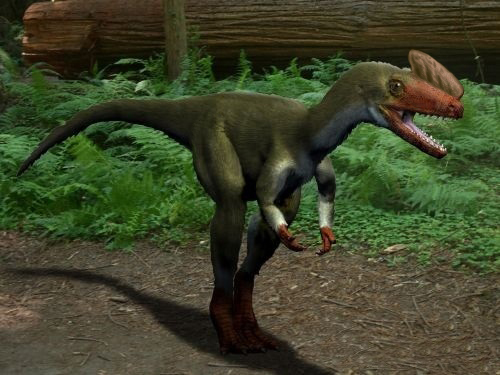
If we imagine the counterfactual possibility of intelligent dinosaur species evolving to the point of developing their own civilization, they might have attempted to domesticate other dinosaur species much as humans domesticated mammals. Smaller ceratopsians might have been candidates for domestication as food animals, while certain theropod species with pack structures might have been selectively bred for traits useful in hunting or protection, similar to how wolves were domesticated into dogs. The physical characteristics of dinosaurs would have presented different challenges and opportunities for domestication compared to mammals. Their egg-laying reproduction might have made selective breeding more straightforward in some ways, allowing for larger clutches and potentially faster generational turnover for selective breeding programs. However, the generally longer maturation times of larger dinosaurs would have presented challenges, and their reptilian neurophysiology might have made them less amenable to the kinds of social bonding that facilitated early mammal domestication.
A Different North American Landscape
The continued presence of large dinosaurs would have had profound effects on North America’s landscapes through their interactions with plant communities. Large herbivorous dinosaurs might have maintained open woodlands and savanna-like environments through their feeding activities, preventing the development of dense forests in some regions. The physical impact of large sauropods moving through landscapes would have created trails and disturbed soil, potentially creating microhabitats for other species. Dinosaur dung would have continued to be an important vector for seed dispersal and nutrient cycling across the continent. The combined ecological engineering effects of numerous dinosaur species would likely have maintained more heterogeneous landscapes than those created by mammalian herbivores in our timeline. River systems and wetlands would have been particularly affected by large dinosaurs, which might have maintained open channels and created wallows similar to those made by modern elephants, but potentially on an even larger scale.
The Scientific Implications of This Alternative History
While this alternative evolutionary timeline remains firmly in the realm of speculation, considering it has scientific value beyond mere entertainment. It highlights the contingent nature of evolutionary history and the profound impact that catastrophic events can have on biodiversity and evolutionary trajectories. Studying what might have happened helps scientists better understand what did happen and why. This thought experiment also provides insight into evolutionary constraints and possibilities—what adaptations might dinosaurs have evolved given more time, and what limits might they have faced? Some paleontologists have used this alternative timeline approach to generate testable hypotheses about evolutionary trends that were underway before the extinction event. Additionally, considering how ecosystems might function with dinosaurs rather than mammals as the dominant large vertebrates helps clarify the ecological roles of different animal groups and the interdependencies within complex ecosystems.
Conclusion: A World We Can Only Imagine
The alternative timeline where dinosaurs continued to evolve across North America for another 66 million years represents one of evolution’s greatest “what ifs.” While we can make educated guesses based on evolutionary trends visible in the fossil record, the actual biodiversity that would have resulted remains unknowable in its specifics. What is clear is that the world would be dramatically different—likely without humans or most of the mammal species familiar to us today. Instead, the North American landscape might still be dominated by the descendants of Tyrannosaurus, Triceratops, and their contemporaries, evolved into forms we can barely imagine after tens of millions of years of adaptation to changing environments. This alternative history reminds us of the profound impact of contingency in evolution and the delicate thread of circumstances that led to our own existence. The dinosaur extinction, catastrophic as it was, created the opportunity for mammalian evolution that ultimately produced our species—a sobering reminder that one group’s tragedy can become another’s opportunity in the long arc of evolutionary history.