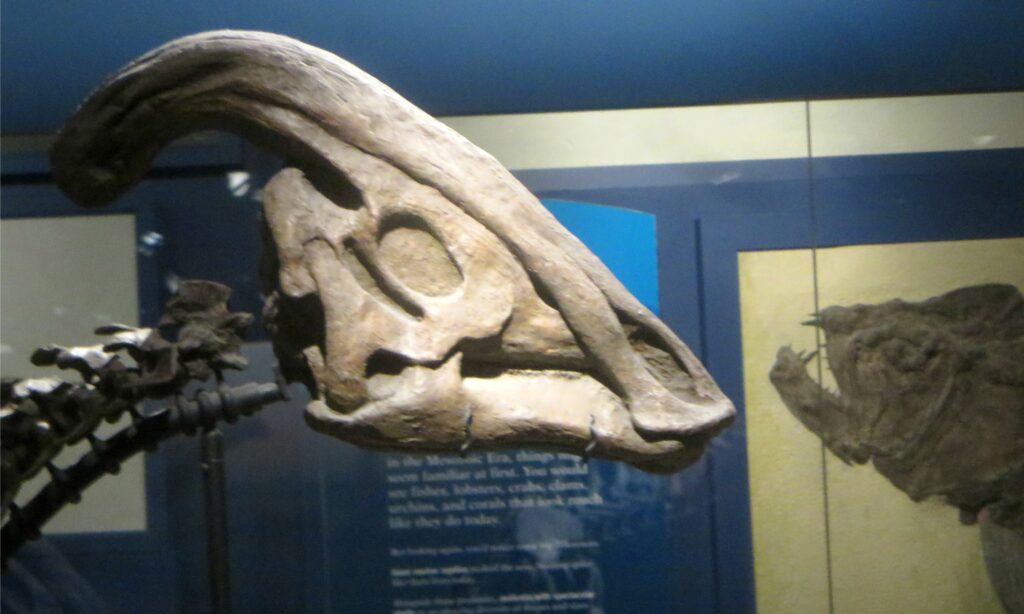
Imagine walking through a prehistoric forest 75 million years ago when suddenly, a deep, haunting sound echoes through the trees – not quite a roar, not quite a trumpet, but something entirely alien yet strangely musical. This mysterious call might have come from one of the most intriguing dinosaurs ever discovered: Parasaurolophus. With its distinctive curved crest that could stretch up to six feet long, this duck-billed dinosaur has sparked one of paleontology’s most fascinating debates. What exactly was that elaborate headgear for?
The Discovery That Changed Everything
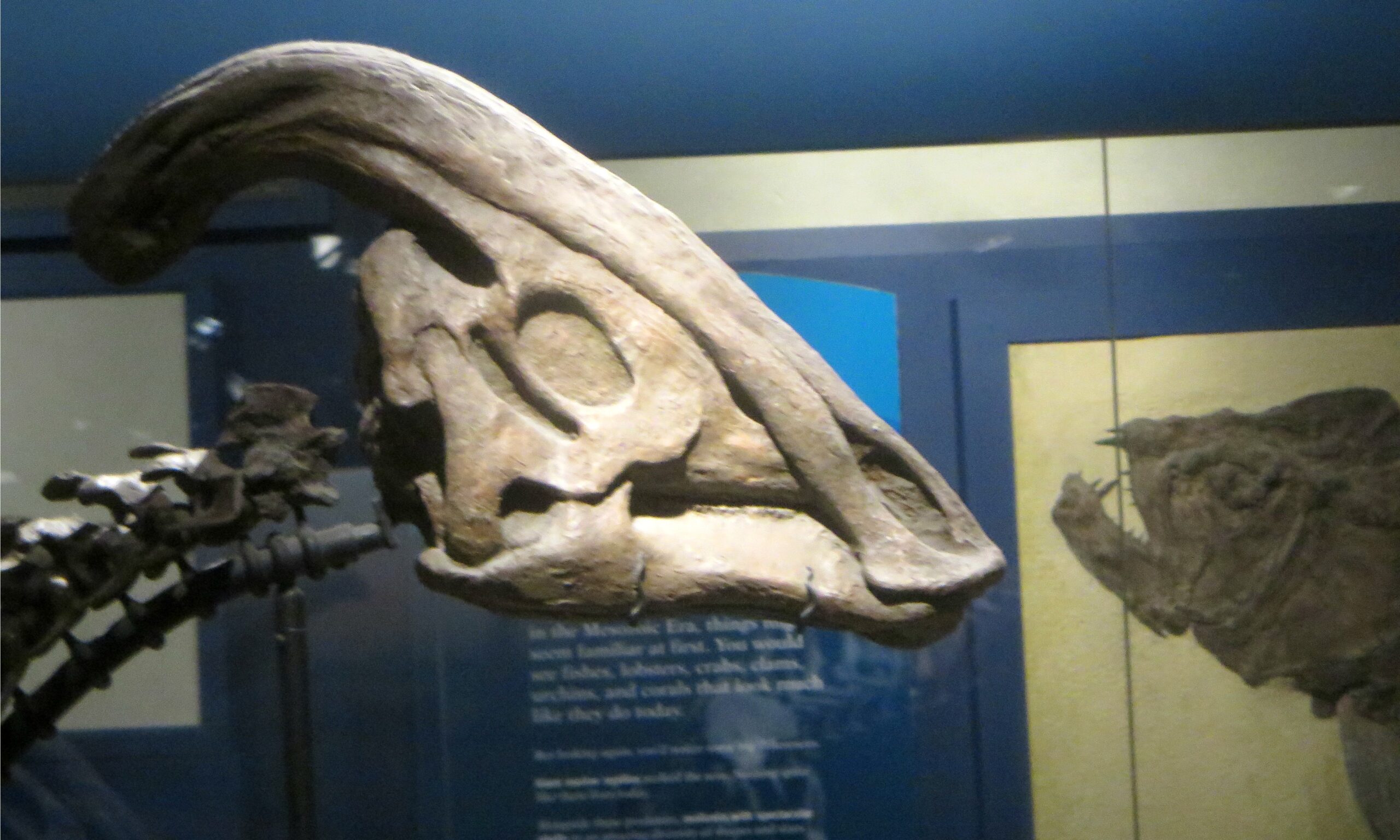
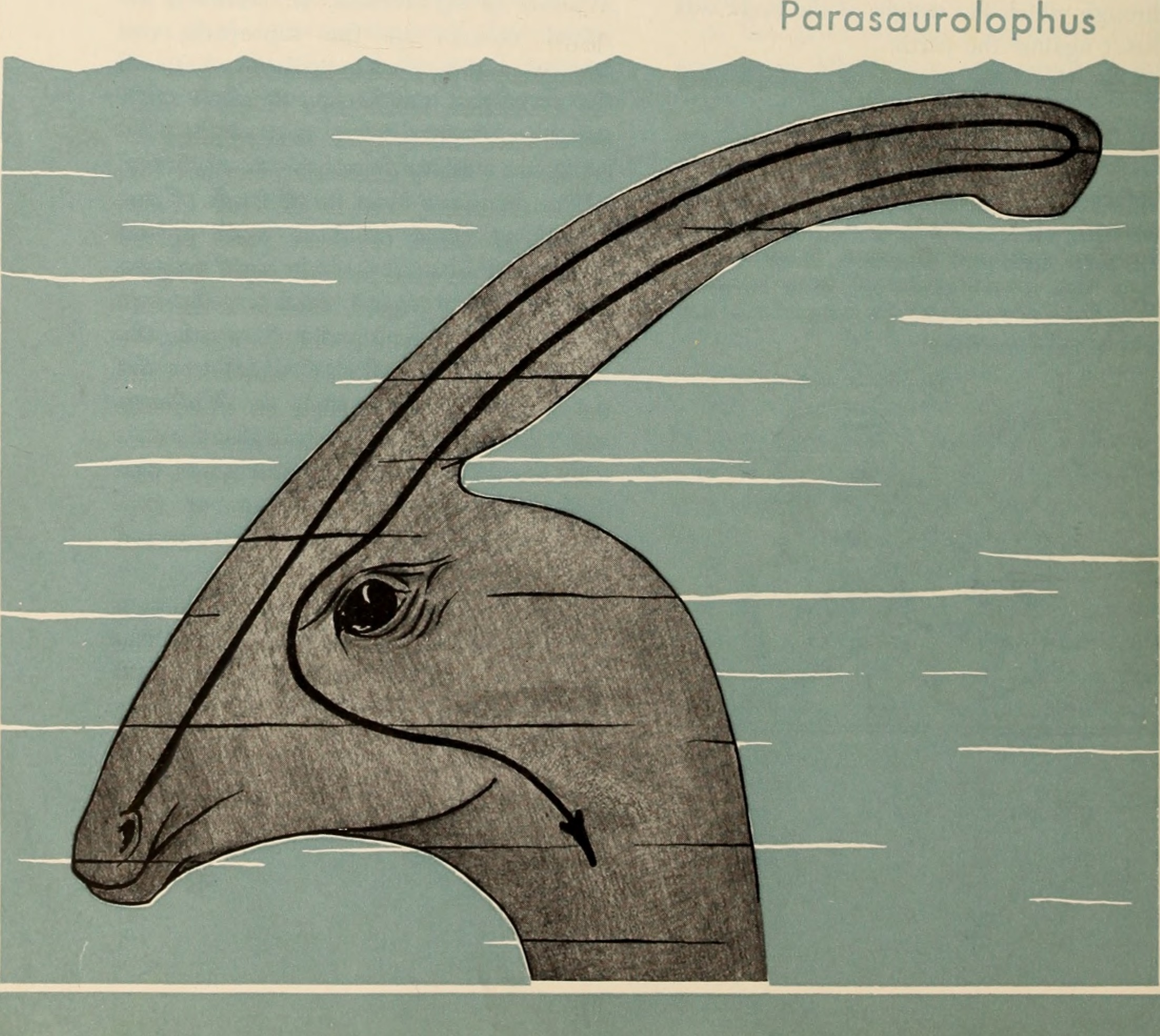
When paleontologists first unearthed Parasaurolophus fossils in the early 1920s, they were immediately struck by the creature’s most distinctive feature. The curved, tube-like crest jutting backward from its skull looked unlike anything they’d seen before. Early researchers nicknamed it the “trumpet dinosaur,” though they had no idea just how accurate that comparison would prove to be. The first complete skull discovered in Alberta, Canada, revealed intricate internal chambers that ran through the entire length of the crest. These weren’t just decorative bumps – they were sophisticated hollow structures that begged the question of their purpose. Some scientists initially thought they might be snorkels for underwater feeding, while others proposed they were used for enhanced smell or even cooling systems.
The Acoustic Revolution in Paleontology
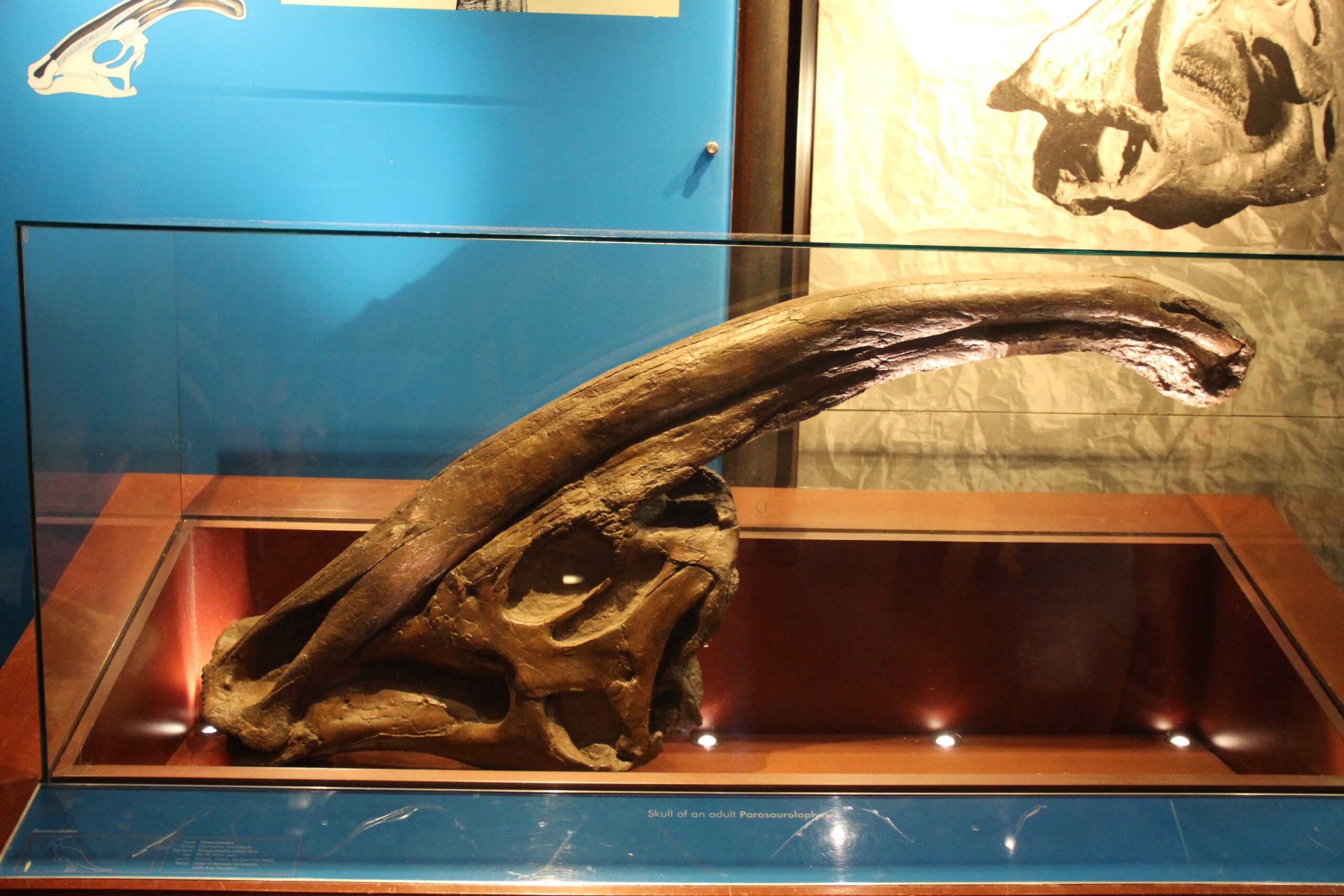
The real breakthrough came when scientists began applying modern acoustic analysis to fossil remains. In the 1990s, researchers started using computer modeling to simulate how air might have flowed through Parasaurolophus crests. The results were nothing short of revolutionary – these weren’t just decorative features, but potentially functional sound-producing organs. Think of it like discovering that an ancient artifact you thought was pottery was actually a complex musical instrument. The crest’s internal structure resembled a natural trumpet or trombone, with specific chambers and air passages that could create distinct tones. This discovery opened up entirely new fields of study, combining paleontology with acoustics, engineering, and even music theory.
Recreating the Voice of the Past

Scientists didn’t stop at computer models – they actually built physical replicas of Parasaurolophus crests to test their theories. Using CT scans of fossilized skulls, researchers created detailed 3D models and then constructed working replicas from various materials. When they blew air through these reconstructions, the results were astounding. The crests produced deep, resonant tones that could be heard from considerable distances. One famous experiment at the New Mexico Museum of Natural History created a replica that produced sounds ranging from low, rumbling bass notes to higher, more melodic tones. The experience of hearing these ancient calls for the first time moved many researchers to tears – it was like listening to the voice of a creature that had been silent for 75 million years.
The Social Communication Theory
Many paleontologists now believe that Parasaurolophus used their crests primarily for social communication. Just like modern elephants use infrasonic calls to communicate across vast distances, these dinosaurs might have used their hollow crests to stay in touch with their herds. The low-frequency sounds they produced could travel for miles through dense forests, allowing scattered groups to coordinate their movements. Different species of Parasaurolophus had differently shaped crests, which would have produced unique “voices” – like having different accents or dialects. This theory suggests that these dinosaurs had complex social structures and communication systems that were far more sophisticated than previously imagined. The idea that dinosaurs might have had their own “languages” completely transforms how we think about prehistoric life.
Species Recognition and Mating Calls
Another compelling theory suggests that Parasaurolophus crests served as species identification tools and mating displays. In the same way that modern birds use specific songs to attract mates and identify their own species, these dinosaurs might have had signature calls. The different crest shapes found in various Parasaurolophus species would have produced distinctly different sounds, preventing cross-species confusion during mating season. Males might have competed with elaborate musical displays, showing off their vocal range and crest size to attract females. Some researchers even suggest that the quality of the sound produced could indicate the health and genetic fitness of the caller. This theory paints a picture of ancient landscapes filled with complex musical performances, where survival and reproduction depended partly on having the right tune.
The Herding and Warning System Hypothesis
Living in large herds would have provided Parasaurolophus with protection from predators, but it also created communication challenges. How do you keep a group of massive dinosaurs together while foraging across vast territories? The crest might have served as a sophisticated herding system, with different calls meaning different things. Short, sharp blasts could signal danger, while longer, more complex calls might indicate the location of food or water. Young dinosaurs might have had higher-pitched calls, allowing parents to locate them quickly in dense vegetation. This communication system would have been crucial for survival, especially when massive predators like Tyrannosaurus rex were hunting in the same regions. The ability to silently coordinate group movements or quickly alert the herd to danger could mean the difference between life and death.
The Cooling System Alternative
Not all scientists are convinced that sound production was the primary function of the Parasaurolophus crest. Some researchers argue that these elaborate structures primarily served as cooling systems for the dinosaur’s brain. The hollow passages inside the crest would have increased the surface area for heat exchange, helping to regulate body temperature in hot climates. This theory suggests that the sound-producing capabilities were simply a beneficial side effect of an adaptation for thermal regulation. The extensive blood vessels that would have run through the crest could have acted like a radiator, cooling blood before it reached the brain. While this theory is less dramatic than the musical dinosaur hypothesis, it addresses a real challenge that large dinosaurs would have faced in maintaining optimal body temperature. The truth might be that the crest served multiple functions simultaneously.
Age and Growth Patterns in Crest Development

Fossil evidence reveals fascinating details about how Parasaurolophus crests developed throughout the dinosaur’s lifetime. Juvenile specimens show much smaller, differently shaped crests compared to adults, suggesting that the sound-producing capabilities changed as the animals matured. Baby Parasaurolophus would have produced higher-pitched calls, while adults developed the deep, resonant tones we associate with the species. This gradual change in vocal ability might have played important roles in social hierarchy and family dynamics. Some scientists theorize that the changing voice helped establish age-based pecking orders within herds, with the deepest voices commanding the most respect. The growth patterns also suggest that these dinosaurs had extended parental care periods, with adults potentially using specific calls to guide and teach their young.
Comparing Modern Animals with Similar Adaptations

To better understand how Parasaurolophus might have used their crests, scientists study modern animals with similar adaptations. Elephants provide particularly valuable insights, as they use infrasonic communication that can travel for miles through various terrains. Howler monkeys demonstrate how vocal adaptations can help establish territory and maintain social bonds in dense forest environments. Even some birds, like the cassowary, have crest-like structures that serve multiple functions including communication and display. Lambeosaurus, a close relative of Parasaurolophus, had differently shaped crests that would have produced distinct sounds, supporting the idea that each species had its own acoustic signature. These modern comparisons help scientists make educated guesses about prehistoric behavior, though they acknowledge that dinosaurs likely had unique adaptations that don’t exist in today’s world.
The Environmental Context of Cretaceous Soundscapes

Understanding how Parasaurolophus used their crests requires considering the environment they lived in. The Late Cretaceous period featured vast coastal plains, dense forests, and river systems that would have created complex acoustic environments. Dense vegetation would have absorbed high-frequency sounds while allowing low-frequency calls to travel farther. The presence of other large dinosaurs, including massive sauropods and various predators, would have created a cacophony of sounds that Parasaurolophus needed to communicate through. Their calls would have needed to be distinct enough to cut through the ambient noise of a world filled with much larger creatures. Climate conditions, including humidity and temperature, would have affected how well sounds traveled through the prehistoric atmosphere. This environmental context helps explain why Parasaurolophus evolved such sophisticated sound-producing capabilities.
Fossil Evidence and Technological Breakthroughs
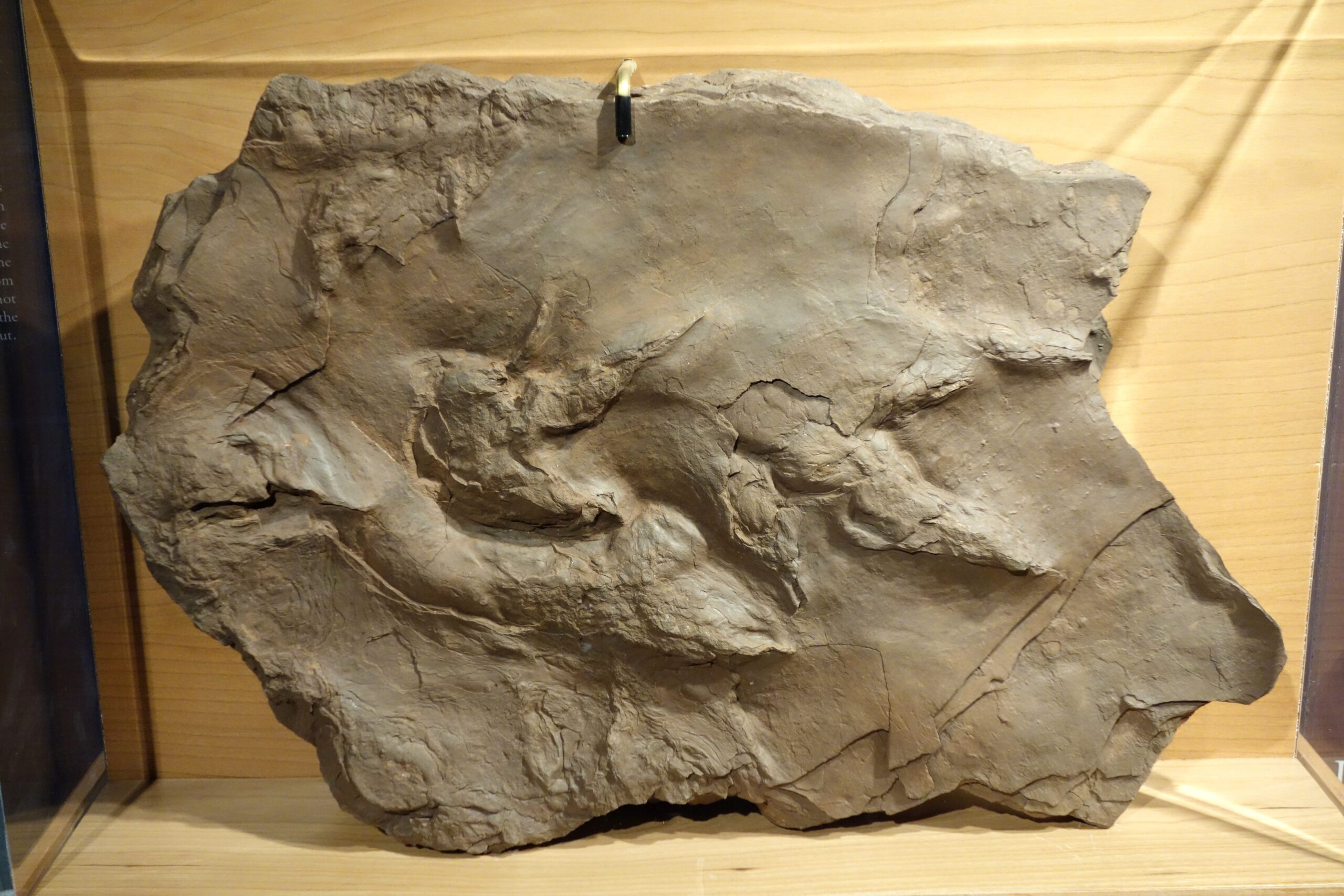
Recent technological advances have revolutionized our understanding of Parasaurolophus crests. High-resolution CT scanning allows scientists to see the internal structure of fossils without damaging them, revealing intricate details about air passages and chambers. 3D printing technology enables researchers to create exact replicas for acoustic testing, while computer modeling can simulate how different crest shapes would have affected sound production. Some fossils even preserve evidence of soft tissues, providing clues about how the crest connected to the dinosaur’s respiratory system. Advanced chemical analysis of fossil remains has revealed information about diet and habitat that helps scientists understand the ecological context in which these communication systems evolved. These technological tools are constantly improving, meaning our understanding of Parasaurolophus behavior continues to evolve as new discoveries are made.
The Predator-Prey Dynamics of Sound
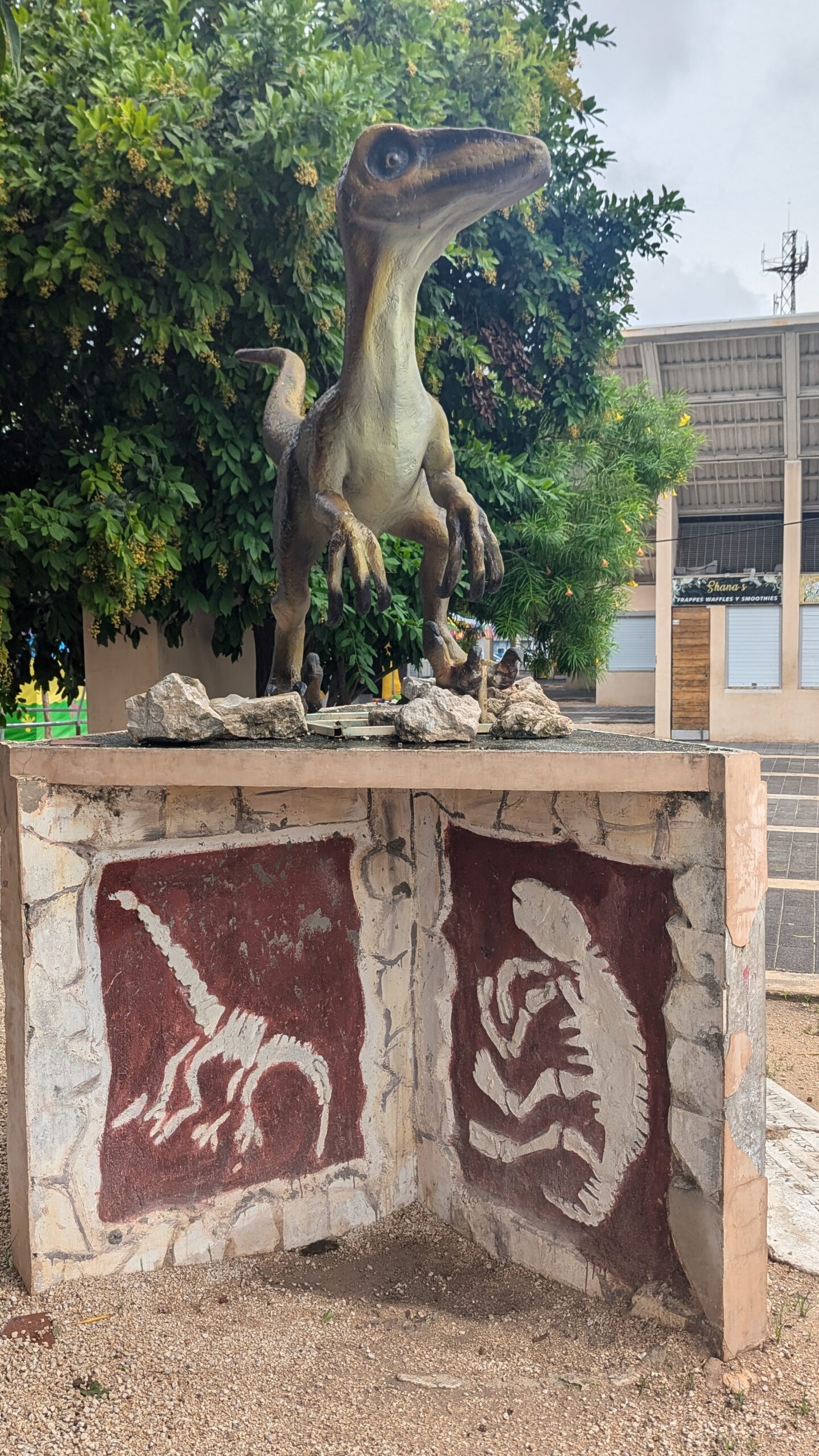
Using sound for communication came with significant risks in a world dominated by large predators. Parasaurolophus calls would have been audible to hunting dinosaurs like Albertosaurus and Daspletosaurus, potentially giving away the herd’s location. This created an evolutionary arms race between the benefits of long-distance communication and the dangers of attracting unwanted attention. Some scientists theorize that Parasaurolophus developed specific “quiet” calls for use when predators were nearby, similar to how modern prey animals modify their vocalizations based on threat levels. The deep, low-frequency sounds they produced might have been harder for some predators to locate precisely, giving the herds a slight advantage. The ability to communicate silently through visual signals would have been equally important, suggesting that these dinosaurs had complex, multi-modal communication systems. This predator-prey dynamic would have shaped not just when and how Parasaurolophus used their voices, but also influenced the evolution of their social behaviors.
Ongoing Debates and Future Research
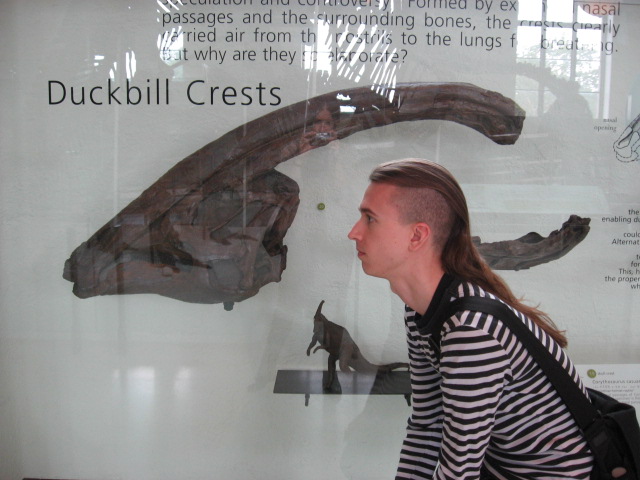
Despite decades of research, significant questions about Parasaurolophus crests remain unanswered. Scientists continue to debate whether sound production was the primary function or just one of several uses for these remarkable structures. New fossil discoveries regularly challenge existing theories, and improved analysis techniques reveal previously unknown details about crest structure and function. Some researchers are exploring whether these dinosaurs might have had even more complex capabilities, such as the ability to produce multiple tones simultaneously or to modify their calls based on environmental conditions. Future research might involve studying the inner ear structures of Parasaurolophus to better understand what frequencies they could hear and produce. The integration of artificial intelligence and machine learning into paleontological research is opening new possibilities for understanding prehistoric behavior and communication. As our knowledge grows, the picture of Parasaurolophus as sophisticated, social creatures becomes increasingly compelling.
What This Means for Our Understanding of Dinosaur Intelligence
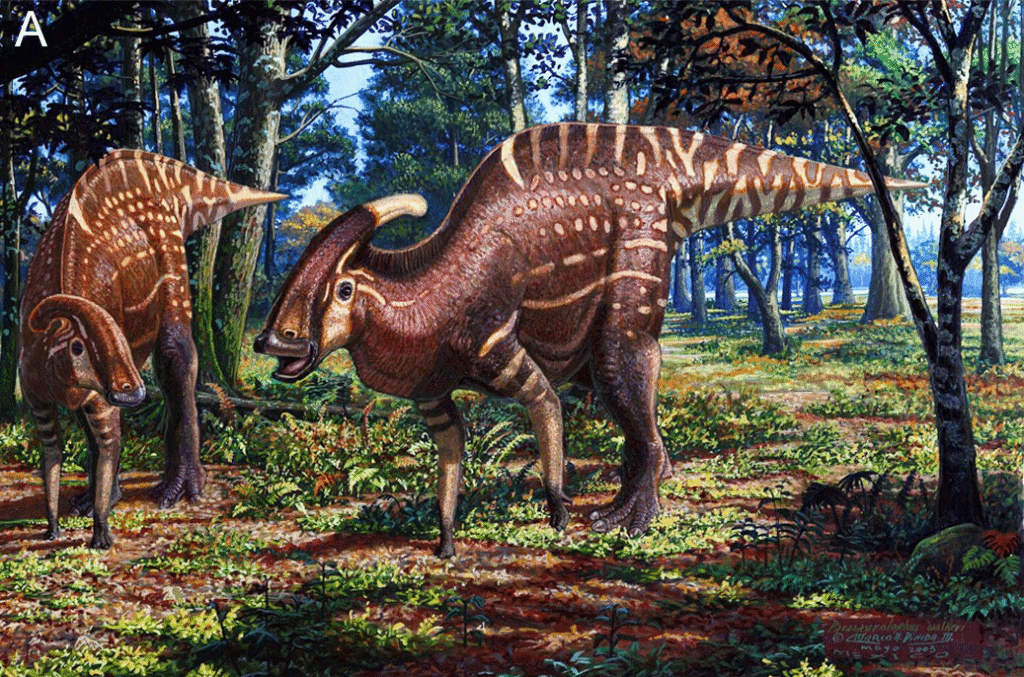
The evidence for complex communication systems in Parasaurolophus has profound implications for how we view dinosaur intelligence and social behavior. If these creatures could produce varied, meaningful sounds and coordinate complex group behaviors, they were likely far more intelligent than previously thought. This challenges the old stereotype of dinosaurs as simple, brutish creatures and suggests they had rich social lives with intricate relationships and hierarchies. The ability to learn and modify calls based on social context would require significant cognitive abilities, including memory, pattern recognition, and perhaps even cultural transmission of behaviors. Some scientists speculate that Parasaurolophus might have had regional dialects or family-specific calls that were passed down through generations. The more we learn about their communication abilities, the more we realize that the boundary between “primitive” and “advanced” behaviors might not be as clear as we once thought. These discoveries are reshaping our entire understanding of what it meant to be a dinosaur in the ancient world.
Conclusion
The story of Parasaurolophus and their mysterious crests continues to evolve as new technologies and discoveries shed light on these ancient creatures. Whether they were primarily musical instruments, cooling systems, or multifunctional adaptations, these remarkable structures represent one of evolution’s most creative solutions to the challenges of prehistoric life. The idea that we might someday fully understand the complex social world of these dinosaurs, complete with their own languages and cultural behaviors, remains one of paleontology’s most exciting possibilities. What other secrets might be hidden in the fossil record, waiting for the right technology or insight to reveal them?