
Picture this: you’re standing in a museum in 1841, staring at massive fossil bones that dwarf anything you’ve ever seen. The teeth are razor-sharp, the skull is enormous, and the sheer size suggests a creature that could have swallowed a horse whole. What would you think? If you were like many early paleontologists, you’d probably assume this beast ruled the oceans, not the land. The story of how scientists first interpreted dinosaur fossils is filled with maritime misconceptions, logical leaps, and the kind of scientific detective work that would make Sherlock Holmes proud.
The Age of Marine Giants
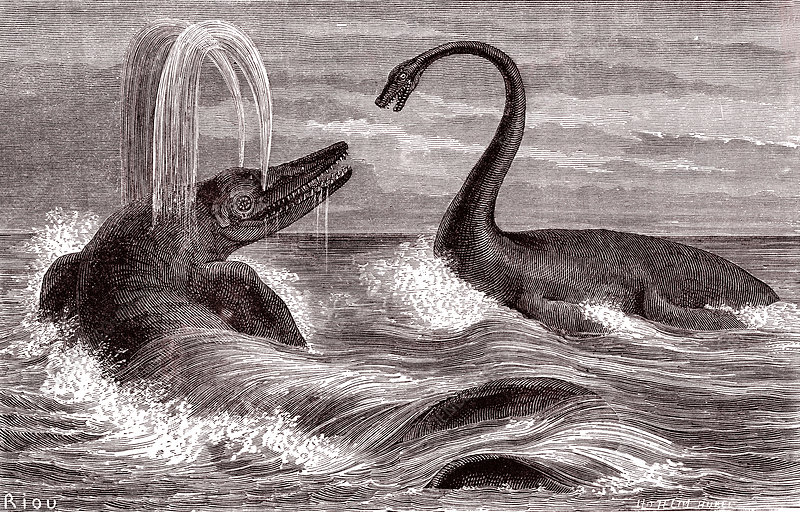
When the first dinosaur fossils were discovered in the early 1800s, scientists were already familiar with massive marine reptiles. Ichthyosaurs and plesiosaurs had been unearthed decades earlier, revealing that prehistoric oceans were home to creatures that made modern whales look like minnows. These marine giants captured the imagination of both scientists and the public, creating a mental framework that heavily influenced how new discoveries were interpreted.
The concept of enormous sea monsters wasn’t just scientific—it was cultural. Ancient legends spoke of krakens and leviathans, and the discovery of actual fossilized marine reptiles seemed to validate these old stories. When paleontologists encountered dinosaur remains, their minds naturally gravitated toward the familiar territory of oceanic behemoths.
Megalosaurus: The First Misunderstood Monster
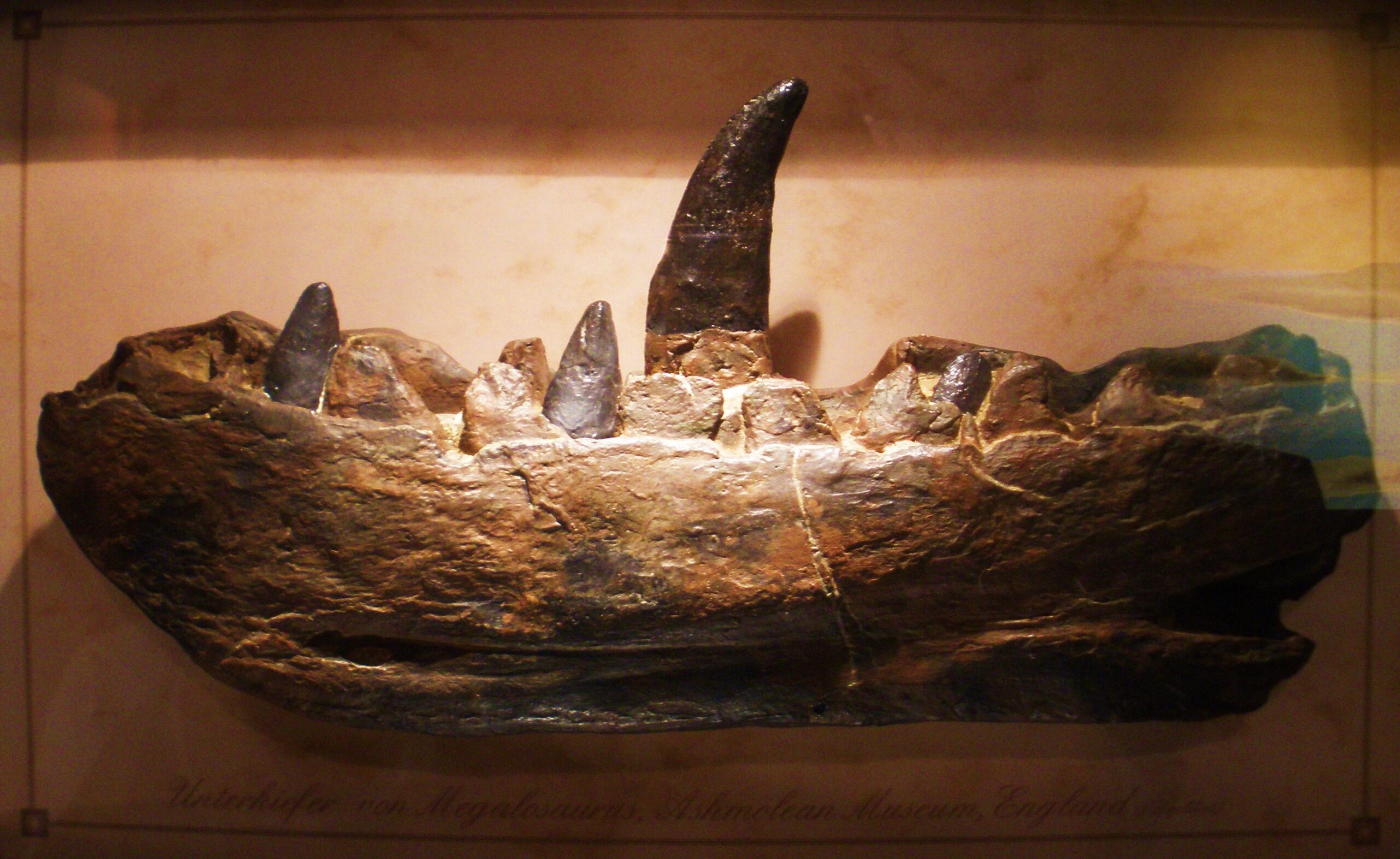
The story begins with Megalosaurus, discovered in England in the 1820s. William Buckland, the geologist who first described it, initially thought he was looking at a massive crocodile-like creature. Given that modern crocodiles are semi-aquatic, and considering the enormous size of Megalosaurus, it seemed logical that this ancient predator must have been a marine animal.
Buckland’s interpretation wasn’t entirely wrong—Megalosaurus was indeed a fearsome predator. However, his assumption that it was aquatic led to decades of misunderstanding about how these creatures lived and moved. The scientific community of the time readily accepted this marine interpretation, partly because it fit with their existing knowledge of prehistoric life.
The teeth of Megalosaurus were particularly convincing evidence for its aquatic lifestyle. They were serrated, knife-like, and perfectly designed for tearing flesh—much like the teeth of sharks and other marine predators. This dental evidence seemed to confirm that Megalosaurus was indeed a creature of the seas.
The Crocodile Connection
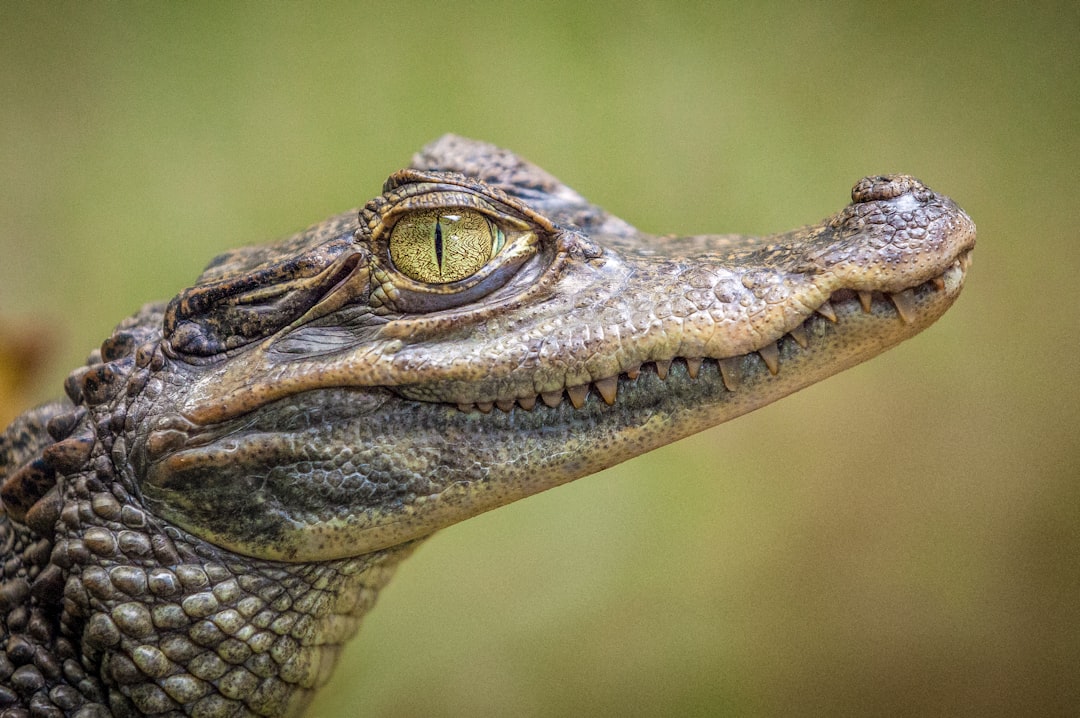
Early paleontologists drew heavily on their knowledge of modern crocodiles when interpreting dinosaur fossils. Crocodiles were the largest predatory reptiles they knew, and they spent much of their time in water. This comparison seemed perfectly logical when applied to dinosaur discoveries, especially given the massive size of some specimens.
The body proportions of early dinosaur finds reinforced this crocodilian connection. Long skulls, powerful jaws, and robust limbs all seemed to point toward a semi-aquatic lifestyle. Scientists envisioned these creatures as super-sized crocodiles, lurking in ancient seas and rivers, waiting to ambush unwary prey.
What made this interpretation even more compelling was the excellent preservation of many dinosaur fossils. The fine sedimentary layers that preserved these specimens were often associated with ancient marine environments, further supporting the idea that these creatures lived in or near water.
Iguanodon’s Aquatic Misinterpretation
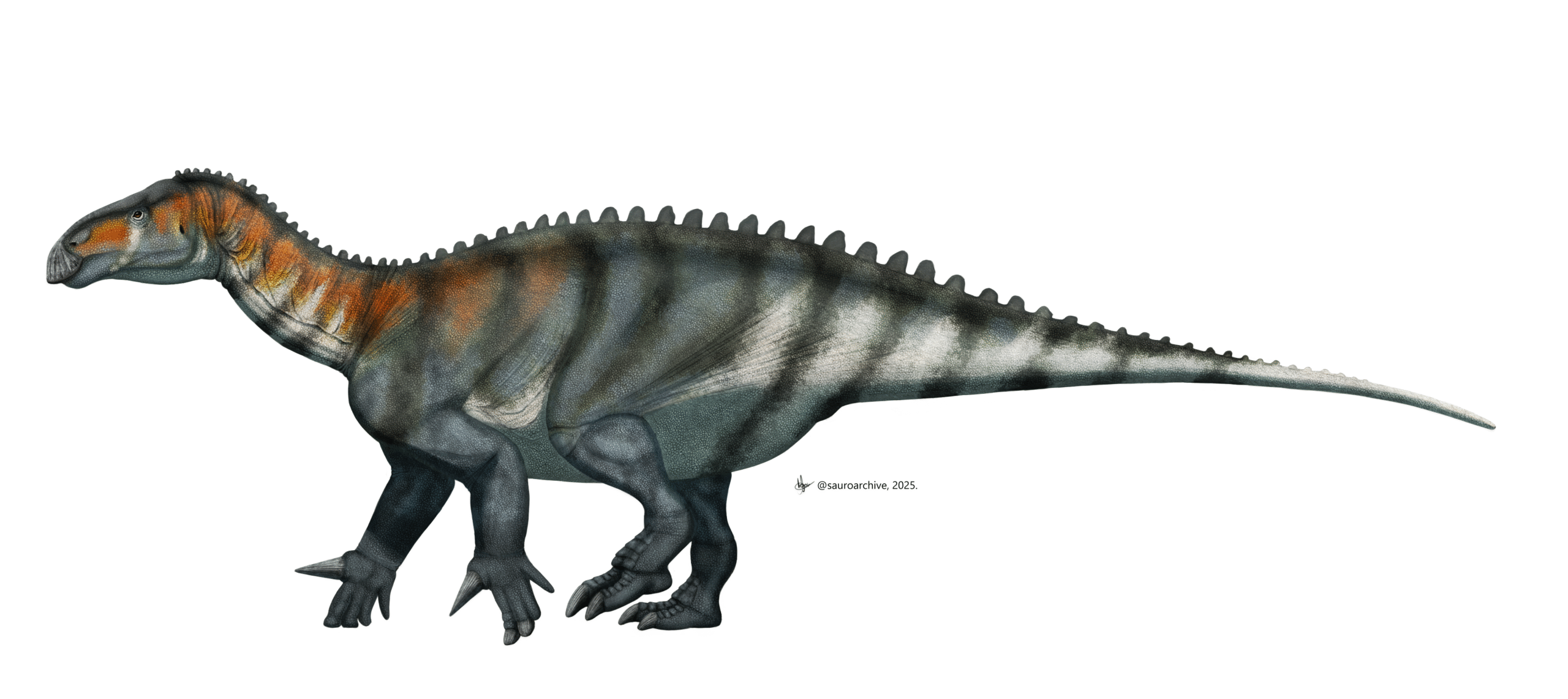
Perhaps no dinosaur was more thoroughly misunderstood than Iguanodon. When Gideon Mantell first discovered Iguanodon teeth in 1822, he correctly identified them as belonging to a giant herbivorous reptile. However, his reconstruction of the living animal was heavily influenced by marine reptile anatomy, particularly that of iguanas, which are excellent swimmers.
Mantell envisioned Iguanodon as a massive marine iguana, perhaps 60 feet long, that fed on seaweed and other marine vegetation. This interpretation seemed logical given the leaf-shaped teeth and the apparent aquatic deposits where the fossils were found. The idea of a giant sea-going herbivore captured the public imagination and influenced paleontological thinking for decades.
The famous “thumb spike” of Iguanodon was initially placed on the creature’s nose, like a rhinoceros horn. This reconstruction made the animal look even more bizarre and reinforced the idea that it was unlike any terrestrial creature. The marine interpretation seemed to explain away these anatomical puzzles.
The Influence of Geological Context

The geological formations where early dinosaur fossils were discovered played a crucial role in shaping marine interpretations. Many of these fossils came from sedimentary rocks that were deposited in ancient seas or coastal environments. To 19th-century geologists, finding large reptile fossils in marine sediments was strong evidence that these creatures were aquatic.
The Wealden Formation in England, where many early dinosaur discoveries were made, was particularly misleading. This formation contains layers that were deposited in a complex environment of rivers, lakes, and occasional marine incursions. The presence of marine fossils in some layers led scientists to assume that all the large reptiles found there were aquatic.
Additionally, the excellent preservation of many dinosaur fossils suggested rapid burial in fine sediments, which was associated with marine environments. The logic seemed unassailable: well-preserved fossils in marine rocks must belong to marine animals.
Anatomical Misreadings
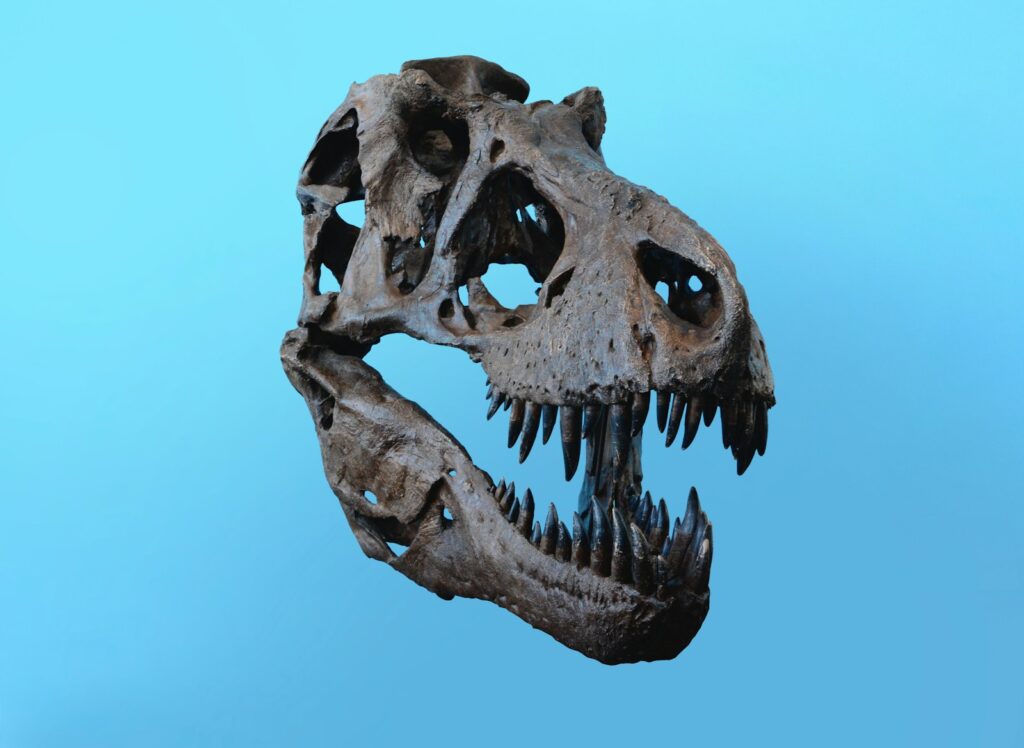
Early paleontologists made several anatomical interpretations that supported aquatic lifestyles for dinosaurs. The long tails of many dinosaurs were seen as swimming organs, similar to those of crocodiles or marine iguanas. The powerful limbs were interpreted as paddles for propulsion through water rather than legs for walking on land.
The skull structure of predatory dinosaurs also seemed to support aquatic interpretations. The elongated snouts and powerful jaw muscles were compared to those of crocodiles and other aquatic predators. The positioning of the nostrils high on the skull was seen as an adaptation for breathing while mostly submerged, like a hippopotamus.
Even the size of these creatures seemed to demand an aquatic interpretation. On land, such massive animals would face serious challenges with locomotion and heat regulation. Water, however, would provide buoyancy and help support their enormous bulk, making an aquatic lifestyle seem not just possible but necessary.
The Whale Analogy
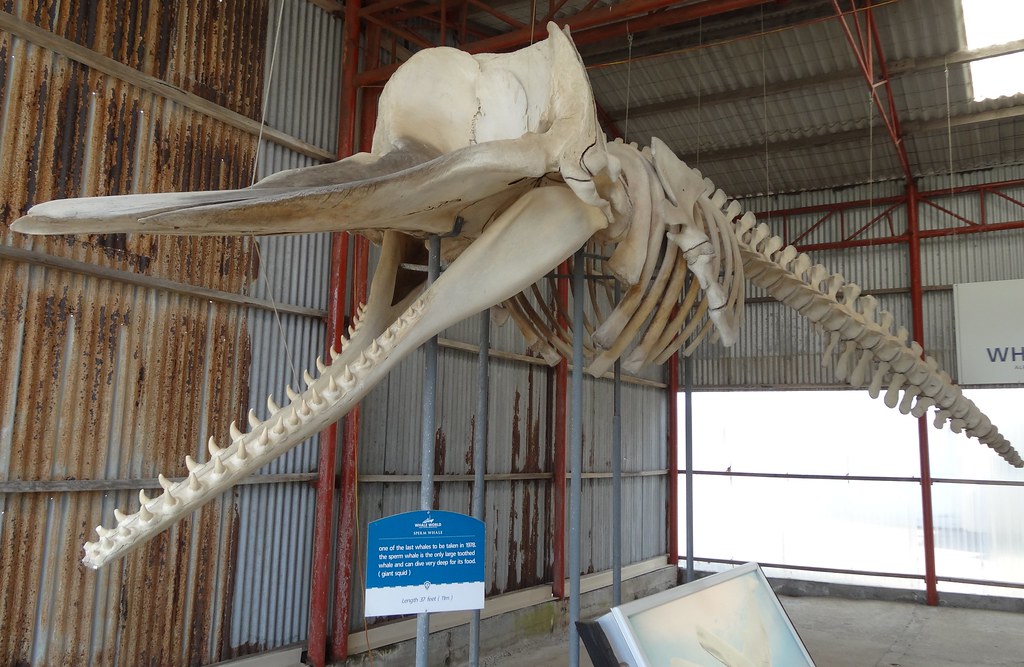
Some scientists drew parallels between dinosaurs and whales, suggesting that these ancient reptiles had evolved similar adaptations for marine life. The idea of convergent evolution—where unrelated organisms develop similar traits—was used to explain the apparent aquatic features of dinosaurs. Just as whales had evolved from land-dwelling mammals to become ocean giants, perhaps dinosaurs had made a similar transition.
This whale analogy was particularly applied to the largest dinosaurs, whose enormous size seemed impossible to support on land. Scientists imagined these creatures as the whales of the Mesozoic, gentle giants that fed on marine vegetation or plankton. The comparison seemed to solve the puzzle of how such massive animals could have existed.
The breathing apparatus of whales also influenced interpretations of dinosaur anatomy. The elevated position of nostrils in some dinosaur skulls was seen as evidence of aquatic breathing adaptations, similar to the blowholes of whales.
Richard Owen’s Terrestrial Revolution
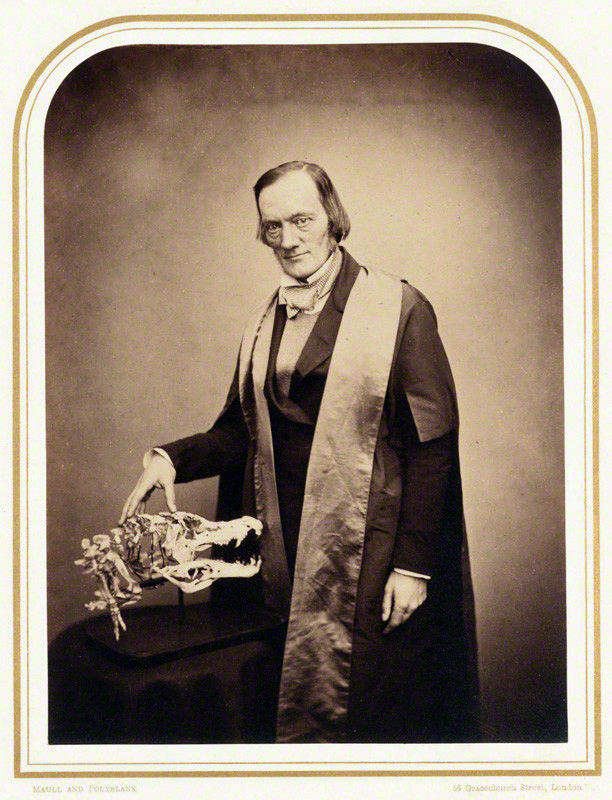
The turning point came with Richard Owen, the brilliant and controversial anatomist who coined the term “Dinosauria” in 1842. Owen’s detailed anatomical studies revealed that these creatures were fundamentally different from both modern crocodiles and marine reptiles. His analysis of limb bones, vertebrae, and skull structures painted a picture of active, terrestrial animals.
Owen recognized that dinosaur limb bones showed adaptations for supporting weight on land, not for swimming. The structure of their hip bones, the articulation of their joints, and the robustness of their limb bones all pointed to terrestrial locomotion. This was revolutionary thinking that challenged decades of marine interpretations.
His reconstruction of dinosaurs as elephant-like terrestrial animals was initially met with skepticism. The idea that such massive creatures could walk on land seemed almost impossible to many of his contemporaries. However, Owen’s careful anatomical analysis provided compelling evidence that dinosaurs were indeed land animals.
The Myth of Swamp Dwellers
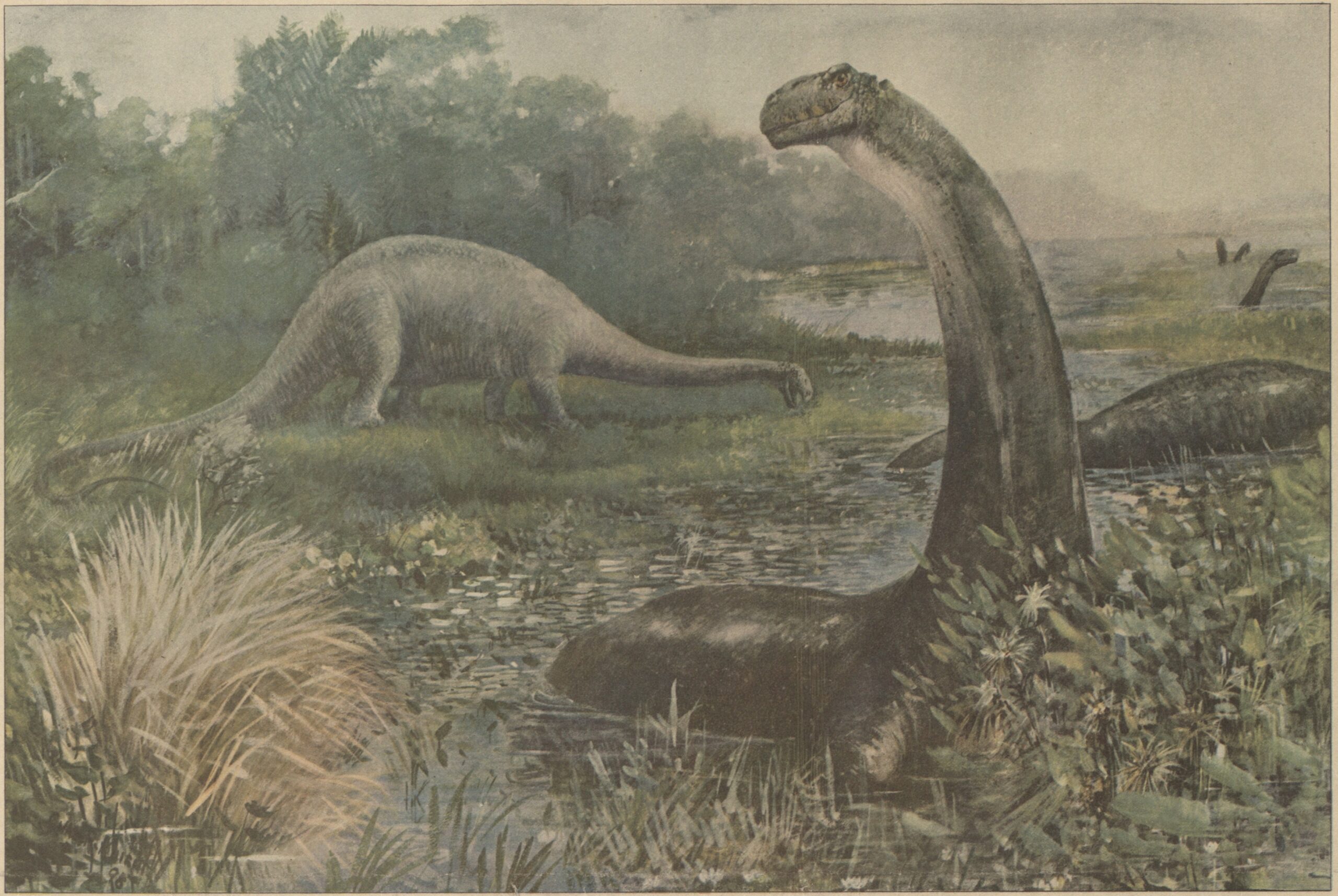
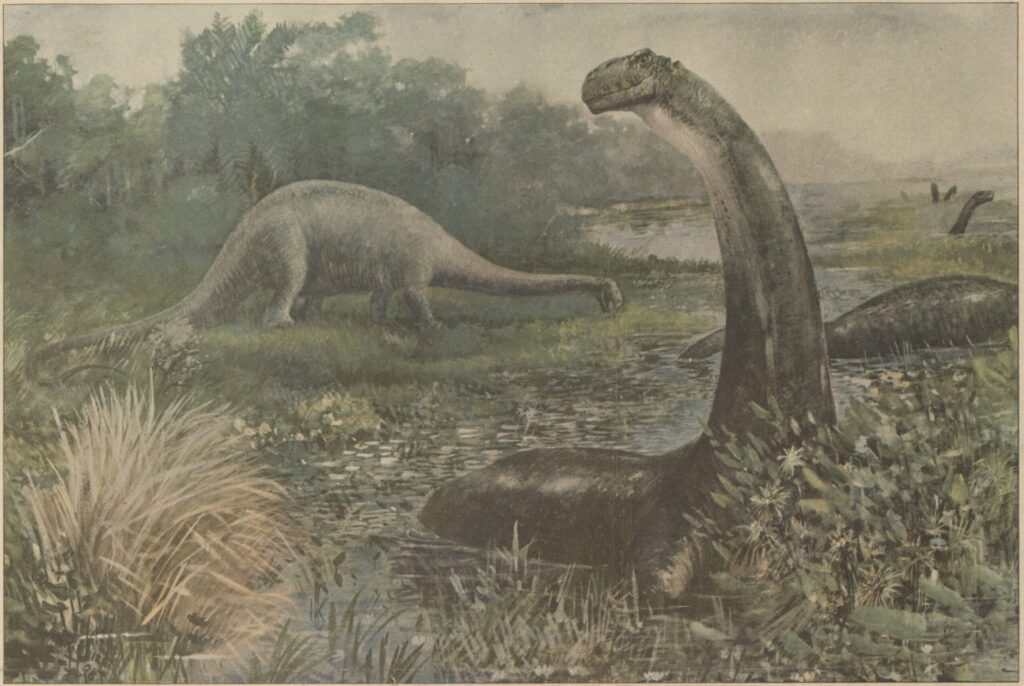
Even after Owen’s terrestrial interpretation gained acceptance, many scientists still clung to the idea that dinosaurs needed water to support their massive bulk. The compromise position was that dinosaurs were swamp dwellers—creatures that lived in shallow water environments where they could be partially supported by buoyancy while still being able to walk on the bottom.
This swamp-dwelling interpretation persisted well into the 20th century, particularly for the largest dinosaurs like Brontosaurus and Diplodocus. Scientists imagined these creatures standing neck-deep in lakes and rivers, using their long necks to browse on aquatic vegetation while their bodies remained submerged for support.
The swamp theory seemed to solve several problems at once: it explained how such massive animals could move around, it provided a reason for their long necks, and it accounted for the preservation of their fossils in sedimentary environments. However, this interpretation would eventually prove to be just as incorrect as the original marine hypothesis.
The Role of Incomplete Specimens
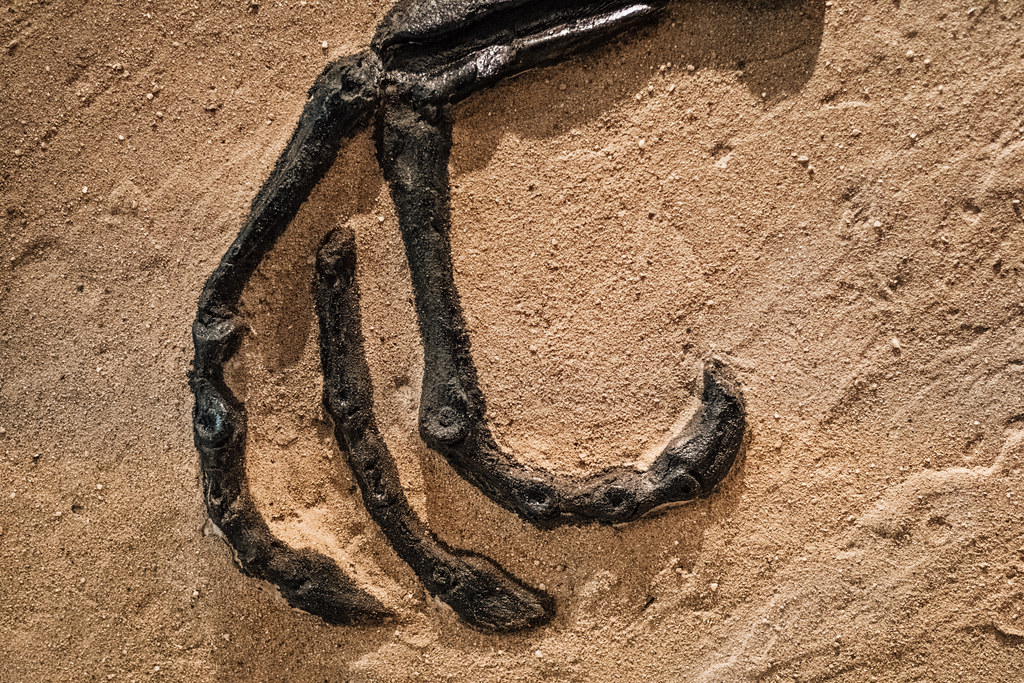
Many early dinosaur discoveries consisted of incomplete fossils—often just teeth, single bones, or partial skeletons. Without complete specimens, scientists had to reconstruct entire animals based on fragmentary evidence, and they naturally drew on their knowledge of modern animals to fill in the gaps.
When paleontologists found large, sharp teeth, they compared them to the teeth of modern aquatic predators like crocodiles and sharks. When they discovered massive limb bones, they imagined creatures that needed water to support their weight. These reconstructions were logical given the available evidence, but they were ultimately based on incomplete information.
The discovery of more complete dinosaur skeletons in the late 19th and early 20th centuries gradually revealed the true nature of these creatures. However, the early aquatic interpretations had become so entrenched in scientific thinking that it took decades to fully overturn them.
Technological Limitations
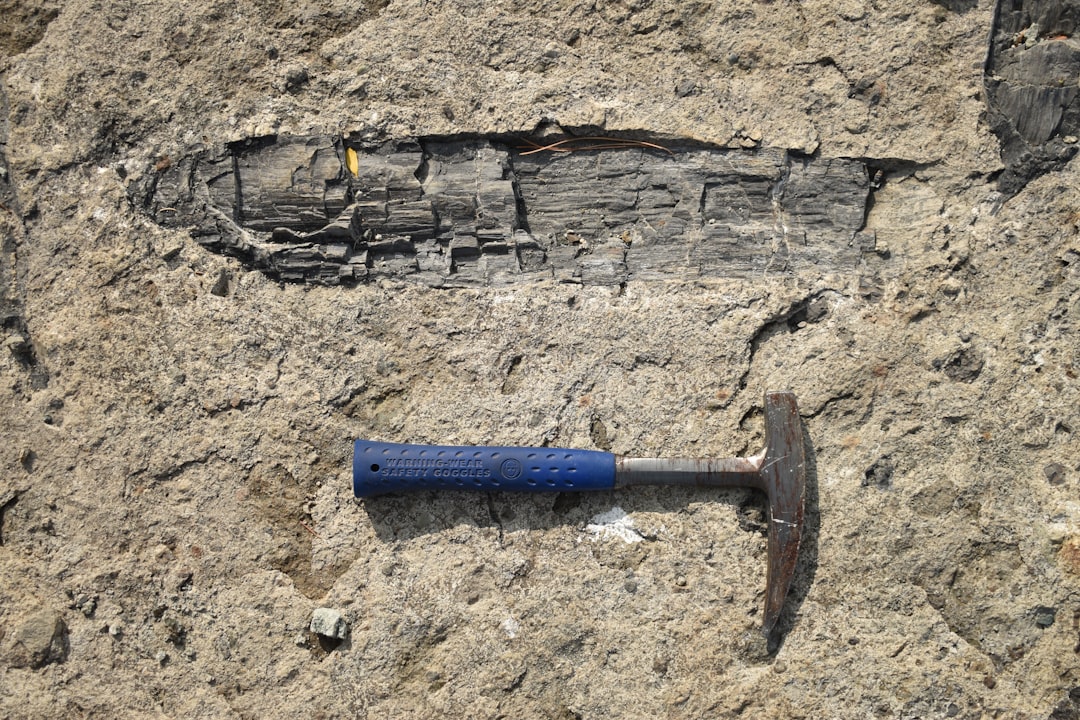
The scientific tools available to early paleontologists were quite limited compared to modern standards. They lacked the sophisticated imaging techniques, chemical analysis methods, and comparative databases that modern scientists take for granted. This meant that their interpretations were based primarily on visual comparison and basic anatomical analysis.
Without access to modern biomechanical analysis, early scientists couldn’t fully understand how dinosaur limbs functioned or how their bodies moved. They couldn’t analyze bone density, muscle attachment sites, or joint mechanics in the detailed way that modern paleontologists can. This limited their ability to reconstruct accurate pictures of dinosaur behavior and ecology.
The lack of sophisticated dating techniques also meant that early paleontologists had difficulty understanding the temporal relationships between different fossil discoveries. They couldn’t always tell which creatures were contemporaneous and which lived in different time periods, making ecological reconstructions even more challenging.
The Paradigm Shift
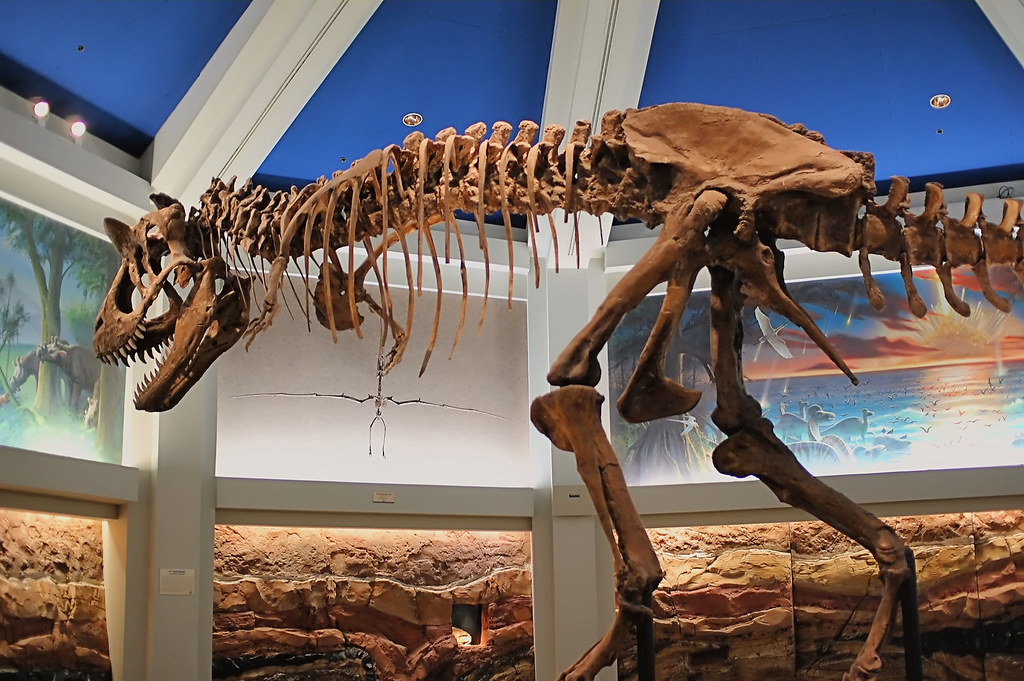
The transition from aquatic to terrestrial interpretations of dinosaurs didn’t happen overnight. It was a gradual process that took place over several decades, driven by accumulating evidence and changing scientific perspectives. The discovery of dinosaur trackways in the early 20th century provided some of the most compelling evidence for terrestrial locomotion.
These trackways showed clear evidence of dinosaurs walking on dry land, with footprints preserved in what were clearly terrestrial sediments. The spacing and depth of the tracks indicated that these creatures were capable of sophisticated terrestrial locomotion, not just wallowing in swamps or swimming in seas.
The development of new analytical techniques in the mid-20th century allowed scientists to reexamine old assumptions about dinosaur physiology and behavior. Bone histology, biomechanical analysis, and comparative anatomy all contributed to a more accurate understanding of how dinosaurs actually lived.
Modern Understanding and Lessons Learned
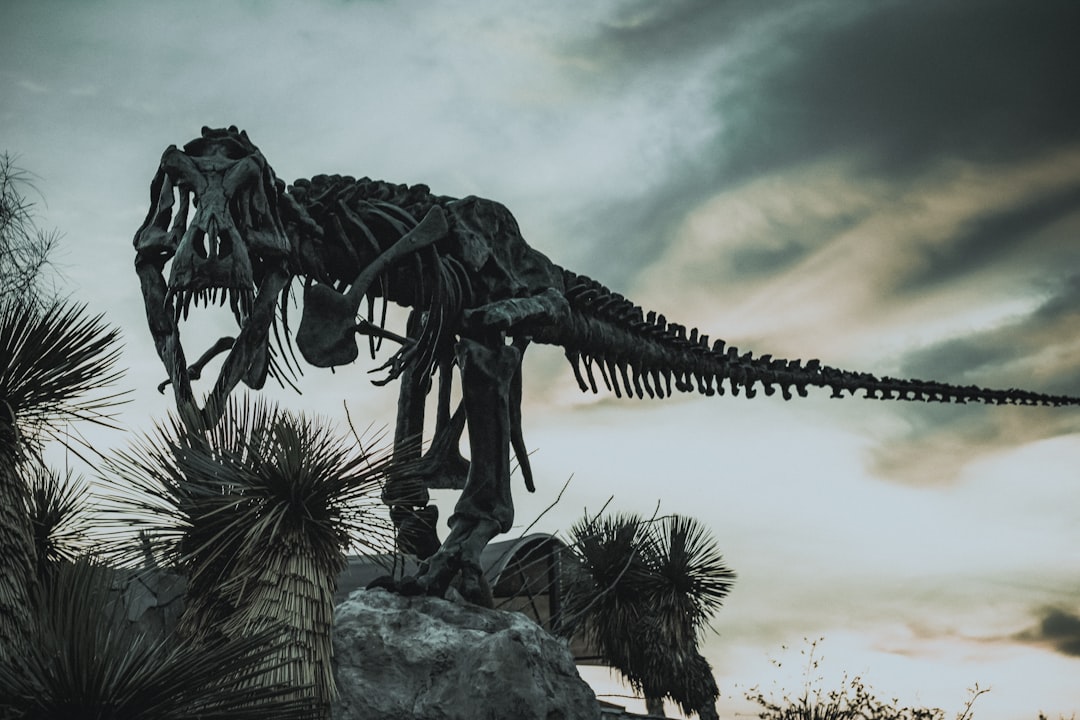
Today, we know that dinosaurs were primarily terrestrial animals, with some species showing adaptations for semi-aquatic lifestyles. The idea of giant marine dinosaurs has been largely abandoned, replaced by a more nuanced understanding of dinosaur ecology and behavior. However, the story of these early misinterpretations teaches us valuable lessons about the nature of scientific discovery.
The early scientists who proposed aquatic lifestyles for dinosaurs weren’t being unscientific—they were working with limited evidence and drawing logical conclusions based on their available knowledge. Their interpretations were products of their time, influenced by the prevailing scientific paradigms and the evidence available to them.
Modern paleontology has benefited enormously from these early mistakes. The process of testing, refining, and sometimes completely overturning scientific hypotheses is fundamental to how science progresses. The aquatic dinosaur hypothesis served its purpose by providing a framework for understanding these creatures, even if that framework eventually proved incorrect.
The story of how early scientists interpreted dinosaur fossils reminds us that scientific knowledge is always provisional and subject to revision. What seems obvious to us today was once hotly debated, and our current understanding may well be challenged by future discoveries. The willingness to admit error and revise our understanding is one of science’s greatest strengths, turning apparent failures into stepping stones toward greater truth.