You are standing on a stretch of coastline that quietly holds millions of years of history beneath your feet. Bouldnor Cliff, on the Isle of Wight, isn’t just another fossil site—it’s one of the most productive and scientifically important locations in the UK. Here, ancient ecosystems, submerged landscapes, and fossil-rich beds combine to create an experience that feels less like a walk and more like stepping into deep time.
What makes this place especially compelling for you is its diversity. You’re not just searching for one type of fossil—you’re exploring a layered record of life that spans prehistoric wetlands, ancient seas, and even early human activity.
A Fossil-Rich Coastline Unlike Any Other
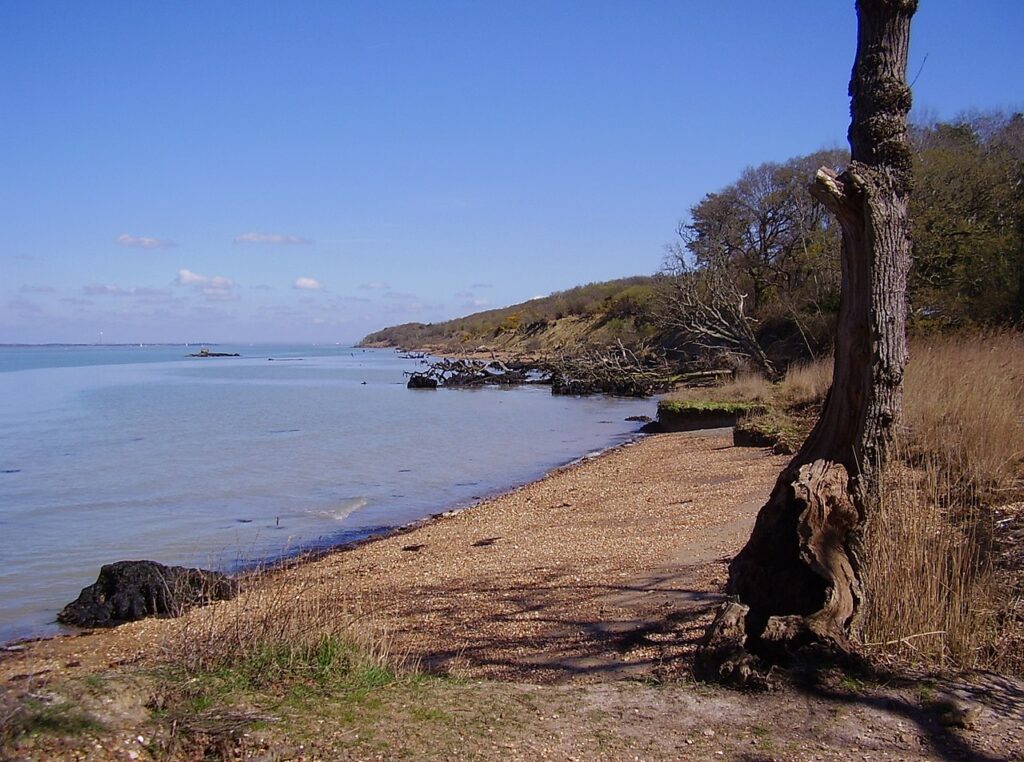
A Fossil-Rich Coastline Unlike Any Other (Image Credits: Wikimedia)
As you walk along the foreshore near Bouldnor, you’re moving across early Oligocene sediments that are packed with fossils. These layers preserve remains of mammals, crocodiles, turtles, fish, and crustaceans—all scattered across the shoreline.
What you’ll quickly notice is how accessible these finds are. Many fossils are simply lying on the surface, exposed by erosion and tides. This makes the site one of the most rewarding fossil hunting locations on the Isle of Wight, especially for those willing to take their time and observe closely.
What You Can Discover on the Shore
You don’t need to dig deep to make a discovery here. As you scan the beach, you can find molluscs, plant remains, and fossilized seeds scattered among the shingle. These smaller finds may seem simple, but they hold crucial clues about ancient environments.
If you’re patient, you might even come across fragments of larger animals—bones from crocodiles or early mammals that once lived in this region. Each piece you find adds to a broader picture of a thriving prehistoric ecosystem.
A Window Into an Ancient Climate
What you’re really uncovering at Bouldnor is a snapshot of a much warmer world. During the late Eocene to early Oligocene period, this region experienced a humid, subtropical climate with wetlands and dense vegetation.
As you examine the fossils, you can begin to imagine this environment—lush landscapes filled with reptiles, early mammals, and abundant plant life. These clues help scientists understand how climates have changed over millions of years and how life adapted to those shifts.
Beyond Fossils: A Submerged Prehistoric World
What makes Bouldnor truly unique for you is what lies just offshore. Beneath the waters of the Solent is a submerged Mesolithic landscape, preserved under layers of sediment. This site dates back around 8,000 years and contains evidence of early human activity.
You’re not just exploring fossils—you’re standing near one of Europe’s most important underwater archaeological sites. The combination of ancient animal remains and early human evidence makes this location exceptionally significant in understanding both natural and human history.
How to Explore Safely and Effectively
While the rewards are high, you need to approach Bouldnor with care. Like most coastal fossil sites, timing your visit with low tide is essential. Rising water can quickly limit access and reduce your chances of finding exposed fossils.
You’ll also want to focus your search along the tideline and cliff base, where erosion constantly reveals new material. With patience and awareness, you can safely explore this remarkable coastline and experience the thrill of uncovering fragments of a world that existed millions of years before you.