
Have you ever wondered why some people seem to bounce back from setbacks faster than others? Or why certain individuals radiate positivity even during challenging times? The answer often lies in their optimistic nature, a fascinating trait that goes far beyond simply “thinking positive.” While many people assume optimism is just about wearing rose-colored glasses, research reveals something much more intricate.
Optimism is a mental attitude that heavily influences physical and mental health, as well as coping with everyday social and working life. Yet true optimism isn’t naive wishful thinking. It’s a sophisticated psychological framework that shapes how you interpret events, respond to challenges, and navigate your relationships. Let’s explore the unique traits that reveal whether you possess this remarkable characteristic.
You Reframe Setbacks as Learning Opportunities

Perhaps nothing separates optimistic people from others more than their relationship with failure. When you face disappointment or setbacks, you don’t view them as permanent roadblocks or evidence of your inadequacy. Instead, you possess an almost magical ability to transform these experiences into stepping stones.
Highly optimistic personalities view setbacks as temporary and solvable challenges. They understand that failures and obstacles are part of the journey. By maintaining a positive outlook, they can analyze what went wrong and identify lessons to be learned. This mindset allows them to bounce back quickly. Instead of dwelling on negative outcomes, they focus on what steps can be taken to improve. They consider setbacks as opportunities to grow stronger and wiser.
This trait manifests in your daily language patterns. You find yourself saying things like “What can I learn from this?” rather than “Why does this always happen to me?” In every mistake there lies a lesson. And in each lesson, there is an opportunity for growth. Optimists know that failure is only when you stop trying. This perspective isn’t about denying pain or disappointment, but about refusing to let temporary circumstances define your future potential.
You Practice Selective Attention to Possibilities

Your brain operates like a sophisticated filter system, naturally gravitating toward opportunities rather than obstacles. Optimistic people have a unique ability to see opportunities where others may see obstacles, to find joy in the midst of adversity, and to maintain a positive outlook even in the face of uncertainty. This isn’t about ignoring problems, but about where you choose to focus your mental energy.
When others see a closed door, you notice the windows. When faced with budget cuts at work, you immediately start brainstorming creative solutions rather than dwelling on limitations. Optimistic people consistently view situations with a positive mindset. They focus on the potential benefits rather than the drawbacks, even in challenging circumstances. This mentality helps them remain hopeful and proactive.
This selective attention extends to your social interactions too. You naturally notice people’s strengths before their weaknesses, and you tend to remember the good moments from past experiences more vividly than the difficult ones. It’s not selective memory, it’s selective focus on what serves your growth and happiness.
You Maintain Multiple Scenario Planning

Contrary to popular belief, highly optimistic people aren’t naive dreamers. You actually engage in sophisticated mental preparation that involves considering various outcomes. Naive optimists think only about best-case scenarios. Pessimists fixate on worst-case ones. But grounded optimists do something more complex: they hold multiple possibilities simultaneously, like a chess player thinking several moves ahead. They hope for the best while planning for various degrees of “less than best.” This cognitive flexibility means they’re rarely blindsided. They’ve already mentally rehearsed different scenarios, not from anxiety but from wisdom. When plan A fails, they don’t collapse – they shift to plan B with the same hopeful energy, because they always knew plan B might be necessary.
You prepare for challenges not because you expect them, but because preparation allows you to maintain your optimistic energy regardless of what unfolds. This trait shows up in how you approach major life decisions, career changes, or relationship discussions. You consider what could go wrong not to worry about it, but to ensure nothing can derail your forward momentum.
Your friends often marvel at how prepared you seem for various situations, yet you never appear anxious or overly cautious. That’s because your planning comes from excitement about possibilities rather than fear of problems.
You Demonstrate Temporal Flexibility

One of your most remarkable traits is your ability to shift time perspectives strategically. When faced with immediate problems, grounded optimists have the ability to shift perspective – to see current difficulties as chapters in a longer story rather than the entire book. They can zoom out to the bigger picture without using it as an escape from present responsibilities. This temporal flexibility helps them maintain hope during dark periods. They remember that all previous “worst days” eventually became memories, that no feeling is final, that life has longer rhythms than the current moment suggests. But they don’t use this perspective to minimize current pain or avoid current action – they use it to endure and respond wisely.
When experiencing stress or disappointment, you naturally remind yourself that “this too shall pass” without dismissing the validity of your current feelings. You can simultaneously acknowledge present difficulties while maintaining confidence that future chapters will be different. This isn’t denial, it’s wisdom about the nature of time and change.
This temporal flexibility also manifests in your goal-setting approach. You think in terms of decades while acting on daily priorities. You understand that meaningful achievements require time, and temporary setbacks don’t diminish long-term potential.
You Exhibit Nuanced Gratitude

Your gratitude practice goes far beyond surface-level thankfulness. Unlike toxic positivity that insists on finding silver linings in everything, grounded optimists practice a more nuanced gratitude. They can be grateful for what’s working while fully acknowledging what isn’t. You don’t force appreciation for genuinely difficult experiences, but you consistently notice and acknowledge the good that coexists with challenges.
Another great quality of optimistic people is that they often show gratitude. No matter what happens, they value it, and they feel grateful for it. Even when things are not going their way, they know that there is no point in showing their sulky face because they can’t change the past. Hence, optimistic people choose to feel grateful and accept what has happened.
This shows up in your daily conversations. You naturally mention things you appreciate rather than immediately jumping to complaints. You notice the barista’s smile, the perfect weather for your morning walk, or the fact that your commute was unusually smooth. These aren’t forced observations but genuine appreciation for life’s smaller gifts.
You Build and Maintain Growth-Oriented Relationships
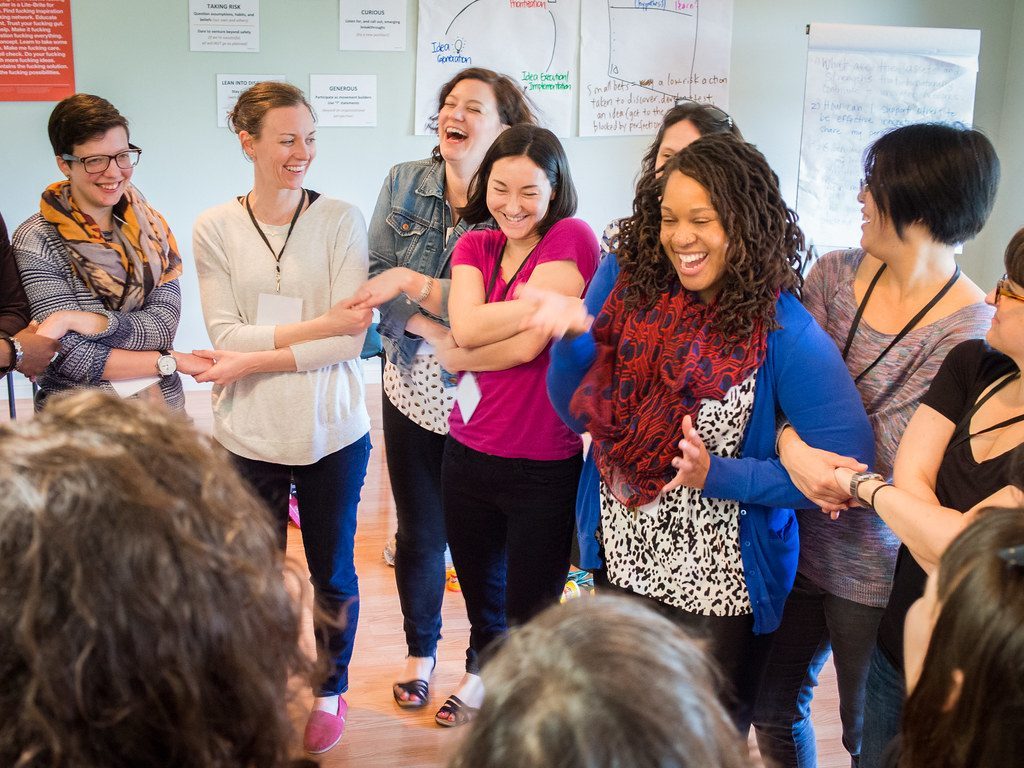
Your optimistic nature profoundly influences your relationship choices and maintenance strategies. Research suggests that highly optimistic individuals often maintain higher quality social relationships, and this isn’t accidental. You actively seek out relationships that challenge you to grow while offering the same opportunity to others.
Grounded optimists believe in people’s potential without being shocked when people are human. They give second chances but not infinite chances. They trust but verify. They invest in relationships knowing that not all investments pay dividends, and they’re okay with that math. This relational wisdom comes from understanding that cynicism is just as naive as blind trust. They’ve learned that most people are doing their best with the tools they have, that kindness usually breeds kindness, and that the occasional betrayal doesn’t negate the general principle. They play the odds, and the odds favor connection.
Optimistic people tend to be empathetic and compassionate towards others, showing concern and support to those around them. This ability to connect with others and provide emotional support contributes to your own happiness and well-being, as positive relationships are a key factor in personal satisfaction. You understand that relationships are investments in mutual growth, not just sources of comfort or validation.
You Maintain Internal Locus of Control

Perhaps your most defining characteristic is your deep belief in your own agency. Optimistic people are sincere with themselves and take responsibility for every move they make. Optimistic people are honest with themselves which takes much courage. It eliminates the possibility to hide the truth with justification and excuses to not succeed. They accept the truth with a straight face and know what is wrong and what is right. Optimistic people recognize their faults, mistakes with great confidence. They do not find other individuals to blame things rather they try to improve their own mistakes. This enables them to achieve success before anybody else.
You consistently focus on what you can control rather than lamenting what you cannot. When colleagues complain about workplace politics, you’re already brainstorming ways to navigate the situation more effectively. When friends worry about economic uncertainties, you’re planning how to build more skills or diversify your income streams.
Being honest with yourself means setting aside justifications and excuses. This attitude requires courage because it means that you won’t try to hide from the truth. It means standing face to face with life and being sincere with yourself. Optimistic people are not afraid to admit when they are wrong. On the contrary, they openly recognize their errors. They avoid blaming others for their mistakes and they are confident enough in themselves to accept that they aren’t always right. This attitude makes them stronger because they know that recognizing their mistakes is a step closer to being better.
This internal locus of control isn’t about believing you control everything, but about consistently focusing your energy on areas where your actions can make a difference. You understand that while you can’t control outcomes, you can always control your responses, efforts, and choices.
Conclusion

These seven traits reveal that true optimism is far more sophisticated than simple positive thinking. Optimistic subjects tend to have more frequently protective attitudes, are more resilient to stress and are inclined to use more appropriate coping strategies. It’s a comprehensive approach to life that combines realistic assessment with hopeful action, emotional intelligence with practical planning, and personal responsibility with compassionate relationships.
If you recognize these patterns in yourself, you possess a remarkable psychological resource that is positively correlated with life satisfaction, happiness, and psychological and physical well-being, and negatively correlated with depression and anxiety. Your optimistic nature isn’t just making you happier, it’s literally contributing to better health outcomes and stronger relationships.
What’s most encouraging is that these traits can be developed over time. Perhaps that’s the most optimistic thing of all: that this kind of grounded hopefulness can be learned. That we can train ourselves to hold both difficulty and possibility, to see clearly and hope anyway, to be disappointed without becoming disappointing. It’s not about choosing between optimism and realism – it’s about discovering they were never opposites to begin with.
Which of these traits resonates most strongly with your own experience? Share your thoughts in the comments below.