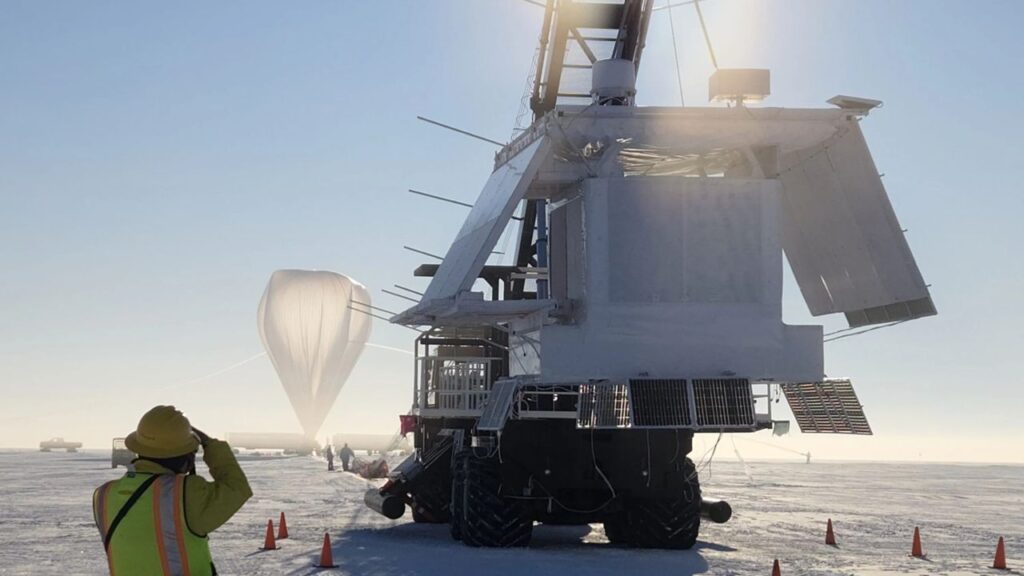
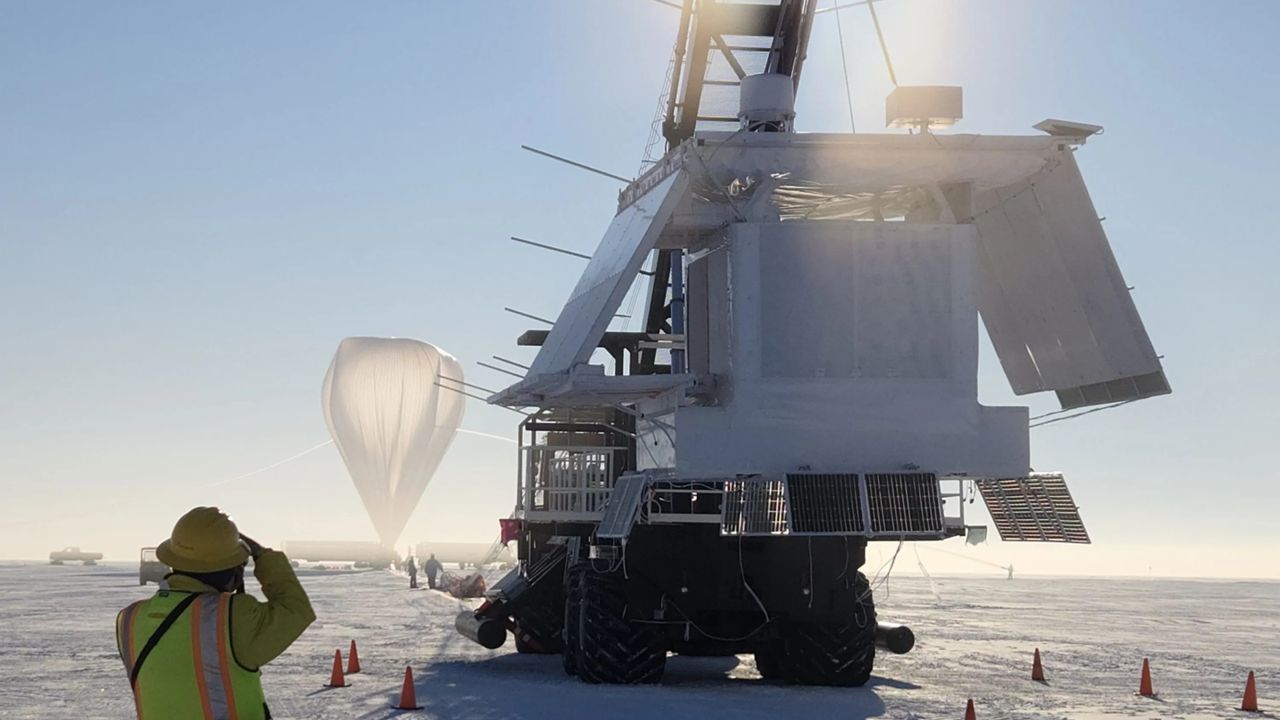
A Bold Leap into the Stratosphere (Image Credits: Cdn.mos.cms.futurecdn.net)
Antarctica – NASA’s scientific balloon campaign intensified this week as a second massive balloon lifted off from the frozen continent, carrying instruments designed to probe the universe’s deepest enigmas.
A Bold Leap into the Stratosphere
The launch marked a pivotal moment in NASA’s ongoing efforts to study cosmic phenomena from one of Earth’s most remote locations. On December 19, 2025, the balloon ascended from the agency’s facility near the South Pole, reaching an altitude of 120,000 feet within hours. This flight followed the successful debut of the campaign’s first balloon just days earlier, demonstrating the reliability of these high-altitude platforms.
Engineers and scientists monitored the ascent closely, celebrating as the balloon stabilized at float altitude. The mission’s success hinges on the unique stratospheric winds over Antarctica, which allow for extended flights lasting weeks or even months. Such duration provides invaluable data collection time, far surpassing what ground-based observatories can achieve.
These balloons, often spanning the size of a football field when inflated, offer a cost-effective alternative to satellite missions while delivering near-space conditions. NASA’s Wallops Flight Facility coordinated the operation, drawing on years of experience in polar ballooning.
Probing Dark Matter and Antimatter
At the heart of this launch lies the General Anti-Particle Spectrometer (GAPS) experiment, a sophisticated payload aimed at detecting rare antimatter particles. Scientists believe these particles could reveal clues about dark matter, the invisible substance that constitutes about 85 percent of the universe’s mass yet remains largely undetected.
The GAPS instrument scans for antiprotons and antihelium, which might originate from dark matter annihilations in space. By floating above the atmosphere, the balloon avoids interference from cosmic rays and air molecules that plague lower-altitude observations. Data from this flight could refine models of how galaxies form and evolve.
- Antimatter detection: Identifies particles that could signal dark matter interactions.
- High-altitude advantage: Operates in a low-background environment for clearer readings.
- Long-duration flight: Enables continuous monitoring over vast sky regions.
- Collaborative effort: Involves international teams and university researchers.
- Precursor to future missions: Tests technology for even larger balloons.
Previous campaigns have yielded breakthroughs, such as mapping interstellar gas clouds, and this one builds on that legacy with advanced detectors.
Navigating the Harsh Antarctic Environment
Conducting launches in Antarctica presents formidable challenges, from extreme cold to unpredictable weather patterns. Temperatures often dip below -50 degrees Celsius, requiring specialized equipment to function reliably. The remote location demands self-sufficiency, with teams relying on U.S. National Science Foundation support for logistics and recovery.
Wind conditions must align perfectly for safe ascent and controlled flight paths. The campaign planned two initial launches, but success depends on seasonal windows when stratospheric circulation patterns favor long-duration circumnavigations. Recovery operations involve tracking the balloon’s descent and retrieving payloads from the ice, a process that can span days.
Despite these hurdles, Antarctica’s isolation minimizes light pollution and electromagnetic interference, making it ideal for sensitive astronomical instruments. NASA’s program has launched dozens of missions here since the 1980s, refining techniques over time.
Broader Impacts on Space Exploration
This balloon campaign underscores NASA’s commitment to innovative, accessible science. Balloons bridge the gap between aircraft and spacecraft, offering rapid deployment and lower costs for testing new technologies. Insights from GAPS could influence future space telescopes or particle detectors launched into orbit.
International collaboration plays a key role, with contributions from universities and global partners enhancing the mission’s scope. As the balloon circles the continent, real-time tracking allows public engagement through NASA’s online portals. Such transparency fosters interest in STEM fields among students worldwide.
| Mission Aspect | Details |
|---|---|
| Altitude Reached | 120,000 feet |
| Flight Duration Goal | Weeks to months |
| Primary Focus | Dark matter via antimatter |
| Launch Date | December 19, 2025 |
The operation also highlights sustainable practices in polar research, minimizing environmental impact in this fragile ecosystem.
Key Takeaways
- NASA’s Antarctic balloons enable groundbreaking cosmic research at a fraction of satellite costs.
- The GAPS mission targets elusive particles that could unlock dark matter secrets.
- Successful launches demonstrate resilience in extreme conditions, paving the way for future explorations.
As these balloons drift silently above the ice, they remind us of humanity’s enduring quest to understand the cosmos. What breakthroughs might emerge from this high-flying endeavor? Share your thoughts in the comments below.