Few things in the history of life on Earth are as visually dramatic as a feather. Think about it for a second. You go from the armored, leathery skin of a crocodile to the iridescent, aerodynamic precision of a peacock’s tail. How does that even happen? The answer, it turns out, is not a sudden leap or a single miraculous mutation. It’s a slow, layered, almost painstaking journey across hundreds of millions of years. And the deeper scientists dig, literally and figuratively, the more astonishing that journey becomes.
What makes this story truly compelling is the science keeps rewriting itself. Every decade brings new fossils, new gene discoveries, and new arguments that shake up what we thought we knew. You might assume the debate is settled, but honestly, it’s very much alive. So buckle up, because the road from scales to feathers is far stranger and more winding than you’d ever expect. Let’s dive in.
A Shared Ancestor You Never Expected

Here is something that might genuinely stop you in your tracks. Hair, scales, and feathers appear to have evolved from a single ancestor, a reptile that lived roughly 300 million years ago. That’s right. Your dog’s fur, a rattlesnake’s scales, and an eagle’s flight feathers all share a common origin. It sounds almost too neat to be true, like nature was working from one original blueprint and simply kept revising it.
Hair, scales, and feathers arose from one ancestral structure, and studies in fetal Nile crocodiles, bearded dragon lizards, and corn snakes appear to have helped settle this long-standing debate. Special skin bumps long known to direct the development of hair in mammals and feathers in birds also turn out to signal scale growth in reptiles, implying all three structures evolved from a shared ancestor. That single shared developmental signal, tiny and easily overlooked, connects creatures as wildly different as a boa constrictor and a hummingbird. It’s one of those facts that genuinely makes biology feel like magic.
The Molecular Clue Hidden in a Scaleless Lizard
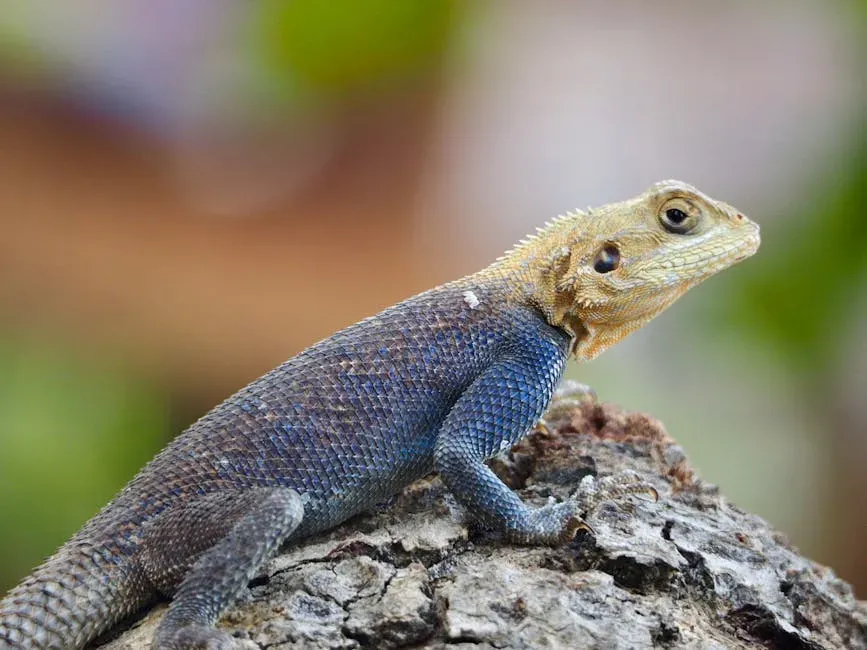
Science often finds its biggest breakthroughs in the most unexpected places. In this case, the clue came from a peculiar scaleless lizard spotted at a pet market. Researcher Milinkovitch stumbled into this decades-long debate after seeing a rare, scaleless Australian bearded dragon at a pet market. After purchasing the animal, he investigated its DNA and found that a mutation of the gene ectodysplasin-A (EDA) led to the scalelessness, and mutations on this same gene are also known to cause baldness, along with deformed teeth and nails, in mice and humans.
A coauthor of the resulting study found that a hair-development gene called EDA was present but disrupted in the scaleless bearded dragons. The researchers then searched for similar molecular signals in normal reptile embryos and found genes and proteins associated with hair and feather growth studding the skin. Think of it as discovering the same software running three completely different operating systems. The underlying code is remarkably consistent, even when the visible output looks nothing alike.
When Dinosaurs Started Sprouting Fuzz
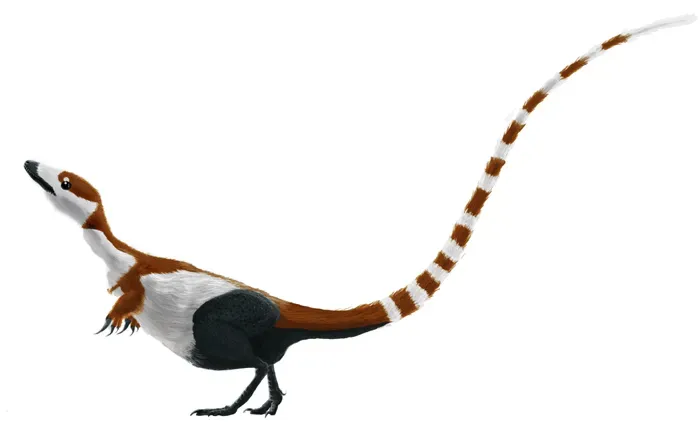
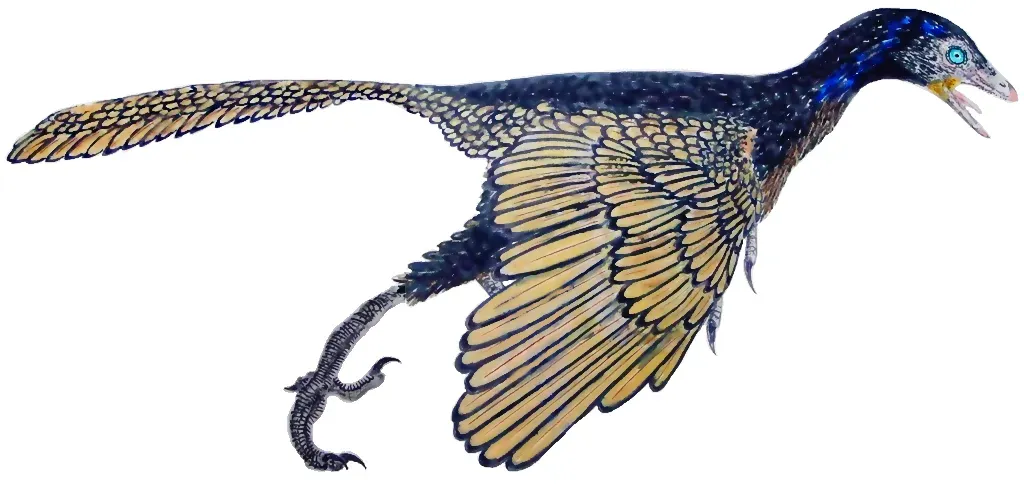
Let’s be real. Most of us grew up picturing dinosaurs as scaly, lizard-like behemoths. That image has been thoroughly dismantled. Until recently, feathers were regarded as uniquely avian, the defining characteristic of birds. This idea was so strongly held that the mere presence of feather impressions around the skeleton of Archaeopteryx was enough to cement its status as the earliest-known bird. However, a series of spectacularly preserved fossil discoveries, primarily from the Early Cretaceous of China, revealed the presence of feathers in a variety of non-flying theropod dinosaurs, demonstrating conclusively that feathers clearly appeared prior to the origin of either birds or flight.
The fossil Sinosauropteryx was dated to the Early Cretaceous Epoch, about 126 million years ago. It was exceptional because its head, neck, back, and tail were covered with a thick, short covering of dark filaments. These filaments were certainly epidermal, and they were probably composed of keratin and other proteins. Some appeared to be branched, but none were complex. So the first feathers weren’t elegant or flight-ready. They were more like a rough, fibrous coat. Think of them as nature’s rough draft before the final polished version arrived millions of years later.
Ten Steps from Scale to Flight Feather
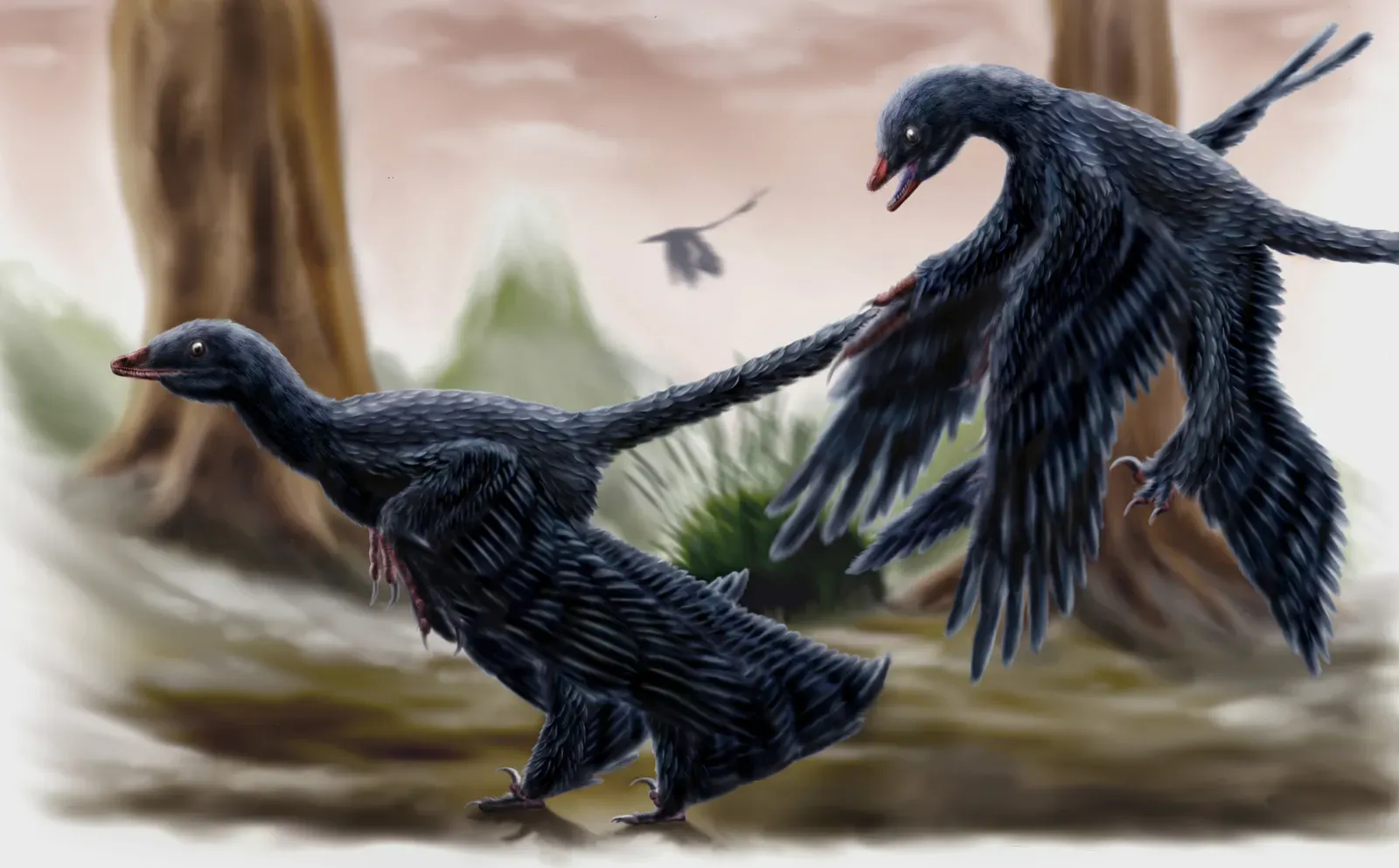
One of the most fascinating frameworks scientists have developed is a step-by-step model of feather complexity. It is not a two-step jump. It is a long, layered progression. If you focus on the structure of the integument, you would agree that there is an increase of complexity in the formation of feathers. Based on developmental studies, researchers propose ten levels of complexity representing the gradual evolutionary transformation from the most simple scales to an advanced asymmetric flight feather.
In feathers, down feathers have radially symmetric barbs, contour feathers have bilaterally symmetric vanes, while flight feathers have bilaterally asymmetric vanes. From the simplest to the most complex, there is a gradual increase in morphological complexity, reflecting the order of appearance during development. You can think of it like the evolution of the written word, going from cave scratches to hieroglyphs to printed text to digital fonts. Each stage builds on the last, and none of them appears overnight.
Feathered Dinosaurs That Were Not Quite Birds
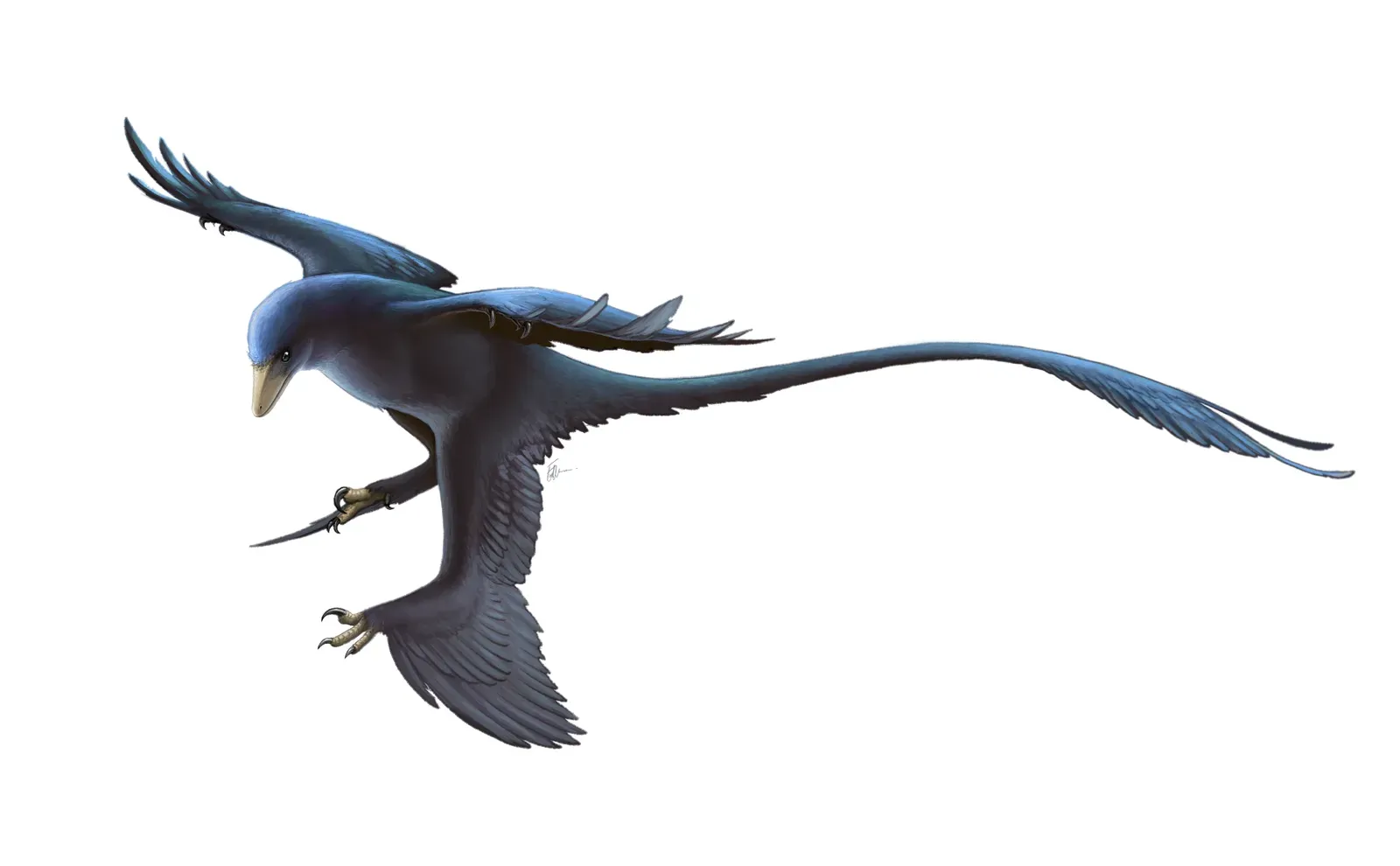
Here is where the story gets genuinely thrilling. Several dinosaurs had feathers long before birds arrived on the scene, and some of them were doing remarkable things with those feathers that had nothing to do with flying. A stunning fossil of the feathery dinosaur Microraptor revealed that it had long, specialized feathers growing from its hind legs as well as its arms. It quickly became known as the “four-winged dinosaur.” Microraptor lived about 125 million years ago, long after the origin of the earliest birds in the Jurassic. Nevertheless, the dinosaur’s anatomy is marked by a suite of aerodynamic traits, and it represents a different pathway for getting into the air, indicating that more than one feathery dinosaur lineage evolved to become airborne.
Feathers appear to have been present in most theropods, the largely predatory dinosaur clade including taxa such as Tyrannosaurus and Velociraptor, but to date no traces of feathers have been discovered in their sister group, the sauropodomorphs, a clade that includes gigantic long-necked sauropods. Feathers remain extremely rare in fossils from the ornithischians, a clade of herbivores including the horned ceratopsians and the duck-billed hadrosaurs. So the distribution of feathers across the dinosaur family tree is patchy and complicated. It wasn’t a universal feature, at least not all at once.
Scales and Feathers Living Side by Side
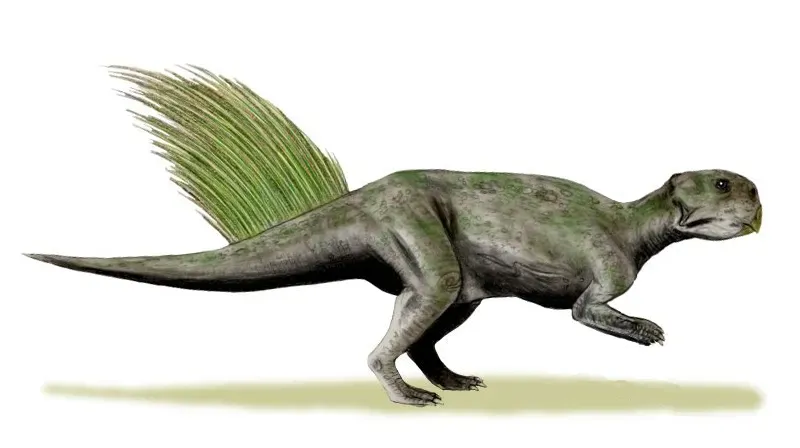
One of the most stunning recent discoveries involves a dinosaur that literally had both scales and feathers on its body at the same time. That detail alone tells you everything about how gradual this transition really was. Fossil evidence supports partitioning of skin development in Psittacosaurus, showing a reptile-type condition in non-feathered regions and an avian-like condition in feathered regions. Retention of reptile-type skin in non-feathered regions would have ensured essential skin functions during the early, experimental stages of feather evolution.
The discovery further suggests that, in the early stages of feather evolution, bird-like skin developed only in feathered regions of the body, while the rest of the skin was still scaly, like in modern reptiles. It’s almost like watching a caterpillar mid-transformation, half the old form, half the new. The fossil skin cells in these specimens looked almost identical to those in modern reptiles, only petrified, sharing a similar cell size and shape and fused cell boundaries, a feature known only in reptiles. The past was literally written in stone.
The Mystery That Science Has Not Yet Solved
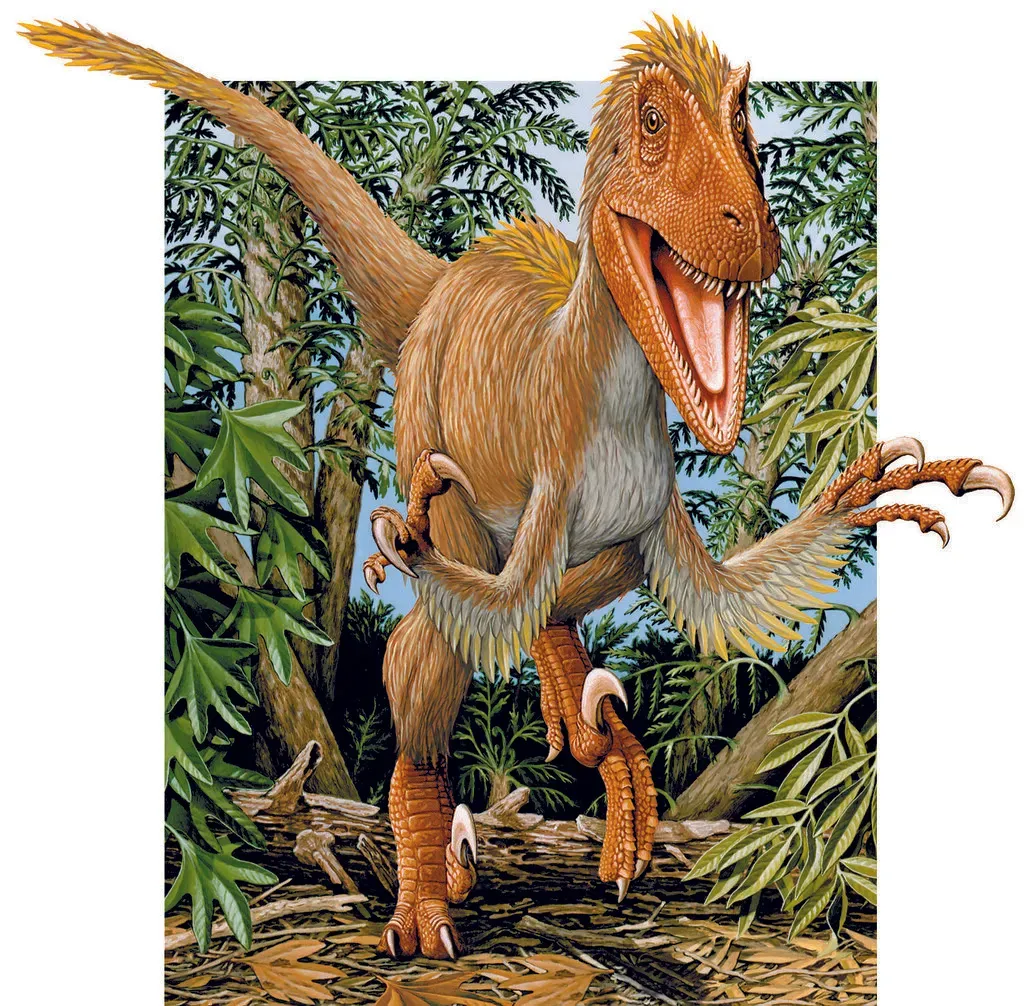
You might expect that by now, with all the fossils, genomic research, and molecular biology available to us, scientists would have the full picture. They do not. Feathers have a diverse range of shapes, roles, and colours in modern birds, but their evolutionary origins are uncertain. That uncertainty is not a failure of science. It’s an invitation. Questions still remain about whether all dinosaurs inherited feathers from a common ancestor, or whether feathers evolved multiple times, and whether they are exclusive to birds and their closest relatives or more widespread across the reptile family tree.
Discoveries of spectacular dinosaur and pterosaur fossils preserving feathers and feather-like structures demonstrate trends of increasing complexity through evolution, and the acquisition of complex flight feathers before the origin of birds. Moreover, this material shows that some early feathers differed from modern feathers morphologically, ultrastructurally, biochemically, and developmentally, revealing integumentary evolutionary pathways absent in modern taxa. In other words, the feathers of ancient dinosaurs were not simply primitive versions of what you see on a robin today. They were their own distinct structures, following their own rules.
Conclusion
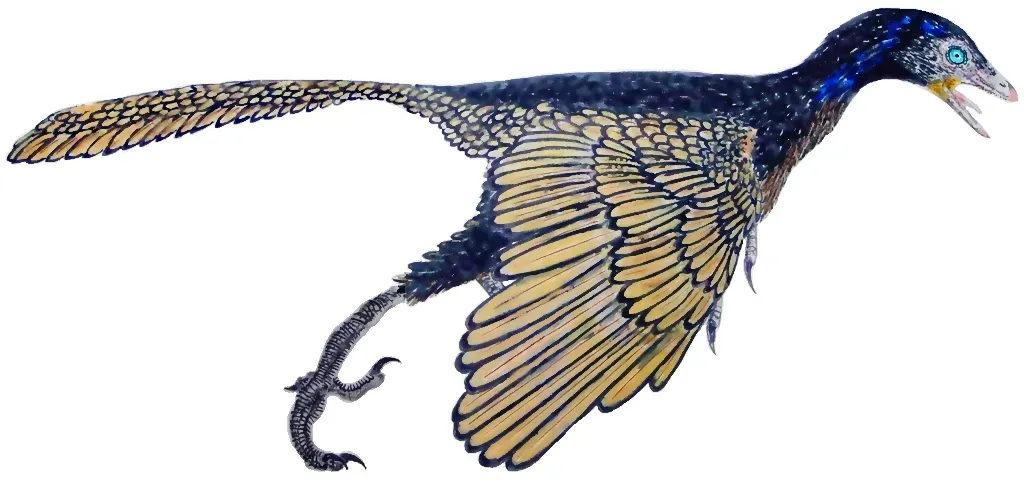
The journey from reptile scale to avian feather is not the dramatic overnight revolution that pop science sometimes portrays. It is a slow, deliberate, layered transformation spanning hundreds of millions of years, guided by shared genes, incremental structural complexity, and a parade of creatures that were neither fully reptile nor fully bird. It happened patch by patch, region by region, creature by creature.
What makes this story so enduringly captivating is the reminder that nature rarely rushes. Every feather on every bird alive today carries the faint genetic echo of an ancient shared ancestor, a creature that looked nothing like a sparrow or a hawk, yet planted the seed for both. There is still a lot of work to do until the origin of feathers can be fully pinned down, and paleontologists will continue to search the world for the fossils that can finally settle this decades-old debate. So the next time you see a bird in flight, take a moment. That’s 300 million years of gradual, breathtaking experimentation soaring overhead. What part of this story surprises you the most? Tell us in the comments.