
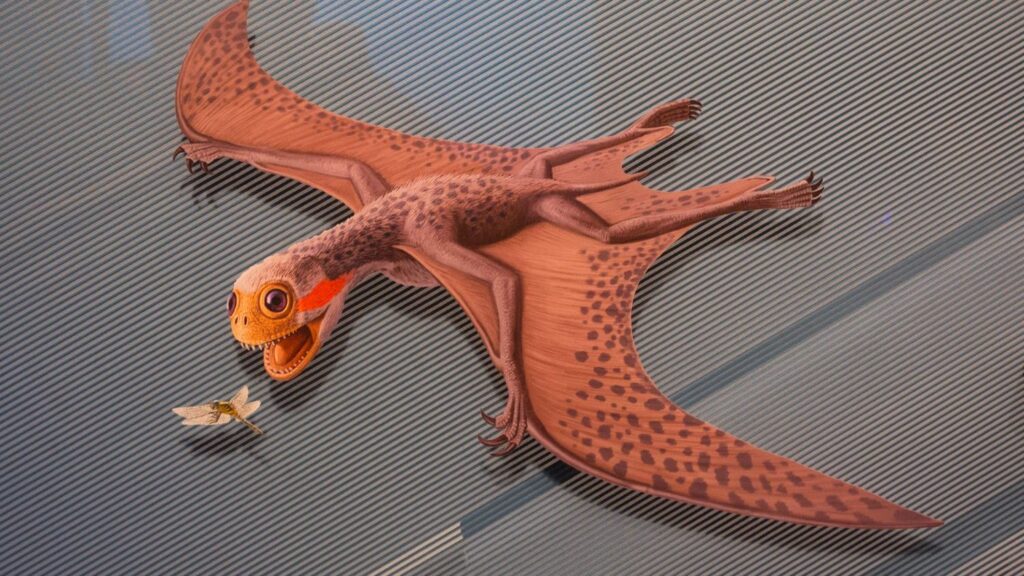
Long before the first bird ever spread its wings, something altogether stranger and far more spectacular was already ruling the skies. Picture a creature with a wingspan wider than a small aircraft, fur-covered body, and hollow bones so thin they resembled paper – soaring effortlessly over ancient coastlines. These were not dinosaurs. These were not birds. These were pterosaurs, and their story is one of the most remarkable in the entire history of life on Earth.
You might think you already know what pterosaurs were. Chances are you’ve called one a “pterodactyl” at some point – most people have. But honestly, that barely scratches the surface of how extraordinary these creatures really were. From sparrow-sized insect-hunters to sky giants that stood as tall as a giraffe on the ground, pterosaurs dominated the prehistoric heavens for an almost incomprehensible stretch of time. Let’s dive in.
The First Fliers: A Record That Stands Alone
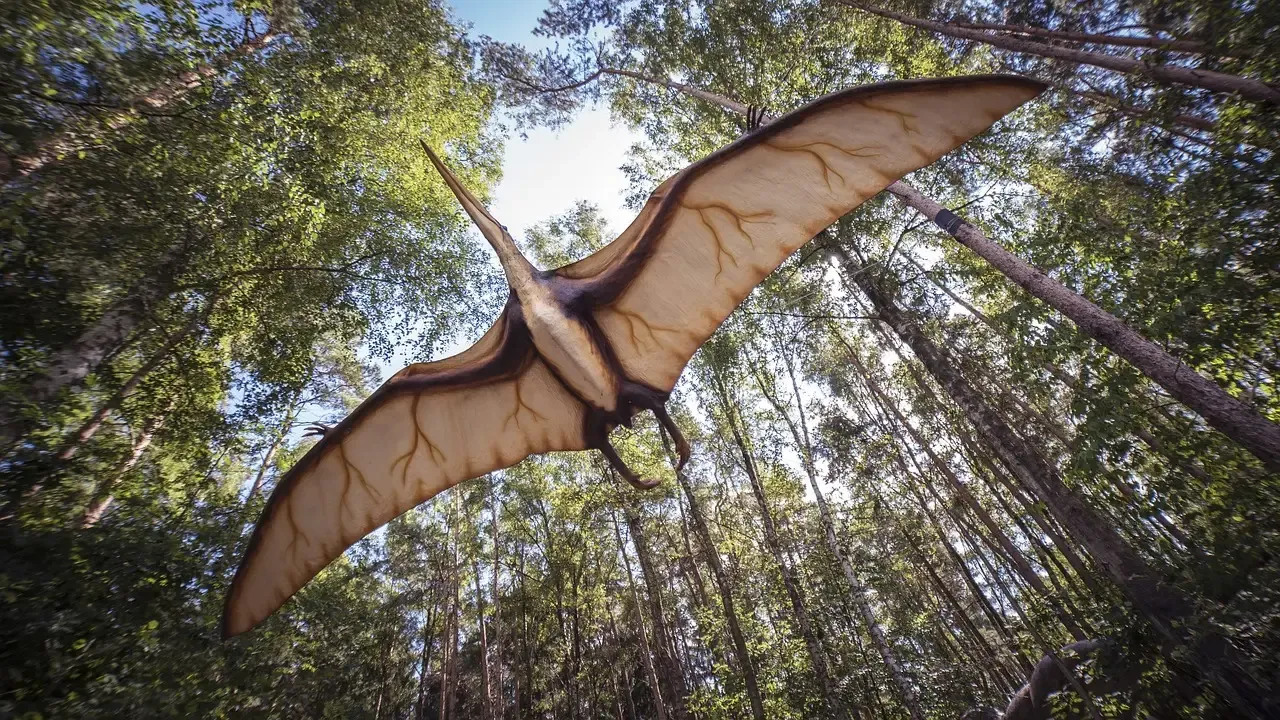
Pterosaurs hold a record no other animal can claim – they are the earliest vertebrates known to have evolved powered flight. Think about that for a moment. Not birds, not bats. These ancient flying reptiles were flapping their way through prehistoric skies millions of years before either of those groups even existed. That is a fact that deserves far more appreciation than it usually gets.
They were an extinct clade of flying reptiles in the order Pterosauria, and they existed during most of the Mesozoic era, from the Late Triassic to the end of the Cretaceous period – a span of roughly 228 million to 66 million years ago. To put that in perspective, they thrived for 150 million years before going extinct, an endurance record that is almost inconceivable compared with the span of humans, whose ancestors started walking upright less than four million years ago.
Not Dinosaurs, But Close Cousins
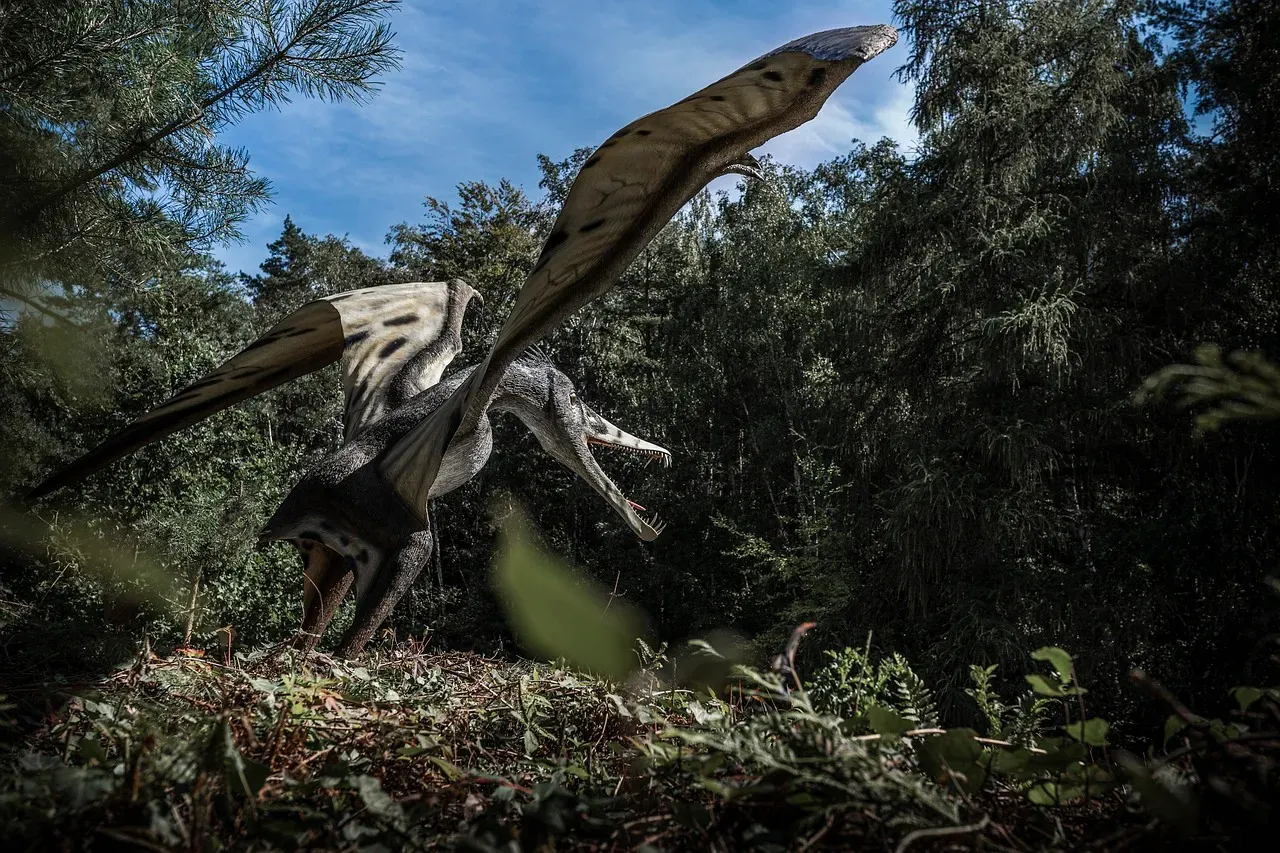
Here’s the thing that trips up almost everyone – pterosaurs were not dinosaurs. They are often incorrectly marketed as “flying dinosaurs,” when in fact pterosaurs and dinosaurs are both members of a group called the archosaurs, meaning they were related to one another, but they were not the same thing. Calling a pterosaur a dinosaur is a bit like calling a dolphin a fish. Related in a broad evolutionary sense, yes. The same thing? Absolutely not.
Dinosaurs did not evolve into pterosaurs, and pterosaurs did not evolve into dinosaurs. Instead, somewhere further back in time, the lines leading to these two groups split from an animal that was an ancestor to both. Birds evolved from dinosaurs, which means that despite some of their apparent similarities, pterosaurs also were not birds or ancestors of them. Each group found its way to the sky independently – which is one of the most stunning examples of convergent evolution in the fossil record.
Wings Built From a Single Extraordinary Finger
Their wings were formed by a membrane of skin, muscle, and other tissues stretching from the ankles to a dramatically lengthened fourth finger. Imagine your ring finger growing to the length of your entire arm – that’s essentially what evolution did here. The result was a wing unlike anything seen in any other animal before or since. It’s a wild engineering solution, and it worked brilliantly for over 150 million years.
In addition to the main flight membrane, an accessory membrane stretching between the shoulder and wrist reduced turbulence on the wing. The pterosaur wing appears to have been well adapted for flight, with a system of fine, long, keratinous fibers running parallel to one another like feather shafts in birds – an arrangement that enhanced both strength and maneuverability. Despite the considerable size of the forelimbs, the bones were hollow and thin-walled, which kept weight remarkably low.
Giants of the Sky: Size That Defies Imagination
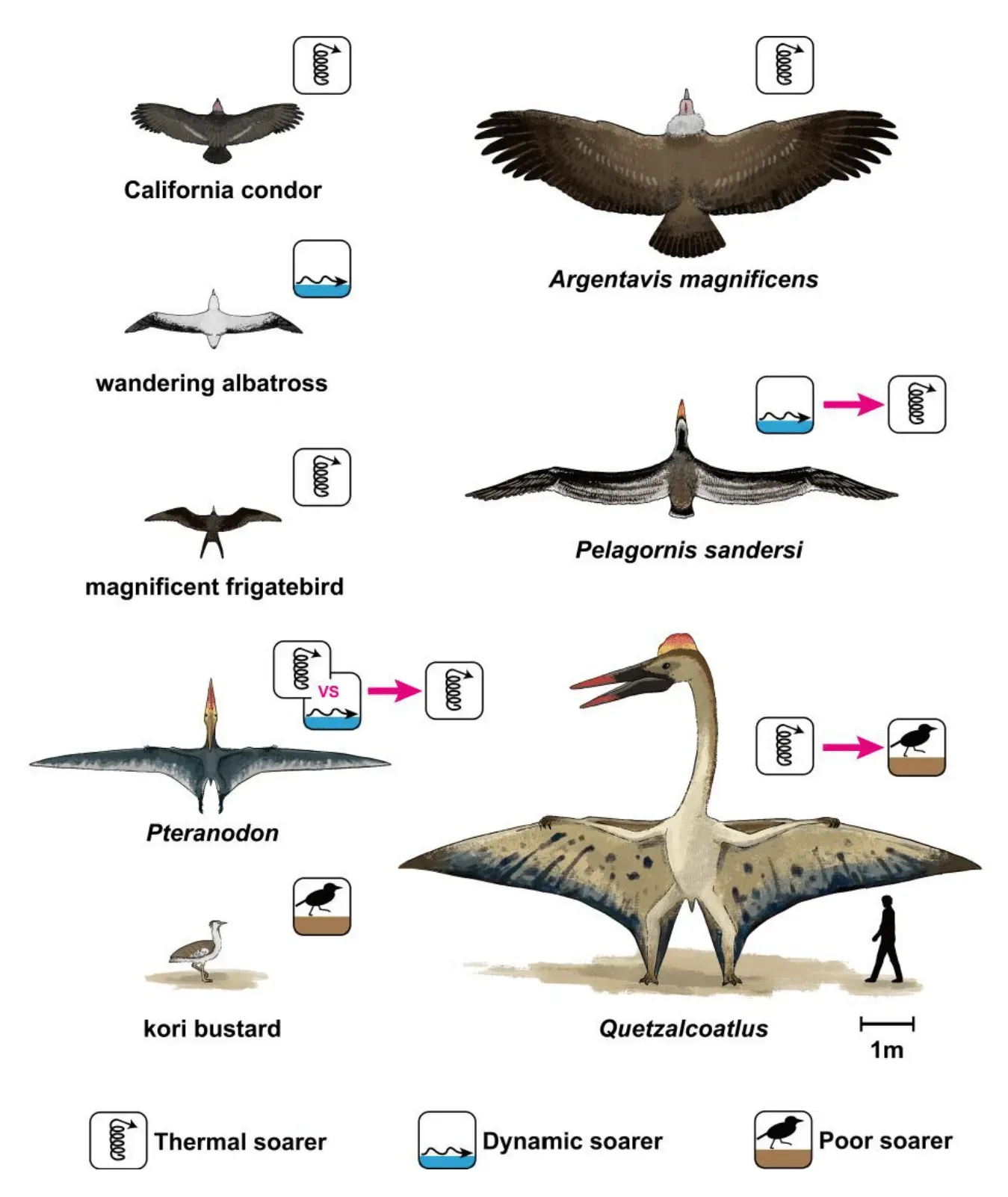
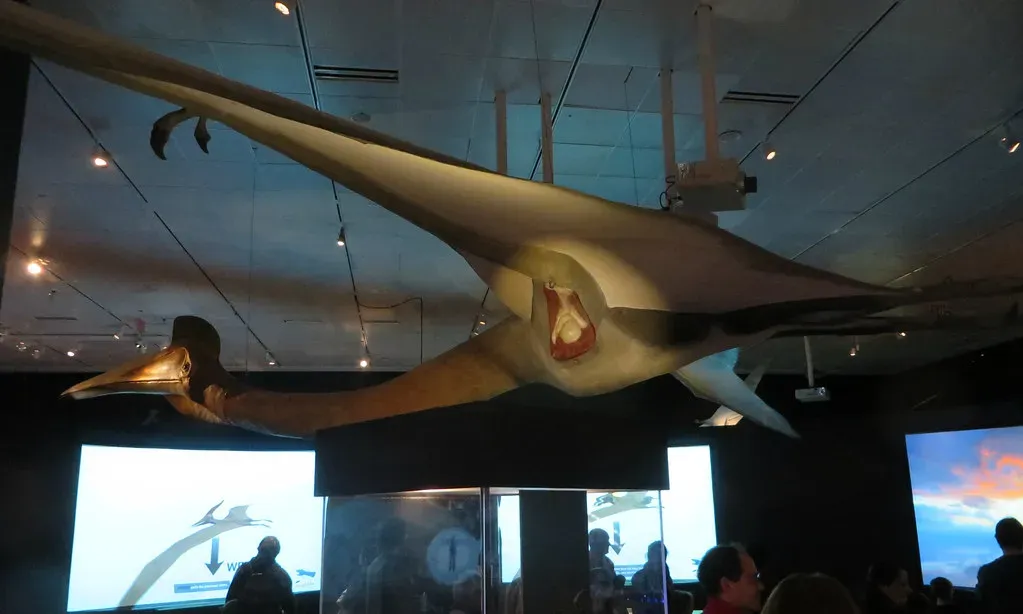
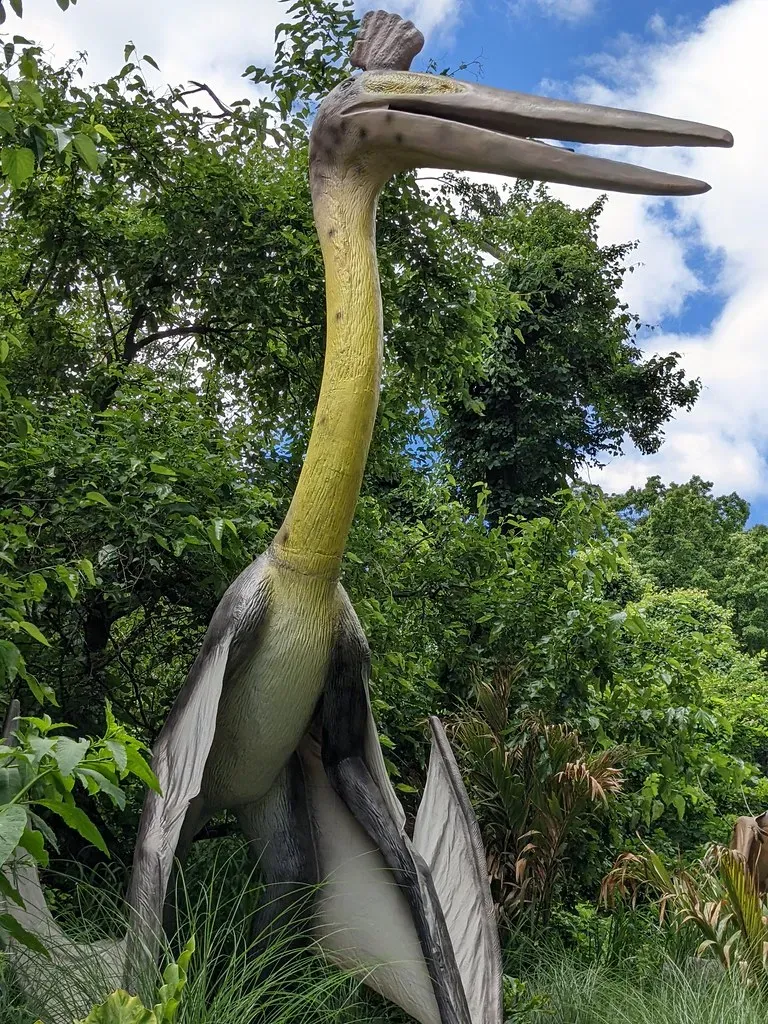
Uncontested in the air, pterosaurs colonized all continents and evolved a vast array of shapes and sizes. Of more than 120 named species, the smallest pterosaur measured no bigger than a sparrow, while the largest reached a wingspan of nearly 40 feet – wider than an F-16 fighter jet. That comparison alone should stop you in your tracks. We are talking about a biological flying machine that would have blotted out the sun if it passed overhead.
Pterosaurs were highly diverse in size, and some were the largest flying organisms in Earth’s history. Early pterosaurs of the Triassic and Jurassic periods were typically small animals with wingspans of only up to about two metres, while most Cretaceous pterosaurs were considerably larger. The pterosaur was a true force to be reckoned with in dinosaur skies, with some species weighing up to 500 pounds and boasting wingspans of up to 30 feet. How something that large could achieve powered flight is a question that has fascinated scientists for generations.
Warm-Blooded and Furry: Shattering the Cold-Blooded Myth
For a long time, scientists assumed pterosaurs were sluggish, cold-blooded creatures – basically big, awkward gliders dragging themselves from cliff to cliff. That image has been completely dismantled. Scientists later discovered that some pterosaurs, including Sordes pilosus and Jeholopterus ninchengensis, had furry coats consisting of hairlike filaments called pycnofibers, suggesting they were warm-blooded and generated their own body heat.
Pycnofibers were unique structures similar to mammalian hair, an example of convergent evolution, and the pterosaur pelts may have been comparable in density to those of mammals. The pycnofibers show that pterosaurs were warm-blooded, providing insulation to prevent heat loss. Like non-avian dinosaurs, pterosaurs grew faster than living cold-blooded animals, achieving full body size in less than a decade, and multiple features including their growth rates, fur, and ability to use powered flight all point to them having a fully warm-blooded metabolism.
A Staggering Menu: What Pterosaurs Actually Ate
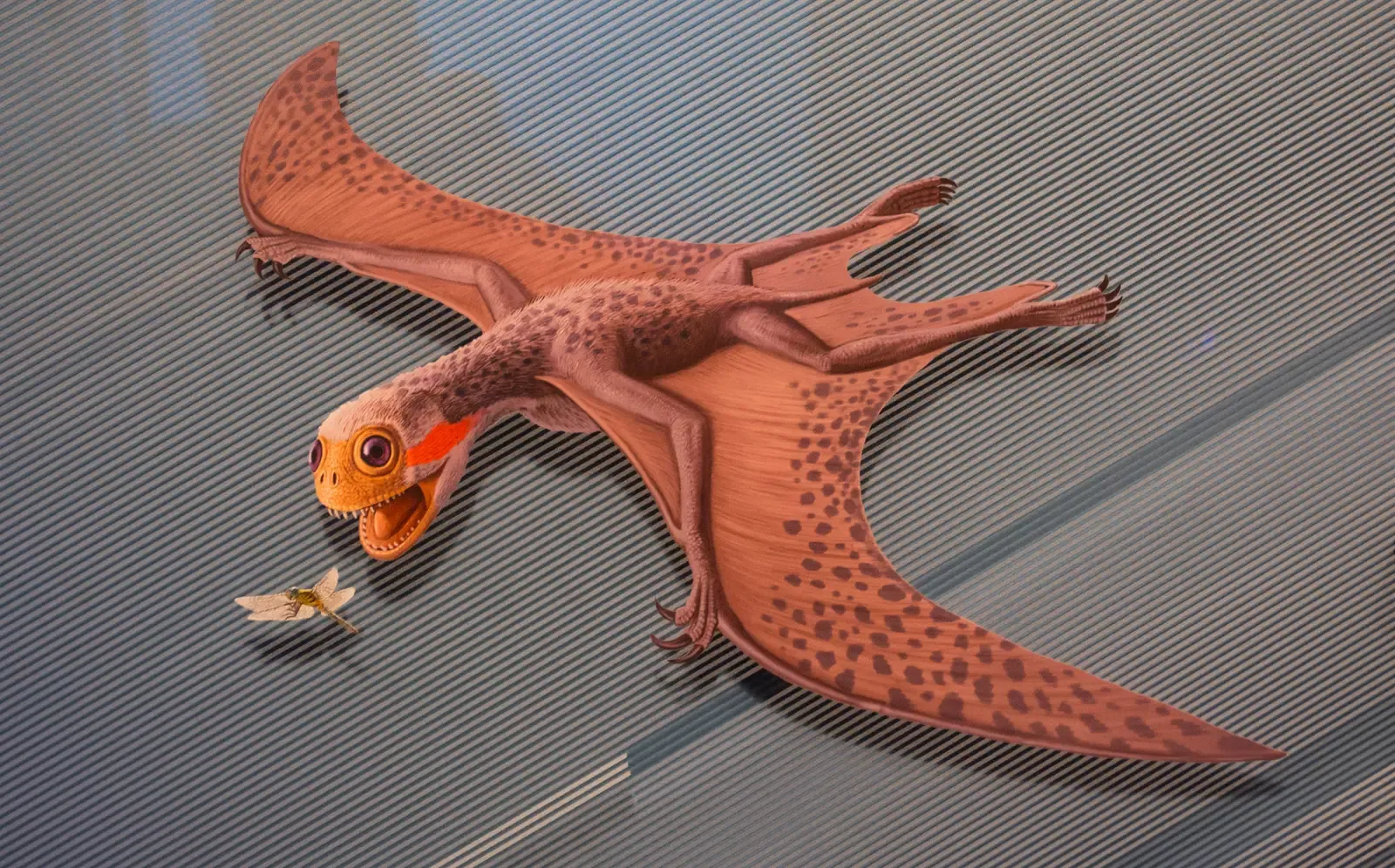
You might picture pterosaurs swooping dramatically over the ocean and snatching fish with their teeth – and some certainly did. Numerous dietary hypotheses have been proposed for different pterosaur groups, including insectivory, piscivory, carnivory, durophagy, herbivory, filter-feeding, and generalism. Honestly, the range is breathtaking. These were not one-trick predators. They filled ecological niches the way modern birds do today.
Many pterosaur fossils exhibit well-developed and specialized teeth: Eudimorphodon and Dorygnathus had teeth designed to spear and hold prey; Dsungaripterus had bony jaws and broad, flattened teeth to extract shellfish and snails; and Pterodaustro had a comb-like array of teeth ideal for sieving plankton. A study led by Uppsala University researchers even provides the first direct evidence of filter feeding in Jurassic pterosaurs, showing that they had a similar diet to the Chilean flamingo. The prehistoric flamingo of the Jurassic. Let that image sink in.
Reproduction and Early Life: Born Ready to Fly
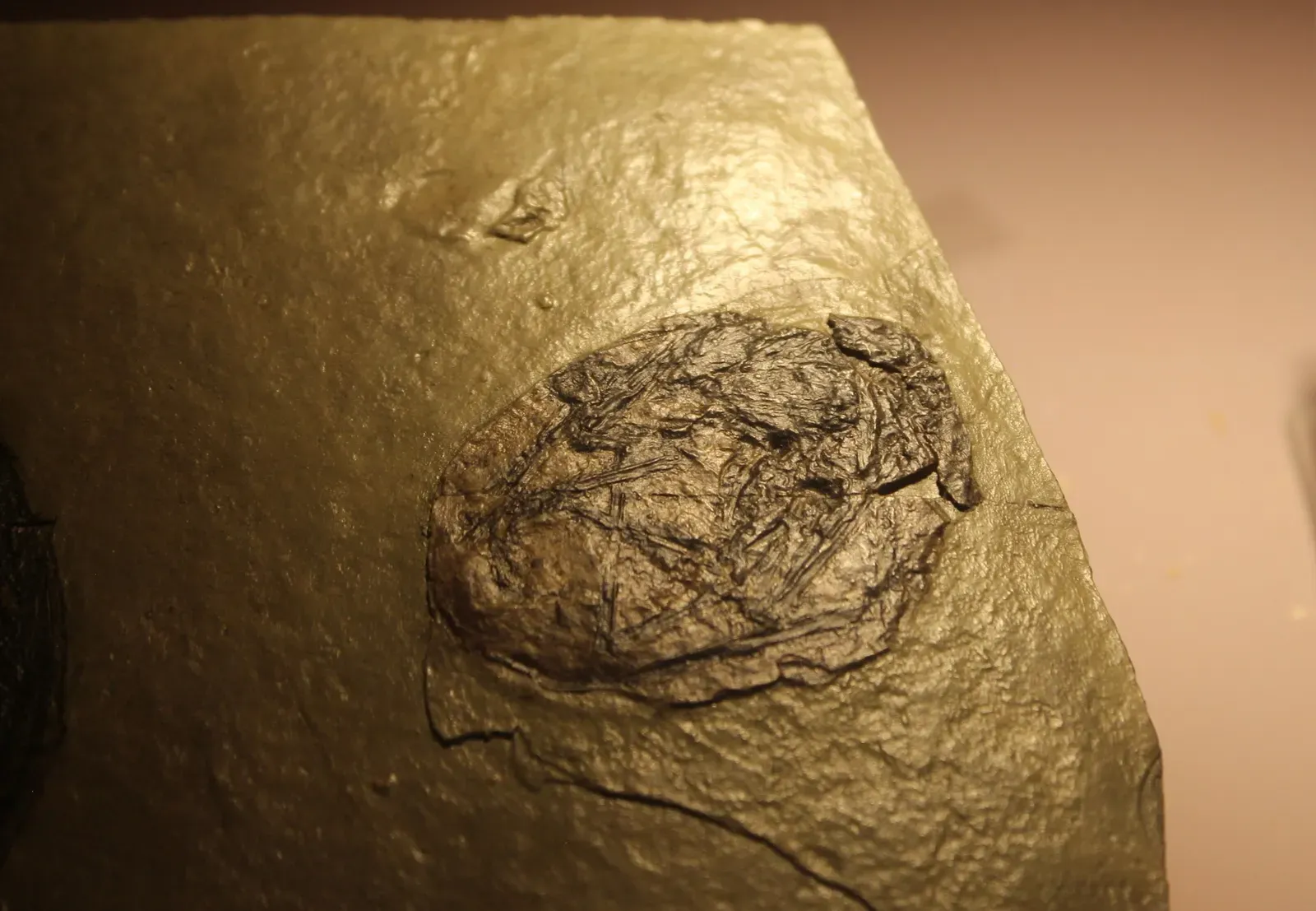
While very little is known about pterosaur reproduction, it is believed that all pterosaurs reproduced by laying eggs, though such findings are very rare. The first known pterosaur eggs were found in the quarries of Liaoning, China – the same place that yielded feathered dinosaurs – and in Loma del Pterodaustro in Argentina. These eggs were soft and leathery rather than hard-shelled like bird eggs, making fossilization extremely unlikely. It’s a miracle we’ve found any at all.
Wing membranes preserved in pterosaur embryos are well developed, suggesting that pterosaurs were ready to fly soon after birth. A study of pterosaur eggshell structure and chemistry indicated that pterosaurs likely buried their eggs like modern crocodiles and turtles. Egg-burying would have been beneficial to early pterosaur evolution as it allows for more weight-reducing adaptations, but this method of reproduction also would have put limits on the variety of environments pterosaurs could live in. It’s a fascinating trade-off between survival strategy and evolutionary freedom.
Extinction at 66 Million Years: The End of the Sky Rulers
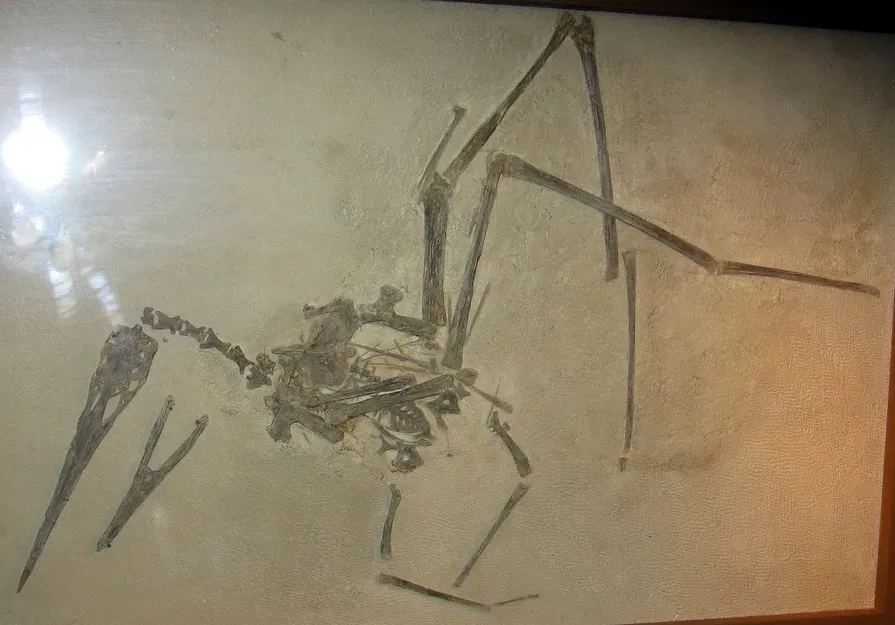
Uploaded by FunkMonk, CC BY-SA 2.0)
Pterosaurs went extinct at the end of the Cretaceous Period, around 66 million years ago, along with the dinosaurs and many other groups of organisms. The cause of this mass extinction event is widely believed to be a combination of factors, including an asteroid impact and volcanic activity. After dominating the skies for an almost unimaginable stretch of time, the reign of the pterosaurs ended swiftly and completely. No pterosaur lineage survived into the age of mammals.
Researchers have suggested that the extinction of pterosaurs was abrupt rather than gradual, caused by the catastrophic Chicxulub impact. Their extinction freed up ecological niches that were then filled by birds, which led to their extraordinary evolutionary radiation in the Early Cenozoic. Pterosaurs are known to be the oldest of three groups of flying vertebrates – alongside birds and bats – that independently evolved self-powered flight. All three groups found the same solution to gravity from three completely different starting points. That alone makes pterosaurs one of evolution’s most awe-inspiring chapters.
Conclusion
![Conclusion ([3] archive copy at the Wayback Machine, CC BY-SA 3.0)](https://nvmwebsites-budwg5g9avh3epea.z03.azurefd.net/dinoworld/bd35e9d94e89860230073d9696c6946b.webp)
Pterosaurs were not failed experiments. They were not clumsy gliders or primitive forerunners of something better. They were sophisticated, warm-blooded, fur-covered masters of the air that ruled the skies for longer than any other vertebrate group in Earth’s history. Their diversity was extraordinary, their anatomy was ingenious, and their legacy is written into every wing that has ever beaten against the wind.
The next time you watch an albatross soar over the ocean or a pelican dive for fish, you are looking at a distant echo of something far older and in many ways more spectacular. The sky has been conquered many times, but pterosaurs did it first and did it longest. What would you have guessed – that a flying reptile with a fur coat and a wingspan wider than a fighter jet could be the ultimate sky champion of all time?