
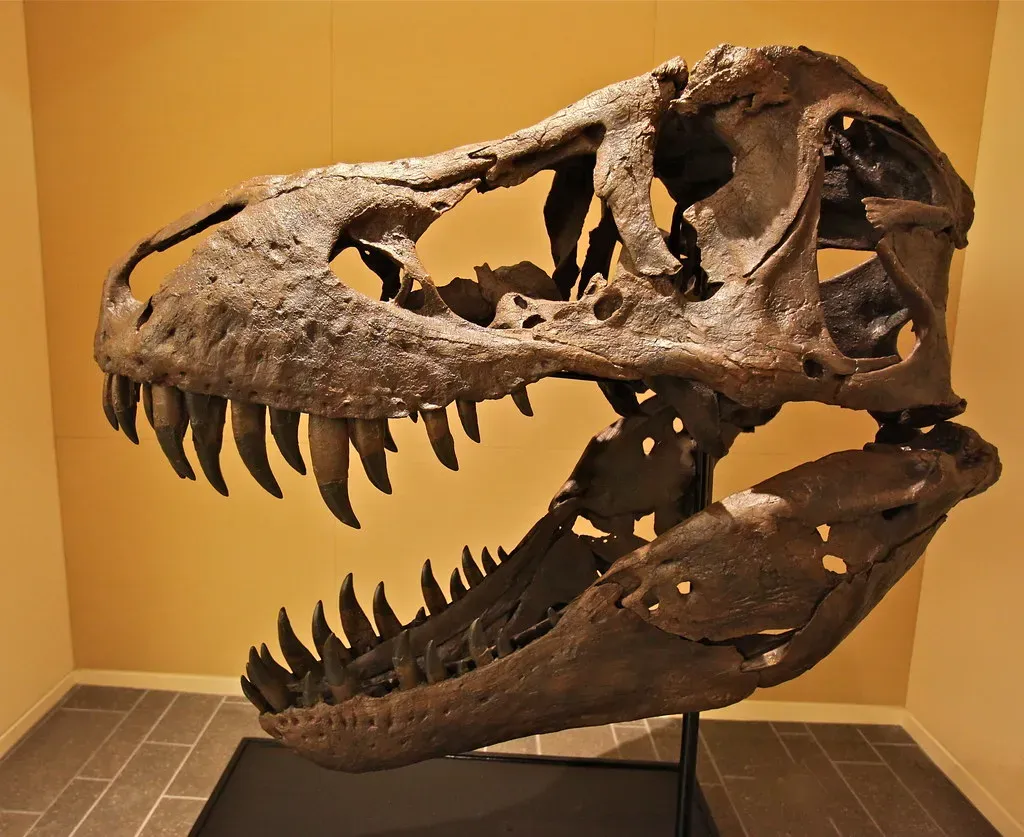
You probably grew up seeing dinosaurs as giant, dusty skeletons in museum halls, frozen in time and mystery. What you might not realize is that, in the last couple of decades, those same bones have become high-tech data vaults, and scientists are finally learning how to crack them open. With new tools, new imaging methods, and new ways of analyzing tiny traces locked inside fossils, you can now look at dinosaurs not just as old bones, but as once-living, breathing animals with color, diseases, growth spurts, and even injuries you can read like a biography.
Instead of chisels and magnifying glasses, researchers are bringing in particle accelerators, medical scanners, ultra-powerful microscopes, and advanced chemistry. That means every time you hear about a dinosaur discovery today, it is less about finding a new skeleton and more about uncovering something unexpected hidden inside one you thought you already knew. As you walk through a museum or scroll past a dinosaur headline, you are looking at the surface of a story that technology is finally starting to tell in full color and stunning detail.
How High-Resolution Scanning Lets You See Inside Bones Without Breaking Them
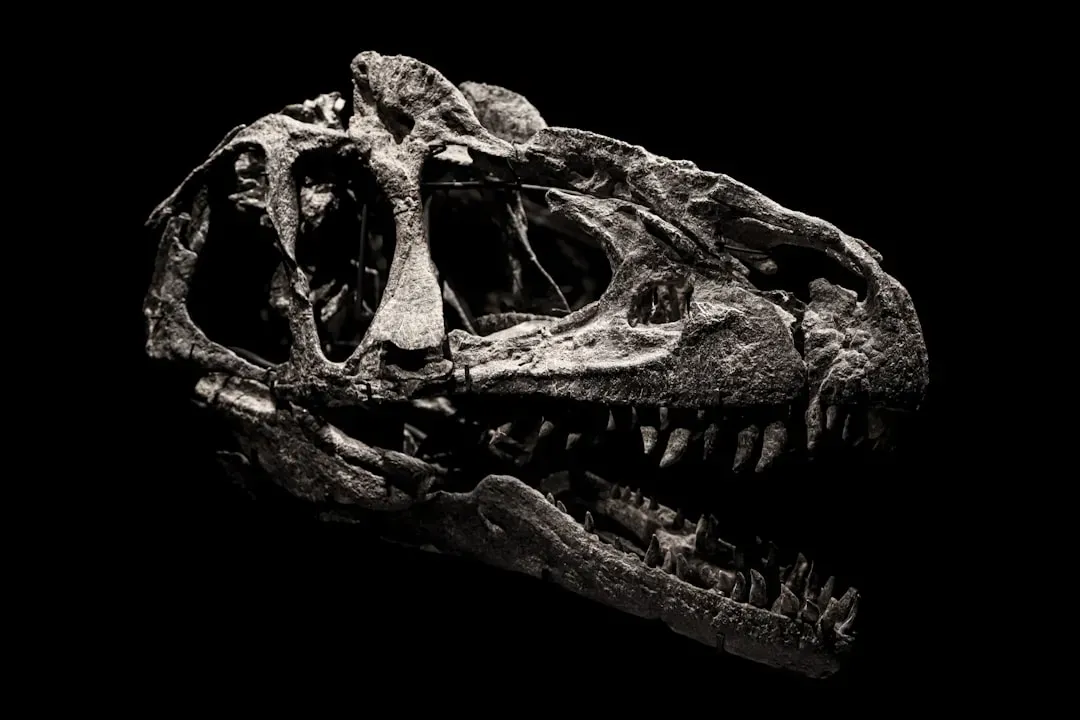
Imagine being able to peel back the layers of a dinosaur bone like an onion without leaving a scratch on it – that is basically what high-resolution CT scanning lets you do. Using the same kind of medical imaging you might get in a hospital, but far more powerful, scientists can send X-rays through a fossil and build a detailed 3D model of everything inside. You get to see growth rings, cracks, ancient injuries, and even hidden teeth or embryos without risking damage to the specimen itself.
As you zoom in digitally, you can rotate the bone on screen, slice it virtually at any angle, and compare it to other specimens from around the world. That means you can test ideas about how a dinosaur grew, how strong its bones were, or how it moved, all without sawing anything open. It is like having X-ray vision for the past: you can examine nerves, blood vessel channels, and internal structures that were completely invisible when scientists had to rely only on the outer shape.
Synchrotron Beams: Reading Chemical Fingerprints Locked in Fossils
If CT scans show you the structure, synchrotron radiation lets you read the chemistry, almost like scanning a barcode from deep time. A synchrotron is a massive machine that accelerates particles to nearly the speed of light, creating incredibly bright X-ray beams. When you point those beams at a dinosaur bone, you can pick up the tiny traces of elements that soaked into it or were part of the original tissue – things like iron, copper, zinc, or rare earth elements. Those patterns can tell you about the animal’s metabolism, diet, and even how its body handled metal elements in life.
When you map these chemical signatures across a skull or limb, you suddenly see that not all parts of the bone are the same. You might discover zones where blood supply was richer, where tendons attached, or where disease altered the chemistry. In some fossils, you can even distinguish parts of original soft tissue impressions from surrounding rock simply because the chemistry is different. For you, this means you are not just staring at a rock; you are looking at a chemically coded record of how a dinosaur lived and what its body went through.
Soft Tissues, Proteins, and the Shock of Finding “Fresh” Signals in Ancient Bones
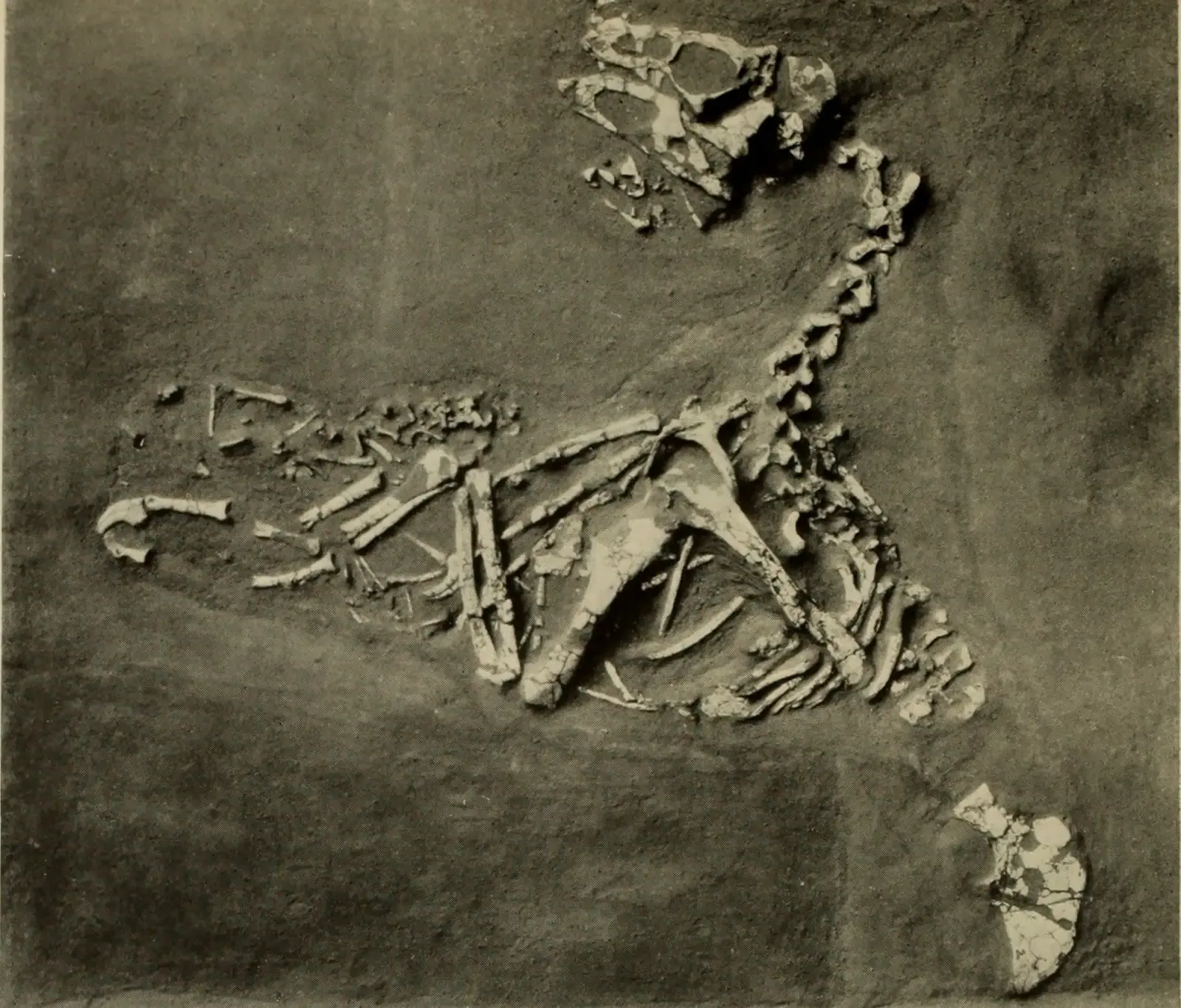
For a long time, you were taught that anything soft in a dinosaur – skin, blood vessels, proteins – would be completely gone after tens of millions of years. Then researchers started finding tiny structures in some exceptionally preserved bones that looked suspiciously like blood vessels, cells, and collagen fibers. Using advanced microscopes and chemical tests, they picked up signals that matched what you see in modern animal tissues, suggesting that traces of original biological material can sometimes survive far longer than anyone expected.
This is controversial territory, so you are not dealing with full-on, intact tissue like something out of a movie, but rather degraded, tiny remnants and chemical fragments. Still, even these fragments can tell you things about how strong a dinosaur’s connective tissues were, how its blood vessels were arranged, or how its bone matrix was built. When you compare these signals to those of birds and crocodiles, you start to see where dinosaurs sit on the spectrum of living animals, not as distant, abstract monsters but as real creatures with bone and tissue surprisingly similar to things alive today.
Bone Microstructure: Reading Growth Rings and Life Stories in Thin Slices
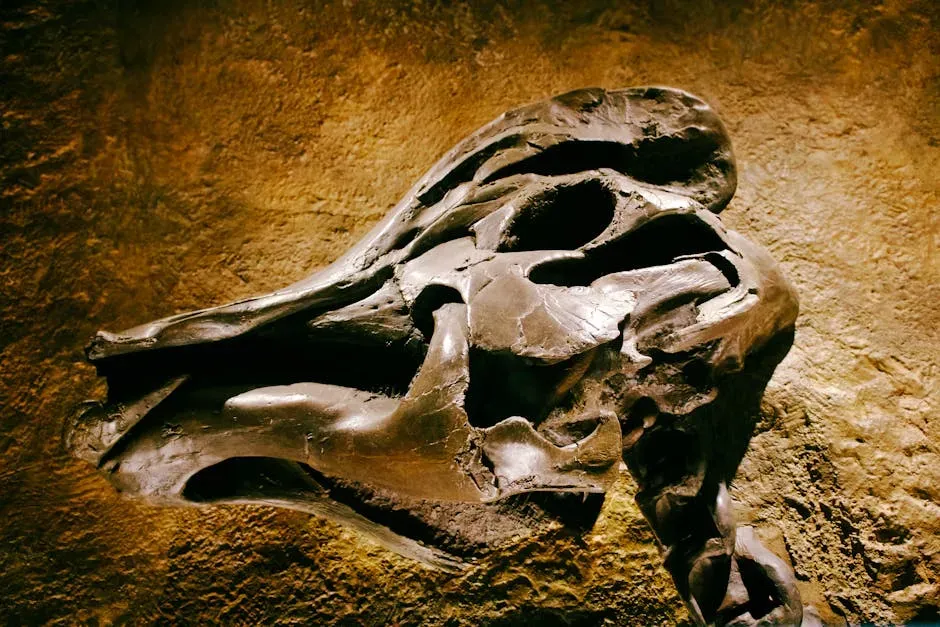
If you could shave off a paper-thin slice of dinosaur bone, glue it to a slide, and put it under a microscope, you would see something that looks a bit like a forest of tiny tubes and rings. That is bone histology, and it lets you read growth like you would count rings in a tree trunk. You can tell how fast a dinosaur grew, whether it had growth spurts, and at what age it reached adulthood. Some species seem to rocket from hatchling to giant in just a few short years, which changes how you imagine their lives and ecosystems.
As you zoom in further, you can spot signs of stress in the bone – interruptions in growth, unusual patterns, or areas where bone was repaired after an injury. You might see dense patches where muscles attached or where joints handled heavy loads, revealing how the dinosaur actually used its body day to day. For you, that means when you look at a femur or a rib on display, you can imagine not just the animal’s size, but its pace of life: whether it lived fast and died young or grew slowly and steadily like a long-lived reptile.
3D Printing and Digital Modeling: Holding a Dinosaur’s Skull in Your Hands
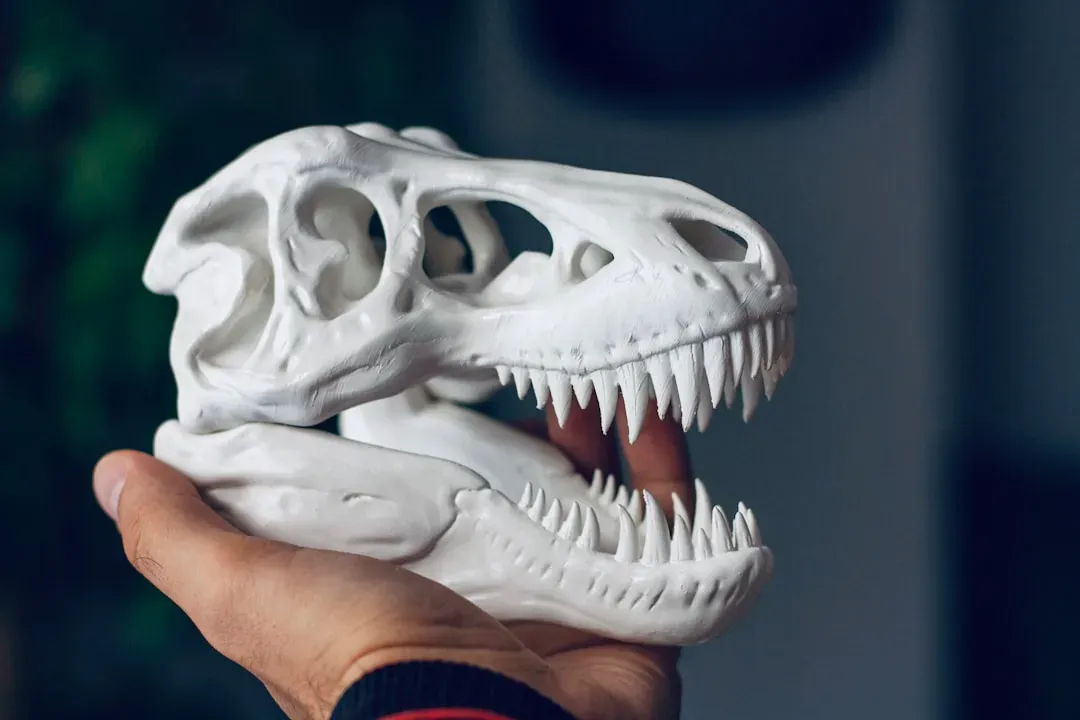
Once you have CT scans and high-resolution images, you do not have to leave them trapped inside a computer. You can feed that data into a 3D printer and suddenly hold a precise replica of a dinosaur skull, tooth, or claw in your hands. You can scale it down to fit on a desk or enlarge a tiny bone so you can see every groove and surface. This lets you try out bite experiments, test how jaws closed, or see how muscles might have attached, without risking damage to the priceless original fossil.
Digital models also let you simulate how forces moved through bones – how a tail flexed, how a neck bent, or how a limb handled stress when the animal ran or turned. With simple animations, you can watch a virtual skeleton walk, bend, and twist, correcting old, awkward postures that never quite made sense. For you, this means that the stiff, rigid poses you may remember from older museum displays are giving way to more dynamic, lifelike reconstructions built on physics, not guesswork.
Isotope Analysis: Tracing Diets, Migrations, and Ancient Climates
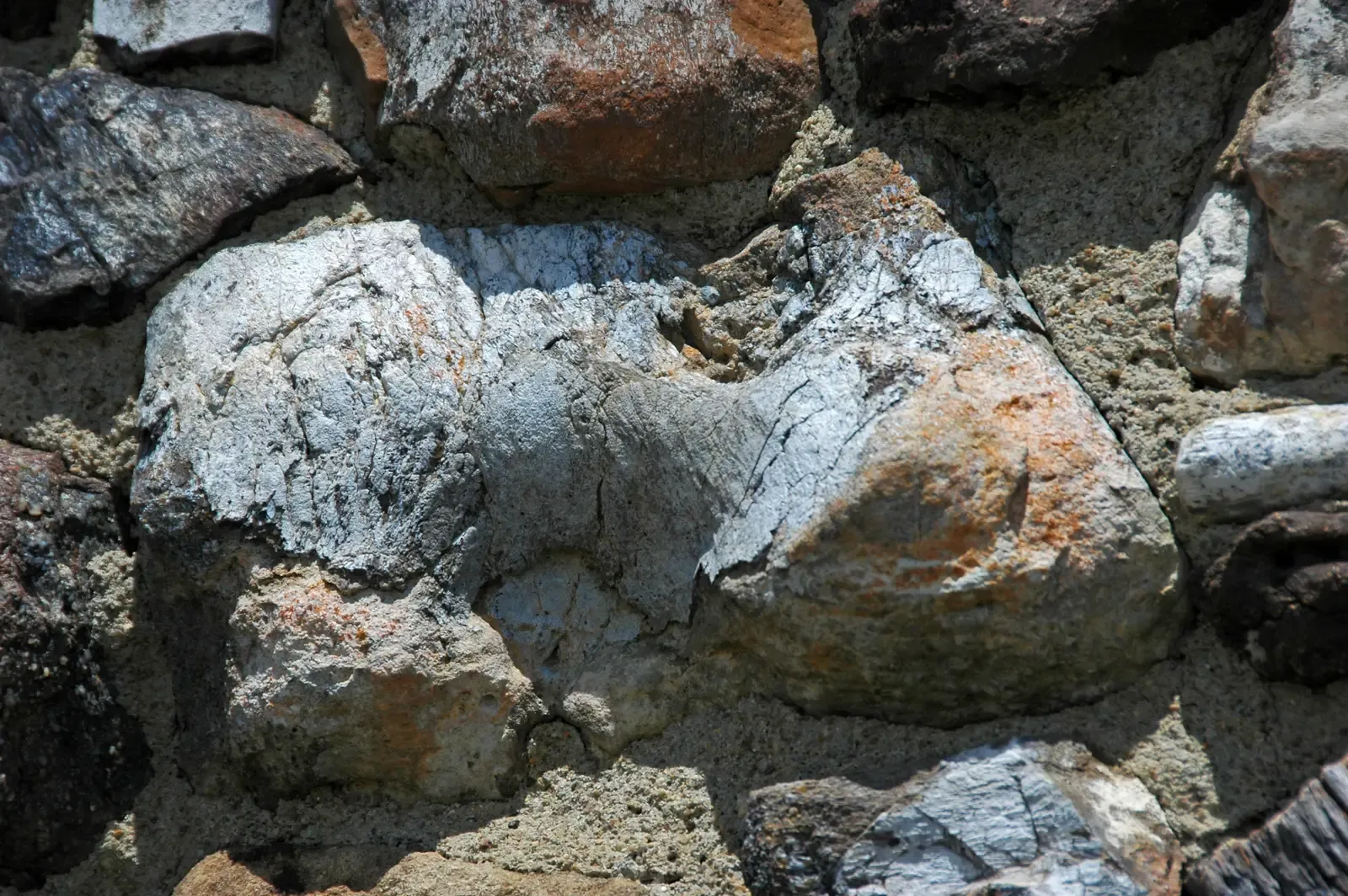
When you eat or drink, tiny variations of elements like carbon, oxygen, and strontium get locked into your bones and teeth, leaving a kind of chemical travel diary. Dinosaur bones work the same way. By measuring these isotopes, you can figure out what kinds of plants an herbivore ate, whether a predator preferred marine or land-based prey, or how much water stress the animal experienced. You are no longer just assuming a dinosaur was a plant-eater or meat-eater; you are backing that story up with chemical evidence.
Isotopes can also reveal whether a dinosaur stayed put or migrated across different landscapes, because different regions leave distinct isotopic fingerprints in water and plants. Teeth that formed at different stages of life can show you seasonal changes, droughts, or shifts in diet. For you, that turns a static skeleton into a traveler moving through rivers, floodplains, coastlines, and forests, responding to climate and resources just like modern animals do.
Paleopathology: Diagnosing Injuries and Diseases in Dinosaur Skeletons
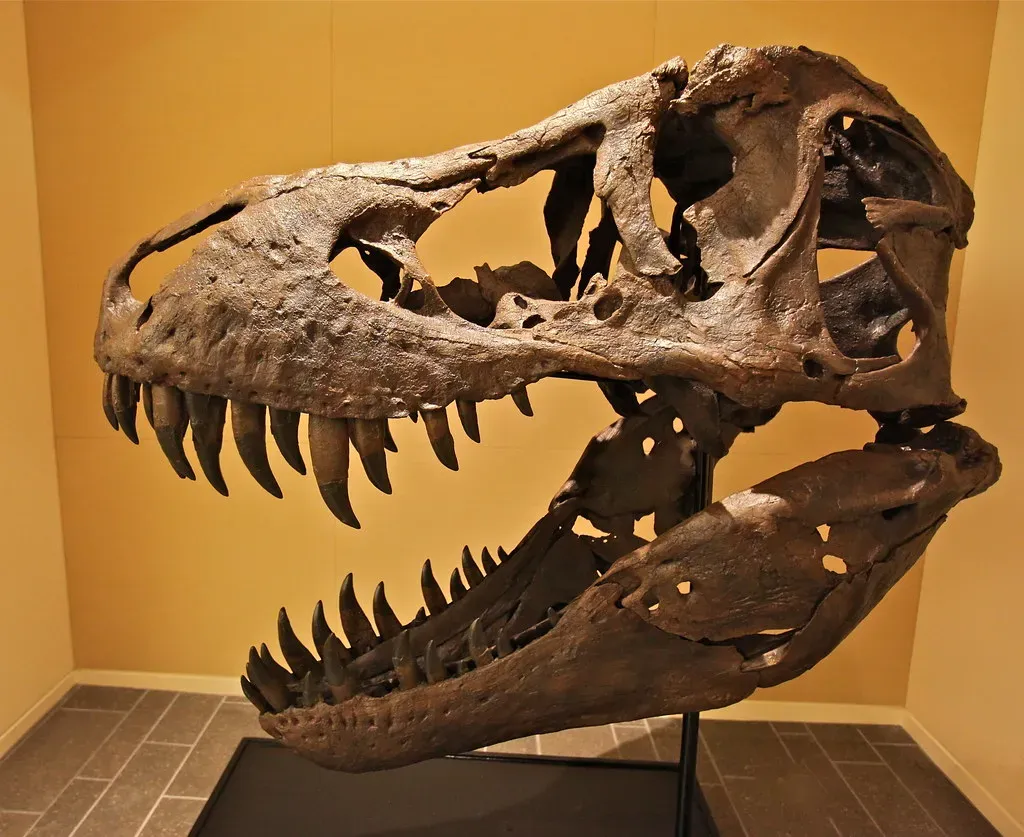
If you look closely at some dinosaur bones, you notice odd swellings, fused joints, strange holes, or twisted shapes. With modern imaging and medical-style diagnosis, you can now identify many of these as broken bones, infections, arthritis, tumors, or bite wounds. CT scans and microscopic analysis help you see whether a fracture healed or stayed fresh, which tells you if the animal survived the injury or died soon after. In some cases, you can even tell that a dinosaur lived a long time with a serious disability, suggesting that it adapted or relied on its herd.
By comparing these fossil injuries to those of modern animals, you can sometimes guess how the trauma happened – whether it looks like a hunting injury, a fall, or a fight with a rival. You might come across evidence of stress on certain joints that hints at how a dinosaur walked or ran, or infections that suggest harsh, dirty environments. Instead of seeing dinosaurs as flawless movie monsters, you start to see them as animals that limped, healed, coped with disease, and bore scars from real struggles in their prehistoric world.
From Museum Relics to Living Stories: What This Tech Revolution Means for You
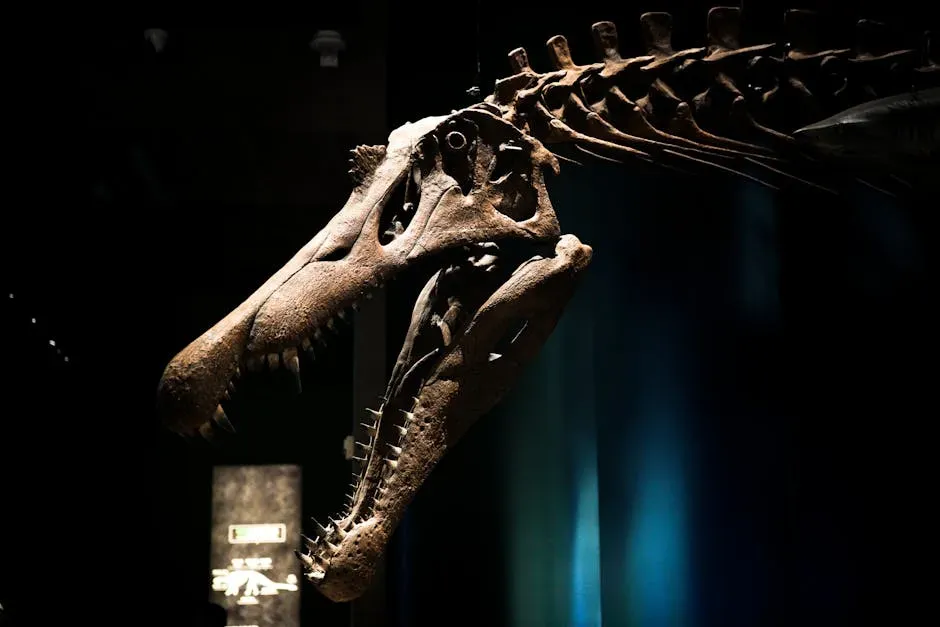
The most surprising part of this technological wave is that many of the biggest insights are coming not from new fossils, but from old ones that have been sitting in drawers for decades. When you apply CT scans, synchrotron beams, and new chemical tests to specimens you thought you already understood, you suddenly find hidden cavities, unexpected tissues, or chemical patterns that change the entire story. A skull you used to see as just a shape now becomes a record of growth, diet, injury, and even behavior.
For you, this means your picture of dinosaurs is becoming richer, stranger, and more human in a way. You are learning what hurt them, how fast they grew, what they might have looked like in life, and how they interacted with their environment. The more data you gather, the less they feel like distant monsters and the more they feel like living creatures you can almost reach across time to understand. As the tools keep improving, you are left with a simple but thrilling question lingering in your mind: how many more secrets are still hiding inside bones you thought you already knew?
In the end, new technologies are not just polishing the surface of dinosaur science; they are cracking it open from the inside. You are moving from silhouettes and skeletons to full, textured life stories written in chemicals, growth rings, and microscopic scars. Each scan, slice, and analysis transforms what you thought was settled into something vivid and new, reminding you that deep time still has plenty left to say. When you look at a fossil now, do you see just a bone – or a locked archive waiting for the next breakthrough to set it free?