You tend to picture early humans as background extras in a documentary about colossal animals: mammoths thundering past, saber-toothed cats snarling, giant birds stomping through forests. But the more you look at the evidence, the clearer it gets: your ancestors were not just spectators. They tracked these giants, carved them, ate them, feared them, and built entire cultures around them. What makes this story wild is how much of it is still being pieced together. Sometimes you get spear points embedded in ribs. Sometimes it is a burned eggshell, a polished bone, or a scatter of cut-marked fossils on an ancient riverbank. And when you line those clues up, you see something almost cinematic: humans and megafauna sharing the same stage, right up until many of those giants disappeared for good.
1. When You Faced Down Woolly Mammoths On The Mammoth Steppe
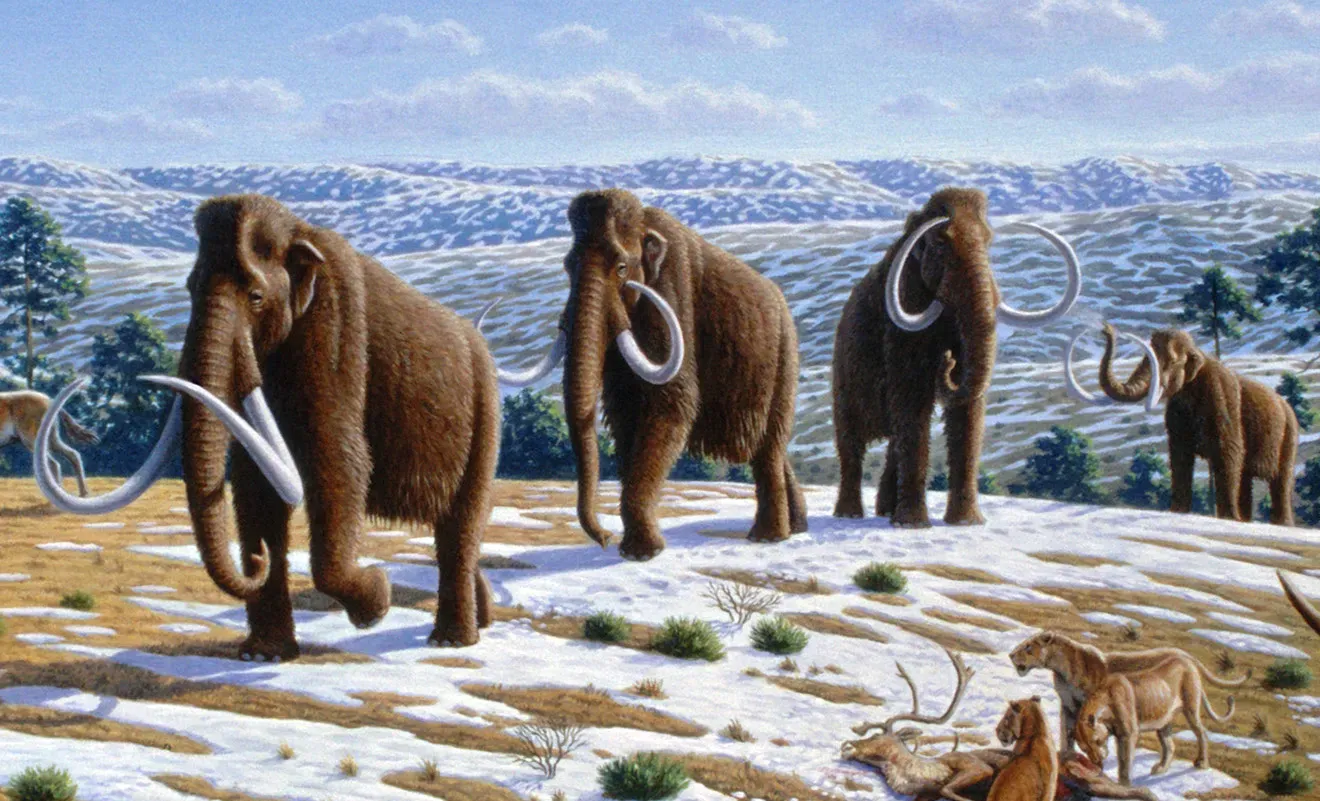
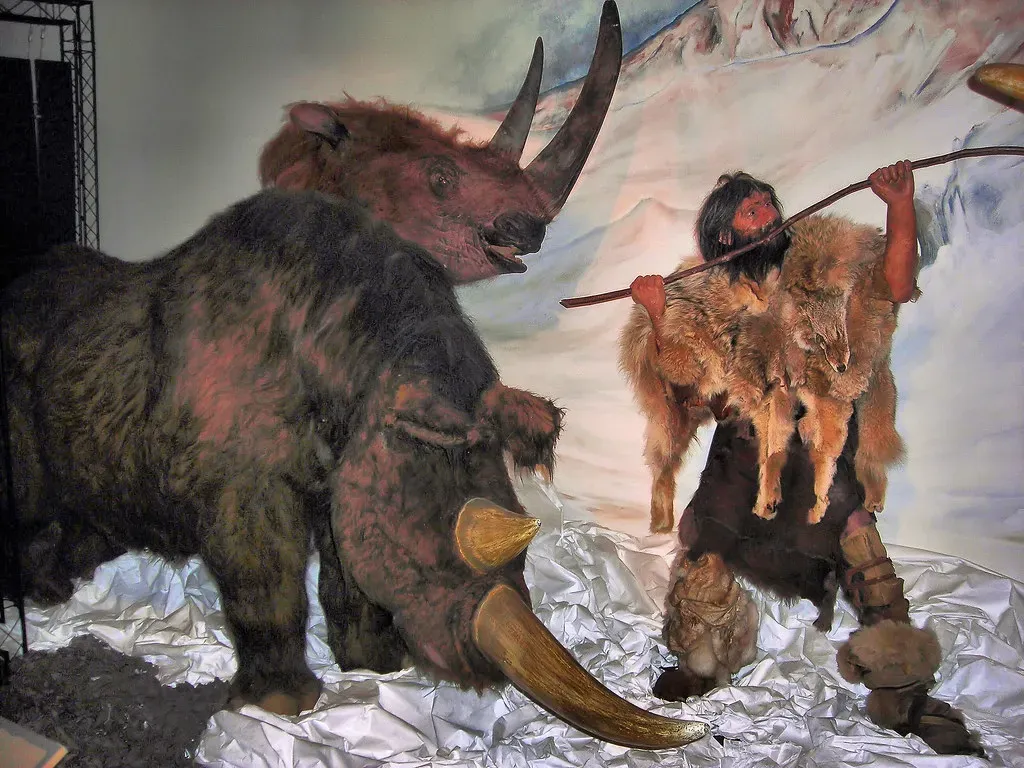
You step into Ice Age Eurasia or North America, and the first thing you would notice is not the cold, but the scale. Towering woolly mammoths, some heavier than modern elephants, move in herds across open grasslands, ripping up shrubs and grass with trunks the size of your torso. If you were a hunter back then, these animals were not just scenery; they were walking mountains of food, bone, fat, and hide that could keep your group alive for weeks. Archaeological sites with mammoth bones clustered alongside stone tools show you that humans did not just scavenge them; in many places, they hunted and butchered them in a planned, organized way.
At mammoth-kill sites in North America, like Dent or Lehner, you see the same pattern: mammoth skeletons lying with stone spear points and clear butchery marks, suggesting coordinated group hunts rather than desperate opportunism. In some Eurasian locations, piles of mammoth bones appear to have been used to build shelters, turning the carcasses into architecture as well as food. When you imagine that, you are not just seeing people chasing a big prize; you are seeing communities reshaping their entire survival strategy around a single gigantic species. For you, living then, mammoths would have been both miracle and menace: a jackpot of calories and materials, but one wrong move could turn you into the thing lying under their feet.
2. When Mastodons Became Targets For Early American Hunters
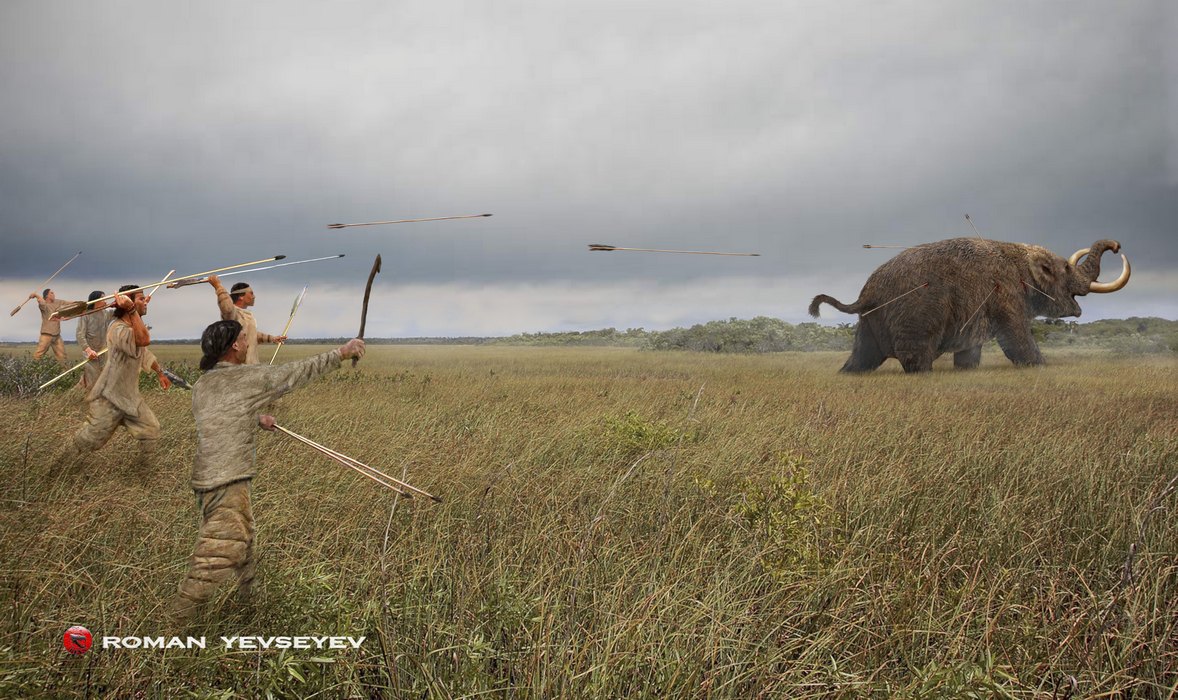
If you jump to late Ice Age North America, you meet the mammoth’s shaggier cousin in the fossil record: the mastodon. These were huge, forest-loving relatives with straighter tusks, browsing on shrubs and trees rather than grazing open grasslands. For a long time, scientists argued about how often humans really hunted them, because clear-cut kill sites are rarer than for mammoths. But some discoveries cut through that doubt, such as a mastodon rib with a human-made projectile point embedded in it, or blood and protein residues from mastodon and other megafauna on Paleo-American stone tools. Those traces tell you that at least some groups were bold enough to bring these giants down up close and personal.
When you think about stalking a mastodon, you have to picture dense, wooded environments where visibility is limited and a wounded animal can turn into a battering ram in seconds. That changes your tactics: you might have used ambushes, coordinated thrusting spears, and intimate knowledge of the terrain to avoid being crushed. The evidence suggests humans and mastodons overlapped during the crucial window when many large species disappeared, which adds another layer of complexity to the extinction debate. From your perspective as a hunter, though, the calculus was brutally simple: risk your life against several tons of muscle and ivory, or watch your family go hungry as the climate shifted and other food sources shrank.
3. When Giant Ground Sloths Became Both Prey And Raw Material
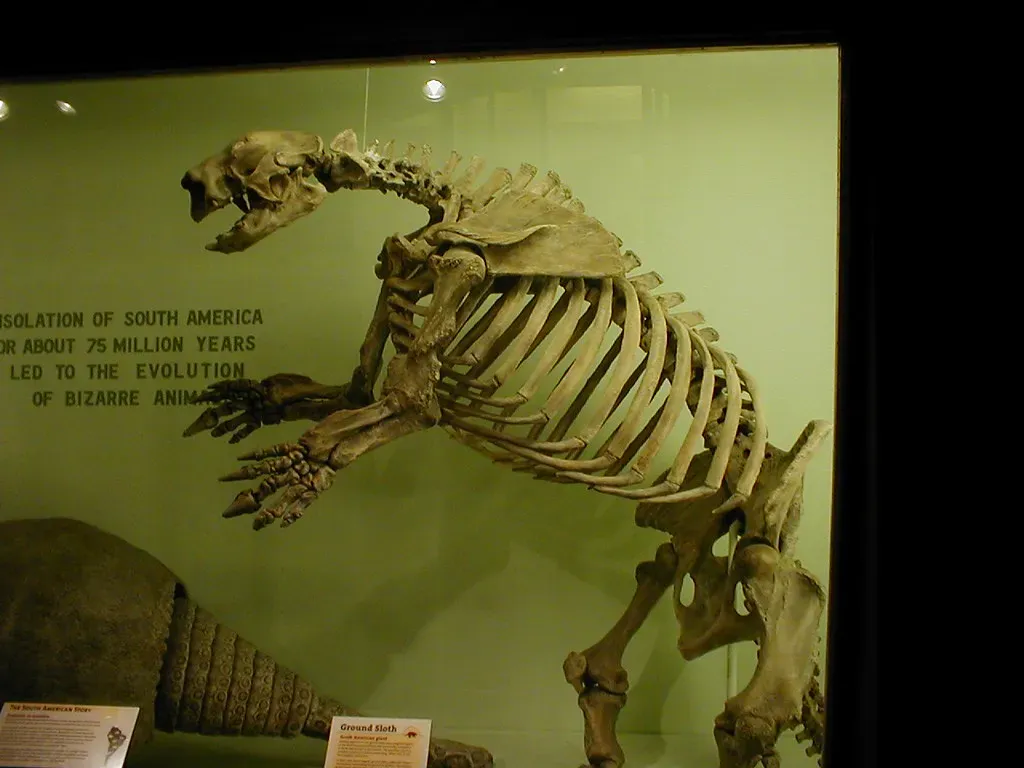
Now imagine walking through South or North American woodlands and seeing an animal the size of a small truck, rearing up on hind legs, tearing branches with massive claws. That is a giant ground sloth, and you might assume no human would be reckless enough to mess with it. Yet at several sites in the Americas, you find giant sloth bones with cut marks, burn traces, or patterns of breakage that fit butchering and cooking, not natural decay. In some places, the bones appear to have been modified or even polished, hinting that you might have used them as tools, ornaments, or symbolic objects after the hunt.
Newer research has been pushing the timeline of human–sloth overlap further back than many people learned in school, suggesting that your species and these behemoths coexisted for thousands of years rather than just briefly at the end. In at least one South American site, the arrangement of sloth remains and stone tools strongly suggests a kill and processing event, complete with organized dismemberment. When you imagine being there, you can feel the tension: a group of humans circling a dangerous, slow-moving, but incredibly powerful animal, gambling spears and courage for tons of meat and fat. The fact that you may also have carved or reworked its bones tells you this was not just about calories; it was about making sense of a world filled with creatures that dwarfed you.
4. When Glyptodonts Turned From Living Tanks Into Human Butchering Sites
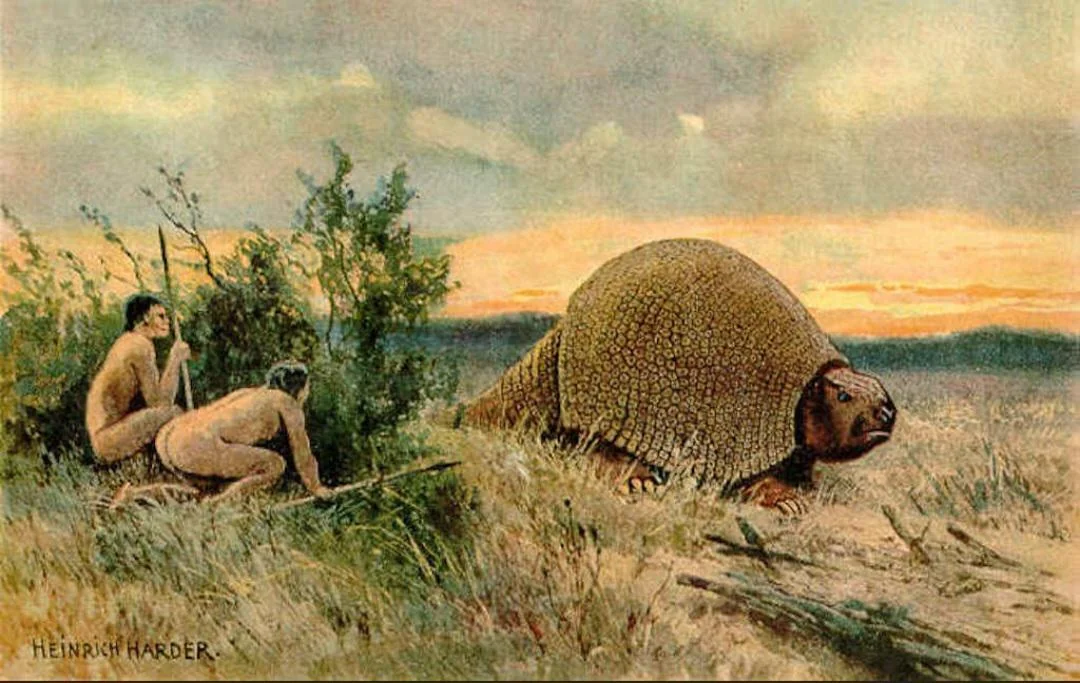
If you have ever seen an armadillo scuttle across a road, you have already met the tiny, modern echo of one of the strangest megafauna your ancestors saw: glyptodonts. These South American giants looked like walking armored domes, some as heavy as a small car, with thick shells and sometimes clubbed tails that make modern armadillos look like toys. At several Pleistocene sites, glyptodont remains lie alongside stone tools and bear cut marks and breakage patterns that match deliberate butchering and marrow extraction. In other words, people like you figured out how to crack open a walking bunker and turn it into a feast.
Picture yourself approaching a glyptodont that has just been brought down, perhaps injured by spears or trapped in difficult terrain. Its armor is so tough that you have to know where to strike to open it efficiently, much like knowing where to cut a turtle shell or a lobster. Once inside, though, the reward is enormous: high-fat meat and bones rich in marrow, ideal for Ice Age diets. Some researchers have even proposed that the shells might sometimes have been reused as shelters or windbreaks, though that idea is still debated. Whether or not that is true, the clear butchery marks show you one thing: even when nature put a tank on legs in front of you, you eventually learned where the weak spots were.
5. When You Hunted Or Scavenged Fearsome Saber-Toothed Cats
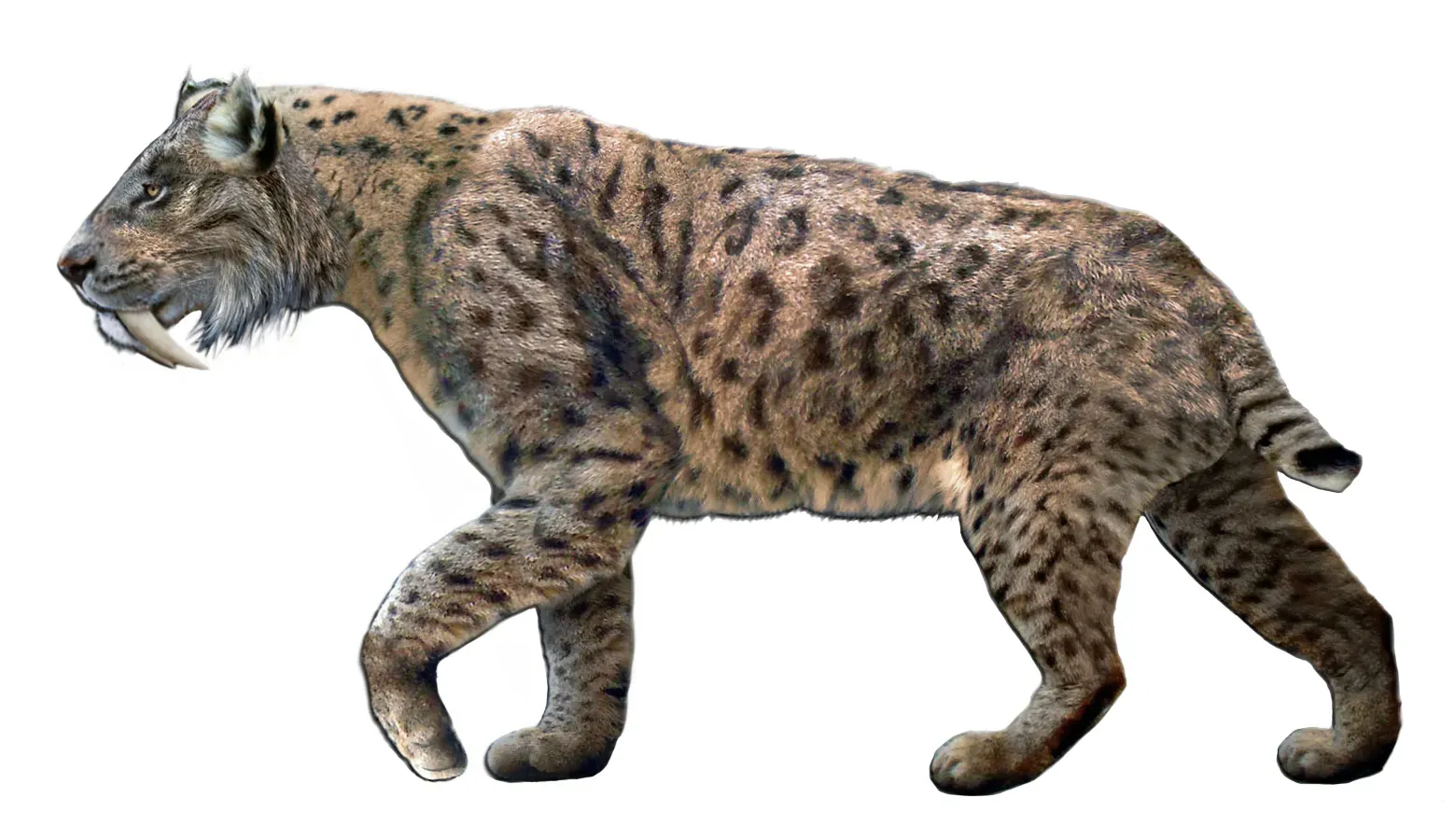
On paper, a saber-toothed cat like Smilodon feels like the last animal you would want to tangle with. It was heavier and more muscular than modern big cats, with front limbs built like grappling hooks and upper canines long enough to pierce deep into prey. Yet you and these predators shared the same landscapes in the Americas, often hunting the same large herbivores such as bison, horses, and juvenile megafauna. While direct evidence of humans hunting saber-toothed cats is sparse, there are sites where their bones occur with human artifacts, suggesting at least scavenging, and at times, potential conflict or opportunistic killing.
If you were an early hunter, you might have followed the tracks of a saber-toothed cat not to fight it, but to take advantage of its kills. That strategy is risky but tempting: let the super-predator do the hard work of bringing down a giant, then drive it away with numbers, fire, or thrown weapons and claim the carcass. In some ecosystems, your arrival likely changed the equation for these cats, adding a new, intelligent competitor at the top of the food chain. You can imagine standoffs at a half-eaten sloth or bison carcass, your small group staring down a frustrated cat whose territory you had just invaded. Those uneasy encounters did not leave many neat fossil signatures, but the overlaps in time, place, and prey tell you the relationship was real.
6. When Dire Wolves And Early Humans Chased The Same Prey
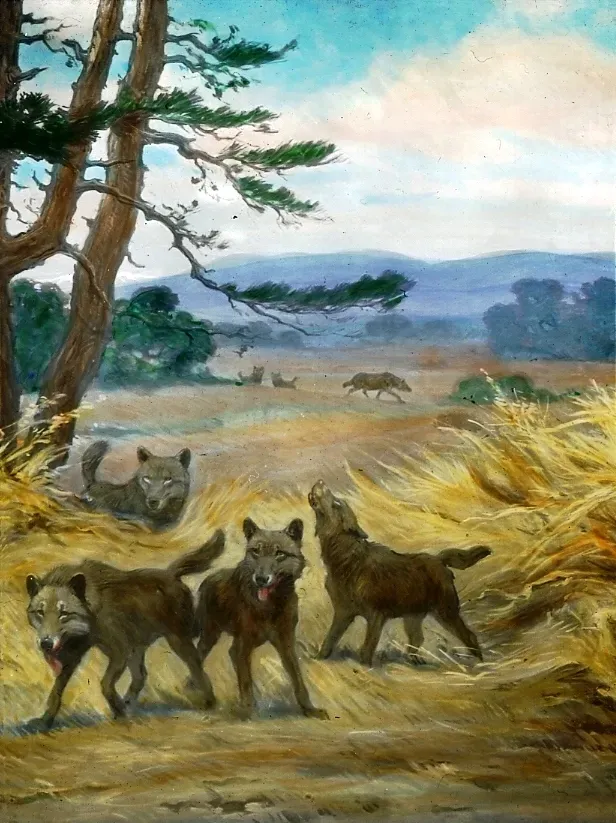
Long before fictional versions of dire wolves appeared in modern stories, their real counterparts roamed the Americas as heavyset, pack-hunting relatives of today’s gray wolves. These animals were built for tackling large prey, with stronger jaws and more robust bodies compared to modern wolves. At fossil-rich sites like the La Brea Tar Pits, dire wolf remains sit alongside bones of the very megafauna your ancestors also hunted, and in some cases, with evidence of human presence in the broader region at the same time. You and these wolves were not enemies in a simple sense, but you were rivals for the same shrinking pool of big herbivores.
From your perspective on the ground, a dire wolf pack would have been both warning sign and opportunity. Where they hunted, you could expect abundant herbivores; follow the wolves and you might find trails, carcasses, or weakened animals that could be finished off. At the same time, their efficiency as predators meant fewer easy targets left for you, especially as climates shifted and some prey populations declined. Even without direct cut marks on dire wolf bones to prove frequent human kills, your shared focus on megafauna put you in constant ecological negotiation: sometimes trailing, sometimes competing, and sometimes confronting each other over the same blood-soaked ground.
7. When You Raided The Nests Of Giant Flightless Birds
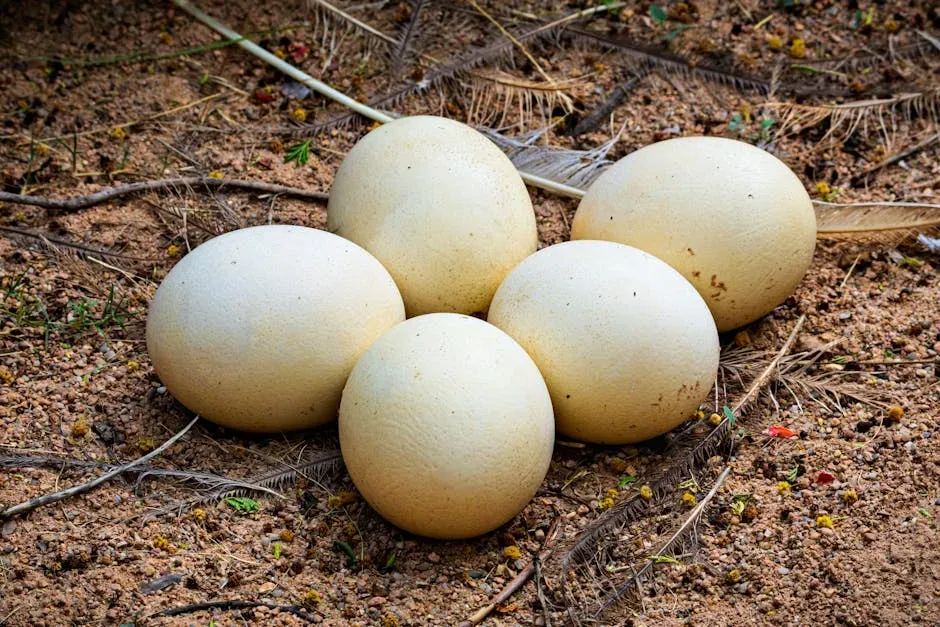
Now swap mammoths and sloths for something else enormous: giant flightless birds. In places like New Zealand and ancient Australia, your species eventually encountered birds so large that a grown person looked small beside them. Moa in New Zealand and massive dromornithid birds in Australia could reach well over human height, and their eggs were gigantic, concentrated packets of nutrition. While direct scenes of you spearing the adults are harder to prove, the evidence for human interaction with their eggs is surprisingly strong, especially in Australia where burned and fractured eggshell fragments appear to come from cooking and eating.
If you have ever cracked open a regular chicken egg for breakfast, imagine the same action scaled up to something closer to a large melon. Taking eggs from nests would have been far safer than attacking a powerful adult bird, and it fits with what you see in traditional societies that exploit bird colonies today. Over time, consistent egg harvests, combined with habitat changes and other pressures, could have hammered breeding success. In New Zealand, archaeological and paleontological evidence suggests that once humans arrived, moa populations collapsed within just a few centuries. For you as a forager, the choice made sense: why chase a dangerous adult when you could simply walk into a nesting area and carry away future generations in your hands?
8. When Aurochs And Other Giant Bovids Became Your Everyday Giants
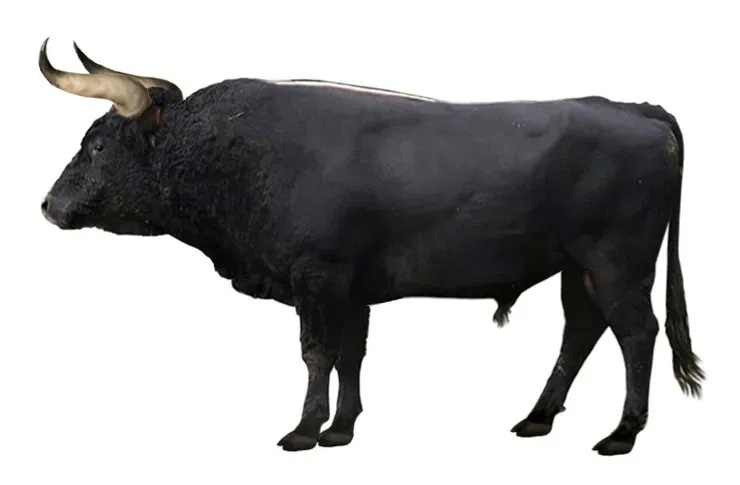
Not all your interactions with prehistoric giants involved spectacular hunts of exotic creatures. Some, like aurochs – the massive wild ancestors of domestic cattle – were part of your everyday landscape across Europe, Asia, and North Africa. Aurochs bulls could be larger and more powerful than modern cattle, with sweeping horns and temperaments that were anything but tame. Cave art, bones with butchery marks, and kill sites show that humans hunted them for meat, hides, and bone long before domestication ever crossed anyone’s mind. To you, they would have been both essential resource and serious hazard.
Over thousands of years, your relationship with these large bovids shifted from pure hunting to something more like negotiation and eventual control. The very fact that aurochs and similar wild cattle were such prime targets probably helped drive the first steps toward herding, as groups learned to manage, corral, and eventually breed less aggressive stock. Yet in the deep past, before fences and barns, bringing down an aurochs meant confronting speed, horns, and raw strength head-on. If you picture yourself as part of a small band edging closer with spears, you get a sense of just how much courage and coordination it took to turn a symbol of wild power into steaks, clothing, and, much later, a domesticated partner.
9. When Early Australians Lived Among Enormous Marsupials
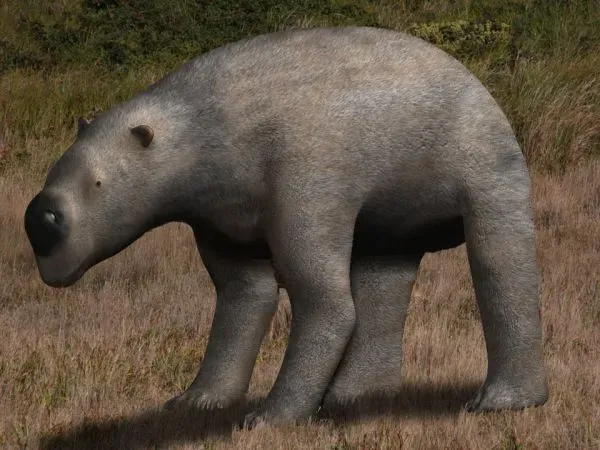
When humans first set foot in Australia tens of thousands of years ago, they walked into a world that feels almost mythical today. There were marsupials the size of hippos, like Diprotodon, giant short-faced kangaroos, enormous reptilian predators, and massive flightless birds. The fossil record clearly shows that people and this megafauna overlapped in time, but direct evidence of hunting – clear cut marks, kill sites, or embedded projectiles – is surprisingly rare. That absence has sparked a lot of debate about whether humans directly hunted most of these giants, or mainly affected them indirectly through fire, habitat change, and competition.
Still, there are hints that you did more than just walk around these creatures in awe. One of the strongest lines of evidence in Australia comes from burned and fractured eggshells of giant birds, which are hard to explain without human cooking and consumption. In some cases, the distribution and condition of megafauna bones suggest at least opportunistic butchering or scavenging. If you imagine yourself lighting fires to clear land, hunting smaller animals, and taking eggs from gigantic nests, you start to see how even limited direct hunting could combine with environmental shifts to push vulnerable species over the edge. You were not a cartoonish “megafauna exterminator,” but you were a new variable in ecosystems that had never faced a clever, tool-wielding omnivore like you.
10. When You Reached The Americas And Met A Whole Cast Of Giants
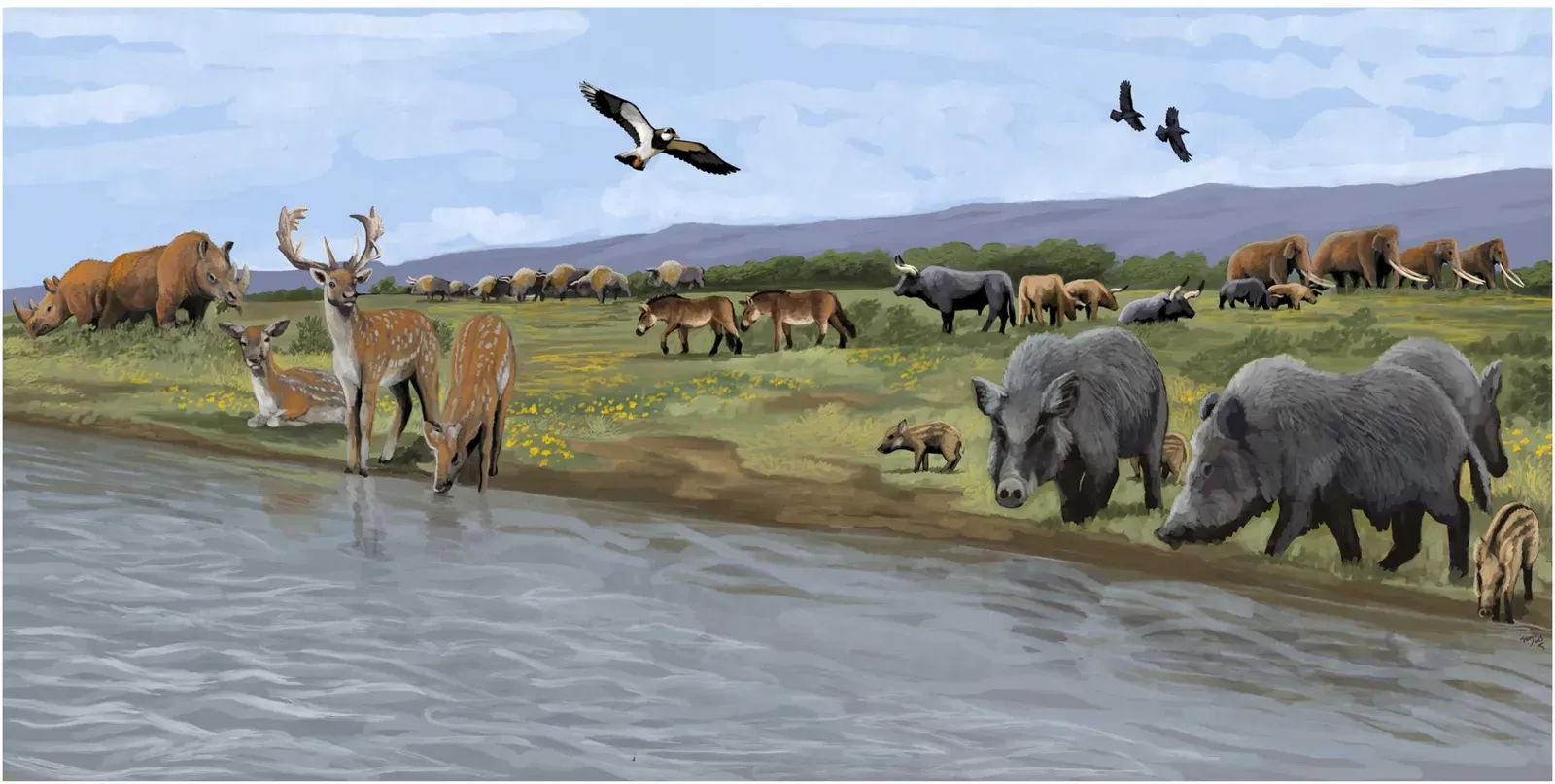
Finally, picture arriving in the Americas as one of the first humans to cross into a vast, mostly unfamiliar continent. You would have encountered not just mammoths and mastodons, but also giant beavers, camels, horses, armored glyptodonts, enormous sloths, and powerful predators like dire wolves and saber-toothed cats. Archaeological sites scattered from North to South America show overlaps in time and space between humans and many of these species, with some locations preserving direct evidence of hunting and butchering. Cut-marked bones, sophisticated spear points, and residues of megafauna blood on stone tools all point to a pattern: you quickly learned the habits and weaknesses of local giants and incorporated them into your survival strategies.
What makes the American story so striking is how closely the spread of humans tracks the disappearance of many large mammals, even though climate change was also reshaping habitats. You can picture a feedback loop from your point of view: as you moved into new areas, you targeted the biggest, slowest-breeding animals first because they offered the most meat. Combined with changing vegetation, melting ice, and shifting rainfall, this pressure likely made some populations fragile. You did not march across the landscape with a deliberate plan to erase species, but the combination of intelligence, weapons, and mobility gave you an outsized impact. When you stand in a museum today and look up at a towering skeleton of a ground sloth or mammoth, you are seeing not just a lost animal, but a former neighbor your species helped to write out of the story.
Conclusion: Sharing A World With Giants Changes How You See Yourself
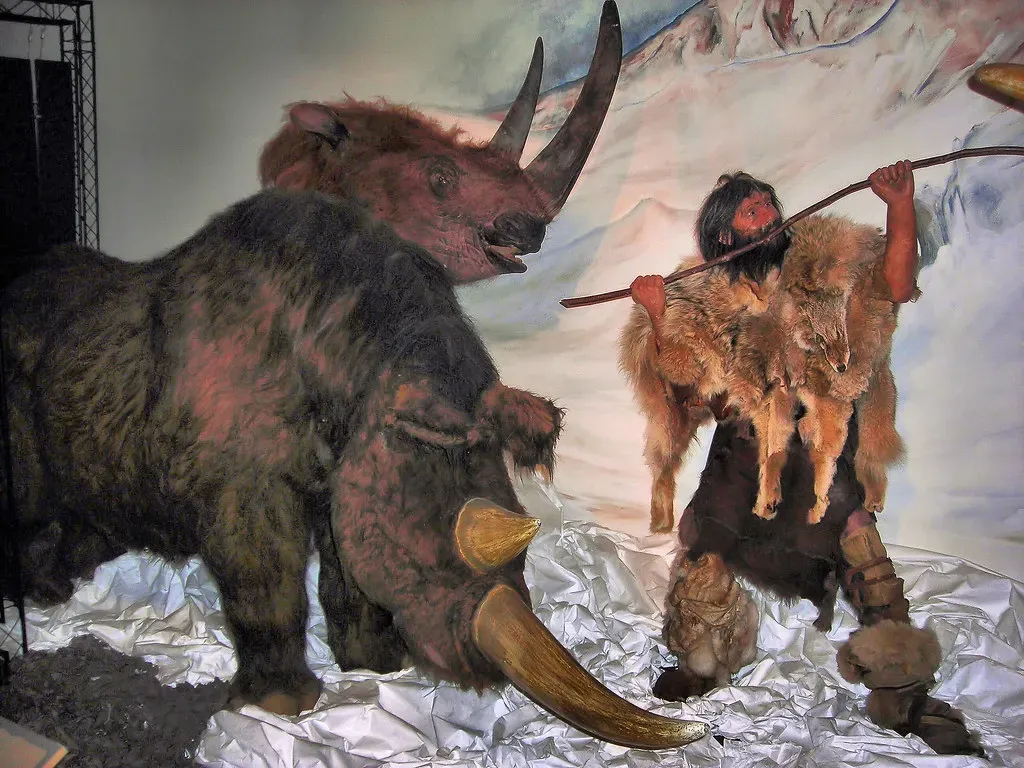
When you zoom out across all these examples, a pattern emerges that is both humbling and unsettling. Your ancestors were never passive in the face of gigantic animals; they adapted, experimented, and pushed the limits of what a small primate with a clever brain could do. Sometimes they hunted giants directly, sometimes they stole their eggs, sometimes they scavenged their kills, and sometimes they altered landscapes in ways that quietly undermined those species over generations. You do not need to imagine mythical dragons or fantasy monsters to feel a sense of awe – real humans once walked among beasts that would make most modern wildlife look modest.
At the same time, this history forces you to confront a long-standing pattern: whenever humans meet large, slow-reproducing animals in new environments, those animals often do not fare well. Today, you live in a world where almost all the really big land animals survive only in tightly managed parks and reserves, echoes of a time when giants shaped ecosystems on their own terms. Remembering how your species interacted with mammoths, giant sloths, and other megafauna is not just a cool story about the past; it is a mirror for how you treat the last remaining giants now. Knowing what you know, how would you choose to act if you suddenly found yourself back on that Ice Age plain, face-to-face with a mammoth herd on the horizon?