

You probably take your own awareness for granted. You wake up, recognize yourself in the mirror, remember what happened yesterday, plan what you’ll do tomorrow, and move through the world as if this kind of consciousness is just… normal. But it was not always like this. At some point in deep prehistory, your ancestors crossed an invisible threshold: they went from simply reacting to their surroundings to actually knowing that they existed inside those surroundings.
We do not have videos of the first humans suddenly becoming self-aware, but you can still trace that shift in the kinds of behaviors they left behind. When you look closely at burials, tools, art, and even the way early humans cared for each other, you are really peeking into the early mind. These clues do not shout; they whisper. Yet when you line them up, they tell a surprisingly rich story about when your species started to notice itself, to worry, to hope, and to imagine.
1. Caring for the Sick and Elderly

One of the clearest signs that early humans were more than just clever animals is the way they cared for group members who could no longer care for themselves. When you find skeletons with severe injuries or disabilities that healed long before death, you are looking at people who must have been fed, protected, and supported over a long period. That means others adjusted their own routines and risked their own resources for someone who contributed little or nothing in practical terms.
To do that, you have to see another individual as more than just a useful body. You have to sense that they matter in some deeper way, that their existence has value beyond immediate survival. When you care for a sick family member today, you are tapping into that same ancient capacity: looking at someone fragile and deciding they are worth the effort. This suggests an early awareness that “you” and “I” are not just moving parts in a survival machine, but beings whose lives have meaning in relation to one another.
2. Intentional Burial and Ritual Treatment of the Dead
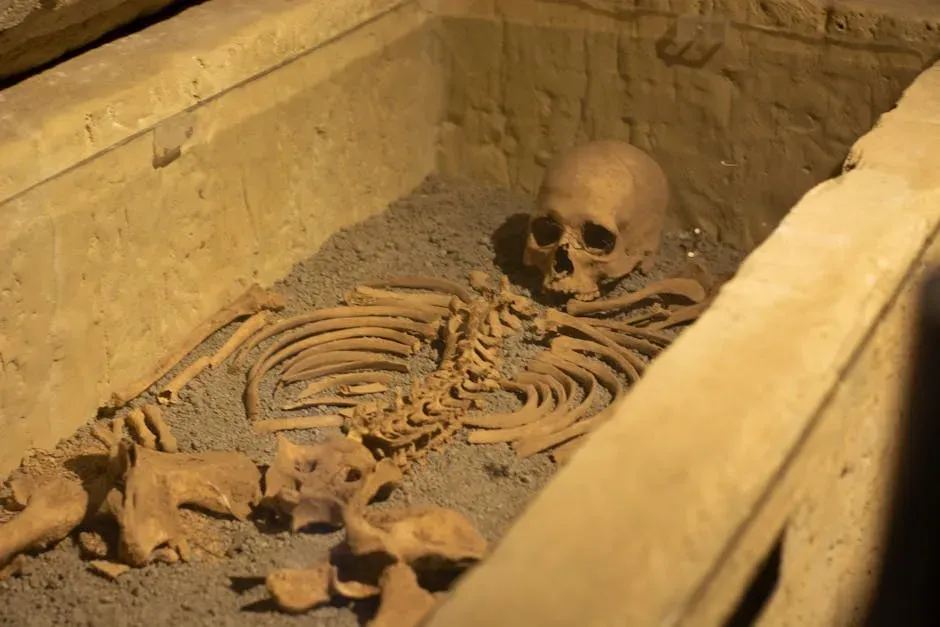
When you carve out a grave, gently arrange a body, and sometimes add objects like tools, flowers, or ornaments, you are doing far more than cleaning up a corpse. You are acknowledging that something important has ended and maybe, in your mind, continues somewhere else. Archaeologists see such burials in both early Homo sapiens and some Neanderthal sites, and this behavior almost certainly required you to think in abstract terms about life, death, and perhaps an unseen realm.
To carry out a burial, you have to picture the dead person in your mind, recall shared experiences, and imagine how others will feel. You are also acting for a future moment, when someone might return to that spot or remember that ceremony. This is early awareness stretched over time: you are not only aware of the person’s body but also of their story, your own feelings, and the group’s memory. When you visit a grave today or keep a loved one’s belongings, you are echoing this same deep, reflective behavior.
3. Making Complex Tools With a Plan in Mind
At first glance, a stone tool can look simple, but the more complex tools from early humans reveal something else: deliberate planning in your mind before anything happens in your hands. When you shape a stone core, strike flakes in a specific sequence, or combine different materials like wood, stone, and plant fibers, you are following a mental blueprint. You can easily imagine early humans rehearsing these steps in their head, anticipating mistakes, and adjusting their technique over time.
This kind of behavior shows that you are not just reacting to immediate needs. You are projecting yourself into the future and preparing for situations that have not yet happened, like hunting an animal or processing a carcass. That requires a sense of “future you” who will benefit from the work “present you” is doing. Even now, when you sharpen a knife, update a tool, or learn a new skill before you urgently need it, you are acting from that same early awareness of continuity in your own life.
4. Creating Art and Symbolic Markings
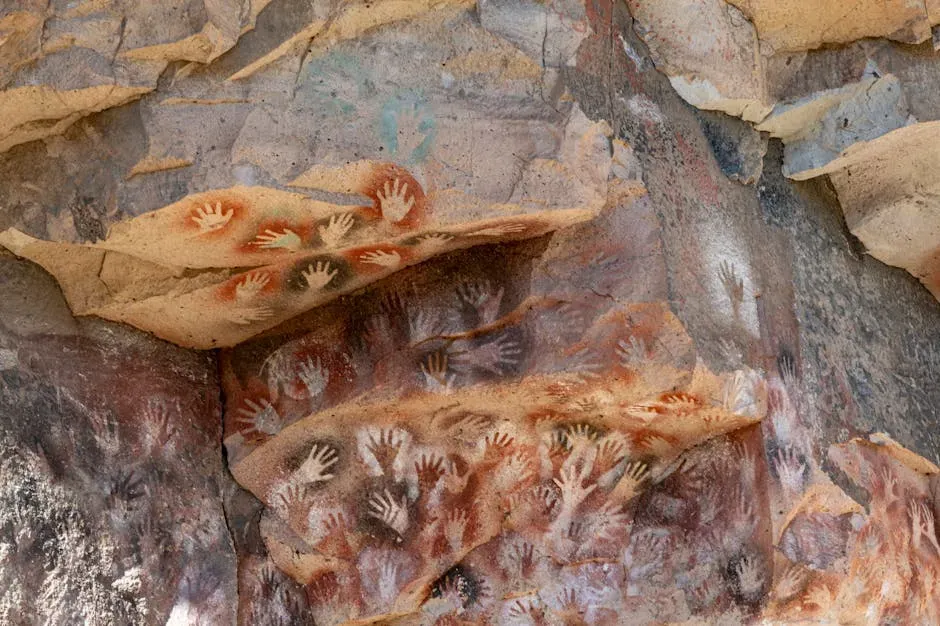
When you pick up pigment to draw a line on a cave wall or you carve a pattern into bone or stone, you are doing something that has no direct survival payoff in the moment. You are turning your inner world into an outer trace. Early humans left hand stencils, abstract shapes, animals, and mysterious signs that suggest you already had a rich mental landscape of images, memories, and meanings that you wanted to share or fix in place.
To make art, you have to notice that your thoughts and feelings exist separately from the physical world, and that you can externalize them so others can see them too. It is a kind of early announcement: “I was here, I saw this, I felt this.” When you doodle in a notebook, decorate your home, or post a photo online, you are following the same urge. You take your private experience and push it into public space, a clear sign that you know you possess an inner life worth expressing.
5. Using Personal Adornment and Identity Markers

Think about what you do when you choose clothes, jewelry, or a hairstyle that feels “like you.” You are not just keeping warm or staying neat; you are shaping how others see you and how you see yourself. Early humans did something similar with beads, shells, feathers, ochre-painted skin, and carefully shaped ornaments. These items show up repeatedly in certain regions and groups, suggesting that you used them as signals of belonging, status, or personal identity.
To care about how you appear through symbolic items, you must recognize that you exist in other people’s minds as an image and reputation. You are, in a sense, stepping outside yourself to consider: “How do they see me?” That is a sophisticated form of awareness because it blends self-knowledge with social imagination. When you put on a wedding ring, a team jersey, or a favorite necklace, you are using the same ancient mental move: you project an idea of who you are into the eyes of others.
6. Coordinated Group Hunting and Strategic Cooperation
Hunting large animals with a group is not just about strength; it is about shared mental models. To drive a herd toward an ambush, you need to understand that others in your group have intentions similar to yours and that you can together shape an animal’s future behavior. Early humans set up traps, used terrain smartly, and coordinated positions in ways that show you could imagine multiple perspectives at once, not just your own point of view.
This kind of cooperation depends on you understanding that each person carries plans, expectations, and knowledge inside their mind. You adjust your actions because you trust that others will do their part, and you also anticipate that they are thinking about your movements in return. That is early awareness operating on a social level: recognizing other minds as minds. Today, when you work on a team project, play a group sport, or even merge into traffic smoothly, you are relying on that same deeply rooted capacity to step into someone else’s mental world.
7. Long-Distance Travel and Mental Mapping

When early humans began traveling over long distances, crossing unfamiliar landscapes, and returning to specific locations seasonally, they relied on more than just a good sense of direction. You have to build internal maps, store them in memory, and mentally visualize paths that you cannot see at the moment. This means you could imagine yourself in another place while still standing in your current one, a powerful sign of flexible, self-aware cognition.
Moving intentionally across large areas also shows that you understood your environment as a connected whole: water sources, migration routes, shelter spots, and dangerous zones all fitted into a mental picture. You were not simply wandering; you were navigating, which is a more sophisticated act. Whenever you navigate a city from memory, plan a road trip, or picture your route home in your head, you experience this same ancient skill of mentally placing yourself in a space that exists beyond your immediate senses.
8. Teaching, Imitation, and Deliberate Skill Transfer

It is one thing to learn by trial and error, and another to teach someone else intentionally. Early humans did not just hope younger members would somehow pick up tool-making or foraging skills. Evidence from complex traditions suggests you slowed down, exaggerated movements, repeated steps, and allowed a learner to watch closely. That means you recognized that another person’s mind needed guidance, not just exposure, and you shaped your behavior on purpose to change what was inside their head.
Teaching shows two layers of awareness at once. You see your own knowledge as something you carry and could lose, and you see another person as an individual who can acquire that knowledge. You might even feel a sense of pride or responsibility in passing it on. When you show a child how to tie their shoes or explain a concept to a friend, you are reenacting this same early drama of mind-to-mind transfer, an unmistakable sign that you are aware of knowledge as a thing and of yourself as a bearer of it.
9. Storytelling and Shared Myths Around the Fire

You can easily picture it: a group gathered around a fire, someone gesturing, miming, drawing in the dust, while others lean in to listen. Speaking in full language leaves no trace in the ground, but the complexity of early human life strongly suggests that you traded stories, warnings, and imagined scenarios. To tell a story, you have to order events in time, assign motives to characters, and hold your audience’s emotions in your mind while you speak.
When you shape a narrative, you are doing a subtle thing with awareness. You are stitching together past experiences, present feelings, and possible futures into a single thread that others can follow. You are, in effect, inviting listeners into a shared mental space. Every time you tell a friend what happened at work, exaggerate a funny moment, or explain a family legend, you are using the same ancient ability to step outside the immediate moment and walk others through the landscape of your mind.
10. Planning for the Distant Future and Storing Resources

Stashing food, crafting containers, and building shelters that last beyond one season all point to a mind that can think far ahead. Early humans sometimes stored resources, returned to the same camps, and built structures meant to be reused rather than abandoned. To do this, you need to picture your future self, or your group’s future needs, and act now to meet them. You are no longer just reacting to hunger or cold; you are anticipating them long before they strike.
This long-range planning suggests an expanded sense of self through time. You understand that the “you” of next month or next year will still be you and that this future self is worth investing in. Whenever you save money, stock your pantry, or learn a skill that will only pay off years from now, you are operating with that same deep-time awareness. You stand at one point in your life and reach forward with your mind, making choices today that shape a version of you who does not yet exist.
Conclusion: Seeing Yourself in the Shadows of the Past

When you piece these behaviors together – care for the vulnerable, burial rites, art, adornment, cooperation, travel, teaching, storytelling, and long-term planning – you start to recognize something familiar staring back at you from prehistory. These are not random quirks of a clever animal; they are early expressions of the same awareness that lets you worry about tomorrow, mourn yesterday, and wonder who you really are. Your ancestors were not just surviving; they were reflecting, imagining, and shaping meaning in ways that still echo in your own daily life.
If you pay attention, you can feel that continuity every time you make a plan, tell a story, or help someone who cannot repay you. Those simple acts are living fossils of early human consciousness, still active in your brain and your relationships. The more you notice them, the less distant those early humans feel. You are not just studying them from the outside; you are recognizing yourself in them from the inside. When you look at your own behavior today, which of these ancient signs of awareness do you see most clearly in the way you live?