If you picture Triceratops as just a lumbering tank with three horns, you’re seriously underselling one of the most fascinating dinosaurs that ever walked the Earth. When you look a little closer, you find a complex animal with a rich story of survival, behavior, and evolution written into its bones and even its skin. It is not just a horned dinosaur; it is a window into a vanished world at the very end of the Age of Dinosaurs.
As you explore what made Triceratops special, you start to see how its massive skull, blade-like beak, and elaborate neck frill tell you about its diet, its social life, and even how it might have faced down predators like Tyrannosaurus. You also discover that scientists are still debating some of the big questions, from how it used its horns to how it grew up. By the time you finish this journey, Triceratops will feel far less like a museum statue and much more like a living, breathing animal you can almost imagine walking past you in a rustling Late Cretaceous forest.
The World Triceratops Lived In
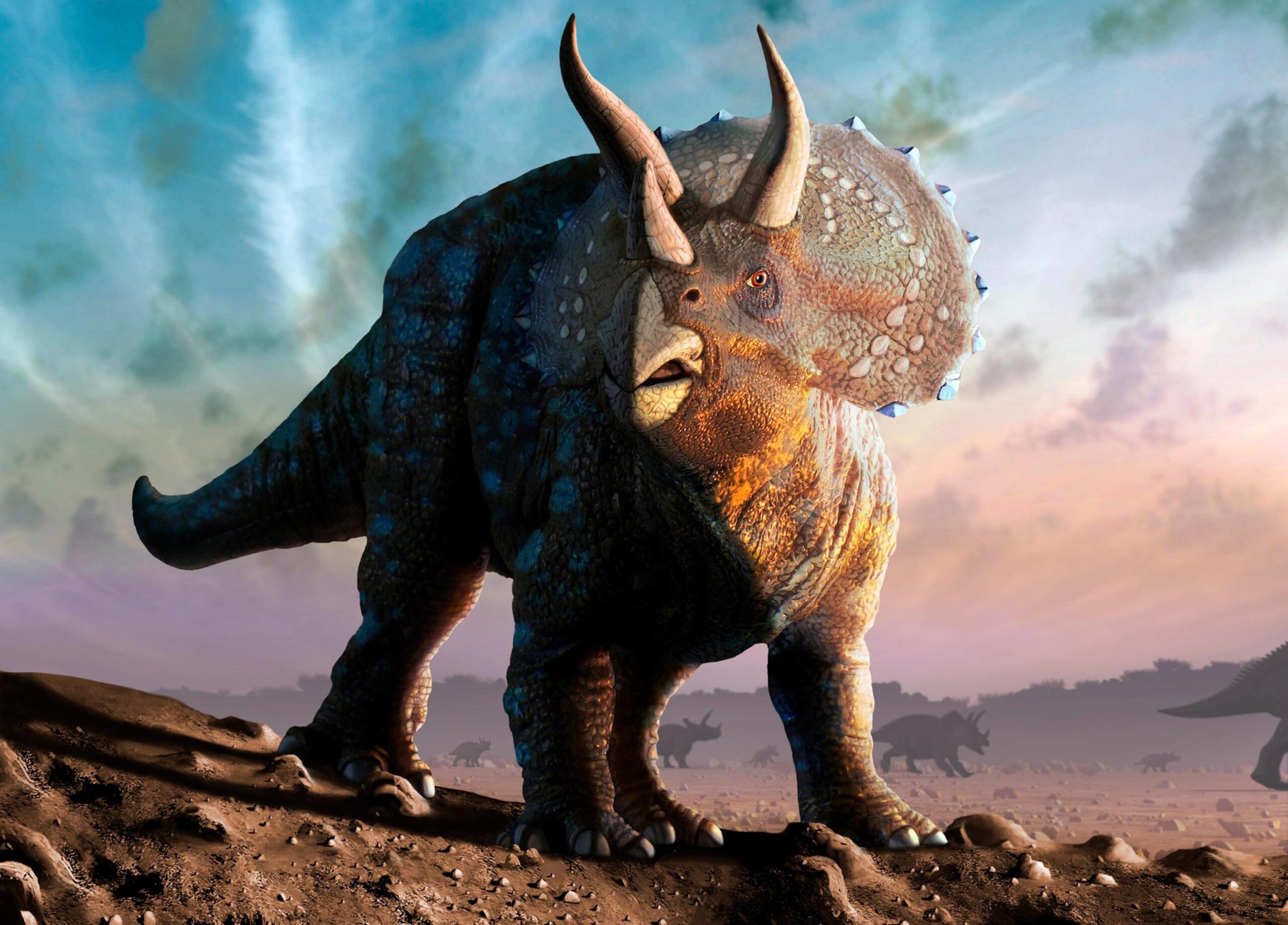
When you think of Triceratops, you should place it not in some vague “dinosaur age” but in a very specific time and place: the Late Cretaceous of western North America, right near the end of the dinosaur era. You are looking at a creature that lived roughly in the last couple of million years before the mass extinction that wiped out non-bird dinosaurs. Its fossils are especially common in rocks from what is now Montana, the Dakotas, Wyoming, and parts of western Canada, a region that once formed a lush coastal plain bordering a shallow inland sea.
If you could walk through that ancient landscape, you would find humid floodplains, river channels, and low-lying forests, more like a swampy Gulf Coast than today’s open prairies. You would be surrounded by other dinosaurs too: duck-billed hadrosaurs milling in herds, armored ankylosaurs trundling along, and towering tyrannosaur predators on the prowl. In that world, Triceratops was one of the largest and most common herbivores, playing a role in its ecosystem similar to modern elephants or rhinos, constantly reshaping vegetation and influencing everything from plant communities to predator behavior.
How Big Triceratops Really Was
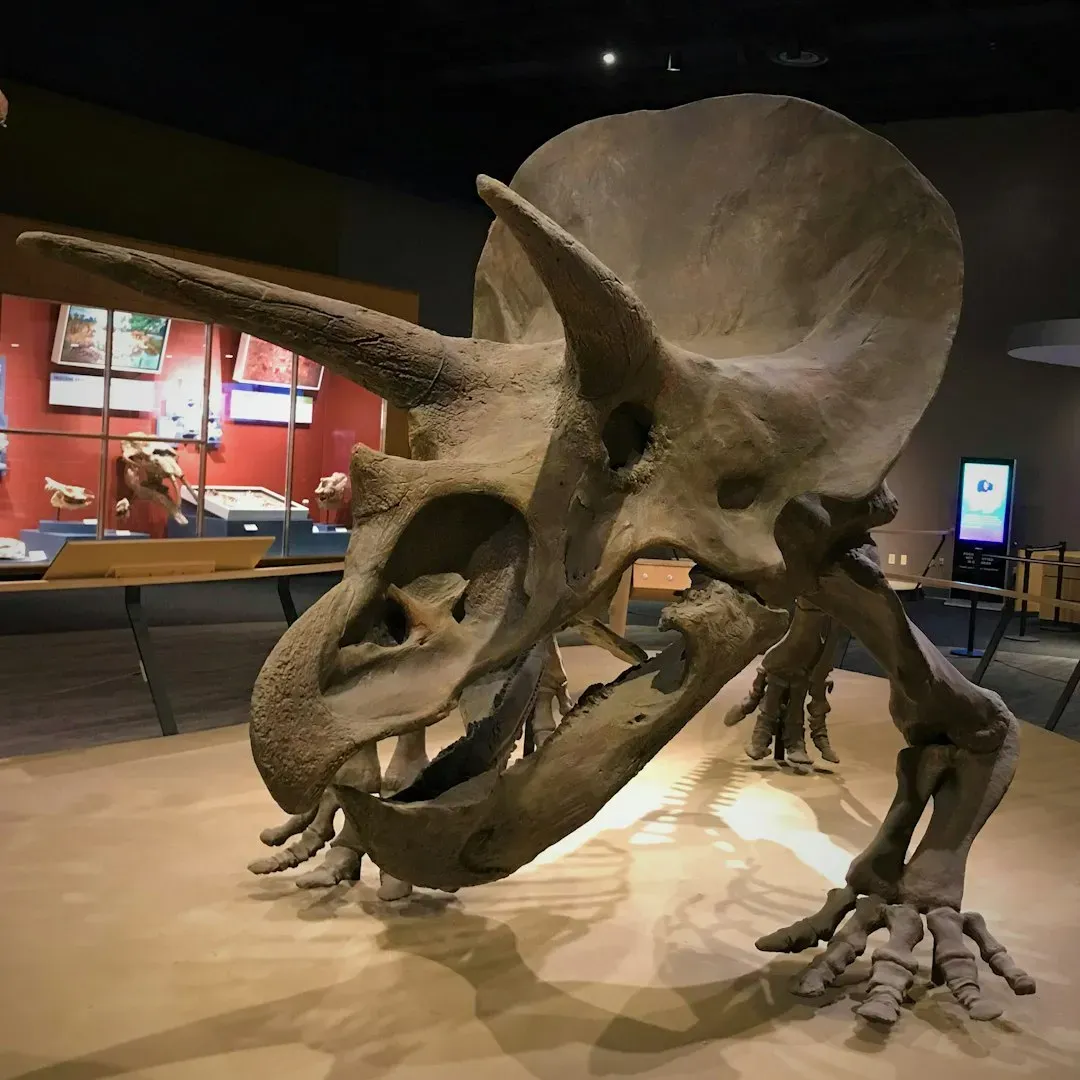
When you see a Triceratops skeleton in a museum, it is easy to underestimate its true size because you are not feeling the weight of living muscle and skin. In reality, you are dealing with an animal roughly the length of a bus, with larger individuals stretching around eight to nine meters from nose to tail. You would be staring up at a shoulder height of about three meters, which is more than enough to make you feel small. In life, you are probably looking at several tons of mass, comparable to a big modern elephant.
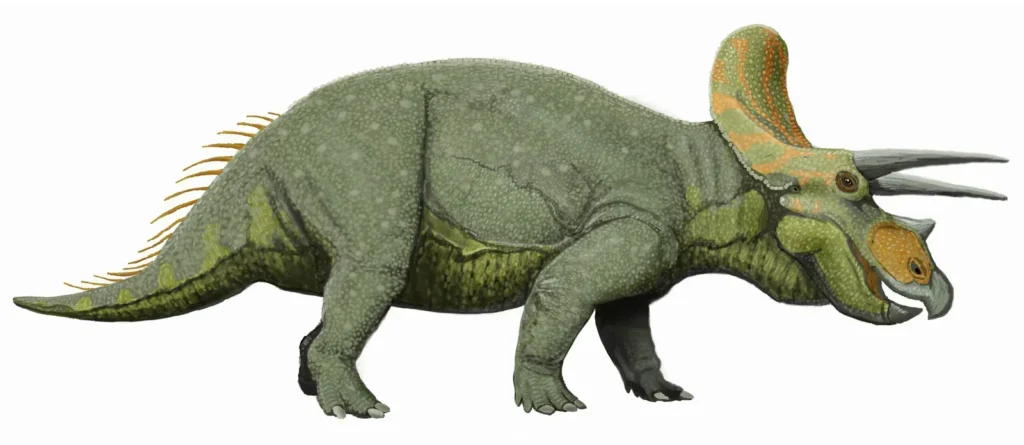
What might surprise you is how much of that bulk sits in the head alone. The skull of Triceratops is one of the largest of any land animal ever discovered, taking up nearly a third of the body length in some individuals. If you were standing next to it, the skull would feel like a stone shield, with its long brow horns sweeping forward and the bony frill flaring back over the neck. This massive head was not just for show; it housed powerful jaw muscles, anchored the horns, and provided vital protection, all while contributing to the dinosaur’s unmistakable silhouette.
The Famous Horns and Frill: Weapons, Shields, or Billboards?
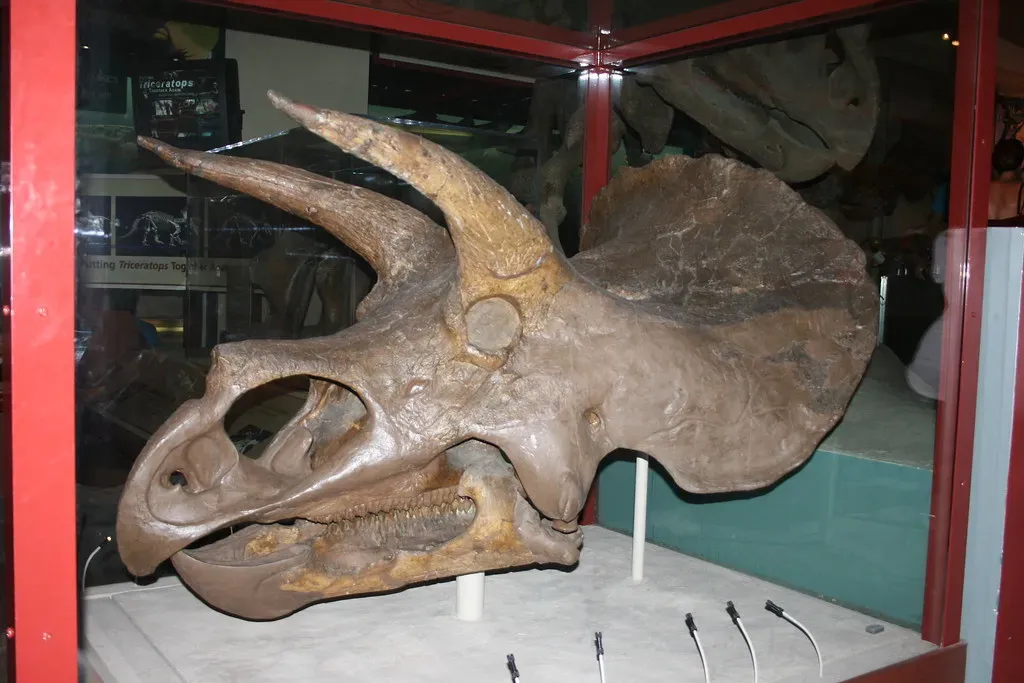
When you look at a Triceratops skull, your eyes go straight to the three horns and the large frill, and you naturally ask what they were really for. You can easily imagine those brow horns driving into the side of a predator or crashing against the horns of another Triceratops. The structure of the skull shows strong reinforcement around the horn bases, which supports the idea that you are not just looking at delicate ornaments. At the same time, the frill forms a broad bony plate over the neck and upper back, giving obvious protection to one of the most vulnerable parts of the body.
But if you study living animals with horns and crests today, like antelopes, goats, or even some lizards, you quickly see another pattern: these structures are often just as important for display as they are for combat. When you picture herds of Triceratops facing one another, it is easy to imagine them reading subtle cues in horn length, frill shape, and perhaps even skin patterns over the frill. The frill may have helped you recognize your own species, signal your maturity, and attract mates, working a bit like a built-in billboard that told the rest of the herd who you were and how strong you might be.
What and How Triceratops Ate
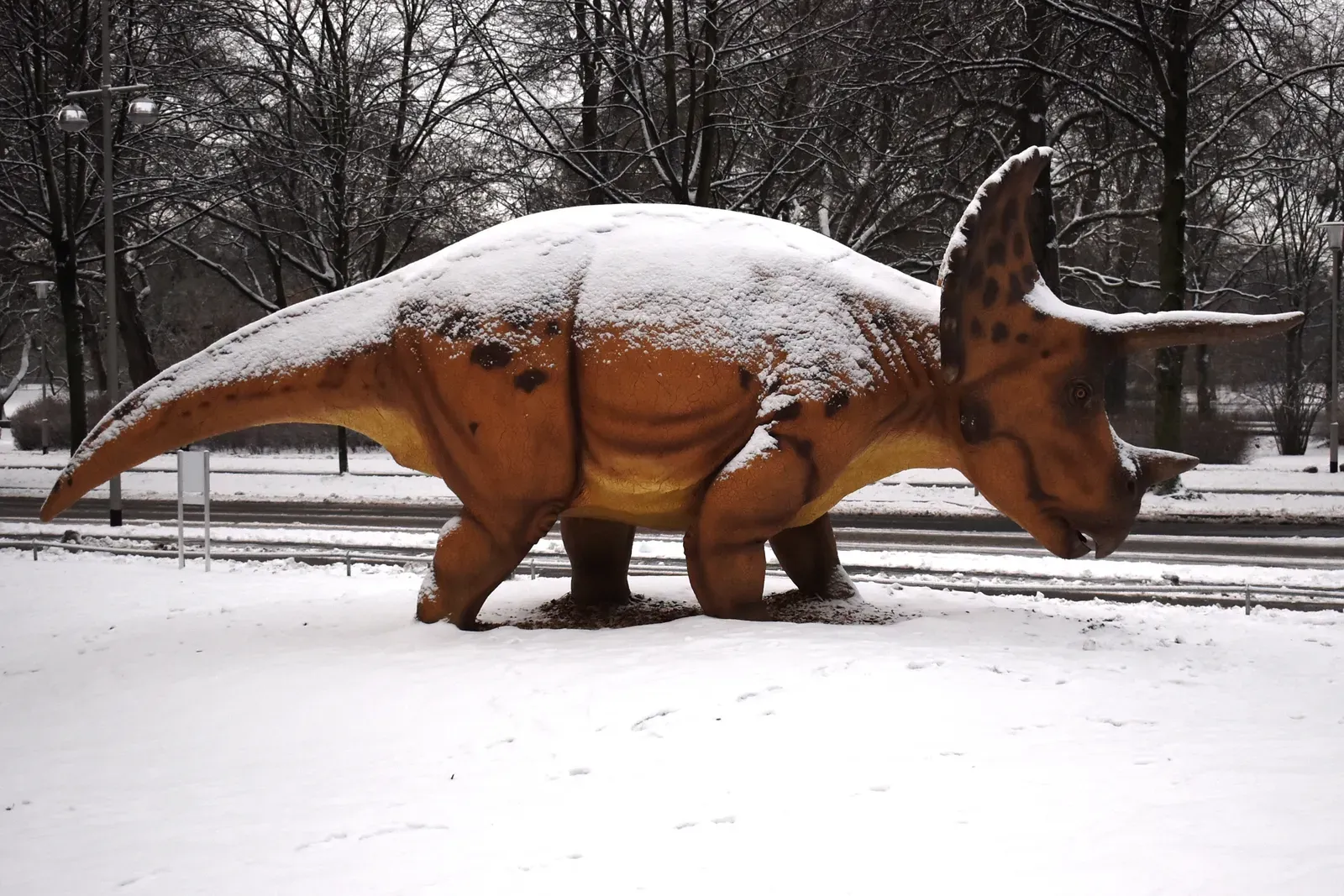
If you want to understand Triceratops as more than a movie monster, you have to look closely at its mouth. At the front you see a sharp, parrot-like beak, perfect for nipping and grabbing tough plant material. Behind that, you find rows of closely packed teeth arranged into dental batteries, forming grinding surfaces that could slice and mash vegetation with impressive force. When you picture this in motion, you see an animal well-equipped to handle fibrous plants that would shred the teeth of many other herbivores.
Based on the structure of the jaws and teeth, you can confidently place Triceratops as a low to mid-level browser, focusing on plants close to the ground or at shrub height. Imagine it working through dense patches of ferns, cycads, palms, and early flowering plants, stripping leaves and stems the way a goat might attack a hedge. Because it was so numerous and so large, its feeding habits would have shaped entire plant communities, opening gaps in vegetation, spreading seeds, and creating paths and clearings that other animals used. In many ways, you can think of Triceratops as one of the original landscape engineers of its time.
Living in Herds, Defending Against Tyrannosaurus
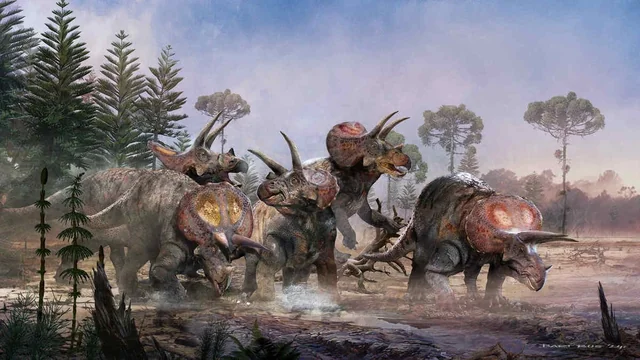
When you picture a lone Triceratops facing down a charging Tyrannosaurus, it makes for a dramatic scene, but you miss an important point: large herbivores often gain their greatest strength from numbers. Evidence from bonebeds and trackways for close relatives suggests that horned dinosaurs frequently moved in groups, especially younger animals. If you imagine yourself in that world, you would likely see herds of Triceratops moving across floodplains together, with younger individuals sheltered within the group and older, larger adults on the edges.
In that setting, the horns and frill of Triceratops become part of a much bigger survival strategy. If a tyrannosaur tested the herd, it would face not one set of horns, but several, all backed by massive bodies ready to wheel around and stand their ground. Even if predators focused on the weak or injured, they still had to navigate a forest of horns and heavy skulls. You can think of a Triceratops herd the way you might think of a group of modern buffalo or musk oxen: as soon as danger appears, bodies close ranks, heads drop, and a living wall of horn and bone turns the tables on the hunter.
Growing Up Triceratops: From Small Frills to Giant Skulls
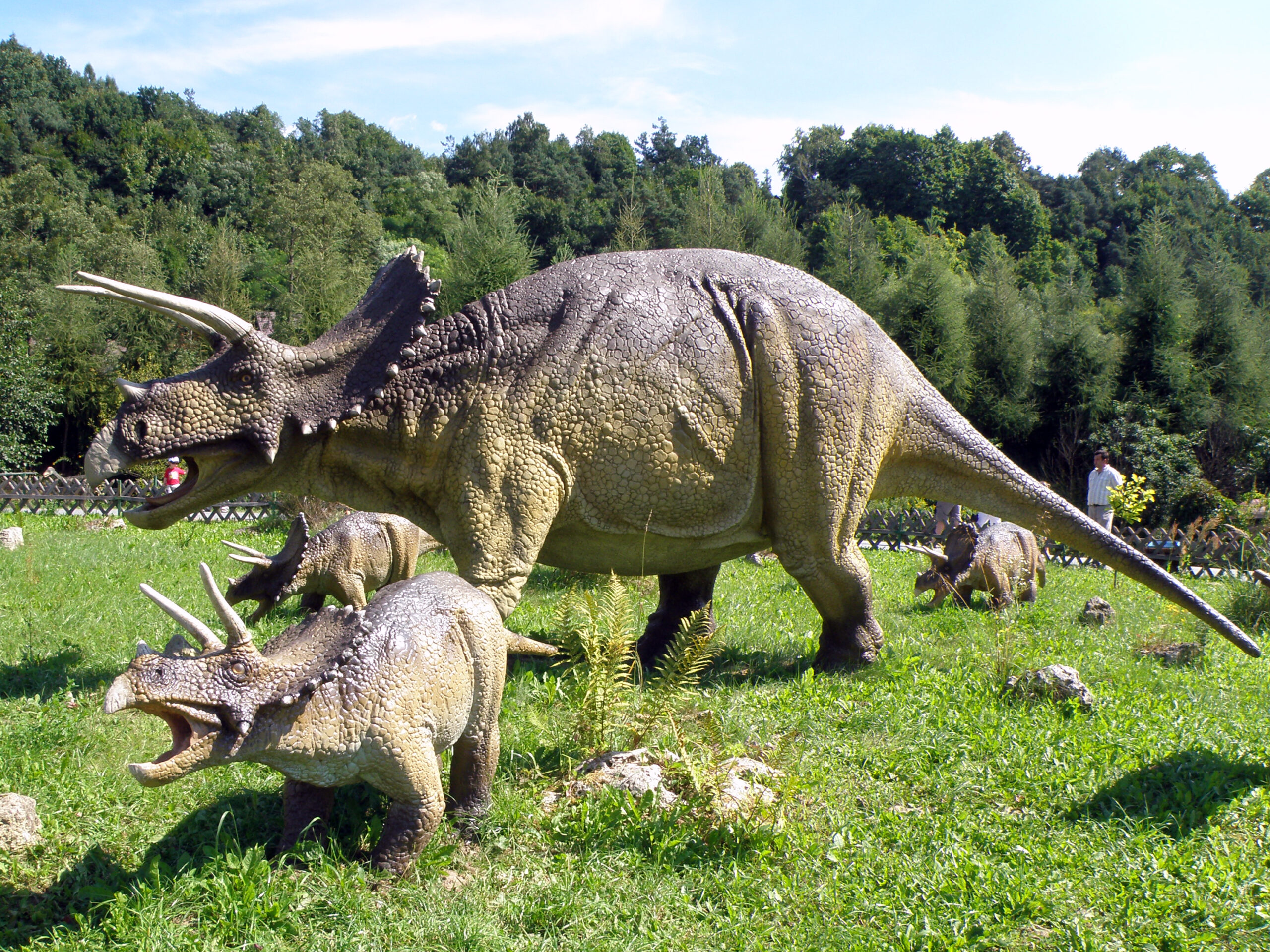
If you could follow a Triceratops from hatchling to giant adult, you would see a dramatic transformation, especially in the head. Young individuals show proportionally smaller frills and shorter horns, with shapes that change as they mature. Bone studies reveal growth rings and changes in texture that help you tell juveniles from adults, a bit like how you might read the growth of a tree from its rings. As the animal grows, the frill expands, the brow horns lengthen and curve, and the nose horn takes on a more prominent shape.
This growth pattern tells you something important about how these dinosaurs lived. When you see structures like horns and frills becoming much more pronounced only as the animals reach full size, it strongly hints that you are looking at features tied to adulthood, social rank, or reproduction. That is similar to the way deer antlers or the mane of a male lion become impressive only once the animal reaches maturity. In a herd of Triceratops, you would likely be able to tell at a glance which individuals were youngsters just coming into their own and which were seasoned adults who had survived many seasons of droughts, floods, and predator encounters.
Fossils, Skin Impressions, and What They Reveal
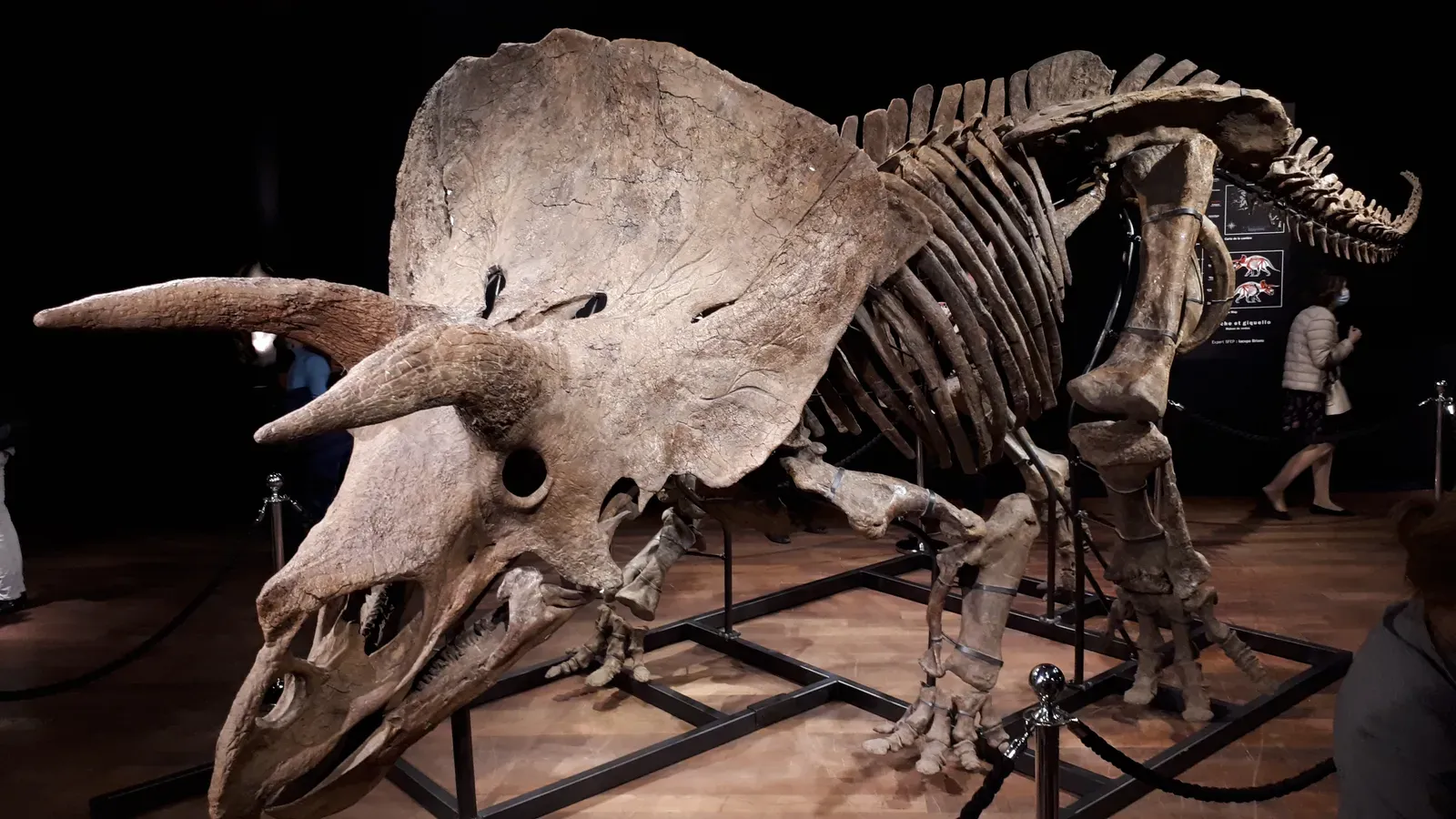
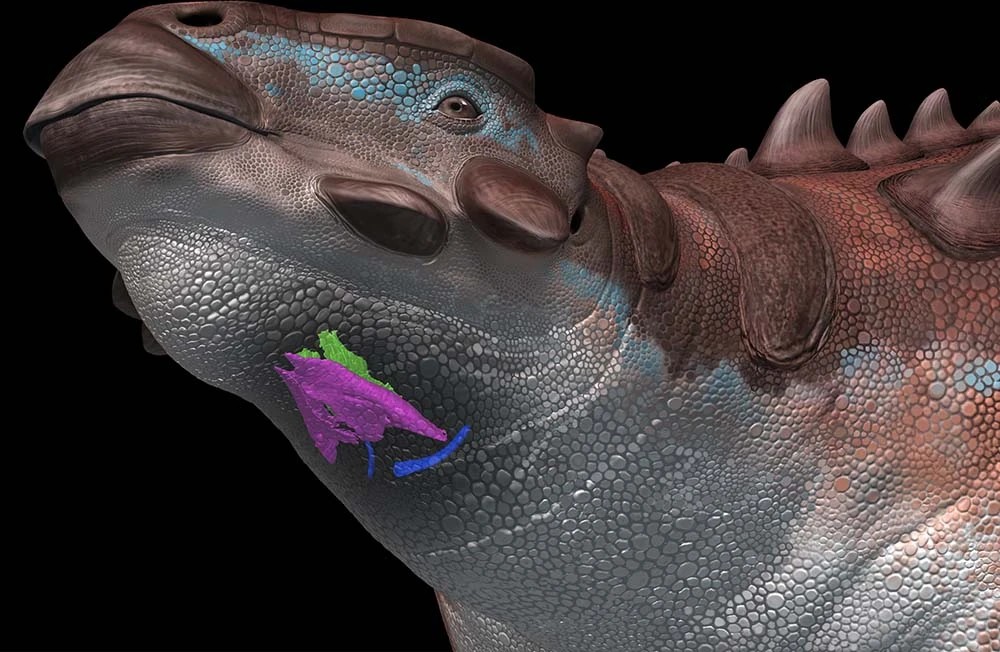
When you study Triceratops, you are not limited to isolated bones; you also gain insight from nearly complete skeletons and even rare traces of skin. Those skin impressions suggest that you would not have seen a smooth, featureless hide, but rather a surface covered in scales of different sizes, some forming larger, raised structures. While you cannot say with certainty exactly how it looked in color, you can imagine a textured, rugged surface that would have caught light and shadow in complex ways, especially across the frill and shoulders.
Triceratops fossils also show healed injuries, bite marks, and wear on the bones that tell you about life-and-death struggles and everyday stresses. Some skulls show damage that may have been caused by horn clashes with other Triceratops, while others show signs of predatory attacks that the animal survived long enough to heal. When you read these clues, you realize you are not just looking at static skeletons but at individuals with histories: animals that fought, healed, aged, and finally died in a changing landscape. Every new specimen you uncover adds another piece to the puzzle, refining how you picture this dinosaur in your mind.
The Legacy of Triceratops in Science and Culture
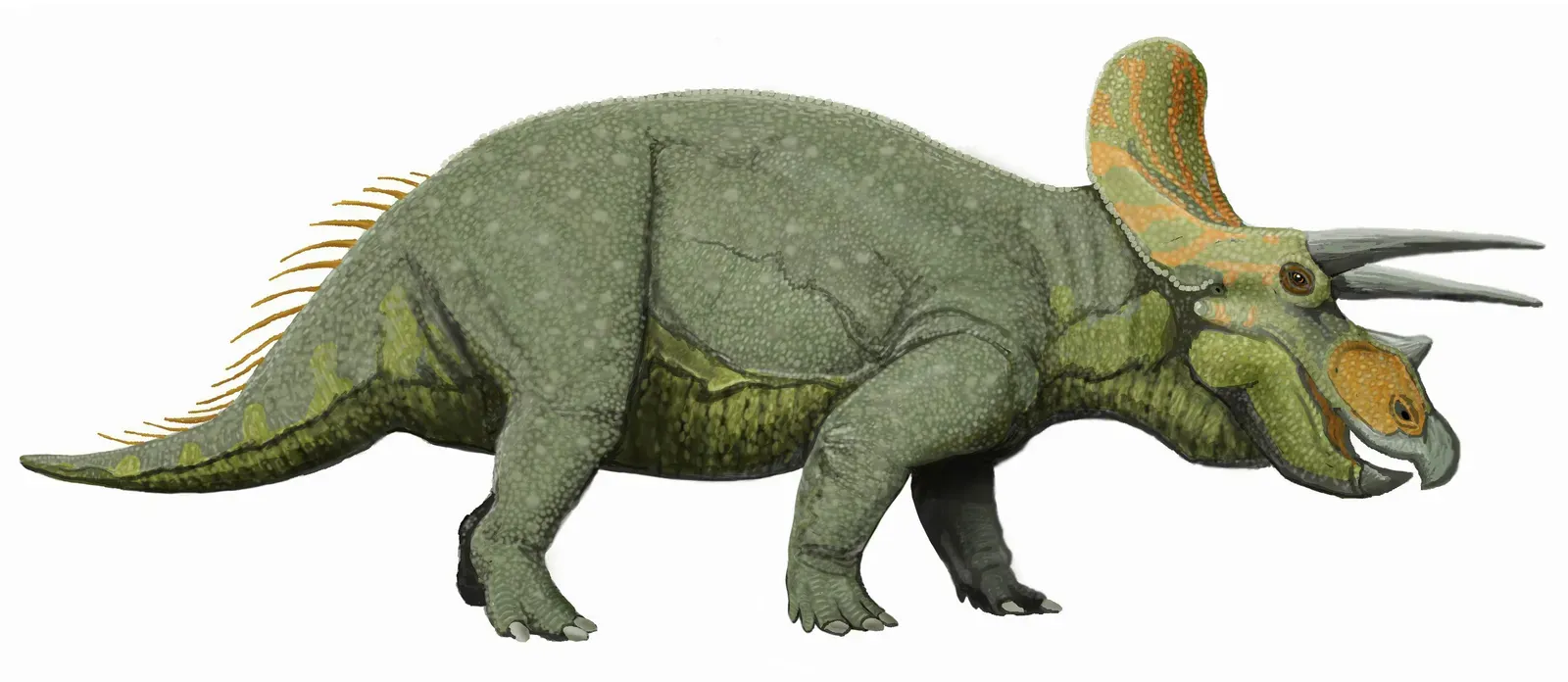
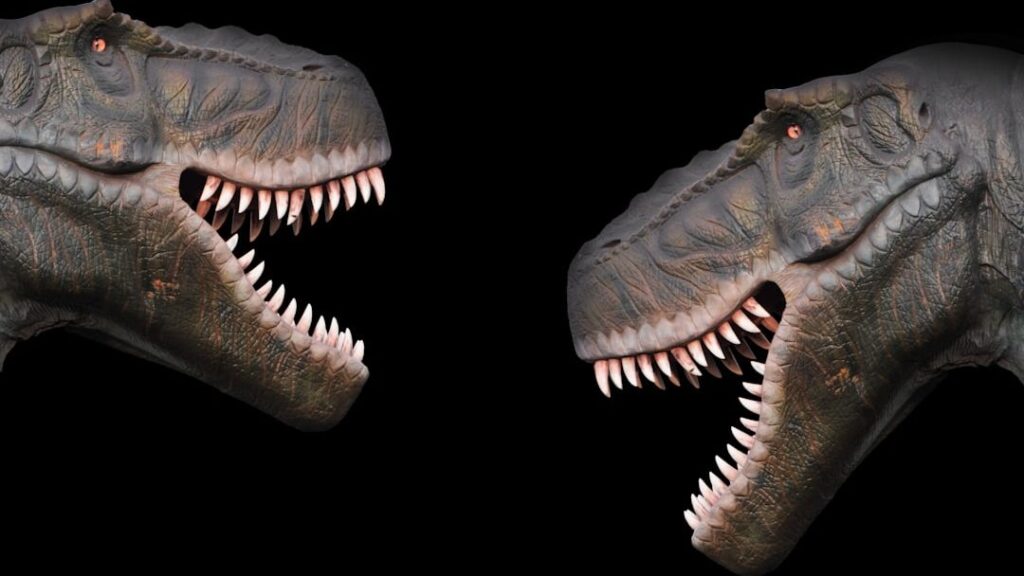
For you, Triceratops might be one of the first dinosaurs you learned about as a child, and that is not an accident. Its unmistakable three-horned face and massive frill make it an icon, a kind of ambassador for the entire world of dinosaurs. It appears in museum halls, documentaries, and artwork as the classic armored herbivore, often posed nose-to-nose with Tyrannosaurus in a timeless standoff. When you see that image, you immediately know you are looking at the end of the dinosaur age, condensed into a single dramatic encounter.
In science, Triceratops has been just as influential, driving discussions about how horns and frills evolved, how dinosaur species are defined, and how these animals lived in groups. Debates over whether some closely related horned dinosaurs represented separate species or growth stages of Triceratops have pushed researchers to look more carefully at bone changes through life. That means every time you read about new fossil discoveries or revised family trees for horned dinosaurs, Triceratops is usually somewhere near the center of the story. Through that constant scientific attention, it continues to evolve not in reality, of course, but in how you understand and imagine it.
When you pull all of this together, Triceratops stops being just a three-horned cartoon and becomes a complex, adaptable animal that thrived in a dynamic and sometimes dangerous world. You see an herbivore powerful enough to face giant predators, social enough to likely move in groups, and specialized enough to reshape the landscapes it fed upon. You also see how its bones and skin impressions still have more to tell you as new techniques and discoveries refine the picture year after year.
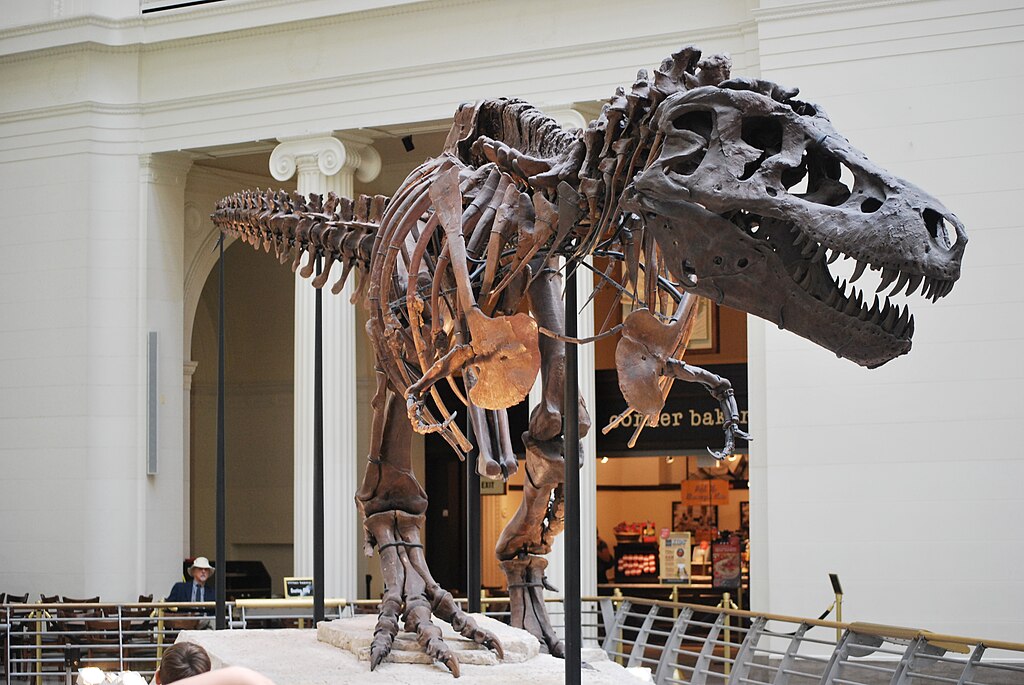
Next time you stand in front of a Triceratops skeleton, you can let your eyes move beyond the horns and frill to the life behind them: the growing youngster, the wary adult in a herd, the survivor of close calls, and finally the fossil that lay buried for millions of years before you came along. In that moment, you are not just looking at ; you are looking at a story of deep time that you are now part of. How differently do you see those horns and that towering skull now that you know what they might have meant?