
If you could step into a time machine and land anywhere in ancient North America, you’d find yourself walking through a world that feels part dinosaur documentary, part science fiction. The ground beneath your feet would shake from enormous footsteps, the skies would be filled with wings wider than small planes, and the water would hide predators that make modern sharks look almost polite. These were not just creatures from some faraway continent; many of them once lived where you might drive, hike, or vacation today across the United States.
As you explore these prehistoric giants, you start to see your own landscape differently. That quiet desert might once have held a toothy apex predator; that peaceful prairie may have been a battlefield of titans; that rocky canyon could have been the ocean floor of a tropical sea. In this article, you’ll meet eight extraordinary animals that really did roam (or swim, or soar over) what is now US soil, and you’ll get a feel for what it would be like if you were actually there with them.
Tyrannosaurus rex – The Tyrant King of the American West
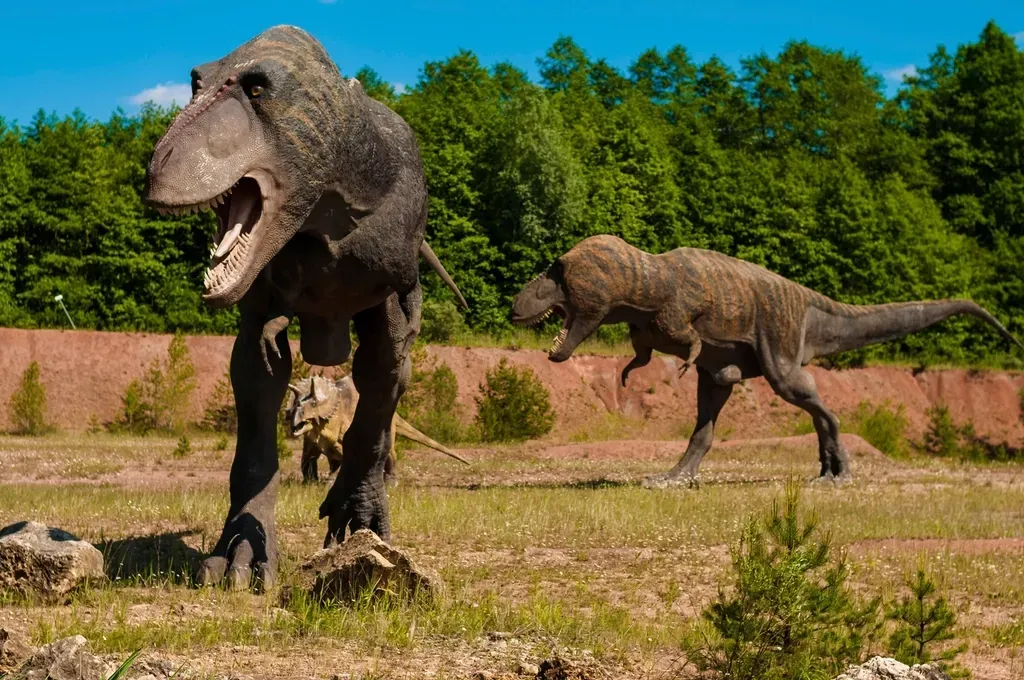
When you think of dinosaurs in the United States, you probably picture Tyrannosaurus rex towering over a floodplain in what is now Montana or South Dakota. You would have met this predator in the late Cretaceous, roughly in the last stretch before the dinosaurs’ mass extinction, stalking through coastal plains and river valleys that covered the western interior. If you were standing near one, you’d be staring up at an animal as long as a city bus, with a massive skull full of banana-sized teeth designed to crush bone, not just slice flesh.
Scientists have found its fossils mainly in places like Montana, Wyoming, and the Dakotas, so you are literally walking its old neighborhood if you travel there today. Evidence suggests T. rex had a surprisingly powerful sense of smell and a bite force that would dwarf that of any modern land predator, so you would not have wanted to be anywhere near the business end of its jaws. You might imagine it as a lonely hunter, but you’d also have to consider newer research hinting at possible social or at least complex feeding behavior around carcasses. Either way, if you were dropped into its world, the safest place to appreciate T. rex would be from a very sturdy time machine, not on foot.
Triceratops – The Horned Tank of Ancient Plains
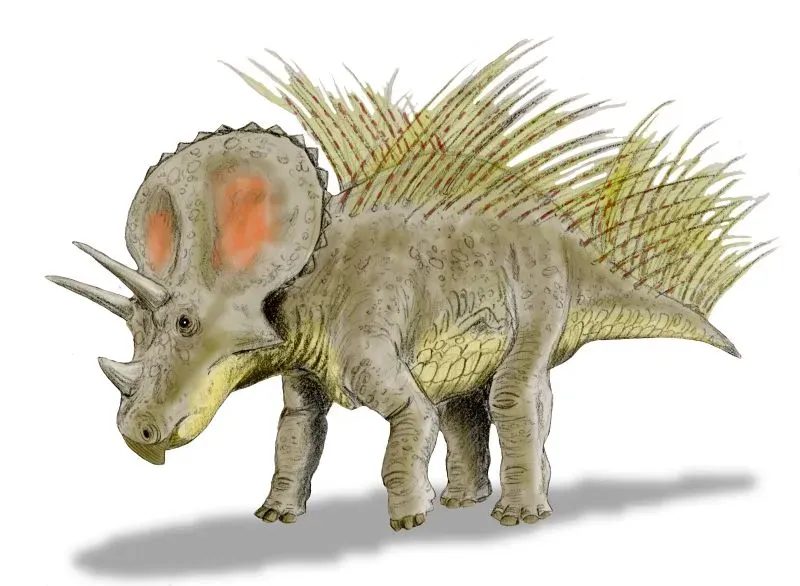
Now picture yourself on those same ancient Western plains, but instead of a predator, you’re looking at a walking shield with horns. That is essentially what Triceratops was: a massive, four-legged herbivore with a bony frill and three intimidating horns on its face, discovered in states like Montana, Wyoming, and South Dakota. If you stood beside one, you might feel like you were next to a living armored truck, its skull alone stretching longer than many people are tall. Those horns were not just for show; they were serious hardware likely used for defense and for battles with other Triceratops.
You might imagine large herds moving slowly across floodplains, but the truth is more nuanced, and you’d have to picture them in smaller social groups, or at least in overlapping territories, munching on tough vegetation. Their world would feel oddly familiar to you: low-lying plants, rivers, and forests that echo modern North American environments, just dialed back in time. If you watched long enough, you could see horn-to-horn combat between rivals, leaving scars on bone that paleontologists still study today. Standing there, you’d probably realize that if T. rex was the terror of the landscape, Triceratops was the stubborn, heavily armed neighbor that was very hard to push around.
Deinonychus – The Raptor That Changed How You See Dinosaurs
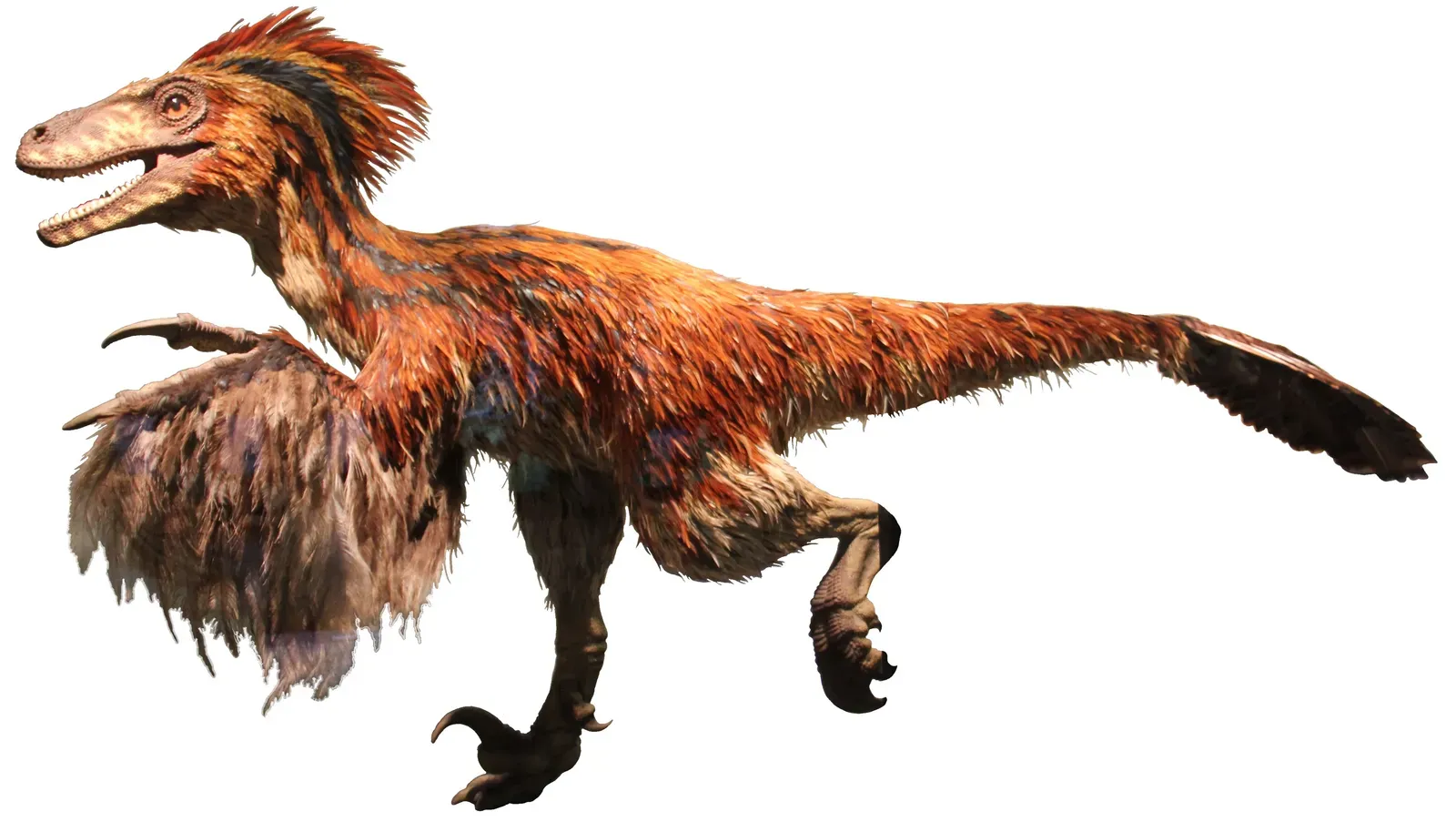
If you traveled to what is now Montana, Wyoming, or Oklahoma in the early Cretaceous, you might be surprised by a predator that is not enormous, but terrifyingly agile. Deinonychus was a mid-sized, sickle-clawed dinosaur that helped change how scientists, and eventually you, think about dinosaurs in general. Instead of sluggish reptiles, you’d be looking at an animal built for speed and precision, likely feathered, with a large curved claw on each foot that could slash or grip prey. Standing there, you would probably be more afraid of its speed and teamwork than of its size.
The fossils of Deinonychus were so influential that they helped spark the idea of dinosaurs as active, warm-blooded animals, closer in style to birds than to lazy lizards. If you were watching from the brush, you might see a small group harassing a much larger herbivore, testing for weakness like modern wolves circling a bison. The landscape would feel like a mix of floodplains, forests, and river channels, where you’d constantly check over your shoulder. You would quickly understand why, in this world, staying still too long could be a very bad strategy for survival.
Edmontosaurus – The Great Migrating “Duck-Billed” Grazer
Shift your time travel coordinates to the northern reaches of what is now the US and Canada, and you would cross paths with Edmontosaurus, one of the classic “duck-billed” dinosaurs. If you were near its habitat, you’d likely hear them before you saw them: huge herds of large herbivores, many as long as a bus, moving together across broad floodplains around what is now Montana, the Dakotas, and into Alaska. Their flattened snouts and complex teeth would let them chew through tough plants the way a modern cow chews cud, efficiently processing huge amounts of vegetation.
What might surprise you most is how dynamic their lives were. There is evidence that some populations lived at high latitudes, meaning you’d be watching dinosaurs that endured long seasonal changes, maybe even periods of winter darkness. You could imagine them migrating, following food like modern caribou do across the Arctic, or at least shifting with the seasons in large social groups. If you were lucky, you might even glimpse skin impressions showing scales and textures, reminding you that these animals were as real and detailed as any modern mammal. Walking among them, you would feel small but strangely calm, as if you had stepped into a prehistoric traffic jam of enormous, plant-eating commuters.
Megalodon – The Giant Shark Off America’s Ancient Coasts
Fast-forward millions of years after the dinosaurs vanished, and you would still find the United States framed by deadly waters. Off what are now the Atlantic and Pacific coasts, including shorelines near states like South Carolina, North Carolina, California, and others, you could meet one of the most famous ancient predators: the giant shark commonly called Megalodon. If you were diving in those prehistoric seas, you’d be sharing the water with a shark far bigger than any great white you have ever seen, with jaws wide enough to engulf you with room to spare. You would not need imagination to feel fear; the bulk of the animal would do that for you.
Fossils of its teeth are often found along US shorelines today, and when you hold one, you can picture how this shark hunted large marine mammals like early whales. You might see it cruising through warm coastal waters, ambushing prey from below or behind, much the way modern great whites do but at a much larger scale. The coasts you visit now for beach vacations would, in its time, have been the hunting grounds of a true ocean super-predator. If you ever pick up one of those massive fossil teeth on a modern beach, you are literally holding a piece of the mouth that once ruled those ancient American seas.
Mosasaurus – The Marine Reptile Lurking in the Interior Sea
If you think terrifying marine predators stayed near the modern coasts, you would be in for a shock in the late Cretaceous. Much of the central United States, from Texas up through Kansas and the Dakotas, was covered by a vast inland sea known as the Western Interior Seaway. If you were swimming there, you would risk encountering Mosasaurus and its relatives, giant marine reptiles with elongated bodies, paddle-like limbs, and powerful tails. Floating in that warm sea, you would quickly give up the idea of a relaxing swim.
Mosasaurus looked somewhat like a cross between a giant monitor lizard and an orca, and you can imagine it cruising up to prey with a mouth full of conical teeth. You might see it attacking fish, smaller marine reptiles, or even early birds that dove too far down, all in waters that sat where the Great Plains now stretch. The calm prairies you know would, in its day, have been a rich, shallow ocean teeming with life and danger from all sides. You would probably find yourself hugging the shoreline of time as tightly as you could, just to avoid drawing the attention of this underwater ambush specialist.
Mammuthus columbi – The Columbian Mammoth of American Grasslands
When you think of mammoths in North America, you might initially picture woolly mammoths trudging through snowy tundra, but much of the United States was home to their larger, slightly less shaggy cousin: the Columbian mammoth. If you were walking across what is now Texas, New Mexico, or other parts of the southern and mid-continental US during the Ice Age, you might see these giants grazing on grasses and open woodland plants. Standing beside one, you would feel dwarfed by its height and curving tusks, which could reach longer than many people are tall.
These mammoths lived alongside early human groups in North America, so if you imagine yourself there, you can picture shared landscapes of hunting, foraging, and migration. You might see mammoths using their tusks to shove aside snow or strip bark, much like elephants push through foliage today. Fossils and archaeological sites show that people sometimes hunted them, meaning that if you were part of that ancient world, you would know them as both majestic presences and vital sources of food and materials. Walking across modern plains or visiting fossil sites in the US today, you are treading the same ground these enormous grazers once shaped with every footstep.
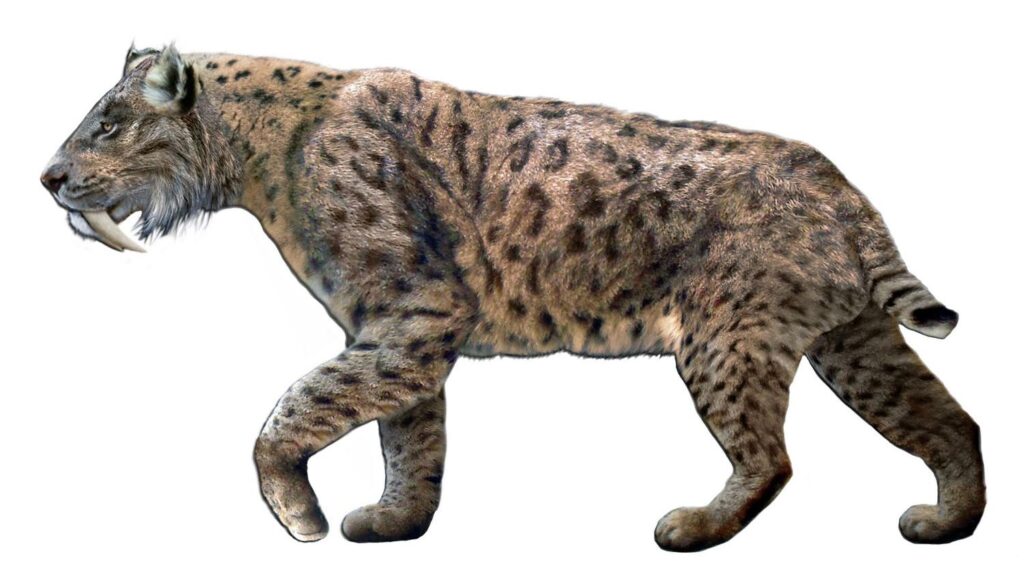
Smilodon fatalis – The Saber-Toothed Cat of Ancient California
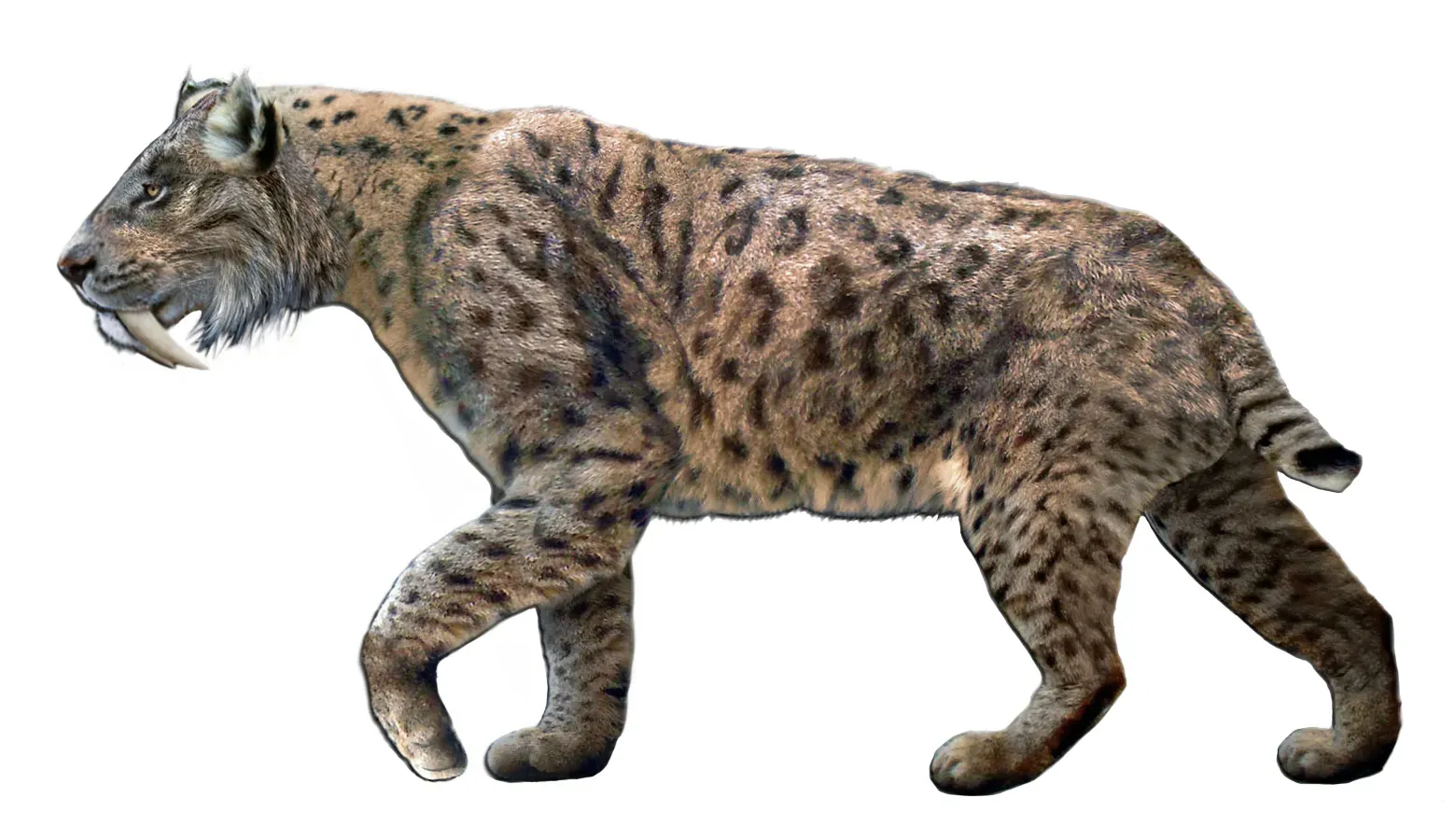
If you teleport to the area that is now Los Angeles during the late Ice Age, the first thing that might strike you is not the traffic, but the predators. In the grassy and lightly wooded areas of prehistoric California, you would share space with Smilodon fatalis, often called the saber-toothed cat. If you saw one up close, you’d notice its muscular build and those famous curved canine teeth, which could grow longer than many modern knives. Unlike a fast, sprinting cheetah, this animal was built more like a wrestler, using explosive power and strength to tackle large prey.
You can imagine yourself standing near a tar pit, watching as trapped herbivores attracted predators, who might then become stuck themselves. That kind of scene is not just fantasy; the La Brea Tar Pits in Los Angeles preserve exactly that sort of deadly trap, loaded with Smilodon fossils. If you lived back then, you would share your landscape with this ambush hunter, and you might hear its low growls in the distance as it staked out territories near prime hunting grounds. Modern city streets and museums now cover this area, but once, it was the stage for one of North America’s most iconic prehistoric predators, moving silently through a world that felt both familiar and feral.
Conclusion: Walking Today in the Footsteps of Giants
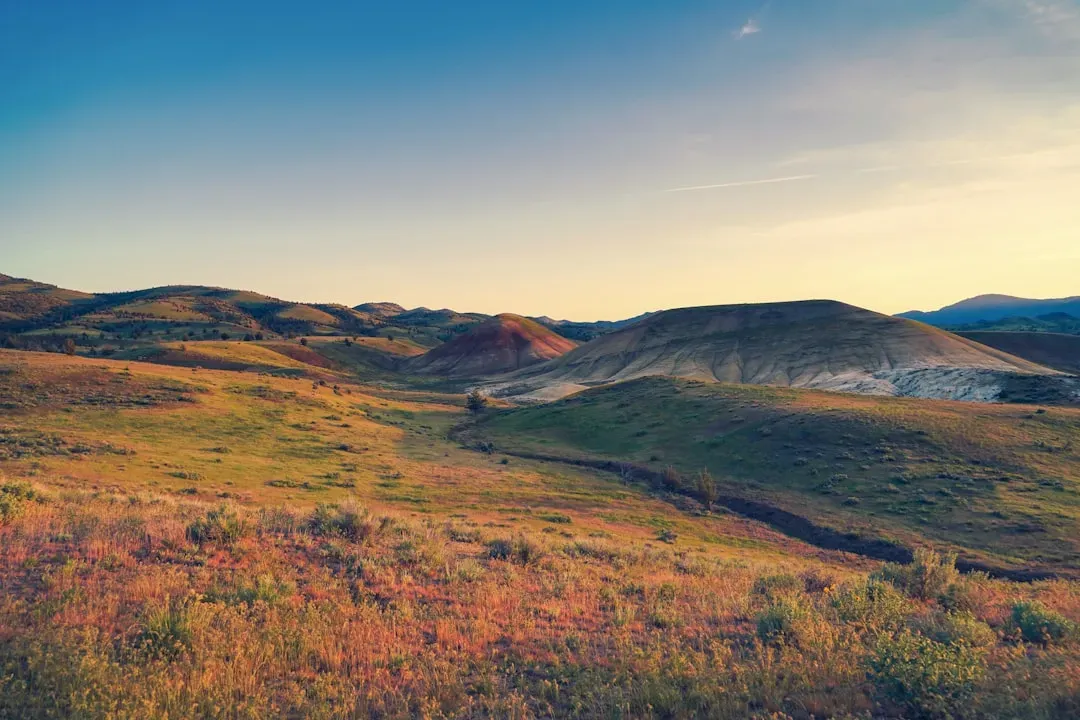
When you look at a map of the United States today, it is easy to see only highways, cities, parks, and state lines, but underneath all of that lies another layer of history written in bone. From T. rex stalking the ancient West to Smilodon lurking near tar pits in what is now downtown Los Angeles, you are living on top of their old neighborhoods. The beaches you visit, the plains you drive across, even the suburbs you call home have all, at different times, been oceans, forests, swamps, and grasslands filled with creatures that would leave you speechless if you saw them in the flesh. Once you realize that, every fossil display and eroded cliff starts to feel like a doorway rather than just a pile of rocks.
As you move through your everyday life, you are constantly crossing invisible paths once walked, swum, or flown by these incredible prehistoric animals. You do not have to be a scientist to feel that connection; all you need is a bit of imagination and a willingness to look at familiar places with ancient eyes. Next time you stand at a museum case or stare out across a quiet landscape, you can ask yourself what might have been roaring, grazing, gliding, or hunting there millions of years ago. Knowing what you know now, does your own world feel just a little more alive with ghosts of deep time?