If you grew up thinking the Tyrannosaurus rex was the undisputed nightmare of the dinosaur age, you’re in for a delightful bit of shock. While T. rex hogs the spotlight, there were crocodilian cousins the size of buses cruising ancient rivers, ambushing dinosaurs that wandered too close to the water’s edge. These were not the low-slung, stealthy reptiles we see today; some were armored tanks, others were bone-crushing giants with skulls as long as a person is tall.
What blows my mind is how few people have even heard of them. Hollywood has turned sharks, snakes, and regular modern crocodiles into recurring villains, yet the most terrifying croc-like predators that ever lived rarely get more than a throwaway line in a documentary. Once you start digging into creatures like Deinosuchus and Sarcosuchus, you realize the age of dinosaurs was also, in many ways, the golden age of crocodilians. And honestly, how did these monsters not get a movie deal?
The Croc Empire That Survived When Dinosaurs Did Not
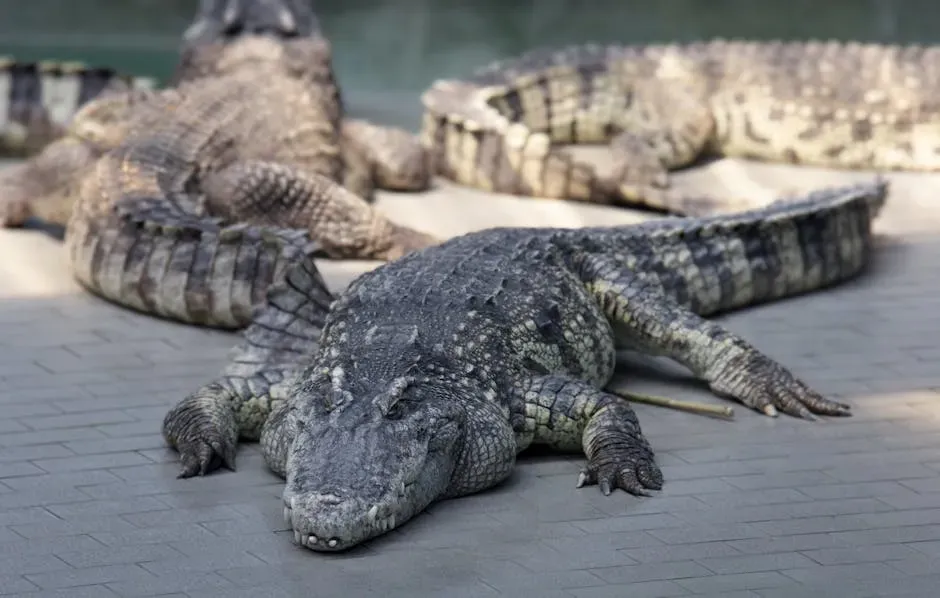
One of the most surprising facts about crocodilians is that, in a story dominated by dinosaurs, they’re the ones that actually won the long game. Crocodile relatives appeared before most of the famous dinosaurs ever walked the Earth, survived the asteroid impact at the end of the Cretaceous, and are still here today, eyeing us from murky rivers. When you picture prehistoric times, it helps to remember that crocodilians were not side characters; they were a whole parallel empire of predators and oddballs evolving alongside dinosaurs.
That survival alone tells you they were doing something very right. While the non-bird dinosaurs vanished, crocodilians weathered massive climate shifts, changing sea levels, and the collapse of entire ecosystems. Their semi-aquatic lifestyle, efficient metabolism, and ability to eat almost anything probably helped them bridge the gap when the world went dark. To me, that makes them less like background monsters and more like the ultimate quiet strategists of prehistory, outlasting the show-off megastars that grabbed all the attention.
Meet Deinosuchus: The Dinosaur-Cruncher of Cretaceous North America
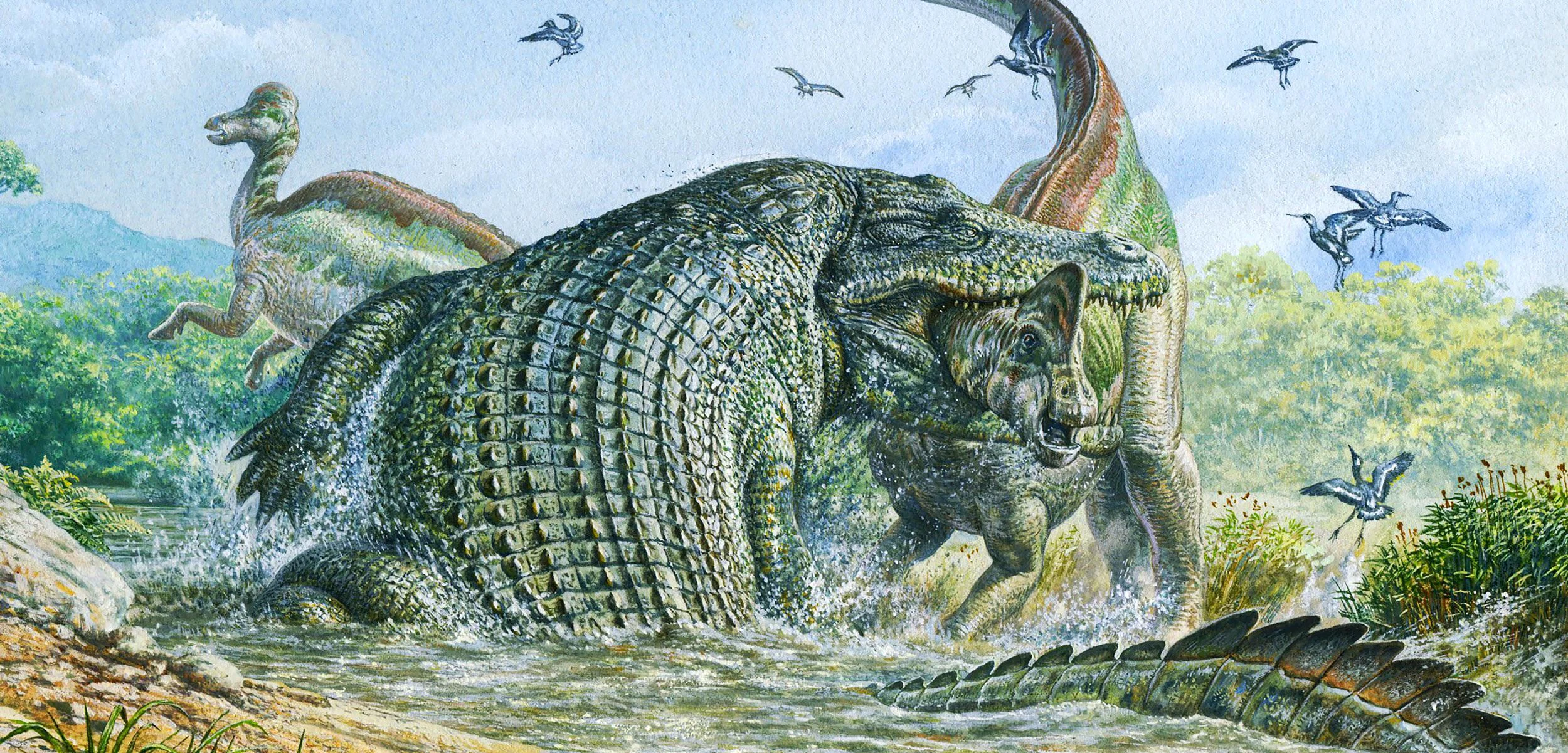
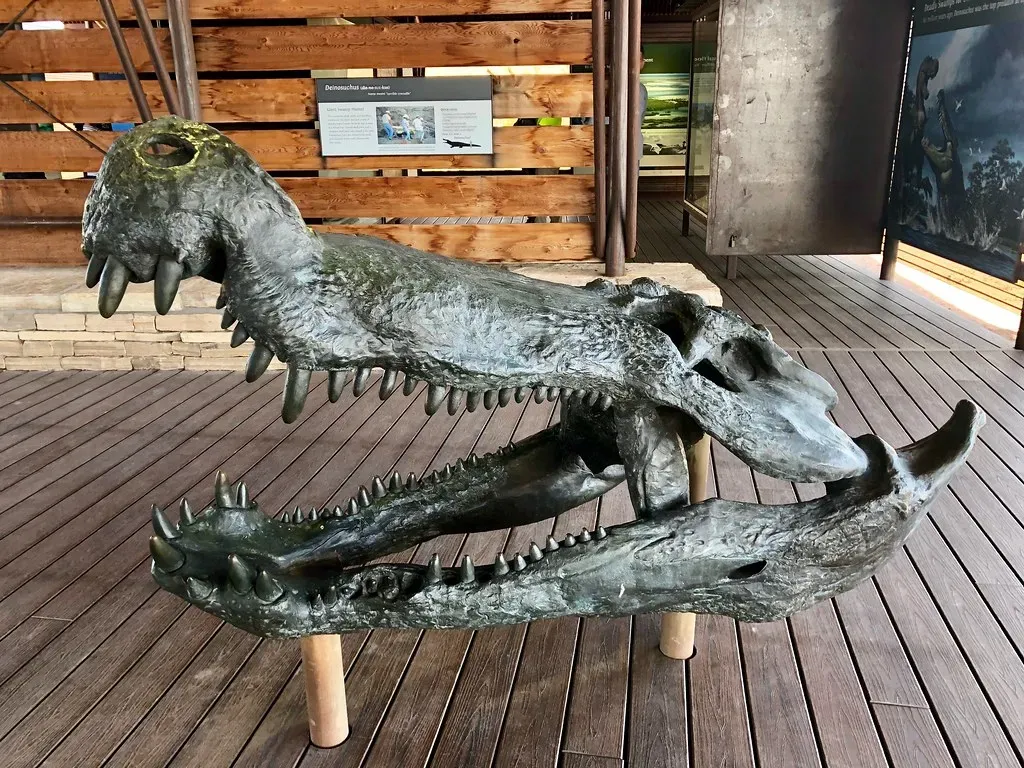
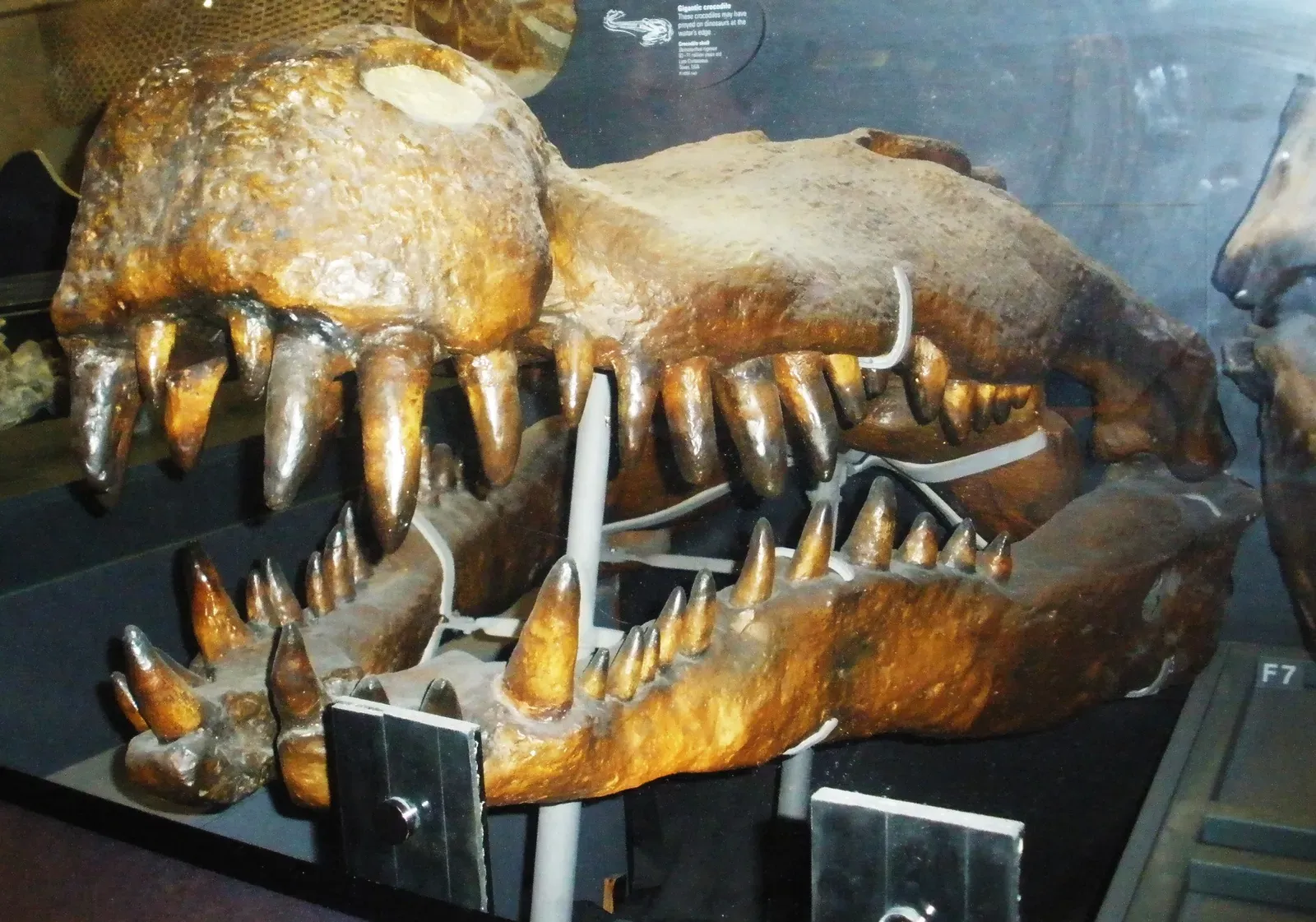
Deinosuchus is the one that really should have stolen T. rex’s thunder. Living roughly in the late Cretaceous of North America, this brute could reach lengths on the order of a large bus, with a skull over a meter and a half long and jaws studded with thick, conical teeth. Fossils show heavily built armor plates along its back and a body plan that screams ambush hunter. Imagine a modern saltwater crocodile, then mentally put it on performance-enhancing everything and drop it into a dinosaur-infested floodplain.
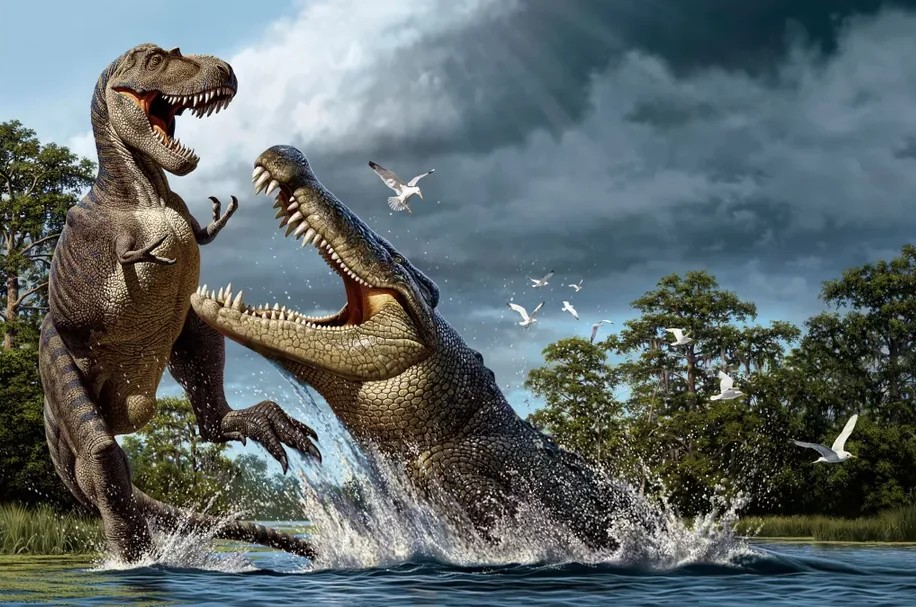
What really clinches Deinosuchus’s horror-movie potential are the bite marks scientists have found on dinosaur bones. The punctures and crushing damage on the fossils of large plant-eating dinosaurs match the size and shape of Deinosuchus teeth, strongly suggesting it was attacking or scavenging them. Picture a herd of duck-billed dinosaurs peacefully drinking at a river, unaware that a living trapdoor is waiting under the surface. One wrong step, one slip, and a multi-ton reptile rockets upward, clamps down, and drags a screaming dinosaur into the depths. How is that not the climax scene in at least three blockbusters already?
Sarcosuchus: The SuperCroc That Ruled Ancient Africa
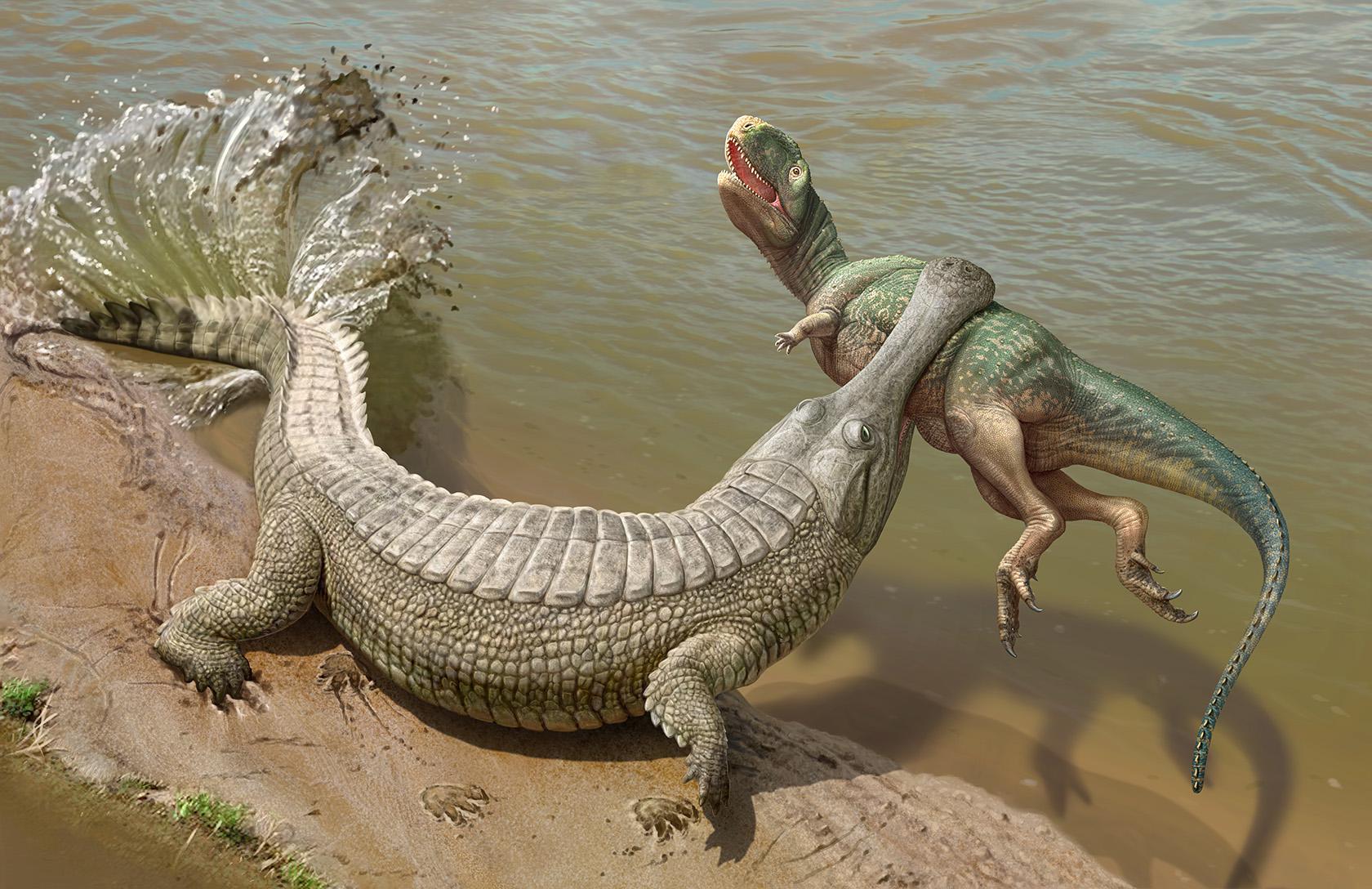
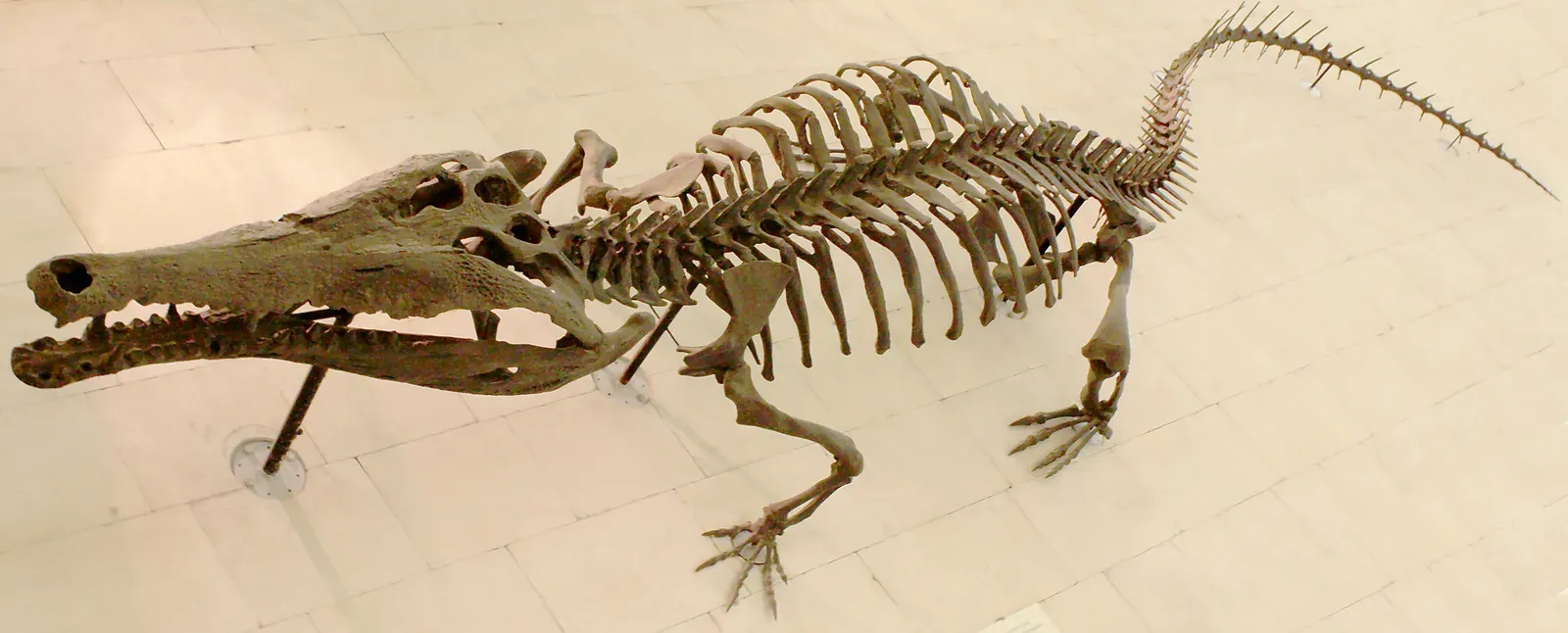
If Deinosuchus was the dinosaur cruncher of the Americas, Sarcosuchus played a similar role in Cretaceous Africa. Often nicknamed “SuperCroc,” it was another enormous crocodile relative, with some estimates suggesting lengths rivaling or exceeding modern crocodiles by a wide margin. Its snout was long and broad, lined with dozens of sharp teeth that could snap up fish, turtles, and, very likely, unwary dinosaurs. It lived in vast river systems that flowed through what is now the Sahara, back when the area was lush, humid, and teeming with life.
What I love about Sarcosuchus is that it pushes the boundaries of what we imagine a crocodile can be. The skull alone looks like something a creature designer would sketch, then throw away for being too over the top, only to realize nature got there first. It probably waited in slow-moving waters, using its size and strength to overpower anything that ventured too close, from big fish to juvenile dinosaurs near the shoreline. If you watch any documentary footage of it reconstructed, you can almost feel the tension along the water’s edge, as if the entire landscape is holding its breath around this lurking heavyweight.
Not Just Killers: The Wildly Weird World of Croc Cousins
One mistake people often make is thinking ancient crocodilians were just larger versions of what we see today. In reality, their extended family included fast-running land predators, herbivores with strange teeth, and odd, dog-sized forms that looked more like a mashup between a reptile and a mammal. Some fossil croc relatives evolved long legs suited to running on land, others had short snouts adapted to crushing plants or shellfish, and a few even filled niches that in later ages would belong to big cats, wolves, or hoofed grazers.
This diversity makes the Mesozoic world feel much richer and stranger than the simple “dinosaurs plus a few crocodiles” picture we usually get. Imagine a Cretaceous floodplain where, instead of just one type of croc lurking in the water, you have armored semi-aquatic monsters, sleek terrestrial hunters, and quirky omnivorous forms wandering around like reptilian pigs. In some ecosystems, crocodilian relatives would have been every bit as varied and important as mammals are today. That alone feels like an overlooked, cinematic universe just sitting there, waiting to be used.
Ambush Tactics: How Giant Crocodilians Hunted Dinosaurs
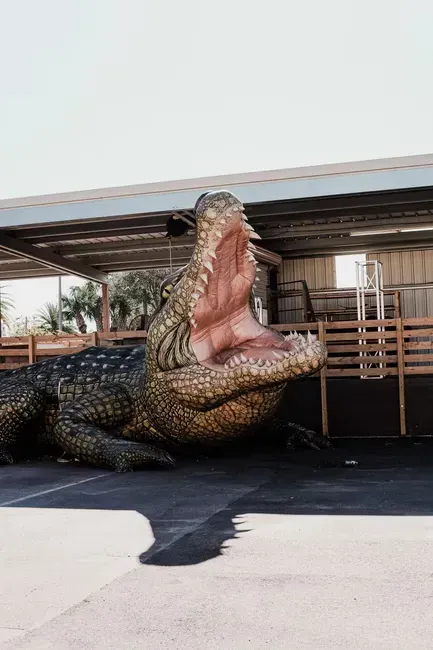
Modern crocodiles already use terrifyingly effective tactics: stay absolutely still, blend into the water, and explode into motion at the perfect moment. Scale that up to the size of a bus and put a thirsty dinosaur at the river’s edge, and you have one of the most dramatic predator-prey interactions of the entire Mesozoic. Massive croc relatives likely relied on stealth, powerful tails, and bone-crushing bites to yank dinosaurs off balance and into the water, where even a huge herbivore would be quickly overpowered or drowned.
The evidence for this is written in the bones. Bite marks matching the spacing and shape of giant crocodilian teeth show up on dinosaur fossils, and the habitats where these crocs are found line up with ancient coastlines, deltas, and river systems. You can picture the daily tension of life near the water, where a beautiful, life-giving river doubled as a deadly trap. To me, it adds a whole new layer to dinosaur life: even if you managed to avoid raptors and big theropods on land, you still had to gamble every time you bent down for a drink.
Why Dinosaurs Got the Fame While Crocs Got the Swamp
So why did dinosaurs get endless movies, while these monstrous crocodilians are mostly relegated to background roles? Part of it comes down to charisma and posture. Dinosaurs like T. rex and Velociraptor are upright, animated, and easy to turn into almost human-like characters: they stride, roar, and dominate the landscape. Giant crocodilians, by contrast, slither and lurk; they are low to the ground, partially submerged, and spend a lot of time looking like logs. That is fantastic for survival, but less obviously thrilling for toy shelves and posters.
There is also a storytelling bias toward what feels new and different. Dinosaurs feel alien compared to anything we see today, while crocodiles are still with us, quietly reminding us of deep time every time we see their armored backs break the surface of a river. As a result, giant prehistoric crocs get mentally filed under “more of the same, just bigger.” Personally, I think that sells them short. The very fact that something so similar is still alive now makes their ancient, supersized cousins even more eerie. It is like discovering your plain-looking neighbor had a family history of legendary warriors and no one bothered to mention it.
What Today’s Crocodiles Reveal About Their Giant Ancestors
If you have ever watched a modern crocodile hunt, you have already seen echoes of Deinosuchus and Sarcosuchus in action. The sudden burst of speed, the rotational death roll, the way they use water as a weapon rather than just a habitat – all of that likely has roots reaching deep into their ancient lineage. By studying how modern species behave and how their bodies work, scientists can make educated inferences about how their giant Cretaceous cousins lived, fed, and competed with dinosaurs.
What fascinates me most is how little these animals have needed to change. Over tens of millions of years, their basic design has remained so effective that tweaks, not overhauls, were enough to keep them successful. That kind of evolutionary staying power makes the giant crocodilians feel less like bizarre one-offs and more like extreme expressions of a winning blueprint. When you see a croc cruising a river today, it is not hard to imagine the shadow of a much larger ancestor drifting just behind it, sharing the same patient, predatory calm.
Conclusion: The Monster Story We Keep Ignoring
The more you learn about massive crocodilians that hunted dinosaurs, the harder it is not to feel that popular culture missed a huge opportunity. These were genuine dinosaur killers, apex predators that shaped entire ecosystems, yet they get overshadowed by their more glamorous, two-legged neighbors. In a world obsessed with fresh angles on familiar monsters, the idea of a river ruled by Deinosuchus or Sarcosuchus feels like the kind of story that practically writes itself. Personally, I think they deserve far more than the occasional cameo as background reptiles in CGI dino battles.
At the same time, maybe their absence from the spotlight matches their nature a little too well. Giant crocodilians were masters of staying hidden until the exact moment it mattered, and in a way, they are still doing that – lurking at the edges of our imagination, waiting for someone to finally drag them into the narrative center. Next time you see a movie where a dinosaur strolls up to a quiet lake, you might find yourself wondering what could be waiting just below the surface, jaws poised, story untold. Did you ever imagine the real king of the river might not have been a dinosaur at all?