You walk into a dark chamber carved by time, your flashlight skims across a wall, and suddenly there they are: ghostly horses, charging bison, handprints frozen like echoes from another world. Cave paintings feel almost supernatural when you see them up close, yet they were made by people who had the same brains, fears, and probably the same terrible jokes as we do. The real mystery is not how they painted them, but why those images were so important that they crawled into the darkest corners of the earth to leave them behind.
For years, schoolbook stories made it sound simple: people hunted animals, so they painted animals, end of story. But the truth modern research is uncovering is far stranger, more emotional, and way more human. Behind those bison in Lascaux, the lions at Chauvet, and the hand stencils in Indonesian caves, there are love stories, power struggles, spiritual experiments, and even clever visual tricks that feel surprisingly modern. Once you see what is really going on, these paintings stop feeling like dusty artifacts and start feeling like messages from people who could easily be your neighbors – if your neighbors preferred mammoth steaks and stone tools.
The Surprising Age of Cave Art: Older, Stranger, and Less European Than You Think
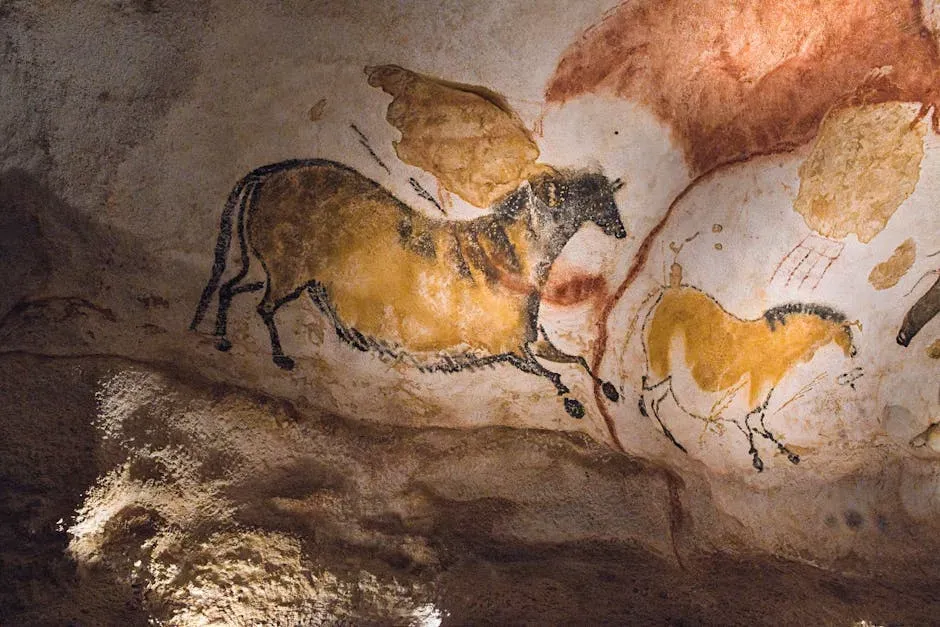
Most people still secretly imagine prehistoric art as a French and Spanish thing: Lascaux, Altamira, Chauvet, big dramatic animals somewhere in Europe. That story is already outdated. Some of the oldest known figurative cave paintings we know about are actually in Indonesia, where reddish depictions of animals and hand stencils have been dated to tens of thousands of years ago, roughly on par with or older than Europe’s best-known masterpieces. This flips the old narrative that high-level art was somehow “born” in Western Europe, and instead suggests that symbolic creativity was part of a much broader human package.
What really blows my mind is how this age forces us to upgrade our picture of so‑called “cavemen.” We are talking about people who figured out how to use minerals, charcoal, and binders to make durable colors, then crawled into deep, dangerous spaces to place those colors in exact spots where flickering light would make them look alive. These were not half-awake brutes doodling between hunts; they were people with long-term plans, complex social lives, and a capacity to imagine things that were not right in front of their faces. In other words, the distance between us and them is a lot smaller than we like to think.
Beyond Hunting Magic: What Those Animals Really Meant
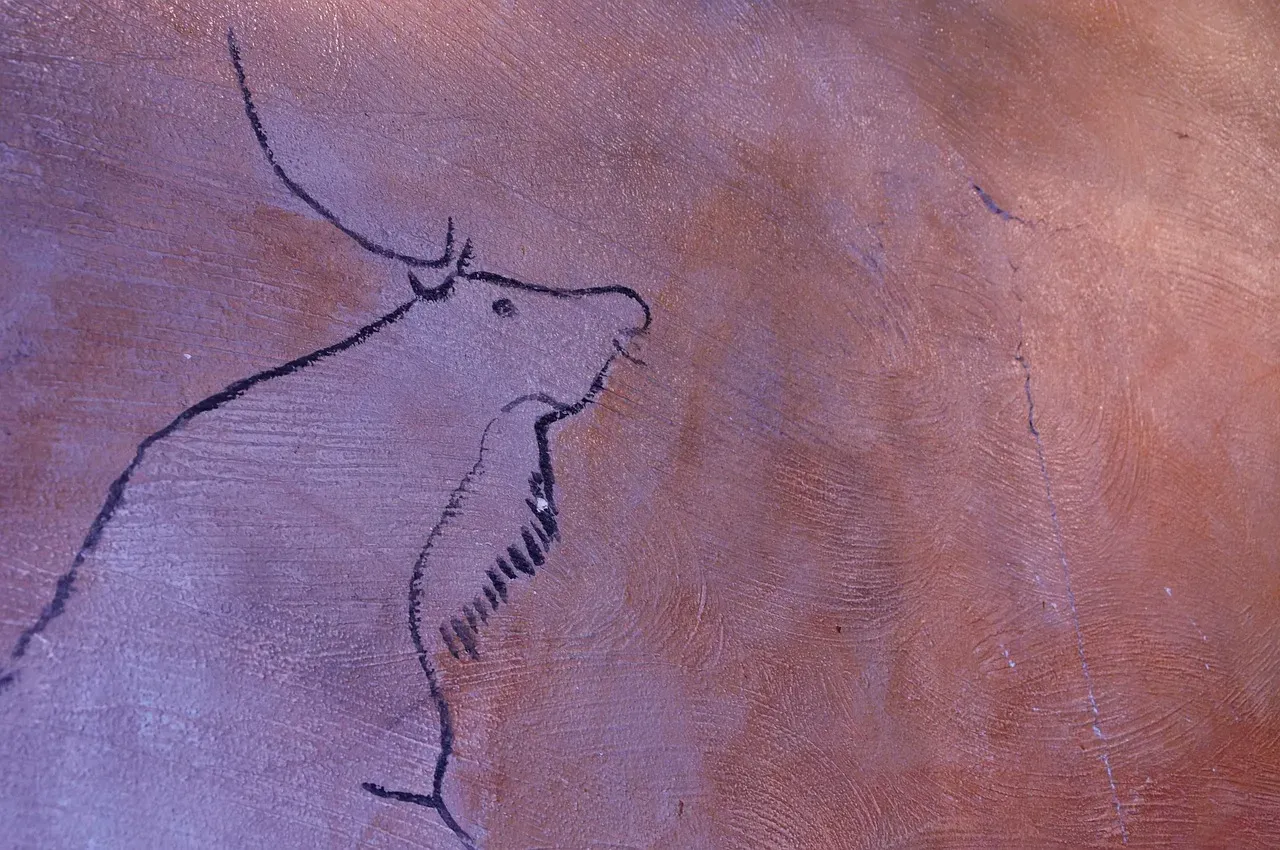
The classic explanation you hear is that hunters painted animals to magically control them, like a prehistoric vision board: paint a bison, get a bison. It sounds neat, but it does not really line up with the details. Many caves are packed with animals that were rarely hunted or even dangerous to approach, like lions, rhinoceroses, and bears. Meanwhile, some very important food animals are missing or barely appear at all in certain sites. If this were purely a practical hunting manual, it would be a terribly inefficient one.
A more realistic picture is that these animals were loaded with layers of meaning: power, danger, fertility, identity, maybe even clan symbols or spirit guides. Imagine a modern sports team mascot, a national animal on a flag, and a childhood story character all rolled into one powerful image. When you stand under a cluster of painted horses in a flickering torchlight, you can almost feel that they were more than just dinner. They were part of how people thought about life, death, luck, and belonging in a harsh world that could turn on you overnight.
The Hidden Theaters Underground: Why Art Was Put in the Darkest Places
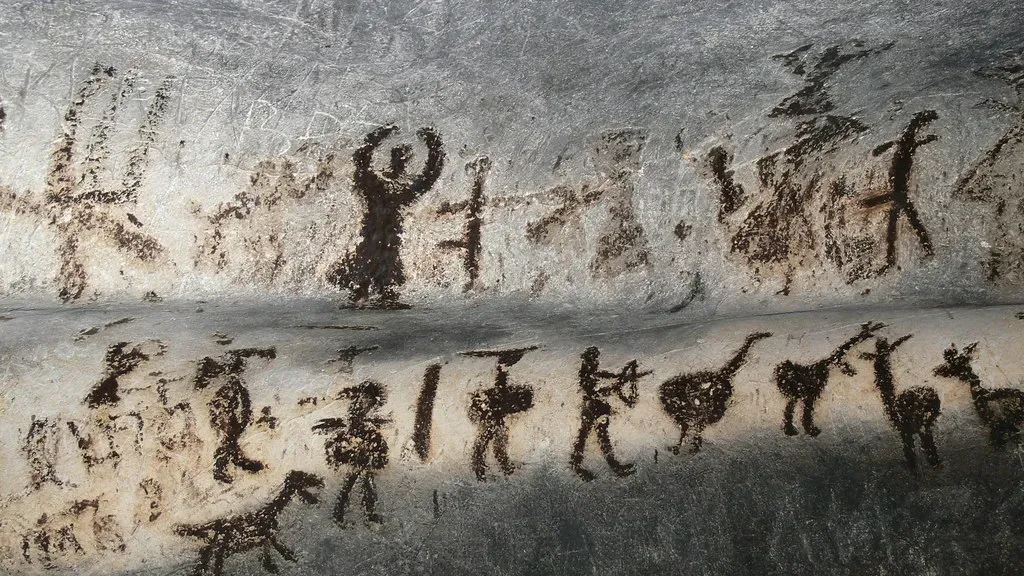
One of the strangest things about many famous cave paintings is where they are. They are not usually at the sunny mouth of the cave where people actually lived and cooked; they are often buried deep inside, beyond narrow squeezes, dangerous drops, and total darkness. This is not a convenient sketchbook location, it is more like a deliberate stage. You had to commit to going there: organize a group, bring light, probably prepare mentally, and go into a space that already felt otherworldly even before the art was added.
When you think of those caves as underground theaters, the pieces start fitting together. The paintings were not just visual, they were part of an experience: torchlight making animals seem to move, echoes of voices or chanting, perhaps the smell of smoke and fat, the thrill of being in a space that few people ever saw. It is not a stretch to imagine that these gatherings were emotionally intense: initiation rituals, healing ceremonies, or community decisions anchored in shared stories about those animals on the walls. The darkness was not a problem; it was the point.
Hands on the Wall: The Personal Side of Prehistoric Identity
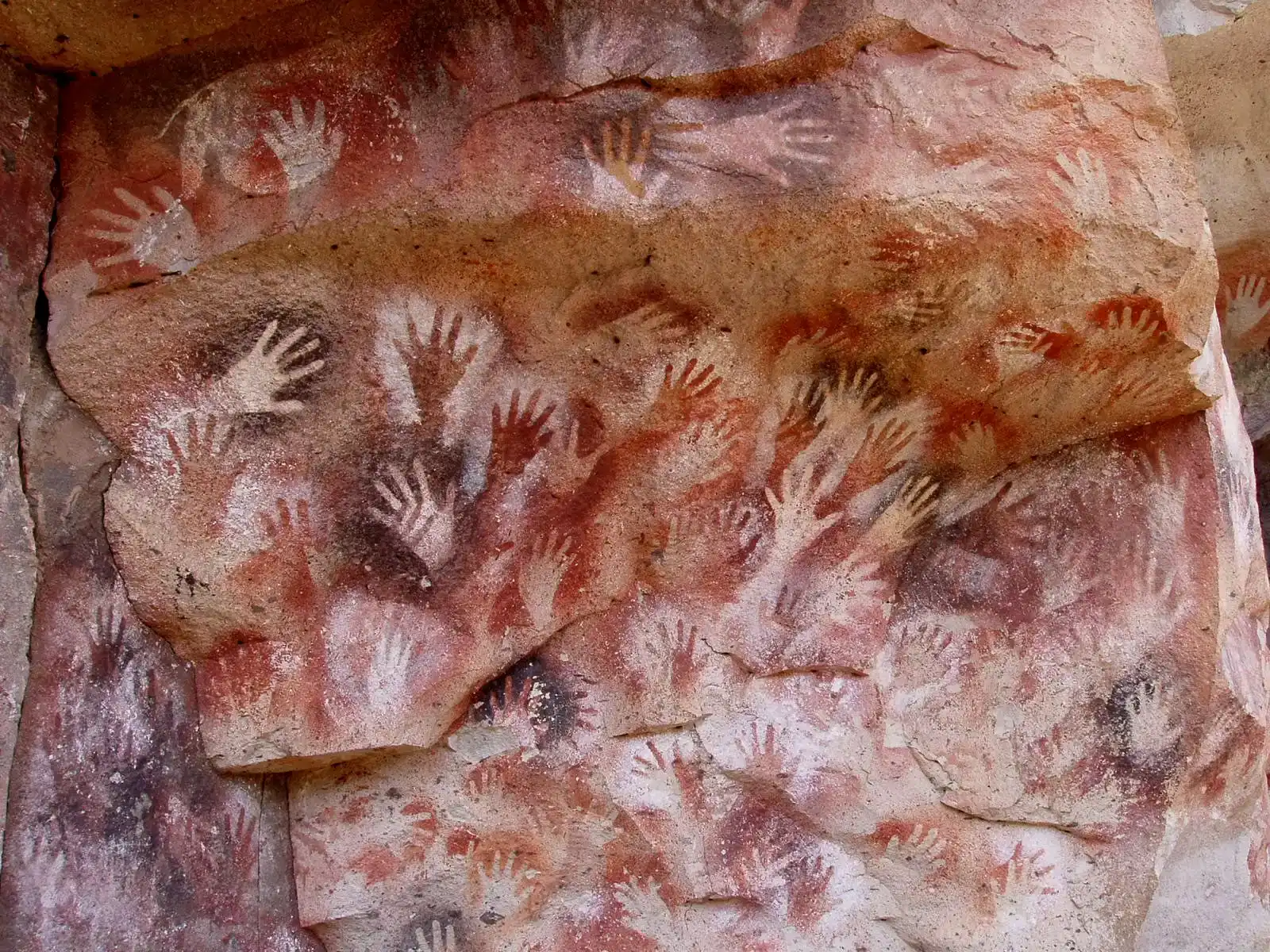
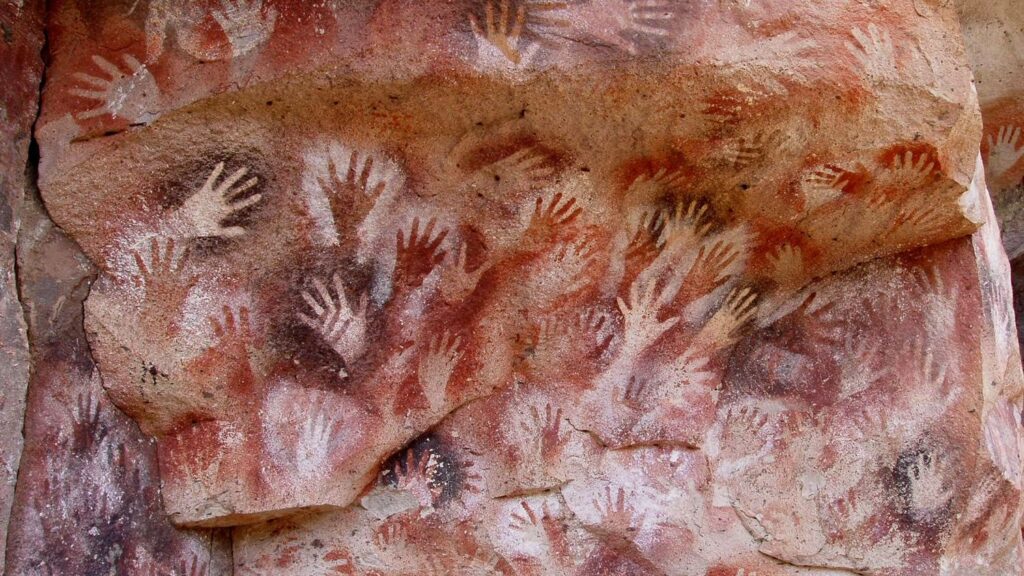
If the big animals are the blockbuster stars of cave art, the hand stencils are the quiet, emotional moments that stay with you. All over the world – from France and Spain to Indonesia and beyond – you find these silhouettes where someone placed a hand on the rock and blew pigment over it, leaving a negative ghost of their touch. It is almost painfully intimate. You can line your own hand up with theirs and feel that weird jolt of contact across tens of thousands of years, like a frozen high-five with someone who never imagined you would exist.
What those hands meant is still debated, but they clearly were more than decorative. Some are from adults, some from adolescents, and some are very small, probably from children. That alone tells you these caves were not just “men’s hunting clubs,” but spaces where different ages – and likely different genders – had roles. Maybe each hand was a mark of belonging, a record of presence at a crucial moment, or a sign that you had gone through a particular ceremony. To me, they feel like the prehistoric equivalent of signing a wall at a life-changing concert: a way of saying “I was here, this mattered, and I want the rock itself to remember me.”
Who Painted the Caves? Rethinking the Myth of the Male Hunter-Artist
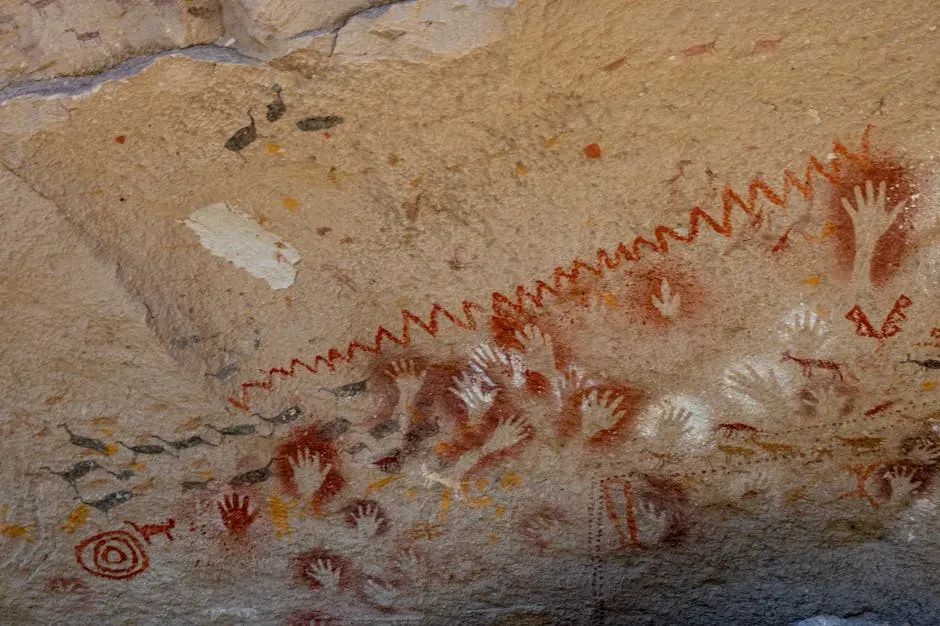
For a long time, the default story was that men created most cave paintings because men, we were told, did the hunting, leading, and important ritual work. That assumption says more about modern biases than about the actual evidence. When researchers started carefully measuring hand stencils and comparing proportions to modern hands, they found that a good number of them likely belonged to women and adolescents. That does not prove every painting was done by women, but it makes it much harder to keep pretending cave art was a strictly male performance.
Once you let go of the macho hunter-artist myth, a more complex and frankly much more interesting picture emerges. You can imagine a group of people where knowledge about pigments, ritual stories, and the “right” places on the wall was shared across generations and roles. Maybe older women taught younger teens how to mix paints; maybe certain images could only be completed by people who had gone through particular life stages. When I think about those scenes, it starts to feel less like a secret men’s lodge and more like a community studio with strict traditions, where power and creativity were tangled together in ways we are only starting to guess at.
Trippy Brains and Flickering Light: Did Altered States Shape the Art?
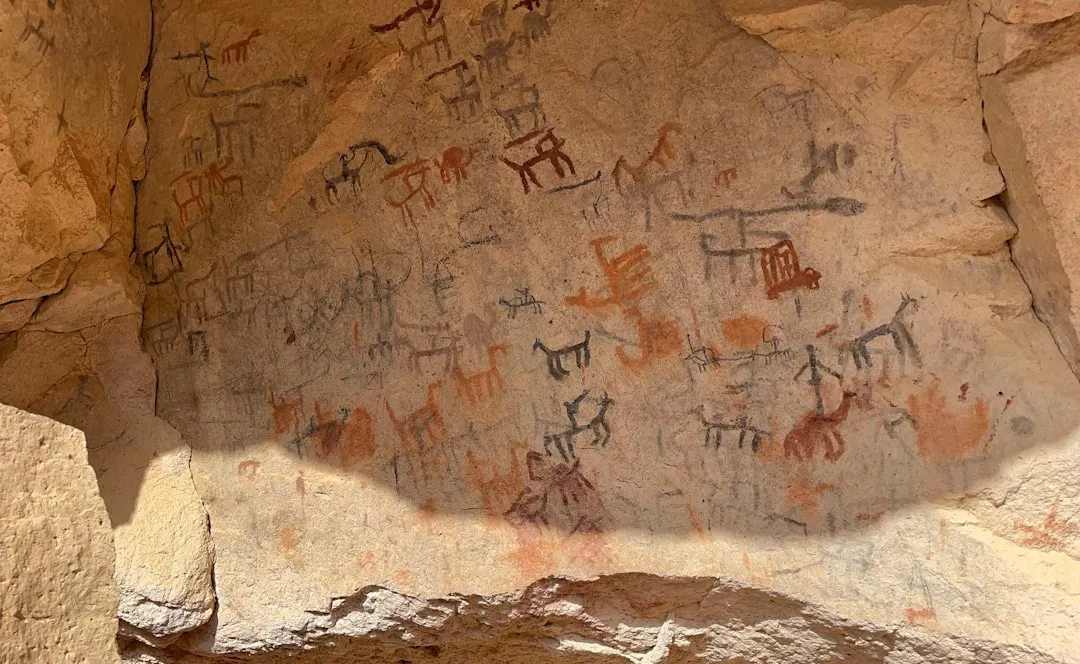
There is a bold but increasingly discussed idea that some cave art may have been influenced by altered states of consciousness, whether from sensory deprivation, rhythmic movement, or plant substances. When you sit in utter darkness, with limited oxygen, repetitive sounds, and flickering firelight reflecting off uneven rock, your brain starts doing strange things. Simple shapes, dots, and zigzags – motifs that appear over and over in prehistoric art – actually match common visual patterns people report in certain trance-like states. That does not mean every dot was a hallucination, but it hints at a deep link between brain states and imagery.
Layer on top of that the way torchlight plays tricks on the painted walls. A slightly bulging rock can make a bison’s flank swell and recede, or a carved line can suddenly pop into three dimensions as the light moves. It is not hard to imagine that some of these images were intentionally placed to work with that moving light and with minds already primed for intense emotion or visionary experiences. Personally, I find this idea convincing in spirit even if the details remain uncertain: these caves were not passive galleries, but active engines for bending perception and making the invisible feel solid.
From Cave Walls to Phone Screens: What These Paintings Say About Us
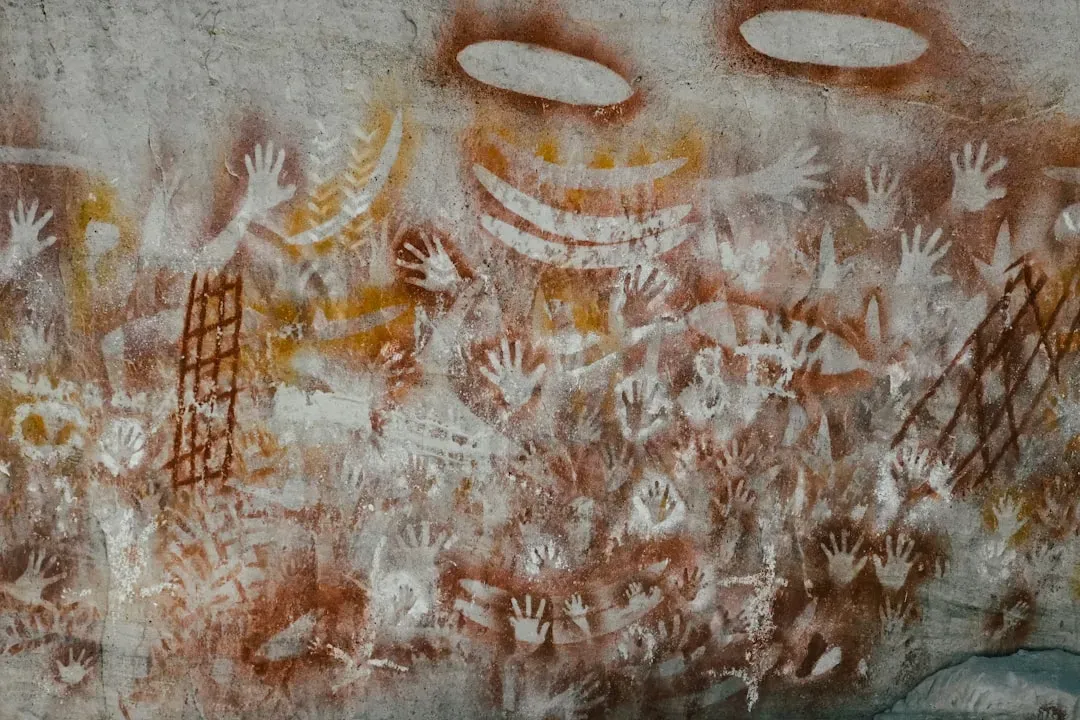
When you scroll through social media today, you are basically watching an endless cave wall, filled with images people choose to show the world: food, animals, danger, desires, and constantly, their own hands and faces. The technology is different, but the urge is suspiciously similar. Those ancient artists did not just want to survive; they wanted to leave marks, tell stories, and be remembered inside a shared mental universe that stretched beyond the daily scramble for food. If anything, they might find our memes and selfies strangely familiar: another way to say, “I exist, I belong, this matters to me.”
The real story behind humanity’s is not a tidy tale of “early art practice” or “primitive magic.” It is a messy, rich, deeply human mixture of spirituality, social organization, identity, fear, pride, and curiosity about the world. These walls are not just about animals; they are about what it felt like to be a thinking, feeling human in a universe you barely understood, but could not stop trying to explain. In that sense, nothing has changed. We just swapped limestone for glass and torchlight for backlit screens, but we are still staring at images, hunting for meaning in the dark.
Conclusion: Why Cave Paintings Still Matter More Than We Admit
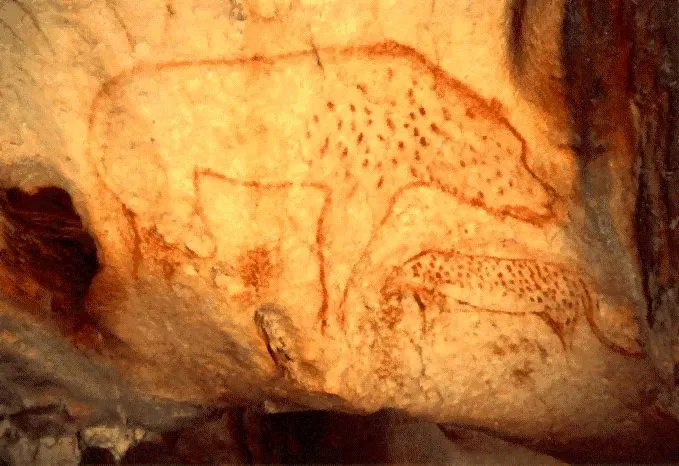
I think we underestimate cave paintings because they make us uncomfortable. They force us to admit that people with stone tools and no smartphones were already making emotionally complex, technically skilled images that still hold power over us tens of thousands of years later. That dents our favorite story that history is a straight line of progress, where the present is always smarter and more advanced than the past. Standing in front of those painted walls, you get the opposite feeling: that in some essential ways, we have not moved very far at all.
In my view, the most honest way to read these caves is not as the start of art history, but as proof that the full human package – symbolism, ritual, identity, imagination – was already there long before cities, writing, or organized religion. These paintings are not rough drafts; they are finished thoughts from minds that were every bit as deep and conflicted as ours. If anything, the real story they tell is a humbling one: we are not the peak of human culture, just the latest remix. Next time you look at a cave painting, maybe ask yourself a slightly unsettling question: are we actually more advanced, or just painting on different walls with fancier tools?