Most people picture science as a slow, steady march toward truth. Fossil discoveries, they assume, are tidy puzzle pieces that click into place and earn polite applause at conferences. But that is almost never how it actually works. A handful of single specimens have done something far more violent to the scientific record: they have demolished theories that took generations to build, triggered bitter public feuds between researchers, and forced entire fields to throw out their textbooks and start over from scratch.
What makes these moments genuinely unsettling is how often the chaos wasn’t caused by a massive excavation or a decades-long project. It was caused by one bone, one slab of rock, one skeleton pulled from the ground at exactly the wrong moment for everyone who thought they had it figured out. Each of the nine discoveries below cracked something open that couldn’t be closed again. Some of them still haven’t settled.
#9 – Piltdown Man Exposed 41 Years of Wishful Thinking
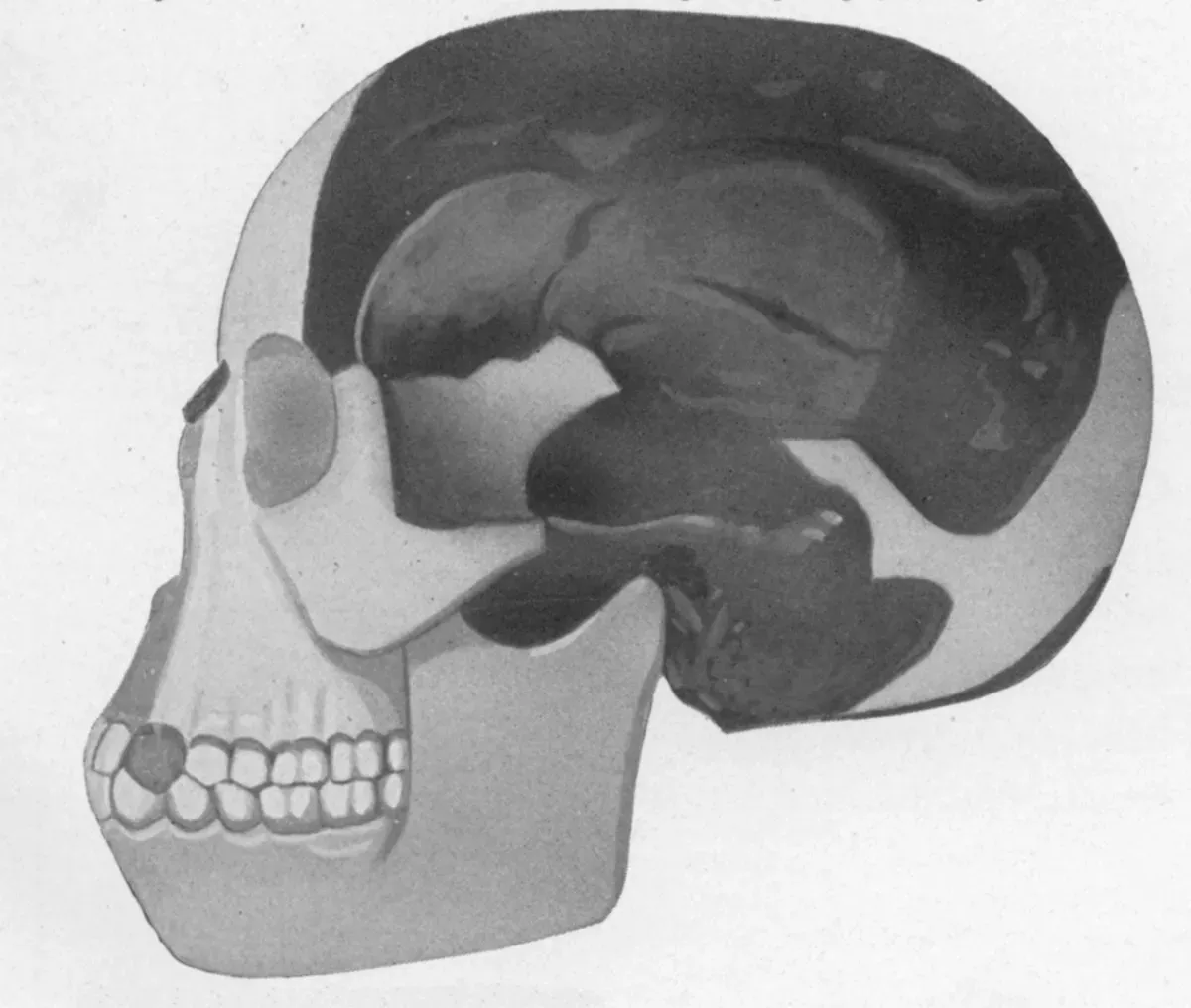
In the early 1900s, British scientists desperately wanted their country to claim the evolutionary “missing link.” When the Piltdown skull surfaced in 1912, they got what they wanted – a large-brained, ape-jawed specimen that seemed to confirm the popular theory that human intelligence evolved before everything else. Researchers built careers around it. Textbooks enshrined it. For four decades, anyone who questioned Piltdown was quietly dismissed.
Then chemical tests in 1953 revealed the truth: someone had combined a modern human cranium with a deliberately filed and chemically stained orangutan jaw. The hoax had worked for 41 years partly because the specimen told scientists exactly what they already believed. The fallout wasn’t just embarrassment – it forced paleoanthropology to completely overhaul its verification standards and confront how dangerously confirmation bias can corrupt even rigorous science. The field is still careful about it today.
Fast Facts
- The fraud is now attributed to amateur archaeologist Charles Dawson, who had sole access to the Piltdown excavation site.
- The hoax was exposed in November 1953 when fluorine-absorption tests revealed the skull and jaw were different ages.
- Under a microscope, investigators found the Piltdown molars had been deliberately filed down to resemble human teeth.
- A 2016 scientific review confirmed a single forger – Dawson – was responsible for both the Piltdown I and Piltdown II specimens.
- The fraud actively impeded recognition of genuinely important African hominin fossils for decades.
#8 – Sinosauropteryx Proved Dinosaurs Wore Feathers
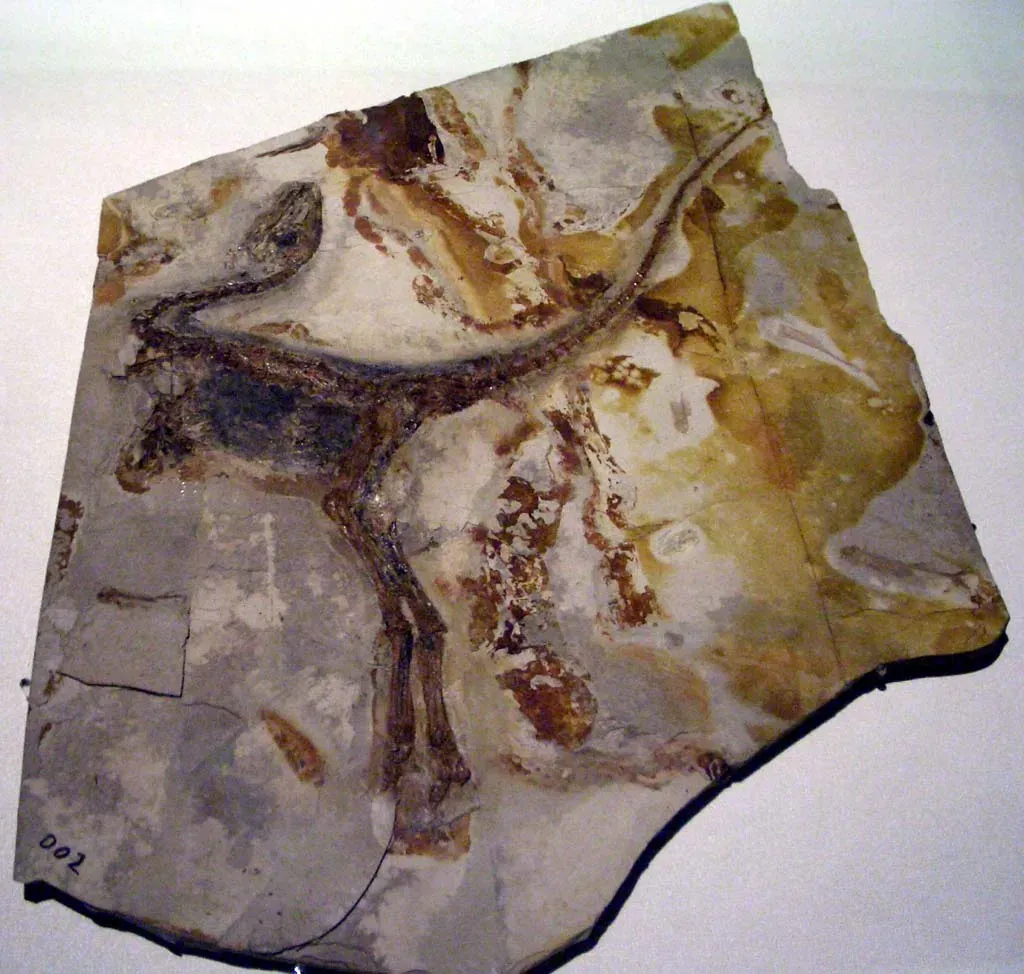
For most of the twentieth century, the dominant image of a non-avian dinosaur was a giant, scaly, cold-blooded reptile – basically a very large lizard with ambition. That image collapsed in 1996 when a single specimen of Sinosauropteryx arrived from the Yixian Formation in northeastern China. Preserved along its tail and back were unmistakable filament-like proto-feathers, structures that had no business being on an animal the field had already categorized and shelved.
The implications hit hard and fast. Feathers had not evolved for flight. They had evolved first – possibly for insulation or display – in animals that never left the ground. The discovery forced a complete rethink of dinosaur physiology, metabolism, and appearance, and it opened the door to a cascade of feathered dinosaur finds from China that made the old scaly-lizard image look almost embarrassingly wrong. Entire museum exhibits had to be redesigned. Artists who had spent careers painting dinosaurs had to start over.
At a Glance
- First described in 1996 by paleontologists Qiang Ji and Shu’an Ji from the Yixian Formation, Liaoning Province, China.
- About the size of a chicken – roughly 3 feet long and weighing approximately 3 kg (6.6 lbs).
- Proto-feathers covered most of its body and were up to 3 cm long; it could not fly.
- Later pigment analysis revealed a ginger and white striped tail – the first time a dinosaur’s color pattern was scientifically identified.
- The news reportedly left feathered-dinosaur theory pioneer John Ostrom “in a state of shock.”
#7 – Deinonychus Launched the Entire Dinosaur Renaissance
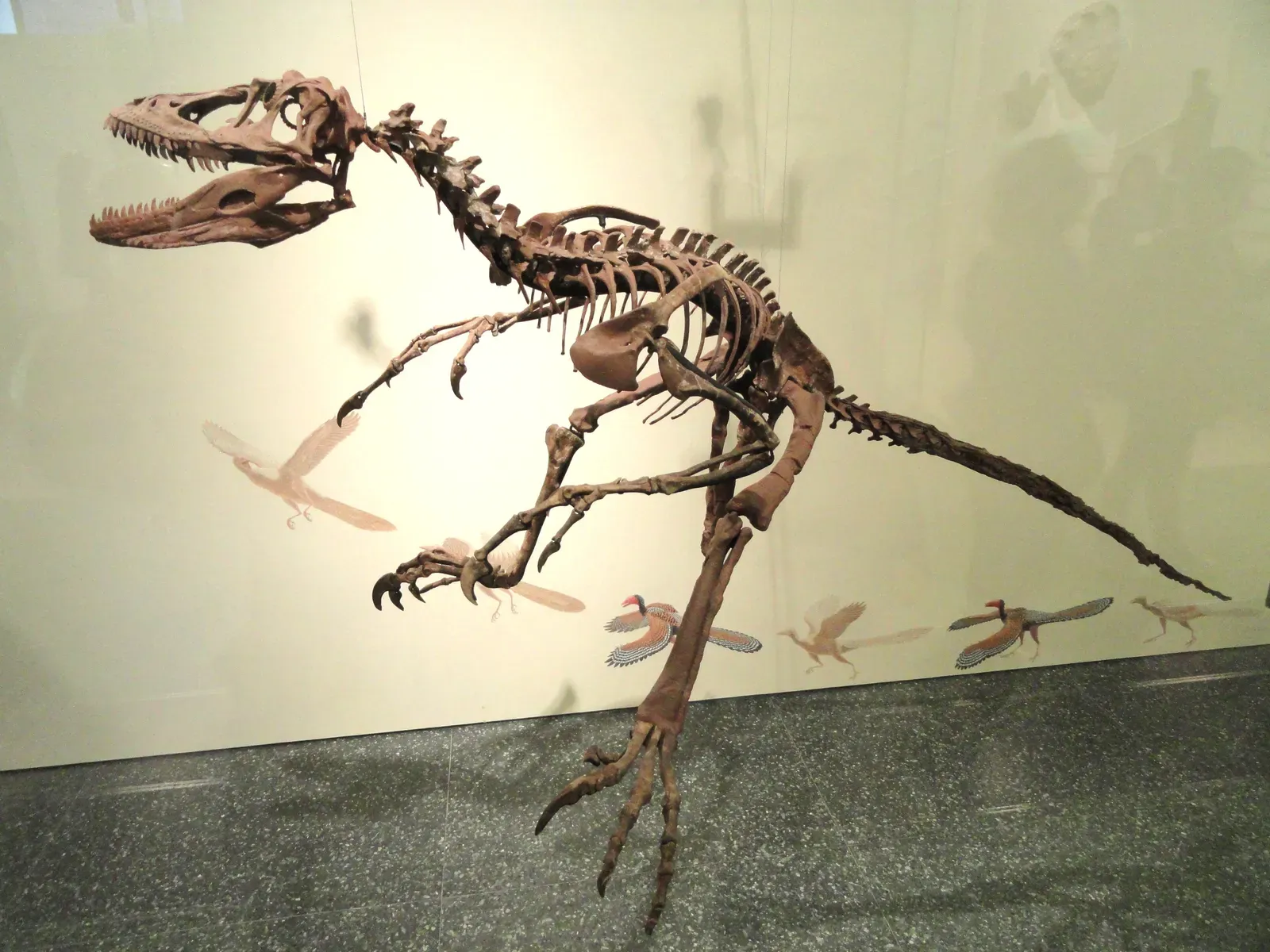
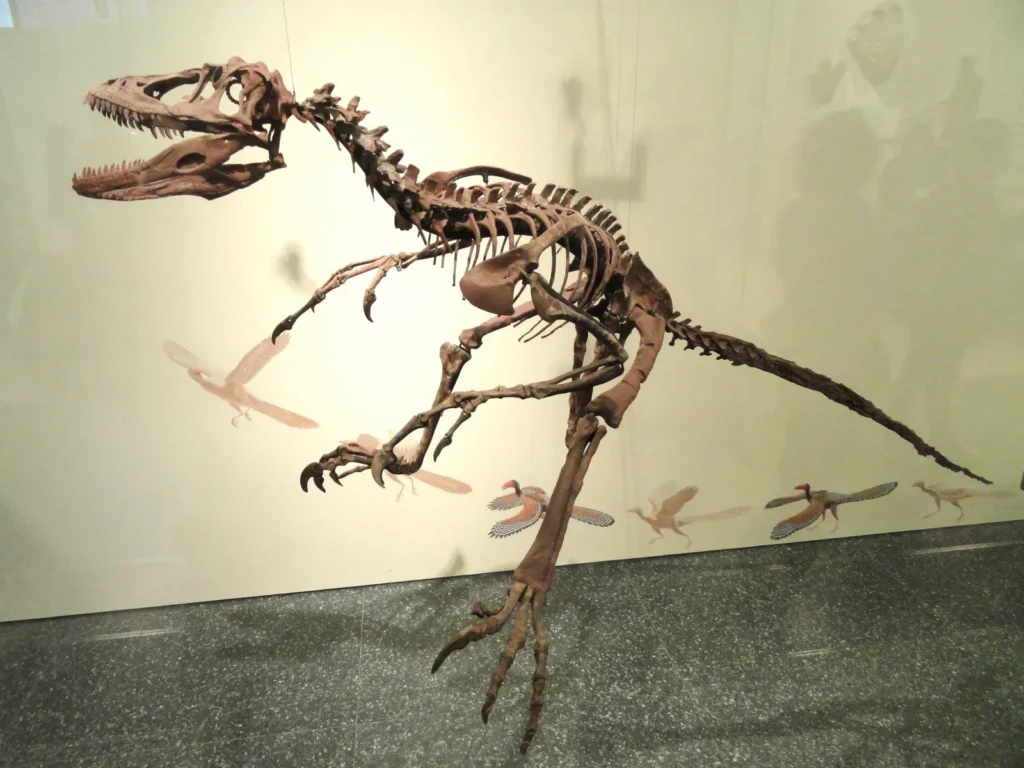
Before John Ostrom described Deinonychus in 1969, the scientific consensus on dinosaurs was bleak. They were viewed as evolutionary dead ends – slow, stupid, cold-blooded animals too dim-witted to avoid their own extinction. That narrative had calcified over decades and showed no signs of cracking. Then Ostrom looked at the hips, the wrists, the killing claw, and the overall body plan of this agile Cretaceous predator and realized the whole story was wrong.
Deinonychus moved like a predatory bird. Its skeleton implied speed, coordination, and possibly warm-blooded metabolism – traits that directly echoed the anatomy of modern birds. Ostrom used the find to revive a long-dormant hypothesis linking dinosaurs to birds, a connection that had been proposed and dismissed since Thomas Huxley’s era. The ripple effects reached everywhere: museum mounts were rebuilt, academic papers multiplied, and eventually a filmmaker named Steven Spielberg scaled Deinonychus up and called it a Velociraptor, cementing the new image of dinosaurs in global popular culture.
#6 – The Fighting Dinosaurs Captured Behavior Science Had Never Seen
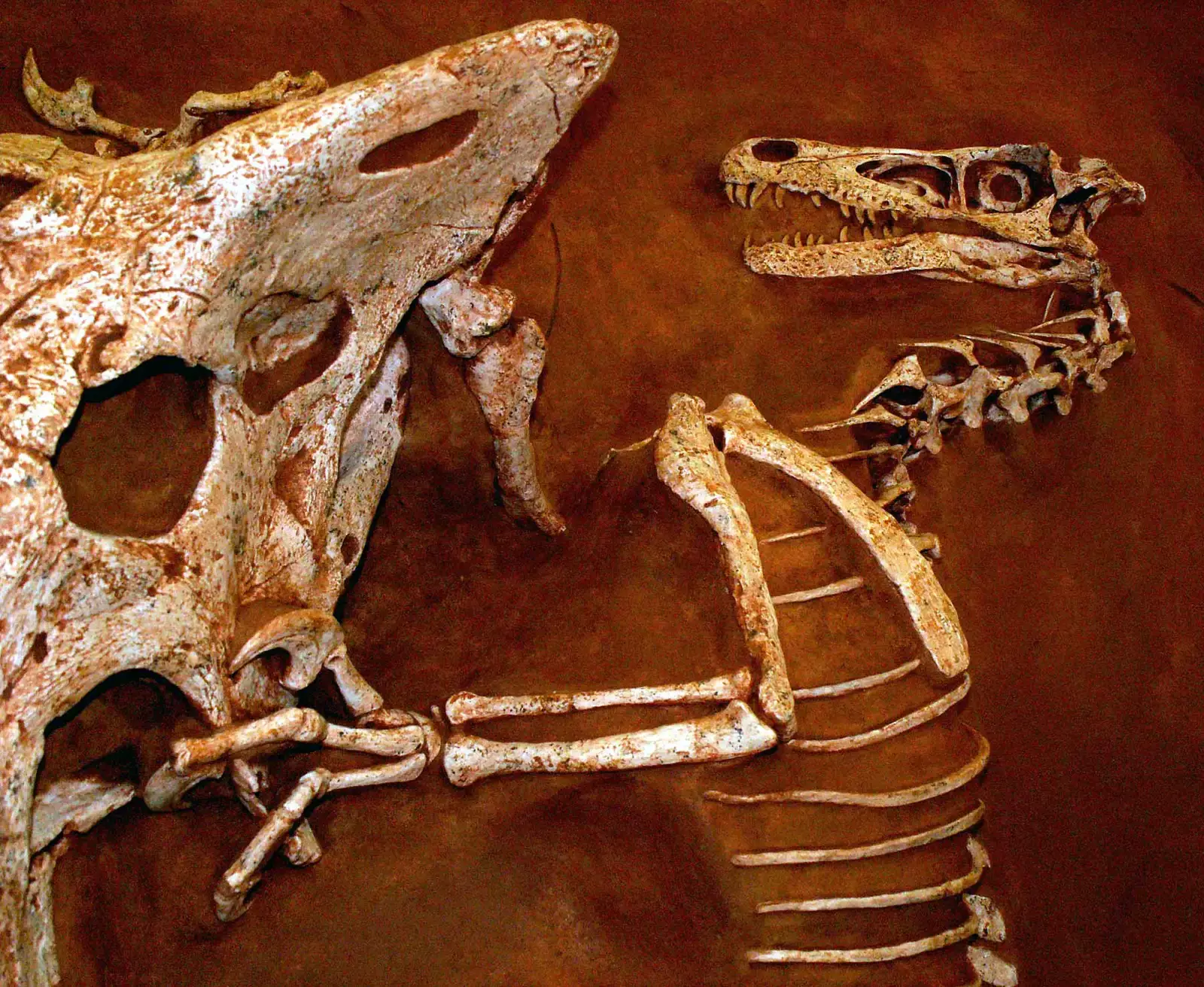
Fossils, by their nature, tend to preserve death in its most passive form – a body that collapsed, was buried, and hardened into stone over millions of years. Scientists had largely accepted that behavioral complexity was simply invisible in the fossil record. Then a 1971 expedition to the Gobi Desert found something that defied that assumption entirely: a Velociraptor and a Protoceratops locked in active combat, preserved at the exact moment of mutual destruction.
The slab was shocking in its specificity. The Velociraptor‘s killing claw was embedded in the herbivore’s throat. The Protoceratops had the predator’s arm clamped in its beak. Whatever killed them – a collapsing sand dune is the leading theory – had frozen a violent, dynamic moment in time with a precision that no paleontologist had any right to expect. The specimen didn’t just prove that predator-prey conflict happened. It proved that fossilization could, on rare and extraordinary occasions, preserve the chaos of life itself.
Worth Knowing
- The specimen is formally known as the “Fighting Dinosaurs” and is housed at the Mongolian Academy of Sciences in Ulaanbaatar.
- A collapsing sand dune is the prevailing theory for why both animals were preserved mid-struggle rather than separated post-death.
- The Velociraptor‘s iconic sickle claw – embedded in the Protoceratops‘ throat – confirmed its function as an active weapon, not a display structure.
- The slab remains one of the only fossils in existence to capture a specific predator-prey interaction frozen in real time.
#5 – T. rex Soft Tissue Broke Everything Scientists Believed About Decay
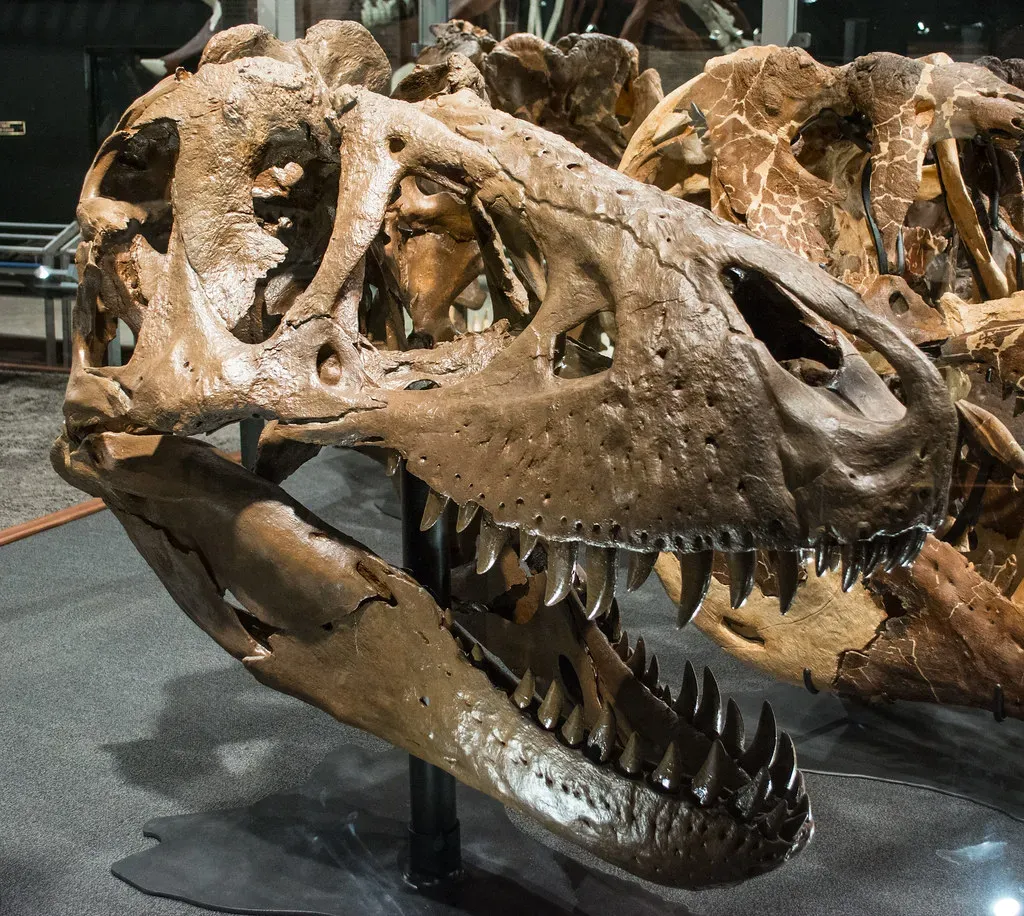
The rule was absolute and seemingly unbreakable: organic material cannot survive 65 million years. Proteins degrade, soft tissue dissolves, and what remains is mineral replacement – stone shaped like bone, not bone itself. Mary Schweitzer had heard this rule her entire career. Then in 2005, after demineralizing a T. rex femur from Montana, she watched flexible, translucent blood vessels stretch under her instruments in the laboratory. The rule was wrong.
The backlash was immediate and fierce. Many researchers assumed contamination or error, and Schweitzer spent years defending findings that the field genuinely did not want to be true. But the evidence kept compounding – similar structures turned up in other specimens, and subsequent analysis identified what appeared to be collagen proteins surviving deep in the fossil record. The discovery didn’t just challenge preservation dogma. It opened entirely new questions about what other biological information might still be locked inside specimens sitting in museum drawers right now, waiting for someone to look properly.
The most exciting phrase to hear in science, the one that heralds new discoveries, is not ‘Eureka!’ but ‘That’s funny…’
Isaac Asimov
Quick Compare
- Before 2005: Scientific consensus held that organic molecules could not survive beyond roughly 100,000 years.
- After 2005: Soft tissue structures – including apparent blood vessels and collagen – confirmed in a 68-million-year-old T. rex femur.
- Collagen match: Amino acid sequencing showed similarities to chicken, frog, and newt collagen – consistent with the dinosaur-bird evolutionary link.
- Preservation mechanism: Later research suggested iron from blood hemoglobin crosslinked proteins, dramatically slowing decay.
- Broader impact: Soft tissue structures were subsequently found in roughly half of additional specimens tested, going back to the Jurassic Period.
#4 – Lucy Rewrote the Entire Human Family Tree
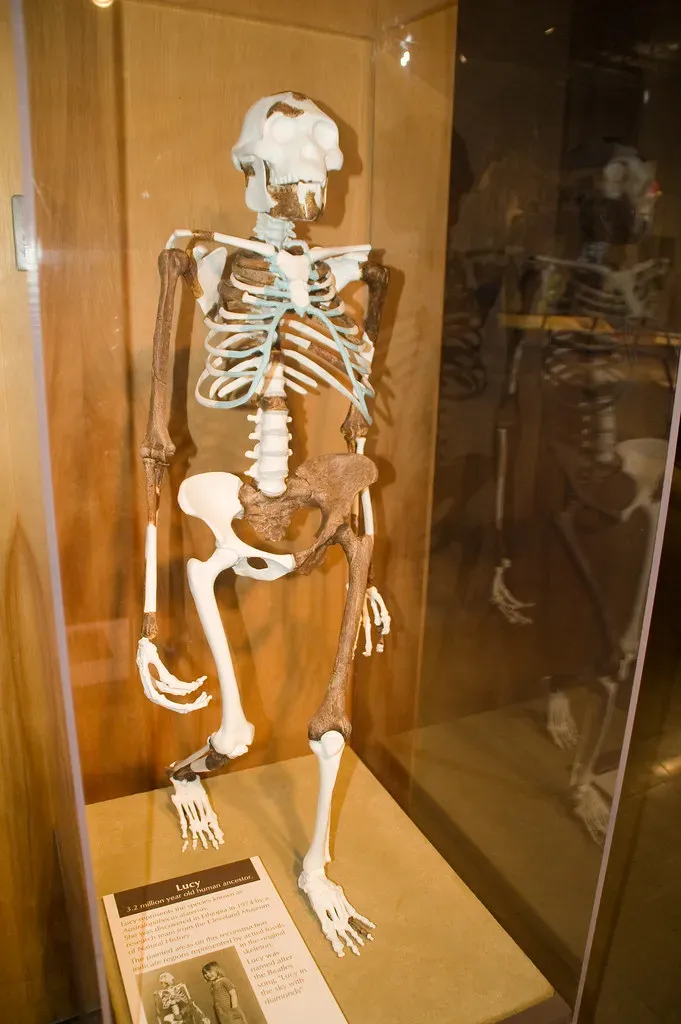
When Donald Johanson and his team found a 40-percent-complete skeleton in the Afar region of Ethiopia in 1974, they named her Lucy and immediately understood they were holding something transformative. At 3.2 million years old, she was the oldest relatively complete hominin skeleton ever found at the time. But it wasn’t her age that turned the field upside down – it was her body. Lucy walked upright on two legs, yet her brain was small, roughly chimpanzee-sized.
That combination demolished one of the most deeply held assumptions in paleoanthropology: the idea that human intelligence evolved first, driving everything else. Lucy proved that bipedalism came long before large brains, long before tools, long before anything that looked conventionally “human.” Her species, Australopithecus afarensis, became the new anchor point for studying human origins, and the theoretical frameworks built around brain-first evolution had to be dismantled almost completely. She remains one of the most studied and debated individuals in the history of science.
#3 – Archaeopteryx Handed Darwin’s Critics the One Thing They Couldn’t Ignore
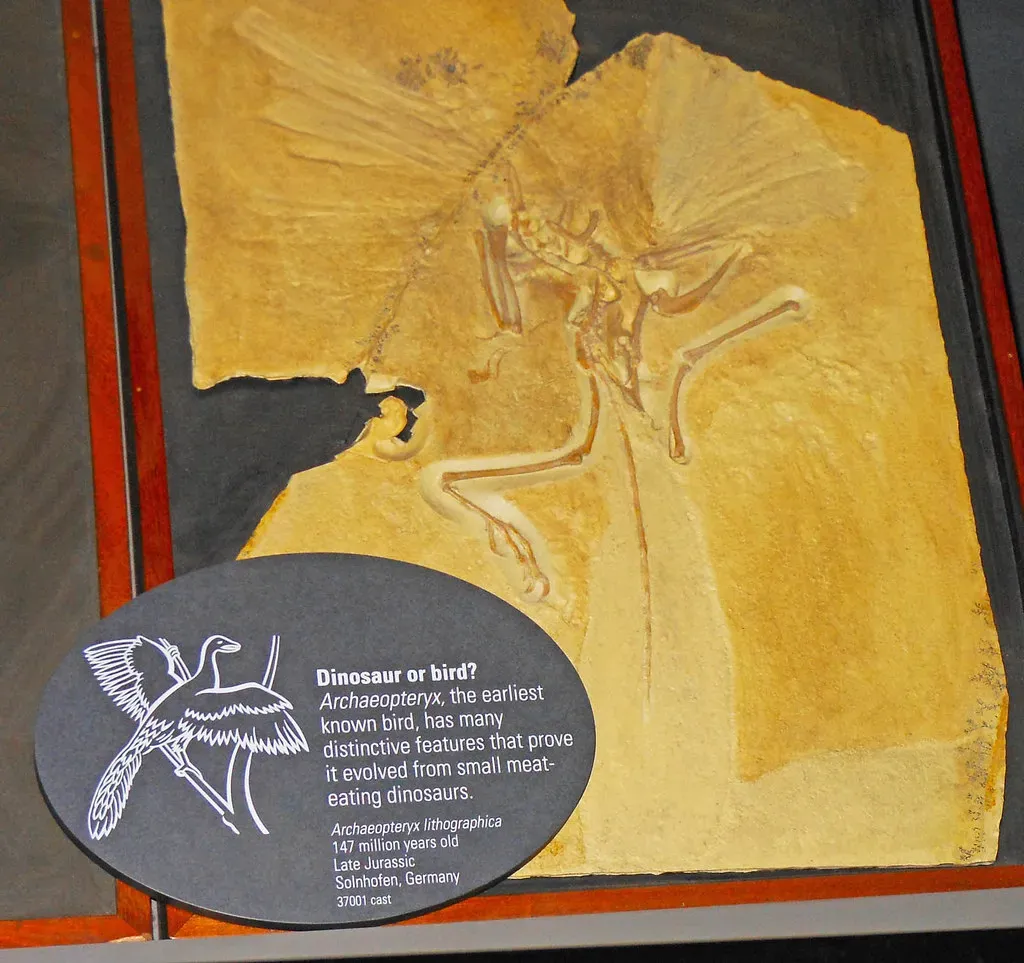
In 1859, Darwin published On the Origin of Species and immediately faced a demand he couldn’t easily answer: show us a transitional form. Two years later, a limestone slab from Bavaria offered exactly that. Archaeopteryx had the unmistakable feathers and wishbone of a bird. It also had the toothed jaw, clawed fingers, and long bony tail of a reptile. It was, in the most literal sense, an animal caught between two worlds.
Thomas Huxley recognized the implications instantly and used the specimen as a cornerstone of his argument for the dinosaur-bird connection. But even with the fossil sitting in the British Museum, many of Darwin’s contemporaries refused to accept what they were looking at. The debate that Archaeopteryx sparked in 1861 didn’t fully resolve for more than a century, until the wave of feathered dinosaur discoveries from China finally made denial untenable. That one Bavarian slab started an argument that outlasted everyone who originally had it.
Why It Stands Out
- First discovered just two years after Darwin published On the Origin of Species – its timing made it scientifically explosive.
- Possessed a uniquely contradictory anatomy: bird feathers and wishbone alongside reptilian teeth, clawed fingers, and a bony tail.
- Thomas Huxley used it as the centerpiece of his argument for a direct dinosaur-to-bird evolutionary link – a connection dismissed for almost 100 more years.
- The debate it ignited in 1861 wasn’t truly resolved until feathered dinosaur discoveries from China piled up in the late 1990s and 2000s.
#2 – Tiktaalik Revealed the Exact Moment Fish Decided to Try Land
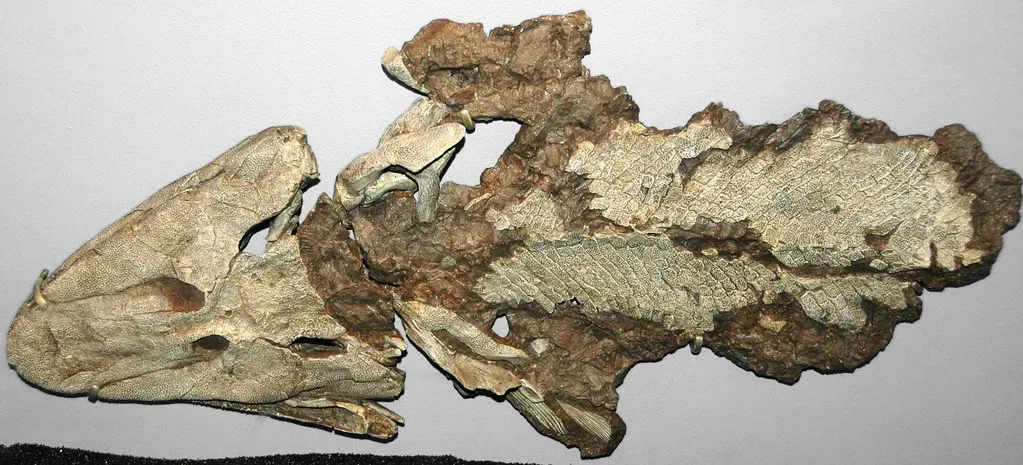
Scientists had long known that at some point, roughly 375 million years ago, a fish-like creature hauled itself onto land and started a lineage that eventually produced every four-limbed animal on Earth, including us. What they couldn’t find was the fossil that showed exactly how that transition worked mechanically. Then in 2004, on Ellesmere Island in the Canadian Arctic, a team led by Neil Shubin found Tiktaalik – and it was almost surreally perfect.
Tiktaalik had fish scales and gills. It also had a neck, a flat crocodilian head, and proto-wrist bones capable of propping its body up in shallow water. It could do a modified push-up. The fins were becoming limbs in real time, frozen at a transitional stage that paleontologists had predicted must exist but had never been able to locate. The discovery was so precise in its timing and anatomy that it felt less like a lucky find and more like the fossil record finally deciding to answer a question it had been avoiding for a very long time.
At a Glance
- Fossils discovered in 2004 on Ellesmere Island, Nunavut, Canada – published in Nature on April 6, 2006.
- The team – Shubin, Daeschler, and Jenkins – spent five years digging on the island before striking gold.
- Its name comes from the Inuktitut word for “large freshwater fish”; its species name roseae honors an anonymous donor.
- Had a neck that moved independently of its body – impossible in other fish – and eyes positioned on top of its skull like a crocodile.
- Its sturdy interior fin bones could prop its body up in shallow water, essentially performing a primitive push-up.
- Nicknamed the “fishapod” – a bridge between swimming fish and walking tetrapods estimated at 375–383 million years old.
#1 – Mary Anning’s Plesiosaur Forced the World to Accept Extinction
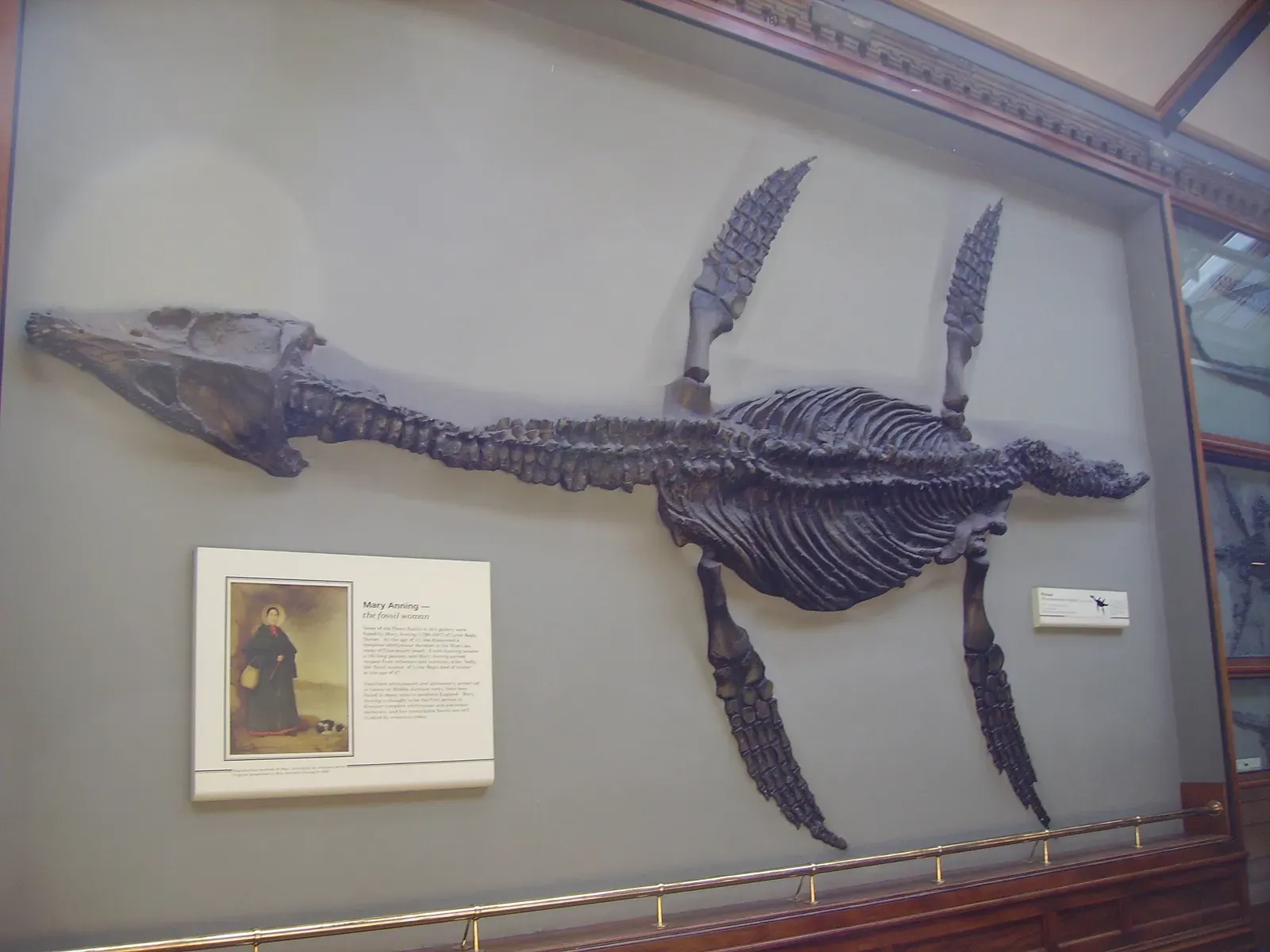
Mary Anning was a working-class fossil hunter from Lyme Regis with no formal scientific training and no institutional support – and she arguably did more to reshape humanity’s understanding of Earth’s history than almost anyone of her era. When she excavated a near-complete plesiosaur skeleton in 1823, the creature was so alien in its proportions that the anatomist Georges Cuvier initially suspected fraud. The neck alone seemed biologically impossible. But the fossil was real, and what it implied was even harder to accept than its anatomy.
At the time, the prevailing view – backed by religious orthodoxy and most geological thinking – was that God would not have allowed any of His creations to go extinct. Anning’s plesiosaur, combined with her earlier ichthyosaur finds, made that position impossible to hold. These were not creatures living somewhere undiscovered. They were gone, utterly and permanently, along with entire ecosystems that no longer existed anywhere on Earth. Her specimens helped establish the concept of deep time, the reality of mass extinction, and the existence of an “Age of Reptiles” that predated everything scientists thought they knew about life on this planet. She never received a formal scientific title in her lifetime. The fossils she found changed the world anyway.
Nine fossils. Nine moments where a single specimen walked into the room and made years of confident theory look fragile. The pattern that emerges across all of them is almost uncomfortable: the discoveries that changed science the most were rarely welcomed. They were resisted, doubted, sometimes buried for decades. Which suggests that whatever the next paradigm-shattering find turns out to be, the first response from the scientific community will almost certainly be the same – disbelief. And then, slowly, everything will change again.